Visa
Punta del Este rewards a well-chosen base
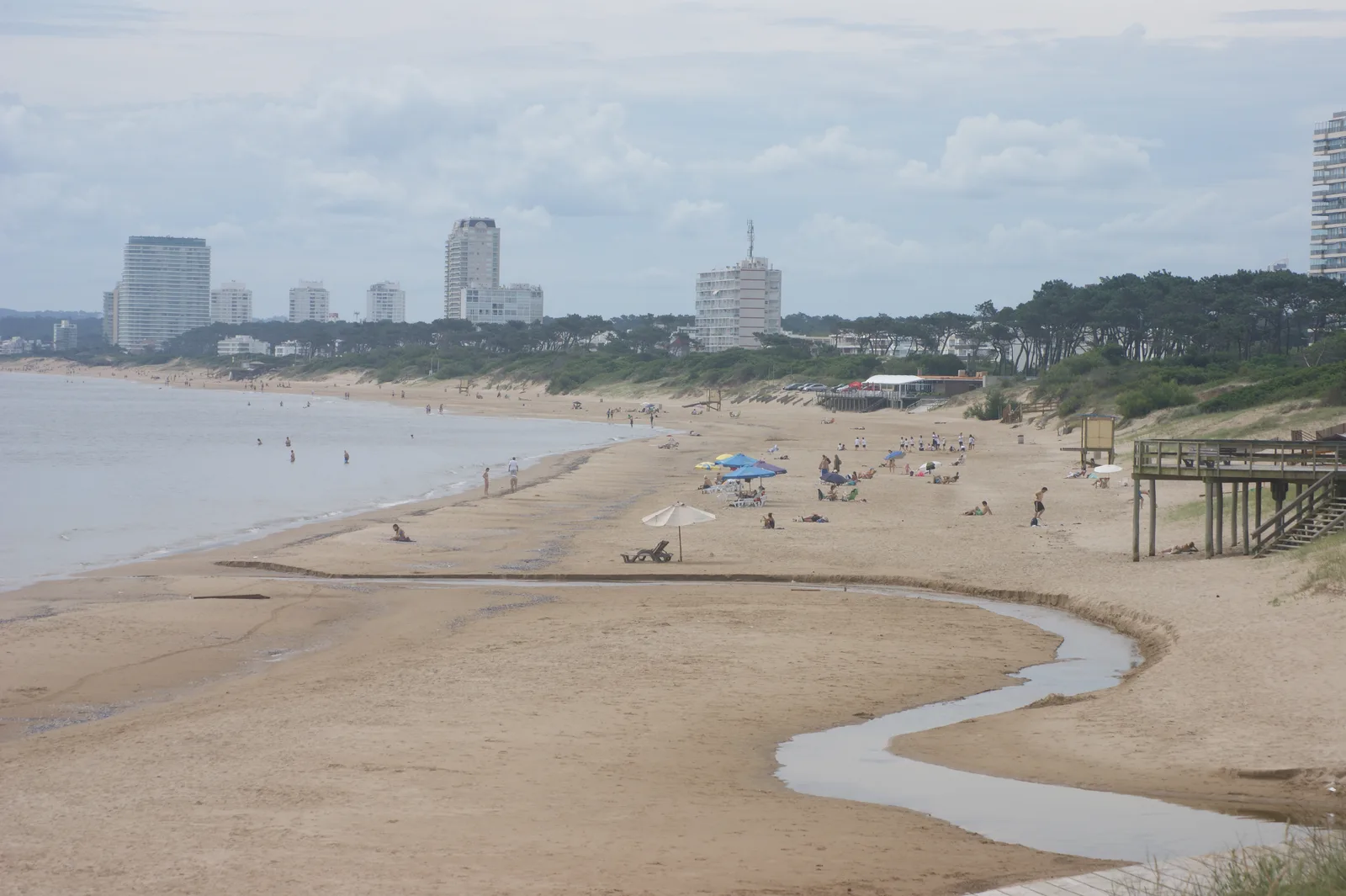
Punta del Este is a seaside resort where choosing the right address matters almost as much as choosing the season. The peninsula offers waterfront walks, restaurants and a working harbour; beyond it, beaches and residential areas spread across a much larger coastal district. A hotel advertised as being in Punta del Este may require transport for nearly everything you planned to do.
Come for a few days if you want to combine beach time with art, coastal scenery and unhurried meals. Allow longer if you intend to explore neighbouring resorts without spending each afternoon checking the clock. For a first visit without a car, a central base is the easiest starting point.
Prospective residents should make a different reconnaissance: visit in quieter months, inspect a genuinely annual rental and test journeys into Maldonado. Use the Uruguay country guide for national context, then assess whether this particular stretch of coast fits your household and working arrangements.
A young resort with an international story
The municipality dates Punta del Este’s formal establishment as a town to 5 July 1907, under Law 3,186; it had previously been known as Villa Ituzaingó. That history helps explain why its built identity differs from Uruguay’s older colonial centres: waterfront apartment buildings, holiday residences and visitor services are prominent features of the present-day streetscape.
Its international associations extend beyond summer leisure. The Uruguay Round of trade negotiations began here in September 1986, a reminder that the resort has also served as a meeting place. These details come from the municipality’s historical account, rather than an assumption that every conspicuous older building is a colonial landmark.
Look for character at street level as well as along the skyline: fishing activity beside leisure boats, craft stalls and the changes between the peninsula’s two shores. You can appreciate those contrasts on foot, without booking an expensive excursion or treating a shopping district as the whole destination.
Understand the peninsula and its surrounding areas
On a map, identify the peninsula first, then Playa Mansa and Playa Brava on its opposing sides. Beach names are useful orientation points, but they are not promises about swimming conditions. Ask for the nearest street intersection and beach access when comparing accommodation; an area name alone can conceal a substantial walk.
Maldonado is a neighbouring urban centre, worth assessing separately for everyday errands and a potential residential base. Beverly Hills is relevant to art visitors because Museo Ralli is there. La Barra and the coast beyond it belong in an outward excursion plan, rather than a quick diversion between central sights.
Punta Ballena, home to Casapueblo, is another distinct base. Compare the Maldonado destination page, Punta Ballena destination page and La Barra destination page before deciding which address suits you. These are location pages; their existence does not mean that every settlement already has a completed editorial travel guide.
Walk from Gorlero to the waterfront
Start with a modest circuit rather than an exhaustive checklist. Avenida Gorlero gives you the commercial spine of the peninsula, while the waterfront provides places to pause and understand its shape. The municipal visitor information identifies Plaza Artigas’s craft market and Calle 20’s shopping among the central points of interest.
Give the circuit a morning or late afternoon, with time for a drink and a detour rather than an appointment at every corner. A walk is also a useful accommodation test: would you be happy repeating the route after dinner, carrying groceries or pushing a stroller? A pleasant holiday promenade is not automatically a comfortable daily journey.
Craft stalls and shops can be a good place to browse, but opening patterns deserve checking outside the busiest period. If you are buying something substantial, establish the material, maker, price and receipt arrangements. Treat branded retail and local craft production as different shopping experiences.
See La Mano and choose a beach carefully
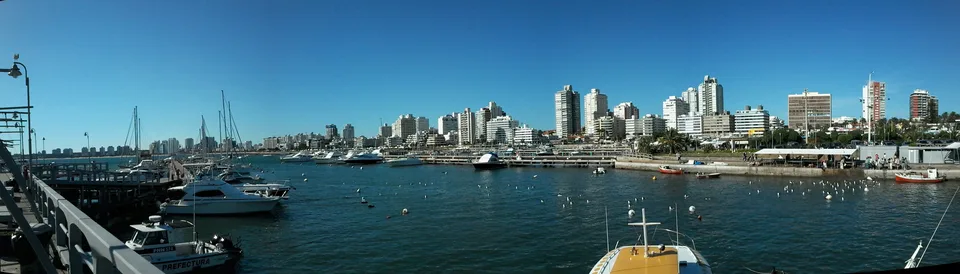
La Mano, also called Los Dedos, is the fingers sculpture associated with Playa Brava. The municipality identifies its creator as Chilean sculptor Mario Irarrázabal and connects it with the 1982 international sculpture event at Paseo de las Américas. Read the official account of the sculpture park for its artistic context, rather than reducing the work to a photograph stop.
After visiting, choose a beach according to conditions and facilities that day. The municipality’s beach information identifies specific accessible and designated pet areas; it does not establish that every access has the same equipment or rules.
Ask the lifeguard before entering the water, especially with children or an unfamiliar seabed. Currents, rocks and abrupt changes in depth matter even when the weather looks inviting. Allow a beach afternoon to become a shore walk if necessary. Keeping that flexibility is more useful than committing in advance to swimming at a particular hour.
Spend time around the harbour
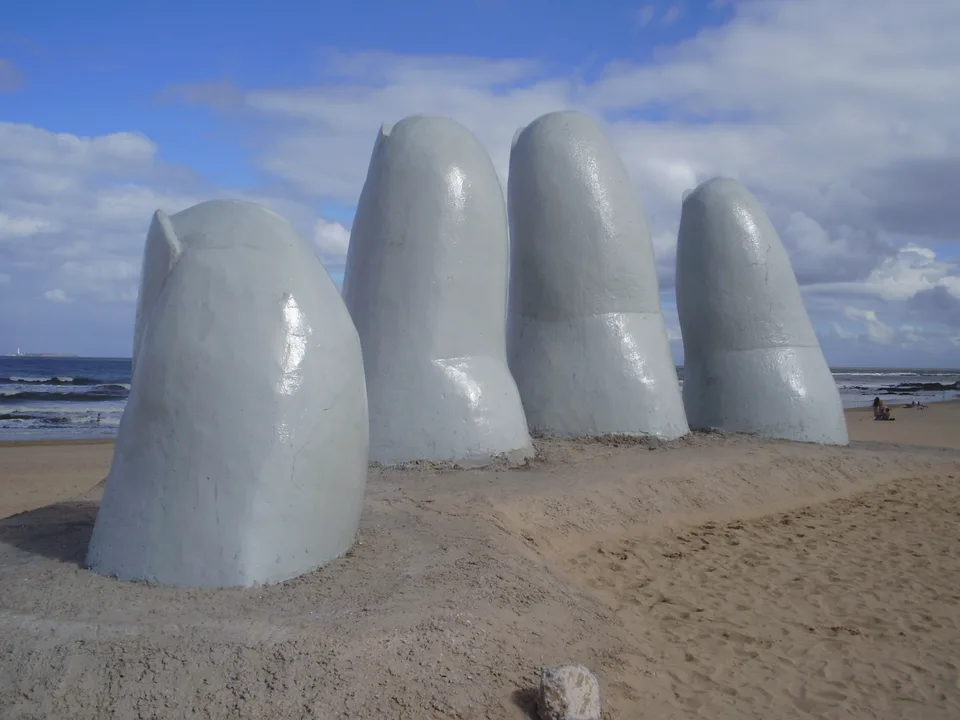
The harbour offers another perspective on the resort: vessels, waterfront buildings and activity that is not solely organised around the beach. Uruguay’s Transport Ministry describes a port serving recreational craft, cruise tourism and artisanal fishing. Its current port information also identifies departures towards Isla Gorriti.
A harbour visit works well with the central walking circuit and a meal, without requiring an island trip. If you want to go afloat, ask an operator about the exact destination, departure point, crossing conditions, passenger equipment and return arrangements. Confirm the final return before boarding, particularly if you have a bus connection later that day.
Do not confuse an outing to Gorriti with a wildlife excursion towards Isla de Lobos. The municipality describes them as separate experiences. Neither a boat visible at the quay nor a general tourism description guarantees a departure on your date. Keep the booking conditional on suitable weather and an operator’s confirmed service.
Make room for Museo Ralli
Museo Ralli provides a substantial reason to leave the waterfront. The foundation describes its Beverly Hills museum as a home for contemporary Latin American art, with an emphasis on Surrealism and works by European artists as well. Its museum introduction is a useful starting point for deciding whether you want an extended gallery visit.
Admission is free, but the timetable changes markedly with the season. The local museum’s October and November hours list Saturdays and Sundays, 14:00–18:00. The foundation’s seasonal contact page lists different summer arrangements and holiday closures. Check the current notice before arranging transport; free admission does not mean daily opening throughout the year.
Keep this as a focused visit rather than squeezing it between distant appointments. Families should plan food separately, and anyone needing step-free access should confirm their requirements directly. The municipality’s accessible-tourism information describes ramps and adapted facilities, while individual needs may still require advance discussion.
Treat Casapueblo as a separate excursion
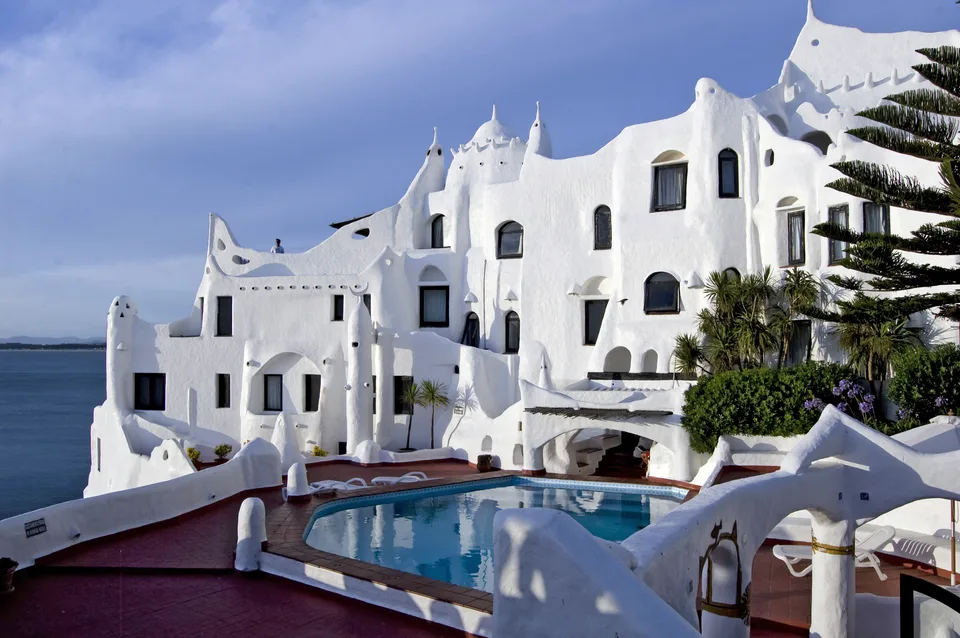
Casapueblo is in Punta Ballena, outside the peninsula. The museum presents the work and life of Carlos Páez Vilaró through paintings, ceramics, sculpture, film and its distinctive architectural spaces. Visit for that combination, rather than expecting a conventional gallery with a neutral building surrounding it.
The museum’s official visitor page lists daily opening from 10:00 until sunset and general admission at UYU 600, with children under 12 admitted free. These are published prices checked in October 2026; reconfirm before travel. For two general-admission visitors, the museum component is therefore UYU 1,200 before transport or refreshments.
For the sunset ceremony, the museum recommends arriving at least 40 minutes beforehand. It uses a recording of the artist’s voice. Arrange your return journey before settling in, and check the sunset time for your date. Hotel terraces shown in photographs do not imply that every space is included in a museum ticket.
Choose accommodation by the journeys it creates
For a short stay, compare a central hotel with an apartment near the particular beach you intend to use. A peninsula address can reduce transport needs for harbour walks and meals. An apartment may offer more space and cooking facilities, but cleaning fees, linen, check-in arrangements and minimum stays affect its usefulness.
A property farther along the coast may be appealing if quiet surroundings are the priority. Price the transfers, evening meals and parking alongside the room. Ask which facilities will actually operate during your dates, including pools, restaurants and reception services.
For a distinctly different setting, Club Hotel Casapueblo lists rooms, apartments and suites at Punta Ballena. Its location makes sense for someone deliberately choosing that area; it should not be mistaken for a central peninsula hotel. Compare the exact cancellation terms and final payable amount, and keep a museum admission decision separate from an overnight accommodation booking.
Compare Laguna del Sauce with Carrasco
The airport operator places the Carlos A. Curbelo international airport at Laguna del Sauce about 20 kilometres from the Punta del Este peninsula. Check the airport’s flight information for services on your dates and its location information when estimating the onward journey. A nearby airport is useful only if its flight schedule fits your trip.
Carrasco, serving Montevideo, is another arrival option. COT’s published timetable includes services between that airport and Punta del Este, but not every departure follows the same route. Compare the entire journey: arrival time, baggage collection, bus availability, final stop and transport to your accommodation.
Avoid buying a connection on the assumption that a scheduled landing and an airport bus departure are interchangeable times. Leave a margin for delay and establish an alternative for a late arrival. For a group, compare a properly quoted transfer with individual bus tickets, including luggage and any child-seat requirements in the quote.
Use buses for specific routes, not vague promises
The COT timetable and fare search is useful for intercity planning. Read the route and operating-day notes, not just the destination heading: services may follow different intermediate stops. Check the fare in the booking process for the journey you actually intend to take, rather than applying a published city-to-city figure to an airport trip.
For local travel, CODESA’s timetable search allows searches by origin, destination, day and time, with printable tables available. Use it to test an outward journey and its return. A route serving an area does not establish a useful frequency for your evening plans, particularly when seasonal schedules change.
If renting a car, clarify parking, toll administration, insurance exclusions and roadside assistance before accepting the keys. Uruguay applies strict drink-driving rules; arrange another way back after alcohol. Walking, buses and occasional transfers may work for a central holiday, while a dispersed coastal itinerary needs a different calculation.
Eat locally without losing sight of the bill
Uruguay’s Tourism Ministry highlights grilled meat and seafood in its Punta del Este visitor brochure. Those are sensible starting points for a menu search, rather than evidence that every waterfront kitchen offers the same quality or price. Compare a restaurant’s current menu and opening days before making a special journey.
For practical budgeting, look beyond the headline main course: drinks, accompaniments, service arrangements and transport home can change the total. Ask about the day’s fish, portion size and preparation if a menu is unclear. Dietary needs deserve a direct conversation rather than an assumption based on the venue’s appearance.
Self-catering can be useful for breakfasts and flexible beach days, provided the accommodation has the equipment promised. Check where you will buy groceries before choosing an isolated property. A kitchenette with limited cookware may not support the meals you had planned, and repeatedly travelling for supplies can erase an apparent saving.
Build a budget around confirmed choices
Uruguay uses the Uruguayan peso; ask what currency a quotation uses whenever you see an unqualified dollar sign. For accommodation and transfers, request a written total for your dates, group and luggage. Keep exchange rates and card-provider charges separate from the local price.
A useful daily calculation has five parts: accommodation, food, transport, paid activities and a reserve for changes. Museo Ralli’s free admission and Casapueblo’s published UYU 600 general ticket offer two verified activity benchmarks. They do not justify inventing a citywide daily average or assuming transport to either attraction is included.
Keep some payment flexibility for smaller purchases, while avoiding unnecessary cash carrying. Check the final currency and amount on a card terminal. The Uruguay location directory can help compare alternative bases, but compare equivalent dates and accommodation standards before concluding that another resort offers better value. Seasonal availability can matter as much as the nightly rate.
Match the season to your priorities
Maldonado’s official visitor information places summer in December–March and winter in June–September. For a holiday centred on beaches and seasonal activity, summer is the natural period to investigate. For walking and galleries with fewer commitments, the quieter parts of the year may be attractive, provided you check opening days.
Pack for coastal exposure rather than relying on the calendar alone. A windproof layer is useful beside the water, and a wet-weather alternative prevents a short break from becoming dependent on uninterrupted sunshine. For an actual forecast, use the dates close to departure rather than treating a seasonal description as a daily prediction.
Winter is particularly revealing for someone assessing relocation: test heating, daylight inside the property, nearby food options and the commute you would actually make. A warm afternoon inspection cannot establish winter comfort. Ask for evidence about the building’s equipment and running costs instead of relying on photographs taken in summer.
A realistic three-day first visit
Day one: settle into a central base, walk Gorlero and the waterfront, then spend time around the harbour. Keep the evening nearby after a travel day. Add La Mano when the light and weather suit, without making swimming a condition of a successful afternoon.
Day two: choose a beach according to conditions, or substitute Museo Ralli if it is open. In October and November, put Ralli on a weekend afternoon. Avoid promising yourself a gallery visit on a closed weekday simply because the entry price is free.
Day three: travel to Punta Ballena for Casapueblo, with the return already arranged. Arrive early enough to see the galleries before the sunset ceremony. If that would make an onward connection too tight, visit earlier or add a night.
With a fourth day, consider Gorriti or a surrounding coastal area. Keep an uncommitted weather window rather than treating a boat departure as guaranteed or combining several distant resorts into a rushed circuit.
Moving here starts with an annual lease
Treat a relocation visit as fieldwork. Inspect the peninsula and Maldonado, then compare quieter coastal addresses against your actual weekly requirements. A holiday apartment and a year-round tenancy may have different availability, included services and contractual expectations. Ask explicitly whether the property is available continuously through the summer period.
Before paying, establish the landlord’s authority, deposit and guarantee arrangements, inventory, termination terms and responsibility for repairs. Get the currency, payment schedule and all shared-building charges in writing. Have unfamiliar legal terms explained before signing; an attractive seasonal offer is not enough evidence for a household commitment.
Inspect ventilation, heating, water pressure, appliances and mobile reception in the rooms you would use. Test the journey to work or study at the relevant time, including the return after dark. If remote work is part of the plan, verify the connection at that specific address and obtain advice on the immigration and tax position.
Check the household services before committing
Ask how electricity, water and internet are billed, who holds each account and what happens when the tenancy ends. Uruguay’s official UTE account-change procedure describes requirements for a new electricity account holder, including identification and account details. Do not assume that paying rent automatically transfers a utility contract or resolves an existing balance.
Request recent bills to understand the property’s actual consumption, while allowing for different occupancy and heating needs. For an apartment, check lift availability, maintenance arrangements and any restrictions relevant to pets, deliveries or working from home. Families should investigate school admission and the daily journey before committing to a lease.
Healthcare needs a separate check. The FCDO’s Uruguay health guidance warns that medical and dental treatment can be expensive and recommends adequate insurance and accessible funds. Visitors should arrange travel cover; residents need to establish eligibility, enrolment and ongoing provision suitable for their circumstances rather than assume holiday insurance covers relocation.
Keep tourism, employment and residence distinct
Use the Interior Ministry’s admission visa regime to check your nationality and passport category before booking. Requirements are not identical for everyone. Where a visa is needed, start with the official visa application instructions and the responsible Uruguayan consulate; confirm its current document and appointment requirements directly.
Permission to visit does not by itself settle permission to work, study or remain permanently. Before accepting employment, enrolling or working remotely from Uruguay, establish the appropriate status for the actual activity. A rental contract or property purchase should not be treated as a substitute for immigration approval.
The government’s legal residence portal distinguishes permanent, temporary and Mercosur-related routes. Requirements depend on the category and can include identity, legalised or apostilled records, translations and evidence of means. Begin document planning before departure. Use VisaWand’s Uruguay consultant listings to seek individual assistance where needed, while checking eligibility and application requirements against the official authorities.
Make beach safety part of the day’s planning
Read the Environment Ministry’s beach-health reports as well as the weather forecast. Water quality and swimming conditions are different questions: sunshine does not establish that either is suitable. Check the posted flags and ask the lifeguard about that stretch of water, rather than applying yesterday’s advice to another beach.
The FCDO’s swimming guidance notes seasonal lifeguard provision and hazards including currents and sudden depth changes. Keep children within close supervision, and leave the coast during dangerous conditions. For accessibility, use the municipality’s facility information to identify a suitable access, then confirm current assistance and equipment before travelling.
Keep valuables supervised during a beach visit and arrange transport that matches your evening plans. These are practical precautions, not a claim that every neighbourhood has the same risks. Review current official advice shortly before departure, especially if storms, disrupted transport or a particular medical need would materially change your trip.
Give neighbouring places their own time
For a different coastal base, investigate Piriápolis rather than assuming it offers an identical version of the peninsula. Punta Ballena combines Casapueblo with the surrounding landscape; the municipality’s parks and nature information introduces Arboretum Lussich and other outdoor options. Confirm the relevant site’s current access before building a day around it.
La Barra and the coast beyond it can suit a separate outing for galleries and coastal scenery. The municipal cultural directory identifies art spaces along the Ruta 10 corridor towards Manantiales and in José Ignacio. Plan for browsing and travel time instead of a succession of short stops.
For a stronger urban contrast, consider Montevideo as another part of the trip. That choice adds a capital-city stay rather than another beach address. Punta del Este works best when you know which experience you are choosing: a compact peninsula visit, a coastal holiday with transport, or a carefully tested year-round home.
Official planning resources
Reviewed 26 October 2026. Use the official resources linked throughout this guide for admission, transport, housing and immigration decisions. Prices, services and rules can change; confirm the details relevant to your dates. Photography illustrates the locations and is not a live view.
View all official resources
- Municipality: Punta del Este history, July 2026
- Maldonado municipality: Punta del Este visitor information
- Municipality: Paseo de las Américas, April 2026
- Maldonado municipality: beaches and facilities
- Uruguay Transport Ministry: Punta del Este port, 6 May 2026
- Ralli Foundation: Punta del Este museum
- Museo Ralli: October and November visiting hours
- Ralli Foundation: seasonal opening times
- Casapueblo museum: visiting and tickets
- Club Hotel Casapueblo: rooms, apartments and suites
- Punta del Este airport: flights and services
- Airport operator: Laguna del Sauce location
- COT: intercity timetables and fares
- CODESA: local bus timetable search
- Uruguay Tourism Ministry: Punta del Este walking and food guide
- Maldonado municipality: visitor and seasonal information
- Uruguay government: changing a UTE electricity account holder
- FCDO: Uruguay healthcare and insurance
- Uruguay Interior Ministry: admission visa regime
- Uruguay government: starting a visa application
- Uruguay government: legal residence categories
- Environment Ministry: beach health reports
- FCDO: Uruguay safety and swimming guidance
- Municipality: accessible tourism information
- Municipality: parks, islands and nature
- Municipality: cultural heritage around Maldonado
Plan the next part of your journey
Explore the Uruguay guide, browse other cities or compare consultants for your travel and relocation questions.