Visa
Monastir works best when you choose your kind of stay
Monastir offers a useful combination on Tunisia's eastern coast: a substantial medieval monument, a manageable central sightseeing area, a marina and a separate stretch of resort hotels at Skanès. It can support a short cultural visit or a longer beach holiday, but those are different trips. Choosing the right accommodation location matters more than compiling a long attraction list.
Allow two full days for an introduction to the town, with additional days for the beach or regional excursions. Someone considering a move should add ordinary weekdays for testing transport, housing and services. A resort stay does not reveal the same Monastir as a rented apartment and a daily commute. Use the VisaWand Tunisia guide for national context, then organise this visit around the balance of history, coast and independence that you actually want.
Understand the town before booking a hotel
Central Monastir gathers the Ribat, medina, Bourguiba Mausoleum and waterfront into a different experience from Skanès, where accommodation is more strongly associated with beach resorts. The national tourism description of Monastir is a useful introduction to that distinction. Check a hotel's actual map position rather than assuming that every property marketed under Monastir is within an easy stroll of the historic centre.
For a short stay, being able to walk out for a meal and a look around town can be more valuable than a large set of facilities. For a family holiday, included meals, a suitable pool and organised activities may matter more. Neither arrangement automatically delivers the other experience.
If comparing apartments, establish the walking route to shops and transport, not just the distance to the sea. Waterfront photographs can obscure differences in access, noise and the practicality of doing everyday errands.
A Ribat city with a modern political inheritance
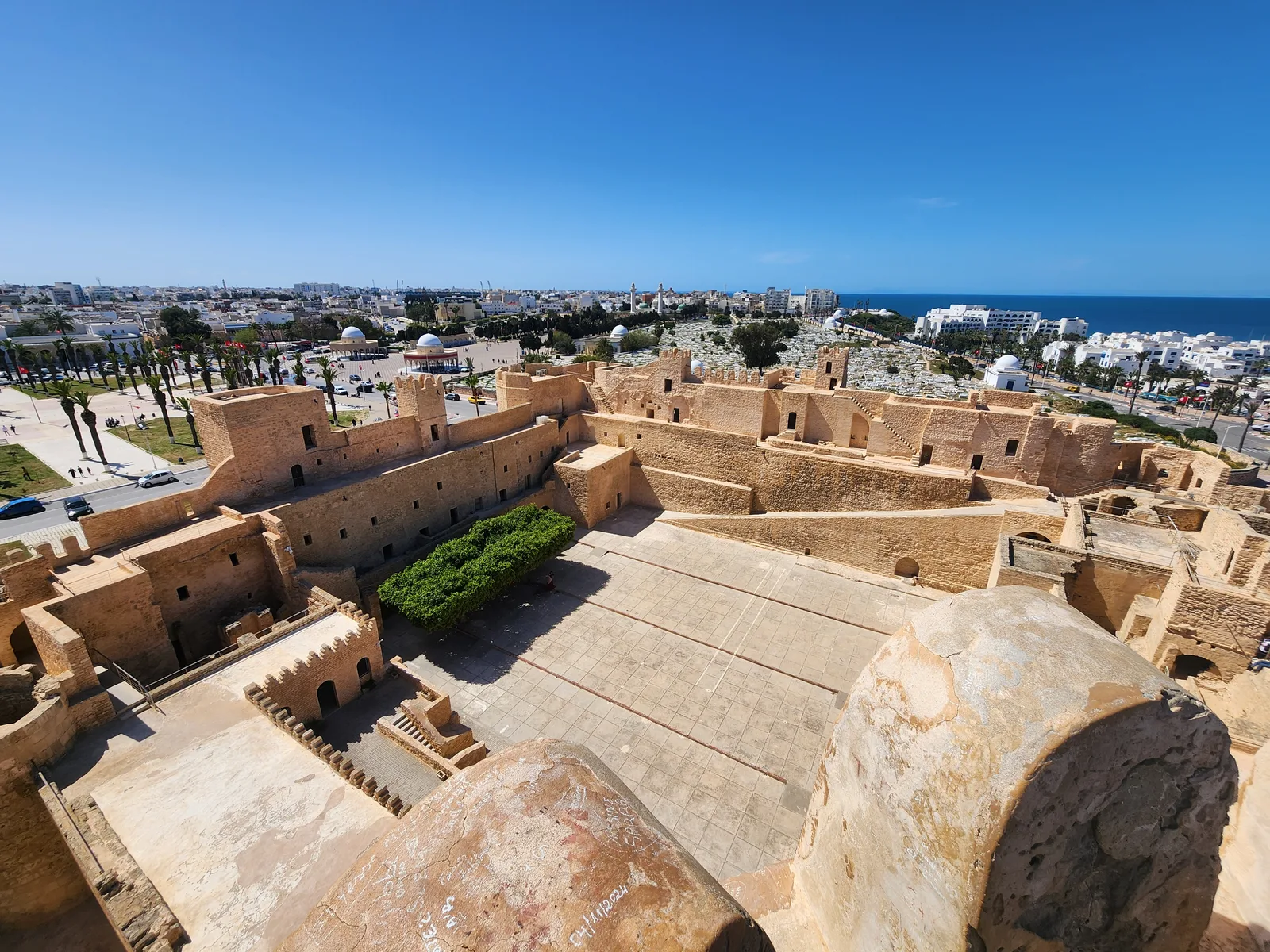
Monastir's best-known monument began as a fortified religious establishment rather than a royal palace. The Tunisian heritage agency's account of the Ribat dates the original construction to 795–796 and describes repeated enlargement and adaptation in later centuries. The substantial structure you visit today is therefore the result of several periods, not an unchanged eighth-century building.
Its courtyards, prayer spaces and lookout architecture help explain how religious retreat and coastal defence could occupy the same site. Look for changes in scale and arrangement rather than expecting a single symmetrical fortress built in one campaign.
Habib Bourguiba, born in Monastir and central to independent Tunisia's political history, gives the town another layer of public memory. His mausoleum belongs to that modern story. Visiting the medieval Ribat and the mausoleum together is more revealing than treating both simply as photogenic buildings with impressive towers.
Visit the Ribat without rushing the climb
Begin the Ribat visit when you have enough time and energy for uneven historic surfaces and stairs. The building rewards looking across its courtyards and considering how the successive additions fit together. A guide can help distinguish the original core from later work, but establish the language, length and price before agreeing to a tour.
The heritage agency currently posts a nonresident entrance price of TND8, with different resident pricing. At that listed rate, two ordinary nonresident admissions total TND16. Confirm the applicable ticket at the entrance, including any additional service you choose. A guide's fee should not be assumed to be included.
Opening hours vary by season and during Ramadan. Check the current schedule before making this the final stop of the day. Ask which museum rooms and upper areas are accessible on your visit; a general reference to a museum does not guarantee every collection or passage is open.
Separate a fine viewpoint from an accessible route
The Ribat's lookout is part of its appeal, but narrow stairs make it a more demanding visit than its position near the waterfront might suggest. If you have limited mobility, vertigo or young children, ask about the exact route before paying. Decide what you want to see from the lower levels rather than treating the highest viewpoint as compulsory.
Allow someone who is uncomfortable with a climb to stop without splitting the group across an uncertain meeting point. Carry water, wear shoes with grip and keep hands free where steps require concentration. Heat can make a short climb feel considerably harder.
Apply the same practical scrutiny to other historic interiors. Request specific information about steps, toilets, seating and drop-off points. Broad descriptions such as accessible or family-friendly cannot establish whether a particular route suits your household. A shorter visit with the right support can be much more rewarding than an exhausting full circuit.
Approach the Bourguiba Mausoleum as a memorial
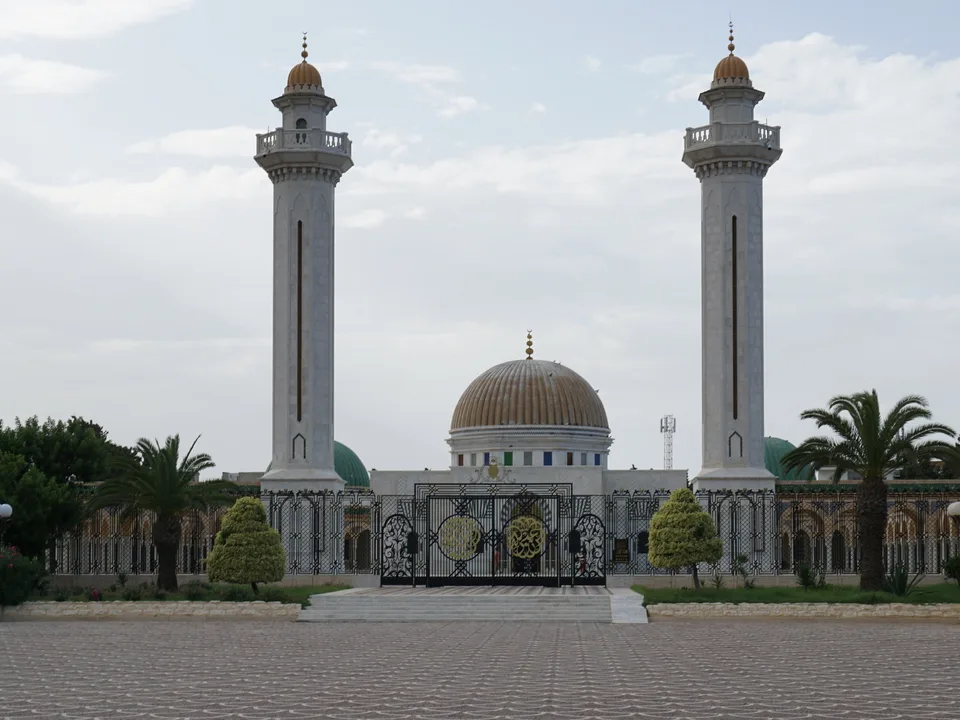
The Bourguiba Mausoleum is a place of commemoration as well as an architectural landmark. Its dome, minarets and formal approach make it an obvious visual contrast with the Ribat. Leave time to understand what the place represents rather than fitting it into a brief stop between a taxi and lunch.
Check visitor access on the day, dress respectfully and follow instructions about photography and entry to particular areas. A memorial or nearby cemetery is not an unrestricted backdrop for photographing other visitors or mourners. Ask before taking a close picture of anyone.
Do not confuse the mausoleum with Bourguiba's former summer residence, another location associated with his life. If you want to visit the residence or a related museum, obtain current opening information first. Official tourism references establish its significance but do not prove that every former room or display is accessible during your stay.
Walk the medina with time for ordinary details
The medina provides a change of scale after the Ribat's walls and open courtyards. A visit is most enjoyable as a sequence of short walks, shop browsing and breaks rather than an attempt to cover every lane. Keep a landmark or meeting point in mind so the group can separate briefly without losing one another.
Ask about materials and workmanship when comparing craft purchases. Price alone does not establish whether an item was made locally, and an attractive display does not guarantee that an old object can legally be exported. Avoid buying anything presented as an archaeological find or something whose provenance cannot be explained.
For food and household shopping, observe where products are stored and how prices are displayed. Carry small amounts of accessible money without revealing your whole budget. A willingness to ask a simple question and leave politely is more useful than assuming every shopping encounter requires prolonged bargaining.
Use the marina as part of a town stay
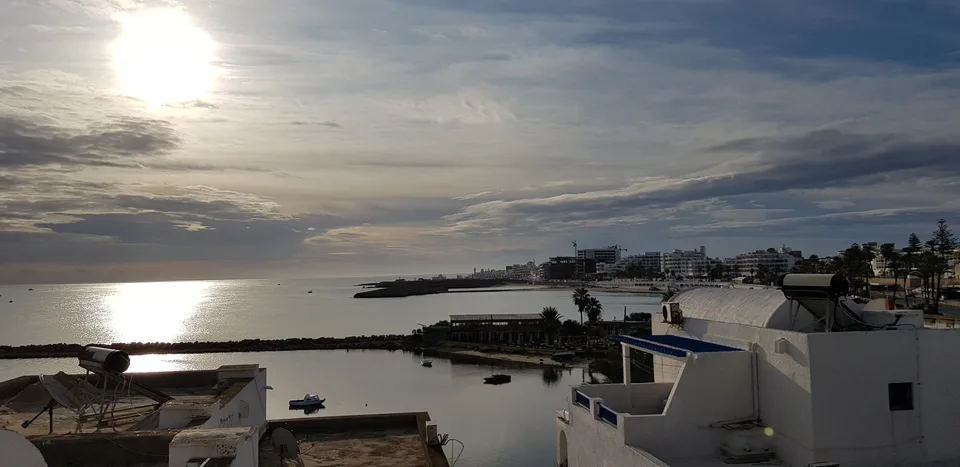
Marina Cap Monastir's operator information places the leisure harbour in central Monastir and describes both marine services and apartment-hotel accommodation. This is a working marina rather than a purely decorative waterfront. Give crews room to handle equipment, respect private pontoons and keep children away from unprotected edges.
For a visitor staying nearby, the advantage is being able to combine a short waterfront outing with meals and visits in town. Ask which facilities are available to apartment guests and which serve boat owners; a list of quay services is not automatically a hotel amenity list.
If considering a boat trip, establish the actual operator, departure point, duration, passenger limit and cancellation terms. Check lifejackets and the arrangements for children or anyone with limited mobility. A calm view from shore does not establish conditions beyond the harbour. Weather-dependent plans need a land-based alternative that you would also enjoy.
Compare Skanès resorts by the facilities you will use
Skanès is worth considering when beach time and the convenience of a resort are central to the holiday. Compare the particular property rather than assuming an all-inclusive label defines a uniform product. Meal times, included drinks, children's activities, beach arrangements and pool access can differ substantially.
For a stay outside the main summer period, ask which restaurants, pools and activities operate during your dates. An outdoor pool in a photograph does not establish whether it is heated, maintained or open in cooler weather. Check the room's cooling, heating and ventilation rather than relying only on the resort's public spaces.
Work out the cost and logistics of trips into town before comparing a resort with central accommodation. Included meals may save money, but their value changes if you intend to spend most days away. For an independent cultural trip, a smaller base may suit better than a package designed around staying on site.
Choose beach and water activities on the day
Build a coastal stay around current conditions, not a promise that a particular month guarantees calm water. Follow local warning flags and lifeguard instructions, and ask where swimming is appropriate for the precise beach you are using. Keep children within close supervision even where the shoreline appears gentle.
Before booking an activity, ask what equipment, instruction and insurance are included. Establish whether the provider can accommodate your experience and any relevant health or mobility needs. Do not use a holiday outing as a reason to attempt an activity whose basic safety arrangements are unclear.
For a boat excursion or diving plan, choose an operator who explains weather cancellation and return arrangements. Check that your own travel insurance covers the activity. If the sea is unsuitable, a town visit, a meal or time at the accommodation should remain a satisfactory option rather than an apparent failure of the holiday.
Eat with the coast and the season in mind
Fish is an obvious starting point in Monastir, but ask what is available and how it is priced before ordering. A displayed fish may be charged by weight rather than as a fixed-price meal. Confirm accompaniments and preparation, particularly if you want to compare a simple lunch with a more elaborate waterfront dinner.
Regional dishes identified by the tourism office include couscous with small charkaw fish and marqet khodhra, a spring vegetable and lamb stew. Treat those as dishes to ask about, not guaranteed options at every restaurant or in every season. Seafood preparation and ingredients need checking if you have allergies.
An apartment kitchen can be useful for breakfast, snacks and a slower day. Compare the actual equipment before assuming you can cook complete meals. A food budget should also allow for drinking water, café stops and the occasional meal whose convenience matters more than finding the lowest advertised price.
Arrive through the airport you actually booked
Monastir Habib Bourguiba Airport is the local air gateway. Use the airport operator's information and your airline to check flight details. A package described as a Monastir holiday may use another airport, so inspect the airport name and code on your booking rather than relying on the destination label.
For a late landing, children or substantial luggage, a confirmed transfer can be more straightforward than assembling a journey after arrival. Establish the meeting point, destination address, waiting arrangements and what happens if the flight is delayed. A transfer to Skanès and one to a central apartment are different bookings.
The airport taxi page distinguishes yellow taxis from the more expensive white tourist taxis. Its indicative figures should not be treated as a guaranteed current quote. Check the fare basis, luggage or other extras and payment before departure. Keep your accommodation's address available offline and confirm how access works if reception is closed.
Use the Sahel railway with a checked timetable
The airport's Sahel railway information identifies the line linking Sousse Bab Jedid and Mahdia via the airport area and Monastir. This gives visitors a useful regional transport option, but an airport summary is not a substitute for the current timetable. Verify the station, destination and last practical return service before making a day trip.
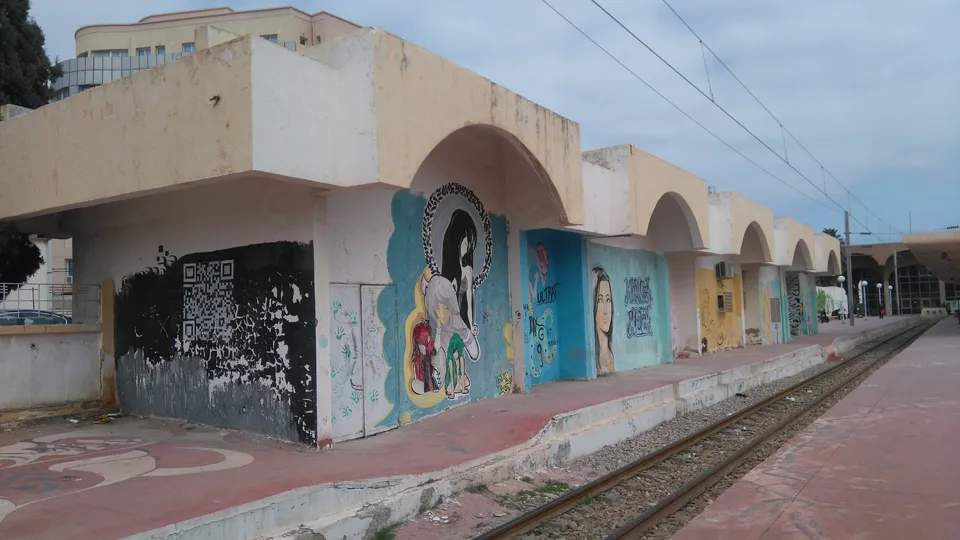
Monastir's city station and the airport stop are distinct. Check the name and walking connection you need, particularly when travelling with bags. Allow time to obtain a ticket and establish whether the service you intend to use calls at your chosen stop.
For commuting, test the journey at the time you would actually travel. A direct regional connection can still involve a walk or another vehicle at either end. Do not choose a long-term home on the basis of a map line without checking operating patterns, reliability and the cost of an alternative when a train is inconvenient.
Budget around room, transport and optional extras
Start with a complete accommodation quote, then add journeys, meals outside any package and the admissions you intend to buy. Keep airport transfers separate from ordinary daily transport: they can make the arrival or departure day look unusually expensive.
Ask explicitly about hotel tax. The UK government's Tunisia entry guidance lists TND8 per person per night for three-star hotels and TND12 for four- and five-star hotels, charged for a maximum of ten nights. Confirm the applicable rate and any exemptions with your property; do not assume the first room price includes everything.
Compare package and independent costs using the same activities and meals. A boat trip, paid guide and several taxi outings can change an otherwise modest budget. Keep a reserve for a different return journey or an extra night. Avoid using an undated daily foreign-currency allowance as though it were a verified Monastir price list.
Handle money with Tunisia's currency rules in mind
Check current customs rules before travelling with large amounts of currency, and retain official exchange receipts. Tunisia applies currency controls, including restrictions on taking Tunisian dinars out of the country. Plan your final cash needs rather than exchanging more than you can sensibly use.
Ask accommodation and activity providers which payment methods they accept. A card logo or a booking-platform payment does not establish that every later purchase can be paid the same way. Keep backup access to funds and avoid depending on a single card or cash withdrawal.
When shopping for gifts, allow for packing and your next destination's import requirements. Oil, food, fragile ceramics and larger craft items involve different practical considerations. Obtain a receipt for valuable purchases and check the airline's baggage allowance before deciding that a bulky item is inexpensive. The total cost includes getting it home intact.
Choose the season for the activities you want
The tourism office's coastal climate guidance describes hot, dry summers and cooler, wetter winters. That supports a practical distinction: summer beach holidays need heat management, while winter visits need realistic expectations about sea conditions, daylight and which accommodation facilities operate.
Spring and autumn can suit a mixed trip combining walking, the Ribat and some coast time. That is a planning judgement rather than a guarantee of a particular temperature or a swimming day. Check the current forecast before leaving, and use a separate marine forecast for activities offshore.
In hotter weather, make demanding outdoor visits earlier, pause in shade and carry water. During Ramadan or holidays, confirm monument hours and meal arrangements for your actual dates. A flexible itinerary with one main visit and an optional second stop can absorb changed hours far better than a chain of tightly timed reservations.
A realistic three-day introduction
Day one: settle into the accommodation and take a short town or waterfront walk according to your base. Confirm the next day's Ribat opening and organise transport if staying in Skanès. Keep arrival day manageable rather than committing to a regional excursion after a flight.
Day two: give the Ribat the morning, taking stairs at a comfortable pace, then plan a break before the mausoleum and a medina walk. Leave time for lunch and shopping without assuming every interior will be open. A marina outing can complete the day if energy and conditions suit.
Day three: choose either a beach day or one regional destination. Sousse makes sense for another historic urban setting; Mahdia offers a different coastal visit. If you prefer El Jem, allocate the day around that journey and its monument rather than combining several distant towns. With only two days, concentrate on Monastir and keep the regional option for another stay.
Look beyond Monastir without turning the trip into a transfer
The UNESCO-listed Medina of Sousse offers a useful comparison with Monastir's coastal heritage, including its own Ribat and historic urban fabric. UNESCO recognition for that property does not mean Monastir's entire medina has the same designation. Check the Sousse destination page when comparing places to stay or visit.
The Amphitheatre of El Jem introduces a different historical period: a substantial Roman monument with surviving structures associated with the arena and seating. Arrange the journey and admission separately rather than assuming it is a small stop within Monastir itself.
For a wider itinerary, investigate Mahdia and Kairouan as distinct destinations. Compare changing accommodation with making a return excursion. Travel time, check-in, bags and the return connection can consume the apparent convenience of adding another place. Keep a buffer between a regional trip and an outbound flight.
Test Monastir as a home during an ordinary week
Before signing a lease, spend time away from the routines of a resort. Test shopping, the journey to work or a course, healthcare access and the return home after your normal evening activities. A holiday apartment's location may be convenient for sights but inconvenient for daily responsibilities.
Obtain written rental terms covering the deposit, payment currency, adjustments, utilities, repairs and termination. Verify the landlord or agent's authority and keep receipts. Inspect the property, photograph its condition and record meter readings where appropriate. Do not rely on a promise that every bill or service is included without seeing the agreement.
Check cooling, winter comfort, damp, ventilation and mobile reception inside the rooms. Ask how water supply and storage work in that building, and who manages the accounts. The SONEDE customer contact page provides an official route for water-service questions; a landlord's explanation should still be checked against the actual account arrangements.
Keep visiting, studying and working as separate decisions
The official passport update ended the EU package-tour identity-card exception from January 2025. Check requirements for your nationality and documents with the Tunisian consulate covering your residence. Visa-free admission for some passports does not create a general right to settle or work.
For employment, the employment ministry's foreign-worker information distinguishes an approved employment contract from categories using an attestation of non-submission to that contract-visa requirement. The relevant procedure depends on your circumstances. A job offer or marriage does not justify skipping the applicable process.
For study or a longer move, check residence requirements with the responsible authorities before your visitor permission expires. Obtain written information from the institution about admission, records, language requirements and any accommodation assistance. Neither a lease nor enrolment alone establishes permanent residence. Use VisaWand's Tunisia consultant listings to compare professional help while retaining official requirements as the basis for your plans. Avoid committing to a remote-working arrangement on an assumed visa exemption without checking its legal and tax implications.
Official planning resources
Reviewed 28 October 2026. Use the official resources linked throughout this guide for admission, transport, housing and immigration decisions. Prices, services and rules can change; confirm the details relevant to your dates. Photography illustrates the locations and is not a live view.
View all official resources
- Tunisian national tourism Monastir region
- AMVPPC Monastir Ribat monument
- Marina Cap Monastir operator presentation
- TAV Monastir airport contact and location
- TAV airport taxi guidance
- TAV airport Sahel railway information
- FCDO Tunisia entry rules for British citizen passport holders
- ONTT coastal seasonal climate
- UNESCO Medina of Sousse
- UNESCO Amphitheatre of El Jem
- SONEDE official customer contact
- ONTT passport requirement update
- Tunisian foreign ministry consular visa service
- Tunisian employment ministry foreign worker categories
Plan the next part of your journey
Explore the Tunisia guide, browse other cities or compare consultants for your travel and relocation questions.