Visa
Decide whether you want Patong’s particular kind of holiday
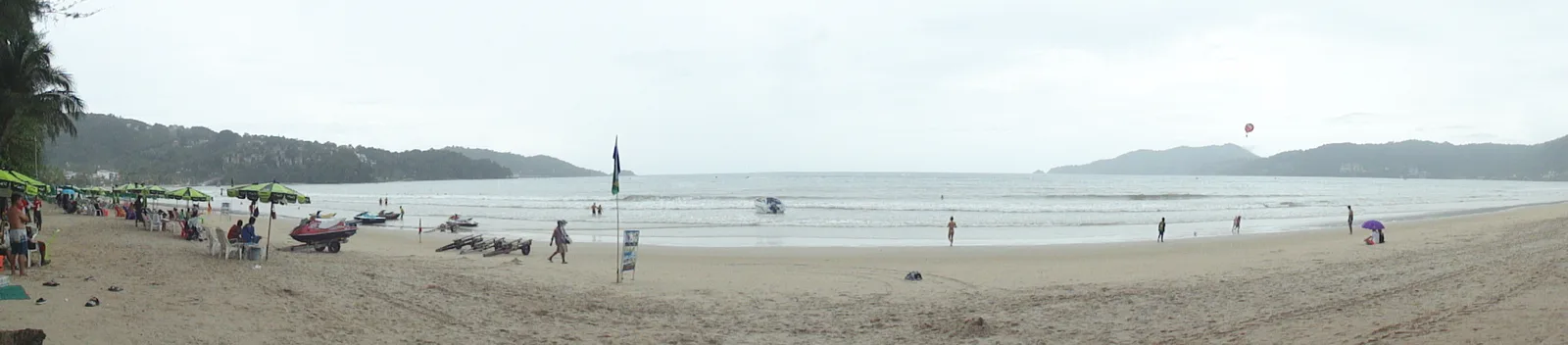
Patong puts a beach holiday and a busy entertainment district in the same bay. That combination is its main attraction and the reason to choose accommodation carefully. You can spend the day near the water, shop without leaving town and go out after dinner. If silence and seclusion are the purpose of the trip, compare another base before booking solely on the strength of a sea-view photograph.
Allow three full days for an introduction with some breathing room. That gives you time to understand the beachfront, enjoy an evening out and make one contrasting excursion. A longer stay works best when the accommodation itself suits your routine, especially if rain changes the beach plans.
The Tourism Authority of Thailand’s Patong introduction places the beach in Kathu District, Phuket. VisaWand’s Thailand country guide provides the national context. Here, the focus is practical: which part of Patong to choose, how to move around and what changes when a holiday becomes a longer stay.
Read the bay and its history together
The municipality’s geographical overview describes a beach approximately three kilometres long on Phuket’s west coast, between the Kamala and Karon areas. Hills wrap around the bay, with lower ground between the slopes and shore. The geography helps explain why two nearby-looking addresses can involve quite different walks and road journeys.
Patong’s modern identity is closely connected with tourism. Its municipal history traces separate local administration through the sanitary-district period, municipal status in 1994 and elevation to a town municipality in 2002. It describes rapid urban growth alongside the expansion of visitor businesses.
That is a useful way to approach the place: as a working town shaped by tourism, rather than a preserved historic centre. Residents, hotel staff, shops and services share the same streets as holidaymakers. For Phuket’s older commercial architecture and a different cultural setting, plan a separate visit to Phuket Town. Do not assume the island’s historic streets are another neighbourhood immediately behind Patong Beach.
Choose between the central beach, Kalim and inland streets
Start by locating the beach, Bangla Road and the places you expect to visit most often. A central address can reduce transfers, but ask about the particular room’s exposure to traffic, music and neighbouring businesses. A room overlooking an internal courtyard can have a different experience from one facing the street in the same building.
North of the main beach, Kalim’s official visitor information describes a rockier shoreline with accommodation and restaurants. Choose it for the address and setting you actually want, rather than assuming every waterfront property opens onto the same sandy swimming area. Check the route back to central Patong after dark.
Inland streets and the Nanai area deserve consideration for a longer stay, but assess the individual walk and gradient. The municipality identifies Nanai and Kalim among its communities; neither name establishes a uniform price or noise level. A hillside room with a panoramic view may rely on a shuttle or paid journeys. Confirm the shuttle’s timetable and return arrangements, including what happens when you miss it.
Treat accommodation details as part of the itinerary
Compare the full cost and practical arrangements across hotels, guesthouses, serviced accommodation and longer apartment stays. Beachfront convenience, a pool, a kitchen and a staffed reception solve different problems. Decide which matters before narrowing the search by price.
Ask whether the pool and communal areas are open for your dates, whether building work is planned and whether the advertised balcony belongs to your room. Confirm lift access, steps from the road and the bathroom layout if mobility is a consideration. A general accessibility label is less useful than answers about the route you will actually use.
For families, check bed arrangements, room occupancy and whether a connecting-room request is confirmed. For late arrivals, obtain the reception procedure and a reachable contact. Establish luggage storage and checkout arrangements before planning a final beach afternoon. Read cancellation terms alongside the rate: a modest saving on an inflexible booking can be less useful than the ability to adjust the stay when plans change.
Enjoy the beach according to the conditions
Make the first beach visit exploratory. Find a comfortable place to sit, identify the lifeguarded area and look at the flags before considering the water. A wide, attractive bay is not a guarantee of safe swimming, and the conditions in an old photograph are not evidence for today.
The Tourism Authority of Thailand’s marine-safety advice is explicit that a red flag means do not swim. Its guidance also discusses the stronger waves and rip-current risks associated with the southwest monsoon. Follow the instructions of lifeguards and current warnings, even if other visitors have entered the sea.
Keep beach time flexible enough to become a walk, a meal or a pool session when necessary. If hiring equipment or considering a watersport, establish the total charge, conditions, insurance and your own ability before agreeing. Do not let a short holiday timetable turn an unsuitable sea into an activity you feel obliged to complete. Bring shade, drinking water and appropriate sun protection, and leave the beach free of your rubbish.

Experience Bangla Road without making it the whole evening
Bangla Road is central to Patong’s nightlife identity, but it need not determine the entire visit. Go because the atmosphere interests you, then decide how long you want to stay. Travellers who prefer an early night can choose dinner elsewhere and still enjoy Patong’s daytime conveniences.
Check a venue’s menu and any entrance or entertainment charge before ordering. Establish whether a quoted price covers one drink, a package or a separate service. Keep control of your bill rather than relying on a verbal impression of what was included. These are practical habits in a busy visitor district, not a reason to treat every business with suspicion.
The UK government’s Thailand safety advice discusses drink spiking and recommends arranging transport home. Keep drinks in sight, stay in contact with companions and choose the return journey before the evening becomes complicated. If staying outside the centre, price that journey while comparing accommodation. A room that seems cheaper can lose its advantage through repeated late transfers.

Give a theatre show its own clear booking
For a more structured evening, Simon Cabaret Phuket’s official website lists daily performances at 18:00, 19:30 and 21:00. The operator describes a staged cabaret programme in a theatre, a different choice from spending the night moving between bars. Check the available performance on your actual date.
Compare the seat category, total ticket price and any transfer inclusion before purchasing. A promotional package is not necessarily the standard admission, and a seller’s photograph does not establish your seating position. Confirm rules for children, photography and access directly where those details affect the decision.
Leave sufficient time between dinner and arrival, particularly if the meal is elsewhere in town. Plan the return as carefully as the outbound trip. This is a suitable evening commitment after a relatively relaxed day; placing it immediately after a long sea excursion creates an avoidable risk of rushing or missing it. Book the experience you want, rather than the largest collection of extras attached to it.
Use Jungceylon for specific needs and rainy intervals
Jungceylon’s official shopping-centre website is useful for checking its current directory, dining and services. Its location information places it on Rat-u-thit 200 Pee Road. Treat it as a practical landmark when comparing accommodation and planning an inland outing.
The published visitor information distinguishes the main centre’s hours from those of Big C and the banking zone. At verification, the centre listed 11:00–22:00, while Big C listed 9:00–23:00. Check the individual shop or service before making a special journey, particularly for banking or an appointment.
Shopping can provide an indoor interval when the weather turns, but it does not need to fill every wet afternoon. Buy what serves the trip: groceries for a kitchen, a replacement essential or a considered gift. Compare size, warranty and baggage implications before purchasing expensive goods. If seeking a tourist offer, read the conditions and exclusions rather than assuming that showing a passport produces the same discount everywhere.

Explore markets and food with the price agreed
The municipal market directory lists Banzaan Fresh Market on Nanai Road, Malin Plaza on Prachanukhro Road and OTOP Market on Rat-u-thit 200 Pee Road. It is a useful location reference, not a review of every stall or confirmation that each trader keeps identical hours.
Choose a market that fits the day’s route. Look at how food is prepared, ask about ingredients and establish the complete price before buying. With seafood, clarify whether the amount is per item or by weight and whether preparation is charged separately. A brief question at the counter is better than discovering the distinction when the bill arrives.
Patong is also a convenient place to compare Thai and international meals according to your own needs. For allergies or dietary restrictions, use clear written information and confirm sauces and broths as well as the main ingredient. For self-catering, check the accommodation’s equipment before buying groceries: a kettle and minibar do not amount to a usable kitchen.
Choose the airport service by its route
Phuket International Airport is the arrival point for many visitors, but the word airport bus does not identify one interchangeable service. The airport’s Smart Bus information describes the coastal route through Patong, Karon and Kata towards Rawai. Choose a stop that works for your accommodation and establish the final walk or connection.
The orange airport bus route 8411 serves Phuket Town. It should not be mistaken for a direct ride to Patong simply because both services start at the airport. If a ticket or booking names Phuket Town, add the onward journey before comparing the total time and cost.
After a late flight, check the remaining departures before relying on public transport. Include baggage collection and the time needed to find the correct boarding area. For a taxi or booked transfer, confirm the complete fare, vehicle capacity, luggage allowance and meeting instructions. A quote for a vehicle and a quote per passenger are different comparisons. On departure day, allow for road delays and the airline’s check-in requirements.
Read the Smart Bus map before buying a pass
The Smart Bus operator’s current payment page lists a flat ฿100 fare for the airport–Patong–Rawai route and ฿50 for its Bus Terminal–Patong route. It accepts contactless Visa, Mastercard and JCB, as well as cash; the listed QR option uses a Thai banking app. Carry a workable backup rather than assuming your usual overseas banking application can pay a local QR code.
The operator’s timetable page separates the coastal service from the Bus Terminal 2 route via Phuket Town. It also lists the free Dragon Line city shuttle. Do not assume that a free city shuttle provides free journeys across the island or along Patong’s beach.
Its pass page lists a Route 1 day product at ฿299 for 24 hours and a three-day product at ฿499. Compare the covered route, validity and journeys you will make. Two single coastal rides total ฿200 at the listed fare, so a day pass is not automatically cheaper. Check current departures and the return stop before setting out.
Budget for movement as well as the room
Patong’s value depends partly on how often you need paid transport. Make a simple daily plan covering accommodation, meals, local journeys, paid activities and a reserve for changes. Then compare a central room with a cheaper address requiring transfers. Use actual quotes for your dates instead of an island-wide daily average that may not describe your trip.
For taxis or tuk-tuks, agree the destination and complete price before departure. Clarify whether waiting or multiple stops are included. If you arrange a return pickup, keep the driver or provider’s contact and agree what happens if timing changes.
Do not rent a scooter simply because it appears to solve the budget. The official safety advice stresses the importance of the correct licence and insurance, and warns against leaving a passport as a rental guarantee. Review the vehicle, equipment and terms before deciding whether driving is appropriate. A rental business accepting payment is not evidence that your licence or policy covers the journey.
Let the season shape the days
The Thai government’s monsoon explanation places the southwest monsoon broadly between mid-May and mid-October. Local transitions vary, and Patong’s west-facing setting makes the sea conditions particularly important. A lower room price during a wetter period should be considered alongside the possibility that swimming or boat plans will change.
The Thai Meteorological Department’s Phuket page provides official weather information and links to forecasts. Check the relevant marine warnings before a sea outing as well as the land forecast. A dry interval over the hotel does not establish calm conditions along a boat route.
For a beach-led holiday, compare dates in the drier part of the local year, while accepting that no month guarantees sunshine or safe water every day. Keep a light rain layer, protect valuables from water and choose footwear suitable for wet surfaces. Book excursions with clear weather-cancellation terms. A flexible day spent locally is often more useful than forcing a distant outing into a poor forecast.
Spend three days at a realistic pace
On the first full day, stay in Patong. Explore the beachfront, identify the practical routes around the accommodation and leave time for lunch and a swim only if conditions permit. Finish with an unhurried meal. A short evening look at the entertainment area can help you decide whether to return another night.
On day two, make Phuket Old Town the main outing. Give the streets and food some attention, then return with enough time to rest. Avoid attaching a tightly timed theatre booking unless the return journey has sufficient margin. The contrast with Patong is part of the value of the excursion.
Use day three for another stretch of coast, a beach-and-pool day or shopping followed by a performance. Choose according to weather and interests rather than trying to visit every named beach. A fourth day leaves room for a suitable organised excursion, with the operator, route, inclusions and cancellation conditions checked separately. Arrival and departure days should remain outside this framework unless you have genuinely usable time.
Test a normal week before choosing a longer tenancy
A move to Patong needs a different assessment from a resort stay. Start with the workplace or school, the times you must travel and the services your household needs. Walk the route from a prospective home and test the journey at the relevant time. Include the return after an evening shift, not only the convenient daytime trip.
Inspect the property and compare written terms. Ask about air conditioning, ventilation, hot water, cooking facilities, drainage and noise at night. Establish who repairs equipment, how quickly faults are handled and what the deposit can cover. Photograph the condition with the landlord or agent and retain an agreed inventory.
Request the utility charging method, meter readings and any shared fees before paying. A long holiday rate is not automatically a residential tenancy with the same rights or services. Confirm the owner’s or agent’s authority and obtain clear receipts. Reliable current data for a typical Patong household rent is limited; a set of inspected, comparable properties is more useful than an invented monthly average.
Arrange household services and healthcare deliberately
The municipality’s service page provides local contacts and services including waste-related payments and requests. Ask the property manager about collection arrangements and any responsibilities attached to the address. Local administrative pages may be in Thai, so arrange language help where a misunderstanding could affect a payment or application.
For electricity and water, the Provincial Electricity Authority and Provincial Waterworks Authority provide official service resources. First establish how the particular building is supplied and billed. Ask whether you hold an account directly or reimburse the owner, and record the agreed basis in the tenancy documents. Confirm mobile reception and internet installation for the actual unit if working or studying online.
Identify appropriate healthcare and pharmacies before a routine need becomes urgent. The Ministry of Public Health’s Patong Hospital listing provides a local starting point, but confirm the relevant department and appointment arrangements directly. Check health cover for your status, planned activities and any ongoing treatment. A nearby hospital does not establish that every service you might need is available there or covered by your insurer.
Keep arrival paperwork, residence and work permission distinct
Begin with the official Thai e-Visa website and the Thai embassy or consulate responsible for your application. Requirements depend on nationality, residence and purpose. Check current eligibility before relying on an old claim about visa-free days, extensions or repeated entries.
The Immigration Bureau’s Digital Arrival Card instructions explain the free online arrival form, the submission window and required information. The TDAC is not a visa. Prepare accurate passport, journey and accommodation details, and keep the confirmation accessible for travel.
For a longer stay, the official TM.30 accommodation-notification guide addresses reporting by owners, householders and accommodation managers. Ask how this will be handled at your address. It does not extend your permission to stay. The Phuket airport immigration website links to reporting and extension resources; confirm the appropriate office for your case.
Tourism, local employment, study, remote work and permanent relocation need separate assessments. The official consular visa-category overview provides the relevant starting points. Compare VisaWand’s Thailand destination and consultant listings and consultant directory if professional guidance would help clarify your route.
Compare another base before adding more transfers
Patong does not have to suit every part of a Thailand trip. Compare VisaWand’s Phuket city guide for the provincial capital’s setting and Krabi city guide for a different destination. These are separate places with their own transport requirements, rather than additional districts to fit between two Patong appointments.
The Thailand location directory offers further destination pages. Decide what another stop should add, whether that is a different coast, a city setting or a quieter pace. Keeping more time in one well-chosen base may serve the trip better than repeatedly packing and transferring.
Official planning resources
Reviewed 16 October 2026. Use the official resources linked throughout this guide for admission, transport, housing and immigration decisions. Prices, services and rules can change; confirm the details relevant to your dates. Photography illustrates the locations and is not a live view.
View all official resources
- Tourism Authority of Thailand: Patong Beach
- Patong municipal geographical overview
- Patong municipality history
- Tourism Authority of Thailand: Kalim Beach
- Tourism Authority of Thailand marine safety advice
- UK government Thailand safety advice
- Simon Cabaret Phuket
- Jungceylon shopping centre
- Jungceylon location and access
- Jungceylon visitor information and hours
- Patong municipal market directory
- Thailand Public Relations Department: Phuket food culture
- Tourism Authority of Thailand: Phuket Old Town
- Phuket Airport Smart Bus information
- Phuket Airport Bus 8411
- Phuket Smart Bus fares and payment
- Phuket Smart Bus timetable
- Phuket Smart Bus day and multi-day passes
- Thailand government: monsoon seasons
- Thai Meteorological Department: Phuket
- Patong municipal services
- Provincial Electricity Authority
- Provincial Waterworks Authority
- Ministry of Public Health: Patong Hospital travel-health listing
- Thai Ministry of Foreign Affairs e-Visa
- Official Thailand Digital Arrival Card instructions
- Thailand government: accommodation notification
- Phuket Airport Immigration online resources
- Royal Thai Consulate-General Osaka: visa categories
Plan the next part of your journey
Explore the Thailand guide, browse other cities or compare consultants for your travel and relocation questions.