Visa
Stay long enough to see more than the White Temple
Chiang Rai brings together Lanna religious heritage, striking contemporary art and the everyday life of a northern Thai provincial city. Wat Rong Khun’s white spires draw visitors, but the Blue Temple, older places of worship and art collections reward a longer look. The Tourism Authority of Thailand’s province overview is a useful introduction, provided you distinguish the city from the much larger province around it.
Two or three nights make a sensible first visit. You can explore the centre, give the outlying sights proper time and enjoy dinner without returning immediately to Chiang Mai. A longer stay also lets you judge the appeal of living here: the right address, a workable daily journey and the season matter. Leave room for heat, rain and rest.
Get the city and its surroundings straight
Use three reference points when comparing addresses: the central bus terminal and shopping streets, the Kok River and Rim Kok area, and the separate cluster of attractions outside town. The White Temple is in Pa O Don Chai, roughly 13–14 kilometres from the centre according to official tourism listings. Baan Dam is in Nang Lae, while the Blue Temple is in Rim Kok.
A hotel convenient for one attraction may leave you dependent on transport for other meals and visits. Golden Triangle viewpoints, Mae Sai and Doi Tung belong to wider provincial excursions. Give those their own planning time instead of treating a Chiang Rai province map as a neighbourhood walking map.
An older religious story beneath the modern landmarks
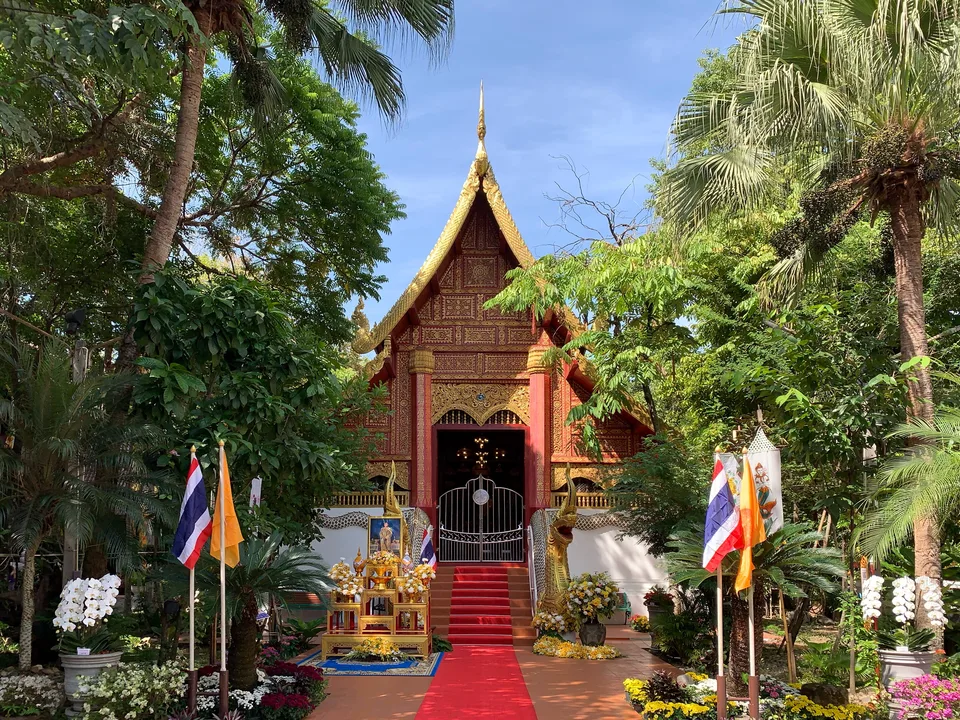
Wat Phra Kaew helps put Chiang Rai’s highly photographed contemporary temples in perspective. The tourism authority’s Chiang Rai temple information connects it with the Emerald Buddha, now enshrined in Bangkok. The image presently associated with this Chiang Rai temple is a later jade Buddha, dedicated in 1991. The two places share a name but are different temples in different cities.
Visit with the same consideration you would bring to any active place of worship: suitable clothing, quiet behaviour and attention to instructions about shoes and photography. Allow time to look beyond the first attractive building. Give worshippers space, including when pausing to take photographs. Confirm access to individual halls locally, especially during ceremonies or maintenance.
Choose a central base for independent evenings
A central stay is a practical starting point if you want to arrive by coach, walk to dinner and make shorter trips around town. Compare the actual distance from your accommodation to Bus Terminal 1 and the streets where you expect to spend the evening. Central Chiangrai’s official visitor information identifies the Night Bazaar near the old bus terminal, a useful reference when reading hotel descriptions.
Walk the route on a map before booking, then ask the property about crossings and the entrance you will use after dark. Choose a room away from a busy street if sleep matters more than being immediately above the action. Include evening transport when comparing room prices.
Compare riverside and outlying accommodation carefully
For a different pace, compare accommodation around the Kok River and Rim Kok with properties farther outside town. Start by defining what you want from the stay: a pool and time at the property, easy access to a particular sight, or an ordinary neighbourhood you might later live in. Request the actual journey and transport arrangements to the places you will use most.
Check the room category, cancellation terms, breakfast charges and accessibility. Longer stays need different questions: laundry, a comfortable work surface, internet in the specific room, cooking rules and nearby food. Ask how the property handles heavy rain and any past flooding at that address. A river view alone establishes neither flood resilience nor a convenient everyday location.
Give Wat Rong Khun its own outing
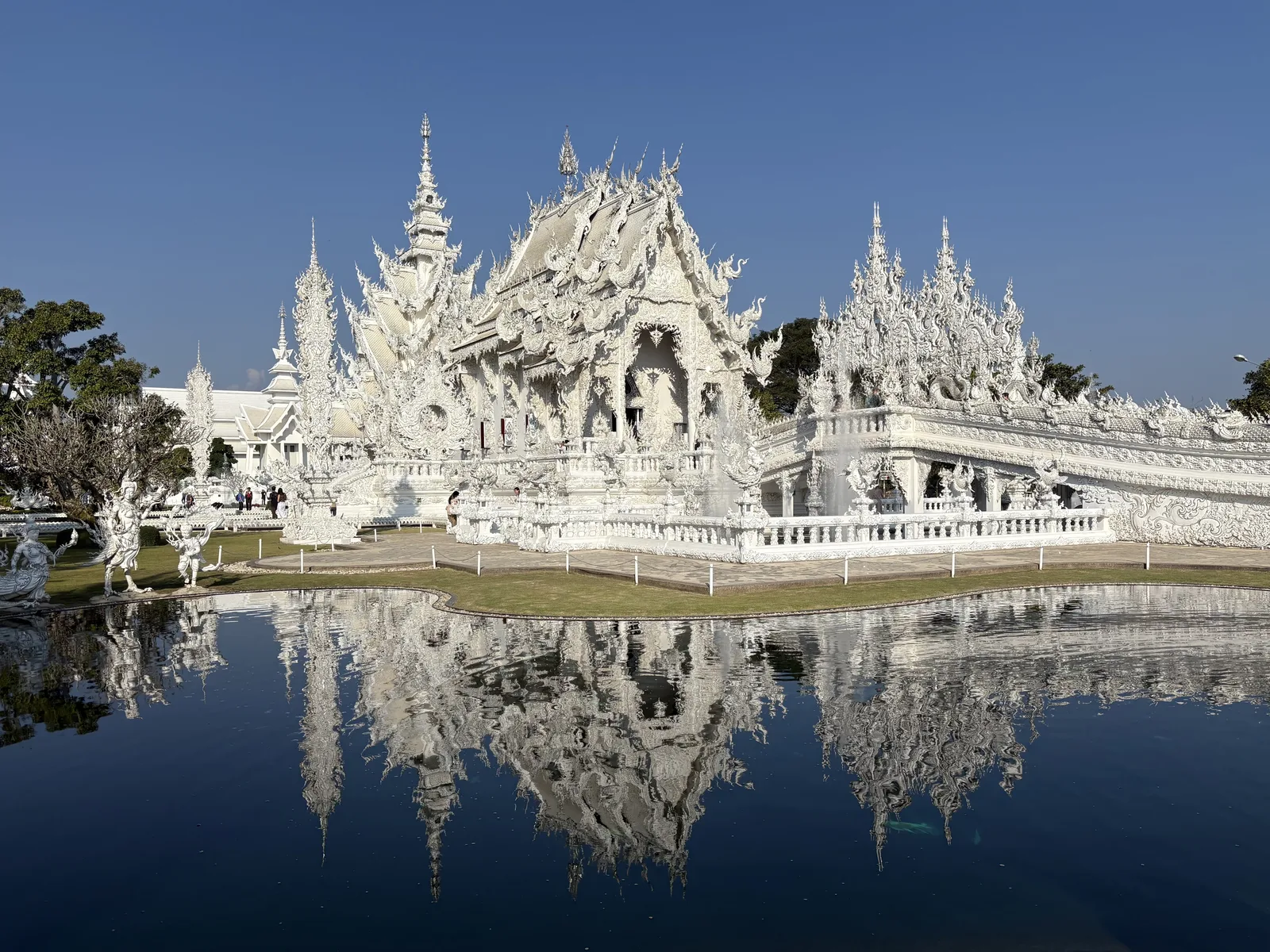
Wat Rong Khun, the White Temple, is the work of Chiang Rai artist Chalermchai Kositpipat. The provincial tourism office dates the modern project’s start to 1997. Its elaborate white architecture draws on Buddhism and mythology; treating it as contemporary religious art gives you more to look for than a single exterior photograph.
The tourism authority’s current White Temple listing publishes admission at 200 baht and opening from 08:00 to 17:00. Confirm the current charge and access arrangements when planning; an older government listing still shows a much lower historical price. Go early if your schedule permits, allow time to follow the visitor route and obey any restrictions inside buildings. Arrange your return or next pickup before leaving the centre, particularly if this is your only substantial outing of the day.
See the Blue Temple as a working place of worship
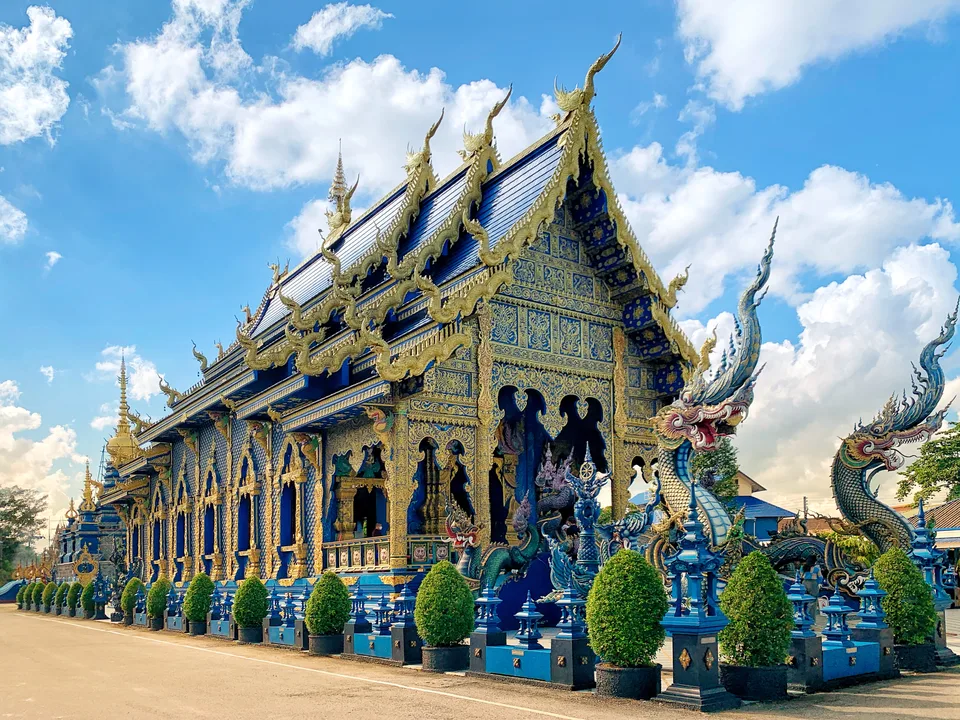
Wat Rong Suea Ten’s blue and gold decoration offers a very different visual experience. The tourism authority’s Blue Temple page attributes its construction to Phuttha Karbkaew, also known as Sala Nok, a pupil of Chalermchai Kositpipat. The site is in Rim Kok, about four kilometres from the central city in the airport direction.
Look at the exterior decoration and enter respectfully where permitted. TAT lists worship access as free; check on site for any separate arrangements. A tour’s description of several “coloured temples” can obscure their different origins and purposes. Combine the Blue Temple with another northern-side visit only if the transport works comfortably. Leave time for food and shade between stops.
Baan Dam is an art museum, not another temple
The official Baan Dam visitor page describes an art museum associated with Thawan Duchanee, with dark northern-style buildings and collections across its grounds. Its familiar English nickname, Black House, is a better description than treating it as a black equivalent of the White Temple. Read the information accompanying the works rather than assuming every building has a religious function.
TAT publishes a 09:00–17:00 visiting window, with irregular closure days, and gives the museum’s contact as 053-776-333. Confirm the day’s opening and admission before travelling to Nang Lae. Allow time to explore the collection. If your group includes children or someone sensitive to particular display material, ask the museum about the exhibitions before committing to an excursion built around it.
Make room for the Mae Fah Luang Art and Cultural Park
The Mae Fah Luang Foundation’s account of the Art and Cultural Park explains its evolution from a crafts and youth-training initiative into a centre for Lanna arts and artefacts. That background makes it a worthwhile complement to Chiang Rai’s contemporary landmarks. This is the Art and Cultural Park near the city, distinct from the Mae Fah Luang Garden at Doi Tung.
The official tourism listing for visiting the park publishes Tuesday–Sunday opening from 08:00 to 16:30, with Monday closure, and adult admission of 200 baht. Check current arrangements for concessions and special exhibitions. The foundation’s recent exhibition information also uses that Tuesday–Sunday window. Allow time for the collection and grounds as a complement to the temple visits.
Match the market to the day of the week
Chiang Rai has several evening-market experiences. The Night Bazaar near the old bus terminal provides a central reference point, while the tourism authority’s walking-street information places the Saturday market on Thanalai Road and the Sunday market on San Khong Noi Road. Confirm local arrangements around public holidays and unusual weather before organising the trip around a particular evening.
Browse the food, crafts and clothing; the selection varies. For textiles or handmade souvenirs, ask who made the item and what materials it contains. Consider how it will travel before buying something bulky. Establish the price before handing over money, and keep a manageable amount of cash available.
Eat northern dishes, then explore beyond one meal
Among the dishes highlighted in TAT’s Chiang Rai food coverage are nam ngiao, a spicy northern soup, and khao soi, noodles served with a coconut-based broth. Sai ua, northern sausage, offers another starting point. Recipes and ingredients vary; ask the person preparing your food about meat, seafood paste and allergens rather than assuming that a dish name guarantees a particular recipe.
Choose a modest first order if you are unfamiliar with a stall, then add more when you know the portion size. Compare a market meal, a café lunch and a hotel dinner as different experiences with different prices. Leave room for a second northern meal rather than spending the entire visit seeking one supposedly definitive restaurant. Confirm current opening directly when using older tourism articles for ideas.
Fly into the correct northern city
Mae Fah Luang–Chiang Rai International Airport uses code CEI. Check that airport code when booking: Chiang Mai is a separate city and its airport does not provide the same arrival. Compare the operating airline’s current flight schedule, baggage allowance and full ticket price for your date, including the consequences of any connection.
The airport’s official Chiang Rai taxi listing places service at Entrance 3, in the public area on the terminal’s first floor. It describes a choice of metered or fixed-rate travel and a starting meter fare of 40 baht. That starting amount is not a complete fare to your hotel. Confirm the charging method and total or applicable charges before departing, and give the driver the property’s exact address rather than its English name alone.
From Chiang Mai, check the coach terminal and date
Greenbus’s current Chiang Mai–Chiang Rai guidance links a booking search from Chiang Mai Bus Terminal 3, Arcade, to Chiang Rai Bus Terminal 1. Its published timetable includes multiple daily departures, with additional services on certain days. Check the journeys actually on sale for your travel date, including the terminal printed on your ticket.
The operator identifies FairFair as its online sales channel and says advance booking can extend up to 30 days, depending on availability. Compare the final payable amount, bus type and conditions together. A booking link without a selected date may default to today, so check that field carefully. Leave a generous margin before anything that cannot easily be moved after arrival. For a short northern itinerary, staying overnight in each city gives more flexibility than repeated return road journeys.
Arrange local journeys around clusters of sights
Group the White Temple separately from the northern-side sights, then discuss the route with your accommodation or chosen driver. Agree what a quotation includes: vehicle, driver, waiting time, parking, stops and the return journey. A private charter for several people is a different purchase from individual seats on a shared service.
For a single ride, confirm where and how you will obtain the return before starting an outlying visit. For a rental vehicle, check licence, insurance, deposit and fuel conditions directly with the operator. Consider a driver for mountain excursions if unfamiliar with the roads. Keep room in the schedule for delayed pickups.
Budget around the activities you actually want
As a planning reference, TAT currently publishes 200-baht admission for the White Temple and 200-baht adult admission for the Art and Cultural Park. Visiting both therefore starts at 400 baht per adult before transport, food and any separately charged elements. Other attractions and concessions need their own current confirmation. Keep the ticket figures beside their source and check them again when booking.
Transport can change the comparison between two itineraries considerably. Price one deliberately simple day against a day with several scattered stops. For accommodation, compare the complete amount for the room and its cancellation conditions. Record menu prices on your first day, then build a personal allowance around your room, meals and journeys.
Choose the season using local climate, not a national average
The Thai Meteorological Department’s Chiang Rai historical table shows a marked contrast between drier winter months and the wetter middle of the year. Its 1981–2010 averages list 7.5 millimetres of rain in January and 358.4 millimetres in August. For weather-led planning, December–February is a reasonable starting point, subject to air-quality checks.
Cool mornings are part of the appeal: the historical January average minimum is 12.8°C, while April’s average maximum reaches 34.8°C. Pack a layer for early starts and check conditions separately for mountain excursions. Historical averages describe a pattern, not your forecast. Consult the current Chiang Rai forecast before departure and leave flexibility around outdoor plans during wet weather, particularly when road or trail access matters to the day.
Air quality deserves its own booking decision
Seasonal haze can materially affect a northern Thailand visit. A Thai government health bulletin from April 2026 reported a serious pollution episode affecting Chiang Rai and other northern provinces. That dated report establishes a real planning concern; it is not a reading for the day you travel.
Check the Pollution Control Department’s Air4Thai monitoring service before committing to outdoor activities and continue checking during your stay. Keep mountain views, long walks and exercise plans flexible when air quality deteriorates. If someone in your party has a respiratory or cardiovascular condition, discuss the trip with their clinician before departure. For a possible move, ask about indoor air filtration at home and school, and consider a trial stay that helps you assess the season in which you would actually live here.
Treat Kok River water quality as a separate issue
The National Research Council’s August 2026 update describes continuing work to address arsenic contamination in the Kok River, including community treatment projects in Rim Kok. The Mekong River Commission’s monitoring assessment also documents localised contamination concerns. A pleasant riverside view does not answer whether water-contact activities are appropriate.
Check current local advice before considering bathing, fishing or another activity involving river water. For a longer stay, establish the source of the property’s household supply and ask its actual provider about current quality information. Use specific, dated information about the relevant supply or activity. Raw-river measurements, treated household supplies and downstream monitoring stations answer different questions.
A three-day introduction with manageable distances
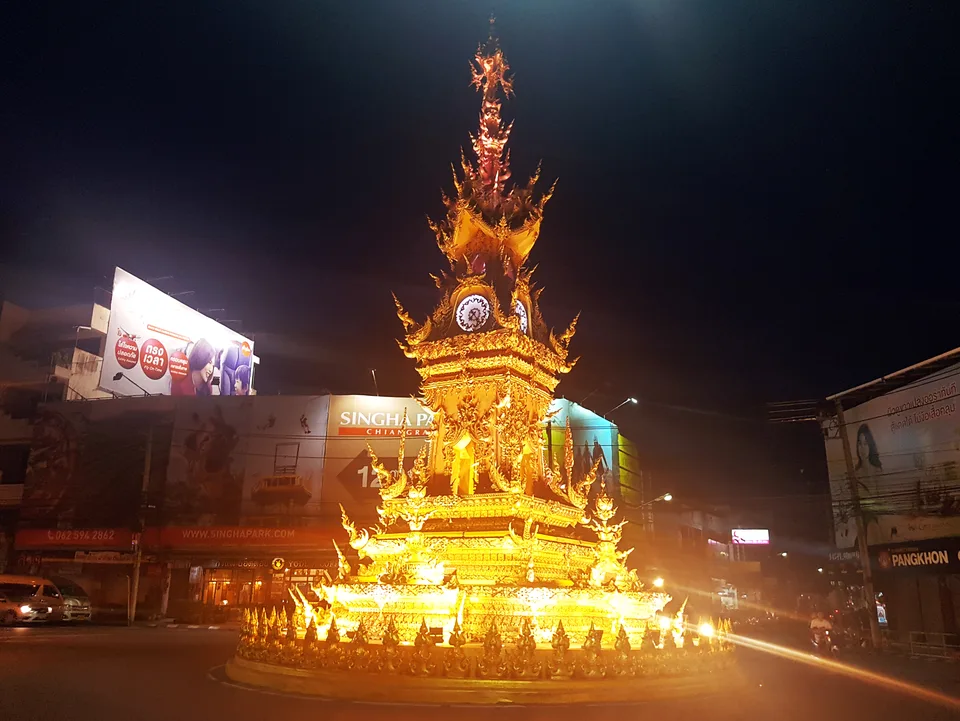
On day one, arrive and settle into the centre. Visit Wat Phra Kaew if timing allows, then find dinner around the central streets. The clock tower provides an easy visual landmark for an evening walk. On a weekend, substitute the appropriate walking street after confirming that it is operating.
Use day two for the White Temple, leaving enough time for its route and a meal. Choose the Art and Cultural Park as a second visit only when its opening day and your transport fit comfortably. Otherwise return to town and enjoy an unhurried afternoon.
On day three, arrange the Blue Temple and Baan Dam as a northern-side outing. You can reduce that to one attraction if travelling with young children or anyone who tires easily. Keep an extended provincial excursion for another day. This pace leaves room to understand the places rather than spending the whole visit moving between entrances.
Check a rental through an ordinary working day
If Chiang Rai appeals as a home, rent temporarily while testing the routines that matter. Compare a central address with Rim Kok or another area relevant to your work or school. Travel the likely commute at the actual time you would use it, and check the evening journey home. Confirm groceries, laundry and internet provision for the specific property.
Inspect drainage, ventilation, air conditioning and signs of damp. Ask about past flooding at the address and the arrangements for interruptions to water or electricity. Obtain a written inventory, deposit and refund terms, repair responsibilities and the basis for utility charges. Compare the complete monthly arrangement, including furnishings and setup costs. Retain the contract, condition photographs and receipts together, and resolve uncertainties before transferring a substantial deposit.
Identify your household service providers
The Provincial Electricity Authority’s service page provides its 1129 contact centre, billing links and a branch finder. Ask whether your rental is billed directly by the provider or through the property, and request the unit rate and any service charges in writing. Check a recent bill rather than estimating air-conditioning costs from the rent alone.
The Provincial Waterworks Authority’s customer portal links water-service information, tariffs and its 1662 contact centre. Establish which provider and account serve your address, especially outside the central area. For internet, confirm availability in the actual building and ask about installation timing and the minimum contract. Use Central Chiangrai’s official directory to plan practical shopping, then compare prices for your own recurring groceries and household needs before choosing an overall monthly allowance.
Match housing to healthcare and schooling
Bangkok Hospital Chiang Rai’s emergency centre states that it operates 24 hours and lists 052-051-913. For continuing treatment, ask directly about the required service, prescriptions, appointments and costs, and confirm coverage with your insurer. An emergency department’s opening does not establish the availability of every specialist you might need.
Families can start a comparison with Chiang Rai International School’s official information, which identifies its Rim Kok campus and preschool-to-Grade-12 provision. Review the school’s admissions, fees and student-visa pages, then ask about availability for the particular child. Consider the curriculum, language, ethos, support needs and actual school journey together. Confirm a workable school arrangement before committing to housing intended to serve several years of family life.
Check tourism entry against the current rules
Thailand’s government announced changes effective 15 September 2026, revoking the former 60-day visa-exemption scheme. Consult the official revised-entry announcement and the Thai embassy or consulate responsible for your application. Eligibility and the permitted stay depend on nationality, passport and purpose; older summaries of the previous arrangement can give the wrong starting point.
Use the official Thai e-Visa service where an application is required. Separately, read the Thailand Digital Arrival Card instructions and complete the free official process within the three-day arrival window if it applies to you. An arrival card does not replace a required visa. Keep accommodation and onward-travel details available, and check the permission actually granted at the border rather than treating an intended itinerary as an entitlement to stay.
Separate a holiday from employment or long-term residence
For Thai employment, the official Non-Immigrant B checklist sets out employer and labour-authority documentation. Arrange the appropriate work permission before starting work. Eligible remote workers can investigate the Destination Thailand Visa guidance, which describes five-year visa validity and stays of up to 180 days per entry, subject to its conditions. It does not authorise work for Thai companies or Thai clients.
Formal study requires the appropriate education arrangements. Retirement has separate requirements: official Non-Immigrant O information lists age 50 and above among the qualifications. Check the applicable financial, documentary, dependant and extension conditions with the responsible authorities. A rental or property purchase does not itself grant permanent residence. Establish a sustainable legal basis for your actual activities before arranging a long stay around an attractive house or school.
Extend the trip selectively
For additional provincial travel, TAT’s area information distinguishes Doi Tung and the Golden Triangle from the city. Choose one well-planned excursion, confirm current access and transport, and allow a separate day. Check immigration and local restrictions before considering a border crossing.
VisaWand’s Chiang Mai city guide helps compare another northern base, while the Thailand country guide supplies national context. Use the Thailand city and settlement directory to locate further destinations; directory entries may still lack authored guides. The Thailand visa destination page and consultant directory provide further planning routes. The best extension is one that fits your interests and available time without turning every day into a long transfer.
Official planning resources
Reviewed 16 October 2026. Use the official resources linked throughout this guide for admission, transport, housing and immigration decisions. Prices, services and rules can change; confirm the details relevant to your dates. Photography illustrates the locations and is not a live view.
View all official resources
- Tourism Authority of Thailand: Chiang Rai province
- Tourism Authority of Thailand: Wat Phra Kaew, Chiang Rai
- Central Chiangrai: official shopping and city visitor information
- Tourism Authority of Thailand: White Temple visitor information
- Tourism Authority of Thailand: Blue Temple
- Tourism Authority of Thailand: Baan Dam Museum
- Mae Fah Luang Foundation: Art and Cultural Park
- Tourism Authority of Thailand: Art and Cultural Park visiting information
- Tourism Authority of Thailand: Chiang Rai weekend walking streets
- Tourism Authority of Thailand: Chiang Rai food and cultural visits
- Airports of Thailand: Chiang Rai taxi service
- Greenbus: Chiang Mai–Chiang Rai booking and timetable
- Thai Meteorological Department: Chiang Rai historical climate
- Thai Meteorological Department: Chiang Rai weather and climate
- Thai government: April 2026 northern haze health measures
- Pollution Control Department: Air4Thai monitoring
- National Research Council: Kok River contamination response
- Mekong River Commission: river monitoring assessment
- Provincial Electricity Authority: service contacts
- Provincial Waterworks Authority: service and water information
- Bangkok Hospital Chiang Rai: emergency services
- Chiang Rai International School: admissions and school information
- Thai government: revised visa exemption rules
- Thailand: official e-Visa service
- Thai Immigration: Digital Arrival Card manual
- Royal Thai Consulate-General: employment visa
- Royal Thai Embassy: Destination Thailand Visa
- Royal Thai Embassy: retirement visa information
- Tourism Authority of Thailand: Chiang Rai city and wider region
Plan the next part of your journey
Explore the Thailand guide, browse other cities or compare consultants for your travel and relocation questions.