Visa
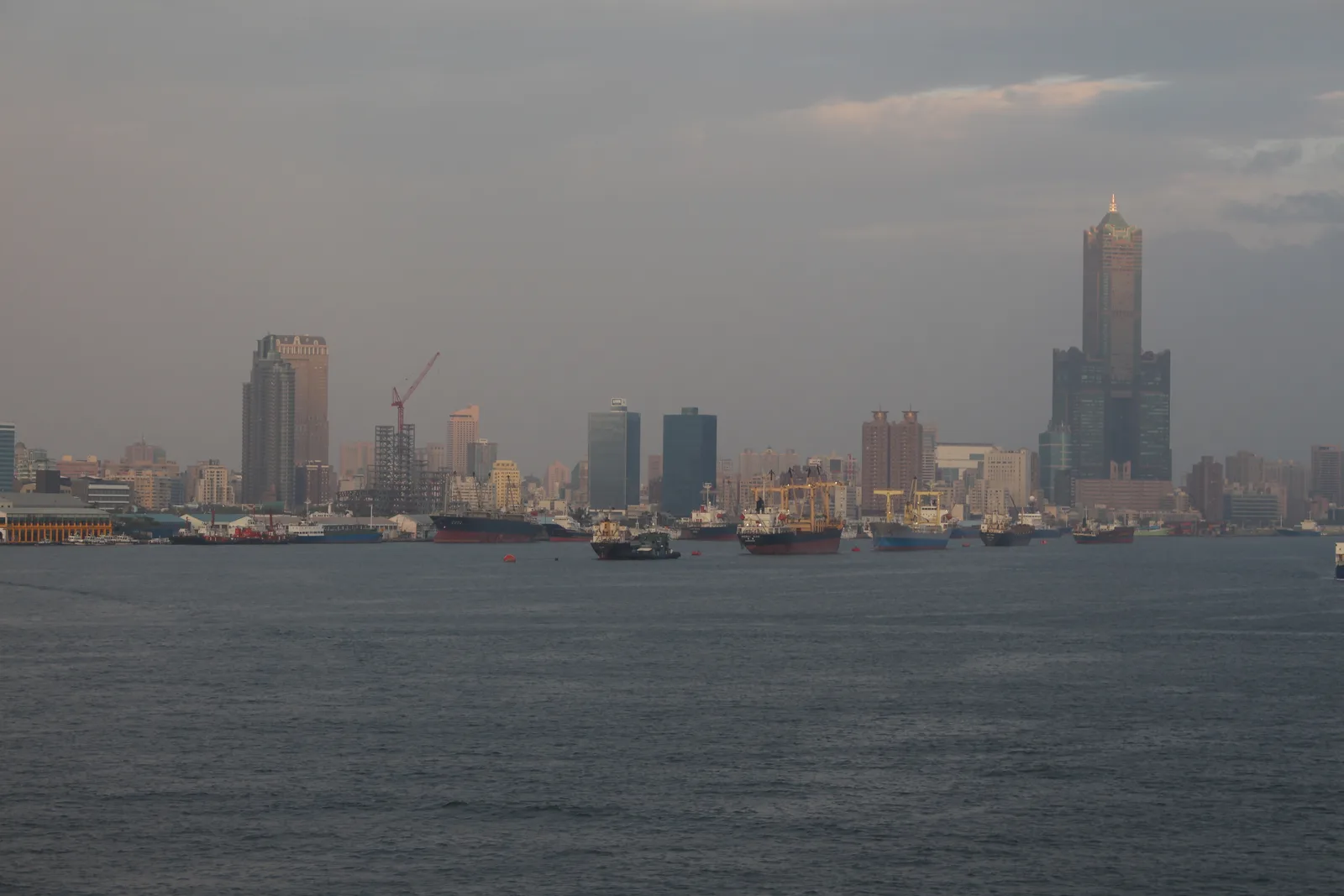
Start with the harbour, then look beyond it
Kaohsiung’s appeal lies in the proximity of working docks, converted warehouses, temple-lined water and ordinary neighbourhood life. The city’s official tourism website provides a useful starting point for these different sides of southern Taiwan.
Allow two or three days if you want the waterfront, Cijin and Zuoying without constantly watching the clock. Longer stays make room for an excursion towards Dashu or the wider municipality. People considering a move should begin with a more precise question: where is the workplace, school or campus? Kaohsiung’s name covers a much larger area than the compact harbour districts that appear most often in visitor photographs.
Understand how a working port became a visitor destination
The city government’s historical account describes the development of Takao harbour and the railways, reclamation and industries associated with Japanese colonial rule. Hamasen and Yancheng grew in relation to those connections.
Look for that relationship as you walk: warehouse scale, former tracks and the movement of ships make the story tangible. It is worth combining an exhibition with time outdoors, where the old infrastructure is easier to read. Its interest comes partly from the contrast between public leisure space and the maritime activity that continues beyond it, with access limited to appropriate visitor areas.
Choose a neighbourhood for your particular plans
Yancheng and Hamasen are natural areas to consider for a waterfront-focused visit. Formosa Boulevard is useful when changing between the Red and Orange MRT lines, while the central station area suits some conventional rail journeys. Zuoying serves a different set of needs, including high-speed rail and visits around Lotus Pond.
Compare the actual hotel or apartment with the journeys you will repeat. A property described as being “near the station” may still involve a long walk, an inconvenient exit or a transfer with luggage. For a move, investigate the street after dark and during the working week as well as on a relaxed weekend.
Explore Pier-2 without assuming every exhibition is included
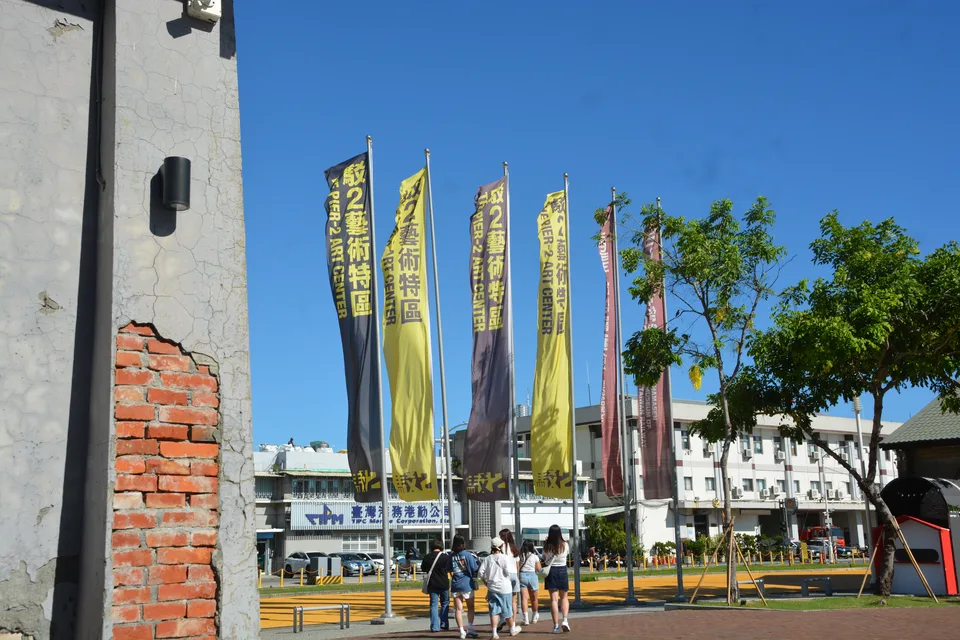
The Pier-2 Art Center occupies former port warehouses in Yancheng. Its open spaces and changing cultural activity make it a good introduction to the waterfront, particularly when paired with nearby railway heritage. Choose a manageable group of buildings rather than expecting to complete every exhibition in one visit.
Consult Pier-2’s own programme for the dates, admission arrangements and language of individual shows. Outdoor access and ticketed exhibitions are different things; a free walk does not establish that a temporary installation or event is free. The tourism listing gives general indoor hours extending later on Fridays and weekends, but the specific venue’s current information should determine your plan.
Add Hamasen’s railway landscape to the waterfront walk
The city’s light-rail sightseeing information distinguishes the Takao Railway Museum and surrounding cultural park from the separate model-railway museum. This matters when planning admission and closing days. The Takao Railway Museum’s indoor exhibition is listed as closed on Mondays, while the model museum has a different schedule.
Pick the experience that interests your group: historical interpretation, model trains or simply the outdoor railway landscape. Children may enjoy the open space, but active light-rail tracks are part of the wider area and require attention. A former track or broad lawn is not permission to cross an operating railway wherever convenient.
Give Cijin enough time for its own pace
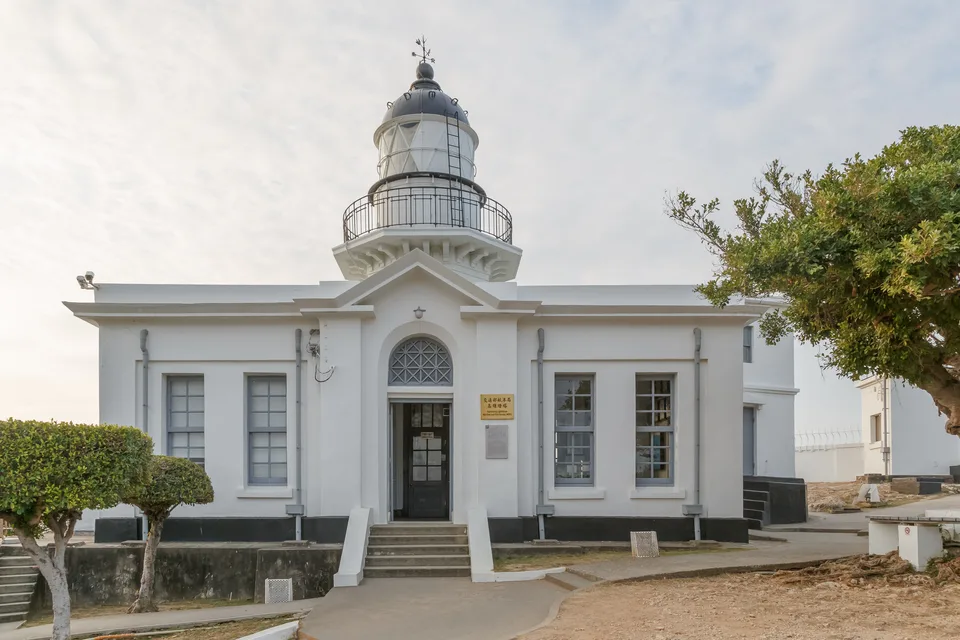
Cijin offers old streets, seafood, coastal scenery and a lighthouse visit that together justify more than a hurried ferry photograph. The city’s Cijin visitor information is useful for identifying the island’s different attractions. Decide whether you want a short northern-area outing or a more substantial coastal walk before setting off.
Allow for exposed sections, slopes and the return to the ferry. A lighthouse approach is a different undertaking from a level street stroll, especially in heat or for someone with limited mobility. Check access conditions before committing to it. A beach setting also does not guarantee that swimming is permitted or safe when you arrive. Follow local signs and lifeguard instructions, and keep the outing enjoyable by shortening the route when the weather or the party’s energy requires it.
Check the ferry tariff and the return service
The Gushan–Cijin ferry operator’s current fare chart lists NT$30 for an ordinary adult pedestrian using an electronic ticket. It also displays a discounted cash fare of NT$30, with the NT$40 cash tariff crossed out. This is the displayed arrangement at review, rather than a promise that the discount will continue indefinitely. Bicycle and motorcycle combinations have separate prices.
Check the chart and notices at the terminal before boarding, especially if travelling with a bicycle or claiming a concession. Verify the return timetable instead of assuming a late departure will always be available. Wind, severe weather, maintenance or a busy holiday can alter the practical journey even when the crossing itself is short.
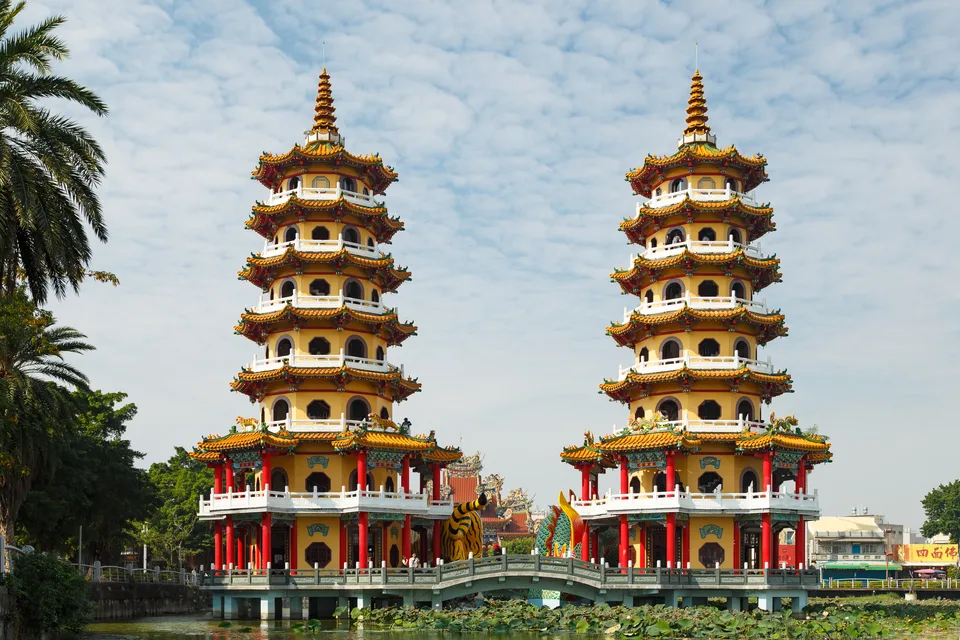
Visit Lotus Pond as a landscape of temples
Lotus Pond in Zuoying brings together the Dragon and Tiger Pagodas, the Spring and Autumn Pavilions and other religious sites around the water. The attraction is more rewarding when approached as a series of places with different functions, rather than a single photograph to collect before leaving.
Choose part of the waterfront and allow time to enter whichever sites are open to visitors. Treat worshippers and ceremonies with consideration; photography, footwear and access rules can differ between spaces. The familiar dragon entrance and tiger exit have symbolic meaning, but follow the route actually available on the day. Renovation or maintenance notices take precedence over an old photograph or map. Leave some flexibility for shade and a drink, rather than forcing a complete circuit in the hottest part of the day.
Reserve a separate outing for the Buddha Museum
The Fo Guang Shan Buddha Museum is in Dashu, away from the central waterfront. Its official information states that public admission is free and that the museum is normally closed on Tuesdays. The museum and the broader monastery are related destinations, but their spaces and visiting arrangements should not be treated as interchangeable.
Plan the outward and return transport for the particular entrance you need. Give the visit room for interpretation and rest; adding it to a full Cijin afternoon creates an unnecessarily compressed day. Consult the current calendar before travelling specifically for a gallery or event, and dress and behave appropriately in spaces where religious practice remains central to the experience.
Choose accommodation by access, room needs and timing
Use the city’s accommodation directory to find options, then compare the property’s own details for your dates. For a short visit, a convenient connection to your first and last journey can matter as much as a harbour view. For a longer stay, laundry, usable storage and a comfortable indoor space become more important.
Ask about the room’s window, lift access, bed configuration and any late-arrival arrangement before booking. Anyone needing step-free access should confirm the complete route from entrance to bathroom, not rely on a single accessibility symbol.
Arrive at Kaohsiung Airport with the terminal route clear
Kaohsiung International Airport’s transport information identifies the airport MRT station as R4 on the Red Line. Exit 6 serves the international terminal and Exit 2 the domestic terminal. Formosa Boulevard, R10/O5, provides the interchange with the Orange Line, useful for journeys towards Yancheng and Hamasen.
Check the first or last useful train for your actual destination when travelling early or late. Immigration, baggage collection and the walk to transport come after the scheduled landing time. The airport also lists metered queued taxis; international-terminal pickups carry a NT$50 surcharge, while domestic-terminal pickups do not. Pre-booked pickups have a designated area, so follow the current instructions for the service you use. Confirm the destination address in writing and arrange a suitable child seat in advance where necessary.
Distinguish Zuoying high-speed rail from Kaohsiung Station
Taiwan High Speed Rail uses Zuoying for Kaohsiung. The R16 Zuoying MRT station information helps identify the interchange and onward journey. Kaohsiung Station is a separate location, so a booking to one should not be described as arrival at the other.
Use the operator’s timetable for the date and train rather than a generic claim about travel time from Taipei. Stopping patterns, ticket conditions and the connection after arrival affect the whole journey. Include the transfer to your hotel or meeting, especially if travelling with children or bulky luggage. A stay beside the high-speed station can suit one night between journeys, while a waterfront visit may justify continuing to a different neighbourhood.
Budget for MRT journeys and validate light-rail trips
KRTC’s MRT fare explanation gives a distance-based range from NT$20 to NT$60. Check the fare for the actual station pair rather than applying the lowest price to every journey. The current light-rail guidance gives fares of NT$20, NT$25, NT$30 or NT$35 according to distance; the former introductory free operation is no longer the normal arrangement.
With a stored-value ticket, complete the required entry and exit validation. Missing a validation can cause a card problem and an additional charge. The light-rail passenger rules also prohibit eating and drinking in restricted areas and require passengers to keep clear of the tracks except at permitted crossings. Compare any pass against the journeys you expect to make. Do not assume a package covers every ferry, temporary exhibition or separately operated attraction just because it includes urban transport.
Eat at Liuhe with curiosity and clear expectations
Liuhe Tourist Night Market is a central evening food destination around Liuhe 2nd Road in Xinxing. The Tourism Administration highlights seafood, cold drinks and papaya milk among its offerings. It is useful for exploring several foods in one outing, without requiring an elaborate restaurant itinerary.
Read prices and serving sizes before ordering, and agree the cost of seafood sold by weight. Several small purchases can become a substantial meal, so order gradually rather than buying everything at the first appealing counter. Ask directly about shellfish, meat, peanuts or other ingredients that matter to your diet. A photographed menu is useful, but appearance alone cannot establish how a dish is prepared. Individual stalls make their own trading decisions; a market visit should remain flexible if a particular business is closed or unusually busy.
Follow food and shopping interests beyond one market
The city’s regional food information introduces Meinong’s Hakka cooking, Cishan’s banana products and Jiasian’s taro specialities. These are reasons to research a wider excursion, not evidence that all three can be sampled beside a central hotel. Choose one area that fits your time and interests rather than crossing the municipality to assemble a list of foods.
For shopping near the waterfront, distinguish design products and exhibition merchandise from ordinary household purchases. Check opening days and return conditions at the actual shop.
Build a realistic spending plan from your itinerary
The published rail and ferry prices above provide concrete transport items. Combine them with accommodation quotes for the exact dates and the admissions your chosen programme requires. Public spaces and free museum admission can keep some sightseeing costs down, while airport transfers, special exhibitions and shopping change the total quickly.
Keep meals, transport and optional purchases visible as separate amounts. Include a fallback journey if weather or a delayed arrival makes the original plan impractical. For a family, compare the cost and effort of repeated changes with an appropriately arranged direct transfer; for a solo visitor, a well-connected hotel may reduce both taxi use and uncertainty.
Plan around heat, rain and weather warnings
Kaohsiung’s warm southern setting makes shade, water and the timing of outdoor visits practical concerns. Check the Central Weather Administration’s forecasts and warnings before committing to the waterfront, a ferry outing or a journey farther inland. The forecast for one urban location does not automatically describe hill or mountain conditions elsewhere in the municipality.
Cooler parts of the year are generally easier to consider for lengthy walks; in hotter conditions, shorten exposed stages and place indoor visits between them. Taiwan’s typhoon season normally runs from May to November, but the current warning and local service notices should determine what you do. Keep cancellation terms in mind when arranging weather-sensitive activities. If heavy rain changes the plan, moving a museum visit is more sensible than completing a coastal itinerary simply because it was booked first.
Spend the first day around Pier-2 and Hamasen
Begin with a waterfront walk and the Pier-2 programme that most interests you. Add a railway-history stop in Hamasen if the relevant indoor venue is open, then take a proper lunch break. This keeps the morning geographically coherent and leaves room to explore without repeatedly transferring across the city.
If conditions and energy permit, cross to Cijin for a deliberately limited afternoon: old streets and a coastal walk, with the lighthouse only if the approach suits your party. Otherwise, give Cijin its own morning on another day. Return with time to spare before dinner, and choose an evening food outing rather than several competing stops. A family with young children or someone arriving after a long flight should shorten the programme.
Use a second day for Zuoying, with an optional third inland
Spend the second morning around Lotus Pond, selecting a few religious and historical stops rather than rushing a complete circuit. Leave space for lunch and a quieter afternoon. A late train departure requires time for collecting luggage and reaching the correct station; do not treat the final sightseeing stop as though it were the departure platform.
With a third day, consider the Buddha Museum as a separate Dashu outing, rearranged around its closing day. Another option is to research one regional food or cultural destination that particularly interests you. Travellers investigating a move should reserve part of the stay for a trial commute, a property viewing and ordinary shopping.
Match the entry route to your passport and purpose
The Bureau of Consular Affairs publishes Taiwan’s visa-exempt entry conditions. Eligible passports have different permitted stays, including ninety, thirty and fourteen days, with additional conditions and some time-limited arrangements. Check your specific nationality, passport validity, onward travel and purpose rather than assuming that a rule quoted by another visitor applies to you.
Where a visa is needed, use the relevant official category and representative office’s instructions before departure. Tourism, employment, study and residence have different requirements. Visa exemption is not a general right to take a local job, and a long-term rental does not create immigration permission. Treat extension or change-of-status possibilities as a separate question for the authorities.
Complete the Taiwan Arrival Card on the official service
The National Immigration Agency’s arrival-card instructions explain the move to online Taiwan Arrival Card submissions from 1 October 2025. The declaration is free and can be completed within three days before arrival through the official TWAC service. It applies to specified categories, including foreign visitors entering with visitor visas or visa exemption.
Check the category instructions if you hold residency documents or another form of entry permission. An arrival declaration is not a visa, residence certificate or work permit. Enter the accommodation and journey information accurately, and use the official service rather than assuming a paid website is required. Keep access to your booking details during the journey in case information needs correcting.
Establish work, study and residence permission before moving
Use the Workforce Development Agency’s foreign-talent guidance for the employment route relevant to your role. Ask an employer to clarify qualifications, documents and the lawful start date. Different categories and exemptions exist; neither an informal promise of sponsorship nor a visitor stay settles the question.
Students should confirm admissions, teaching language and immigration support with the institution. The WDA’s student-employment guidance requires an appropriate work permit and normally limits work during the teaching term to twenty hours weekly, with different vacation arrangements. Do not finance a course on assumed unrestricted employment. The NIA’s residence guidelines require foreign nationals entering on resident visas to apply for an ARC within thirty days, calculated from the day after entry. Permanent residence requires its own eligibility assessment; it does not follow automatically from renting, studying or working in Kaohsiung.
Inspect the home and agree the lease in writing
The Kaohsiung Land Administration Bureau is an official starting point for rental-rights and property information. Have the landlord’s authority and contract reviewed if you cannot assess them confidently. Compare the deposit, rent, building charges, notice requirements and conditions for returning money, rather than judging the property by monthly rent alone.
Inspect ventilation, damp, air conditioning, noise and the condition of electrical and plumbing fittings. Confirm which appliances and furnishings are included and who pays for repairs. Ask how electricity, water and internet are billed, whether meters are shared and what any management fee covers. Establish that the address and documents will support your residence application. Test the trip to work or campus at the relevant hour, including the street crossings and final walk. A convenient holiday base is not automatically a suitable long-term home.
Price education and student housing before choosing an address
National Sun Yat-sen University’s accommodation information is useful for its own students: it describes shared facilities and notes that mattresses and bedding are not provided. Confirm current room allocation, term dates and charges with the university; institutional housing is not a public short-stay offer, and quoted fees on different university documents may refer to different arrangements.
Families comparing schools should obtain individual admissions decisions before committing to a lease. For context, Kaohsiung American School’s 2026–27 admissions page lists PreKindergarten–Grade 5 tuition of NT$243,150 per semester, alongside other charges, including a US$8,000 new-student capital fee. Its foreign-passport and assessment requirements are school-specific. Compare curriculum, language support and the school journey as well as fees.
Arrange healthcare and the ordinary household routine
The National Health Insurance Administration’s eligibility guidance distinguishes employed residents from other categories. Eligible employees with residency documents enrol from the first day of employment; many non-employed residents qualify after six full months of the specified residence, with exceptions. Confirm your own start date and any dependant coverage rather than assuming every newcomer waits the same period.
Arrange suitable cover for any gap and identify how to continue prescriptions or ongoing treatment. Before moving in, locate practical groceries, a pharmacy and laundry, and clarify internet activation and building access. Ask the manager about waste separation, collection arrangements and any shared facilities. Keep copies of the lease and household records for administrative tasks. Address changes also require attention: NIA guidelines specify reporting the change within thirty days, calculated from the following day, so a move between temporary and permanent accommodation needs planning.
Compare nearby destinations and professional support
The Tainan city page offers another destination to consider when planning southern Taiwan. Compare its sights and transport with the time available, including the station-to-centre journey. A separate city visit can add variety, but it should not consume the margin needed for an international departure or an important appointment.
Use VisaWand’s Taiwan country page for wider browsing and the Taiwan consultant listings or consultant directory when seeking help with a specific application. Ask about relevant experience, jurisdiction, scope and fees, and check requirements against official services. For current travel risks, consult your government’s advice, including resources such as the FCDO’s Taiwan safety guidance. Kaohsiung works best when the harbour experiences, inland outings and daily practicalities each receive enough time, rather than competing inside an overfilled schedule.
Official planning resources
Reviewed 17 October 2026. Use the official resources linked throughout this guide for admission, transport, housing and immigration decisions. Prices, services and rules can change; confirm the details relevant to your dates. Photography illustrates the locations and is not a live view.
View all official resources
- Kaohsiung official tourism information
- Kaohsiung City Government history
- Pier-2 Art Center visitor information
- Pier-2 official exhibitions and events
- Kaohsiung waterfront and railway heritage itinerary
- Cijin Seaside Park and island visitor information
- Gushan–Cijin ferry fares and timetable
- Tourism Administration Lotus Pond
- Fo Guang Shan Buddha Museum admission and hours
- Kaohsiung accommodation directory
- Kaohsiung International Airport transport
- Taiwan High Speed Rail timetable and tickets
- KRTC Zuoying station and interchange
- KRTC MRT fare calculation
- KRTC light-rail fares and validation
- Kaohsiung light-rail passenger rules
- Tourism Administration Liuhe Night Market
- Kaohsiung regional food information
- Central Weather Administration forecasts and warnings
- BOCA visa-exempt entry requirements
- NIA Taiwan Arrival Card instructions
- Official Taiwan Arrival Card service
- Workforce Development Agency foreign talent guidance
- WDA student work permits and hours
- NIA residence and ARC application guidelines
- Kaohsiung Land Administration Bureau
- NSYSU international student accommodation
- Kaohsiung American School admissions and 2026–27 fees
- NHI eligibility for foreign residents
- FCDO Taiwan safety and natural hazards
Plan the next part of your journey
Explore the Taiwan guide, browse other cities or compare consultants for your travel and relocation questions.