Visa
Come for the hills, leave time for the town
Ella's attraction is the relationship between a small hill-country town and the landscape around it. Tea slopes, forest, the curve of Nine Arch Bridge and the view through Ella Gap give a stay its shape. You can spend a morning walking and be back for lunch, provided you choose a manageable route and leave room for the weather.
Ella is in Badulla District, Uva Province. The official tourism development plan places this small town among the southeastern highlands, with Bandarawela, Hali-Ela and Passara among its surrounding centres.
Two or three nights make more sense than a hurried stop between long transfers. For anyone considering a longer stay, the view is only the beginning: the slope to your accommodation, reliable internet, transport and access to services will matter every day. Use the VisaWand Sri Lanka guide alongside these local arrangements.
Understand the landscape behind the photographs
Sri Lanka Tourism's Ella information describes a town surrounded by tea plantations and cloud-forest hills, with views through the gap towards the southern plains. Elevation brings cooler conditions than the lowlands, but it does not eliminate strong sun, rain or humidity. A light layer and rain protection belong in the same bag as your sun hat.
The landscape reflects a plantation and railway history that includes the colonial-era Nine Arch Bridge. Tea estates and the railway remain working systems. A plantation path may cross private land; a railway structure may carry trains even when a photograph shows nobody using it.
The town also supports homes, businesses and services behind its visitor-facing streets. Look beyond a single viewpoint, and give ordinary activities some space. Buying tea after learning how it is made, or walking a properly maintained route through the surrounding landscape, can add more to a visit than collecting every familiar camera angle.
Choose a base by gradient as well as distance
The centre around the railway station and main commercial streets suits visitors who want meals and short journeys within easy reach. Check evening noise and the position of your room before deciding that a central address is automatically convenient. A room behind the frontage can feel different from one facing a busy road.
Properties along Passara Road can suit plans around Little Adam's Peak and nearby attractions. Other accommodation spreads towards Kithal Ella and the slopes facing the gap. Look at the route from the road to the entrance, not simply the straight-line distance from town.
Ask whether a vehicle reaches the door, how many steps remain and what happens when the approach is wet. For travellers with limited mobility, detailed photographs of entrances, bathrooms and paths are more useful than a broad accessibility label. If you expect to eat in town each evening, establish a realistic return option before choosing a secluded hillside room.
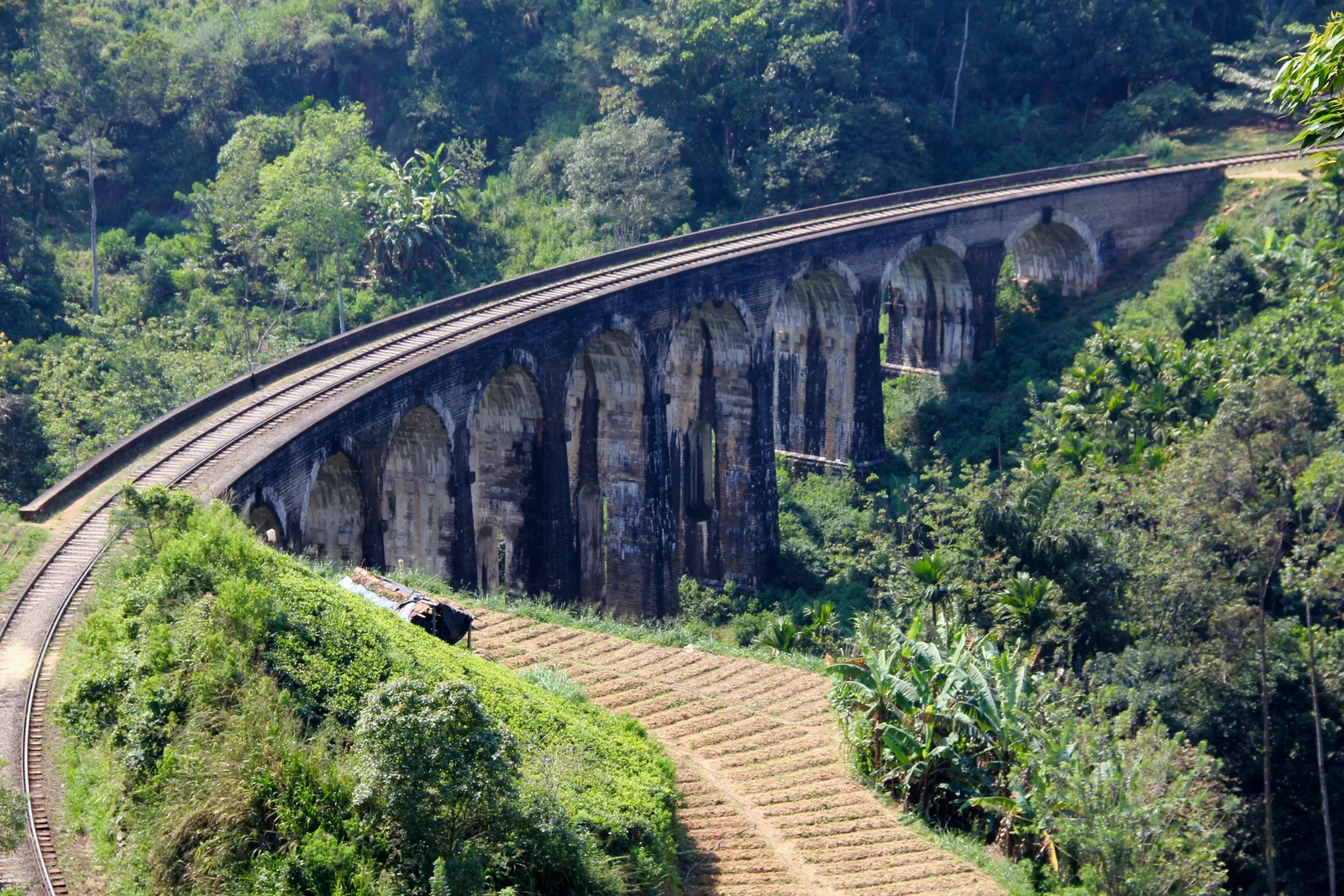
Visit Nine Arch Bridge without entering the railway
Nine Arch Bridge is a major reason people include Ella in a hill-country journey. Its curve and tall arches make most sense when seen within the valley, rather than solely from track level. Choose a permitted viewing position and allow time to appreciate the structure without expecting a train to appear on demand.
Keep clear of railway tracks, tunnels and exposed edges, and follow staff instructions and local restrictions. A popular photograph or a route description online does not establish that standing on a working railway is permitted or safe. Do not balance on a parapet or obstruct a train for a picture.
Ask locally about the appropriate access route and current ground conditions. Mud, steps and an uneven approach may matter more than the apparent distance. If your main interest is watching a train cross, check current operations before setting off, but build the visit around the place itself rather than a guaranteed departure time copied from an old blog.
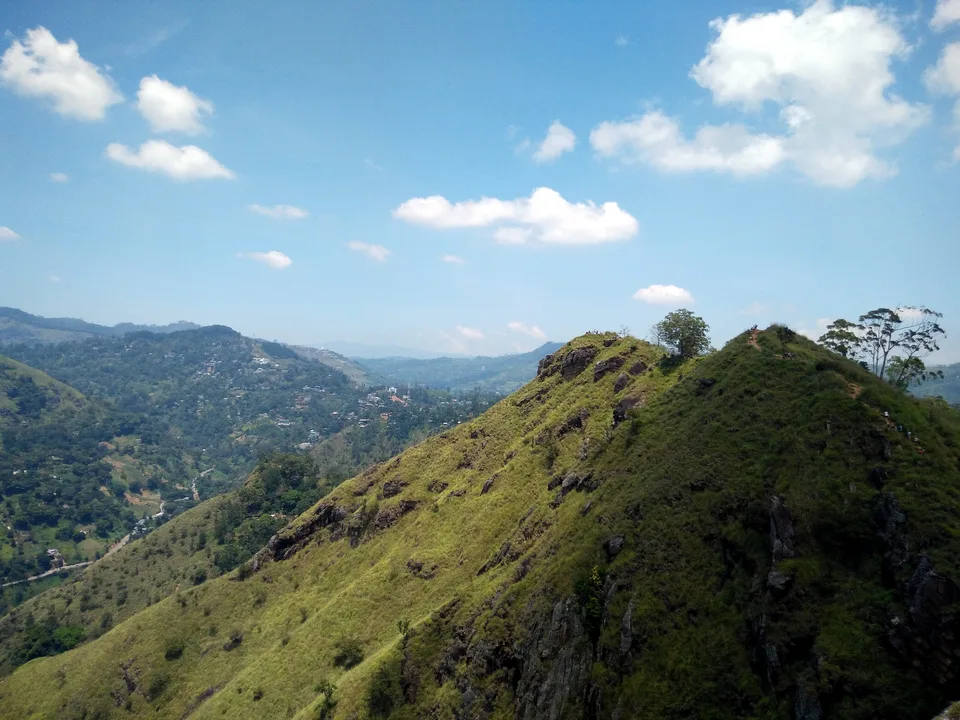
Walk Little Adam's Peak at your own pace
Sri Lanka Tourism's Little Adam's Peak page identifies the summit at 1,141 metres and also uses the name Punchi Sri Pada. The name reflects a resemblance to Adam's Peak; this is a different mountain from the major Sri Pada pilgrimage destination.
Start early enough to avoid making the hottest part of the day your main climbing period. Wear footwear suitable for steps and uneven ground, carry water and pause before fatigue affects your footing. The word “Little” should not be taken as a promise that every traveller will find the ascent easy.
Views depend on conditions. Cloud can be atmospheric, but there is no reason to approach an exposed edge in poor visibility. Turn back if rain, lightning or your group's stamina makes continuing unwise. With children, choose a clear turnaround point and leave energy for the descent. You can enjoy the surrounding tea-country setting without reaching every ridge used in photographs.
Separate an Ella Rock hike from a casual stroll
Ella Rock is another prominent walking objective, but it deserves its own planning. Ask about a current permitted route, the distance from your actual accommodation, terrain and expected return time. A walk beginning at a trailhead is not the same undertaking as one beginning at a distant guesthouse.
If you are unfamiliar with the area, arrange a properly identified guide through a reputable provider and agree the route and charge beforehand. Carry enough water, a charged phone and an offline route resource. Tell someone where you are going and avoid assuming that mobile coverage will be continuous.
Do not use railway walking as a shortcut. Nor should a sunrise photograph persuade you to negotiate an unfamiliar route in darkness without suitable preparation. Choose between Ella Rock and another substantial walk according to your experience and the forecast. Combining both simply to fill a day can leave little time to recover or respond to changing conditions.
Use the Pekoe Trail's current advice
For a defined longer walk, consult the official Pekoe Trail Stage 16 information for Ella to Demodara. The operator lists 9.5 kilometres, an average duration of three hours and 410 metres of ascent. Those figures describe a route with meaningful climbing, even though its published difficulty is easy.
The trail's update dated 17 October 2026 reports the stage open with muddy, slippery surfaces after rain and vegetation narrowing some sections. Check the latest advisory before walking; that dated assessment should not become a permanent guarantee of access.
Download the current route and seek advice about any railway-adjacent sections, using only permitted access. Arrange how you will leave Demodara: a pickup or available tuk-tuk may be necessary, and a train back depends on the actual timetable. The three-hour average excludes leisurely stops, a meal and the return journey. Give the outing enough daylight rather than treating it as a quick addition to several other attractions.
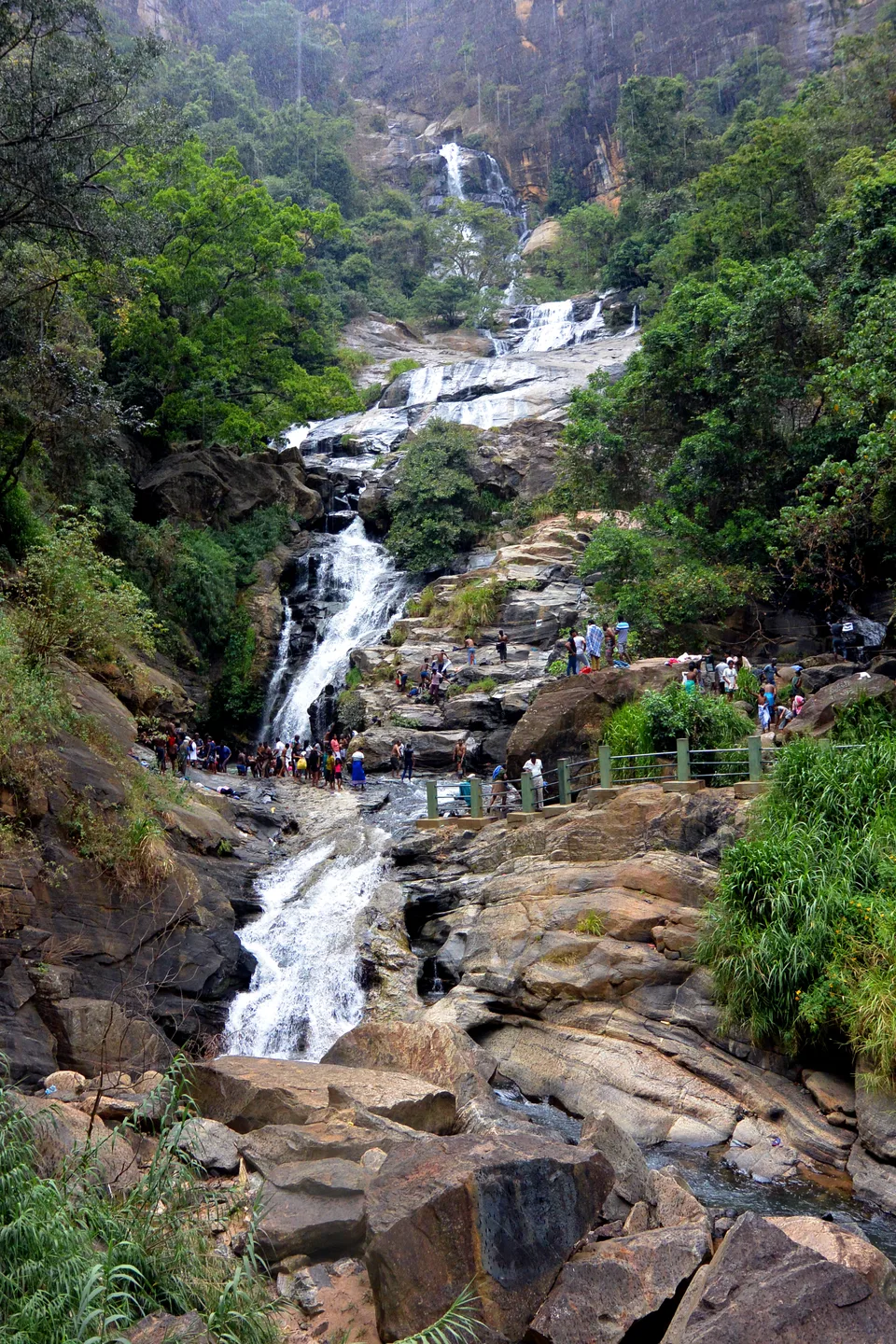
View Ravana Falls with the water conditions in mind
Ravana Falls is a worthwhile landscape stop when it fits your road journey, rather than a reason to hurry down a wet slope. Look at the cascade from an appropriate public viewing place and keep away from slippery rocks, sudden drops and fast water. Conditions after rainfall can differ sharply from the photograph that inspired the visit.
If arranging a driver, agree where the vehicle can stop and how long the visit will take. A roadside attraction still needs attention to traffic and a safe place to get out. Families should keep children close around both the road and the water.
The falls' name is associated with the Ravana tradition. Treat stories connecting the landscape with epic events as cultural narratives, not verified historical accounts. You do not need to climb into a pool or chase an upper viewpoint to appreciate the cascade. When access is restricted or conditions are poor, continue with another part of your itinerary.
Learn what happens between leaf and cup
Halpe Tea's official tour information distinguishes a factory tour from a plantation tour at Uva Halpewatte. Each is currently listed at LKR3,000; the handmade tea masterclass is a separate LKR9,000 experience. The choice matters: seeing manufacture is different from learning about growing and picking.
The factory tour includes an explanation of processing and a tasting. Confirm the day's production arrangements if seeing machinery operating is important to you. A factory can receive visitors without every stage running continuously, and purchasing a ticket should not be treated as a guarantee of a particular working scene.
Ask how the teas differ, then buy according to taste and intended use. Check the package's producer, grade, storage guidance and price rather than assuming a scenic shop offers the same product as every other outlet. Respect staff and plantation workers as people doing a job. Ask permission before taking portraits, and do not enter working land without agreement.
Decide whether paid adventure adds to your visit
Flying Ravana offers a different experience from walking. Its published zipline rate table lists LKR9,900 for foreign adults aged sixteen and over and LKR6,000 for foreign children aged fifteen and under. Check the applicable category and any extras before paying; photography and equipment hire can be additional purchases.
The operator's participation rules also apply. The minimum age is six, with weight limits of 30–100 kilograms and height limits of 90–190 centimetres. Meeting the age category alone is insufficient. Read the medical restrictions and ask the operator about any relevant condition rather than assuming an activity is suitable.
The site lists daily operation from 9am to 5.30pm, last entry at 4.30pm and a lunch break from 1.30–2pm. Heavy rain and thunderstorms can suspend operations. Keep the activity optional within the day: the landscape is accessible through other experiences, and a weather cancellation need not spoil the stay.
Choose accommodation for the route you will repeat
Ella has a range of guesthouses, homestays and more substantial hotels. Compare the room, approach and included meals before comparing headline prices. Confirm hot water, ventilation, bedding arrangements and whether the quoted room matches the view shown in the photographs.
98 Acres Resort and Spa's official accommodation information provides an example of a tea-estate resort setting, with several room categories and a two-bedroom suite. It is useful to compare with a central guesthouse, rather than assume that the same style of property suits every trip. Ask about steps and the route to shared facilities.
Check which rate you are eligible to book. A resident promotion can require documentary proof and should not be used to estimate a foreign visitor's final bill. For a longer stay, request a quotation covering laundry, workspace and any kitchen access. Establish cancellation terms before committing to accommodation around an uncertain transport connection.
Eat well without turning every meal into an excursion
Keep some meals close to your accommodation, particularly after a long walk. Ask what is available freshly that day and whether a rice-and-curry selection is priced per person or by the dishes ordered. Sambols and sauces deserve ingredient questions when allergies or dietary restrictions matter.
For a more structured restaurant meal, 98 Restaurant and Bar's official dining information describes Sri Lankan dishes, rice and curry, sambols and tea-influenced creations alongside other cuisines. Confirm availability for outside guests and the full price before making a special journey. A resort meal and an everyday town meal fill different roles in the budget.
Tea makes an obvious purchase, but compare sealed products by weight and grade. Leave room for ordinary provisions too: water, fruit or snacks for the next day's walk. Carry your litter back from trails. An early departure is easier when breakfast arrangements and supplies have been agreed the previous evening.
Build a budget around the activities you choose
Ella's costs depend heavily on accommodation, transfers and optional activities. Walking-focused days have a different budget from a day with a guided excursion, zipline and restaurant booking. Use confirmed prices instead of assuming that all attractions are free because they are outdoors.
For example, two foreign-adult zipline rides at the published LKR9,900 each come to LKR19,800 before transport, meals or extras. Add the tea experience you choose using its confirmed quotation for your group. This is a planning example, not a recommended daily allowance.
Get transfer prices in writing and establish whether the quotation includes waiting, parking and stops. For accommodation, check taxes, service charges and meals. Carry a reserve for a weather-related route change and compare quotations for the dates you will travel.
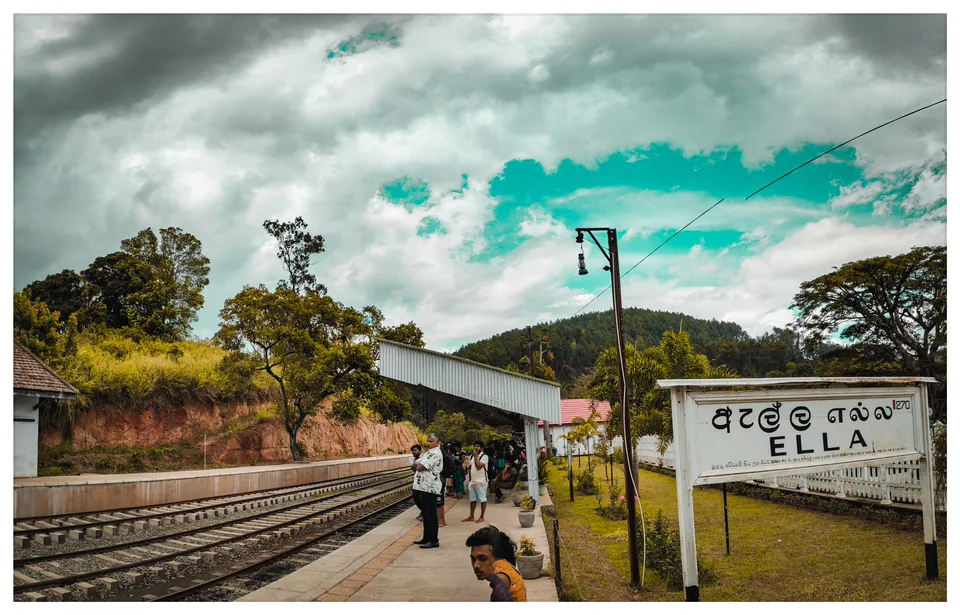
Check the rail journey you can actually book
Ella's railway is part of its appeal, but historic route descriptions cannot establish present operation. Sri Lanka Railways published a June 2026 notice about restoring Badulla–Nanu Oya services after cyclone damage. That notice alone does not confirm an uninterrupted through journey from Colombo or Kandy.
Use the operator's current notices and booking service for the precise date and section you want. A timetable copied before disruption may no longer describe the journey available. Keep a road alternative and sufficient margin before a flight or another fixed booking.
The official ticket-collection directory lists Ella station's collection counter from 6am to 9.30pm and telephone 0572228571. These are counter details, not a schedule of trains. Check ticket type, collection requirements and luggage arrangements. During a journey, remain safely inside the carriage and follow railway instructions; an open doorway is not a viewing platform for a photograph.
Arrive by road with a realistic first day
For international arrivals through Colombo, consult Bandaranaike International Airport's official ground-transport information. The airport offers several transport arrangements, but a transfer into Colombo and a journey to Ella are different bookings. Establish the destination, vehicle, luggage capacity and full charge before departure.
A long arrival journey through the hills should leave room for breaks and delays. Avoid planning a substantial hike immediately after an overnight flight and road transfer. A first afternoon spent checking in, eating and making the next day's arrangements is a useful part of the itinerary.
Within the area, short walks and agreed tuk-tuk journeys can be combined according to terrain and conditions. For an outlying guesthouse, confirm that a vehicle can reach the entrance. If using buses, check current boarding points, destination and changes locally rather than treating a road connection on a map as a direct service. Keep accommodation details available offline.
Choose your season with room for cloud
Sri Lanka's monsoons affect regions differently. The tourism authority's weather information identifies October and November as the second inter-monsoon period, when heavy showers can affect the island. March and April can bring afternoon thunderstorms. Coastal “best season” advice should not be converted into a promise of dry hill-country mornings.
For a walking trip, choose dates with flexibility and monitor conditions close to departure. Begin exposed outings early where appropriate, and keep an indoor or shorter alternative. Views can disappear behind cloud without making the whole day unusable; equally, a brief clear spell does not establish that a slippery route is safe.
Check the Disaster Management Centre's current warnings and road information before longer journeys and hikes. Follow local instructions concerning landslides, closures or heavy rain. Pack footwear with grip, a light warm layer and a waterproof cover for important belongings. Avoid committing every morning to a different non-refundable outdoor activity.
A three-day stay with alternatives built in
On the first morning, choose Little Adam's Peak at a pace suitable for your group. Leave time for breakfast and recovery, then visit a tea factory or spend a quieter afternoon in town. Keep any paid adventure dependent on availability and conditions rather than making it the day's deadline.
Use the second day for Nine Arch Bridge and a manageable local walk. If you want to complete Pekoe Trail Stage 16, plan it as the main outing with a return transfer, rather than adding its full length casually to the bridge visit.
Reserve the third day for Ella Rock if your experience and the weather suit, or choose a shorter outing and a road visit towards Ravana Falls. With two days, retain one peak walk, the bridge and a tea visit, and drop the rest. Families and less mobile visitors can select transport-assisted viewpoints and a factory experience without matching a strenuous hiking programme.
Test a longer stay beyond the balcony view
Start with temporary accommodation while assessing where everyday life would happen. Test the journey to shops, your workplace or study location, and the return route after dark or rain. A steep final approach can become tiresome when carrying groceries, even if it felt manageable on a holiday.
Inspect drainage, retaining structures, damp, ventilation, water pressure and hot-water provision. Ask about previous slope problems and road access during heavy rain; obtain appropriate professional advice before a substantial property commitment. Record furnishings and condition, verify the landlord's authority and put deposits, notice and repairs in writing.
Clarify utility billing and any included usage limit. The Ceylon Electricity Board's customer forms include account-name changes and related guidance. Establish who pays each account and record opening readings. Test internet at the actual address during working hours, including upload performance for calls. A general Wi-Fi promise is insufficient for a work-dependent tenancy.
Arrange healthcare, schooling and permission separately
Identify suitable routine healthcare and how ongoing prescriptions will be managed. The 1990 Suwa Seriya service provides free pre-hospital emergency ambulance care across Sri Lanka; call 1990 for that service. It is not a scheduled transfer for appointments, and its published averages do not promise a particular response time at your address.
Families should confirm school admission, teaching language, fees and the daily journey before signing a long tenancy. For work or study, consult the official entry and residence-visa guidance and obtain the appropriate approval before making commitments. Tourism permission should not be treated as local employment authorisation or a guaranteed route to residence.
Remote workers can examine the Department of Immigration's digital nomad category. The published minimum monthly remittance for the main applicant is US$2,000, with a US$500 annual visa fee per person. Insurance and supporting approvals are required; local employment is excluded. Renting a house or holding a temporary category does not itself establish permanent residence. Consultants listed for Sri Lanka can help compare options, with requirements verified against official instructions.
Apply for the right visit permission before travelling
The official Sri Lanka ETA portal publishes the current nationality rules. From 25 May 2026, its scheme provides a free 30-day tourist ETA for forty listed nationalities, while still requiring advance authorisation. Fee exemption should not be confused with permission to arrive without the required ETA.
Check your own nationality and passport category, including any special application process. Other rules apply to some travellers, and the period allowed can differ. An extension requires the relevant approval and fees; do not plan a longer stay on the assumption that it is automatic.
For another hill-country base, compare Bandarawela's destination page and Nuwara Eliya. Kandy and Colombo offer different urban experiences and services. Explore the Sri Lanka destination directory while planning the route, leaving transport and weather enough room to determine a sensible pace.
Official planning resources
Reviewed 28 October 2026. Use the official resources linked throughout this guide for admission, transport, housing and immigration decisions. Prices, services and rules can change; confirm the details relevant to your dates. Photography illustrates the locations and is not a live view.
View all official resources
- SLTDA and UDA Ella Tourism Development Master Plan 2020-2030
- Sri Lanka Tourism: Ella
- Sri Lanka Tourism: Little Adam's Peak
- Official Pekoe Trail Stage16 Ella to Demodara
- Halpe Tea official factory and plantation tours
- Flying Ravana current rates and packages
- Flying Ravana zipline restrictions and visiting hours
- 98 Acres Resort and Spa official accommodation
- 98 Restaurant and Bar official dining information
- Sri Lanka Railways: Badulla to Nanu Oya restoration notice
- Sri Lanka Railways ticket collection locations
- Bandaranaike International Airport official ground transport
- Sri Lanka Tourism seasons and weather information
- Sri Lanka Disaster Management Centre alerts and road information
- Ceylon Electricity Board customer application forms
- 1990 Suwa Seriya ambulance service official FAQ
- Sri Lanka Embassy: entry and residence visas
- Immigration Sri Lanka digital nomad category
- Official Sri Lanka ETA application and current notices
Plan the next part of your journey
Explore the Sri Lanka guide, browse other cities or compare consultants for your travel and relocation questions.