Visa
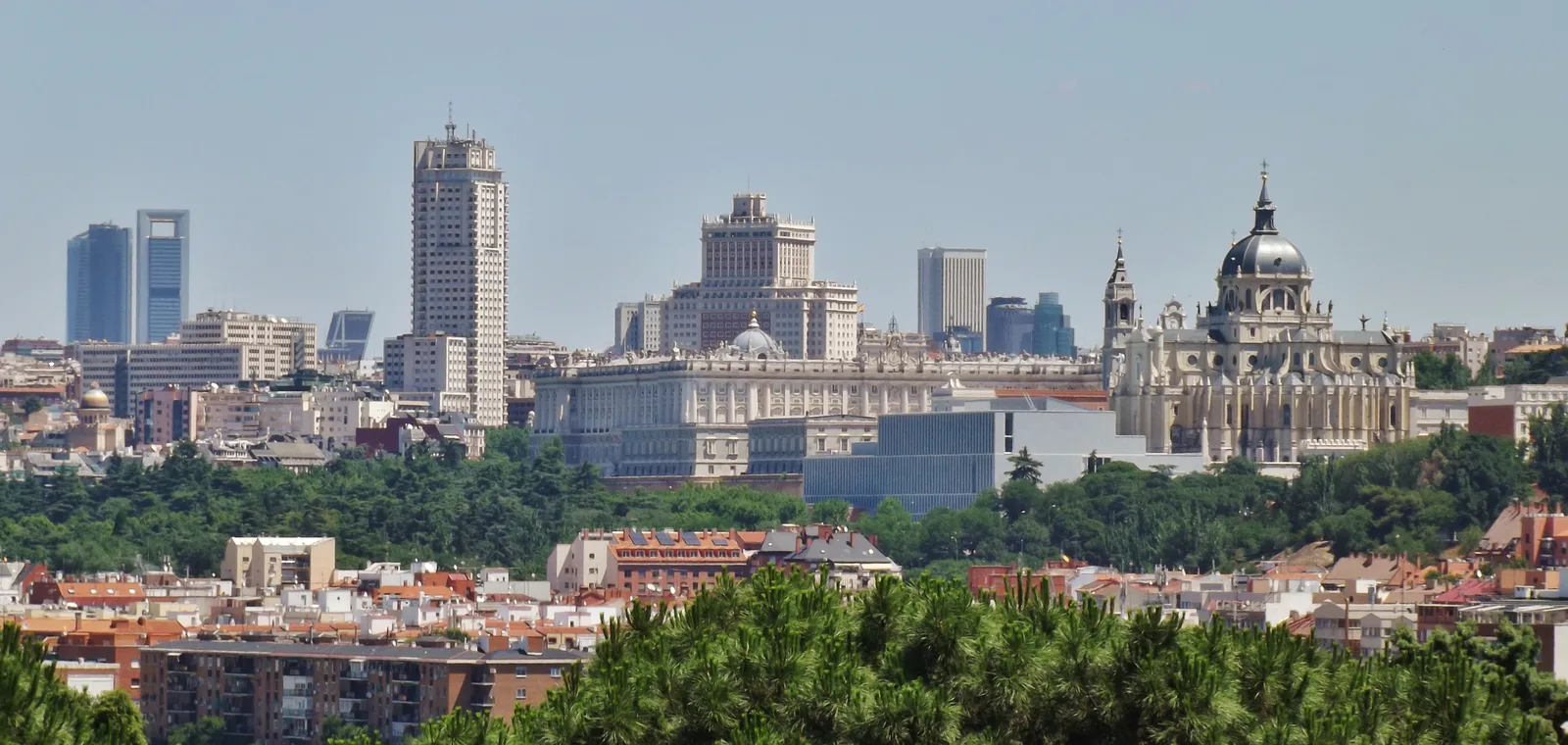
Madrid rewards a visit with room between the reservations
Madrid brings together a royal centre, major art collections and neighbourhoods where the evening can matter as much as the morning's sightseeing. Spain's capital is an inland city: a trip here revolves around museums, streets, parks and food rather than a beach. Three full days can give a first-time visitor a coherent introduction, provided each day has one main commitment and time to wander afterwards.
The useful distinction is between the compact sightseeing centre and the much wider city where people live, study and work. A hotel beside a museum may be ideal for a weekend; a home should be chosen around its actual commute and household needs. This guide helps with both decisions while keeping visitor entry separate from permission to work or settle. It also gives space to experiences that need no admission ticket: an old square, a literary street and a park walk.
For broader planning, use VisaWand's Spain country guide, Spain destination page, location directory and consultant listings. Its completed Barcelona city guide provides a useful comparison for another Spanish city.
The older royal centre: Austrias and Plaza Mayor
The Austrias neighbourhood gives Madrid's royal history a street-level setting. Plaza Mayor and the Royal Palace belong to this older centre, where a route through squares and connecting streets works well before or after a palace booking. Rather than racing between monuments, allow time to notice how the enclosed square contrasts with the more open spaces around the palace.
An exterior walk is worthwhile even without buying several admissions. Choose whether your interest is royal interiors, religious architecture or the urban setting, then reserve the corresponding visit. Booking a palace ticket does not mean every neighbouring institution is included. This is also a sensible area for an arrival-day walk: it gives a newcomer a clear starting point without requiring the sustained attention of a large art collection.
Royal Palace: rooms, tickets and official-event closures
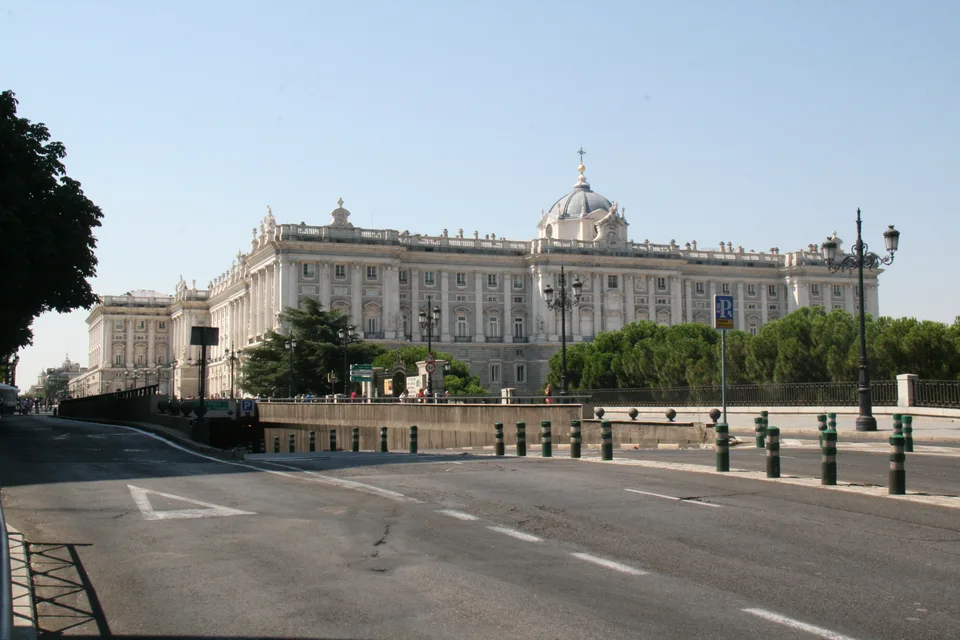
The Royal Palace's official visitor page lists a basic admission of €18. Its sequence of grand rooms, staircases and ceremonial spaces makes it a different experience from an art museum. The Royal Kitchen has separate admission arrangements, so purchase it deliberately rather than assuming it is part of the basic ticket. The site remains connected to official events, which can alter opening arrangements.
For October to March, the published schedule is Monday to Saturday, 10am–6pm, and Sunday, 10am–4pm, with final admission an hour before closing. Consult the calendar for your date: a general schedule cannot override a special closure. Ópera station, served by Metro lines 2 and 5, is a useful approach. The visitor entrance is by the Almudena esplanade at Calle Bailén; use the entrance instructions on your booking rather than following any palace gate you encounter.
Barrio de las Letras: a literary walk between the big sights
Barrio de las Letras offers a compact walk around Madrid's literary history. Cervantes, Lope de Vega and other writers are associated with the quarter; Calle Huertas carries literary quotations in the pavement, while Plaza Santa Ana sits beside Teatro Español. The theatre and surrounding streets give this area a cultural identity beyond its convenient position between the central sights and the art district.
Walk through it on the way to a museum, then return when you have time for a meal or a bookshop. The experience works without a prescribed list of restaurants. Some streets restrict vehicles, but the whole neighbourhood should not be treated as pedestrian-only. If a house museum or a performance interests you, look up that venue's own visiting arrangements. A literary landmark on a map does not necessarily have unrestricted public access.
La Latina: squares, tapas and the Rastro
La Latina changes the pace with narrow streets opening into squares. Cava Baja and Cava Alta provide a useful focus for an evening meal, while Plaza de la Paja offers another stopping point. The district's irregular street pattern and commercial past make it rewarding to explore on foot, rather than using it solely as a restaurant address.
El Rastro brings street-market activity on Sunday and public-holiday mornings. Build that into a visit only when your dates match; it is not a daily market. Browse without assuming every object is locally made or every price is a bargain. For a historical alternative to shopping, the Museum of San Isidro interprets Madrid's origins. This area suits a shorter, flexible outing, especially after a morning spent looking closely at paintings or palace interiors.
Choosing an art museum rather than collecting three tickets
The Prado, Reina Sofía and Thyssen-Bornemisza form Madrid's familiar art triangle. Their proximity makes combinations possible, but their collections deserve different kinds of attention. A visitor interested mainly in older European painting can prioritise the Prado; someone seeking modern art can start with Reina Sofía. Leave another museum for a second day if art is the main purpose of the trip.
Decide on a theme before booking: portraits, Spanish painting, a particular artist or modern artistic responses to history. That produces a more satisfying visit than a checklist of famous names. Check what is displayed on the date you choose, since loans, room changes and temporary exhibitions can affect a collection visit. Meals, outdoor walks and sitting down are part of a realistic museum day, especially when travelling with children or anyone who finds prolonged standing difficult.
The Prado: a focused route through older painting
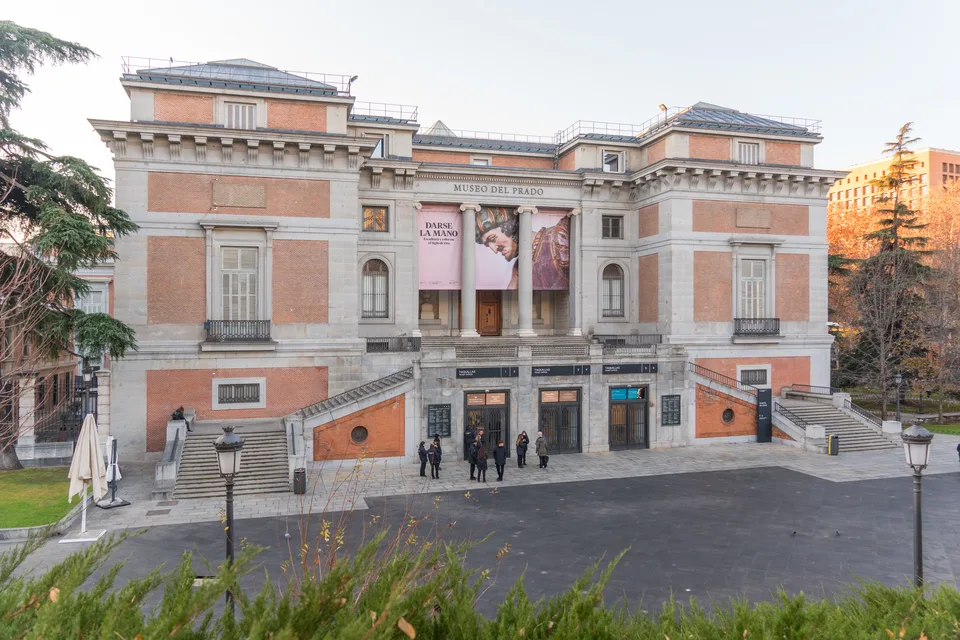
The official city visitor listing for the Prado gives general admission as €15. The museum opened in 1819, in a building originally conceived for science. Its Spanish, Italian and Flemish collections make it useful for comparing artistic traditions, rather than seeing a single national school in isolation.
Choose a small group of works or artists as an anchor. Velázquez's Las Meninas, Goya's paintings and Bosch's The Garden of Earthly Delights are among the works highlighted by the visitor board. A focused route leaves room for unexpected discoveries and avoids trying to absorb the whole institution in one session.
The listed regular hours are 10am–8pm Monday to Saturday and 10am–7pm on Sundays and public holidays, with specific holiday closures. Use the museum's official booking channel for availability and current conditions. Free-entry periods can reduce expenditure, but should not be treated as a guarantee of a quiet, unhurried visit.
Reina Sofía: plan around Tuesday and luggage rules
At Reina Sofía, general admission is €12 and the museum closes on Tuesdays. Its official visitor guidance recommends choosing a day and admission time online. Tickets are required during free-entry hours too, so a free period is still something to organise. Check the current collection route rather than assuming that a particular gallery will always be available.
There are two entrances: the Sabatini building at Plaza de Juan Goytisolo and the Nouvel courtyard at Ronda de Atocha, 2. The museum recommends the latter for visitors who already have an online ticket. This is a practical last-day limitation: suitcases and large backpacks are not admitted, and the lockers are limited. Leave airport luggage at an appropriate storage facility or your accommodation before coming. A museum ticket cannot solve a baggage problem, even if the visit fits neatly before your flight.
El Retiro: a park visit with a current closure to know
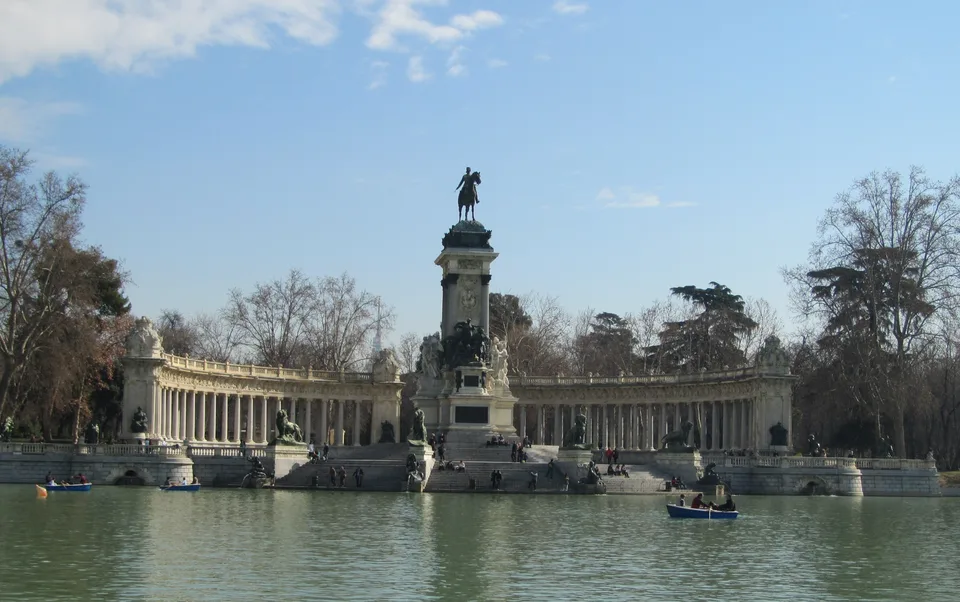
El Retiro gives an art-focused trip breathing space. The large lake and Monument to Alfonso XII make a recognisable starting point, with garden paths offering alternatives to another indoor attraction. A walk, a rest and a return towards the museum district can fill an afternoon without turning the park into a strenuous circuit.
There is an important current limitation: the Glass Palace is closed for renovation until 2027, according to the city's dedicated notice. Photographs of its transparent interior should not be interpreted as evidence that you can enter it today. The park itself can also close during severe weather. The Paseo del Prado and Retiro landscape received UNESCO recognition in 2021; appreciating that relationship between culture and green space is more useful than trying to visit every building shown on a heritage map.
Where to stay: match the address to your days
For an initial sightseeing visit, compare accommodation in the royal centre, Barrio de las Letras and the museum district. These choices put different parts of the itinerary close to your door. An address around Sol or Gran Vía may appeal if central activity is a priority; anyone wanting quiet should assess the particular room, its orientation and nearby premises rather than relying on a neighbourhood label.
The official accommodation directory includes different accommodation types and is a starting point, not a promise of availability or a price comparison. Compare the total charge for your actual dates, cancellation terms, bathroom arrangements and any breakfast or luggage-storage provision. With an apartment, establish the check-in process and who responds if access fails. For a late arrival or an early departure, a slightly less central property can make sense if its transport connection is demonstrably easier.
Arriving at Madrid-Barajas: the terminal matters
Adolfo Suárez Madrid-Barajas is the principal airport for a Madrid visit. Confirm your terminal before selecting the journey into town: Aena's rail information identifies the airport train connection at Terminal 4. A flight arriving elsewhere requires a different approach or an additional terminal transfer. Use the airport's current connection information and the operator's journey planner for the complete route to your accommodation.
The transport consortium's airport fare information lists a €3 Metro airport supplement where applicable and a €5 Airport Express fare. These are different products, with different coverage. Avoid deciding purely from the headline fare: consider changes, luggage, operating times and the walk at the destination. Rail schedules and temporary works can alter the convenient route. Do not assume that an airport train runs directly to every central railway station merely because those stations appear on a broader network map.
Local transport: understand the tourist ticket
The CRTM tourist ticket is personal and gives unlimited covered travel within the selected zone, subject to its exclusions. The current Zone A prices include €10.30 for one day, €23.10 for three days and €43.20 for seven days. The Multi card is included when buying this tourist product. Compare those totals with how often you expect to travel; a day spent largely walking does not automatically justify a pass.
Validity uses calendar days from first use, with the relevant night services extending until 5am, rather than a rolling series of 24-hour periods. Zone A includes the Metro airport supplement, but excludes the Airport Express bus. Regional coverage is a separate decision, and a tourist ticket should not be assumed to cover a high-speed day-trip train. Keep the distinction between Metro, EMT buses, suburban rail and longer-distance rail clear when planning a journey.
Food: use meals to explore the neighbourhoods
The official food information points to tapas in La Latina and calamari sandwiches around Plaza Mayor, as well as Madrid's wider restaurant scene. Churros with hot chocolate offer another familiar option. These are useful starting points for choosing what to try, not a claim that every establishment serves an equally good version or charges the same amount.
For tapas, consider how the menu prices portions and drinks before ordering several dishes. Sharing can make a varied meal, but a succession of small orders can cost more than expected. A seated meal suits travellers who need a proper rest between walks. People with allergies or dietary restrictions should ask about ingredients and preparation directly; the name of a dish is not enough to establish suitability. Use published menus to choose a place that fits your budget and needs, rather than assuming a venue beside a famous sight is the best choice.
Shopping and a budget built from real choices
Shopping can be part of the neighbourhood route: bookshops and small businesses in Las Letras, or the Rastro when its market is operating. Separate browsing from essential purchases, especially on a short stay. With antiques or second-hand goods, ask about condition, provenance and transport before paying. An attractive object is less useful if it cannot sensibly travel home.
A simple verified cost example is €15 for the Prado plus €12 for Reina Sofía and €18 for the basic palace visit: €45 in admissions before transport, food or accommodation. Add a three-day Zone A tourist ticket at €23.10 and those selected costs total €68.10. This is an illustration, not a daily budget or a complete holiday price. Your room dates and meal choices remain major variables. Schedule free walks between paid visits and spend on the experiences that actually motivated the trip.
Seasons: plan walking around heat and daylight
Madrid's official seasonal overview describes hot, dry summers and cold winters. Spring and autumn can suit a trip with substantial walking, although rain and changes in temperature still affect the day. Use AEMET's Madrid forecast shortly before travelling; a seasonal description is not a forecast for your week.
During summer, put longer outdoor walks earlier or later in the day and reserve indoor time for the hotter part. Carry water and leave space for breaks rather than relying on shade along an entire route. In winter, an appealing sunny afternoon does not remove the need for warmer clothing after dark. Check actual daylight and venue hours when arranging an evening walk. Museums can provide an alternative in poor weather, but tickets, closing days and luggage restrictions still apply.
A realistic three-day introduction
On day one, explore Austrias and Plaza Mayor, with a Royal Palace visit if it is a priority. Leave the later part of the day for La Latina and a meal. This combines a booked attraction with an adaptable walk rather than two lengthy indoor visits. If arrival consumes the morning, make it an exterior introduction and move the palace booking.
On day two, choose the Prado as the main commitment, followed by a meal and El Retiro if weather and access permit. Walk through Las Letras before or afterwards according to the ticket time. On day three, visit Reina Sofía and explore more of the centre, or replace the museum with the Rastro when the day matches its schedule. Swap the order around Tuesday closures and available reservations. Keep a separate departure buffer; a full final afternoon of sightseeing is unsuitable for an early flight.
Moving to Madrid: test a normal working week
A relocation assessment needs a different route from the visitor itinerary. Start with the workplace, university or other regular destination, then test potential homes against that journey. Include the walk to the station, any changes and the return at your likely finish time. Central sightseeing convenience alone is a weak reason to accept a long daily commute.
Visit a prospective address during the hours you expect to be at home. Consider daylight, ventilation, noise, cooling, heating and lift access, as well as the advertised floor area. Identify groceries, a pharmacy and the appropriate healthcare contact near the property. Temporary accommodation can provide time for viewings, but check its duration and costs before treating it as a solution for several months. A holiday visit can reveal whether you enjoy Madrid; it cannot establish that a particular lease, job or immigration route will work.
Housing: distinguish a residential lease from a seasonal one
Madrid's regional rental-deposit guidance distinguishes the statutory fianza for habitual residential housing, normally one month's rent, from other uses, including seasonal arrangements, where two months applies. That statutory deposit is not necessarily the whole upfront payment. Ask for a written breakdown of rent, deposit, any additional guarantee and other charges, with the contract type clearly identified.
Before committing, establish what is included: furniture, appliances, utilities, internet and responsibility for repairs. Check the landlord or authorised agent's identity and the property's actual condition. Record the inventory and meter readings at handover. Someone moving for work or study should pay particular attention to whether the accommodation supports their intended period of residence and required address documentation. A furnished holiday listing is not automatically equivalent to a long-term home, and a low advertised monthly figure may omit costs that materially change affordability.
Address registration and essential services
The municipal padrón procedure explains address registration, including identity and occupancy evidence. Prepare the documents appropriate to your situation and confirm the current appointment or filing route. Registration records where you live; it does not itself grant a visa, residence permission or permission to work. Ask about the property's documentation before signing rather than discovering a problem after moving in.
For healthcare, the regional health-card guidance separates access from simply having a local address. Establish your entitlement and consult the assigned health centre about the necessary evidence and application. Students, visitors and employed residents should assess the coverage relevant to their own circumstances. For household accounts, agree which services remain in the owner's name, which need a transfer and how consumption is billed. Reliable internet, functioning appliances and a clear repair contact matter more to daily life than an impressive listing photograph.
Entry, study and employment require different checks
For tourism, consult the Spanish foreign ministry's entry conditions. Short Schengen stays are generally limited to 90 days in any 180-day period, subject to nationality, visa conditions and applicable entry requirements. Time spent elsewhere in Schengen matters too. Check passport validity, purpose-of-visit evidence and the requirements that apply to your own nationality before booking around an assumed allowance.
Work, study and residence require separate planning through the official national-visa information and the competent Spanish consular post for your legal place of residence. A visitor admission is not a general permission to take a job or live indefinitely in Madrid. EU, EEA and Swiss nationals fall under a different framework from third-country applicants. For a course or employment offer, establish the correct route before making irreversible commitments; acceptance by an institution or an employer does not by itself settle immigration requirements.
Toledo and Barcelona: add another place deliberately
Toledo offers a different setting for an excursion, with its historic city, cathedral and Alcázar. Treat it as a separate outing with its own transport and admissions, not an extra stop after a full Madrid museum day. Its historical religious and cultural layers deserve more than a quick photograph. Check the return journey before committing to an evening booking back in Madrid.
Barcelona is a broader alternative for a second city stay; use VisaWand's Barcelona guide to compare its neighbourhoods and visitor priorities. Add another location when the available days justify moving accommodation and carrying luggage. For a first Madrid trip, an additional unhurried day in the capital can be more useful than a rushed excursion. Let your interests determine the choice: deeper art visits, more time in neighbourhoods or a genuinely different urban setting.
Official planning resources
Reviewed 14 October 2026. Use the official resources linked throughout this guide for admission, transport, housing and immigration decisions. Prices, services and rules can change; confirm the details relevant to your dates. Photography illustrates the locations and is not a live view.
View all official resources
- Official Austrias neighbourhood overview
- Royal Palace official tickets and opening information
- Official Barrio de las Letras visitor information
- Official La Latina neighbourhood guide
- Official Madrid visitor information for the Prado
- Reina Sofia official admissions and visitor rules
- Official El Retiro visitor information
- Official Glass Palace renovation notice
- Official Madrid accommodation directory
- Aena airport rail connections
- CRTM official airport transport fares
- CRTM tourist-ticket prices and conditions
- Official Madrid food and restaurant information
- Official Madrid seasonal climate overview
- AEMET Madrid municipal weather forecast
- Regional rental-deposit requirements
- Madrid municipal address registration
- Madrid public healthcare eligibility and health-card guidance
- Spanish foreign ministry entry conditions
- Spanish foreign ministry national visa overview
- Official Madrid tourism Toledo excursion information
Plan the next part of your journey
Explore the Spain guide, browse other cities or compare consultants for your travel and relocation questions.