Visa
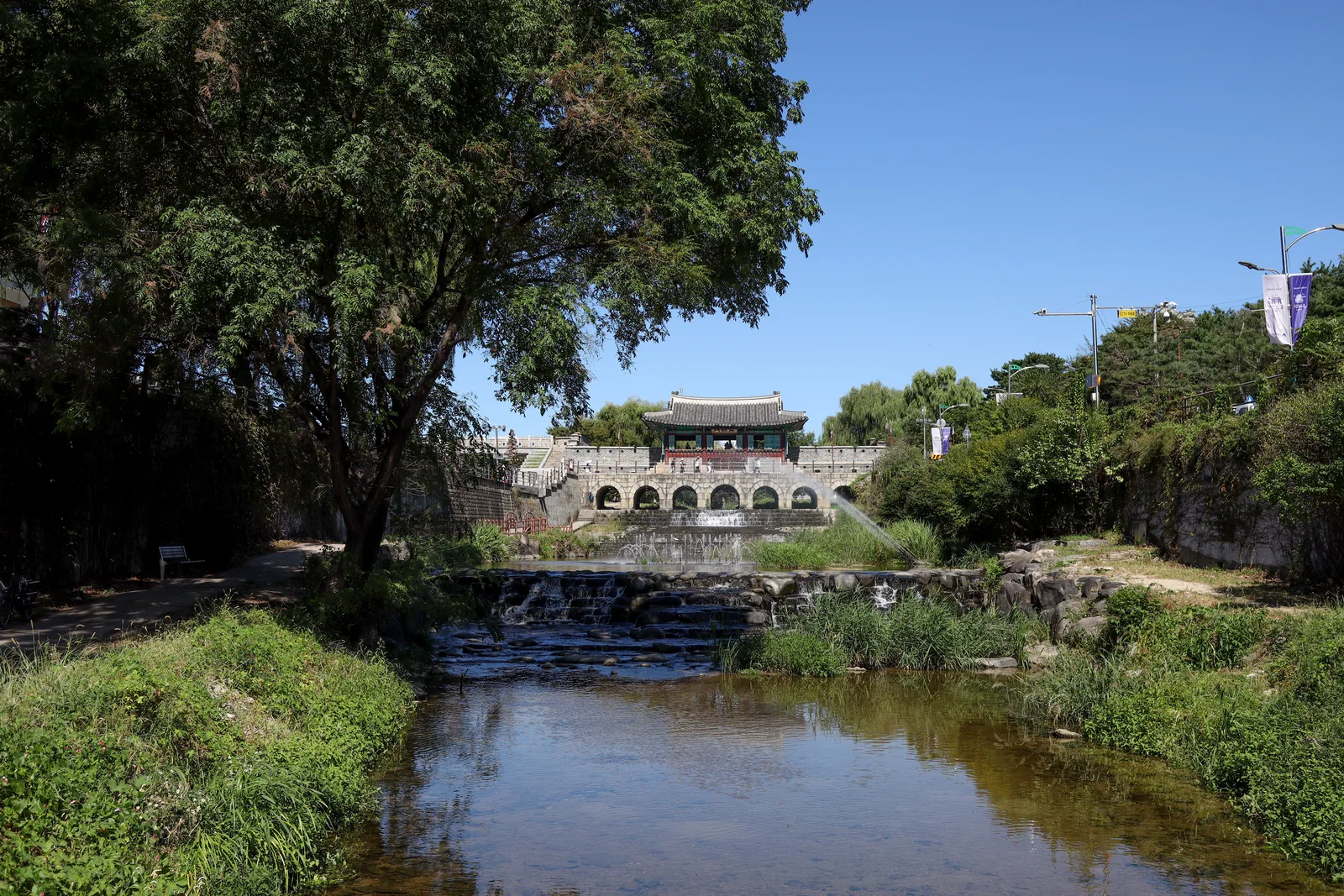
Choose Suwon for more than a quick photograph
Suwon combines a walkable royal-era landscape with the practical demands of a substantial modern city. Within the old centre, fortress walls climb a hill, water passes through a monumental gate and palace courtyards open onto streets of workshops and food businesses. Elsewhere, lakeside apartment towers, exhibition venues and technology-related attractions show a different side of the city.
It works as an excursion from Seoul, but an overnight stay lets you divide the wall walk, palace and modern districts without rushing. The important choice is where to concentrate your time. Suwon Station, the fortress area and Gwanggyo are useful reference points, not interchangeable names for one compact centre.
For anyone considering a move, make the same distinction before looking at housing. An address suited to sightseeing may be poorly placed for a particular campus or workplace. Use VisaWand’s South Korea country guide for the national context, then assess Suwon through its actual neighbourhoods and journeys.
Understand the city King Jeongjo wanted to build
Hwaseong Fortress was constructed between 1794 and 1796 during King Jeongjo’s reign. The project reflected filial devotion to his father, Crown Prince Sado, as well as political, commercial and defensive ambitions. Practical engineering mattered: technical planning associated with Jeong Yakyong and machinery for moving heavy stones formed part of the undertaking.
The UNESCO-listed fortress surrounds the historic centre and follows both flat and hilly ground. Its approximately 5.74-kilometre circuit incorporates four principal gates, watergates and specialised defensive structures. The Suwoncheon runs through it, making the stream part of the historic layout rather than an incidental scenic addition.
What you see also reflects damage and reconstruction. War destroyed important structures, and restoration drew on the detailed construction records published in 1801. Read the landscape as an extensively documented historic ensemble, without assuming every visible timber or stone has stood untouched since the eighteenth century.
Choose a section of the fortress to explore
Do not turn the wall circuit into an endurance requirement. Its western side crosses Paldalsan, while the eastern part is flatter. Start with your available time, the weather and the walking ability of everyone in your group, then select a section rather than automatically committing to the entire perimeter.
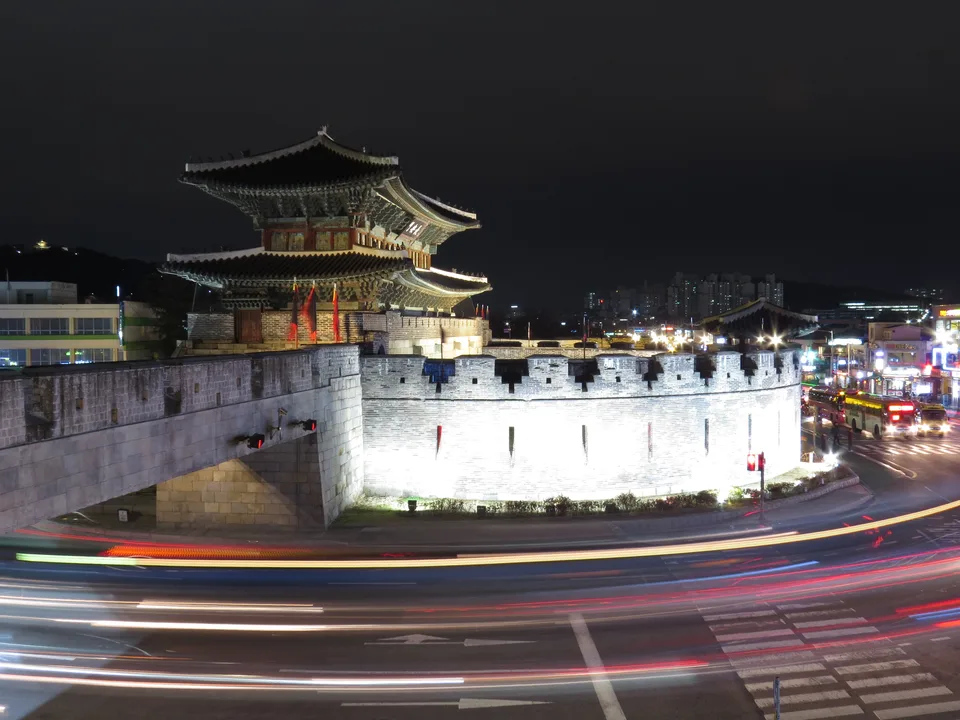
Janganmun provides a northern landmark; Hwahongmun connects the fortifications with the stream. Looking at their different purposes is more rewarding than collecting gate names. Pause where the wall meets ordinary streets, and notice how the historic structure remains part of a working city with traffic and residents.
The cultural foundation’s visitor information lists the fortress visit as free. The palace, tourist trolley and other activities have separate charges. Check local access notices before setting out and use crossings carefully around roads. Comfortable footwear and a plan for leaving the route early are sensible, particularly on a hot day or when travelling with children.
Understand the palace inside the walls
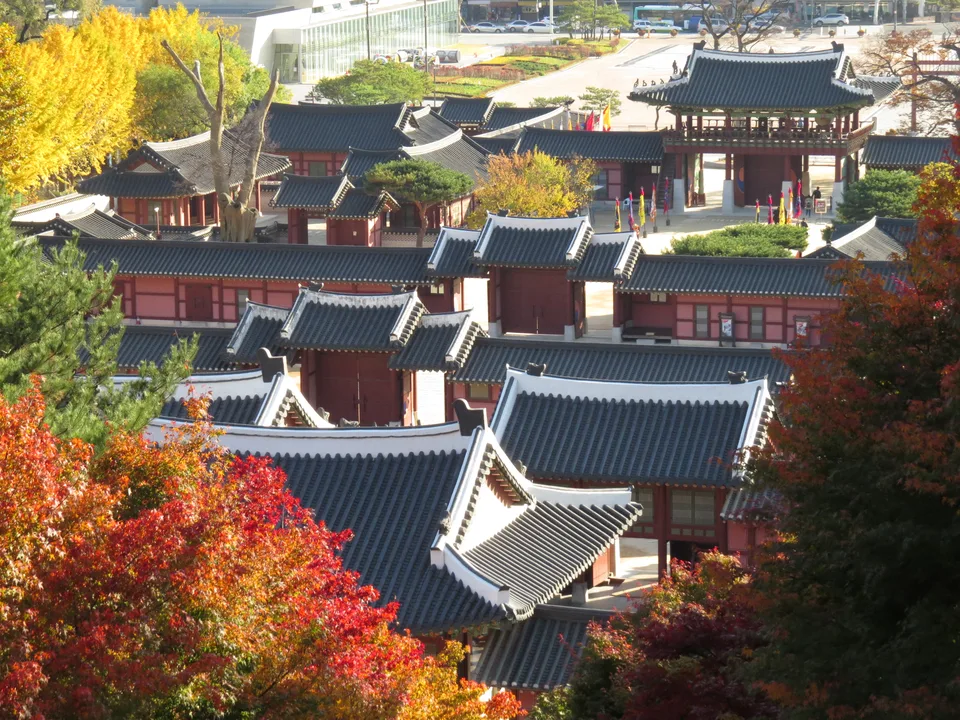
Hwaseong Haenggung is a separate visit within the fortress area. A haenggung was a temporary palace outside Seoul; this one accommodated King Jeongjo during visits connected with his father’s nearby tomb. When the king was absent, it served local administration. Those two functions help explain why it belongs to the city’s political history as well as its royal story.
Walk through the sequence of gates, courts and buildings with that distinction in mind. Give yourself time to read the interpretation rather than treating the palace as an entrance photograph before returning immediately to the walls. The palace site and a full fortress circuit are different commitments.
Published daytime hours are 09:00–18:00, with last admission at 17:30. The foundation’s revised charges list individual adult admission at ₩2,000, with separate youth and child categories. Verify concessions for the actual members of your party. An advertised free fortress walk does not remove the palace admission charge.
Plan an evening around a dated programme
An evening in the old centre can justify staying overnight, but distinguish ordinary illuminated streets from ticketed palace access and special festivals. They do not necessarily share dates, opening hours or admission arrangements.
The official 2026 palace night-opening notice specifies 1 May to 1 November, on Friday–Sunday and public holidays, from 18:00 to 21:30, with entry ending at 21:00. It lists adult admission at ₩2,000. Check the notice again before travelling, and do not carry that schedule forward as a promise for another year.
Plan dinner and the return journey before the evening begins. If returning to Seoul, check the last useful connection from your actual departure point, including the journey from the palace to the station. An attractive night photograph of a gate does not establish that every adjacent path or interior is open. Keep the evening manageable if you have already spent several hours walking the walls.
Explore the streets around Haenggung and Paldalmun
The palace area is worth exploring beyond its ticketed boundary. The foundation describes Haenggung Street as a roughly 420-metre connection between the temporary palace and Paldalmun, with workshops, food businesses and individual shopfronts. That description refers to a particular street, rather than the size of the whole surrounding district.
Use the area for a slower interval between major sights. Browse a workshop that interests you, inspect menus and leave room for a break rather than booking every hour. Opening days and individual business hours vary; a list of cultural activities does not guarantee that every workshop accepts visitors without an appointment.
Staying nearby can simplify a heritage-focused visit, especially if you want to return after dinner. The trade-off is the connection to your arrival station and other districts. Check the complete route to the accommodation entrance, rather than selecting a room solely because its listing includes the word “fortress”.
See a different Suwon around Gwanggyo Lake Park
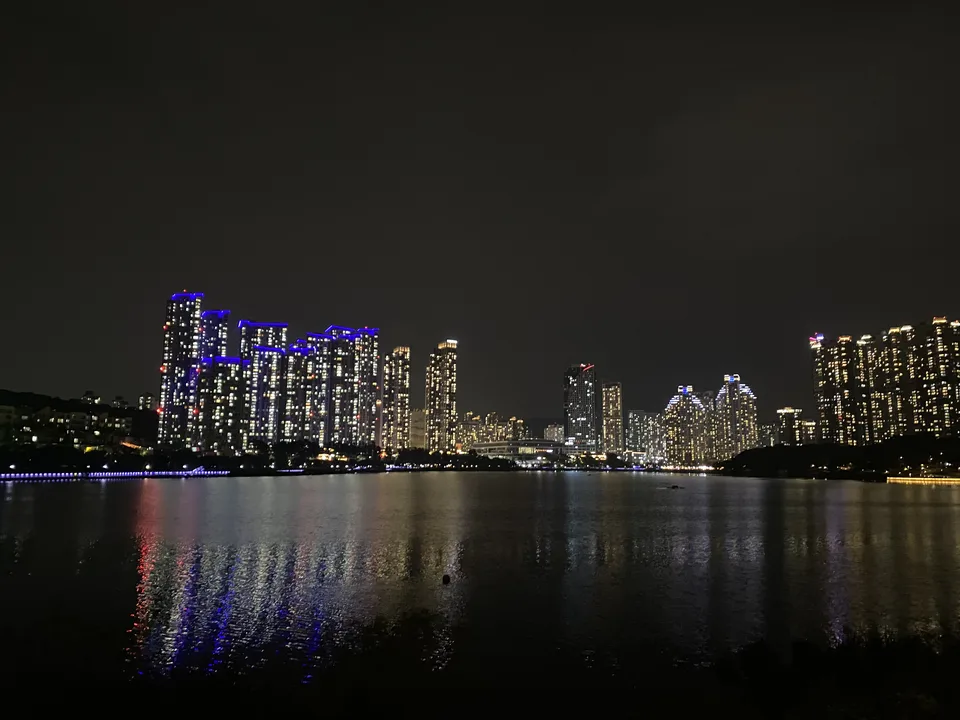
Gwanggyo Lake Park offers a useful contrast to the old centre. Its urban landscape combines reservoirs, landscaped watersides and views of modern development. The Korea Tourism Organization lists it at 165 Gwanggyohosu-ro in Yeongtong-gu, with free admission and year-round access.
Choose a section to walk rather than assuming you need to cover the whole park. This is an opportunity for open space and a less tightly programmed afternoon. A lakeside route can also work well when different members of a group want a break from historic interiors, provided the weather suits outdoor time.
General park access does not mean that every facility, café or lighting feature operates continuously. Check any particular attraction separately and allow for the journey back. For people assessing a move, visit the surrounding area during an ordinary working day as well as an attractive evening. Consider daily services and the route to work alongside the skyline.
Reserve Samsung Innovation Museum appropriately
The Samsung Innovation Museum provides another reason to travel beyond the fortress area. Its subject is the history of the electronics industry and technological innovation, and its address is 129 Samsung-ro in Yeongtong-gu. Treat it as a planned museum visit, rather than assuming you can casually enter company premises at any time.
The museum advertises free exhibition admission. Weekday visits require an advance reservation for a guided tour. Saturdays allow visits without reservations, with published hours of 10:00–17:00 and last admission at 16:00. Sundays, national and other public holidays, and 31 December are listed closures.
Confirm the language and time of the available tour when booking. Younger children require adult supervision under the museum’s stated rules. Its visitor information also distinguishes personal photography from commercial filming. Keep a copy of your reservation and check notices before departure, particularly if this is the main purpose of your trip to that part of Suwon.
Match the airport bus to your actual district
For an Incheon arrival, begin with the airport’s Gyeonggi bus search, not an old hotel transfer paragraph. It lists route 4000 for East Suwon/Hotel Castle, routes 4100 and 4100-2 for Yeongtong/LandMark Hotel, and night route N4000 for East Suwon. Their names describe different connections; none should be assumed to stop at every Suwon hotel.
Select your arrival terminal, check the current stop list and identify the final journey from the bus stop to your accommodation. Terminal 1 and Terminal 2 have different boarding arrangements. Confirm the fare and departure when purchasing rather than relying on a historical airport-bus price.
Incheon Airport Service links to the official intercity reservation system and publishes service notices. Leave time for immigration and baggage before choosing a departure. If your flight lands late, establish which night service actually fits, or arrange a transfer with a confirmed price. Keep your hotel name and address in Korean for the final connection.
Distinguish the station area from Gwanggyo connections
Suwon Station is an important interchange, but it is not the palace entrance. Suwon Messe’s transport information identifies metropolitan Line 1 and the Suin rail connection, alongside mainline train access and the station transfer centre. Check the particular train, destination and stopping pattern for the journey you need; an intercity ticket and a metropolitan transport-card journey are different products.
For a Seoul excursion, compare your complete route, including getting to the station at either end. A short headline train time can hide a longer journey from a hotel or office. Avoid choosing accommodation on the assumption that every part of Suwon has the same connection.
Gwanggyo uses another useful rail corridor, the Shinbundang Line. Its operator explains that fares combine a metropolitan base, distance charges and a separate line surcharge. The base fare alone is therefore not the total price of a journey towards Gangnam. Include repeated travel costs when comparing districts for a longer stay.
Use transport credit and transfers deliberately
For ordinary buses and metropolitan rail, a reloadable card can simplify travel. The Korea Tourism Organization’s transport-card guidance describes Tmoney and EZL cards, available through convenience stores, with a balance that you load for journeys. Buying the physical card and adding usable travel credit are separate steps.
Check how to top up the particular product you choose and retain enough balance for the next journey. Do not assume a foreign bank card can simply replace a Korean transport card at every reader. A Seoul-focused unlimited pass should not be purchased on the assumption that it covers all Suwon travel or the Shinbundang Line.
Tap the card correctly when entering and leaving transport. The Shinbundang operator explains that transfer discounts depend on recording the journey and meeting the applicable transfer window. For an unfamiliar connection, allow a little extra time to find the correct platform, stop or exit rather than building a schedule around the shortest possible transfer.
Choose accommodation around the trip you will make
For a short heritage visit, compare the Haenggung area with accommodation near Suwon Station. The former can simplify palace, street and evening walks; the latter can suit an arrival or a programme involving repeated rail journeys. Gwanggyo may be more practical for activities centred there. None is automatically the best base for every visitor.
The foundation’s Suwon Hostel information describes Korean-style, Western-style and youth-room configurations, with shared cooking and laundry facilities. Use it as a concrete option to investigate, checking current availability, room arrangements and booking conditions directly. A room described as youth accommodation is not necessarily the same product as a private hotel room.
Before paying, establish the complete price, cancellation terms and check-in arrangements. Ask specifically about beds, private or shared bathrooms, stairs, lift access and luggage storage. For a longer booking, laundry and usable kitchen facilities may matter more than a small saving in the advertised nightly rate.
Eat with an understanding of Suwon’s specialities
The Korea Heritage Agency’s food coverage identifies two particularly relevant choices: Suwon galbi and tongdak. Galbi here means beef ribs, marinated and grilled. Tongdak refers to whole chicken preparations, and the streets near Paldalmun have a concentration of chicken businesses. These are useful subjects to explore, rather than a promise that every restaurant offers the same dish or quality.
Read the menu and serving size before ordering. A grilled-meat meal for several people can be a different budget decision from a quick individual meal. Check whether quoted prices apply per person, per portion or to a shared order, and establish what else you want before adding it automatically.
Dietary requirements need direct questions. Sauces, broths and accompaniments may contain ingredients that a brief translated dish name does not reveal. Carry a clear explanation in Korean when necessary. Compare current menus instead of assuming there is one dependable “local meal price” that applies throughout the city.
Keep a budget that reflects your own choices
The heritage area allows a useful distinction between free exploration and paid additions. Two adults paying the standard ₩2,000 palace rate would spend ₩4,000 on that admission. The foundation lists an adult tourist-trolley ticket at ₩6,000 and traditional archery at ₩3,000 for a ten-arrow session. Check operating conditions and availability before treating either activity as fixed.
Those small entries are only part of the total. Build the larger budget around accommodation, airport transfers, meals and the number of cross-city or Seoul journeys. Someone staying near the palace for a quiet overnight visit will spend differently from a commuter travelling daily on a route with additional charges.
Keep prices in won while comparing alternatives; a currency conversion adds another variable. Ask your bank about overseas transaction costs, and allow for payment methods that differ between shops, transport and small businesses. Retain a modest practical reserve rather than allocating every remaining won to activities.
Add shopping without confusing the districts
Starfield Suwon is at 175 Suseong-ro in Jangan-gu. Its library space, shops and entertainment offer a contrasting indoor outing, particularly when the weather makes a long outdoor programme unattractive. This is the Suwon mall, not the similarly named COEX destination in Seoul.
Check the store directory and that day’s hours for what you actually want to use. The mall, individual retailers, restaurants and entertainment businesses can follow different arrangements. A library visit and a paid leisure activity should not be treated as one all-inclusive experience.
Give the mall a separate block of time if shopping is a priority. For longer stays, compare ordinary grocery and household services close to prospective housing as well as the larger destination malls.
Choose the season around outdoor walking
Suwon’s wall walks make weather a material part of the plan. Official national climate guidance describes moderate spring and autumn conditions, hot and humid summers, and cold, relatively dry winters. These broad patterns are more useful for packing than borrowing another city’s monthly temperature table and presenting it as Suwon data.
Spring or autumn can suit a walking-focused stay, with layers for changing temperatures. In summer, reduce exposed midday walking, take water and plan indoor alternatives. The wetter period often overlaps late June and July; use the forecast for the actual dates, rather than assuming a seasonal label predicts each day.
Winter calls for warm clothing and attention to slippery surfaces. Air quality is another consideration, including spring dust episodes: check current reports before committing to a lengthy outdoor route.
Spend two days without rushing between extremes
For a first overnight visit, use day one for the historic centre. Arrive, leave luggage where agreed and visit the palace while there is time to read its interpretation. Explore Haenggung Street and choose a manageable fortress section, allowing for the hill if it is part of your route. Have dinner nearby; add palace evening access only if its dated programme operates.
On day two, choose a contrasting emphasis. Gwanggyo Lake Park suits a less structured outdoor interval. Samsung Innovation Museum requires a compatible day and reservation arrangement. Shopping is another option, but trying to fit all three into the same short day can leave the experience dominated by transfers.
For a Seoul day trip, reduce the programme to the palace, one fortress section and a meal. With more time, investigate the wider Seoul destination page and South Korea destination directory. Check each location and journey on its own merits rather than treating the surrounding metropolitan region as one small sightseeing district.
Test a longer stay against housing and work
Before relocating, identify the actual workplace or teaching building and test candidate addresses against a normal journey there. Include walking to transport, transfers, evening returns and the costs of repeated travel. A pleasant visitor base near the fortress may have little connection with the place you need to reach every morning.
Inspect the tenancy terms carefully: deposit, monthly payments, management charges, utilities, inventory, maintenance responsibility and termination conditions should all be understood before money changes hands. Get help with a Korean contract if you cannot evaluate it confidently. Ask what documents the accommodation can supply for your residence procedures.
The provincial government’s foreign resident support directory lists Suwon’s migrant community centre at 43 Jungbu-daero, with telephone 031-223-0075. It also lists a separate multicultural family support centre. Contact the relevant organisation about services, language availability and eligibility.
Set up household services and appropriate healthcare
Suwon’s bilingual foreign resident guide explains separate handling of general waste, food waste, recyclable materials and bulky items. General waste uses designated bags; food waste has its own bag or collection arrangement. Ask the landlord or building manager where and when your household should put each category out, since apartment facilities and collection arrangements need to be understood locally.
Before committing to a home, establish internet provision, heating and cooling arrangements, laundry facilities and access to groceries. Families should also check the actual school or childcare placement available for their circumstances.
For visitors, official health advice gives 119 as the ambulance number and recommends insurance and accessible funds for treatment. Residents need a separate eligibility check. NHIS guidance for foreigners distinguishes workplace insurance from other resident categories; a general six-month rule must not be read as a universal waiting period for every employee or student. Confirm enrolment and any gap in cover before relying on it.
Keep visiting, studying and residence permissions separate
Check the Korea Visa Portal against your nationality, purpose and length of stay. There is no single short-stay entitlement that this guide can safely assign to every reader. The official K-ETA notice extends the temporary exemption for eligible countries and regions through 31 December 2026, Korea time. It is not an exemption for every passport or a promise about later years.
For study, Study in Korea distinguishes D-2 degree programmes from D-4 non-degree or training categories. Employment and permanent residence require their own qualifying routes; a holiday or admission to a course does not establish unrestricted work rights. Confirm the appropriate process with your institution, employer and immigration authority.
Hi Korea provides immigration services and the 1345 information centre. It also identifies the official electronic arrival-card website and warns that the service is free. Use the relevant official instructions, and consult VisaWand’s South Korea consultant listings if you need professional assistance with your particular circumstances.
Official planning resources
Reviewed 24 October 2026. Use the official resources linked throughout this guide for admission, transport, housing and immigration decisions. Prices, services and rules can change; confirm the details relevant to your dates. Photography illustrates the locations and is not a live view.
View all official resources
- Suwon Cultural Foundation: fortress history
- UNESCO: Hwaseong Fortress
- Suwon Cultural Foundation: admission and activity prices
- Suwon Cultural Foundation: Hwaseong Haenggung
- Suwon Cultural Foundation: revised visitor charges
- Suwon Cultural Foundation: 2026 palace evening opening
- Suwon Cultural Foundation: Haenggung Street
- Korea Tourism Organization: Gwanggyo Lake Park
- Samsung Innovation Museum: visitor rules
- Incheon Airport: Gyeonggi bus search
- Incheon Airport Service: ticketing and service notices
- Suwon Messe: station and transport access
- Shinbundang Line operator: fares and transfers
- Korea Tourism Organization: transport cards
- Suwon Cultural Foundation: Suwon Hostel
- Korea Heritage Agency: Suwon food and royal heritage
- Starfield Suwon: mall and library information
- Korea Tourism Organization: seasons and weather planning
- Gyeonggi Province: foreign resident support directory
- Suwon City: bilingual foreign resident guide (PDF)
- UK government: visitor health advice for South Korea
- National Health Insurance Service: foreign resident eligibility
- Korea Visa Portal: Visa Navigator
- Ministry of Justice: K-ETA exemption extension through 2026
- Study in Korea: student visa and stay status
- Hi Korea: immigration services and arrival-card warning
Plan the next part of your journey
Explore the South Korea guide, browse other cities or compare consultants for your travel and relocation questions.