Visa
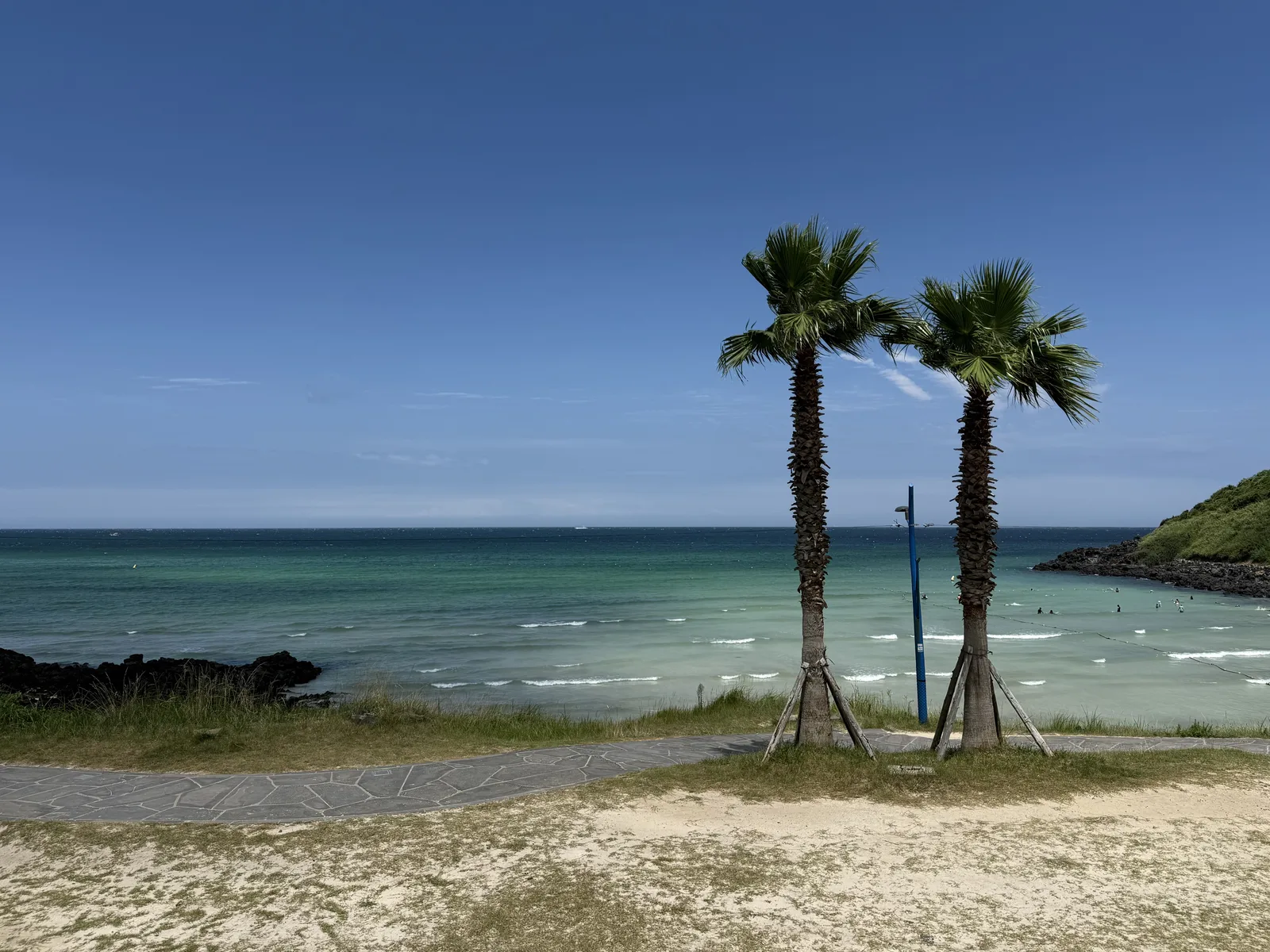
Jeju City rewards a more focused island visit
Jeju City is where a working island capital meets a volcanic shoreline. Markets sell fish and fabric, aircraft descend near the coast, and a reconstructed government compound sits among ordinary commercial streets. It makes a useful base for visitors who want museums, meals and practical transport alongside their time outdoors.
The name needs care. Jeju-si covers the island’s northern half, including towns and countryside well beyond the urban centre. Seogwipo-si occupies the south. A hotel advertised as being in Jeju City can therefore be a substantial journey from downtown. Use the tourism board’s geographical explanation before choosing accommodation by municipality alone.
Three nights allow an introduction to the old town and a north-coast excursion. Add time for Hallasan or the southern coast. Trying to circle the entire island while changing attractions several times daily tends to make the car, rather than Jeju, the main experience.
Read the island’s history before touring its landmarks
Jeju’s earlier history belongs to Tamna, with its own maritime connections and cultural traditions. The Jeju National Museum traces the island through prehistoric communities, Tamna and later Korean dynasties. Its displays provide context for buildings and sacred places that otherwise risk becoming disconnected photograph stops.
Founding stories and documented history deserve different treatment. Samseonghyeol preserves the mythology of three ancestral founders; it does not establish that supernatural events occurred. Likewise, the timber buildings in the government compound should be understood through their reconstruction history, rather than assumed to be untouched medieval originals.
Modern history also matters. The Jeju 4·3 Peace Foundation’s historical account describes the 1947 police shootings, the April 1948 armed uprising and subsequent violence in which civilians suffered extensive killings. These events continued across years. A serious visit leaves room for remembrance alongside beaches, shopping and scenic landscapes.
Choose between the old town and the newer city
For a first visit centred on history, look around Dongmun Market, Gwandeokjeong and the older commercial streets. This puts several useful walks together. Check the actual hotel entrance, however: proximity on a map does not establish quiet rooms, step-free access or an easy route with luggage.
Yeon-dong and Nohyeong-dong, in the newer city west of the old centre, suit travellers comparing airport-side hotels, shopping and onward road journeys. The official bus network connects these districts with other parts of town. A convenient airport location still requires transport planning for the museums and eastern beaches.
Hamdeok offers a different proposition: a coastal stay in Jocheon-eup, within Jeju-si but outside the central urban area. Choose it for time beside the sea, then account for journeys back into town. These bases serve different trips; the cheapest room can become a poor bargain after repeated transfers.
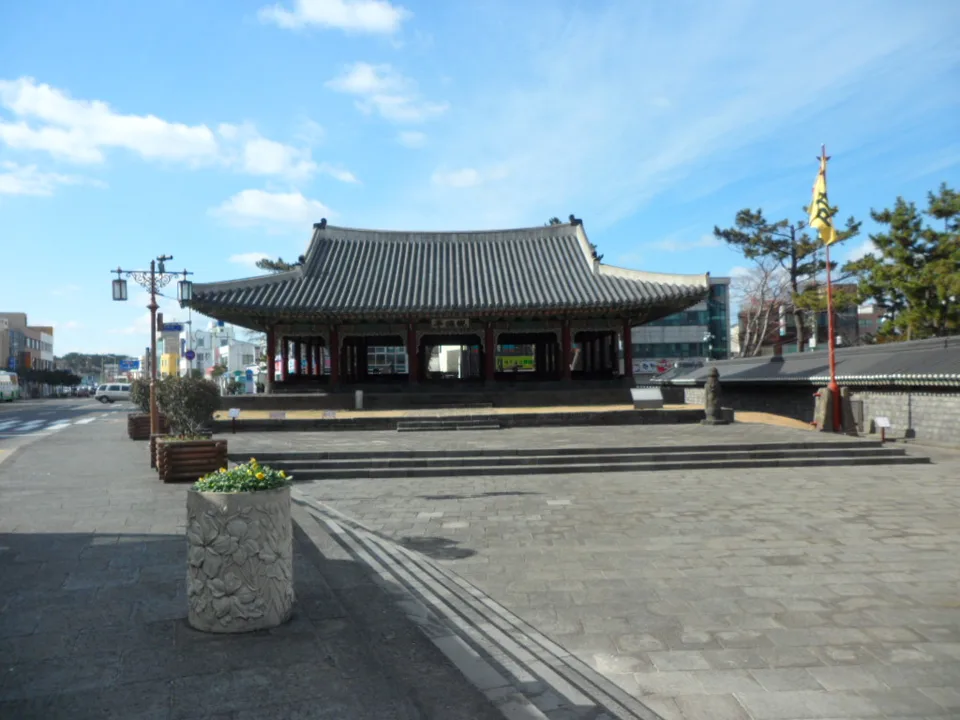
Walk Gwandeokjeong and the government compound
Start an old-town walk at Gwandeokjeong Pavilion and the adjacent Jejumok Government Office, often called Mokgwana. Courtyards, tiled roofs and administrative buildings make the former seat of government easier to picture. The tourism board’s historical description explains that excavations revealed building traces and informed reconstruction; this is an interpreted historic complex.
The government office’s own visitor information lists daytime opening from 09:00 to 18:00 and ordinary adult admission at ₩1,500. Arrive comfortably before closing. Seasonal evening openings and performances have separate arrangements, and weather can interrupt them; a night-time photograph online is not evidence of access on your date.
Continue through surrounding shopping streets rather than treating the compound as an isolated monument. This is a useful first morning because it introduces the older city without committing to a long road trip immediately after arrival.
Give Samseonghyeol a quieter part of the day
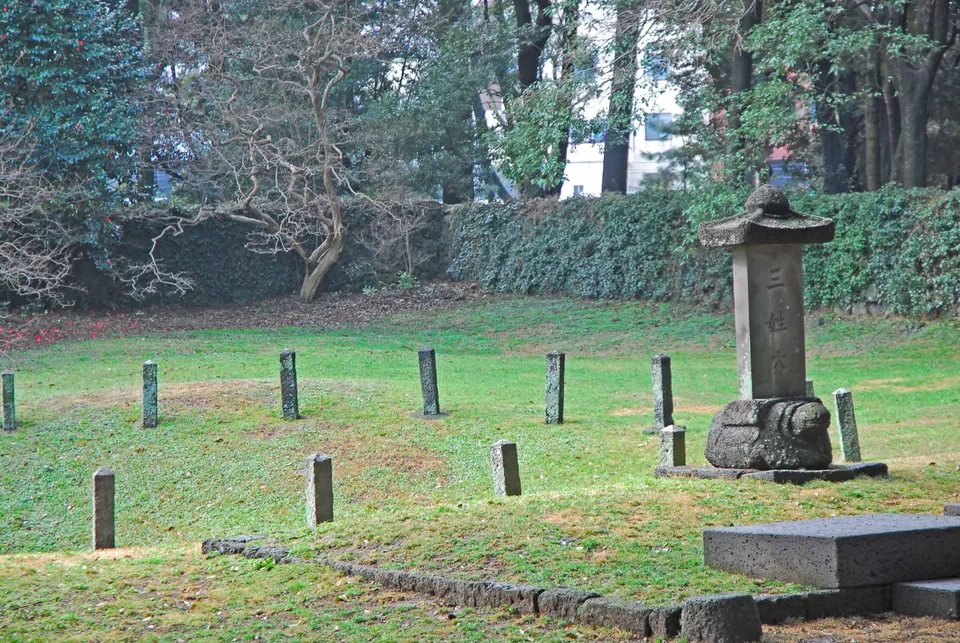
Samseonghyeol connects a sacred grove with the story of Go, Yang and Bu, Jeju’s mythical founders. The interest lies in how landscape, ritual and collective memory meet here. Read the interpretation and allow the place to remain quieter than a busy market or beach.
The Korea Tourism Organization’s Samseonghyeol listing gives opening hours of 09:00–18:00 and adult admission of ₩4,000. Its exhibition and media spaces explain the founding lore. Treat those narratives as mythology, and avoid confusing this city site with similarly described locations elsewhere on the island.
It pairs naturally with an old-town day, but check the route between stops rather than assuming every attraction is adjacent. Travellers with limited mobility should ask about the surfaces and entrances they will actually use. A small site is not automatically an accessible one.
Use the National Museum as an introduction
The Jeju National Museum deserves time early in the visit, especially if the island’s history is unfamiliar. Archaeology and exhibitions about Tamna and later periods help explain an island shaped by movement, exchange and changing relationships with the mainland. Go with questions about everyday life as well as rulers and dynasties.
The museum publishes 09:00–18:00 opening and free admission, while noting that special exhibitions may charge. Regular closures include Mondays, New Year’s Day, Seollal and Chuseok. Check the current calendar before making it the centrepiece of a rainy Monday.
An indoor visit is a useful weather alternative, but build it into the route geographically. It works better as a considered cultural stop than as a hurried substitute squeezed between distant coastal attractions. Leave enough energy to read the displays rather than simply crossing off another building.
Leave time for the Jeju 4·3 Peace Memorial
The Jeju 4·3 Peace Park and Memorial Hall provide a setting for learning about civilian suffering, remembrance and reconciliation. This is a substantial historical visit, not a decorative park stop. Plan transport to the site separately from a central shopping walk, and allow time afterwards rather than rushing directly into entertainment.
The foundation’s current visiting rules state that admission is free, the hall opens 09:00–18:00 and last entry is 17:00. Closure is on the first and third Mondays, moving to the next non-holiday when those Mondays are public or substitute holidays. This differs from the National Museum’s weekly Monday closure.
Families should consider the subject matter and the needs of younger visitors. Keep photographs respectful, follow exhibition instructions and use the foundation’s interpretation to understand the historical context instead of reducing the events to a single date.
Visit Dongmun for more than evening snacks
Dongmun’s permanent markets bring together food shopping, seafood, household purchases and visitor trade. Daytime browsing reveals a different place from the evening food stalls. Look at the produce and fish sections before deciding whether this is a shopping stop, a meal or both.
Where a restaurant prepares seafood bought from a seller, establish the total arrangement first: fish price, preparation, table charges and accompaniments. Freshness, portion size and value are separate questions. Ask for a clear price before agreeing, particularly when a product is weighed rather than sold as a fixed meal.
The nearby underground shopping area extends the walk towards Gwandeokjeong. Individual businesses keep their own hours, so avoid building an early morning or holiday itinerary around an assumed universal opening time. Remember the entrance used; large market complexes are easier to navigate with an agreed meeting point.
See Yongduam as part of a coastal walk
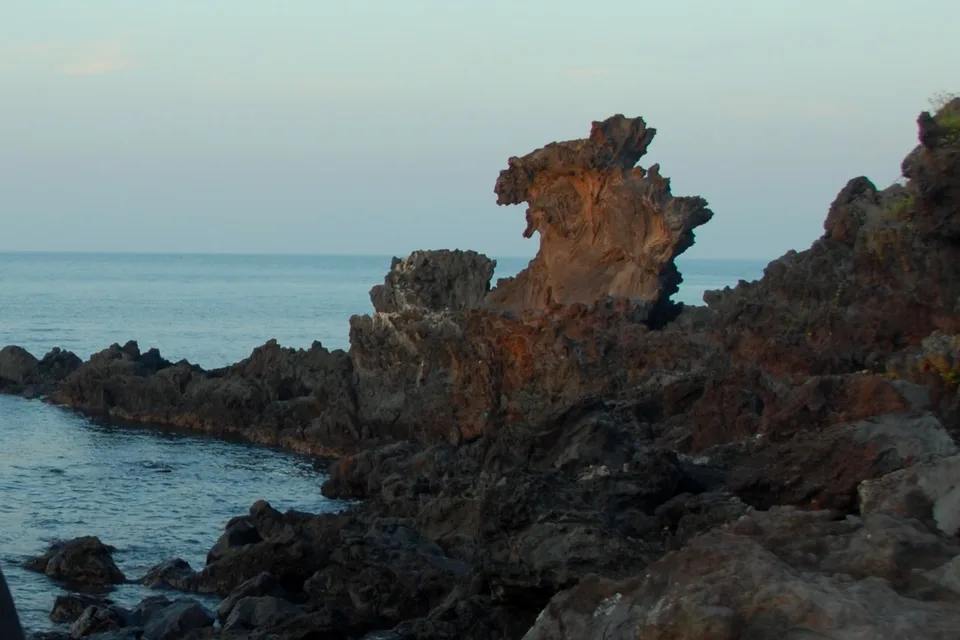
Yongduam, or Dragon Head Rock, is a distinctive volcanic formation on the city’s northern shore. Its shape gives a simple geological landmark a memorable identity. The national tourism listing for Yongduam explains the role of wind and waves in shaping it.
It is better approached as one element of a coastal outing than as an attraction requiring an elaborate excursion of its own. Allow time to watch the shoreline and understand its relationship with the city. Conditions determine whether lingering by the sea is pleasant.
Stay on permitted routes and keep clear of wet rocks and breaking waves. A calm photograph does not establish safe conditions on arrival. For anyone using a wheelchair or travelling with a pushchair, verify the viewpoint route separately from vehicle access to the surrounding area.
Make Hamdeok a proper north-coast outing
Hamdeok Beach and neighbouring Seoubong offer pale sand, open coastal views and a volcanic cone beside the water. They lie east of central Jeju City in Jocheon-eup. Give the area a relaxed half-day or longer, with transport and a meal planned around it.
Swimming is seasonal. The tourism board lists the 2026 supervised beach season as 24 June–6 September, with swimming from 10:00 to 19:00 and no night swimming. Those dates have passed for an October visit; they should not be read as permission to swim throughout the year. Follow current signs and conditions.
Seoubong adds an uphill walk for visitors who want a wider view. Consider footwear, heat and wind before setting off. A beach café and the summit path are different levels of activity, even when they appear close together on a destination map.
Treat Hallasan as a separate hiking day
Hallasan requires a decision about route, fitness and weather before a decision about photographs. The national park’s reservation notice applies booking to the upper summit sections of the Seongpanak and Gwaneumsa routes. It lists other routes, including Eorimok, Yeongsil and Eoseungsaeng, as available without that reservation requirement; they are not interchangeable summit routes.
For reserved sections, each visitor needs their own QR code and identification. Check current trail controls and seasonal entry deadlines through the official system. An available reservation does not override a weather closure, and starting late can prevent completion.
The park warns that there are no shops on the mountain. Carry food, water and equipment appropriate to the conditions. Arrange the return journey before starting, and keep the evening light. A demanding mountain day followed by an ambitious cross-island itinerary is an avoidable strain.
Plan the airport connection around your district
Jeju International Airport, CJU, is on the north coast near the city. Flights can arrive directly from overseas or via mainland Korea, but those routings have different implications for entry eligibility. Check immigration requirements before buying a connection solely because it is cheaper.
The airport’s ground-transport page lists bus and taxi arrangements. Bus 600 boards outside Gate 5 and serves newer-city stops before continuing towards Jungmun and Seogwipo. It is not a universal shuttle to every central hotel. Match the route to the accommodation’s Korean address.
The airport’s language versions give conflicting first and last departures, so confirm the current timetable through the bus system. Allow for baggage collection, finding the stop and any hotel transfer. With a late arrival, establish a workable alternative before depending on the final bus.
Budget for bus routes rather than straight-line distances
The official bus system’s fare table lists adult general trunk and branch journeys at ₩1,150 with a transport card or ₩1,200 in cash. Express services use distance pricing: the adult card fare begins at ₩2,000 and reaches ₩3,000; cash users pay the maximum. Airport limousine fares follow their own bands.
Compatible prepaid cards include T-money. Tap when leaving as well as boarding; transfer discounts depend on timing, route and service type. Carry enough balance, and do not assume an overseas bank card functions as a Korean transport card.
Use the route planner for the full journey, including walking and waiting. A low fare does not imply a quick connection. This is especially important when comparing a central hotel with a remote property whose map pin still says Jeju-si.
Decide whether a rental car earns its cost
A car can be useful for dispersed outings, while central sightseeing may justify hiring one only for selected days. Compare the complete cost with buses, taxis and organised transport: rental, protection options, fuel or charging, parking and the time spent collecting and returning it.
The tourism organisation’s rental-document guidance identifies a recognised International Driving Permit or Korean licence, passport and payment documentation as important requirements. Check the chosen operator’s current rules, including the original home licence, permitted vehicle category, driving experience and additional drivers. An unofficial online “international licence” should not be treated as equivalent paperwork.
Confirm insurance exclusions and the excess before payment. Photograph the vehicle condition with the operator and understand breakdown procedures. For an electric vehicle, establish how charging access and payment work before choosing it for a tightly timed itinerary.
Eat with ingredients and portions in mind
Jeju’s food culture includes grilled black pork, often accompanied by meljeot, an anchovy-based sauce, and gogiguksu, noodles with pork broth and sliced pork. These dishes give a more specific introduction than choosing somewhere merely because its sign promises local food.
A solo traveller should check minimum barbecue orders; a group should compare the weight and number of portions rather than the headline price alone. A noodle meal and a long barbecue dinner serve different budgets and schedules. Ask whether rice, drinks and additional dishes are included.
Dietary requirements need ingredient-level questions. Pork broth can matter even when the visible topping is removed, and a fish-based sauce matters to someone avoiding seafood. Save translated dietary information on the phone and confirm it with staff rather than relying entirely on a menu photograph.
Build a budget from actual choices
The useful price anchors here are specific: ₩1,500 ordinary admission to Mokgwana, ₩4,000 to Samseonghyeol, free standard National Museum admission and free entry to the 4·3 Memorial Hall. Four separate general-bus boardings paid by adult transport card would total ₩4,600 before any eligible transfer discounts.
These are components, not a complete daily budget. Add accommodation for the actual dates, meals at the portions ordered, airport transport and any car costs. A shared room and occasional taxi produce a different total from a beachfront hotel and continuous rental.
When buying seafood, souvenirs or food to take home, compare quantity, packaging and transport suitability. Check the destination country’s import restrictions before purchasing animal or plant products. Keep a separate contingency for disrupted travel rather than spending the entire allowance on the advertised hotel rate.
Choose the season for the activity
Jeju’s official weather guidance makes an important distinction between the northern city, the southern coast and the mountain. Summer can be hot, humid and rainy; winter coastal conditions do not tell you what to expect higher on Hallasan. Wind can materially change an otherwise comfortable day.
Spring and autumn are reasonable choices for walking, provided the itinerary can move around poor weather. Summer beach travel requires attention to the supervised season and current sea restrictions. Winter visitors should prioritise suitable clothing and indoor alternatives rather than assume the island is uniformly warm.
Check forecasts shortly before travel and again before mountain or exposed coastal outings. Book transport with enough margin around the flight home. A museum day can replace a windy beach day; it cannot repair an itinerary that leaves no flexibility at all.
A realistic three-day introduction
Day one: settle into the chosen district, then explore Gwandeokjeong and Mokgwana. Continue through the older shopping streets to Dongmun for a meal. If arrival is late, keep only the market and move the historic compound to the following morning.
Day two: visit the National Museum and Samseonghyeol, allowing transport time between them. Give the 4·3 Memorial a separate substantial block if history is the priority, replacing another stop rather than compressing all three. Check each institution’s closure calendar when assigning dates.
Day three: spend time at Hamdeok and Seoubong, adjusting the walk to weather and ability. On a longer stay, add a dedicated Hallasan day or a southern base. Yongduam can fit a separate coastal interval. Keep the last day geographically sensible for airport return, particularly if a rental vehicle must be handed back.
Consider a southern base for a different trip
Seogwipo is the alternative to consider when the southern coast becomes the centre of the holiday. Moving accommodation can reduce repeated journeys across the island, but the advantage depends on how many nights are available. For a short visit, packing and checking in again can consume the time supposedly saved.
Keep Jeju City for its old-town sights, museums and northern airport access; choose a second base because the itinerary needs it. Compare actual routes before booking both. An attractive island-wide list of places is a starting point for planning, not proof that every stop fits comfortably into one day.
Test everyday life before choosing a home
For relocation, start with the workplace, campus or other lawful reason for staying, then work outward to housing. Test the commute at the hours required. A holiday preference for a quiet coastal setting may conflict with appointments, groceries and a daily journey into the city.
Compare central and newer-city addresses with the actual household’s needs: lift access, heating, ventilation, storage, nearby food shopping and the route to medical care. Visit the property, inspect damp and noise, and ask which utility and management charges are additional.
The government’s housing lease explanation distinguishes a lump-sum jeonse deposit from arrangements involving a deposit and monthly rent. Check ownership, registered rights and the broker’s licence before paying. Registration, address reporting and a fixed date can affect protection; a signed lease alone is not a guarantee that a deposit will be recovered.
Arrange services alongside the right residence status
Ask employers or institutions about residence paperwork before committing to a long lease. Housing, employment permission and immigration status are related practical issues, but acquiring one does not automatically supply the others. Keep translated copies of the contract terms you need to understand.
The National Health Insurance Service’s foreign-resident guidance distinguishes workplace insurance from other enrolment routes. The six-month rule for some regional subscribers is not a universal waiting period for every worker or student. Confirm the household’s coverage dates and arrange suitable cover for any gap.
Check phone-plan identification requirements, internet installation and utility billing at the property. Jeju’s practical visitor information lists 220V, 60Hz electricity. For emergencies, police are reached on 112 and fire or ambulance on 119. Locate suitable routine medical services before they are needed, especially when regular treatment or prescriptions are involved.
Separate a Jeju holiday from work or study
The embassy’s January 2026 Jeju entry notice limits the special scheme to eligible overseas arrivals; connecting through Seoul or Busan does not qualify under that scheme. Nationality exclusions apply. Travellers eligible for K-ETA generally need it unless exempt, and the temporary exemption notice runs through 31 December 2026 for covered nationalities, not everyone.
Check the official electronic arrival-card guidance separately; the service is free and submissions open within three days before arrival. Exemptions apply. Use the Korea Visa Portal for the appropriate category. Tourism admission does not authorise unrestricted employment, study or permanent settlement; student visa guidance distinguishes degree and training routes.
Compare the South Korea guide and destination overview before choosing an island base. The existing Busan guide offers a mainland coastal alternative. Use the South Korea location directory for other places and consultant listings when individual plans need advice.
Official planning resources
Reviewed 15 October 2026. Use the official resources linked throughout this guide for admission, transport, housing and immigration decisions. Prices, services and rules can change; confirm the details relevant to your dates. Photography illustrates the locations and is not a live view.
View all official resources
- Visit Jeju: geography and practical orientation
- Jeju National Museum: exhibitions and visiting
- Jejumok Government Office: official visiting information
- Visit Jeju: Jejumok history and reconstructed buildings
- Korea Tourism Organization: Samseonghyeol
- Jeju 4·3 Peace Foundation: history
- Jeju 4·3 Peace Memorial Hall: admission and closures
- Visit Jeju: Dongmun and other permanent markets
- Korea Tourism Organization: Yongduam Rock
- Visit Jeju: Hamdeok Beach and Seoubong
- Hallasan National Park: reservation sections and hiking preparation
- Jeju International Airport: buses and ground transport
- Jeju Bus Information System: routes, fares and transfers
- Korea Tourism Organization: rental documents
- Visit Jeju: food culture
- Visit Jeju: seasonal weather differences
- Korean Embassy: Jeju visa-free entry, 2 January 2026
- Easy to Find Practical Law: housing lease arrangements and protection
- Korea Visa Portal: visa categories and applications
- K-ETA: temporary exemption through 2026
- Korean electronic arrival-card guidance
- Study in Korea: student visas and residence registration
- NHIS: foreign-resident health insurance
Plan the next part of your journey
Explore the South Korea guide, browse other cities or compare consultants for your travel and relocation questions.