Visa
Choose which Incheon you want to experience
Incheon rewards visitors who look beyond the airport name. Its historic port streets, Korean-Chinese food traditions and Songdo’s waterside skyline offer markedly different experiences within the same metropolitan city. The Incheon Tourism Organization also covers islands and Ganghwa, a reminder that this destination extends well beyond a single centre.
For a first visit, allow a day around the old port and another for Songdo if both interest you. A short airport stop requires a narrower plan. For a move, begin with the workplace or campus address: an appealing apartment elsewhere in the municipality can still create an inconvenient commute.
Read the port’s history through its streets
The regional maritime authority’s port history dates Incheon’s opening as an international port to 1883. Trade, foreign settlements and colonial expansion subsequently reshaped the waterfront. The Korean War brought further destruction in 1950, followed by reconstruction and later container-port development. This was a working gateway shaped by unequal political relationships as well as commerce.
Around the Open Port area, look at buildings and street patterns alongside museum interpretation. A handsome facade is more informative when you understand its former role and the circumstances behind it. The contrast with modern Songdo is especially useful: together, these areas reveal successive approaches to building a city around international connections, with very different consequences for residents and visitors.
Explore Chinatown as a living food district
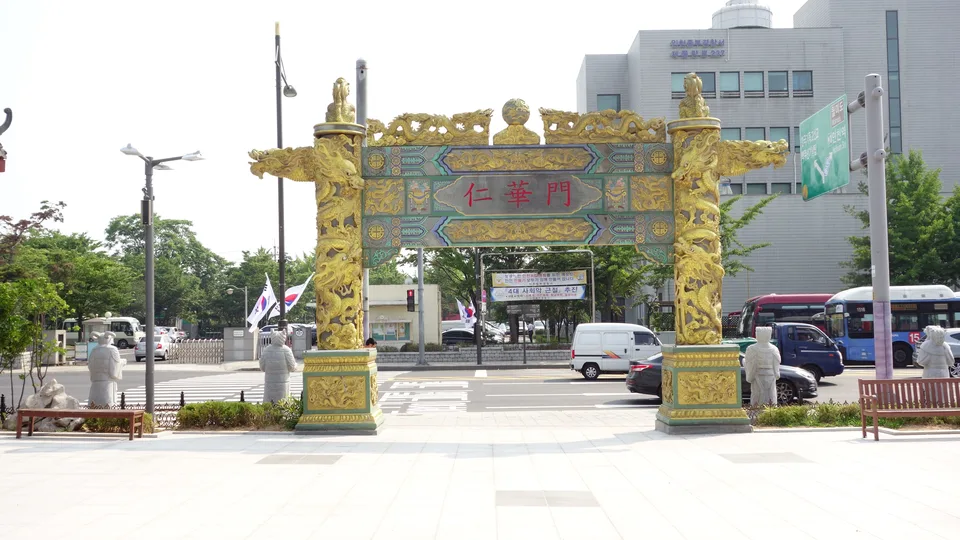
Incheon’s Chinatown grew from the Chinese community associated with the port’s opening.
Choose a restaurant by the dishes and conditions you need, rather than assuming every famous-looking building offers the same experience. Check opening days, queue arrangements and whether a quoted serving is intended for one person or sharing. Anyone with allergies should ask about ingredients and shared preparation equipment directly. Some surrounding streets involve slopes or steps, so plan a shorter route or confirm an alternative approach if mobility, a pushchair or summer heat makes climbing difficult.
Use the Jajangmyeon Museum to put lunch in context
Black bean sauce noodles are a particularly revealing local subject. VISITKOREA’s Jajangmyeon Museum information explains how Chinese-origin noodles developed into a distinctive Korean-Chinese dish. The museum occupies the former Gonghwachun restaurant building and connects food with migration and the neighbourhood’s development.
The published adult admission is ₩1,000, with opening hours of 09:00–18:00. Monday is normally closed; when Monday is a public holiday, closure moves to the following day. Confirm the calendar before travelling specifically for it. Pairing a compact museum visit with lunch provides more context than choosing a restaurant solely for its queue.
Browse Sinpo Market with room for a proper meal
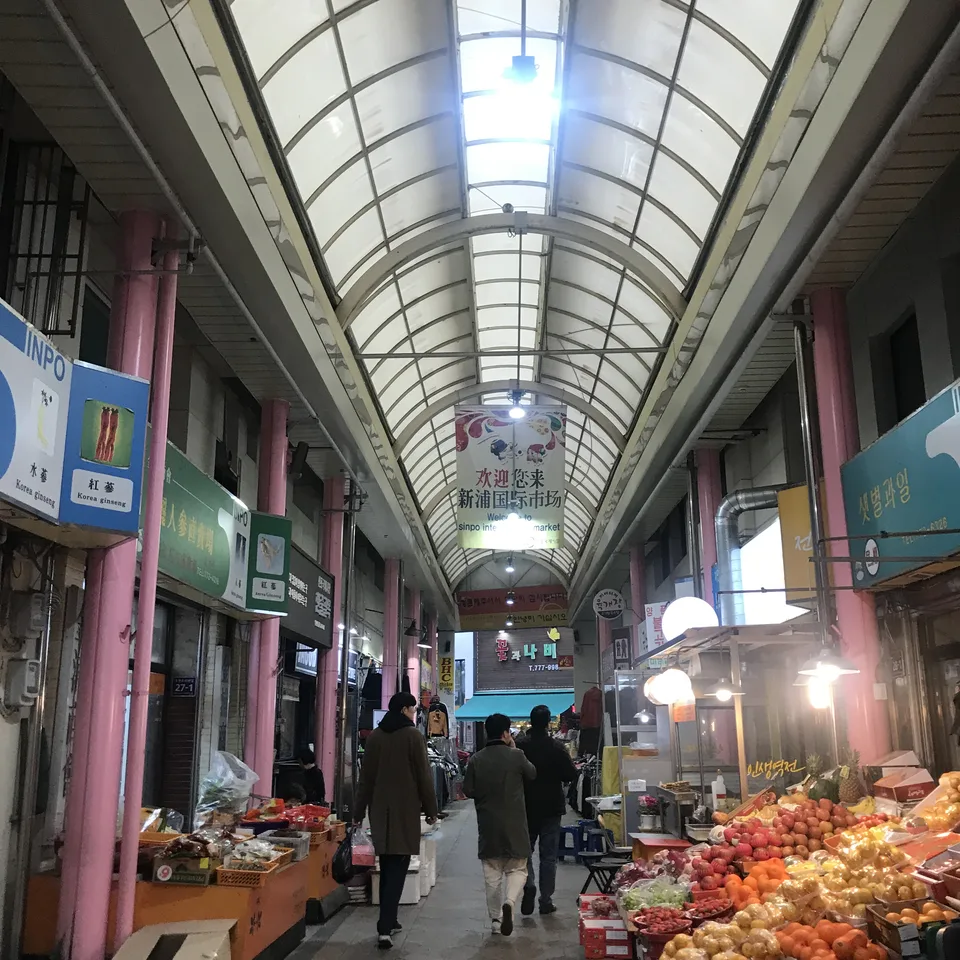
Sinpo International Market combines everyday shopping with foods that attract visitors. The tourism board identifies dakgangjeong, sweet crisp chicken, alongside dumplings, jjolmyeon and gonggal bread. Produce, seafood and side-dish stalls also make the market relevant to the surrounding community, rather than simply a collection of snack counters.
Compare portion sizes before ordering several dishes. A takeaway box and a restaurant meal can represent very different quantities, and a large first purchase may leave little appetite for anything else. Ask about spice, meat and seafood ingredients instead of relying on appearance. Keep the main aisle clear while stopping for photographs, and check whether a particular business accepts your payment method. Opening patterns belong to individual shops; an accessible market street does not guarantee every stall will be trading.
Make Songdo Central Park the focus of a separate outing
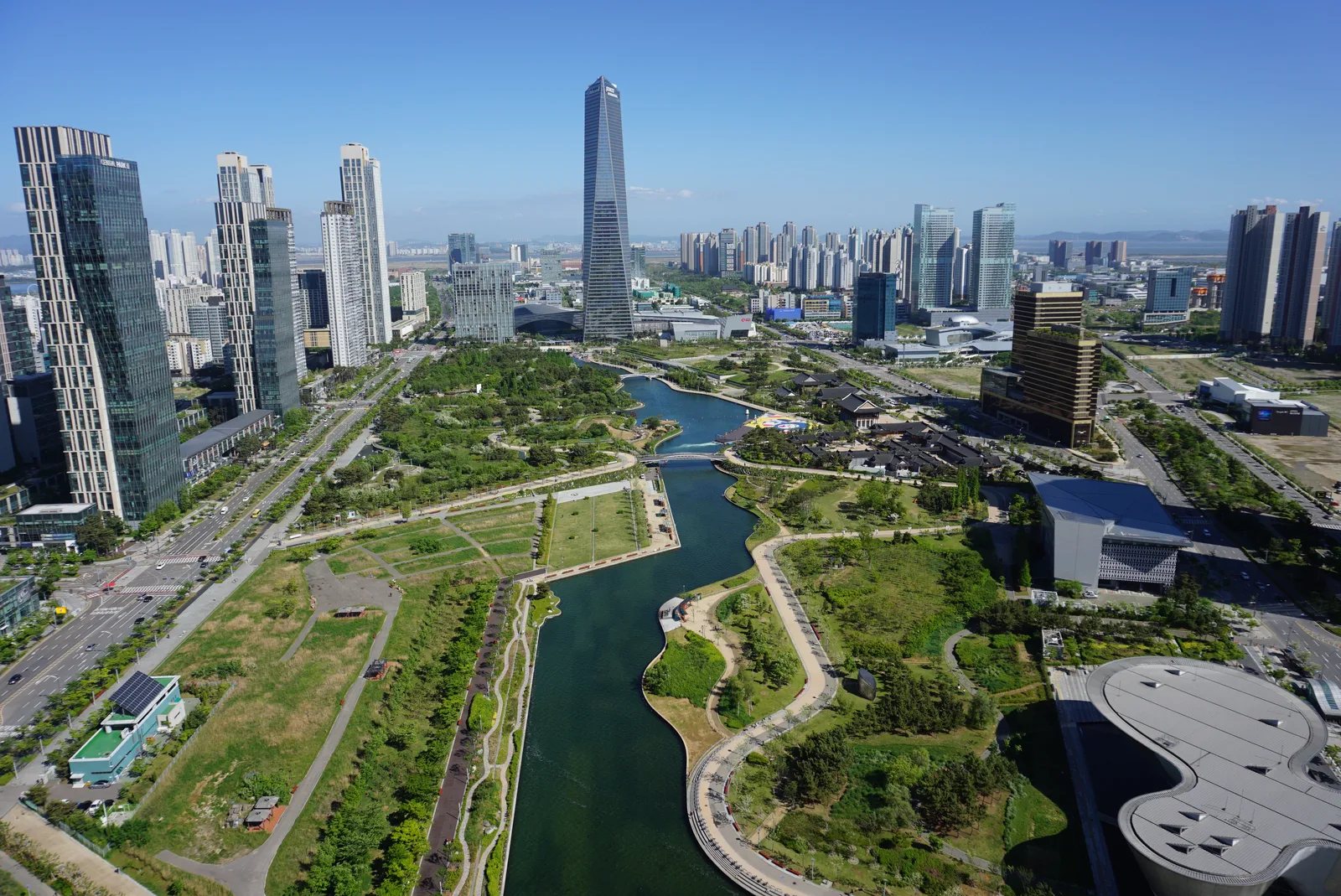
Songdo offers a change in scale: high-rise buildings, planned streets and landscaped waterside spaces. The city’s Central Park visitor information, updated in April 2026, describes an artificial seawater channel running through the park. Walking beside it is a straightforward way to understand the relationship between the landscape and the surrounding development.
Treat boat activities as an optional purchase, subject to current operation, rather than an essential promise of the visit. A park walk and a commercial activity can have different hours and conditions. Choose a manageable circuit, especially in strong sun or wind, and leave time for somewhere to sit. For prospective residents, use the outing to look beyond the skyline: locate the station entrance, groceries and the actual pedestrian route towards any accommodation under consideration.
Visit Wolmido for the waterfront, with rides as an extra
Wolmido’s visitor information makes an important geographical distinction: the former island is now connected to the mainland. Its waterfront, cafes, amusement facilities and park can therefore form a separate excursion from the historic centre without assuming a ferry crossing is necessary.
Decide whether your priority is a walk, a family ride or a meal overlooking the water. These require different budgets and amounts of time. Amusement businesses have their own prices, height restrictions and operating conditions, which should be checked individually. A waterfront visit can work without buying multiple rides, but it is less appealing if the weather makes exposed walking uncomfortable. Keep the return route and last useful connection in mind before settling into a long dinner or an evening programme.
Check the Wolmi Sea Train’s current Korean tariff
The operator’s current hours and fare page lists ordinary adult tickets at ₩11,000 on weekdays and ₩14,000 on weekends. The English information still showing an older ₩8,000 tariff should not be used for budgeting. Resident and concession prices require the relevant eligibility.
The regular closing day is Monday, with a public-holiday exception. April–October hours extend to 19:00 on Fridays, weekends and public holidays; Tuesday–Thursday operation ends at 18:00. November–March hours end at 18:00. The final complete circuit leaves earlier than closing time, so arriving at the advertised closing hour is too late. Decide whether the elevated sightseeing ride adds enough value for your party, and check current notices before purchasing. It is a visitor attraction with its own ticket, rather than an ordinary metro journey covered by the basic rail fare.
Give Ganghwa a day of its own
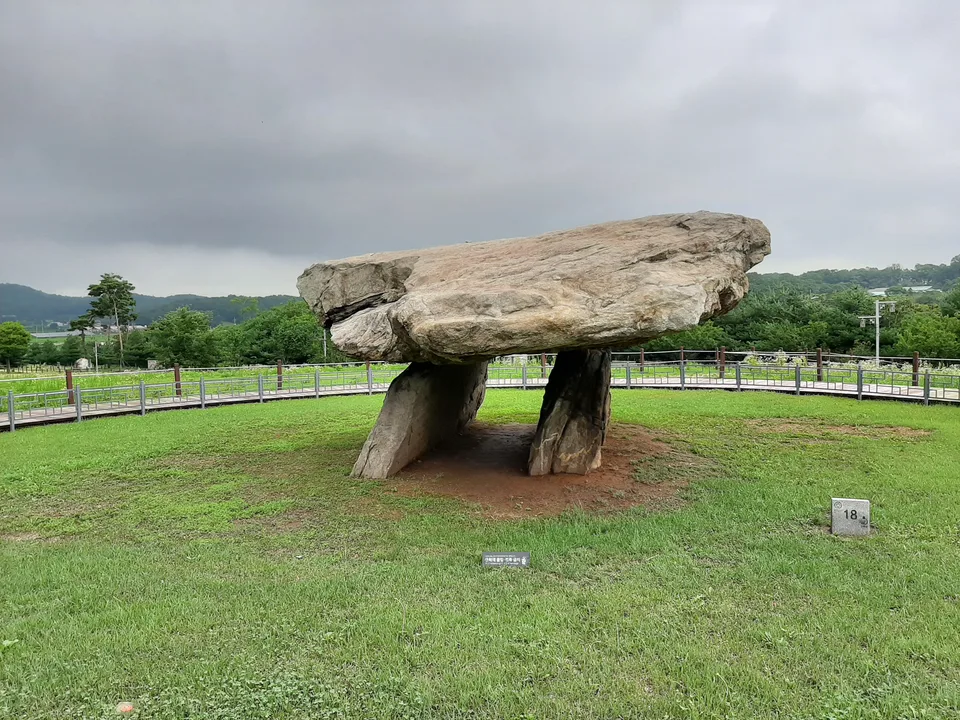
Ganghwa changes the emphasis from urban streets to a wider historical landscape. Its dolmens form part of UNESCO’s Gochang, Hwasun and Ganghwa World Heritage property. These substantial stone burial monuments offer evidence of Bronze Age societies. The serial listing covers separate places: visiting Ganghwa does not mean you have seen the Gochang and Hwasun groups elsewhere in Korea.
Plan transport between the particular sites you want to see, not merely a journey to “Ganghwa”. Check the final approach, walking conditions and the return connection before setting out. A dedicated day leaves more room for interpretation and delays than attaching it to a busy Songdo afternoon. If the available time is short, choose fewer stops rather than spending most of the excursion transferring between places spread across the island.
Select accommodation around the journey that matters
For historic streets and food, compare accommodation around the old port and its useful transport connections. For a conference or a Songdo-focused stay, consider a property near the event or park area. An airport-oriented hotel can suit an early departure, but its location should be judged against the correct terminal and transfer arrangements.
Ask whether an advertised shuttle operates at your required hour and whether advance booking is necessary. Families and longer-stay visitors should confirm laundry, cooking arrangements and bed configurations directly.
Arrive through the correct airport terminal
Use the airport’s official public-transport information to check terminal-specific rail and bus options. Confirm Terminal 1 or Terminal 2 from your airline booking, then allow time for immigration, baggage collection and finding the correct departure point.
For a short stopover, first establish whether you may enter Korea and whether your onward journey permits leaving the airport. Subtract border procedures and the required return margin before choosing any city excursion. If little usable time remains, a complicated cross-city outing is a poor fit. On departure day, verify service hours and disruption notices again, particularly when relying on the first connection of the morning or travelling with luggage that slows transfers.
Choose the airport service for your actual destination
The AREX Express connects the airport terminals with Seoul Station. Its published adult fare is ₩13,000 at this review. That service can be useful for a Seoul-bound journey, but “express” does not automatically make it the right choice for a hotel elsewhere in Incheon. The all-stop service is a different product with intermediate stations.
For Songdo, compare the airport directions published by Songdo ConvensiA, including the 6777 bus connection, against your specific address and arrival time. Check the live timetable, boarding location and fare before choosing it. Avoid interpreting a venue’s approximate travel time as a guaranteed door-to-door transfer. With children, substantial luggage or a late arrival, compare the practical cost of fewer changes as well as the cheapest ticket. Confirm the destination in writing when arranging a taxi.
Understand local rail fares and the final walk
Incheon Transit Corporation’s fare information lists an adult transport-card base fare of ₩1,550 for the first ten kilometres, compared with ₩1,650 for a single-use ticket. Additional distance costs apply. The airport railway’s independent fare section has separate treatment, so the base metro price is not a universal airport-transfer price.
Use the route map and current journey information for the precise station pair. Record the exit as well as the station name: reaching a large interchange does not finish the walk to a hotel, meeting or apartment. Check lift arrangements where required and allow extra time for unfamiliar transfers. For a possible commute, make a trial journey at the relevant hour. A connection that looks acceptable on a weekend sightseeing trip may feel quite different when repeated before and after work.
Build a budget from identifiable costs
Use the verified rail and museum figures above as specific items, not as evidence of a complete daily budget. Accommodation dates, meal choices, airport transfers and paid activities can change the total substantially. Obtain room quotes for the actual stay, then add the journeys and admissions your itinerary requires.
A useful comparison separates unavoidable costs from optional purchases. Keep a line for an alternative transfer if a delay makes the planned connection impractical. For shopping, decide whether you want market food, household supplies or larger purchases before crossing the city for a retail stop. Avoid treating every low-priced snack as a replacement for a meal, especially when comparing realistic spending for children, dietary needs or a longer stay.
Time the visit around rain, heat and cold
The Korea Meteorological Administration’s 1991–2020 climate normals show Incheon’s seasonal contrast: January’s mean temperature is about −1.5°C and August’s about 25.6°C. Summer accounts for roughly sixty per cent of annual rainfall, with July the wettest month. These are long-term observations, not a forecast for your dates or every island within the municipality.
Spring and autumn are practical periods to consider for substantial walking, while winter needs warm clothing and shorter exposed waterfront stages. In summer, place indoor visits between outdoor activities and keep an alternative for heavy rain. Check current weather and air-quality information shortly before travelling. Do not book an island excursion solely because a seasonal average seems favourable; wind, visibility and service decisions on the day can matter more than a monthly summary.
Use two days without turning the trip into a checklist
On the first day, start around Incheon Station and Chinatown. Combine a manageable street walk with the Jajangmyeon Museum if open, then leave space for lunch. Continue towards the historic port streets and Sinpo area according to your interests and stamina. Choose Wolmido as an additional outing only if you still have sufficient time and a clear return plan.
Dedicate the second day to Songdo rather than repeatedly crossing between districts. Walk part of Central Park, take a meal break and add one optional activity that is actually operating. With a third day, consider Ganghwa as a separate excursion. Rearrange the order around closing days and weather. Visitors investigating a move should replace some sightseeing with a supermarket visit, a property viewing or a trial commute relevant to daily life.
Plan coastal outings with current safety information
Consult your own government’s advice alongside current local notices; the FCDO’s South Korea safety guidance discusses regional tensions and severe weather. Keep emergency instructions available and follow restrictions around sensitive areas. A historical excursion to Ganghwa is not automatically a visit to an unrestricted border viewpoint.
For an island journey involving a ferry, verify the specific service, identification requirements, outbound sailing and a realistic return. Weather can change the plan even when you have a reservation. Keep essential medication and communication details with you rather than assuming an onward connection will run. On urban outings, have the accommodation address saved in Korean and allow a way to contact the property.
Separate visitor entry from permission to live and work
Begin with the Korea Visa Portal’s nationality and purpose-based guidance. A tourist visit, a degree programme, employment and permanent residence are distinct legal situations. Choose the route that matches the activity before committing to a move; a rental agreement or an employer’s informal offer does not establish the necessary permission.
The official K-ETA notice extends the temporary exemption for the affected countries and regions through 31 December 2026, Korean time. It is not an exemption for every passport, and this guide does not assume it continues into 2027. Check your own eligibility and proposed arrival date on the official service. Also check the permitted length and conditions of stay: an authorisation’s validity and the duration allowed on a particular visit are different questions.
Complete arrival and residence formalities separately
Korea’s e-Arrival card instructions describe a free submission within three days before arrival. Registered foreign residents, valid K-ETA holders and certain other categories are exempt. Being temporarily exempt from obtaining K-ETA does not itself mean you are exempt from the arrival declaration. Use the official service rather than paying an intermediary for a supposedly mandatory application.
For a longer stay, consult the city’s residence-registration guidance and Hi Korea for the category, documents, appointment and responsible office. Foreign nationals intending to remain more than ninety days generally need registration within ninety days, subject to exemptions. Registered residents must also handle address changes; the city specifies a fourteen-day reporting period. Confirm what applies to your status through immigration information service 1345 before deadlines approach, especially when changing accommodation soon after entry.
Establish work or study conditions before choosing a home
The city’s employment information for foreign residents makes work rights dependent on immigration status. Ask a prospective employer to explain the permitted role, location, sponsorship process and documents before accepting a proposed start date. Do not budget on being able to take any available job while visiting.
Students should confirm the programme, teaching language, campus location and immigration support directly with the admitting institution. Study in Korea’s employment guidance explains that student part-time work requires permission and depends on conditions including language proficiency and programme. It is not an automatic entitlement attached to every course. For a permanent move, obtain a separate assessment of the relevant residence route. Studying, renting a home or working for a period does not by itself guarantee permanent residence or citizenship.
Examine the lease and deposit before paying
The city’s housing guidance distinguishes deposit-based jeonse from monthly-rent arrangements, commonly described as wolse, which also involve a deposit. Compare the money required upfront as well as the recurring payment. A lower monthly figure can conceal a much greater amount of capital committed to the property.
Have ownership and the property register checked, and obtain advice on deposit protection and the registration steps relevant to your circumstances. Agree the lease term, management charges, utilities, repair responsibilities, notice and refund conditions in writing. Do not treat a general description of the deposit system as a guarantee that recovery will be straightforward. Inspect heating, ventilation, moisture, noise and essential appliances. Establish whether furnishings belong to the rental and whether the address can support the paperwork your immigration status requires.
Price student housing and ordinary household needs
Incheon Global Campus’s published housing information lists sixteen-week fees of ₩1,200,000 for a double room and ₩1,800,000 for a single room. These are institutional student-housing figures, not general market rents or accommodation available to every visitor. Confirm eligibility, the required term, availability and refund rules with the campus housing office.
For an independent home, use the city’s electricity, water and gas guidance to clarify accounts and billing. Obtain meter readings and ask what building charges include. Check internet installation, laundry facilities and the nearest practical grocery options before moving in. The residential waste instructions distinguish general waste from food waste and note district-specific bags. Learn the actual building’s collection arrangements, rather than copying another neighbourhood’s routine. Include bedding and basic equipment in the setup budget when they are not supplied.
Match schools and healthcare to the household
Families should consult the city’s education information and the relevant school or education office before committing to a residential area. Local, foreign and international schools have different admissions arrangements, language environments and costs. Confirm learning support, transport and childcare hours for the individual child; a nearby campus or an international district name does not establish a place at a suitable school.
Check medical coverage with the National Health Insurance Service. Eligibility and the start of cover depend on the applicable category; the general six-month rule for many longer-stay foreign residents should not be assumed to govern every worker, student or dependant. Arrange appropriate cover for any gap and budget for contributions and patient charges. Confirm where routine prescriptions and any continuing treatment can be obtained before departure.
Compare Incheon with the place your plans actually require
If most planned visits are in the capital, compare the Seoul city page before choosing an Incheon base. Conversely, a Songdo conference, a local university programme or a specific Incheon employer may make a nearby address much more practical than commuting from Seoul. Compare actual routes and obligations, not broad claims that one city is always cheaper or more convenient.
Use VisaWand’s South Korea country page for wider destination browsing and the South Korea consultant listings or consultant directory when seeking professional help. Ask about relevant qualifications, jurisdiction, scope and fees, and confirm immigration requirements with official services. The strongest plan gives each part of Incheon an appropriate amount of time and makes the ordinary journeys, paperwork and household arrangements work before adding more attractions.
Official planning resources
Reviewed 17 October 2026. Use the official resources linked throughout this guide for admission, transport, housing and immigration decisions. Prices, services and rules can change; confirm the details relevant to your dates. Photography illustrates the locations and is not a live view.
View all official resources
- Incheon Tourism Organization
- Incheon port history, Ministry of Oceans and Fisheries
- Incheon administrative reorganisation
- Incheon current administrative districts
- VISITKOREA Incheon Chinatown
- VISITKOREA Jajangmyeon Museum and food history
- VISITKOREA Sinpo International Market
- Incheon Tour Songdo Central Park
- VISITKOREA Wolmido
- Wolmi Sea Train current hours and fares
- UNESCO Gochang, Hwasun and Ganghwa Dolmen Sites
- Incheon Airport ground transport
- AREX Express train official information
- Songdo ConvensiA airport directions
- Incheon Transit Corporation rail fares
- Korea Meteorological Administration regional climate
- FCDO South Korea safety and security
- Korea Visa Portal
- K-ETA 2026 temporary exemption notice
- Korea Immigration e-Arrival card instructions
- Incheon residence registration and address changes
- Hi Korea immigration services
- Incheon employment for foreign residents
- Study in Korea student employment rules
- Incheon housing and rental guidance
- Incheon Global Campus student housing
- Incheon electricity, water and gas
- Incheon residential waste disposal
- Incheon education information for families
- National Health Insurance for foreign residents
Plan the next part of your journey
Explore the South Korea guide, browse other cities or compare consultants for your travel and relocation questions.