Visa
A university town with the Winelands on its doorstep
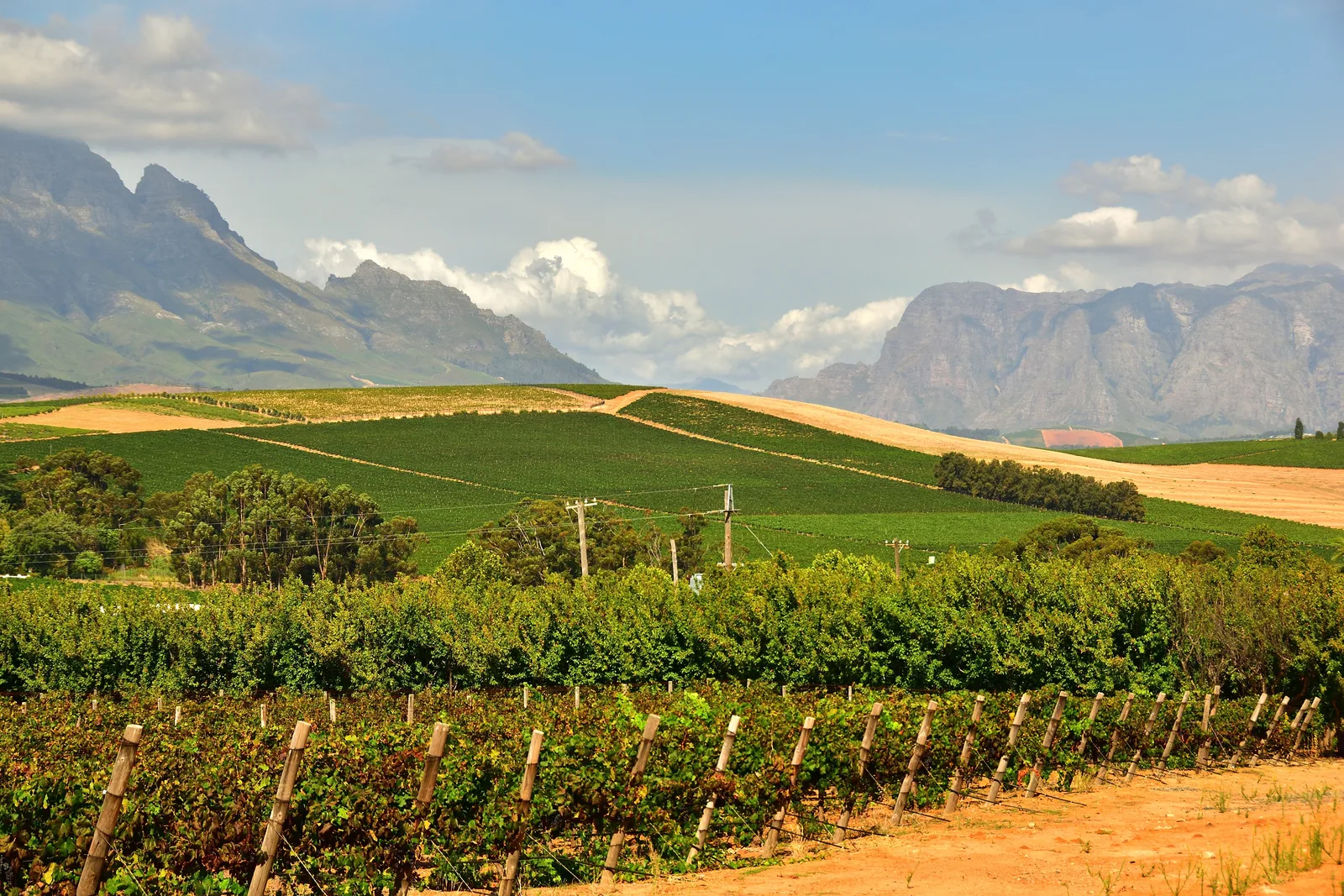
Stellenbosch rewards travellers who give the town itself as much attention as its vineyards. On the Eerste River in South Africa’s Western Cape, it combines historic streets, university life, galleries and gardens with access to mountain country. You can spend a morning on foot among old houses, then leave the centre for a tasting or a landscape of steep, folded ridges.
The practical distinction is between staying in town and staying on a farm. A central address makes meals and sightseeing easier without a car; an estate stay puts scenery outside your window but adds transport arrangements. Two or three nights allow a useful introduction. A longer visit can test whether the university-town setting suits everyday life, provided you investigate housing and commuting separately from the pleasures of a holiday.
For a mixed group, agree priorities before reserving accommodation. Someone interested in museums may want an independent town day while others visit estates. A central base and separately booked activities can make that possible without requiring everyone to follow the same schedule.
Read the historic streets with their wider history
The colonial town was established in 1679 and named after Cape governor Simon van der Stel. Its development around the river, subsequent street layout and the destructive fire of 1710 help explain the mixture of buildings seen today. The Stellenbosch Heritage Foundation’s historical account provides context for Dorp, Church and Drostdy streets rather than treating every whitewashed façade as the same architectural period.
This history includes dispossession and the labour of enslaved people, not simply picturesque settlement. Apartheid subsequently reshaped who could live in the centre. Stellenbosch University’s research with former residents of Die Vlakte documents a community fractured by forced removals, with families dispersed to places including Cloetesville, Kayamandi and Idas Valley. Some university expansion occupied this displaced community’s land. Reading that history changes the meaning of an otherwise attractive walk through the campus and town.
Find your bearings around Dorp Street and the campus
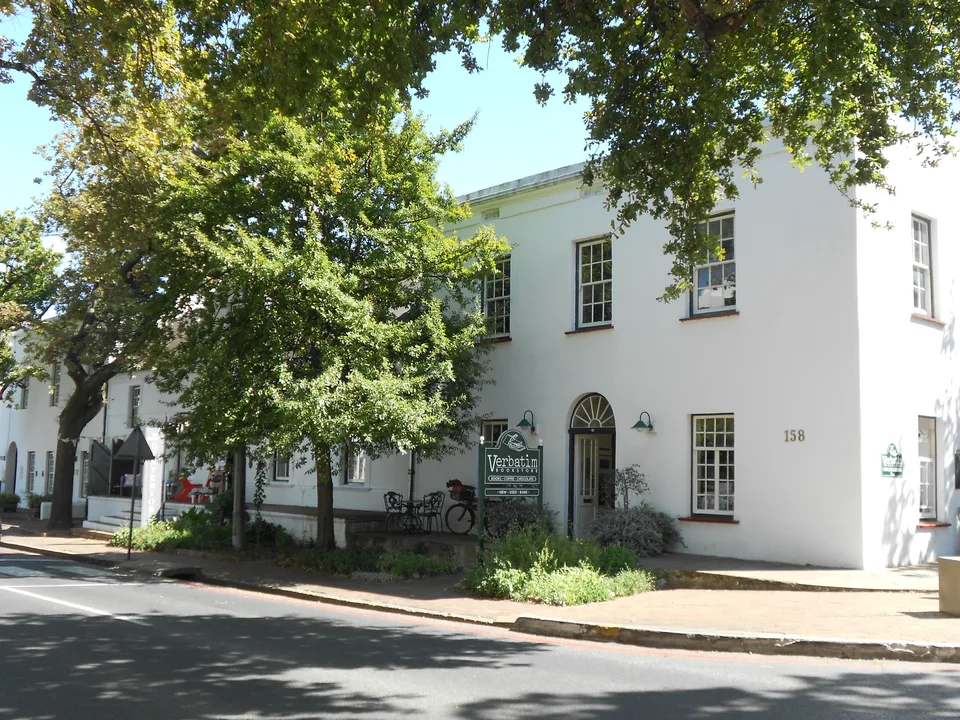
Dorp Street provides a useful first orientation, with historic buildings and a route into the central streets. Church Street and the lanes around the museum make a compact area for an unhurried walk. Look up from restaurant menus to notice gables, roof forms and the relationship between older houses and the modern commercial town.
The university adds another rhythm: lectures, student accommodation and ordinary working days continue alongside tourism. The town centre, campus and surrounding residential districts should not be confused with the much wider municipal area or the full wine region. A property advertised as “Stellenbosch” may be well outside walking distance of the streets you intend to use. Check its map position, entrance and realistic route before booking, particularly if you plan to return after dinner.
For a first walk, save your accommodation location and a few landmarks before leaving. Break the route into small sections instead of trying to cover the full residential town in one afternoon. If a gallery catches your attention, check whether you are entering a public exhibition or a commercial showroom; either can be interesting, but opening arrangements and expectations differ.
Use the Village Museum to look beyond façades
The Stellenbosch Village Museum brings together four historic houses and their gardens. Their restored settings interpret different periods of domestic life, offering a more structured introduction than simply photographing buildings from the pavement. Schreuderhuis dates from 1709 and survived the fire that devastated much of the young colonial town the following year.
Allow time to compare the houses rather than rushing through them as one uniform attraction. Ask how their interiors were reconstructed, whose lives they represent and what is known about the people who worked in them. Restored rooms are historical interpretation, not untouched time capsules. Confirm current admission arrangements and opening hours with the museum before committing a morning, and check separately for other museum facilities rather than assuming one ticket includes every site operated by the institution.
Make a small garden part of your town day
The Stellenbosch University Botanical Garden offers a quieter stop within the town rather than a separate expedition into the countryside. Its entrances are on Neethling and Van Riebeeck streets. It is particularly useful when you want a break between architectural sightseeing and lunch without spending another hour arranging transport.
The university currently lists ordinary admission at R15, with separate concessions; free entry for its own staff and students requires a valid card. Published hours are 08:00–17:00 from September to May and 09:00–17:00 from June to August, with closure on New Year’s Day and Good Friday. There is no dedicated visitor parking. Keep children supervised, leave plants undisturbed and check accessibility for your particular needs. This is Stellenbosch’s university garden, distinct from Kirstenbosch in Cape Town.
Choose wine visits by interest and travelling time
The surrounding estates are individual businesses with different booking systems, food arrangements and experiences. Decide whether you want an introductory tasting, a particular producer, a long lunch or a garden visit before choosing the day’s route. Fewer appointments with generous gaps are more useful than a checklist that leaves you watching the clock.
For a concrete price reference, Spier’s published tasting menu lists its six-wine Taste of Spier experience at R105 per person. Other tastings cost more and some experiences have group-size requirements. That figure is an example from one estate, not a region-wide admission price. Check the current menu, appointment and cancellation terms. If travelling with children or non-drinkers, establish what they can actually do during the session; an estate’s grounds do not automatically make every tasting suitable for everyone.
Arrange the driver before arranging the tastings
Transport is part of the wine budget. The Vine Hopper Northern Route currently lists R450 per person for transport and a driver, with tastings charged separately. Its published collection arrangements include central Stellenbosch guesthouses or the tourism office at 141 Dorp Street. The Northern Route operates on Mondays, Wednesdays and Fridays; other routes need their own checks.
This is a road-based service between estates, not a tram through central Stellenbosch. Read the return timetable before selecting a final stop, and remember that a late start reduces the number of places you can comfortably visit. A private driver may suit a group with fixed reservations, while a single-estate outing can be simpler for families. Agree collection points and waiting charges in advance. Keep a non-drinking driver if using a rental car rather than improvising after a tasting.
Take sculpture as seriously as the wine
The Dylan Lewis Sculpture Garden provides a substantial alternative to another tasting. At Mulberry Farm on Paradyskloof Road, the experience combines sculpture with a deliberately composed outdoor setting. It is suited to visitors who want to look slowly, rather than move through a crowded sequence of short appointments.
Visits are by appointment, with published opening Tuesday–Saturday, 08:30–17:00. Standard self-guided admission is currently R280 per person; under-18s have complimentary entry. Private guided tours require advance arrangements and carry a separate group fee in addition to garden admission. Do not mistake the group guiding price for an inclusive ticket. Ask about the surfaces and distances if mobility is a consideration, and choose clothing for an outdoor visit. Reserve a sufficiently generous slot that weather or transport does not turn it into a hurried detour.
Plan Jonkershoek around the current access notice
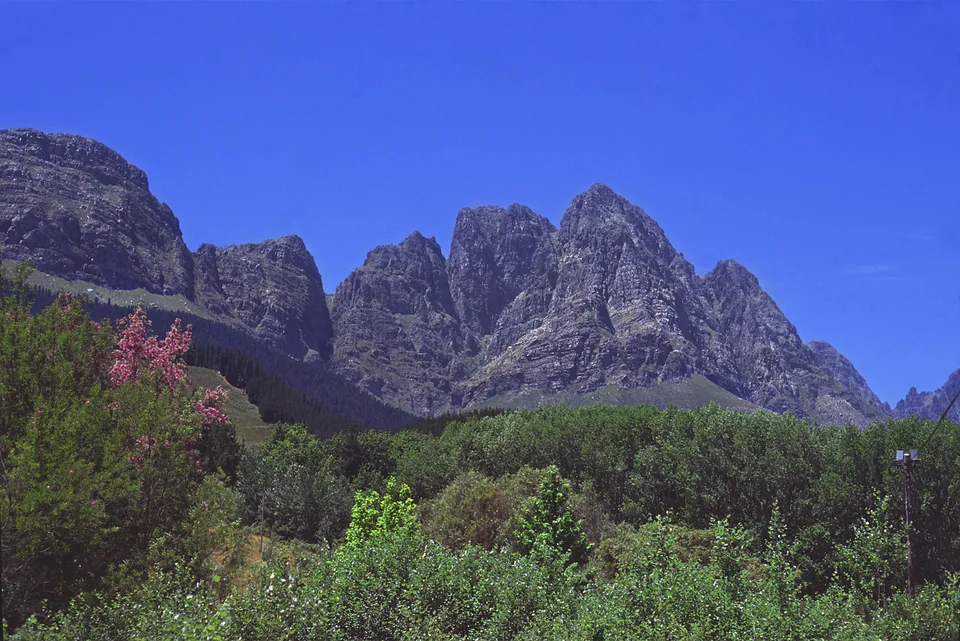
CapeNature’s Jonkershoek visitor information is essential reading before a mountain day. Its current notice says parking on the circular route is closed until further notice, with parking outside adding approximately five kilometres of walking to reach the trails. A walk described elsewhere as short may therefore require significantly more time and effort under present arrangements.
The published adult day-access price is R80; the R55 starting figure applies to children aged four to seventeen. Confirm availability and the appropriate permit before setting out. Long-route starts have earlier cutoffs than the waterfall routes, and hikers must respect the reserve’s exit requirements. Do not substitute a general estate or mountain-bike gate timetable for the hiking rules. If the added approach makes your intended route unrealistic, choose another day’s activity rather than compressing the walk into the afternoon.
Treat the mountains as an outdoor commitment
Jonkershoek is an attractive counterpoint to cultivated vineyards, but the change of setting brings exposure, distance and weather decisions. Begin with a route suited to the least experienced person in your group. Carry water, food, sun protection and an extra layer, and establish how you will return to town before losing mobile reception or finishing tired.
The MTO Jonkershoek permit page distinguishes hiking from mountain-bike access; do not assume a hiking payment authorises every activity or that a bike pass covers every conservation requirement. Recheck closures and start cutoffs on the day, particularly after poor weather. Summer heat and winter rain change the difficulty of the same landscape. A guide or a shorter outing may be the better use of your time if you are unfamiliar with mountain navigation, local conditions or the current access arrangements.
Match accommodation to the evenings you want
A central guesthouse, small hotel or apartment suits travellers who want to step out for dinner and combine several town attractions on foot. Before paying, ask about parking, street-facing noise, stairs and late arrival. A historic exterior does not tell you whether a room has practical ventilation, quiet windows or an accessible bathroom.
Farm accommodation suits those who value space, views and spending time at the property itself. Compare the full cost with a town stay: transfers, dinner transport and any activities that require a separate booking. Confirm whether the restaurant opens on your dates and whether you can prepare food. For families, check sleeping arrangements and pool supervision rather than relying on a generic “family friendly” label. For longer stays, laundry and a workable kitchen often matter more than another decorative reception room.
Ask for photographs of the room category you are booking, particularly where one property combines older buildings with newer rooms. Establish whether breakfast is included and whether a late checkout is possible before planning an afternoon departure around it. Read the cancellation deadline against your flight and visa arrangements. A lower advance rate is only a saving if its restrictions fit your trip.
Arrive through Cape Town with a confirmed transfer
Cape Town International Airport is the main practical flight gateway for a Stellenbosch visit. Airports Company South Africa’s transport information lists car hire, shuttles and authorised taxis, including staffed transport arrangements in the terminal. Book for your actual Stellenbosch address, not merely a generic Cape Town transfer zone.
Get a written quotation covering the number of passengers, luggage, waiting after a delayed flight and late-night collection. If using an app, follow the airport’s current pickup instructions and match the vehicle and driver to your booking. Avoid unsolicited offers in arrivals. A rental car offers flexibility for the wider region, but confirm licence requirements, insurance, deposit and after-hours collection with the rental company. Allow extra time on departure day; a map’s uncongested estimate is a poor basis for a flight connection.
Separate town walking from regional travel
Walking works well for a deliberately compact central day. It becomes less useful when an address lies on an estate road beyond the centre. Look at the whole route, including pedestrian space, traffic and the final entrance, rather than judging a journey by kilometres alone. Book a return ride when visiting an isolated property, especially for an evening meal.
For a potential relocation, test commuting at the times you would actually travel. The cost of a car includes parking, insurance, maintenance and fuel, while repeated paid rides can change the economics of an apparently cheaper rental. Do not commit to a home on the assumption that an old rail map guarantees a convenient current service. Verify operating trains, connections and the route from station to workplace before making public transport central to your housing decision.
Eat, shop and budget for complete days
Choose some meals in town and make an estate lunch a deliberate booking. This lets you compare ordinary eating costs with a special outing rather than treating every day as a restaurant package. Check menus for vegetarian choices, allergies and children’s meals before reserving; a tasting platter may not replace lunch for your group.
When shopping for gifts, ask about production, materials and delivery rather than assuming a regional label explains provenance. For wine purchases, establish whether the producer ships to your home country and who handles duties or breakages. Those costs belong in the comparison with carrying bottles yourself. Keep receipts and check your destination’s import allowance; buying at an estate does not remove the rules at home.
Published attraction prices make useful anchors. Two ordinary adult botanical-garden entries currently total R30; two standard sculpture-garden entries total R560. Two Northern Route transport tickets total R900 before tastings, food or other transfers. These are separate examples, not an all-inclusive daily budget. Accommodation, restaurant choices and driving arrangements usually produce the larger differences. Spier’s visitor information also prohibits bringing your own food and drinks onto the farm, so do not assume every estate accepts an outside picnic. Check luggage allowances before buying wine to take home.
Choose the season for your activities
Stellenbosch has hot summers and a winter-rainfall pattern. The local Stellenbosch Triennale visitor information describes that Mediterranean climate, but broad seasonal expectations are more useful than promising a particular temperature on your dates. Warm weather suits outdoor meals and garden visits, while heat can make an exposed walk substantially less comfortable.
Winter can work well for museums, town stays and planned indoor tastings, with flexibility around wet days. Spring and autumn offer another balance for combining outdoor and indoor plans. Check the mountain forecast separately from conditions at your accommodation, and carry layers even when the morning feels settled. For any trip built around a particular event, harvest experience or garden display, verify that year’s dates and availability. An archived festival page is not evidence that the same programme is running during your visit.
A three-day introduction with room to adjust
On day one, keep your schedule in the centre: orient yourself along Dorp Street, visit the Village Museum, stop for lunch and spend the afternoon at the botanical garden. Read the Die Vlakte history before a campus-area walk. Finish with dinner near your accommodation rather than adding a long transfer immediately after arrival.
Use day two for the wine region. Reserve one or two experiences that fit your chosen transport route, include a proper lunch break and leave time to return without rushing the final collection. Non-drinkers can substitute the sculpture garden on an opening day. Day three can be Jonkershoek if weather, fitness and current access allow. Account for the additional approach walk; otherwise use that day for sculpture, another town visit or an onward journey. Swap days around confirmed bookings rather than forcing attractions into unsuitable opening days.
Test Stellenbosch as a home during an ordinary week
A reconnaissance stay should include groceries, laundry, a workday journey and time in the area after normal visitor hours. Evaluate the precise location against your workplace or course, not just its distance from Church Street. A quiet estate holiday and an everyday household with commuting responsibilities are different propositions.
Consider whether you need a furnished short stay while looking for a longer lease. Inspect storage, cooking facilities, damp, ventilation, secure entry and mobile reception. Ask what backup power actually supplies: a working lamp does not establish that cooking appliances, hot water or internet will continue operating. Check broadband availability at the exact address. Families should investigate school admission and travel independently, while anyone needing regular healthcare should confirm nearby services and insurance arrangements before choosing a home. Do not infer availability from a tourism map.
Keep a separate settling-in budget for bedding, kitchen equipment, connection charges and the overlap between temporary accommodation and a new lease. If sharing, agree how common bills and replacement tenants will be handled. A visit during a normal working week gives you a better basis for those conversations than an itinerary devoted entirely to restaurants and estates.
Put the lease and household costs in writing
The Western Cape Government’s rental guidance recommends recording responsibilities clearly and attaching a signed list of defects from a joint inspection. Establish the rent, deposit, escalation, notice terms and which bills you pay. Photograph the condition of the property and take meter readings when moving in.
The guidance explains that deposits must earn interest, with lawful deductions potentially covering unpaid amounts or damage beyond ordinary wear. Keep payment records and request written clarification of disputed charges. Ask how water and electricity are billed, whether meters are prepaid and which provider serves the address. Compare total monthly costs, including connectivity and transport, before judging affordability. Current listings can inform your search, but no single advertised apartment establishes a reliable town-wide rent. Confirm the property and the person authorised to let it before transferring a deposit.
Distinguish a visit from work, study and residence
Start with the South African mission responsible for your nationality and country of residence. Visa exemptions and permitted lengths of stay vary. The official consular immigration resources separate tourist applications from other activities; a tourist visit does not automatically authorise employment with a local business. Read the current checklist before buying non-refundable travel or accepting a proposed work arrangement.
South Africa also has a separate remote-work route. The June 2026 official remote-work checklist requires a signed foreign-employer contract and sets a minimum gross annual salary of R650,796, alongside further documentation and tax-registration conditions. Its New York submission instructions apply to that consular jurisdiction. Study requires the appropriate status; Stellenbosch University explains its registered South African medical-cover requirements for study-visa holders. Permanent relocation needs a qualifying immigration route of its own. Property rental, university admission or enthusiasm for the town does not by itself grant residence permission.
Compare Stellenbosch with the rest of your trip
Use VisaWand’s South Africa country guide for the broader journey and its South Africa location directory to compare places. Cape Town is the stronger base if most of your plans involve its urban attractions and coastline; Stellenbosch makes more sense when the town and surrounding wine country are central to your itinerary.
Franschhoek and Paarl are other regional locations to investigate, with their own accommodation and transport choices. Check each destination’s specific activities instead of assuming every Winelands experience operates from the same town. VisaWand’s South Africa destination page and consultant listings can help organise further research and immigration questions. Choose the base that reduces your actual journeys, and leave enough time to enjoy it between reservations.
Official planning resources
Reviewed 28 October 2026. Use the official resources linked throughout this guide for admission, transport, housing and immigration decisions. Prices, services and rules can change; confirm the details relevant to your dates. Photography illustrates the locations and is not a live view.
View all official resources
- Stellenbosch Heritage Foundation short history
- Stellenbosch University: Mapping Die Vlakte
- Stellenbosch Village Museum operator
- Stellenbosch University Botanical Garden visitor information
- Spier wine tasting
- Vine Hopper Northern Route
- Dylan Lewis Sculpture Garden visitor bookings
- CapeNature Jonkershoek visitor information
- MTO Jonkershoek permit operator
- ACSA Cape Town airport transport
- Spier visitor contacts
- Stellenbosch Triennale local visitor information
- Western Cape Government rental guidance
- South African Consulate New York immigration resources
- DIRCO June2026 remote-work visa checklist
- Stellenbosch University medical cover requirements
Plan the next part of your journey
Explore the South Africa guide, browse other cities or compare consultants for your travel and relocation questions.