Visa
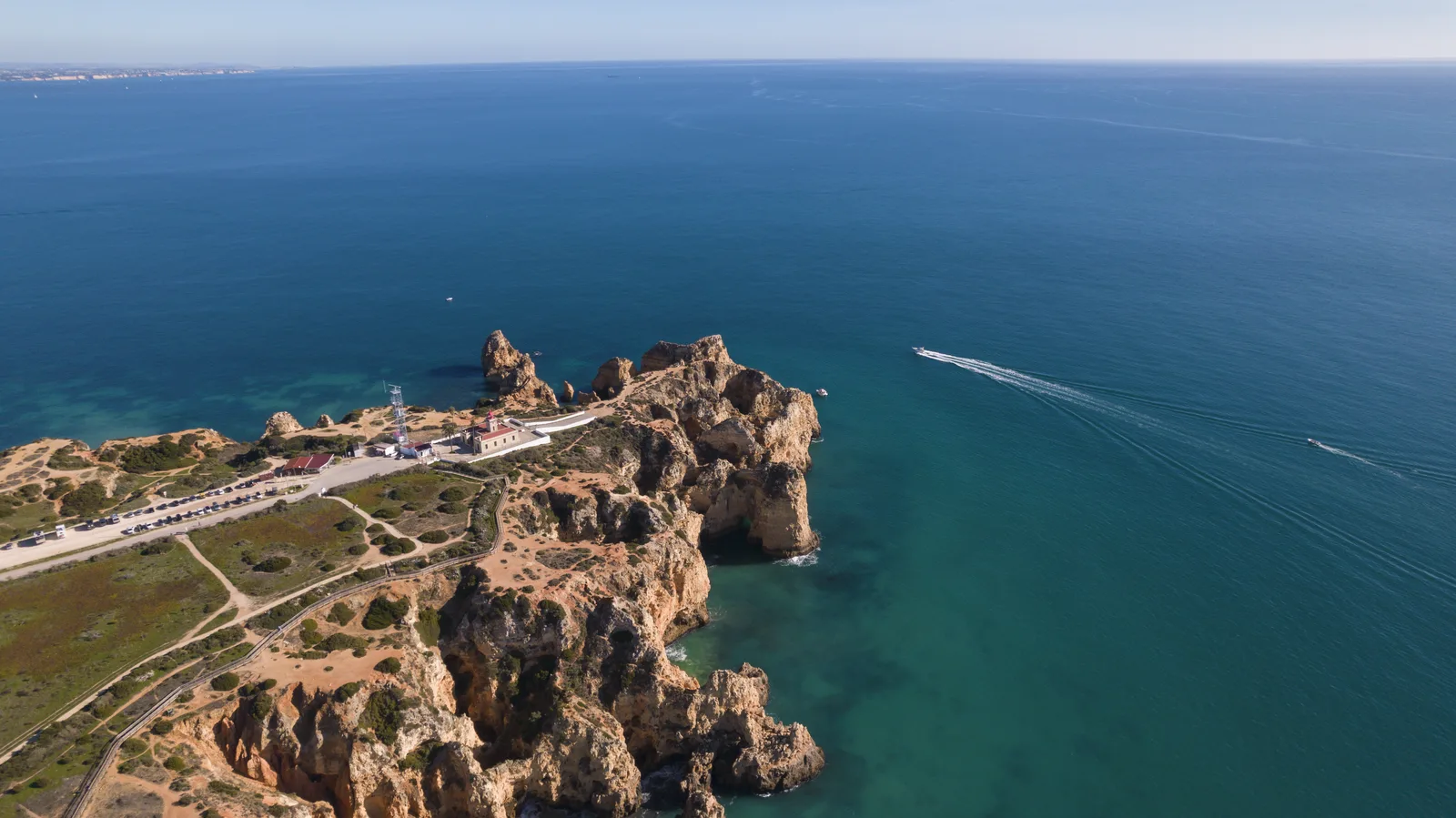
Choose Lagos for a town as well as a coastline
Lagos offers two holidays that work particularly well together: a walkable historic town with markets and museums, and a coastline of long beaches, small coves and sculpted cliffs. You can spend a morning looking closely at the city’s history, then walk towards the sea without changing accommodation or organising a major expedition.
This is Lagos in the western Algarve, in mainland Portugal. It should not be confused with Lagos in Nigeria, or with similarly named places elsewhere in Portugal. For visitors, the main decision is whether to stay close to the old centre, beside the marina or near a particular beach. For prospective residents, the more consequential questions concern year-round housing, winter comfort and how everyday journeys work outside the holiday season. Three or four nights give a useful introduction; a longer stay makes room for the surrounding coast.
Read the city’s maritime history critically
The sea has shaped Lagos through fishing, navigation, trade and tourism. The historic streets, defensive remains and waterfront give that story a physical setting, but a visit becomes more meaningful when it includes the people harmed by maritime expansion as well as its celebrated navigators.
The municipal museum’s Rota da Escravatura exhibition examines Lagos’s connection with the fifteenth-century trade in enslaved Africans. Its interpretation draws on archaeological discoveries as well as historical evidence. Treat the commonly used name Mercado de Escravos as the name of a museum site, rather than proof that the present building preserves an unchanged medieval trading space. This is a worthwhile stop for adults and older children prepared to discuss difficult history. Allow time for reflection instead of making it a brief photograph between beaches and lunch.
Find your bearings between the walls and water
Begin on Avenida dos Descobrimentos, then turn into the old town. Praça Gil Eanes and Praça Infante Dom Henrique are useful reference points, with connecting streets providing cafés, shops and places to pause. Inside the historic centre, narrow lanes and uneven paving encourage walking at an unhurried pace. Shoes with a dependable grip are more useful than beach footwear for a longer exploration.
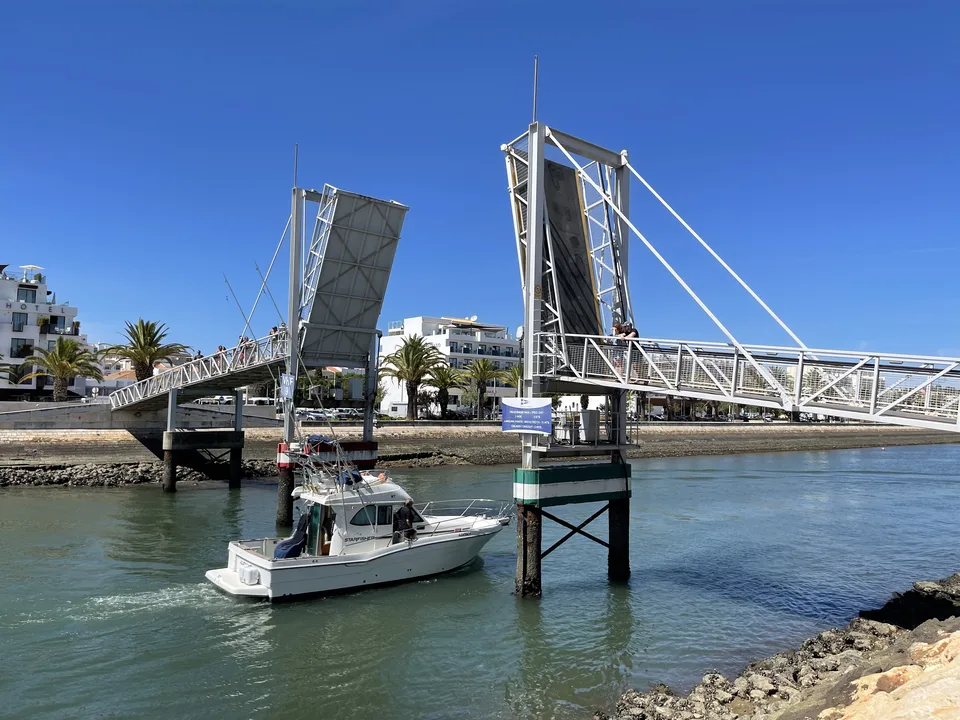
The marina lies across the channel, connected to the central waterfront by the pedestrian bridge. The railway station is on the marina side, so distinguish it from the bus terminal when planning an arrival. A property described as “central” may still require a bridge crossing or an uphill walk with luggage. Save its exact entrance, not merely the street name. The first practical test of a neighbourhood is the walk you will make at the end of the evening.
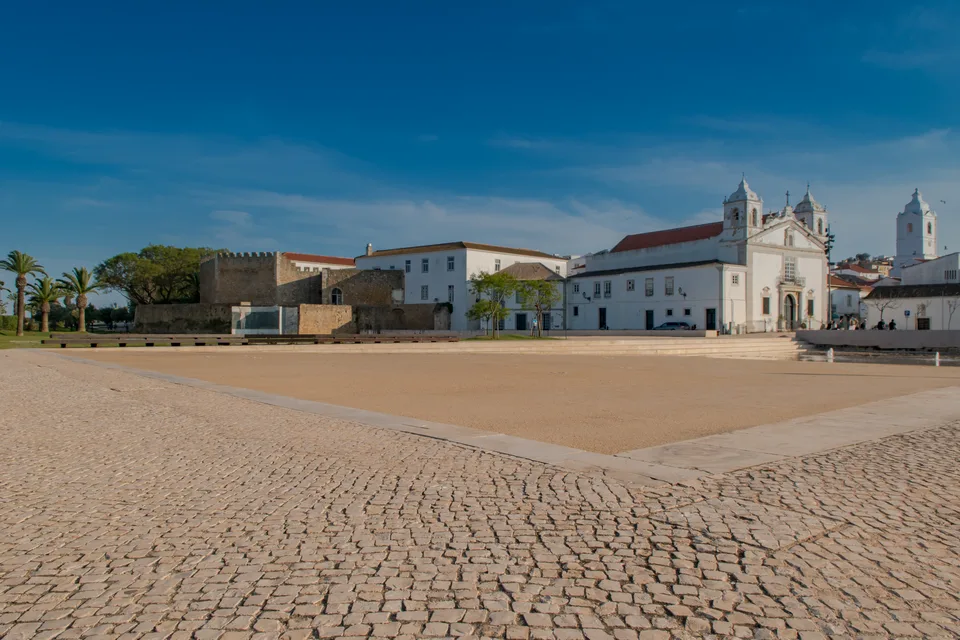
Pair the Formosinho museum with Santo António
The Dr José Formosinho museum complex brings together local history, art and collections associated with the Algarve. It includes Santo António church, whose richly worked interior offers a striking change from the restrained appearance of many surrounding streets. Plan the visit through the museum’s arrangements rather than assuming that every adjoining building operates independently.
The current museum visitor information lists normal admission at €3 for Formosinho and €3 for Rota da Escravatura, or €5 for a combined ticket. Concessions and exemptions require supporting evidence. Both sites publish Tuesday–Sunday hours of 10:00–13:00 and 14:00–18:00, with last entry half an hour before closing; check holiday exceptions. Ponta da Bandeira fort is currently listed as temporarily closed. You can appreciate its waterfront setting, but an itinerary should not promise an interior visit while that notice remains in place.
The published conditions include free admission for children up to 12 and municipality residents, subject to proof where required. Bring suitable clothing for the museum and church: swimsuits, bare feet and a bare torso are not accepted. Leave beach equipment and large bags at your accommodation rather than planning a cultural visit with everything carried from the sand.
Walk Ponta da Piedade before deciding on a boat trip
Ponta da Piedade is the headland associated with many of Lagos’s best-known coastal views. There is value in seeing it from land even if you also book a boat: cliffs, arches and changing angles reveal themselves gradually as you walk. The municipality describes coastal boardwalks between Canavial and Pinhão, passing the headland and lighthouse area. Choose a length that suits the weather and your ability rather than assuming the entire route must be completed.
Keep to authorised paths and respect barriers, including temporary closures. The municipality’s emergency guidance addresses unstable coastal cliffs; sunshine and a calm sea do not remove the possibility of rockfall. Stay back from cliff edges and avoid resting directly beneath cliff faces on the sand. The most useful viewpoint is one you can reach safely, not the informal ledge made familiar by somebody else’s photograph.
Pick a beach by access, space and conditions
The municipal beach descriptions help distinguish the options. Meia Praia spreads east of town and offers a different experience from the small coves south of the centre. Dona Ana and Camilo appeal through their enclosed rocky settings, but reaching the sand involves substantial stairs. If carrying a child, managing painful knees or using mobility equipment, assess the return climb before descending.
Porto de Mós and Praia da Luz are alternatives to investigate when you want beach facilities and a broader setting. Confirm the specific access arrangements you need, including parking, ramps, adapted equipment and the dates assistance is available. A general accessibility label cannot describe every person’s journey. At any beach, follow current flags, lifeguard instructions and local notices. Clear-looking water is not evidence of safe swimming, and lifeguard provision should not be assumed outside the designated season.
Understand the rules before carrying a kayak downstairs
Lagos has a specific access regulation for Dona Ana and Camilo. During the bathing season, carrying equipment for activities such as surfing, SUP, windsurfing, kitesurfing, kayaking and canoeing down their stairs is prohibited between 09:00 and 19:00. Placing associated equipment on the beach is also restricted during those hours; the regulation provides exceptions for skimming and bodyboards.
These rules concern equipment and constrained access routes. They do not mean that ordinary beachgoers are banned from using the stairs during the day, nor that the same restriction automatically applies to every beach in Lagos. Check the bathing-season dates and current instructions before organising an independent outing. If joining a guided trip, ask where it launches and how equipment reaches the water. A meeting point, launch beach and advertised destination may be three different places, with different transport requirements.
Compare coastal outings by what they include
Boat and kayak trips can provide a closer perspective on the rock formations, but their suitability depends on conditions and the individual programme. Ask about time actually spent on the water, group size, safety equipment, physical effort and whether a support boat is involved. People travelling with children should check age limits and seating arrangements before payment.
Confirm the departure point and the operator’s policy if wind, swell or sea conditions prevent the planned route. A photograph of a cave does not guarantee that a vessel can enter it on your date. Keep the first available morning for a preferred outing if you have several days, leaving another opportunity if conditions change. Visitors prone to seasickness or uncomfortable in confined water passages may prefer the land-based views. Both approaches can be rewarding; purchasing a trip is not a prerequisite for understanding the coastline.
Stay where your evenings and mornings will work
The old town suits travellers who want restaurants, history and an easy evening wander close to their room. Ask about nearby nightlife, street-facing windows and air conditioning, particularly if you plan to sleep early. An attractive central address can still be noisy, and a room above a busy lane differs from one facing an internal courtyard.
The marina and Meia Praia side can suit rail arrivals, beach time and accommodation with more space. Around Dona Ana or Porto de Mós, assess the uphill journey and your options for returning from dinner. Self-catering apartments offer flexibility, but confirm cooking equipment, laundry and the actual bedroom arrangement. For a local accommodation property, use Turismo de Portugal’s RNAL register to check its advertised registration. Registration is a useful verification step; it does not certify that the property meets your accessibility needs or guarantee the quality of a stay.
Make Faro Airport a separate stage of the journey
Faro Airport is the main regional gateway, roughly 85 kilometres from Lagos according to Visit Portugal’s destination information. Your holiday begins with a further road journey or a public-transport connection, not a short walk from arrivals. Match your transfer to the flight’s actual landing time, allowing for baggage collection and border formalities where applicable.
Consult Vamus’s current regional journey planner for airport-coach options and date-specific services. Published schedules and fares on secondary travel sites disagree, so check the operator directly before relying on a last departure. A booked private transfer can be practical for a group, late arrival or accommodation outside the centre; obtain a total quotation and establish what happens if the flight is delayed. If connecting through Faro city to rail, include the airport-to-station journey and waiting time. The airport itself is not Lagos railway station, or Faro’s town-centre station.
Use rail for regional journeys and plan the final walk
The CP Algarve regional timetable covers Lagos, Tunes, Faro and destinations farther east. For a journey from Lisbon, check the actual connections rather than assuming a direct long-distance train reaches Lagos. Tunes is an important interchange, and a useful itinerary includes transfer time as well as time aboard.
At Lagos, the station’s position behind the marina makes the final approach part of the trip. Check the walk to your accommodation with luggage, especially if it is on the opposite side of the channel or up the slopes beyond the old town. For day trips, look up both the outward and return services before setting off. Regional trains provide an alternative to driving, but station locations may require a separate bus, taxi or walk to the attraction you want. A route on the railway map does not mean every beach has a station beside its entrance.
Get around Lagos with walking and A Onda
Walking is effective for the central waterfront and historic streets. For longer journeys, A Onda is the municipal bus network, with routes serving beaches, neighbourhoods and places elsewhere in the municipality. Check the actual stop and direction, especially where a route has different weekday, weekend or school-day arrangements. A holiday bus journey is useful practice if you are assessing a future commute.
The operator’s 2026 fare table publishes subsidised onboard fares of €1.20 in Zone A and €1.60 in Zone B, with a €3 one-day ticket. Ordinary onboard tickets allow transfers within their one-hour validity. The €0.80 pre-purchased ticket requires a magnetic card costing €3 and a minimum €5 load, so it is not necessarily the cheapest purchase for one short visit. Establish which zone covers your journey and compare the total cost, including the card, before choosing a ticket.
Spend on the experiences you want, not a generic daily allowance
A realistic budget separates accommodation, arrival transfers, meals, transport and optional outings. Room prices depend heavily on dates, location and facilities, so compare quotations for the same stay rather than treating a seasonal bargain as a city-wide norm. Ask for the total payable, including any compulsory charges, and check cancellation conditions before reserving a non-refundable room around a weather-dependent activity.
Two adults buying the €5 combined museum ticket and a €3 A Onda day ticket each would spend €16 between them on those admissions and local transport. This is a worked example using published prices, not a complete daily budget. It excludes meals, accommodation, airport travel and boat trips. Build your own plan around the activities you will actually use. A day spent walking and visiting markets has a different cost structure from a private coastal outing, even when both start from the same hotel.
Choose a season for your preferred kind of day
Summer suits visitors seeking long beach days and a lively holiday atmosphere, provided they are comfortable with heat and demand for accommodation. Spring and autumn can work well for walking, museums and a mix of coast and town. Keep a light layer for breezy waterfront evenings even when the middle of the day feels warm.
Winter deserves a different itinerary. Plan more around urban walks, meals and cultural visits, and check which seasonal services are operating. Do not infer heated accommodation from photographs taken in summer. The IPMA climate normals for Faro offer a regional comparison, not an exact forecast or Lagos neighbourhood record: the Algarve’s mild winter reputation does not guarantee beach weather, warm sea temperatures or a dry week. Check the current forecast and sea conditions before exposed walks or water activities. Leave flexibility for a museum afternoon when conditions make the coast less inviting.
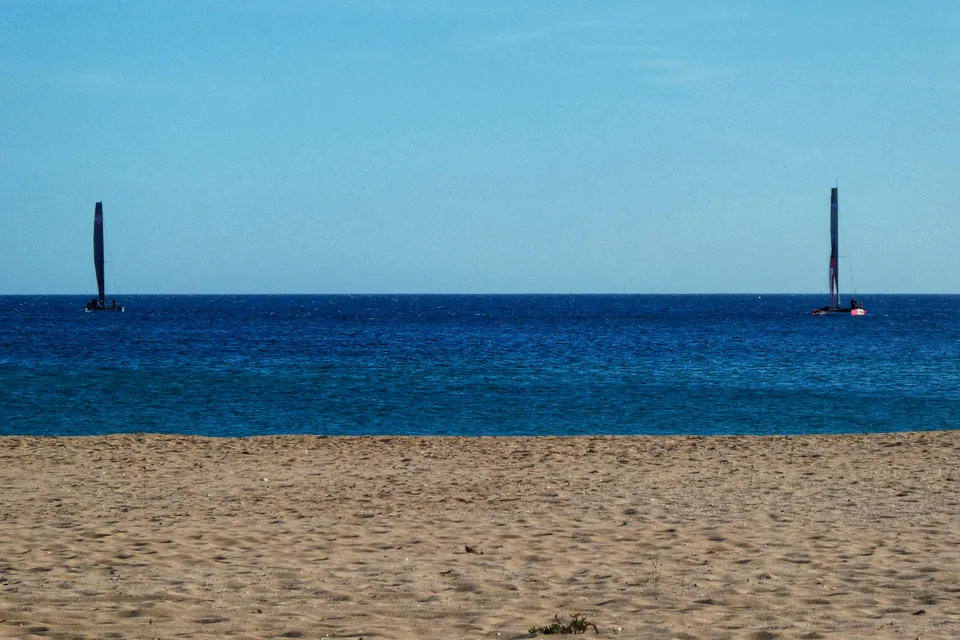
A three-day itinerary with room to change
Day one: settle in, explore the waterfront and walk through the old town. Visit Formosinho and Santo António if the opening day fits, then allow time for a relaxed dinner. If arriving late, move the museum to another day rather than rushing its final admission.
Day two: walk part of the Ponta da Piedade coast in suitable weather, keeping to authorised paths. Choose one beach by access and conditions. A boat outing can replace part of the walk if it matches your interests; there is no need to combine every coastal activity.
Day three: begin with a market if the day suits its schedule, then visit Rota da Escravatura. Spend the afternoon at Meia Praia, explore Praia da Luz or keep time free before travelling onwards. For a fourth day, consider a separate western-Algarve excursion. Preserve transport margins on departure day instead of squeezing a weather-dependent cruise immediately before a connection.
Look for a home that remains available all year
Holiday convenience and residential suitability are different tests. A central apartment may offer an appealing winter trial, but ask whether it is available throughout the year and what happens when peak season begins. Get the tenancy dates and total charges in writing. Visit the actual property, verify who has authority to rent it and obtain a clear contract before transferring a substantial deposit.
Inspect ventilation, signs of damp, heating, insulation, hot water and noise at the times you will be home. Outside the centre, test the trip to groceries, school and work without assuming you will always drive. Idealista’s Lagos municipality rental series has gaps in its recent published data, so it would be misleading to present a precise current city-wide rent from it. Compare live year-round listings and actual offers; asking prices and rents agreed in signed contracts are different measures.
For context, that series reports €16.20 per square metre for May 2026, followed by unavailable values for June–September. It is an advertised-rent indicator for the municipality, not a quote for a particular apartment or evidence that every tenant pays that amount. The missing months should remain missing, rather than being filled with numbers for neighbouring municipalities.
Organise healthcare, paperwork and household essentials
The municipal healthcare directory identifies Lagos’s health centre and hospital unit. Confirm the specific services and referral arrangements relevant to your needs, especially for ongoing specialist treatment. The Portuguese health regulator’s guidance for foreign nationals distinguishes obtaining a health-user number from establishing who covers the costs. Insurance, residence status and eligibility should be checked separately.
For household administration, the Tax Authority’s NIF information explains how foreign nationals request a tax-identification number. A NIF can be needed for contracts, but it does not confer immigration permission. Check utility transfer arrangements, meter readings and internet availability at the address before moving in. Families can use the government’s school-network search to identify contacts, then discuss places, documentation and language support directly. Do not choose accommodation on the assumption that every school or service elsewhere in the municipality is a short walk away.
Separate a short visit from a plan to live or work here
Portugal participates in Schengen. Eligible short-stay visitors generally share a limit of 90 days in any rolling 180-day period across the area; consult the European Commission’s short-stay calculator and your own visa conditions. Nationality determines whether a visa is required. The EU’s Entry/Exit System records eligible short-stay border crossings; it is separate from ETIAS, which is not yet accepting applications at this guide’s review date. Check the official status before travel.
For relocation, EU, EEA and Swiss citizens’ registration arrangements differ from third-country immigration routes. Non-EU applicants should consult the official Portuguese visa portal and AIMA’s categories for employment, remote work or higher education. Tourist admission does not automatically authorise employment or establish permanent residence. Remote workers also need to consider tax and social-security obligations. VisaWand’s consultant directory provides a way to find advisers; check expertise, credentials and fees before engaging one.
For those covered by the EU registration route, AIMA directs applications to the municipality of residence within 30 days after the first three months in Portugal.
Compare nearby places before deciding on a permanent base
Praia da Luz can suit a beach-centred stay with a different daily rhythm from Lagos’s old town. Meia Praia and Porto de Mós offer other ways to place the coast at the centre of a holiday. For a longer stay, spend an ordinary weekday in each area and test the journeys you would repeat, not just the view from a restaurant terrace.
Sagres offers a separate western-coast excursion, while Faro is worth comparing for a more regional-service-oriented base. Use VisaWand’s Portugal country guide for national context and its Portugal destination directory to locate other places; directory entries do not necessarily contain completed guides. Lagos works best when you allow its town and coastline equal attention, then choose the balance that suits your mobility, budget and reason for being here.
Official planning resources
Reviewed 28 October 2026. Use the official resources linked throughout this guide for admission, transport, housing and immigration decisions. Prices, services and rules can change; confirm the details relevant to your dates. Photography illustrates the locations and is not a live view.
View all official resources
- Museu de Lagos: Rota da Escravatura
- Museu de Lagos: Dr José Formosinho and Santo António church
- Museu de Lagos: admission and current access
- Municipality: coastal and inland walking routes
- Municipality of Lagos: cliff instability and emergency precautions
- Municipality: Lagos beaches
- Municipality: Dona Ana and Camilo beach access regulation
- Turismo de Portugal: registered local accommodation search
- Visit Portugal: Lagos
- Vamus: regional routes and airport journey planning
- CP: Algarve regional railway timetable
- A Onda: Lagos municipal bus network
- A Onda: 2026 fares
- Municipality: markets and local produce
- IPMA: Faro 1991–2020 climate normals
- Idealista: Lagos municipality asking-rent history
- Municipality: health centre and hospital contacts
- Health regulator ERS: foreign nationals and SNS access
- Tax Authority: obtaining a NIF
- Government: school network search
- European Commission: Schengen short-stay calculator
- Council of the EU: Entry/Exit System
- European Union: ETIAS current status
- AIMA: EU citizen registration certificate
- Ministry of Foreign Affairs: official visa portal
- AIMA: work and residence categories
- AIMA: remote work residence
- AIMA: higher education student residence
- Visit Portugal: Sagres
Plan the next part of your journey
Explore the Portugal guide, browse other cities or compare consultants for your travel and relocation questions.