Visa
An inland base with a life beyond its fort
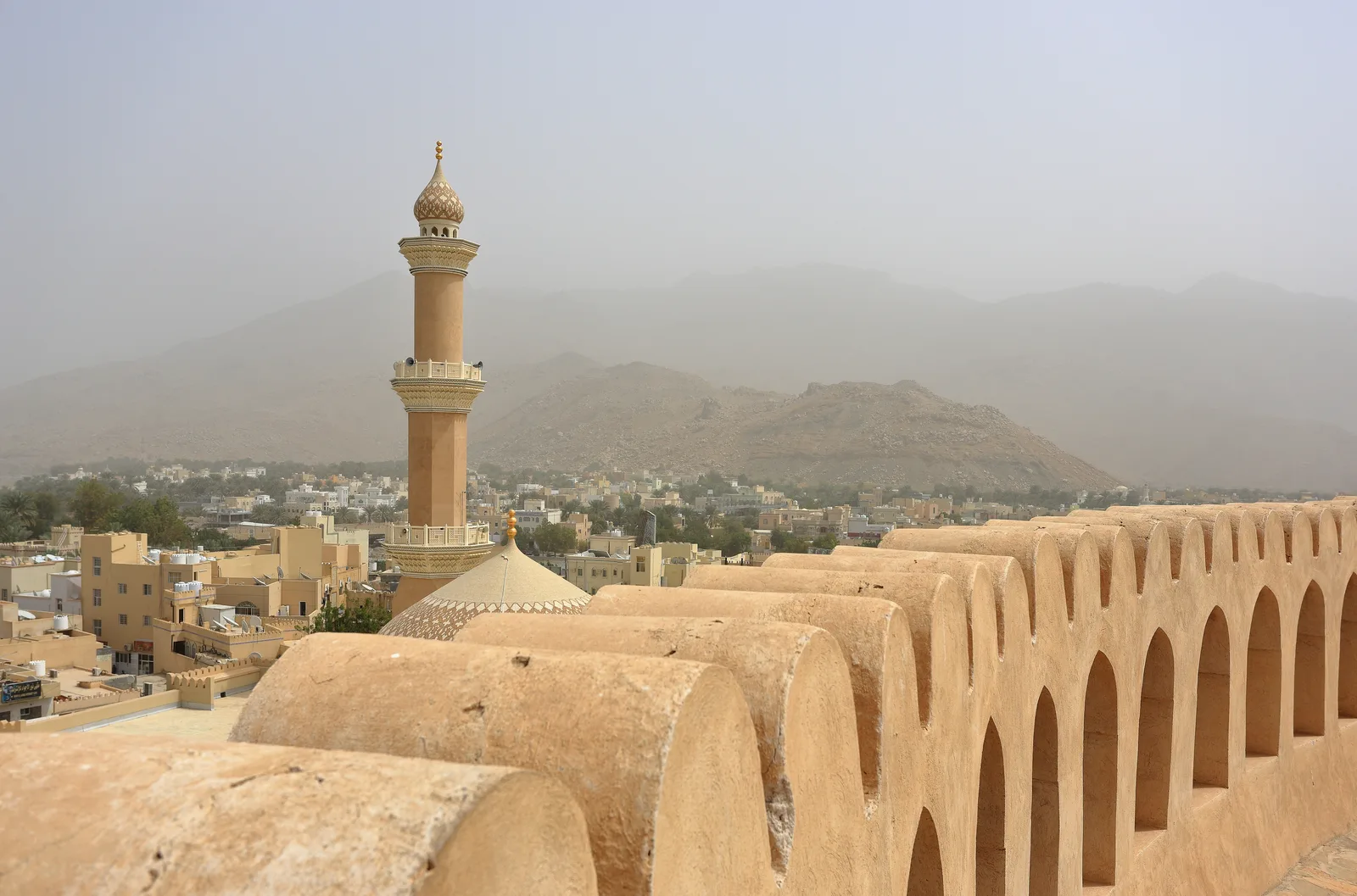
Nizwa is a rewarding place to slow down in Oman’s interior. Its fort rises beside the souq, pottery fills shop entrances, and the irrigation landscape explains how an inland settlement could sustain both agriculture and urban life. The appeal is the relationship between these things: defence, trade, water and the streets where visitors now stop for coffee or an overnight stay.
A day trip can cover the fort and market, but two or three nights allow a less hurried introduction. That extra time makes it easier to visit the Oman Across Ages Museum in nearby Manah, explore the surrounding region or organise a Friday market morning without a very early departure from Muscat. These are suggested trip lengths, not a fixed package that suits every visitor.
Nizwa is particularly useful for travellers interested in architecture, history and the inhabited landscape of the interior. It also works as a base for some regional excursions, provided you plan the transport separately. Use VisaWand’s Oman country guide alongside this article, and compare the wider Oman destination directory before deciding how many places your available days can reasonably accommodate.
Read the geography before choosing your address
Nizwa is in Al Dakhiliyah Governorate, inland from Muscat. The historic core around the fort and souq is one part of a larger modern settlement. A property using the city’s name may be convenient for road travel while being a poor choice for walking to the market before breakfast.
The Ministry of Heritage and Tourism’s Al Dakhiliyah overview identifies Harat Al Aqr as a historic neighbourhood and sets Nizwa within a region of mountains, cultivated landscapes and fortified sites. Think of the old core, the modern road corridors and the wider governorate as different planning scales. They should not be combined into a single walkable “old town” itinerary.
Before booking, compare the actual entrance of your accommodation with the fort, the pickup point for any tour and the places you expect to eat. Ask whether the final approach is suitable for your vehicle and where luggage can be unloaded. A few minutes spent clarifying a map pin can prevent repeated detours throughout the stay.
Make the fort the beginning of the story
The official Nizwa Fort visitor page dates the fort to the mid-seventeenth century, during the reign of Imam Sultan bin Saif Al Ya’rubi. Its circular tower and defended stairways explain its military purpose, while the residential and administrative spaces show that it also served government and household life.
Allow time to understand the layout rather than climbing immediately for a photograph. Look at the circulation between rooms, courtyards and defensive positions; then use the view to relate the fort to the surrounding settlement. A guide, available on request according to the tourism ministry, can help connect the architecture with its functions. Confirm availability and any additional charge when buying admission.
The ministry publishes 8am–8pm for Saturday to Thursday, with a separate Friday schedule. Its Friday text contains an apparent time-format error, so confirm that day’s visiting periods directly. A current admission tariff could not be verified from a working operator page during research; check the ticket counter rather than relying on an old price copied online.
Browse the souq with room for conversation
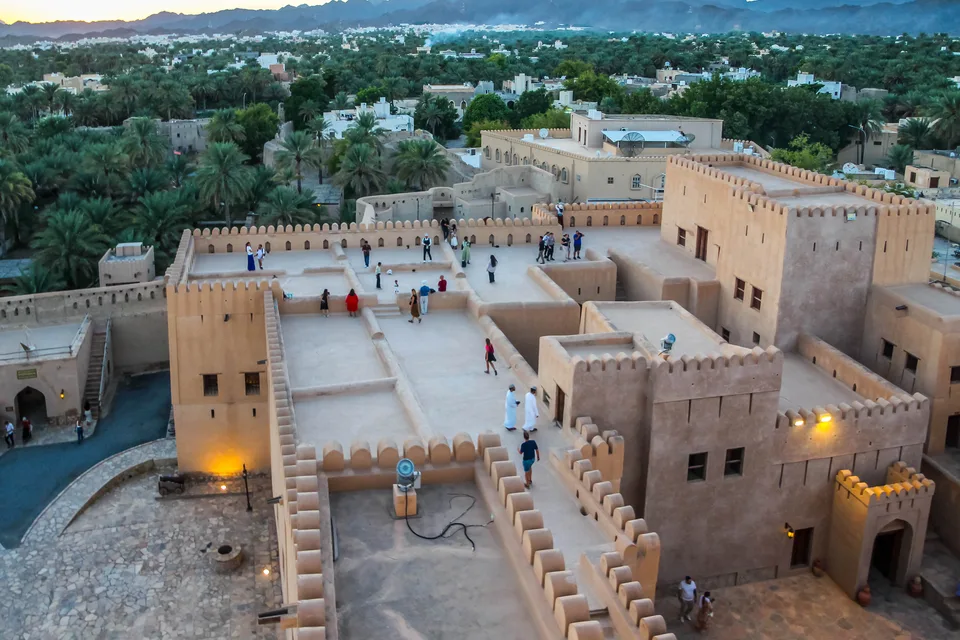
The souq is adjacent to the fort, making the pair the natural centre of a first visit. Browse at a pace that leaves time to compare objects, ask about materials and understand what you are buying. The difference between an inexpensive decorative souvenir and a substantial piece of craftwork is not something a photograph or a broad “traditional” label can settle.
Pottery is an especially tangible connection with the market’s character. Examine the finish and ask whether a piece is intended for practical use or display. If it is going into luggage, establish how it will be wrapped before agreeing a purchase. For jewellery or other valuable items, obtain a receipt that describes the material and the seller.
Ask before taking close portraits of vendors or customers, and leave shop entrances clear. Early or later visits can fit more comfortably around a hot day, but individual businesses keep their own hours. A market map is useful; a claim that every stall will be trading at one universal time is less useful.
Plan a Friday morning deliberately
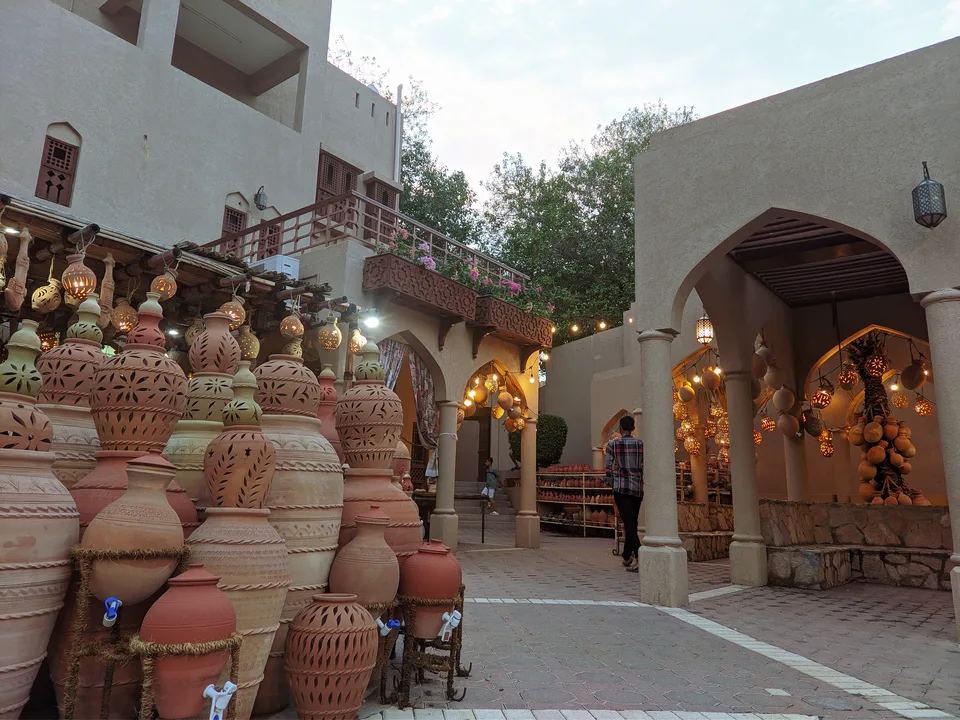
Nizwa’s Friday livestock market is a distinct experience from browsing souvenir shops. Oman Observer’s reporting on the market describes traders forming a circle to offer animals for sale. The tourism ministry’s activities material also identifies the early Friday market. Treat it as commercial activity with its own purpose and rhythm.
Stay in Nizwa the night before if this is a priority. Ask your host about the current location and likely active period, then arrive early enough to observe without hurrying. Published accounts give differing precise times, and an older report is not a dependable timetable for your particular Friday.
Keep clear of handlers and animals, supervise children and step back when traders need space. Ask permission for identifiable portraits. If crowds or animal trading are uncomfortable for someone in your group, arrange an alternative breakfast or short walk nearby. Afterwards, confirm the fort’s Friday arrangements instead of assuming a continuous morning visit will be possible.
See the water system as working heritage
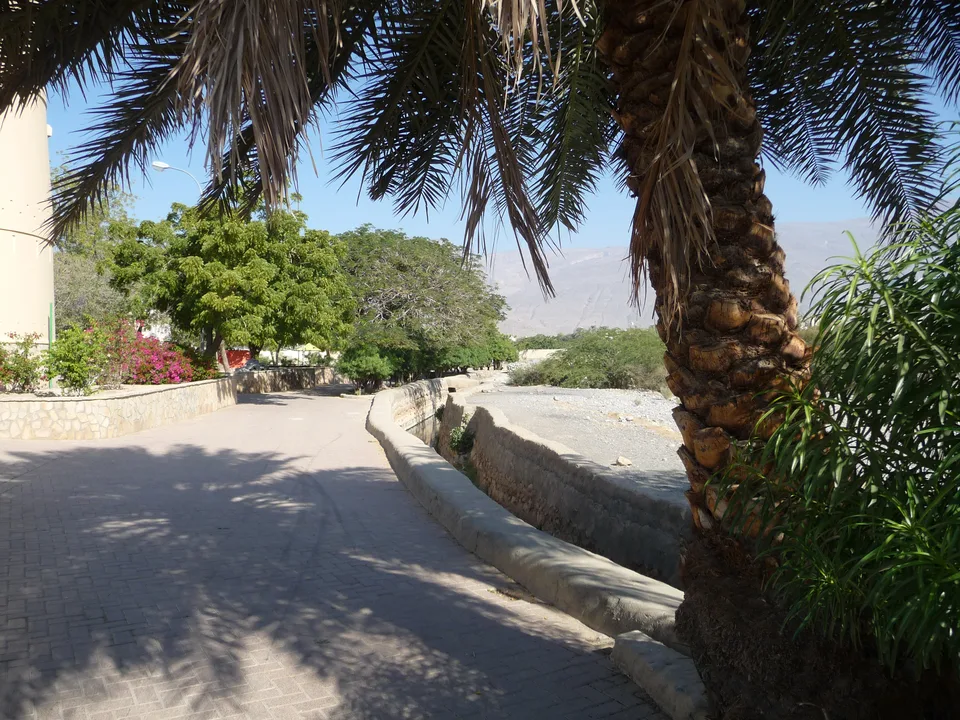
Falaj Daris adds a different dimension to the city. An irrigation channel can look modest beside a fort, but it explains the practical organisation that supports cultivation and settlement. The National Museum of Oman’s explanation of aflaj identifies Daris among the five systems inscribed on the World Heritage List in 2006.
UNESCO’s account of the Aflaj Irrigation Systems of Oman describes gravity-fed water distribution and the community arrangements behind its allocation. The heritage is both engineering and cooperation. The designation covers specified systems; it does not mean every water channel in Oman, or the whole city of Nizwa, is a World Heritage property.
Visit with that working purpose in mind. Keep to publicly accessible paths, avoid entering cultivated plots without permission, and do not put rubbish or anything else into the water. Children need supervision beside channels. Conditions can change after rain, so choose a comfortable viewing place rather than approaching fast-moving water for a photograph.
Give the Oman Across Ages Museum its own outing
The Oman Across Ages Museum is in Manah, outside Nizwa. Its official location and access information (source unavailable) places it 17.5 kilometres from Nizwa and lists facilities including wheelchairs, tactile interpretation and a lift to the galleries. That makes it a substantial regional cultural stop, rather than an extra room beside the fort.
The museum’s visitor page makes an important distinction: the general site opens daily from 9am to 9pm, but galleries are listed as 9am–5pm Saturday to Thursday and 1.30pm–7pm Friday. Plan around gallery hours if the exhibitions are the reason for your visit. The museum says it closes on the first day of both Eid Al Fitr and Eid Al Adha.
Published admission is OMR 5 for tourists, OMR 2 for residents and OMR 1 for adult Omani and GCC citizens. Bring identification and check documented concession eligibility for your party. The museum lists Visa and Mastercard payment and ticket reservation through its desk, kiosks or online channels. Do not mistake the building’s evening opening for permission to enter galleries after they close.
Choose between old-core convenience and a road-trip hotel
An overnight stay near the fort and souq can make the historic core easier to enjoy at different times of day. Ask about the actual walk, parking and steps before paying for that convenience. An atmospheric room reached by stairs may be unsuitable for a traveller with limited mobility or several heavy bags.
For a more conventional hotel option, Falaj Daris Hotel advertises a pool, laundry, internet and airport pickup. Its own description places it about four kilometres from town, illustrating why an established Nizwa hotel should not automatically be treated as a market-side address. Confirm the route and transfer costs that apply to your plans.
Compare the final price for your dates, including breakfast, taxes, extra beds and cancellation terms. For longer stays, ask whether laundry and cooking facilities are actually available to guests. Photographs of a courtyard or pool do not answer practical questions about air-conditioning, soundproofing or a family’s sleeping arrangements. Request clear answers from the property while you can still change the booking.
Get there through Muscat with the onward journey settled
Muscat International Airport is the relevant major arrival point for many overseas visitors planning Nizwa. The airport’s official transfer information lists rental desks in the public arrivals hall, airport taxis and Mwasalat buses outside the terminal at ground level. These are different ways to begin an onward journey; none should be assumed to deliver you to a particular Nizwa guesthouse without further arrangements.
A prebooked transfer is useful after a late flight or when you prefer not to drive. Give the operator your flight number, exact destination, luggage count and child-seat requirements, and clarify what happens after a delay. Obtain the full price, including waiting and any parking charges, in writing.
If collecting a rental car, check licence requirements, the deposit, insurance excess and the permitted roads before committing. A long international flight is a poor preparation for an unfamiliar drive when you are tired. Consider a first night near your arrival point if the flight schedule makes the transfer uncomfortable. Build the return journey around your airline’s check-in requirements rather than the most optimistic map estimate.
Match local transport to the shape of the trip
Mwasalat’s intercity booking service lists several Nizwa stopping points, including locations around Saal, Komah and Tanuf. The stop name matters: an intercity ticket for “Nizwa” does not establish that the vehicle stops at the fort or your accommodation door. Confirm boarding, arrival and the return service for the date you need.
No current operator fare for the specific airport–Nizwa journey was established during research, so this guide does not present an old timetable’s price as a current quotation. Compare the available dated booking with a transfer and the cost of reaching the stop at each end.
Within the historic core, walk when heat, surfaces and personal mobility allow. For the museum, Falaj Daris or several regional stops, arrange transport in advance. When hiring a driver, agree the sequence, waiting time and return address. A cheaper outward ride can be poor value if you have no practical way back from a site.
Eat around your plans and buy what you understand
Keep some meals close to the area you are exploring rather than turning every lunch into another journey. Check a current menu and the full bill before ordering. Ask about portion size if sharing, and explain allergies directly: a familiar dish name is not a reliable description of every ingredient or preparation method.
For a published hotel dining option, Golden Tulip Nizwa’s dining information describes Birkat Al Mauz as an international restaurant with buffet and à la carte service, and lists a lobby café. These provide identifiable alternatives when you want a staffed hotel setting; they should not be taken as a measure of what every local meal costs.
In the souq, distinguish food you can enjoy during the trip from products that must meet your home country’s import rules. Ask about ingredients, packaging and keeping conditions for edible purchases. For a fragile craft item, the best purchase may be one you can carry safely, rather than the largest piece that fits the souvenir budget. Keep receipts for valuable goods.
Build a budget around the costs that change most
Accommodation, transport and the number of regional excursions will shape your spending more than a single headline attraction price. Budget in Omani rials and ask which currency will actually be charged when booking internationally. Card-conversion charges and cancellation conditions can change the value of apparently similar offers.
For a verified benchmark, two tourist adults would pay OMR 10 for Oman Across Ages Museum tickets at its published rate, before transport. The fort needs a current admission check. Add room costs, meals, daily transport, telephone service, parking where applicable and a reserve for changing plans. A private vehicle shared by several people and separate taxis for one traveller produce very different totals.
Do not use a student residence quotation as an estimate for a holiday apartment, or a hotel night as a monthly housing benchmark. Keep the categories separate when comparing a short visit with a move. A reliable budget uses actual dates and the services you need, rather than a universal “cheap day in Nizwa” figure.
Put outdoor time into the right part of the day
The tourism ministry recommends October to April for the fort. For a trip built around walking, markets and outdoor heritage, that is a sensible period to investigate first. Nizwa’s inland setting and nearby mountain destinations still require separate planning; the weather at an elevated excursion should not be inferred from conditions outside your hotel.
In hotter periods, put substantial outdoor activity early or late and use the middle of the day for an indoor visit or a rest. Check that the room has functioning cooling, and carry water rather than depending on a shop being open at every stop. A winter mountain outing may require additional layers.
Consult the Oman Directorate General of Meteorology’s forecasts and warnings before setting out. Rain can change road and wadi conditions quickly. The UK government’s Oman road-safety advice highlights flash-flood dangers; do not enter flowing water because a mapped route crosses it. Leave the itinerary flexible when official warnings affect the area.
A practical three-night itinerary
Arrive on the first day with time to settle in and identify the route to the historic core. Take a short orientation walk if conditions suit, have dinner and confirm the next day’s opening arrangements. Avoid treating the transfer from an international flight as the start of a tightly timed sightseeing challenge.
Use the first full day for the fort, souq and Harat Al Aqr area, with a proper break between activities. Add Falaj Daris if the transport and weather fit comfortably. Keep the second full day for the Oman Across Ages Museum and a measured visit around Manah, rather than trying to collect every regional fort in one afternoon.
If Friday market activity is central to the trip, rearrange the first full day around an early Friday start and check the fort and museum’s different schedules. With another night, select one regional excursion instead of repeatedly shortening the city visits. On departure day, allow time for the road journey and airport formalities. This sequence is a planning suggestion, not a guarantee of access on every date.
Consider the surrounding region without overloading a day
Bahla, Jabreen and the mountain landscapes are reasons to allow more time in Al Dakhiliyah. They are separate destinations, requiring current opening information and realistic driving plans. Nizwa can serve as a base, but that does not make every regional attraction an easy addition after lunch.
If considering Jabal Akhdar, confirm present vehicle-access rules with the relevant operator or authorities and check the rental agreement. Reports of recent changes make a blanket statement about which vehicles may pass unhelpful. Road permission, vehicle capability and the driver’s experience are separate questions. A booked mountain transfer may be the more practical choice for your party.
Use VisaWand’s Manah destination page to place the museum outing geographically, and the Muscat destination page when deciding how to split nights between coast and interior. Choose extra places for a particular interest, such as architecture or walking, rather than adding them solely because they appear nearby on a country map.
Try ordinary weekdays before making a move
Someone considering Nizwa as a home needs a different visit from a holiday circuit. Locate the actual workplace or campus first, then test the commute at the hours you would use it. Visit food shops, pharmacies and any school under consideration. A pleasant stay beside the souq does not establish that the address works for a household’s daily obligations.
Inspect prospective housing for cooling, water pressure and storage, drainage, internet availability and maintenance responsibility. Ask for recent electricity bills and clarify whether the property has a separate meter. Establish the deposit, inventory, renewal and early-departure terms in a written agreement before paying.
Nama Electricity Supply’s tenant guidance says account information should be updated when renting, with the lease or ownership details and the relevant civil ID linkage. Ask the landlord who handles that process and verify the applicable tariff with the supplier. Do not assume a quoted rent includes unlimited cooling or every utility. Include installation, household equipment and transport in the initial moving budget.
Study, healthcare and household arrangements
The University of Nizwa’s housing information describes on-campus and off-campus student residences, shared facilities and shopping transport. Contact the university about the actual place offered, its cost and the travel arrangements for your programme. Institutional accommodation is an eligibility-based option, not a public hotel service or a promise that family housing will be available.
Students should establish campus location, class timings, meal arrangements and the route from their allocated residence before signing a separate private lease. For families, confirm school admission and any curriculum or language requirements directly; a school’s presence in the region does not establish a place for a particular child.
Arrange health insurance appropriate to the stay and identify a suitable local provider before treatment is needed. Bring prescription details and ask a qualified provider about medicine availability and import documentation. Oman’s government service pages list 9999 as the emergency number. Keep the full residential address and an accessible contact available to every adult in the household.
Check the immigration route for the purpose of the stay
Oman’s Foreign Ministry entry guidance describes nationality-dependent short-visit arrangements and additional conditions for some passport holders, including qualifying residence or visas elsewhere. Its requirements include passport validity, accommodation, a return ticket, insurance and sufficient funds. GCC citizens have separate entry arrangements. Check your own eligibility rather than interpreting a broad country count as permission to travel.
An August 2026 ministry announcement also describes a free 14-day tourist visa for designated nationalities under specified conditions, including replacement with other tourist categories where permitted. That announcement should not be confused with an unrestricted right to extend every short visit or to take employment. Use the Royal Oman Police visa eligibility service for the category that applies to you.
For employment, the official work-visa service describes an employer-led process linked to labour permission and supporting documents. For study, the Royal Oman Police student-visa information places responsibility with the licensed institution. Neither a holiday booking nor a rental agreement creates permanent residence. Seek case-specific advice through the responsible authorities or VisaWand’s Oman consultant listings before making commitments that depend on immigration approval.
Official planning resources
Reviewed 24 October 2026. Use the official resources linked throughout this guide for admission, transport, housing and immigration decisions. Prices, services and rules can change; confirm the details relevant to your dates. Photography illustrates the locations and is not a live view.
View all official resources
- Ministry of Heritage and Tourism: Al Dakhiliyah
- Ministry of Heritage and Tourism: Nizwa Fort
- Oman Observer: reporting from Nizwa Friday market
- National Museum of Oman: Aflaj Gallery background
- UNESCO: Aflaj Irrigation Systems of Oman
- Oman Across Ages Museum: location, access and facilities (source unavailable)
- Oman Across Ages Museum: tickets and gallery hours
- Falaj Daris Hotel: rooms and facilities
- Muscat International Airport: onward transfers and car rental
- Oman Directorate General of Meteorology: forecasts and warnings
- UK government: Oman road safety and local laws
- University of Nizwa: student housing options
- Oman Foreign Ministry: nationality-dependent entry rules
- Oman Foreign Ministry: August 2026 tourist-visa amendment
- Royal Oman Police: visa eligibility wizard
- Royal Oman Police: work visa service
- Royal Oman Police: student visa
Plan the next part of your journey
Explore the Oman guide, browse other cities or compare consultants for your travel and relocation questions.