Visa
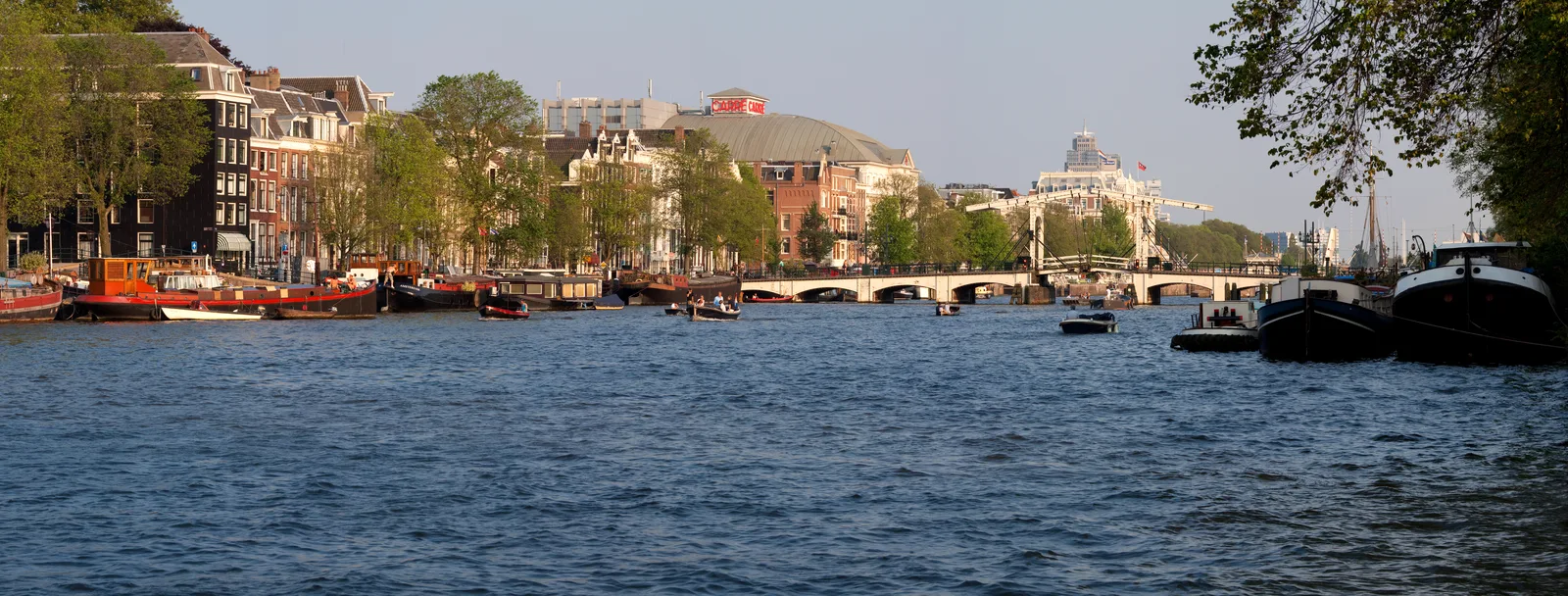
Amsterdam's canal city is a place to explore at street level
Amsterdam suits a visit built around art, waterways and neighbourhood walks. Its best-known sights reward advance booking, but the city also leaves room for unhurried afternoons: a canal-side route through the Jordaan, market browsing in De Pijp or a ferry across the IJ. Choose two or three priorities for a short break rather than turning the whole stay into a sequence of admission slots.
The UNESCO-listed seventeenth-century canal ring explains much of the centre's character. Its waterways and gabled houses were part of a planned expansion west and south of the older town and port, involving drainage and a system of concentric canals. This was urban engineering as well as architecture, connected to Amsterdam's development through maritime trade. The historic district remains an inhabited part of the city. A rewarding visit therefore includes looking at its layout and streets, while leaving entrances and daily activity unobstructed.
For wider planning, use VisaWand's Netherlands country guide, destination page, location directory and consultant listings. The Haarlem location page offers another city to consider.
Jordaan: canal streets, galleries and a market-led walk
The Jordaan offers a reason to leave space between museum appointments. The official neighbourhood guide describes a former working-class district whose canal streets now include galleries, boutiques and cafe terraces. A visit here can focus on the street scene and small businesses instead of requiring another major admission ticket.
Noordermarkt is a useful anchor if its market fits your dates. The tourism guide distinguishes Saturday's food and flea-market stalls from the Monday flea market; do not plan the same market experience for every day of the week. Browse according to what interests you, leaving a purchase optional. An Anne Frank House booking can provide a separate fixed commitment, while the wider walk stays flexible. If you are considering accommodation in the area, inspect the actual access to the room and route to your repeated destinations rather than assuming a canal address supplies the same convenience for every traveller.
De Pijp: food, market browsing and a park break
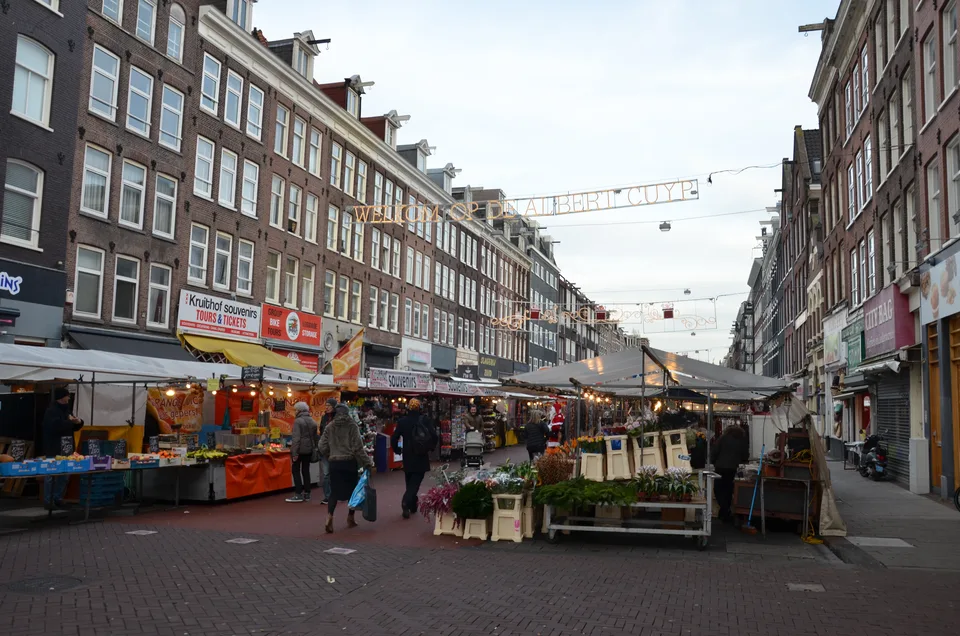
De Pijp's official visitor overview puts the Albert Cuypmarkt and Sarphatipark alongside its cafes, terraces and varied cuisines. This gives the neighbourhood a different planning role from a day organised around the main museums: come with time to browse, eat and pause, rather than treating it as a quick detour for one photograph.
Choose the market and a meal as the focus, then use the park for an additional walk. Market stalls and restaurants have their own hours. For a longer stay, nearby places to eat belong alongside the commute and housing costs in the decision about a base.
Noord: cross the IJ for a different Amsterdam
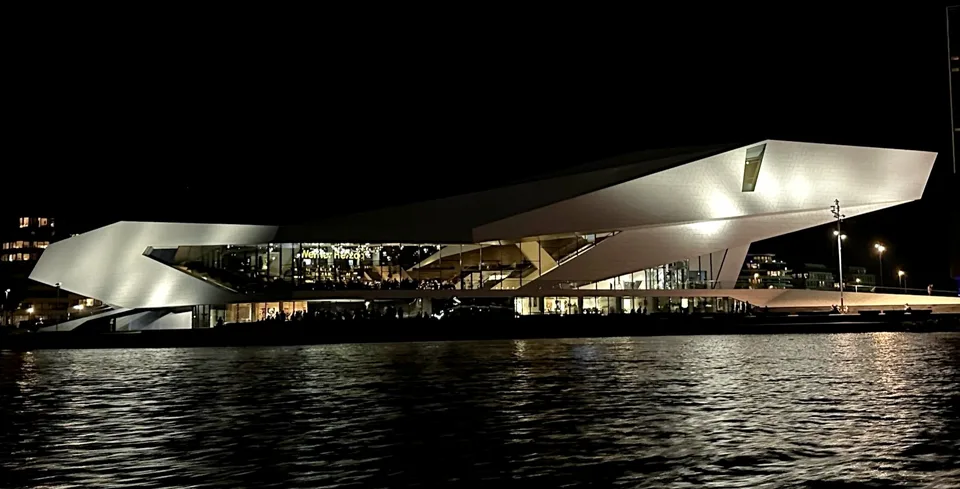
Amsterdam Noord's visitor overview highlights contemporary architecture, cultural venues, waterside terraces and green areas across the IJ. Eye Filmmuseum and the NDSM area offer different reasons to cross: decide which destination interests you before selecting a ferry, because Noord is a district rather than one waterfront attraction.
GVB's official ferry information lists free IJ crossings F1 to F7 for pedestrians, cyclists and the other eligible slow-traffic users it specifies. The Buiksloterweg–Centraal Station connection runs day and night; NDSM has a separate Centraal connection. These are useful parts of an itinerary or commute, but they are not car ferries. Look up the relevant departure and onward route instead of assuming every crossing arrives beside the place you intend to visit. For accommodation north of the water, compare the complete return journey after an evening out with the room's price and location.
Rijksmuseum: book a start time and arrive without large luggage
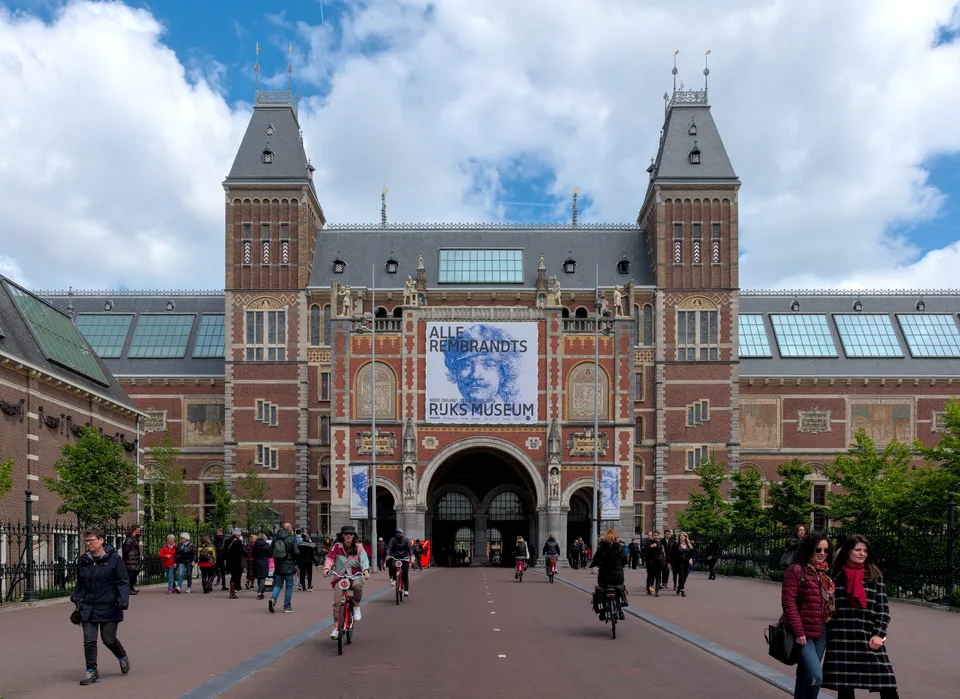
The Gallery of Honour gives a focused starting point for Dutch painting, with works by seventeenth-century artists including Rembrandt, Vermeer, Frans Hals and Jan Steen. Its corridor leads towards the Night Watch Gallery. Look at how portraits, domestic scenes and still lifes differ in subject and scale, then choose further rooms around your interests. This provides a coherent first visit without making every gallery a compulsory stop.
The Rijksmuseum's official visitor FAQ lists adult admission at EUR25 and free entry for visitors aged 18 and under. The museum opens daily from 9am to 5pm, including public holidays. A booked start time is normally required, including for Museumkaart holders; the museum identifies its Friends as an exception. An admission entitlement should therefore not be treated as a substitute for reserving the visit.
Make the museum a deliberate commitment rather than a gap between check-out and a train with all your bags. Its cloakroom cannot take large backpacks or travel luggage. The FAQ also says paid tickets cannot be cancelled, while rebooking requests should be made several working days ahead and are not an instant guarantee. These conditions matter when deciding which day to reserve.
Anne Frank House: secure the actual museum admission
An Anne Frank-themed walk and admission to the Anne Frank House are different products. The museum's official ticket information says its admission tickets are sold through annefrank.org, and commercial tours do not provide access to the house. Check what you are buying before making this the fixed point of an Amsterdam itinerary.
The museum releases tickets on Tuesdays at 10am for visits six weeks later; use its current release notice and Amsterdam local time rather than assuming a year-round UTC offset. The standard visit includes the Annex, exhibition and audio tour. A separate English introductory programme adds 30 minutes and EUR7 per ticket, and is described as suitable from age ten. The museum says it does not reschedule or refund tickets and has no waiting list for sold-out dates. Choose the date carefully, leaving transport margin before the reserved start, and retain a different plan if admission is unavailable.
The museum's accessibility guidance also matters before booking: this is a historic canal house with steep stairs and small rooms, and not all areas are fully accessible. Review the facilities for your needs and contact the museum about support or alternatives rather than assuming every part of the visit has step-free access.
Accommodation: choose the base around your days
The official accommodation directory provides routes to hotels, hostels, family-oriented options and campsites, as well as properties in the surrounding region. Use it to shortlist the type of stay, then compare the actual room arrangements: a hostel bed, private hotel room and apartment with cooking facilities meet different needs.
For a canal-and-Jordaan itinerary, begin with addresses that reduce those repeated journeys. For a museum-focused stay, compare access to the museum district and De Pijp. Noord offers another possibility if the full ferry or Metro journey fits your plans. These are planning choices, not guarantees that one neighbourhood always has the cheapest or quietest rooms. Check stairs, lifts, sleeping capacity, luggage storage and cancellation terms at the property. If an early flight is the main constraint for the final night, compare an airport-area stay with the complete early-morning journey from the city.
Schiphol connections start beneath and outside the terminal
Schiphol's railway station is directly below the airport, while buses leave from the area in front of Schiphol Plaza. The airport's current public-transport guidance gives those access points and notes that bus-station renovation is temporarily changing some departure locations. Use the current stop information for the bus you intend to take rather than relying on a remembered bay number.
The airport explains contactless payment with a bank card or phone: check in at the start and check out with the same card. That method is not presented as covering international trains or every special service. Choose the route to the actual accommodation, not simply the word Amsterdam on a destination board. The Amsterdam Travel Ticket is a separate product combining city transport with Schiphol connections; compare its scope against your own journeys before assuming an ordinary city day ticket provides the same coverage.
A GVB day pass covers an operator, not every regional journey
GVB's current day-pass information lists a 24-hour e-ticket at EUR10 for 2026. It covers GVB trams, buses including night buses, and Metro services. The operator's listed coverage includes Amsterdam and places such as Diemen, Amstelveen, Schiphol and Weesp. That is a reason to check the operator of the journey, rather than interpreting a place name as permission to board any service there.
In particular, do not infer that a GVB pass covers the airport train simply because Schiphol appears in the area's list. The airport train and a GVB bus are different transport choices. The online day ticket also requires an active Apple or Google Wallet app, so choose a suitable sales channel if your phone cannot support it. Compare the pass with the journeys you will actually take: a largely walking-based day and a day with repeated cross-city trips may justify different purchases.
Dutch snacks, market food and purchases worth planning
The official tourism guide to Dutch foods gives a useful vocabulary for ordering. A stroopwafel sandwiches syrup between thin waffles; pannenkoeken are broad, thin pancakes with sweet or savoury toppings. Bitterballen are fried bar snacks commonly served with mustard, while a broodje haring puts herring in a sandwich with onions and pickles. Kibbeling offers battered pieces of fish. These are possibilities for a snack or meal, rather than a requirement to eat everything in one afternoon.
Markets and bakeries let you combine a small purchase with sightseeing. Ask about ingredients where allergies or dietary restrictions matter: a recognisable dish name does not establish every vendor's recipe. Compare the portion and displayed price before ordering, especially if a snack is replacing lunch. For shopping, decide whether you want something to eat immediately or take home; packaging and your destination's import rules can affect the latter. Leave space in the day for a proper meal instead of budgeting only for drinks and incidental snacks.
Budget for the final accommodation bill
Amsterdam's official tourist-tax page lists 12.5% of the overnight price excluding VAT, applying to accommodation types including hotels, hostels, apartments and campsites. Compare final booking totals rather than assuming the first displayed room price includes every charge.
One adult Rijksmuseum ticket plus a 24-hour GVB e-ticket totals EUR35 at the verified prices. This is a worked example, not a daily budget: accommodation, airport transfers, meals and additional attractions are separate. A walking-and-market day may require fewer paid journeys. Start with the final room quote for your dates, then add the meals and admissions you actually want. Keep optional shopping separate from essential costs, including the departure connection.
Seasons: plan for outdoor time without relying on dry weather
The Royal Netherlands Meteorological Institute's Schiphol station data provide a nearby climatic reference, not a forecast for a particular Amsterdam street. In the 1991–2020 normals, January's average daily maximum was 6.2°C and minimum 1.2°C, compared with 22.5°C and 13.5°C in July. The same record includes rainfall in every month: a summer date does not guarantee a dry canal walk.
For a visit centred on walking and outdoor meals, the warmer part of the year is a sensible starting point. Cooler months suit a schedule with substantial museum time and shorter outdoor intervals. Carry a weatherproof layer and footwear you can comfortably use on a wet walking day. Reserve essential indoor attractions first, then keep the flexible walk on whichever day has the better forecast. These averages describe a historical period; check current weather warnings and conditions before an excursion, rather than treating a monthly norm as the temperature you will experience.
Three days with room to enjoy the city
Day one can introduce the canal centre and Jordaan. If you have Anne Frank House admission, build the day around its reserved time and leave the surrounding walk flexible. Without admission, use the neighbourhood for a first look at the streets and canal layout rather than purchasing a tour in the belief that it includes museum access.
Day two can focus on the Rijksmuseum, followed by a meal and a less structured afternoon in De Pijp. This combination keeps a major indoor visit and market neighbourhood together without requiring several museums in succession. Carry only what you need for the day and make separate arrangements for travel luggage.
Day three offers a choice: cross to Noord for a waterfront and cultural outing, or take a separate-city excursion to Haarlem. Keeping that choice open is useful when the weather or your energy changes. On a departure day, shorten the plan around your actual airport or railway connection; a three-day itinerary should not depend on fitting one last timed admission into a narrow travel margin.
Haarlem is a separate city worth a day of its own
The official Haarlem visitor overview identifies art associated with Frans Hals, the Teylers Museum, the River Spaarne and the shopping streets known as the Gouden Straatjes. That makes Haarlem an alternative cultural outing, not simply another Amsterdam neighbourhood. Choose a museum or riverside and shopping walk as the day's focus, rather than trying to cover every attraction after travelling there.
It can also be a location to compare if you are deciding where to spend a longer stay. Evaluate the actual accommodation and repeated journeys instead of assuming a nearby city supplies the same commute as an Amsterdam address. For a day trip, use current rail planning for the chosen departure and return; a headline journey time does not include reaching the stations or the destination on foot. If Amsterdam itself already fills your available days, retaining Haarlem for another visit is a reasonable choice.
Renting in Amsterdam: identify the housing category first
Amsterdam distinguishes social housing, mid-range rentals and private-sector homes. That classification affects the rent rules, so a quoted monthly figure alone does not tell you whether a property is fairly priced. The city's rental-housing explanation says social housing often involves long waiting times; it is unsuitable as a guaranteed solution for an imminent arrival. Mid-range housing also has a maximum rent, calculated through a national points system that considers features including floor area, property value and energy efficiency.
For an actual listing, use the linked Rent Tribunal check and establish whether a housing permit is required. Compare the basic rent separately from service charges, utilities and furnishing costs. A neighbourhood shortlist becomes useful only when the available homes fit your budget and the journey to work or study. Students should start their search before arrival rather than assuming temporary visitor accommodation can become a long-term tenancy.
Rental problems: keep documents and use the city's support routes
The municipal landlord-reporting page identifies problems including intimidation, discrimination, missing written contracts, excessive service charges and deposits above two months' basic rent. It also directs tenants to !WOON for free advice and practical assistance, including Rent Tribunal cases. These are concrete routes for help, rather than a reason to accept unclear terms because a home is difficult to find.
Keep the contract, inventory, payment records and correspondence together. Confirm the landlord's identity before paying, record the condition at handover and report repairs promptly. For a dispute, take your documents to the advice service so it can assess the individual tenancy.
A move involves city registration as well as immigration permission
Amsterdam's first-registration instructions say someone moving from abroad for more than four months must register with the city and visit a City Office within five days of arrival. Family members moving with you must attend too. Prepare this administrative step before arriving, especially where certificates need translation or legalisation.
The city lists proof of the address, such as a valid rental contract or the appropriate signed consent, alongside identity and relevant civil-status documents. Registration leads to a citizen service number, the BSN, used for matters including work, banking and health insurance. It should not be confused with permission to enter or remain in the Netherlands. When considering a rental, establish that the property and documentation support your actual residential arrangements, then follow the applicable immigration route separately. A holiday booking, an address and a residence permission answer different questions.
Household waste: follow the rules for the address
Amsterdam's household-waste sorting instructions include practical differences that newcomers can easily miss. Clean, dry paper and cardboard belong in the paper containers, with boxes reduced to fit. Glass containers are for food and drink packaging rather than every object made of glass. Plastic packaging and drink cartons go with residual waste under the city's stated system; do not assume rules from another municipality apply here.
Electrical appliances and household chemicals require other disposal routes, and medicines can be returned to a pharmacy. The city directs residents to address-specific guidance for some collections, including garden waste. Ask the landlord or building manager where your household uses the system, then check the city's instructions for the item concerned. This matters when moving in as well as moving out: unpacked cardboard, unwanted furniture and old appliances do not all belong beside the same container. Include disposal arrangements in the move rather than leaving everything outside with ordinary rubbish.
Health insurance depends on your reason for staying
A holiday insurance policy and the Dutch insurance required for many residents are different arrangements. The Dutch government's health-insurance guidance says people coming to live or work in the Netherlands generally need Dutch cover promptly, and no later than four months after arrival. Where that obligation applies, coverage is required from arrival; waiting beyond the deadline can leave earlier care unreimbursed.
The same guidance identifies exceptions and separate rules. Foreign students' obligations depend on their origin and activities alongside study, while people working for an employer outside the Netherlands should consult the Social Insurance Bank about their situation. EU institution employees have a separate scheme. Establish the relevant category before purchasing a policy or cancelling existing cover. For a short visit, arrange insurance appropriate to the journey; for a longer stay, include premiums and any applicable out-of-pocket costs in the household budget rather than treating health cover as an administrative afterthought.
Tourist entry: check the Schengen allowance before booking
The IND's short-stay guidance directs visitors to NetherlandsWorldwide to check whether their nationality requires a visa. For the usual Schengen short-stay allowance, the maximum is 90 days within 180 days across the area, rather than a new allowance on arrival in Amsterdam. Your visa can authorise a shorter visit, so read its conditions as well as the general rule.
The guidance includes passport conditions and evidence of the purpose of the trip, means of support and reasons to return. Its stated financial benchmark for a holiday or family visit is EUR55 per person per day, with an eligible guarantee as an alternative. That immigration benchmark is not a promise that it will cover your chosen hotel, meals and attractions. Use actual booking prices for the travel budget. Paid employment and longer study or residence need their relevant routes; a tourist permission does not become a work permission because a short stay is allowed.
Working in Amsterdam depends on nationality and the role
The IND's guidance on employing foreign nationals says EU, EEA and Swiss citizens can work under free movement without a Dutch work or residence permit. For other nationalities, a short stay can still require an employer's work permit; longer employment needs the appropriate residence route. Highly skilled work, transfers and other employment have different requirements. Establish the route with the employer before travel; a BSN does not replace immigration permission.
Official planning resources
Reviewed 14 October 2026. Use the official resources linked throughout this guide for admission, transport, housing and immigration decisions. Prices, services and rules can change; confirm the details relevant to your dates. Photography illustrates the locations and is not a live view.
View all official resources
- Schiphol official public-transport connections
- Rijksmuseum official admission, reservation and luggage rules
- Anne Frank House official tickets and release schedule
- Anne Frank House accessibility guidance
- Official Jordaan neighbourhood and market overview
- Official De Pijp neighbourhood overview
- GVB current day-pass price and coverage
- City of Amsterdam first registration and BSN
- IND work and residence requirements by nationality
- City of Amsterdam rental categories and rent checks
- Municipal landlord reporting and free tenant advice
- Dutch government health-insurance requirements and exceptions
- UNESCO canal-ring history
- Official Amsterdam Noord visitor overview
- GVB IJ ferry routes and eligibility
- Official Dutch food descriptions
- KNMI Schiphol climate normals, 1991–2020
- Amsterdam waste sorting
- Official Haarlem visitor overview
- IND tourist entry and Schengen allowance
- Official accommodation directory
- Amsterdam tourist tax
- Rijksmuseum official Gallery of Honour visitor introduction
Plan the next part of your journey
Explore the Netherlands guide, browse other cities or compare consultants for your travel and relocation questions.