Visa
A capital best explored one district at a time
Mexico City can put an excavated Mexica temple, monumental murals and a neighbourhood lunch into the same day. A good first visit gives each part of the city enough time: the historic centre, Chapultepec, and the southern neighbourhoods each deserve a distinct outing.
Allow four days for an introduction, or longer if museums are a principal interest. People considering a move should add ordinary weekdays to the itinerary. An attractive plaza tells you little about a school run or an evening commute. VisaWand’s Mexico country guide provides the national context; this guide helps you choose a base, plan visits and test whether everyday life in the capital suits your household.
Get the geography right before booking
The city government’s introduction to Mexico City places the capital in the Valley of Mexico at around 2,240 metres above sea level, with some areas higher. Administratively, CDMX has 16 alcaldías, or boroughs. The wider urban area extends beyond those boundaries, including into the separate State of Mexico.
For an address, identify both the colonia, meaning neighbourhood, and the alcaldía. A familiar district name alone is insufficient for comparing journeys or confirming services. On arrival, leave room for an easier first afternoon rather than committing immediately to a long outdoor excursion. The scale of the city and the distance between attractions make geographical grouping more useful than a list ordered only by fame.
Understand the city beneath the city
The UNESCO account of the Historic Centre and Xochimilco explains how the Spanish city developed in the sixteenth century over the ruins of Tenochtitlan. That relationship remains central to understanding the capital: the modern street scene sits alongside evidence of an earlier urban and ceremonial world.
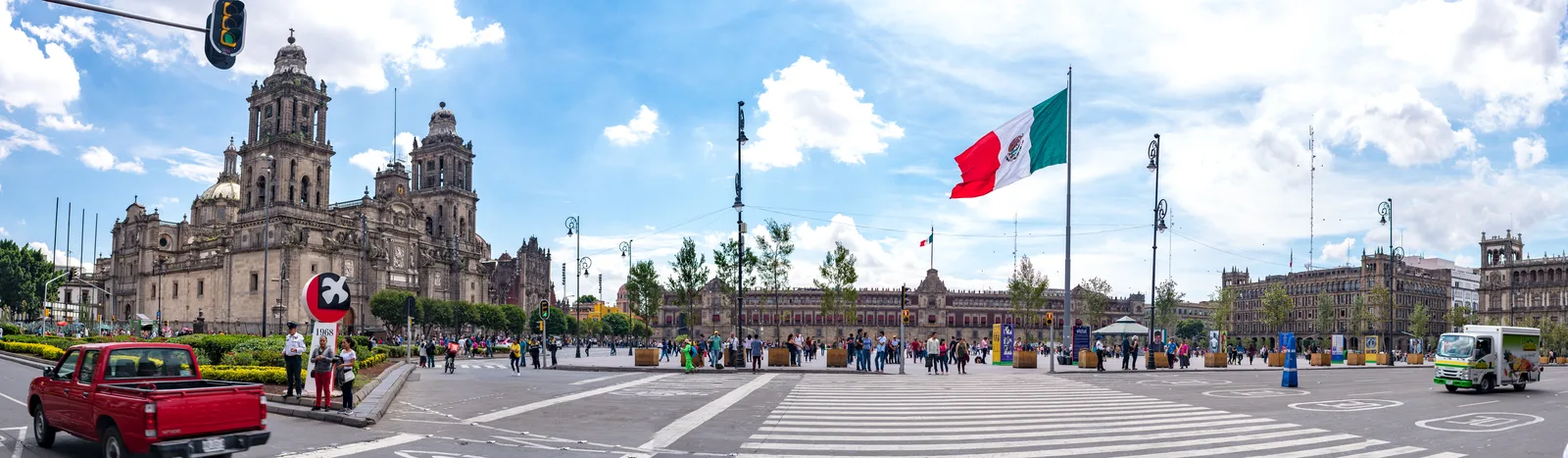
Start around the Zócalo, formally Plaza de la Constitución. Look at the surrounding buildings before choosing an interior visit, and leave time to understand what survives at Templo Mayor. UNESCO recognition here concerns particular historic and landscape areas, not a claim that the entire metropolis is one preserved monument. Xochimilco supplies another part of the story through its canals and cultivated chinampas, rather than simply offering a colourful boat photograph.
Walk the Zócalo area with realistic expectations
The official Zócalo and Templo Mayor walking route connects the square, Metropolitan Cathedral, archaeological site and surrounding historic buildings. It gives a coherent introduction without spending the day travelling between distant neighbourhoods. Begin with a walk, then choose the museum or monument that most interests you.
The centre is also a working civic space. Plan around current access instructions rather than assuming every square, street or government building will be available exactly as shown in a photograph. For a first day, avoid placing several non-refundable reservations immediately after an international arrival. A flexible centre walk can absorb a delayed flight or a slower start much more comfortably than a tightly timed sequence of interiors.
Give Templo Mayor more than a passing glance
At Templo Mayor, the practical value lies in pairing the surviving remains with their interpretation. It is a different experience from looking over a railing and taking a quick photograph. Read enough background to distinguish the ceremonial complex from the later buildings around it, and leave time for the museum as well as the site.
The INAH visitor listing for Templo Mayor gives Tuesday–Sunday hours of 09:00–17:00 and an admission price of MXN210 for foreign visitors. National and eligible concessionary rates differ. Do not assume a foreign tourist qualifies for every Sunday or student concession. Check the current conditions, keep evidence of eligibility available and arrange the rest of the day around the actual opening schedule.
Combine Bellas Artes with an Alameda walk
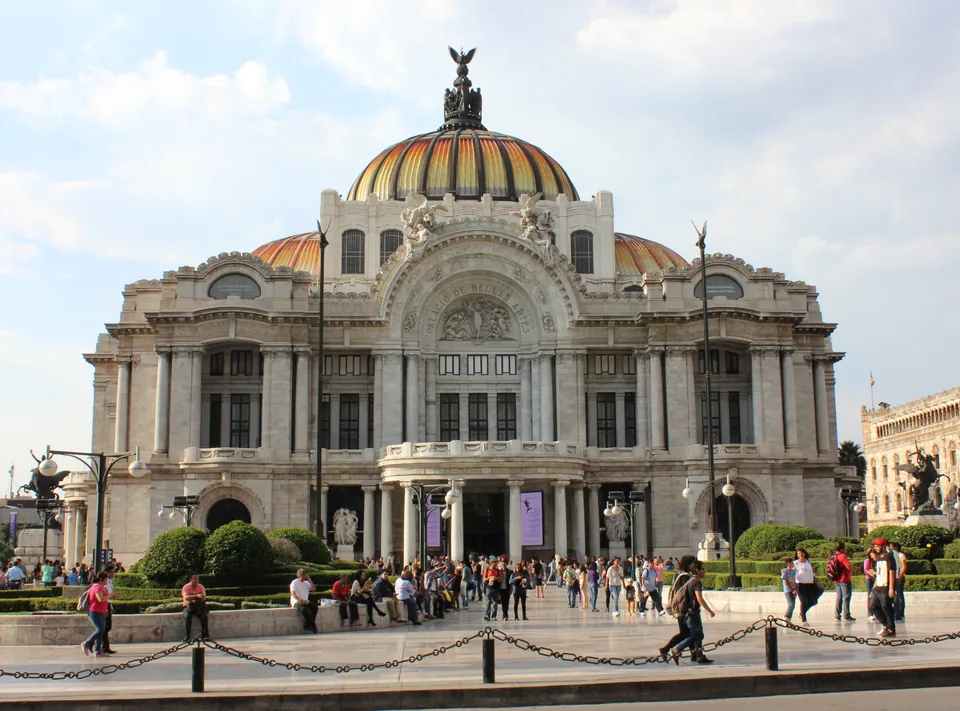
The route towards Alameda Central and Avenida Madero gives the historic-centre day another focus. At the Palacio de Bellas Artes, decide whether you want the museum, a performance or simply time to appreciate the building. These are different plans with different tickets.
The culture ministry’s Bellas Artes museum listing identifies works by Diego Rivera, José Clemente Orozco and David Alfaro Siqueiros. It lists Tuesday–Sunday opening from 10:00 to 18:00, MXN90 general museum admission and free museum entry on Sundays. A museum ticket should not be treated as a theatre reservation. If a performance matters to you, consult its particular programme and ticket conditions before building the evening around it.
Treat Chapultepec as a substantial outing
The official Chapultepec visitor introduction divides the park into sections, which is useful when planning a visit. Choose a specific entrance and destination rather than navigating vaguely to “Chapultepec.” For an initial trip, the castle and a museum can anchor the day, but the space between them still requires walking and time.
Attempting the castle, Anthropology Museum and several more galleries can leave little energy to absorb any of them. Before leaving your accommodation, check the walking approach, the museum’s admission rules and where you can eat or leave luggage.
Choose a focus at the Anthropology Museum
The National Museum of Anthropology’s INAH page describes collections spanning ancient civilisations and the lives of Indigenous communities. Choose several galleries to explore carefully, rather than treating the Sun Stone as the sole reason to enter. The museum can also provide context for what you see later at archaeological sites.
Current published hours are Tuesday–Sunday, 09:00–18:00, with MXN210 foreign-visitor admission. Official pages show differing figures for some discounted categories, so confirm your applicable rate directly rather than assuming a particular reduction. Leave Monday out of the plan. If archaeology is a central interest, reserve a substantial part of the day and reduce another stop; a rushed hour will give only a fragment of the collection.
Plan the ascent to Chapultepec Castle
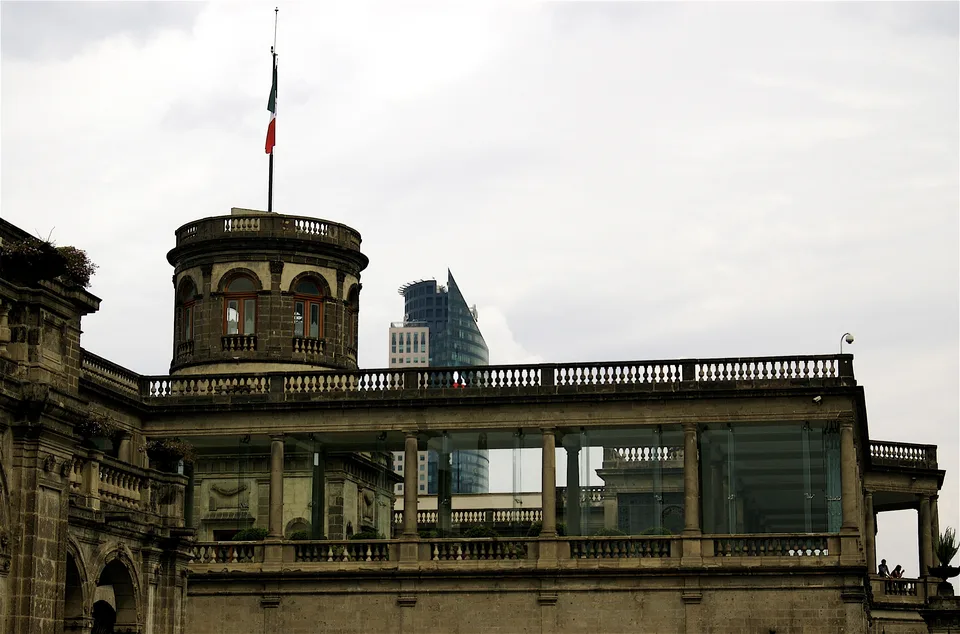
The National Museum of History’s visitor instructions locate the collection in Chapultepec Castle, approached by a rising ramp. The museum explains Mexican history from the Conquest onwards, offering a different emphasis from the Anthropology Museum. The building and its views also form part of the visit.
Its published hours are Tuesday–Sunday, 09:00–17:00, and it states that it never opens on Mondays, including public holidays. General admission is MXN210; documented Mexican and resident concessions apply. The museum prohibits food and water bottles inside, so organise refreshment around admission rather than assuming you can carry everything through. Anyone needing a particular mobility arrangement should confirm the approach and available assistance before travelling to the park.
Decide whether Roma or Condesa suits your stay
The city’s Roma and Condesa introduction highlights streets, plazas, restaurants and galleries. Much of Roma lies east of Avenida Insurgentes, while Condesa lies across it. These areas make sense for visitors who want neighbourhood walks and meals to form a substantial part of the trip.
Use that as a starting point, then examine the exact accommodation address. A room above a late venue creates a different experience from one facing an interior courtyard. Ask about noise, ventilation, lift access and the walking route to transport. Neither district eliminates cross-city journeys to Coyoacán or other southern destinations. Choose a base for the balance of your itinerary, rather than expecting one neighbourhood to make every attraction equally convenient.
Let Coyoacán be more than a museum queue
The Coyoacán visitor guide identifies Jardín Hidalgo and Jardín Centenario, the adjoining church complex and the streets towards Francisco Sosa. These offer a worthwhile setting for an unhurried walk, lunch and time away from a succession of large institutions.
Distinguish the central neighbourhood from the whole borough and from University City. They are not interchangeable stops. Likewise, Casa Azul and other venues associated with Frida Kahlo are separate places. If the principal museum is sold out, choose an alternative for its own merits rather than assuming it offers the same collection. Keep the transfer to the southern part of the city in the day’s schedule instead of adding Coyoacán casually after a full Chapultepec visit.
Reserve Casa Azul through its official channel
The Frida Kahlo Museum’s visit page currently lists MXN320 general admission and explicitly says it has no ticket-window sales. Use the booking link from that page and check the available date and time before finalising your Coyoacán outing. The address is Londres 247 in Colonia Del Carmen.
Monday is closed. Wednesday starts at 11:00, and Thursday currently has later opening than the standard daytime schedule; check the calendar and holiday exceptions for your date. The page says personal, non-flash mobile photography is included, while other uses require authorisation. It also describes access support in certain areas without promising every original room is equally accessible. Ask about your specific needs rather than relying on a general accessibility label.
Choose the kind of Xochimilco outing you want
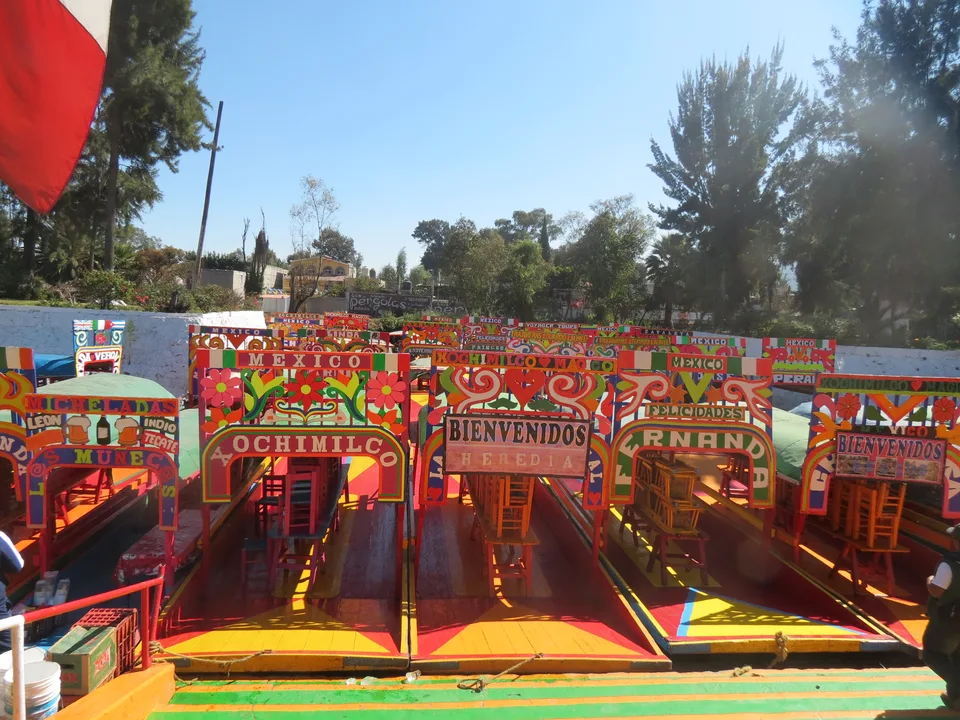
Xochimilco is not one uniform boat excursion. The borough’s official tourism information distinguishes traditional visitor piers, including Nativitas, from departures such as Cuemanco, Fernando Celada and Puente de Urrutia that serve ecological routes. Ask where the trip goes and what its purpose is before agreeing to a duration.
The published official rate is MXN750 per boat-hour, with a maximum of 18 people per trajinera. It is not a mandatory MXN750 charge for each passenger. Confirm the complete quotation, departure point, length and any separately offered extras. A canal ride does not automatically include a chinampa visit or a conservation activity. Choose a quieter ecological focus or a more social outing deliberately, and allow for the journey back afterwards.
Check the airport before choosing a transfer
Read the airport name and terminal on the actual flight booking. Benito Juárez/AICM, Felipe Ángeles/AIFA and Toluca are separate gateways. A cheaper fare may produce a different ground journey, especially when the flight arrives late or you have substantial luggage.
For AIFA, use its official ground-connection information, which describes a Mexibús connection through Ojo de Agua and links to other transport options. For Toluca, consult the airport’s transport services. Neither should be planned using directions intended for AICM. Price the complete journey to your room, check the operating hours for your arrival date and leave a generous connection margin if changing airports. A booking labelled “Mexico City” is not enough to establish the transfer.
Use the right AICM bus boarding point
The AICM Metrobús information page locates boarding at Terminal 1, door 7, and Terminal 2, door 2. Confirm current signs and any terminal-work diversions on arrival. The service has an operating window; it should not be assumed to run throughout the night.
The city’s Metrobús guidance lists MXN30 for the airport service, compared with MXN6 for ordinary journeys. Check the route and destination displayed before boarding, then plan the final connection to your accommodation. If choosing a taxi instead, use the airport’s authorised arrangements and establish the destination and complete fare. Do not rely on an unverified street pickup location, an old terminal map or a promised journey time that ignores road conditions.
Learn the Metro’s direction signs
The official city guide to using the Metro lists MXN5 per journey, regardless of distance or internal transfers. An Integrated Mobility card is a practical starting point; the guide lists MXN15 for the card itself, before adding travel credit. Keep its purchase cost separate from your daily fares.
Lines use colours and numbers or letters, with direction indicated by the terminal station. Match both the line and the direction before entering the platform. Allow extra time for interchanges and crowded periods, and check current service information rather than assuming a route on an old map is operating normally. The Metro and Metrobús are different systems: sharing a payment card does not mean every transfer between them is free.
Make food part of the itinerary
The city’s food introduction explains how regional cuisines meet in the capital. You can explore that variety through different meals: an Oaxacan mole, central Mexican preparations such as tlacoyos, or another regional speciality encountered on a menu. A meal can be a deliberate destination without requiring an invented list of supposedly secret favourites.
Read what is included and ask about ingredients when allergies or other dietary needs matter. Order sauces separately if you want control over heat. For budgeting, combine a few planned restaurant meals with simpler lunches, and check drink prices rather than estimating the bill from one dish. Leave room in a museum day for an actual meal instead of discovering that your only available interval falls between two reservations.
Shop with room in the suitcase
Markets and neighbourhood shops can make shopping more interesting than a hurried airport purchase. Start with the object you want: food, books, textiles and bulky craftwork create different transport and packing needs. At Xochimilco, the borough specifically identifies craft markets around Nativitas and Cuemanco.
Ask about the material, maker and price rather than inventing a provenance from appearance. Compare a few examples, check fragile pieces closely and establish whether packing is included. For food purchases, check the destination country’s import rules before buying. Keep shopping money separate from transport and accommodation costs, particularly if a bargain would require an extra bag on the flight. A manageable purchase is often a better souvenir than an unexpectedly expensive shipping problem.
Build a budget from real components
Accommodation is best priced from quotes for your dates, room type and cancellation terms. Add meals, local transport, airport transfers and the attractions you genuinely intend to enter. Two MXN5 Metro journeys and an MXN210 Anthropology Museum ticket total MXN220 before food and lodging. That is a useful calculation, not a complete daily budget.
For four people sharing a standard one-hour MXN750 trajinera, the boat component would be MXN187.50 each if divided equally, before transport and extras. Confirm the actual arrangement with the operator. Children, residents and concession holders may face different attraction prices, so calculate the household’s real total. Keep a reserve for a changed plan or a taxi rather than budgeting to the final peso.
Prepare for cool mornings and seasonal rain
The city’s practical travel guidance describes April and May as hot and dry, with the rainy period broadly extending from May to October. It also notes cooler mornings and evenings, particularly in winter. Pack layers rather than assuming a highland capital feels like a Mexican beach resort.
For outdoor visits, check the forecast shortly before leaving. A plan with a morning walk and a flexible indoor afternoon is useful in wetter periods, but it is not a guarantee that rain follows a fixed timetable. The city’s weather, pollution and UV resource also provides a starting point for checking conditions. Adjust outdoor plans to current advice when needed; a clear-looking sky alone does not establish favourable air quality.
Four days without crossing the city repeatedly
Day one: explore the Zócalo and Templo Mayor area, then continue towards Alameda and Bellas Artes if time and energy allow. Choose one substantial interior visit. Day two: devote your attention to Chapultepec, selecting the Anthropology Museum or castle as the main event, with park time around it.
Day three: use a confirmed Casa Azul booking to anchor Coyoacán, leaving room for the plazas and a meal. Day four: choose Xochimilco or a further neighbourhood day in Roma and Condesa. Archaeology enthusiasts can instead reserve a separate outing to Teotihuacan. Reorder these suggestions around Monday museum closures, ticket availability and arrival times. They are options for a workable introduction, not an instruction to squeeze every famous sight into four days.
Test a neighbourhood before signing a lease
For a possible move, travel from the prospective home to the actual workplace or campus on an ordinary weekday. Include waiting, changes and the final walk. Repeat the return journey at the hour you would normally use it. A weekend museum transfer cannot establish whether a daily commute is acceptable.
Inspect the building as carefully as the apartment: entrance security, stairs, lift operation, noise, ventilation and the route out. Ask how water is supplied and stored, what drinking-water arrangements residents use, and who handles maintenance. Establish the internet service available at that exact address, with installation timing, rather than relying on a neighbourhood reputation. A temporary stay can be useful while you investigate these questions in person.
Put the tenancy terms in writing
CONDUSEF’s rental-fraud advice warns about implausibly cheap listings, advance payments for properties that cannot be shown and requests for identity documents from unverified people. Arrange a genuine viewing and establish who is entitled to let the property before sending money or sensitive paperwork.
Review a written lease covering rent, deposit, duration, included charges, repairs and the procedure for leaving. Record the condition of rooms, appliances and furniture at handover. Ask how electricity, gas, water, internet and building charges are billed, and whether previous balances have been settled. Do not treat a visitor accommodation quote as a standard residential tenancy. When terms are unclear, obtain appropriate local advice before making a long commitment; a brief trial stay is easier to revise.
Organise the household beyond housing
Before moving, establish healthcare arrangements for each family member, including any period before local coverage starts. Confirm providers, payment procedures and the treatment of ongoing prescriptions with the relevant insurer or service. A residence document alone should not be taken as proof that every medical bill is covered.
Families should contact schools directly about places, teaching language, documents, fees and the everyday journey. Check the route alongside the working adults’ commutes before choosing housing. Keep a practical first-week budget for laundry, phone service, basic groceries and household items that a furnished property may omit. At check-in or handover, ask about the building’s emergency instructions and designated exits, and keep important documents accessible without carrying every original on each sightseeing outing.
Match immigration permission to the purpose
The official Mexican visitor-visa portal describes visits without remuneration from a national source, for up to 180 days. This is a maximum, not an automatic allocation for every arrival. Check visa requirements and the permission actually granted; renting a room does not establish a right to remain indefinitely.
For a move, examine the temporary and permanent residence categories. Employment has its own prior INM authorisation and employer-led procedures, while student residence covers qualifying study beyond 180 days. SRE’s student guidance requires the residence-card process within 30 calendar days of entry. Follow the current checklist for your category and consular post. Foreign income is not a blanket answer to every work-permission question. Use VisaWand’s consultant listings when your individual circumstances require advice.
Choose the next destination deliberately
Teotihuacan’s UNESCO description provides context for a separate archaeological excursion outside the capital. Check current INAH access conditions, transport and the time needed on site. Do not assume a photograph showing people on a pyramid means climbing is currently permitted. Avoid placing a substantial day trip immediately before a flight.
For a wider journey, VisaWand’s Mexico location directory helps identify other destination pages, while the Mexico destination page offers another national planning starting point. Directory entries are not necessarily completed guides. The completed Cancún city guide offers a contrasting coastal option requiring a separate journey. Extend the trip when the additional place suits your interests and available time, rather than reducing Mexico City to a rushed connection between attractions elsewhere.
Official planning resources
Reviewed 15 October 2026. Use the official resources linked throughout this guide for admission, transport, housing and immigration decisions. Prices, services and rules can change; confirm the details relevant to your dates. Photography illustrates the locations and is not a live view.
View all official resources
- Mexico City: geographical identity and boroughs
- Historic Centre and Xochimilco: UNESCO World Heritage
- Zócalo and Templo Mayor walking route
- Templo Mayor: official admission and opening days
- Alameda Central and Avenida Madero walking route
- Palacio de Bellas Artes museum: cultural ministry listing
- Chapultepec Forest and Park
- National Museum of Anthropology: INAH visitor information
- Chapultepec Castle: National Museum of History
- Roma and Condesa: official neighbourhood introduction
- Coyoacán and University City
- Frida Kahlo Museum: official visit and advance tickets
- Xochimilco: official piers, chinampas and boat tariff
- AICM: Metrobús boarding points
- Metrobús: city visitor transport guidance
- Metro: city visitor transport guidance
- Felipe Ángeles Airport: ground connections
- Toluca Airport: transport services
- Food basics: regional cuisines in the capital
- Practical climate and seasonal travel
- Forecasts, air quality and UV: city visitor resource
- CONDUSEF: avoiding rental fraud
- Mexican visitor visas: official consular portal
- Mexican residence visas: official consular portal
- Employment visas and prior INM authorisation
- Student residence: official consular portal
- SRE: student residence card after arrival
- Teotihuacan: UNESCO World Heritage
Plan the next part of your journey
Explore the Mexico guide, browse other cities or compare consultants for your travel and relocation questions.