Visa
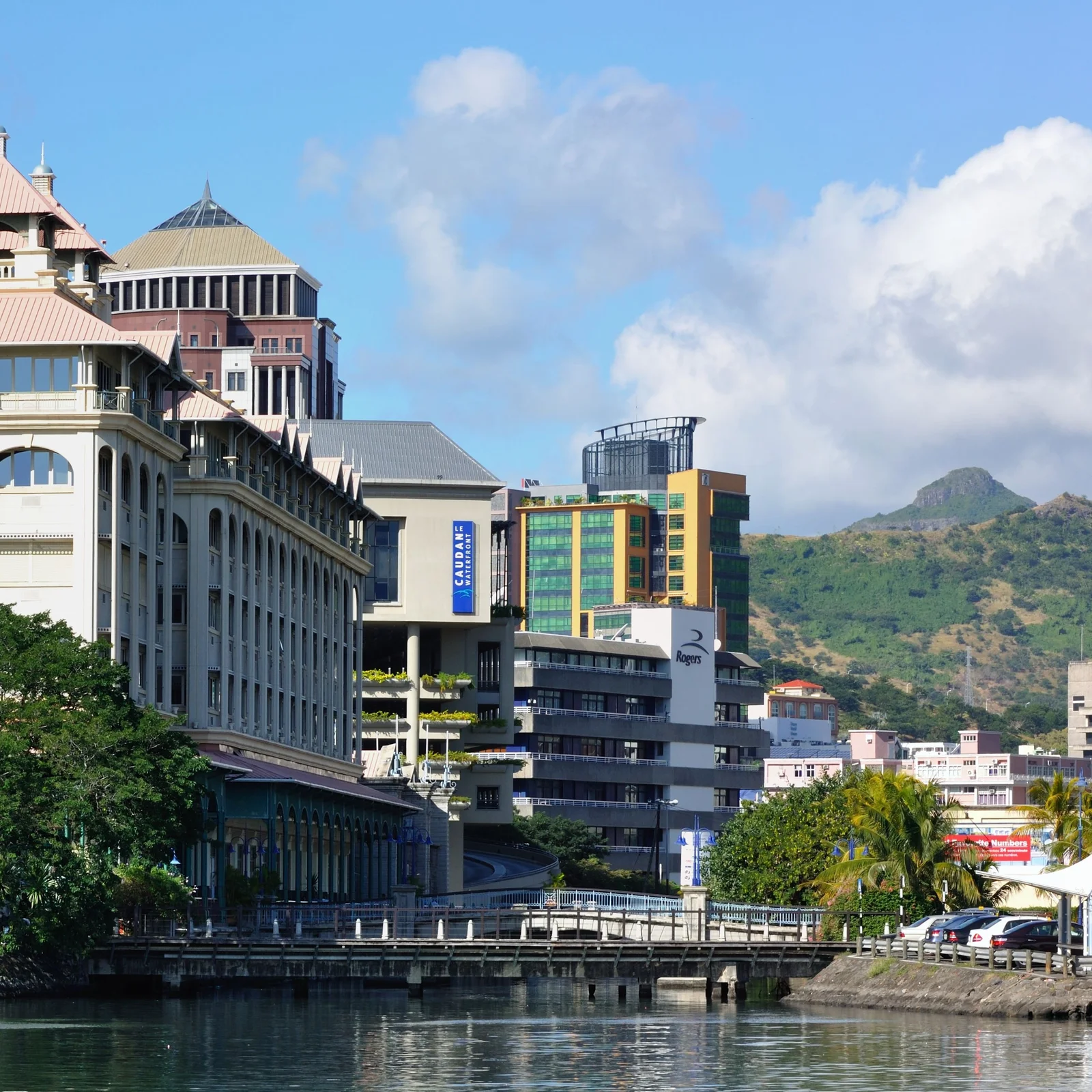
Make time for the capital behind the beach holiday
Port Louis brings the human history of Mauritius into focus. The capital occupies the island’s northwest, with markets, offices and a harbour gathered below the mountains. Its appeal lies in the connections between places: an immigration depot and the families whose ancestors passed through it, a market lunch and the island’s diverse food traditions, a waterfront museum and the trading routes that shaped the city.
Give it a full day if your holiday is based elsewhere. An overnight stay makes room for a second museum, an unhurried meal and a clearer sense of the streets beyond the waterfront. For a prospective resident, the useful question is where daily life would actually happen: the workplace, school, supermarket and transport connection that would determine an ordinary week.
The Mauritius Tourism Promotion Authority’s Port Louis overview is a good geographical starting point. Use VisaWand’s Mauritius country guide alongside this article for the wider destination context, then choose city activities around your interests and the conditions on your dates.
Check the latest travel notices before setting out
Travel update, checked 16 October 2026: the current official travel advisory reports recent demonstrations and community unrest, with possible road closures, transport disruption and interruptions to services. Temporary overnight curfews have also been imposed. The advisory’s latest listed period ran overnight on 15–16 October; that is not a reliable timetable for subsequent nights.
Check fresh local instructions before arranging evening outings or an airport transfer. Ask your accommodation and transport provider how any restrictions affect the actual journey, including its return leg. Avoid demonstrations, follow police directions and keep plans flexible. The itinerary below assumes that access and transport are operating normally; shorten or postpone it when current instructions require that.
Read the city through its different histories
Port Louis developed as a naval base and shipbuilding centre under French governor Mahé de La Bourdonnais. British conquest followed in 1810; slavery was abolished in Mauritius in 1835. These changes, and the subsequent arrival of indentured labourers, help explain why a short walk can encounter such different architectural and cultural traditions. The tourism authority’s history of Mauritius supplies the wider chronology.
Resist treating the colonial streets as scenery detached from labour and power. Aapravasi Ghat offers an essential counterpoint to the grand buildings, while contemporary shops and places of worship show a city that continues to evolve. Look closely, ask permission before photographing people and allow religious buildings to remain working places rather than stops that must admit visitors.
For an overview from above, investigate Fort Adelaide, also called the Citadel. The Tourism Ministry’s city-sights page identifies its view across the city and harbour. Confirm access before adding the uphill visit, and choose another activity if heat, mobility needs or the day’s conditions make the climb unsuitable.
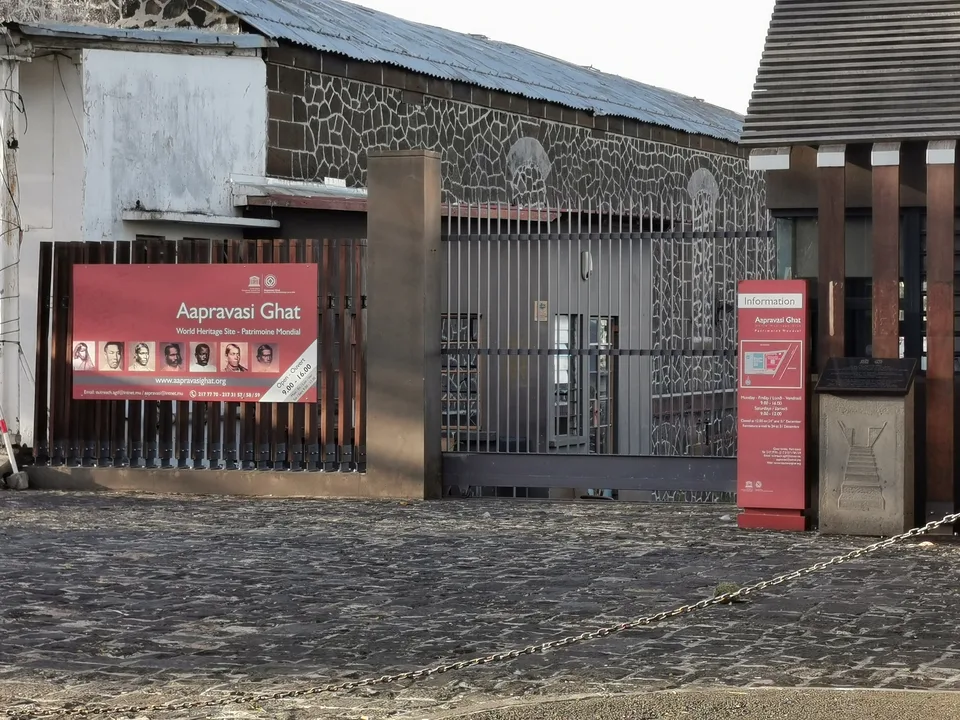
Begin at Aapravasi Ghat
The remains at Aapravasi Ghat, a UNESCO World Heritage Site, preserve an immigration depot built in 1849. The site connects Mauritius to the much larger history of indentured migration and the plantation economy. Surviving structures carry meaning that is easy to miss if you simply arrive, take a photograph and leave.
Follow the operator’s suggested sequence: begin with the Beekrumsing Ramlallah Interpretation Centre, then explore the heritage property. The official visitor information allows roughly an hour for both. Admission is free; published hours are 9am–4pm Monday to Friday and 9am–noon Saturday, with closure on Sundays and public holidays. Guided visits require advance booking and remain subject to availability.
The operator describes the site, main interpretation areas and galleries as wheelchair accessible, with accessible toilets. Contact it about any particular arrangements your party needs. This is especially useful when planning the approach from a vehicle or combining the visit with other streets whose accessibility may differ. Leave time afterwards to absorb the history before moving on to a shopping or food stop.
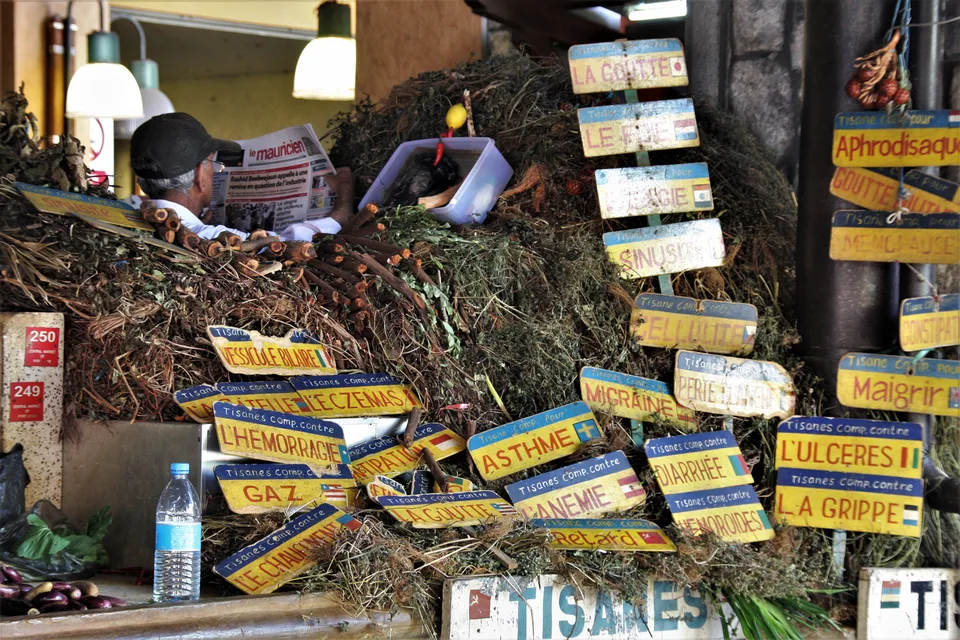
Let the Central Market set a slower pace
The Central Market is useful both as a visitor experience and as a glimpse of household shopping. Produce stalls, food kiosks and other trading sections reward a patient circuit. Clothes and bags are sold outside, while the first floor includes crafts. Its proximity to Chinatown makes the two areas a sensible pairing.
Walk through once before buying. Ask how unfamiliar produce is used, establish the unit behind a price and keep the circulation space clear while other customers shop. If your accommodation has a kitchen, buy quantities you can use during the stay. A fragrant spice packet makes a more practical purchase when its ingredients, sealing and suitability for your onward destination are clear.
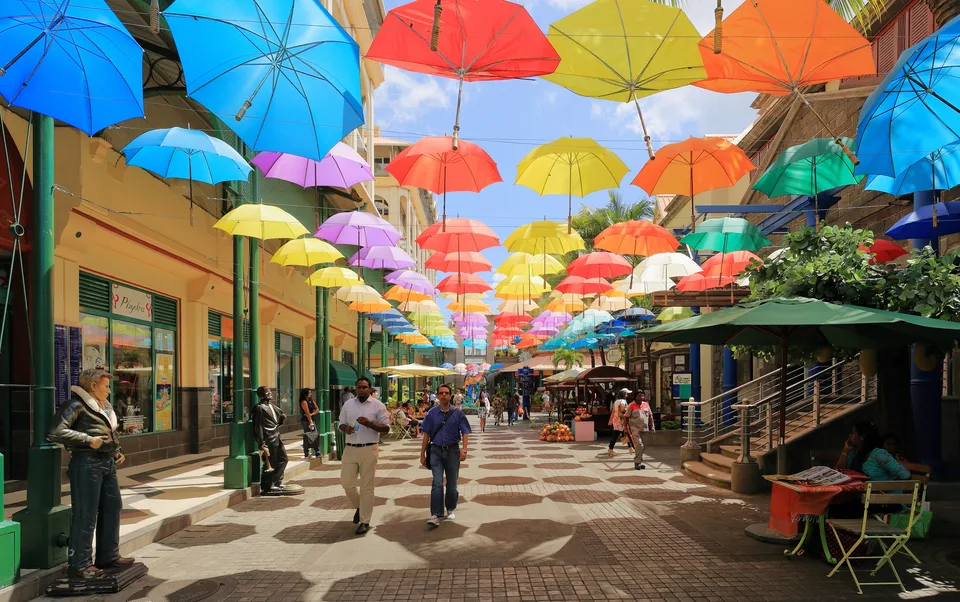
Chinatown adds small shops, food and street art to the outing. Choose a few streets to explore rather than trying to turn lunch into a race around every landmark. Ask before entering a workshop or photographing a shopkeeper. If you want someone to interpret the area, check a guide’s route, language and arrangements before booking, including whether food purchases are included.
Order food with curiosity and clear questions
The tourism authority’s Mauritian food guide explains several dishes worth recognising. Dholl puri is a split-pea flatbread served with accompaniments such as curry, chutney or pickles. Gateaux piments are fritters made with split peas, chilli and coriander. Boulettes are steamed dumplings with varied fillings, often served in broth; rougaille is built around a seasoned tomato base.
Let those names start a conversation rather than dictate a fixed order. Ask what is in the day’s preparation, how hot it is and whether sauces or broth contain ingredients you avoid. A vegetable filling does not by itself establish that the whole dish meets a particular dietary requirement. Where an allergy is serious, choose somewhere able to answer specific preparation questions.
There is room in a city visit for both a counter lunch and a longer seated meal. Read the menu and total price before ordering, including drinks and any additions. Keep enough time to enjoy what you buy, and ask about takeaway packaging if you cannot finish it. No single vendor or supposed secret address is necessary to make the food part of the visit worthwhile.
Choose museums by the questions that interest you
At Caudan, the Blue Penny Museum explores Mauritian art and history, including navigation, historical Port Louis and postal heritage. It is a strong choice if old maps and images help you understand the city outside. Its celebrated Post Office stamps are illuminated for only ten minutes at quarter past each opening hour, so ask about the display when you arrive.
Published admission for non-residents is MUR325 for an adult, MUR200 for a child or student, and MUR820 for two adults with two children. Normal hours are 9.30am–4pm Monday to Saturday, with Sundays and public holidays closed. Photography is prohibited in the stamps room. Check the museum’s own notices for exceptions on your date.
The Mauritius Museums Council provides a different option at the Natural History Museum, on the ground floor of the Mauritius Institute building opposite Jardin de la Compagnie. Its dodo, fauna and marine galleries shift attention towards the island’s natural world. Confirm current access and hours directly when planning the day. Choose one museum carefully if attention or time is limited; a second visit should add interest rather than fatigue.
Use Caudan for a harbour walk and a practical break
Caudan works well as a pause between more concentrated visits. Decide whether you want a meal, shopping, the museum or simply a waterfront stroll, and allow the rest to remain optional. It is also a useful place to regroup when different members of a party want different activities.
The operator’s Craft Market information describes a ground-floor market in the main complex, with textiles, woodwork, jewellery and model ships among its offerings. Published hours are 9.30am–6pm Monday to Saturday and 9.30am–2pm on Sundays and public holidays. These hours belong to the Craft Market; individual restaurants and attractions have their own arrangements.
Ask who made an object, what material it uses and how it should travel before paying for a bulky souvenir. Compare craftsmanship and finish as well as price. A model ship needs different luggage planning from a piece of fabric, and fragile purchases may affect the rest of your day. Keep receipts and check the rules for taking food, plants or animal-derived materials across your next border.
Stay where the trip’s purpose makes sense
A city stay suits travellers who want substantial time with the museums, market and central streets. Staying elsewhere on Mauritius and visiting for a day can work better when swimming and a resort routine are the main priorities. Compare the door-to-door journey with the additional room move before splitting a short holiday between addresses.
The tourism authority’s accommodation overview covers hotels, guesthouses, B&Bs and other licensed accommodation types. Search the exact address of a shortlisted property: a broad Port Louis label may tell you little about the approach, surroundings or journey you will make most often. Check the entrance location, reception arrangements and the route back after dinner.
For an apartment, establish whether the advertised kitchen, laundry and internet are private, shared or subject to charges. Ask about lift access, stairs, cooling and a secure place for luggage. For a hotel, compare the complete package with an apartment rather than the room rate alone. Breakfast, cleaning, transport and cancellation conditions can change the calculation, especially on a short stay. Obtain written confirmation of any feature essential to your party.
Plan the airport journey separately from city transport
Sir Seewoosagur Ramgoolam International Airport is not served by the city’s Metro Express corridor. The airport operator’s bus information lists route 198 between Port Louis Victoria Square and Mahébourg via the airport, with a published average frequency of fifteen minutes. Its route timetable places the airport fourteen minutes after Mahébourg and Port Louis at eighty-five minutes: about seventy-one scheduled minutes for the remaining journey, before allowing for conditions.
The first and last departures in that document are from the route’s terminals, not from the airport stop. Check the appropriate day, direction and airport pickup before relying on a connection. With bulky luggage, limited mobility or an inconvenient arrival, compare a prearranged transfer with the bus rather than assuming the cheapest mode is the most workable.
The official airport taxi list effective January 2026 quotes MUR2,500 for Port Louis. It also lists possible night, waiting, oversized-luggage and other adjustments, plus a card-payment charge. Treat the figure as a planning reference: confirm the final total, payment method, meeting point and destination with the provider. During travel disruption, verify that the journey can operate under the latest instructions and agree how you will be contacted if arrangements change.
Build local journeys around stations and the final walk
Metro Express connects the Port Louis–Curepipe corridor and offers single-use tickets and the reusable MECard. Fares depend on zones travelled. Use the operator’s journey and ticketing information for the stations relevant to you, then check current service notices before committing to a departure time.
A station near the district you want is only part of the journey. Examine the final walk, road crossings and the entrance of the actual destination. Leave a margin for finding the correct platform or bus departure point, particularly when returning to a meeting or connecting with another service. Ask about the last usable service for your whole trip, not merely the line’s general hours.
If driving, Mauritius uses the left side of the road. The official safety advice also notes narrow roads and places without pavements. Choose a parking location before entering the centre and avoid using a map’s short walking distance as proof of a comfortable pedestrian route. For a short central visit, fewer vehicle moves can make the day easier to manage.
Budget from identifiable costs
Keep a Mauritius budget in rupees for ordinary comparisons, while noting separately any quote in another currency. Ask the accommodation how currency conversion and card payment work before accepting a total. Your useful daily figure is the room, food, local journeys and activities you actually intend to purchase, with an allowance for changes.
The Mauritius Revenue Authority’s tourist-fee notice sets a fee of €3 per tourist aged twelve or above, per night in tourist accommodation, effective from 1 October 2025. For two eligible guests staying two nights, that is €12 in tourist fees. Ask whether the booking total already includes it and how it will be collected.
Separate arrival costs from the daily budget so an airport transfer does not distort your view of ordinary city spending. Use dated admission prices for the attractions you choose, and look at actual room quotes for your dates. This guide does not assign an unsupported average to meals or rent. When comparing properties, include the cost of repeatedly travelling from a cheaper address to the places you need.
Choose a season, then plan for the day’s weather
Mauritius Meteorological Services describes a warm, humid summer from November to April and a relatively cool, dry winter from June to September, with May and October as transition months. These are island-wide patterns, not a forecast for your walk through Port Louis. Do not substitute temperatures from an inland station for the conditions at a coastal address.
For a day of streets and museums, favour a pace that leaves room for shade, water and an indoor break. Bring rain protection that is manageable in a crowded market, and keep any exposed viewpoint optional. Check the forecast before travelling from another part of the island; a clear start does not remove the need to consider warnings later.
Cyclone season generally runs from November to May. Follow official warnings and accommodation instructions rather than trying to preserve a sightseeing plan. When booking a weather-sensitive outing, understand its cancellation arrangements and how the operator communicates changes. A flexible day with one main indoor visit is easier to adapt than a sequence of prepaid, tightly connected activities.
A realistic two-day introduction
Day one: begin with Aapravasi Ghat while your attention is fresh, allowing time for interpretation rather than just the outdoor remains. Continue to the Central Market and choose lunch according to what appeals when you arrive. Spend the early afternoon exploring Chinatown, with a pause whenever the heat or the group’s energy calls for one.
Finish with a modest Caudan plan: a waterfront walk, a meal or some shopping. Confirm any evening arrangements against current travel notices. If you are returning to a hotel outside the city, preserve enough time for the entire connection and avoid adding one last attraction simply because it looks nearby.
Day two: choose the Blue Penny Museum or Natural History Museum. Add Fort Adelaide only if access and conditions suit you. Another possibility is a short look at Champ de Mars, whose history includes its inauguration as a racecourse in 1812 and the independence ceremony in 1968; do not assume a race will be scheduled.
For an excursion outside the capital, consider the SSR Botanic Garden in Pamplemousses. Its published visitor hours are 8.30am–5.30pm daily; non-citizens aged five or above without a residence permit pay MUR300. Give the garden its own time and transport allowance. It is an alternative to extra city stops, rather than an effortless addition to an already full afternoon.
For a different second base, compare the Moka location with Port Louis rather than assuming the capital is the right address for every task. The Tourism Ministry describes Moka as a separate inland town with a contrasting setting. Ask where meetings or family visits will take place before choosing between them. Curepipe is another place to investigate along the Metro corridor, especially if the purpose of the trip lies there. A map can introduce these alternatives; a trial journey will reveal which one fits your timetable.
On a short visit, keep an accessible bag for water, tickets and rain protection so purchases do not make the next stop awkward. Travellers with a stroller or mobility aid should confirm the approach to each chosen attraction, including any steps between the drop-off point and its entrance.
Test an ordinary week before choosing a home
For a move, begin with a short stay and investigate the commute at the time you would actually make it. Compare a central address with alternatives around your workplace or along a usable transport route. VisaWand’s Mauritius location directory can help identify places for further investigation; directory entries should not be treated as completed neighbourhood guides.
The Economic Development Board’s accommodation and estate-agent directory offers a starting point for enquiries. Request current listings and compare like-for-like properties. Before paying a deposit, establish who can let the home, what the written agreement includes, how repairs are handled and how the deposit is returned. Inspect ventilation, damp, cooling, locks and the route to everyday shopping.
For electricity, the Central Electricity Board’s residential-supply requirements (source unavailable) include landlord authorisation and ownership documents for tenants. Agree how accounts, existing balances and meter readings will be handled. Check Central Water Authority updates and ask about the property’s supply, storage and maintenance arrangements. Test the internet connection needed for your own work.
Families should investigate school options and admissions before fixing an address. Also identify suitable healthcare and insurance: the official health guidance notes that private treatment can be expensive and complex care may require evacuation. In a medical emergency, the published ambulance numbers are 114 or 999.
Match immigration permission to the life you intend
Check the Passport and Immigration Office’s visa requirements for your nationality and purpose before booking. A holiday, local employment, study and permanent relocation involve different permissions. A visa does not guarantee admission; immigration officers make the final decision at the border, including the permitted stay.
For a longer stay supported from abroad, investigate the Economic Development Board’s Premium Visa information. The published scheme is renewable and valid for up to a year, but applicants must not enter the Mauritian labour market. Its conditions include an overseas main business or income source, evidence of the stay and appropriate travel and health insurance. Confirm your eligibility and the current application requirements directly before making commitments.
Local work, study or a permanent move needs its own assessment. Renting a home does not settle immigration permission, and immigration status does not resolve every tax or household question. Start with the official route matching your circumstances, then use VisaWand’s Mauritius destination and consultant page if you want professional help evaluating the documents and next steps.
Official planning resources
Reviewed 16 October 2026. Use the official resources linked throughout this guide for admission, transport, housing and immigration decisions. Prices, services and rules can change; confirm the details relevant to your dates. Photography illustrates the locations and is not a live view.
View all official resources
- MTPA: Port Louis
- FCDO: current Mauritius travel updates
- MTPA: history of Mauritius
- Tourism Ministry: city sights
- UNESCO: Aapravasi Ghat
- Aapravasi Ghat: plan your visit
- MTPA: Port Louis Central Market
- MTPA: Mauritian food
- Blue Penny Museum: collections, hours and tickets
- Mauritius Museums Council: Natural History Museum
- Caudan: Craft Market
- MTPA: accommodation choices
- SSR Airport: public buses
- SSR Airport: route 198 timetable
- Official airport taxi fare list: January 2026
- Metro Express: routes and ticketing
- FCDO: safety, local laws and transport
- MRA: tourist accommodation fee
- Mauritius Meteorological Services: climate
- MTPA: Champ de Mars history
- SSR Botanic Garden: visitor information
- Economic Development Board: accommodation and agents
- CEB: residential electricity supply (source unavailable)
- Central Water Authority: services and updates
- Economic Development Board: education
- FCDO: health and medical care
- Passport and Immigration Office: visa requirements
- Economic Development Board: Premium Visa
Plan the next part of your journey
Explore the Mauritius guide, browse other cities or compare consultants for your travel and relocation questions.