Visa
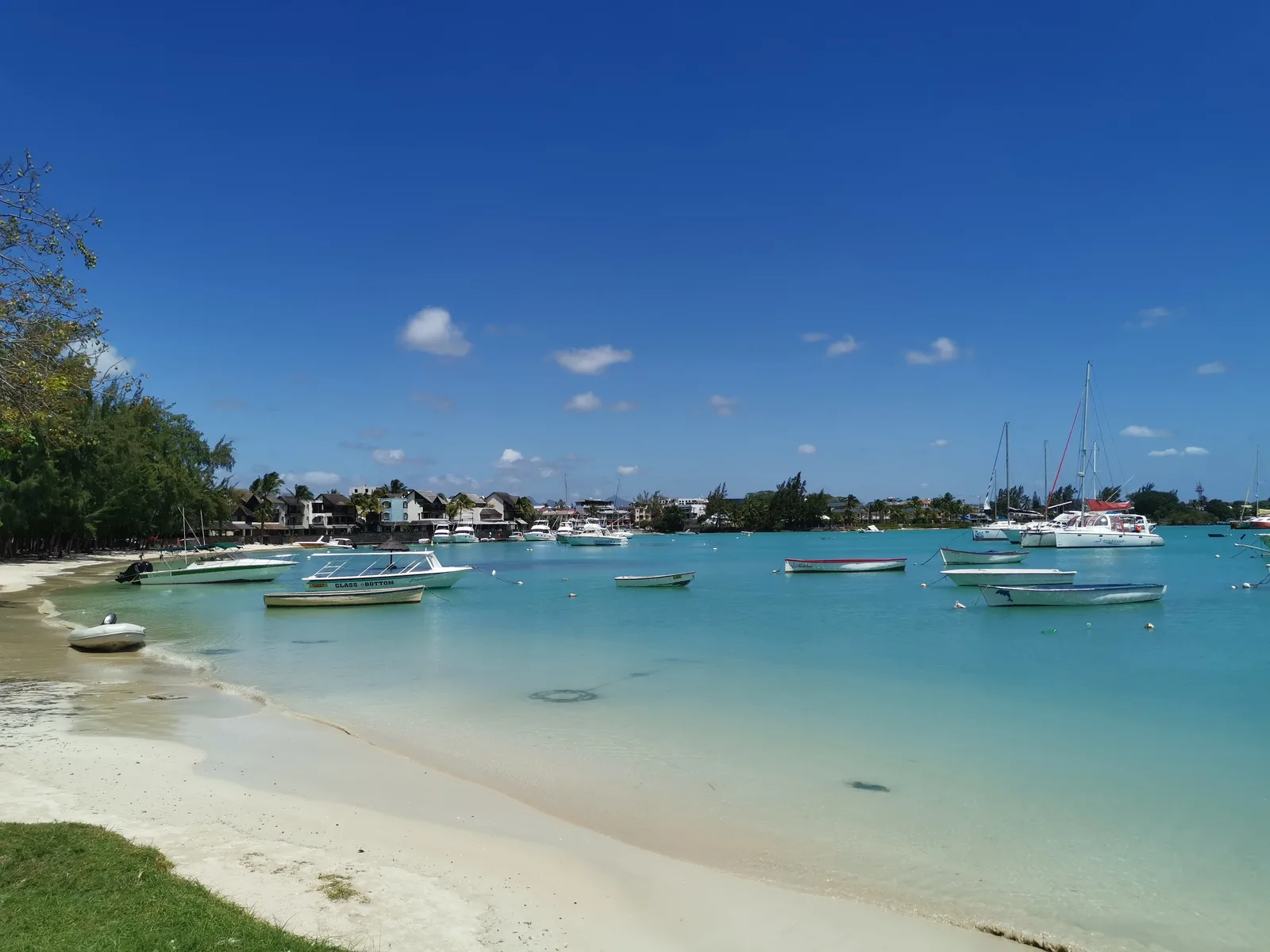
A lively northern base with a village scale
Grand Baie suits travellers who want the sea without spending the entire holiday inside a resort. This coastal village in northwestern Mauritius combines a sheltered bay, places to eat, shopping and departure points for excursions. Its appeal is convenience and choice: a beach morning can sit alongside an afternoon inland, followed by dinner somewhere different from the night before.
The Mauritius Tourism Promotion Authority’s Grand Baie overview describes the horseshoe-shaped bay and the lively coastal strip towards Pereybère. Expect a place shaped by tourism and everyday commerce, rather than a secluded stretch of coast. Someone seeking silence should compare the precise accommodation setting carefully; someone who enjoys having restaurants and services nearby may find that same activity useful.
Allow three days for a first introduction to the village and northern sights, or longer if swimming, a boat excursion and unhurried meals are the main purpose. For a possible move, add ordinary weekdays for viewing homes and testing journeys. A holiday based beside the water will reveal only part of how a household here would function.
The setting behind the holiday image
Grand Baie’s contemporary character makes more sense in the context of Mauritius itself. The tourism authority’s island history traces Dutch, French and British colonial periods, the abolition of slavery in 1835 and the arrival of indentured workers. Independence followed in 1968. These are national historical turning points; they should not be presented as the founding dates of this individual village.
A northern stay can include that wider story without turning every day into a history lesson. Visit a museum, look beyond resort grounds and give some thought to the labour and trade that shaped the island. Food, religious buildings and the languages you hear offer different ways to understand a place whose identity extends well beyond its beach photographs.
Grand Baie is also a practical base rather than a substitute for the whole island. Decide which journeys matter most before booking a long stay in the north. An itinerary dominated by southern attractions may work better with a second base. Repeatedly crossing Mauritius to sleep in the same room can use time that would otherwise be spent enjoying the destination.
Choosing between the bay and nearby beaches
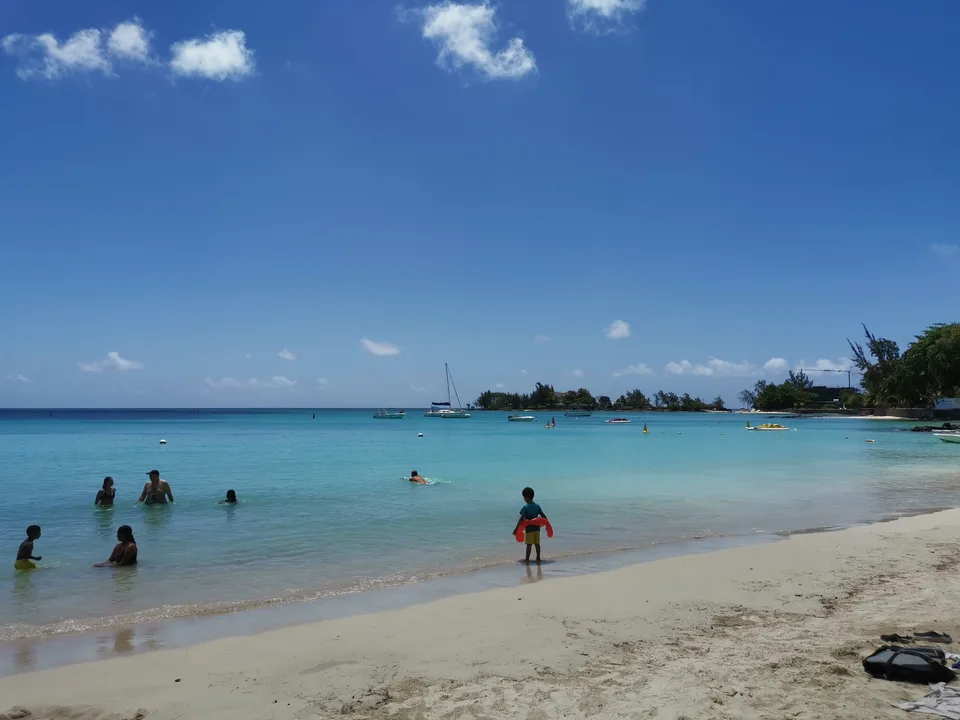
Start by distinguishing Grand Baie’s central waterfront from a dedicated swimming stop. Boats and shore activity are part of the bay’s character. Before entering the water, identify the swimming area, boat movements and any local instructions. A sheltered appearance is not a guarantee of safe conditions, and a photograph cannot establish the state of the sea on your visit.
Compare nearby Pereybère, La Cuvette and Mont Choisy as separate beach outings rather than treating every coastal address as interchangeable. The Beach Authority’s information on public-beach panels includes Pereybère and Mon Choisy among its sites. Use the signs and current local advice when you arrive, particularly if children or less confident swimmers are involved. Establish shade, toilets, access and the return journey before settling in for several hours.
For a family beach day, take only what you can supervise and arrange how valuables will be kept secure while people swim. Leave yourself the option to change plans if the water or weather is unsuitable. If easy access is essential, ask about the actual route from your accommodation to the sand, including steps and road crossings, instead of relying on a broad description such as beach nearby.
Accommodation and the nightly tourist fee
Choose between a village-based hotel, a beachfront resort and a self-catering property according to how you want to spend each day. Veranda Grand Baie and LUX* Grand Baie are identifiable hotel options to compare directly. Look at the exact setting, meal plan, room type and cancellation terms; a shared destination name does not make the properties equivalent.
Check that tourist accommodation is appropriately registered with the Mauritius Tourism Authority. For an apartment, establish who handles cleaning, maintenance, key collection and emergencies. Ask about cooking equipment and the shops you would actually use. Resort restaurants, pools and beach equipment may have access conditions, so confirm arrangements before planning to use another property’s facilities.
The Mauritius Revenue Authority’s tourist-fee notice specifies a charge of €3 per eligible tourist aged twelve and over for each night in tourist accommodation on the island of Mauritius, effective from 1 October 2025. Accommodation providers collect it. Two eligible adults staying seven nights should therefore allow €42 for this fee. Ask whether it is included in the displayed total and how the property collects payment before comparing apparently similar room prices.
Getting from the airport to the north
Your arrival airport is Sir Seewoosagur Ramgoolam International Airport. The airport operator’s taxi information places the service counter on Level 0 in the Tour Operators Hall, opposite the customs exit. A prearranged hotel pickup is another option. Obtain a meeting point, reachable contact and total price before travelling, especially for a late arrival with luggage.
The airport’s January 2026 taxi fare list gives Rs3,500 for Grand Baie, Pereybère and Pointe aux Canonniers. Its conditions allow adjustments for night journeys, waiting, oversized luggage, peak periods and extra stops, and list an additional charge for card payment. Confirm the final amount and vehicle capacity rather than treating the base figure as an unconditional quote. The list estimates roughly one to one-and-a-half hours to the north, subject to conditions.
The airport’s public-bus page lists routes serving destinations including Port Louis, Curepipe and Mahébourg, rather than a direct Grand Baie service. A bus journey north requires careful connection planning. Check current stops, luggage practicality and the final leg before choosing it. After a long flight, compare the complete journey with a taxi, not simply the price of the first bus ticket.
For the airport taxi, the published night period is 11pm–5am, when a 10–20% supplement may apply. The list also gives a 10% card-payment charge. Ask for the complete quote and a receipt before accepting the journey. These conditions make a meaningful difference when comparing an airport taxi with a hotel transfer advertised as a single inclusive price.
Local transport and realistic distances
Use walking for a selected stretch of village and arranged transport where the road layout, weather or distance makes that more comfortable. Inspect the route itself: a nearby restaurant may involve an awkward crossing or a different return after dark. If you rent a car, establish parking at the accommodation and the conditions attached to insurance before relying on it for daily outings.
The National Land Transport Authority’s timetable resources are a starting point for public transport. Confirm the current service and last return locally rather than assuming that an old published timetable establishes the frequency on your dates. Keep enough flexibility to change the plan if a connection is inconvenient, particularly when carrying shopping or travelling with children.
For a taxi or driver, agree whether the arrangement is one transfer, several stops or an entire excursion. Clarify waiting time, parking and the return leg. A driver dropping you at a beach is not necessarily booked to wait until you finish swimming. Families should discuss suitable restraints ahead of time. For relocation, test the journey to work or school at the hours you would actually travel, not only during a quiet sightseeing afternoon.
Cap Malheureux and the northern coastline
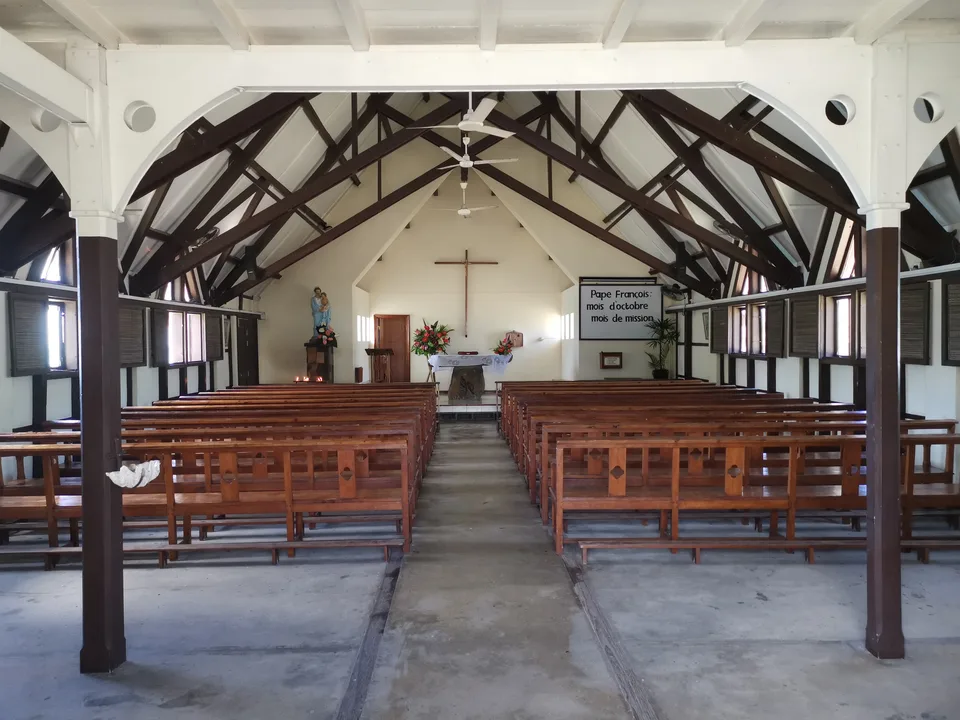
Nearby Cap Malheureux provides a different coastal stop from Grand Baie’s commercial waterfront. The tourism authority’s church information identifies Notre-Dame Auxiliatrice, known for its red roof, as a notable northern landmark. Treat it as a place of worship as well as an attraction. Check whether an interior visit is appropriate, respect services and ask before photographing people.
The official northern-region guide also introduces places such as Triolet and Château de Labourdonnais, alongside the coastline and offshore islands. Choose according to your interests rather than constructing a day around every available marker. Religious buildings, a historic house and a beach each benefit from a different pace and may have separate access arrangements.
A short coastal exploration can be enough for one afternoon. Include a proper meal break and time to stop where something interests you. If you are investigating accommodation, this is also an opportunity to compare the immediate surroundings of different addresses. Make notes about access, services and the journey back to Grand Baie while those details are fresh, rather than allowing an attractive view to become the only basis for a decision.
Boat excursions and choosing an operator
The north offers opportunities for outings towards islands such as Îlot Gabriel and Coin de Mire. Before booking, ask for the actual route, embarkation point, duration and planned swimming stops. An island name in an advertisement does not tell you whether the programme involves landing, passing offshore or stopping elsewhere to swim. Confirm exactly what is permitted and included.
The UK government’s safety guidance says water-sports operators should hold the appropriate permit, carry enough life jackets and be able to contact the coastguard. Ask about sizes for children, boarding arrangements and the procedure if conditions change. Discuss any mobility or medical needs before paying, and obtain cancellation terms covering weather and operator decisions.
Keep the boat day flexible within the stay. Check the marine forecast and follow instructions if a trip is postponed; an operator’s willingness to sail is not something to negotiate around a rigid sightseeing schedule. Take sun protection, water and a secure way to protect essential documents or electronics. Leave unnecessary valuables ashore and establish who is responsible for belongings during swimming stops. A full day at sea is usually best treated as the main activity, with an easy evening afterwards.
Food, shopping and practical budgeting
The tourism authority’s food overview reflects Mauritius’s Indian, Chinese, African and European influences. Dholl puri, biryani, fried noodles, chilli-seasoned pineapple and pastries offer starting points for exploring beyond a hotel buffet. Ask how dishes are prepared if you have allergies or dietary requirements; neither a familiar name nor a meat-free-looking dish establishes the ingredients or cooking environment.
For shopping and ordinary services, La Croisette’s own directory and location information provide a useful reference on Chemin Vingt Pieds. Check individual outlets before making a special journey. Combine practical purchases with an outing where convenient, but leave room to carry groceries and other items back comfortably. For a longer stay, price a realistic household basket rather than estimating living costs from holiday restaurant bills.
Mauritius uses the Mauritian rupee, MUR, commonly shown as Rs. The Bank of Mauritius’s exchange-rate information is a comparison point; your card provider or exchange service may use a different rate and charge fees. Budget separately for accommodation, the tourist fee, meals, transport and excursions. Ask about drinks, equipment, guiding and transfers when comparing packages, and retain a contingency for changes rather than allocating every rupee in advance.
Seasons, sunshine and sea conditions
The Mauritius Meteorological Services climate guide describes a warm, humid summer from November to April and a cooler, drier winter from June to September, with May and October as transition months. These are broad climatic patterns, not a guarantee of weather in Grand Baie. Pack for sun, showers and evenings outdoors, taking your planned activities into account.
For a first trip, decide whether beach time, boat excursions or inland sightseeing matters most. Keep outdoor bookings adaptable and read cancellation terms before paying. A rainy interval need not ruin the stay if a shopping or cultural visit can move into it, but an excursion dependent on sea conditions deserves a different level of flexibility.
Check official weather and marine warnings shortly before activities and during the stay. Do not infer offshore conditions from a calm-looking patch of water beside the hotel. Accommodation staff and operators can help interpret practical arrangements, but official warnings should guide decisions. Anyone considering relocation should also ask how a prospective property handles heavy rain, drainage and storm preparation; an attractive viewing on a sunny day gives only part of the picture.
Pamplemousses, gardens and sugar history
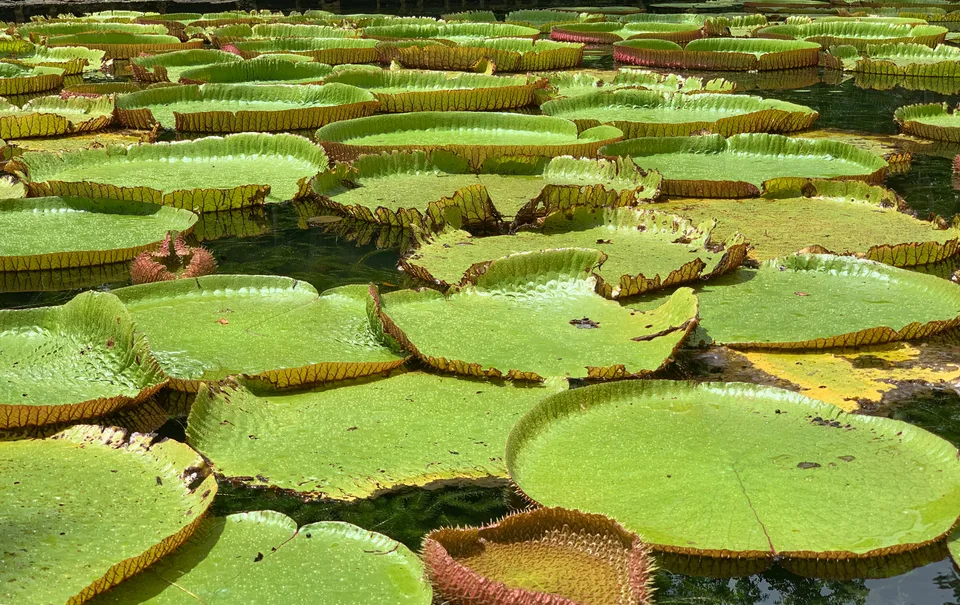
The Sir Seewoosagur Ramgoolam Botanic Garden at Pamplemousses makes a worthwhile inland excursion from the northern coast. Its official visitor information lists daily opening from 8.30am to 5.30pm, including public holidays. Admission for non-Mauritian visitors aged five and over without a residence permit is Rs300; children under five enter free. Different rates apply to citizens and residence-permit holders, and Sunday free admission is for Mauritians only.
Allow time to look closely at planting and ponds rather than treating the garden as a single photograph. Bring water and suitable footwear, and ask about the route if access or walking endurance is a concern. A garden visit and a substantial museum stop can fill a day comfortably, with a lunch break between them.
Nearby L’Aventure du Sucre’s current visitor page lists general adult admission at Rs1,200 and opening Monday–Saturday, 10am–4pm, with Sunday closure. It recommends entry by 3pm and gives a 3.15pm ticket-office closure. Its exhibits connect sugar with the island’s history; a guided visit costs extra and should be reserved. Check holiday closures and the concession categories relevant to your party instead of assuming a child, student or resident rate applies automatically.
At L’Aventure du Sucre, the general child and youth categories are listed at Rs600, and children under six enter free. Students aged eighteen to twenty-five need student identification for their concession. Ask about the family discount and whether your party qualifies before paying; compare the admission total separately from lunch or a guided tour.
A three-day plan with room to relax
Use day one to find your bearings in Grand Baie, look around the waterfront and choose a nearby beach according to current conditions. Keep lunch and the afternoon flexible. An arrival late the previous night is a good reason to reduce the programme, rather than beginning the holiday with an early departure and an ambitious list of stops.
On day two, plan Pamplemousses and L’Aventure du Sucre, allowing separate time for each and checking that the museum is open. The two visits give a different perspective from the coast. If gardens or industrial history particularly interest you, stay longer at one instead of rushing both to make room for another attraction.
Reserve day three for a boat excursion or a coastal outing towards Cap Malheureux. These are alternatives, not two halves of a compulsory schedule. Move the boat day within the stay if weather requires it. With more time, add a distinct Port Louis day or investigate another region of the island. For a reconnaissance trip before moving, replace one sightseeing block with property inspections, a commute trial and practical appointments; trying to do both programmes fully will produce a misleadingly hurried visit.
Moving to Grand Baie and choosing a home
Start with where work or study will take place. Grand Baie can appeal as a coastal base, but a daily journey elsewhere needs to be tested before signing a lease. Compare actual addresses in Grand Baie, Pereybère and other nearby areas, including the last part of the route to the property. A convenient holiday base does not automatically suit a weekday household.
The long-term rental listings from Pam Golding Mauritius provide examples of available property types and asking prices. They are individual offers, not a reliable average rent for the entire village. Confirm whether a listing is for a long lease, which bills and communal charges are included, and the currency and timing of payments. Inspect in person and establish the agent’s authority before transferring a deposit.
Check locks, cooling, cooking facilities, water pressure and internet reception. Ask who maintains any tank, pump, generator or shared pool and how repairs are authorised. Note noise and access at relevant times, not only during the viewing. A flexible first stay gives you time to compare homes without letting a checkout date force a decision about a lease you do not yet understand.
Household services, healthcare and study
Use the Central Electricity Board’s customer information (source unavailable) and Central Water Authority’s customer guidance to identify the correct account and connection procedures. At the property, obtain meter details and recent bills and clarify whether the owner or tenant deals with each service. If stored water or backup equipment is important to the household, request a demonstration and a clear explanation of maintenance and running costs.
The UK government’s health guidance notes that private healthcare can be expensive and complex cases may require evacuation. Arrange cover appropriate to the length and purpose of the stay and keep treatment funds accessible. Identify suitable care and prescription arrangements before moving, especially for ongoing needs; a nearby clinic’s existence does not establish that it can provide every service.
Families should confirm school places, teaching language and the actual school journey before committing to housing. Students need both admission and the correct immigration arrangements. The immigration office’s study-permit guidance is a relevant starting point, alongside the institution’s own instructions. Investigate internet installation and a workable place to study or work at home as part of the same process, rather than leaving essential household decisions until after moving day.
Visiting, remote work and longer-term permission
Check the Passport and Immigration Office’s requirements for your nationality and purpose. For British citizens, UK entry guidance describes visits without a visa for up to sixty days, a passport valid for the stay and one blank page. It also identifies recent-travel health restrictions that can affect entry. Those British-passport provisions should not be generalised to all visitors.
Complete the official All-in-One Travel Digital Form as required and retain the resulting documentation. Confirm onward travel, accommodation evidence and any route-specific health requirements before departure. Admission and the permitted stay remain immigration decisions; a holiday reservation is not permission to take local employment or remain permanently.
The immigration office describes the Premium Visa as a one-year permission that can be renewed, with eligibility and supporting evidence still required. Renewal is a separate decision to prepare for; do not assume that the first approval establishes indefinite residence or resolves your tax position.
For eligible longer stays, the Economic Development Board’s Premium Visa information describes remote work with the main business and income outside Mauritius and no entry into the local labour market. Local employment, investment, study and residence require their appropriate routes; use the official work-and-residence resources before committing. VisaWand’s Mauritius location directory, destination page and consultant listings support further research, while the Antananarivo city guide provides another regional destination to compare.
Official planning resources
Reviewed 17 October 2026. Use the official resources linked throughout this guide for admission, transport, housing and immigration decisions. Prices, services and rules can change; confirm the details relevant to your dates. Photography illustrates the locations and is not a live view.
View all official resources
- MTPA: Grand Baie
- MTPA: island history
- Beach Authority: public-beach information panels
- Veranda Grand Baie: village location
- LUX* Grand Baie: resort information
- Mauritius Tourism Authority: licensed tourism services
- Mauritius Revenue Authority: tourist-fee notice
- ATOL: airport taxi counter
- Airport Taxi Owners Association: January 2026 fares
- ATOL: public airport buses
- National Land Transport Authority: route timetables
- MTPA: Cap Malheureux church
- MTPA: northern region
- UK government: safety and water-sports guidance
- MTPA: Mauritian food
- La Croisette Grand Baie: shopping and location
- Bank of Mauritius: exchange rates
- Mauritius Meteorological Services: climate
- Mauritius Meteorological Services: forecasts and marine warnings
- SSR Botanic Garden: visitor information
- L’Aventure du Sucre: admission and opening arrangements
- Pam Golding Mauritius: long-term rental listings
- Central Electricity Board: connection and tariff information (source unavailable)
- Central Water Authority: customer questions
- UK government: healthcare and health risks
- Mauritius immigration: study entry and residence permits
- Mauritius immigration: visa requirements
- UK government: Mauritius entry requirements
- Mauritius All-in-One Travel Digital Form
- Economic Development Board: Premium Visa conditions
- Economic Development Board: work and residence routes
Plan the next part of your journey
Explore the Mauritius guide, browse other cities or compare consultants for your travel and relocation questions.