Visa
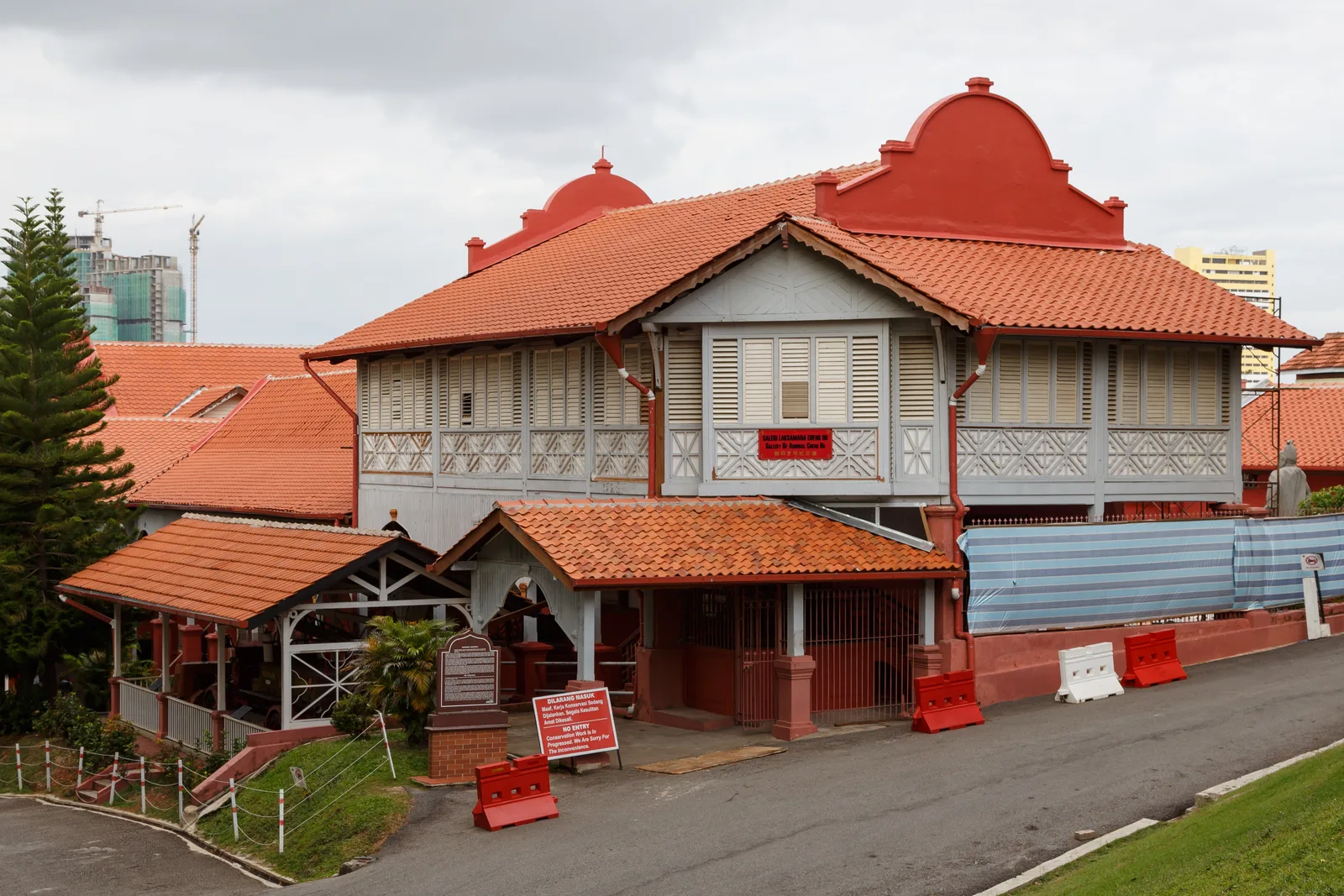
A trading city worth more than a day trip
Malacca, commonly called Melaka in Malaysia, rewards visitors who stay long enough to see its riverfront at different hours and its historic streets between excursions. The city sits on the southwestern side of Peninsular Malaysia, facing the Strait of Malacca. Its appeal comes from the relationship between places: a former civic building, a merchant’s house, a temple and a meal can reveal different parts of the same trading history.
Two nights gives a first visit room to breathe. You can cover a selective heritage circuit, spend time inside a house museum and leave an evening for the river. Anyone considering moving here should add ordinary weekdays to the trial, testing shopping, housing and commuting beyond the visitor centre. The city and the surrounding state share a name; check which one an accommodation or attraction description actually means.
Read the heritage through several communities
UNESCO’s Melaka and George Town inscription recognises historic trading cities shaped by exchanges between Asia and Europe over centuries. Melaka’s buildings reflect the Malay sultanate and Portuguese, Dutch and later colonial influences, alongside the cultures of communities who traded and settled here. The inscription dates to 2008, with a subsequent boundary modification; it covers defined historic areas, rather than every modern development bearing the city’s name.
Look beyond an architectural checklist. A shophouse’s living quarters and commercial frontage tell a different story from a fortification or church. Allow time for interpretation inside a museum instead of relying entirely on façade photographs. The most rewarding itinerary combines public history with domestic life and present-day worship, while recognising that residents continue to use these streets for purposes unrelated to sightseeing.
Get your bearings around the river
For an initial orientation, use Dutch Square, the river crossing and Jonker Street as reference points. Tourism Malaysia’s city overview identifies the Jonker area with shopping and dining, and Bandar Hilir with major monuments and museums. Choose a few stops in one area before crossing town for something else.
A convenient hotel address is one that connects comfortably to your actual plans. Check the walking route, not simply the distance displayed beside a booking. Ask how luggage reaches the entrance, where a vehicle can stop and whether the room requires stairs. For someone with reduced mobility, request specific information about surfaces, gradients and bathrooms. A historic building’s charm does not establish that its interior or approach meets every visitor’s access needs.
Start at Dutch Square
The red civic architecture around Dutch Square provides a memorable introduction. The Stadthuys stands beside Christ Church, with the clock tower and fountain contributing to the setting. Its name refers to a town hall, a useful reminder that this was an administrative landscape as well as the backdrop to modern holiday photographs.
Spend a little time looking at the relationships between buildings before moving on. If you plan to enter the History and Ethnography Museum in the Stadthuys, confirm current opening arrangements and admission with the museum before assigning it to a fixed slot. Historic attractions can have different visitor rules even when they appear to form one continuous outdoor circuit. Keep a shaded or indoor stop in reserve if the heat makes a longer walk uncomfortable.
Climb St Paul’s Hill when conditions suit
St Paul’s Hill and the Church of St Paul add a different perspective on the city. The Portuguese chapel dates to 1521; today visitors encounter its ruins, Dutch tombstones and a statue of St Francis Xavier. The hill involves a stair climb, so decide whether it suits everyone in your party before starting.
Take water and leave room for pauses rather than treating another visitor’s climbing time as a target. If rain makes the approach slippery, rearrange the visit. A short heritage outing can be enough without adding every nearby museum. Read the interpretation at the site and distinguish what survives from later commemorative features. The church’s former association with Xavier is part of a history extending beyond Melaka, including the subsequent movement of his remains to Goa.
See domestic history at the Baba & Nyonya museum
The Baba & Nyonya Heritage Museum offers a close view of a family home rather than another grand public monument. Three terrace lots acquired by the Chan family in 1861 became a museum in March 1985. The family continues to manage it, presenting a setting associated with late nineteenth- and early twentieth-century Peranakan life.
Its operator’s visitor information lists weekday opening of 10:00–16:15, excluding Tuesdays, when it is closed; weekend hours are 10:00–16:45. Check for changes before visiting and use the museum’s own ticket page for current admission. The address is 48 and 50 Jalan Tun Tan Cheng Lock, one street from Jonker Walk. Ask about tour arrangements, photography and stair access in advance if these affect your visit. An atmospheric interior deserves time to understand its household arrangements, not simply to pass through.
Visit Cheng Hoon Teng as a place of worship
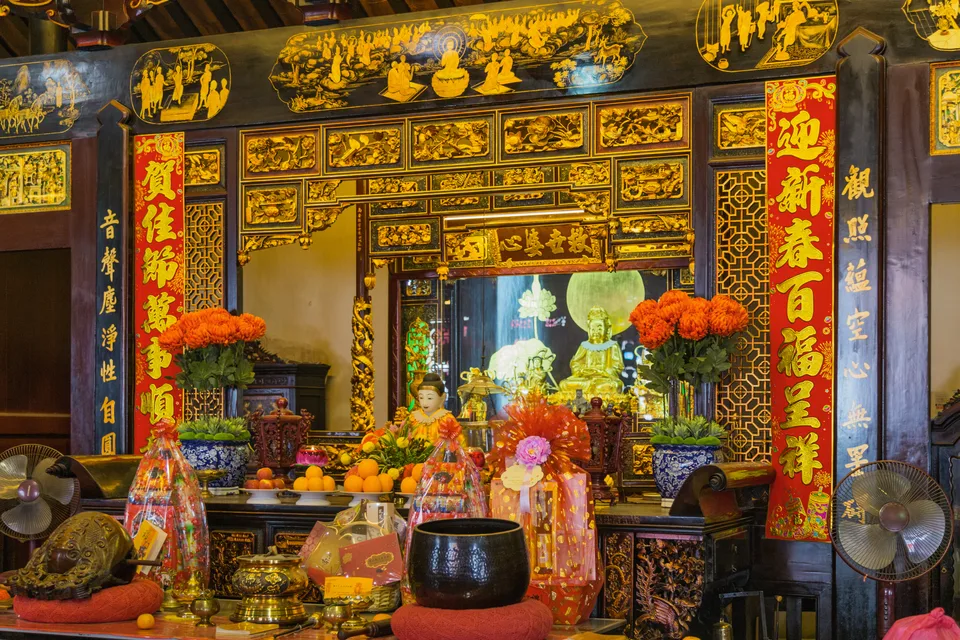
Cheng Hoon Teng Temple remains a religious setting with daily services. Enter with an awareness that somebody else may be praying, consulting religious staff or attending to a family obligation. Follow instructions at the entrance, dress respectfully and ask before photographing people or rituals.
Make the visit part of a thoughtful walk rather than a race through a list of religious buildings. Look closely at craftsmanship where visitor access allows, then step aside when worship requires space. Do not assume that every hall is open simply because an outer entrance is accessible. If travelling with children, explain beforehand why voices, movement and photography may need to change here. A temple visit is most useful when the practical conduct matches the cultural interest that brought you through its gate.
Leave time for Kampung Morten
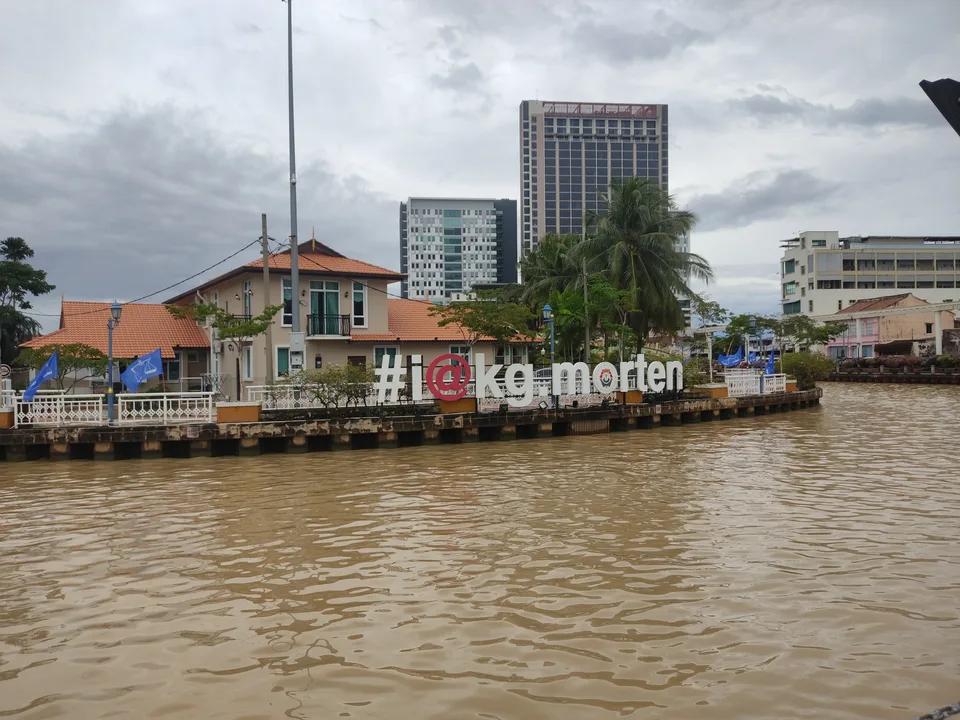
Tourism Melaka describes Kampung Morten as a historic Malay village within the city. Villa Sentosa provides a house-museum connection to Malay domestic heritage, adding another perspective to a visit otherwise concentrated on colonial monuments and Peranakan townhouses. Confirm current visiting arrangements directly before expecting to enter a home.
Walking through a residential area requires a different approach from entering a ticketed attraction. Keep to public routes, avoid blocking doorways and ask before photographing residents or private interiors. The surrounding modern buildings are part of the present city, not a flaw in the experience. Plan the return journey as carefully as the outward walk, especially if you intend to remain after dark. The riverfront can give you a useful sense of how this neighbourhood relates to the wider centre.
Choose the right river-cruise product
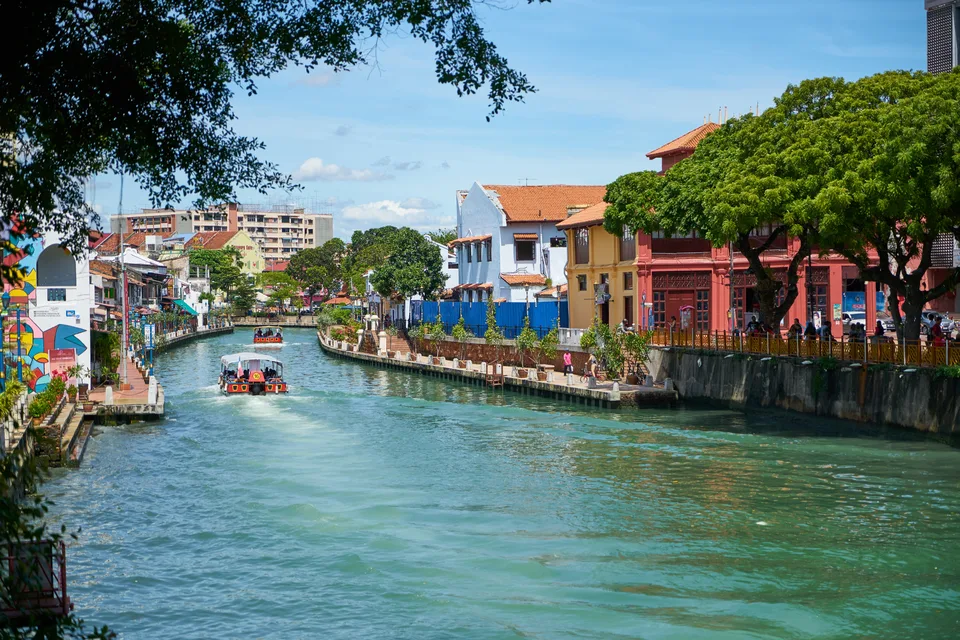
The Melaka River Cruise operator describes a journey of about 45 minutes over roughly nine kilometres, with daily operating hours published as 09:00–23:00. Check conditions and the final available departure for your day. Taman Rempah and the Quayside river-square area are boarding reference points; use the jetty named in your booking.
At research, the official booking system’s River Cruise MRP package listed RM50 for a foreign adult and RM45 for a foreign child. This package includes Melaka River Park, so compare like with like when reading older price lists. The operator also markets separate hop-on, hop-off services; a sightseeing cruise is not automatically an unlimited transport pass. For accessibility, children or a particular seating need, ask the operator before booking. Leave time for the queue and boarding in addition to the advertised journey.
Stay close to the experience you want
A central address around Jonker Street or Jalan Tun Tan Cheng Lock can suit a short heritage visit, particularly if you want to return to your room between outings. Compare access and the exact room location, since proximity to activity can matter differently to someone seeking lively evenings and someone needing early sleep.
Bandar Hilir provides another useful search area for visitors prioritising its monuments and museums. For a riverfront property, establish what “river view” means for your booked category and whether your usual entrance faces the walking route you intend to use. Compare a more distant room’s parking, space and transport costs before booking.
Check the practical side of a heritage stay
Ask about stair access, air conditioning, bathroom layout, window position and overnight assistance. A restored townhouse, conventional hotel and self-contained apartment offer different arrangements for meals, housekeeping and maintenance. Travellers with children should check beds and safety features rather than infer them from a room’s maximum occupancy.
Read the full cancellation and payment terms, including arrival arrangements if reception is limited. Establish whether the quoted price includes taxes, service charges and any local levy. Request a clear total for the dates and number of rooms you are booking. For a working stay, check the specific room’s desk and connection.
Reach Melaka from the airport or Kuala Lumpur
For an international arrival, compare your flight options with the ground journey to Melaka before committing to accommodation. Transnasional’s official booking site advertises KLIA and KLIA2 connections to Melaka Sentral from RM30. This is a starting fare, so check the dated departure, terminal, luggage conditions and final price rather than budgeting from the headline alone.
Melaka Sentral is a transport interchange, not your hotel doorstep. Plan the last leg separately and save the accommodation address offline. Allow a comfortable gap between landing and a reserved coach, accounting for immigration, baggage and the journey to the correct departure point. For a return flight, obtain current timing advice and leave a margin for road delays. Travellers arriving from Kuala Lumpur should likewise confirm their precise coach departure terminal and Melaka arrival point.
Treat rail as a journey with an onward connection
KTMB’s timetable page lists services associated with Pulau Sebang, also known in rail listings as Tampin. This is a regional rail option rather than an arrival inside Melaka’s heritage centre. Compare the complete journey, including the transfer onward, with a coach that brings you to Melaka Sentral.
Use the operator’s timetable for the relevant date and distinguish ETS reservations from Komuter services. A railway line on a map does not establish a convenient departure at the time you need. If choosing a late arrival, verify the final connection and keep a workable alternative. Rail can suit someone combining destinations along the corridor, but it needs more deliberate planning than assuming a train station labelled for the region serves the central sightseeing streets directly.
Use BAS.MY for the journeys it actually serves
BAS.MY Melaka’s operator page provides route leaflets and current service information. Its M100 city feeder connects Melaka Sentral with stops labelled Jonker Walk/Stadthuys and Muzium Samudera, among others. Check the direction of the loop before boarding: the return journey may not mirror the route you took outward.
The transport authority’s fare information describes distance-based ordinary fares and several payment methods, rather than a universal flat fare. Check the amount and accepted payment on your service, carry usable small cash and request a receipt. Malaysian concession and monthly-pass offers have eligibility conditions; foreign visitors should not assume they qualify. Inside a compact heritage circuit, walking may be simpler, while a taxi or e-hailing journey can be useful with luggage or when waiting would consume too much of the day.
Eat across the city’s different traditions
Tourism Malaysia’s Melaka food overview gives several useful starting points. Chicken rice balls use rice cooked with chicken stock; Nyonya laksa brings a coconut-rich curry gravy; asam pedas combines fish with sour tamarind and chilli. Satay celup involves skewered ingredients cooked in peanut sauce, while cendol brings shaved ice, jelly strands, coconut milk and palm sugar into a cooling dessert.
Choose meals around the day’s geography rather than crossing town repeatedly for a long restaurant checklist. Ask about ingredients and preparation if you have allergies or dietary requirements: peanut sauce, seafood and stock can be relevant even when a menu description looks simple. Confirm halal status with the establishment where required. For a shared cooking experience, ask how ingredients are handled and what cooking instructions apply. A famous dish is an invitation to enquire, not a guarantee of suitability for every diner.
Browse Jonker without turning shopping into a marathon
Use the Jonker area for browsing between a museum and a meal, leaving enough flexibility to compare workmanship and prices. For a meaningful purchase, ask who made it, where it was produced and what materials it contains. Get a receipt and agree packing or shipping arrangements before handing over a substantial payment.
Antique-style appearance does not prove age or provenance. Check export and destination import requirements before buying objects that could involve protected materials or cultural property. For food gifts, consider storage, ingredients and customs restrictions at home. If a street is busy, keep the group together and agree a meeting point. Shopping works better as part of a selective afternoon than as an obligation to buy something at every stop.
Make a budget from current quotations
Start with the room total and intercity journeys, then add local transfers, meals and the paid visits you actually want. A foreign adult’s currently listed MRP cruise package provides a concrete RM50 reference, but it does not establish what an entire day should cost. Museums, transport choices and room categories create very different totals.
Under Customs’ tourism-tax guidance for online bookings, the tax is RM10 per room per night, with exemptions including Malaysian citizens and permanent residents. Keep proof if a registered platform collected it: the guidance explains that the property should not collect the same tax again when payment evidence is shown. Ask the accommodation to itemise any other charges separately. For two chargeable room nights, the national tourism-tax component would be RM20, before any distinct applicable charges.
Plan around heat and rain
METMalaysia’s regional climate explanation describes warm, humid conditions and substantial rainfall. On the southwest coast, October and November tend to be wetter and February relatively drier; early-morning Sumatra squalls can affect the coast from May to August. These are seasonal patterns, not guarantees for an individual trip.
Start exposed walking when conditions are comfortable and place an indoor stop within reach of the afternoon plan. Carry water, sun protection and rain cover without assuming that every downpour will be brief. During thunder or heavy rain, wait somewhere appropriate instead of pressing ahead to protect a timetable. Check the current forecast and warnings close to your excursion. Melaka’s conditions should not be inferred from advice about Malaysia’s east-coast islands, which have a different exposure to the monsoon.
A manageable two-day introduction
On the first morning, orient yourself at Dutch Square and, if conditions suit, continue to St Paul’s Hill. Choose one museum visit rather than several rushed interiors. After lunch, browse the Jonker area and allow time to return to your accommodation before an evening meal or river cruise. Confirm the cruise jetty separately from the restaurant address.
On day two, give the Baba & Nyonya museum a proper visit, scheduling around its Tuesday closure. Include Cheng Hoon Teng with respect for worship, then consider Kampung Morten as a separate outing. Leave space for food stops and weather changes. These are suggested combinations rather than a promise that every door will be open. Someone with only a day should shorten the circuit, while an extra night allows a slower pace and more opportunity to look beyond the main monuments.
Test a move through ordinary routines
For relocation, begin with a short rental and try the journeys you would repeat: work, school, groceries, medical appointments and leisure. Compare the actual door-to-door commute at the relevant hour. A home convenient for a visitor’s heritage walk may be poorly placed for an employer or school elsewhere.
Inspect internet performance, mobile reception, ventilation, drainage and maintenance arrangements. If considering an apartment, ask about lift access, parking allocation, security procedures and building rules. If considering a landed home, establish responsibility for outdoor maintenance and access. Confirm who can enrol children and what documents the school requires before choosing housing around it. Use a trial stay to identify the routines that work for your household, rather than extrapolating from two enjoyable sightseeing days.
Put housing and utilities in writing
Before paying a large deposit, verify the landlord’s identity and authority to let the property. Obtain an agreement you understand covering the term, deposit, repairs, early departure and inventory. Record the condition and meter readings at handover, and clarify which bills are included.
TNB’s account guidance covers electricity accounts and changes of tenancy. Syarikat Air Melaka Berhad’s application information sets out water-account documentation, including tenancy-related requirements. Check the current process for your situation instead of assuming a visitor’s passport alone is enough to arrange every service. Agree whether you will hold accounts directly or reimburse the owner, and how usage will be evidenced. Keep payment records. Seek independent advice for a substantial lease or purchase; accommodation arrangements and immigration permission require separate decisions.
Make healthcare part of the longer-stay decision
Check that local providers can meet your particular needs and establish how you would reach them. FCDO’s Malaysia health guidance lists 999 for an ambulance and notes that public and private hospitals charge for services. Arrange appropriate cover and accessible funds rather than assuming treatment will be free.
For a longer stay, confirm that insurance covers the duration and purpose of residence, continuing prescriptions and any planned activities. Keep medical contacts and your address available offline. Follow current health advice about heat, mosquito exposure and air quality, especially if a household member has a respiratory condition. The right choice of neighbourhood may depend partly on reliable access to care, making this a question to settle before signing a long agreement rather than after moving in.
Keep tourism, work and study distinct
Check entry eligibility for your passport through Malaysia’s official visa portal. Where applicable, submit the Malaysia Digital Arrival Card within three days before arrival. Exemptions include Singapore citizens, specified official passport holders, Malaysian permanent residents and long-term pass holders, with other listed categories. The declaration does not replace a visa or determine your permitted stay.
The short-term social visit pass covers purposes including tourism; extensions are considered for special circumstances and should not be treated as a routine relocation strategy. Employment requires the appropriate work authorisation, while formal education has a separate Student Pass process. Buying or renting a home does not create permanent residence. Resolve the correct route before committing to a job, school or long stay. VisaWand’s Malaysia country guide and consultant listings can help organise the questions you need answered.
Decide what to combine with Melaka
For a trip that needs a larger urban base, compare the completed Kuala Lumpur guide before deciding how to divide your nights. Melaka works well as its own stay when heritage walks and food are priorities; compressing it into a hurried transfer day reduces the time available inside museums and neighbourhoods.
For another perspective on the shared UNESCO inscription, the completed George Town guide offers a separate Penang itinerary rather than an immediately adjacent excursion. Compare onward transport and allow the travel day it requires. Browse VisaWand’s Malaysia location directory for other possibilities, remembering that a location listing may not yet contain a full guide. Leave time for the practical discoveries that matter to your visit or move.
Official planning resources
Reviewed 16 October 2026. Use the official resources linked throughout this guide for admission, transport, housing and immigration decisions. Prices, services and rules can change; confirm the details relevant to your dates. Photography illustrates the locations and is not a live view.
View all official resources
- UNESCO: Melaka and George Town historic cities
- Tourism Malaysia: historical city of Melaka
- Tourism Malaysia: Dutch Square landmarks
- Tourism Malaysia: St Paul’s Hill and church ruins
- Baba & Nyonya Heritage Museum: family house and collection
- Baba & Nyonya Heritage Museum: location and opening hours
- Baba & Nyonya Heritage Museum: visitor booking
- Cheng Hoon Teng Temple: religious services and visiting
- Tourism Melaka: Kampung Morten and Villa Sentosa
- Melaka River Cruise: official visitor information
- Melaka River Cruise: current ticket categories
- Transnasional: airport and intercity coaches
- KTMB: current train timetables
- BAS.MY Melaka operator: routes and travel information
- BAS.MY: ordinary fares and pass eligibility
- Tourism Malaysia: Melaka food traditions
- Royal Malaysian Customs: tourism tax and online bookings
- METMalaysia: regional climate patterns
- TNB: electricity accounts and change of tenancy
- SAMB: water applications and account changes
- FCDO: Malaysian healthcare and travel health
- Malaysian Immigration: official visa portal
- Malaysian Immigration: Malaysia Digital Arrival Card
- Malaysian Immigration: short-term social visits
- Malaysian Immigration: Employment Pass
- Malaysian Immigration: Student Pass
Plan the next part of your journey
Explore the Malaysia guide, browse other cities or compare consultants for your travel and relocation questions.