Visa
A river-mouth capital worth more than a stopover
Kuala Terengganu is a good choice for travellers interested in markets, textiles, Malay architecture and the workings of a coastal capital. The Terengganu River meets the South China Sea here, giving the city its organising feature: old commercial streets near the river, bridges linking the banks, and excursions that quickly become separate journeys. Give the city its own time before adding an island transfer.
The most rewarding visit combines a walk around Kampung Cina and Pasar Payang with the state museum and a carefully chosen waterfront outing. Nor is every place promoted under the name Terengganu close to the capital: the state extends well beyond the city.
Use VisaWand's Malaysia country guide for wider preparation and the Malaysia location directory to identify other places. For a move, begin with the actual workplace or institution. The address that works for two nights of sightseeing may be inconvenient for a daily journey across the river.
Read the city's history through trade and objects
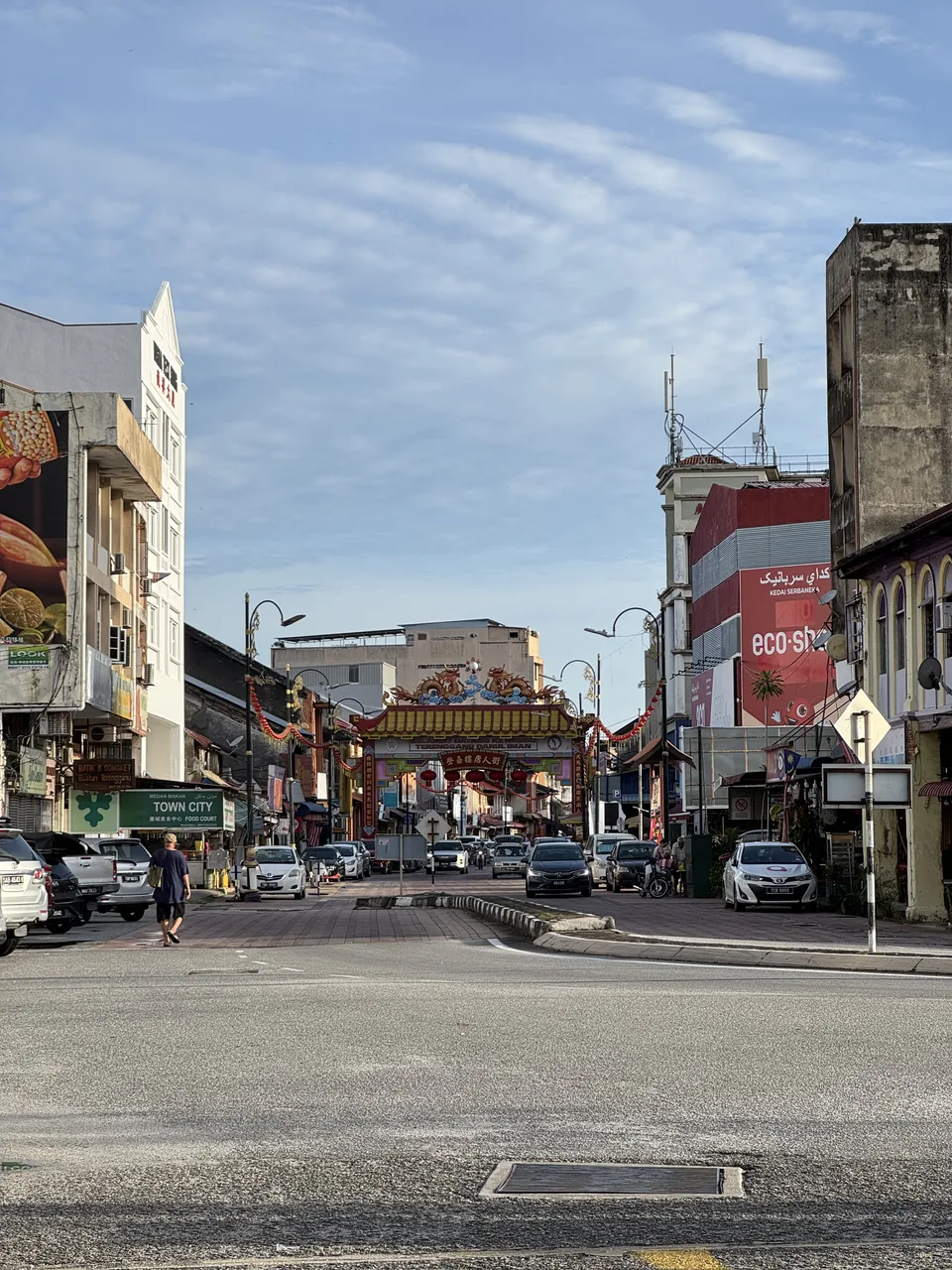
The old commercial core helps explain the city's appeal. Shophouses, market goods and river views make a more revealing introduction than a list of landmarks visited from a car. Tourism Malaysia's Kuala Terengganu overview describes Kampung Cina's merchant buildings and Peranakan heritage. Walk slowly enough to notice the differences between a shop, a family home, a temple and a building adapted for visitors.
For a deeper historical anchor, look to the Terengganu Inscribed Stone. UNESCO's Memory of the World entry recognises its evidence of Jawi writing and the spread of Islam. Its registration in 2009 belongs to that documentary-heritage programme; it does not mean the entire city is a UNESCO World Heritage site.
The state museum's institutional history dates the inscription to 1303 and connects its rediscovery at Kuala Berang with the effort to establish a museum. Keep those locations distinct. A significant object from the wider state can illuminate the capital without becoming evidence for the founding date of the city itself.
Choose between the centre, coast and northern bank
For an initial visit, compare accommodation around the historic centre, the city waterfront and Batu Burok. A central address can simplify morning walks and meals. A coastal property may suit a slower stay, but check the distance to the particular beach access, shop or restaurant you intend to use. A sea view and a convenient pedestrian route are different things.
Across the river, Seberang Takir and the northern approaches offer another perspective on the urban area. Airport access, university-related travel and meetings can make this side practical. Check the exact destination rather than treating every address marketed as Kuala Terengganu as equally central.
For a household, compare the journey at the hours you would actually travel. Ask about parking, bridge approaches and alternatives during heavy rain. A larger home farther from the centre can be a sensible choice if it reduces the main commute; its size alone cannot establish that it will make daily life easier.
Start with Pasar Payang and Kampung Cina
Pasar Payang is useful both as a market and as an introduction to Terengganu's craft economy. Look for textiles and locally made products, while allowing time to compare rather than purchasing the first item presented as traditional. Morning is a sensible editorial choice for combining shopping with breakfast and a walk before the hottest part of the day.
Continue into Kampung Cina to examine the street frontage, side lanes and commercial buildings. Some premises are private or have limited access. Ask before entering or photographing an interior, and keep doorways clear while stopping for pictures.
Carry a small amount of cash for purchases, but ask which payment methods a particular stall accepts. Keep receipts for more substantial craft purchases. If you want an item packed for flying, settle the packaging and collection arrangement before paying rather than assuming the seller provides either service.
Give the state museum a substantial morning
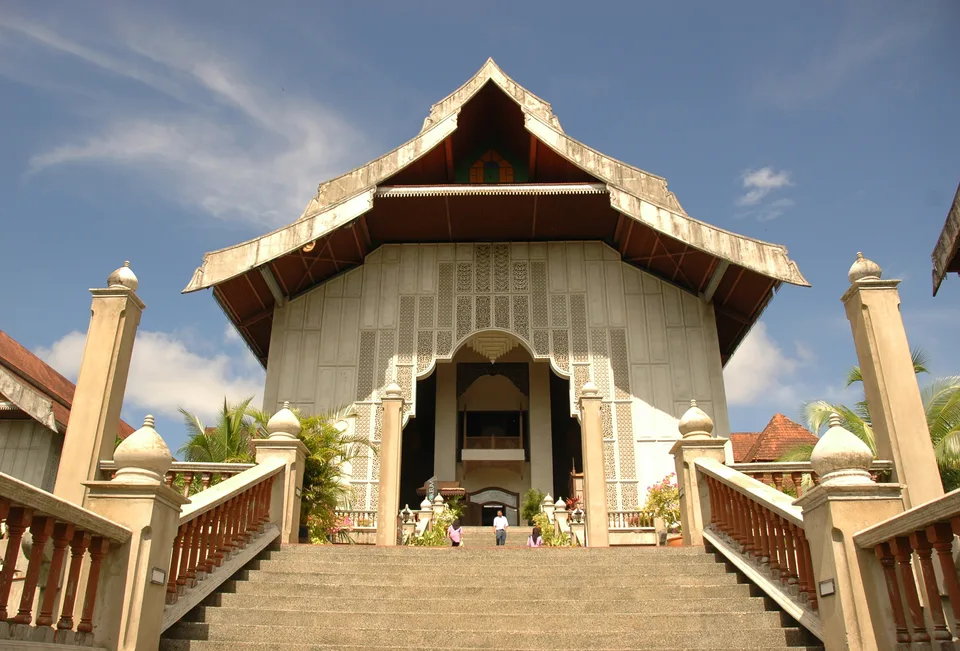
The Terengganu State Museum at Bukit Losong deserves more than a hurried photograph of its roofline. Use the visit to connect architecture, textiles, regional history and maritime life. Choose a few themes that interest you and leave time to read the displays; a building this distinctive can otherwise distract from the objects it contains.
The museum's own visitor FAQ lists normal gallery hours as Saturday–Thursday, 9am–5pm, with Friday closed. It also lists closure on the first two days of both Hari Raya Aidilfitri and Aidiladha. Special evening events have their own dates and should not be taken as a permanent extension of those hours.
Admission is RM5 for Malaysian adults and RM15 for non-citizen adults; the respective child prices are RM2 and RM10. The FAQ says a visit does not require advance booking. Check current notices for exceptional changes and ask about step-free access to the galleries you want, especially if stairs or long periods of standing are difficult.
Separate the mosque, monument park and cruise
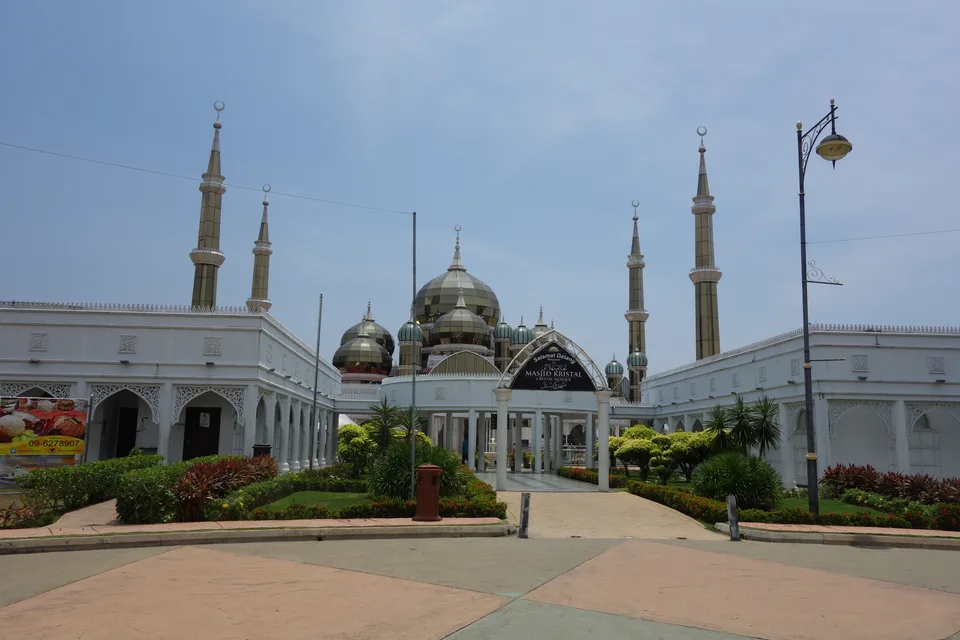
Taman Tamadun Islam on Pulau Wan Man contains several experiences, rather than one interchangeable ticket. The operator's attraction overview distinguishes the Monument Park, Crystal Mosque and river cruises. Decide whether you want an outdoor architectural exhibition, a place of worship, a boat journey, or some combination before choosing a ticket.
The current Monument Park admission page displays RM24 for adults aged 13–59 and RM19 for children aged 7–12 and seniors aged 60 or above. Children six and under are listed free when accompanied by parents. Prices shown include 8% SST. Optional transport around the park costs extra; do not assume a ticket includes a buggy.
The operator normally closes the park on Tuesdays. Its published Friday operation includes an 11.30am–2.30pm prayer break. Confirm the day's opening and final ticket time, particularly around school and public holidays. Management-office hours shown in the footer describe the office, not the visitor attraction's schedule.
Visit the Crystal Mosque with the right expectations
The Crystal Mosque's official page describes a steel-and-glass building constructed between 2006 and 2008 and opened in February 2008. Treat it as a functioning religious site. Ask about visitor access, dress requirements and appropriate behaviour before entering, and allow worshippers space rather than treating prayer activity as a photographic performance.
An admission price for the Monument Park does not by itself explain access to every other facility on the island. Likewise, wedding-booking fees and ceremony hours on a mosque page are not tourist entrance charges or general visiting hours. Where arrangements are unclear, ask the operator which parts are available to you.
For families, discuss the amount of outdoor walking and the availability of shade before committing to a lengthy visit. Bring water and plan a break. Combining the museum and park can work as a day, but it should remain possible to leave one for another morning rather than rushing through both in the heat.
See the drawbridge as infrastructure and a viewpoint
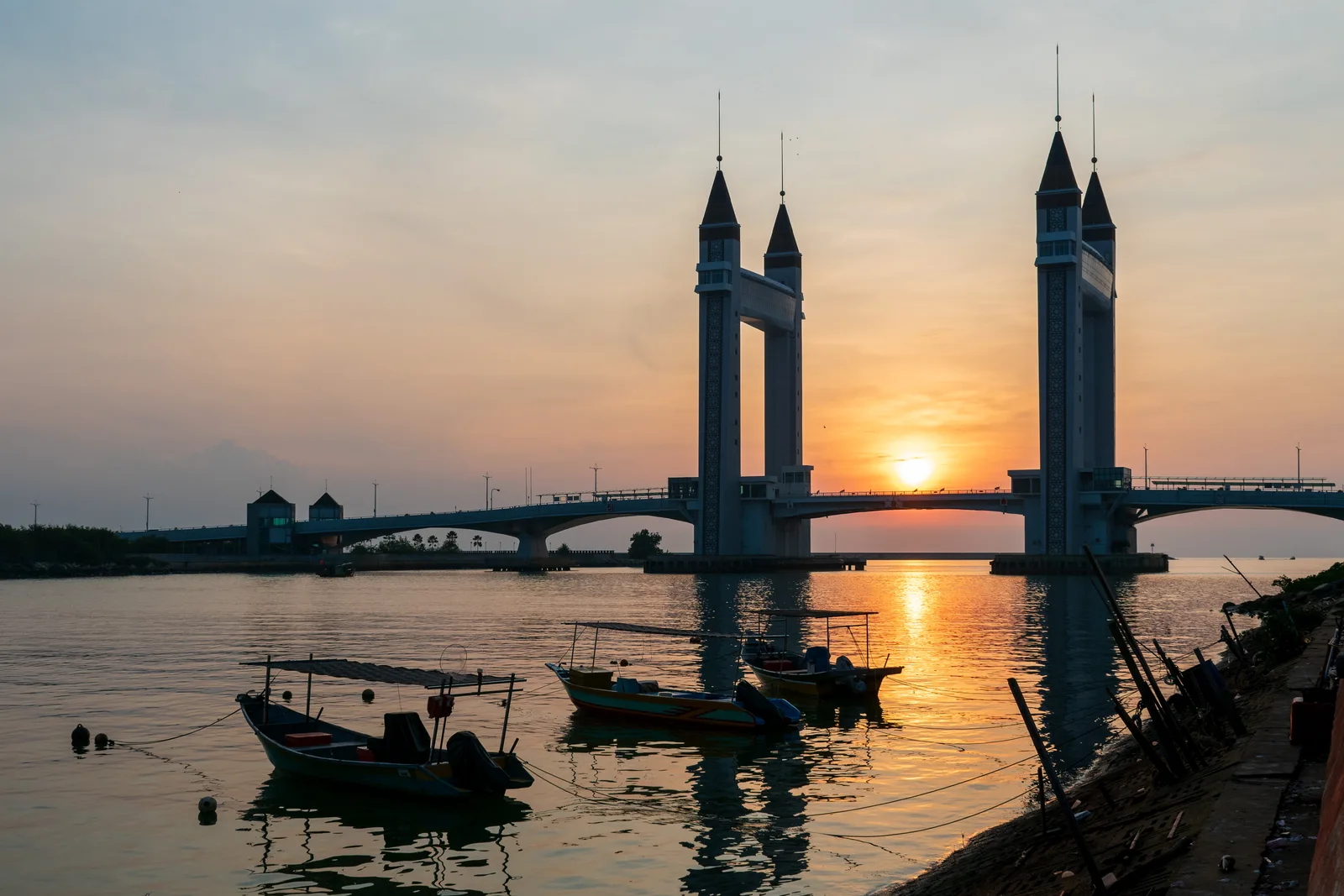
The Terengganu Drawbridge gives the river mouth a contemporary landmark. It is worth understanding both as a crossing and as a visitor attraction with elevated views. Choosing a riverside viewpoint is different from buying admission to the observation experience, so decide which you want before planning the journey.
The drawbridge operator's visitor page lists Sunday–Thursday visits from 10am–7pm, Friday from 2.30pm–10pm and Saturday from 10am–10pm. Public-holiday arrangements differ, including a Friday prayer break. These are attraction hours, not a statement about when traffic may use the road crossing.
Check the current admission option and any operational notices directly. Do not promise yourself a bridge lift at a particular time unless the operator confirms it. A photograph taken with the bridge closed is still a record of the landmark; a visit need not depend on witnessing its moving sections in action.
Plan the airport connection around your arrival
Sultan Mahmud Airport serves Kuala Terengganu from the northern side of the urban area. Check the airport and terminal named on the booking, especially when combining domestic travel with an international connection. Allow for baggage collection and the onward road or bus journey rather than measuring the arrival day by flight duration alone.
There is a public-transport option: the official BAS.MY network map marks Lapangan Terbang Sultan Mahmud on route T10 between Kuala Terengganu and Jeti Merang. Confirm the stop, direction and next departure before relying on it, particularly with luggage or after a delayed flight. The route serves more than the airport.
For a taxi or e-hailing journey, establish the pickup location and final price before setting off. Give the full accommodation address, not just a hotel name shared with another property. If your arrival must connect to a boat, obtain the boat operator's latest check-in time before deciding whether a same-day transfer is realistic.
Use the bus network for specific journeys
BAS.MY's Kuala Terengganu network is operated by Mara Liner. The detailed map identifies T100 for the city circuit, T21 for stops including the state museum and Masjid Kristal, and T30 towards Marang via Chendering. Choose the route using the named stop nearest your destination, then check the remaining walk and return direction.
Read the T10 timetable as a timetable, not a promise of a bus every hour. Its pattern varies by day, and the published Friday service has a substantial midday gap. Times at the end of the route are not departure times from the airport stop. Obtain the relevant stop information when planning a flight or ferry connection.
Current fares were not reliably established during this review, so no old flat-fare or universal free-travel claim is repeated here. Ask the operator about payment and eligibility for concessions. Keep an alternative for the last journey of the day if a missed connection would leave you far from your accommodation.
Taste the regional cooking without chasing a ranking
Begin with nasi dagang: steamed rice prepared with coconut milk, commonly served with fish curry and pickled vegetables. Keropok lekor combines fish and flour in a distinctive snack, while laksam offers rolled, sliced noodles with a fish-and-coconut gravy. Tourism Malaysia's food guide explains these dishes and other regional specialities, including banana-leaf-wrapped sata.
Use that background to choose a meal you understand rather than ordering only by a photograph. Ask whether a snack is boiled or fried, what portion a price covers and whether sauces are included. Fish, shellfish, eggs and coconut can matter for dietary needs; explain an allergy precisely and ask about shared preparation equipment.
A breakfast-focused outing and a separate market snack can be more satisfying than a long drive between widely scattered food stops. Check opening time, seating and access before travelling to a particular business.
Shop for the making as well as the pattern
Batik and songket are worthwhile purchases when you take time to understand what is being sold. Ask how a piece was produced, where it was made and how it should be washed or stored. Similar colours do not establish the same material, technique or amount of handwork. Compare a few pieces before settling on a larger purchase.
For a commissioned item, agree the dimensions, finishing, collection date and what happens if it cannot be completed before departure. Keep a written record and receipt.
Make a budget from verified components
All prices in this guide are Malaysian ringgit, abbreviated RM. At the displayed adult rates, a non-citizen's museum admission and Monument Park ticket total RM39. Two adults would therefore spend RM78 on those two admissions alone. Transport, food, accommodation and optional rides are additional. Confirm the available ticket category before purchase.
The TTI river-cruise page currently advertises RM29 for an adult's approximately 45-minute guided cruise, including 8% SST, and RM50 for an adult park-and-cruise combination. Compare that bundle with buying separately. Children's cruise charges differ from the park's free admission for young children; check the age band rather than assuming they travel free.
Ask accommodation providers for a complete dated quotation including applicable taxes, breakfast, parking and cancellation terms. Build a daily allowance from meals and journeys you actually intend to take. A shared family transfer or a paid boat excursion can change the total more than saving a small amount on an entrance ticket.
Let the monsoon influence the itinerary
MetMalaysia explains the Northeast Monsoon as running broadly from November to March, bringing heavy rain to the peninsula's east coast and potentially rough seas and flooding. Its climate guidance identifies November, December and January as the east coast's wettest months, with June and July generally drier in most districts.
For city sightseeing, a relatively drier period can make outdoor walks easier, but rain remains possible. Schedule exposed outings early, keep a covered alternative and check the forecast near your travel date. Avoid presenting the monsoon as a brief shower that will predictably clear after lunch.
For a household, ask about the property's flood history, access roads, drainage and where a vehicle can be moved if needed. Follow official warnings and do not drive through floodwater. A higher floor may protect belongings without keeping the road, lift or car park usable; the whole access arrangement matters.
A realistic three-day city itinerary
On day one, keep the morning around Pasar Payang and Kampung Cina, with time for breakfast, browsing and a slower look at the streets. Take a break before a river-mouth viewpoint or a confirmed drawbridge visit. This is an editorial outline, not a booking: adjust it to opening times, heat and your pace.
Use day two for the state museum, then choose the Monument Park or a river cruise rather than assuming every attraction must fit. This day works best away from the museum's Friday closure and the park's Tuesday closure. If the two schedules do not align, split the visits across your stay.
Day three can focus on another neighbourhood, a coastal outing or a craft interest you want to pursue further. Reserve an island stay as a separate, properly confirmed extension. Keep departure day simple enough to absorb rain or a transport delay, with documents, luggage and the next connection already organised.
Choose accommodation by the routines it supports
A hotel can be convenient for a short city stay; a guesthouse, homestay or apartment may offer a different balance of space, cooking and parking. Compare the exact property and room, including bathroom arrangements, stairs, cooling and noise, rather than relying on the accommodation label to establish quality.
Ask whether there is a lift, an accessible entrance and a safe walking route to food. For a family or longer stay, establish the number of actual beds, laundry facilities, kitchen equipment and responsibility for cleaning. A kitchenette without the equipment you need may offer little practical saving.
Request the full address and cancellation terms before paying a deposit. For any beachfront description, check what lies between the building and the water. A coastal setting can be attractive without being a safe swimming location; use posted warnings and current sea conditions rather than the room advertisement to make that decision.
Test a home and commute before committing
Rent temporarily before signing a longer agreement when possible. Visit the proposed home, test water pressure and cooling, and look for damp, leaks and signs of previous flooding. Agree an inventory, repair responsibilities, deposit deductions and the payment currency in writing. Do not treat an online listing as proof of the advertiser's authority to let the property.
Compare the full monthly cost, including utilities, internet, transport and parking. Ask who holds each account, whether any balance is outstanding and how final readings will be recorded. The SATU water-services portal is a useful official starting point for water-account information and current service notices.
For work or study on the northern side of the river, check the actual campus or office entrance before choosing a central-city home. Test mobile reception indoors and fixed-broadband availability at the address. Neither a coverage map nor a fast connection in a nearby café guarantees the service inside your own room.
Arrange healthcare and essential services early
Hospital Sultanah Nur Zahirah is on Jalan Sultan Mahmud in Kuala Terengganu. Use the hospital's official information and your insurer to understand the service you need, payment arrangements and any referral requirements. Foreign visitors should not assume treatment is free or that every policy covers the same providers.
For continuing care, discuss medication supplies and documentation with the relevant professionals before moving. Families should confirm school admission, teaching language, fees and travel arrangements directly. A place offered informally and a confirmed enrolment are different levels of certainty, particularly when immigration permission is still being processed.
Match entry permission to visiting, work or study
Check Malaysian Immigration's visa information for your nationality and use the official MyVISA service where an eVisa is required. Visa-free eligibility, a visa and the period actually granted at entry are different matters. Do not assume another traveller's passport receives the same conditions as yours.
Most foreign visitors also need the Malaysia Digital Arrival Card, submitted within three days before arrival. The official portal lists exemptions, including Singapore citizens and Malaysian permanent residents or long-term pass holders. This declaration does not replace a visa or create permission to work.
For employment, ask the sponsoring employer to check the revised Employment Pass policy, effective from June 2026, before quoting salary thresholds or planning a start date. For formal study, follow the institution and Education Malaysia Global Services document guidance. A tourist visit is not a substitute for the relevant work or student permission.
Treat a longer stay as a separate application
Remote workers should examine MDEC's digital-nomad programme and its current requirements rather than assuming tourist entry authorises their working arrangement. Check the intended activity, supporting contracts, family arrangements and the steps needed before beginning work. Practical internet access and immigration eligibility are separate questions.
For an MM2H proposal, compare the tourism ministry's official category requirements, including financial and property conditions. Obtain advice on the category that actually applies and on any separate property restrictions before transferring money. A property purchase, long-stay pass and permanent residence should not be treated as equivalent outcomes.
Use VisaWand's consultant listings for relevant professional advice and confirm requirements with official authorities. Resolve each household member's permission separately, including employment and schooling.
Extend the trip without confusing the jetties
Merang and Marang are different places: Merang lies north of Kuala Terengganu, while Marang lies south. Get the exact boarding point from your boat operator. Redang Beach Resort's own transfer information, for example, describes departures from TTI Jetty and an alternative Al-Ameen jetty service in Merang. Those arrangements belong to that resort, not every Redang passenger.
Confirm the date, reporting time, destination landing point, baggage allowance and cancellation terms. Sea conditions can change departures, and operators' seasonal arrangements vary. An island package should specify its transfers; do not assume that arriving at a familiar jetty name is sufficient.
For another city, compare VisaWand's Kuala Lumpur guide or explore the Kota Bharu location page and Marang location page. The latter two are destination records, not completed travel guides. Choose the next stop around your interests and available transport, and leave enough room for the weather to change the plan.
Official planning resources
Reviewed 15 October 2026. Use the official resources linked throughout this guide for admission, transport, housing and immigration decisions. Prices, services and rules can change; confirm the details relevant to your dates. Photography illustrates the locations and is not a live view.
View all official resources
- Tourism Malaysia: Kuala Terengganu heritage and neighbourhoods
- Terengganu State Museum: admission and normal opening hours
- UNESCO: Terengganu Inscribed Stone
- Terengganu State Museum: institutional history
- Taman Tamadun Islam: attraction overview
- Taman Tamadun Islam: park admission and opening hours
- Taman Tamadun Islam: river cruise options
- Taman Tamadun Islam: Crystal Mosque
- Terengganu Drawbridge: official visitor information
- BAS.MY: Kuala Terengganu bus network
- BAS.MY: detailed Kuala Terengganu route map
- BAS.MY: T10 route and timetable
- Redang Beach Resort: its own boat transfer arrangements
- MetMalaysia: monsoon and severe-weather guidance
- MetMalaysia: Malaysian climate patterns
- Tourism Malaysia: Terengganu food
- Hospital Sultanah Nur Zahirah: official services and contact information
- SATU: Terengganu water services
- Malaysian Immigration: Digital Arrival Card
- Malaysian Immigration: visas and nationality requirements
- Malaysian Immigration: official eVisa FAQ
- Malaysian Immigration: revised Employment Pass policy
- Education Malaysia Global Services: student documents
- MDEC: DE Rantau Nomad Pass FAQ, August 2026
- Tourism ministry: MM2H categories
Plan the next part of your journey
Explore the Malaysia guide, browse other cities or compare consultants for your travel and relocation questions.