Visa
A small capital with a dramatic setting
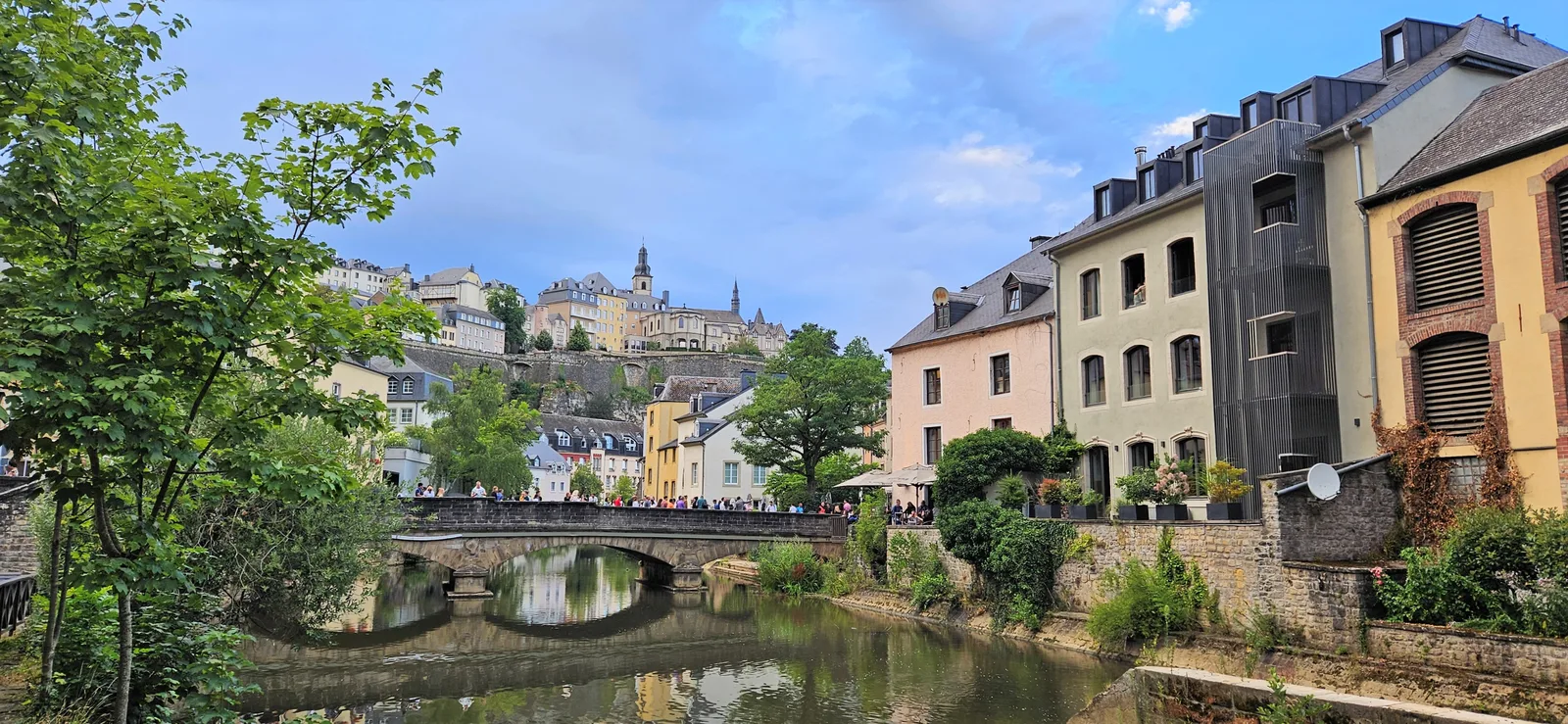
Luxembourg City makes its first impression through height. Houses cluster beside the Alzette, fortress walls rise above them, and bridges connect districts that seem close on a map but occupy very different levels. The pleasure of a visit comes from moving between those perspectives: looking down from the old town, then walking beside the water you saw below.
Allow two full days for the historic centre, one underground visit and time on Kirchberg. A single day can work if you choose carefully; a longer stay opens up regional excursions. People considering a move should add ordinary weekday errands and a trial commute to the sightseeing programme.
The capital and the country share a name. This guide concerns the city; VisaWand’s Luxembourg country guide provides the wider national context, including the distinction between a short visit and establishing a home.
Read the landscape before planning a walk
The city tourism office’s topographical overview explains how the Alzette and Pétrusse carved deep valleys through the landscape. That geography gives Luxembourg much of its character, but it also affects walking routes, hotel choices and accessibility. Distance alone is an incomplete measure of convenience here.
Ville Haute is the upper historic centre. Grund and Pfaffenthal sit in the valleys, while Kirchberg occupies a plateau beyond the old town. Public lifts and the Pfaffenthal–Kirchberg funicular help connect different levels, but they are distinct facilities serving different routes.
Before setting out, identify both your descent and your return. Travellers using wheelchairs or pushchairs should check the complete route and current lift status, rather than assuming that a path marked on a tourist map is step-free. Leave an alternative for a closure or a tiring climb at the end of the day.
Understand the fortress beneath the modern capital
The official city history traces Luxembourg’s origins to Count Siegfried’s acquisition of the Bock promontory in 963. Its defensible position helped determine the settlement’s development. Upper and lower districts grew around a stronghold whose military importance would shape the city for centuries.
The dismantling of the fortress following the 1867 settlement allowed a different urban future, but substantial defensive remains survive. In 1994, the old quarters and fortifications received UNESCO World Heritage recognition. The designation concerns a defined historic site, not every building in the capital or the whole country.
That layered history is more rewarding than a checklist of walls. Look for how streets meet the cliff edges, where bridges cross valleys and how newer buildings sit beside older masonry. The contrast continues on Kirchberg, where cultural venues and European institutions give the capital a markedly different face.
Begin in Ville Haute
Start around Place Guillaume II and Place d’Armes, using the upper town as your orientation point. Combine its streets and squares with the Cathedral of Notre-Dame, whose origins lie in a Jesuit church begun in 1613. Its late Gothic architecture includes Renaissance elements; allow a quiet visit around worship and any access restrictions.
The nearby Grand Ducal Palace is worth including on an exterior walk. Interior tours are seasonal. The published 2026 summer programme has finished, and the tourism office directs visitors towards ticket sales reopening in spring or summer 2027. An autumn visit should not depend on gaining access inside.
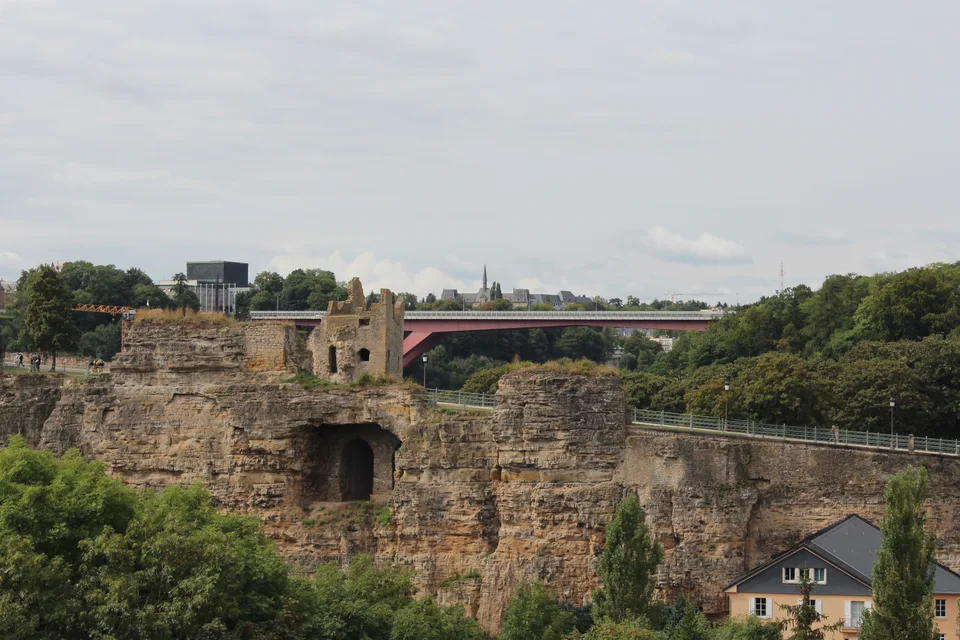
Continue towards the Corniche for views over the lower city. Keep the first walk deliberately flexible: it is easier to appreciate the relationship between buildings, river and fortifications when you can stop at a viewpoint without missing the next booking.
Book the Bock Casemates for the right season
The Bock Casemates offer a way into the city’s underground defensive heritage. Standard 2026 individual admission is €11 for adults, €9 for students and people aged 60 or over, and €5.50 for children aged 4–12; younger children enter free. Guided products have separate conditions.
Respect the booked time: entry is not guaranteed more than 15 minutes late, and the maximum visit duration is 45 minutes. The 2026 mid-season timetable runs until 8 November, with last admission at 17:00. From 9 November, the listed low-season hours begin at 10:45 with last admission at 14:45. Check the calendar for your date rather than relying on the page’s general opening summary.
Contact the tourist office before buying if you have particular access requirements. An underground fortress visit has different practical demands from the exterior viewpoints. Choose clothing and footwear for the booked activity, and leave enough time to reach the correct entrance on Montée de Clausen.
Treat the Pétrusse Casemates as a separate visit
The Pétrusse Casemates have their entrance at Place de la Constitution and use lighting and interpretation to introduce another part of the fortress. They are a separate booking from the Bock, with their own tickets, visitor conditions and calendar.
Check the exact product when comparing prices: an individual entry and a guided tour are different purchases. Their seasonal timetable also changes on different dates from the Bock’s. For 2026, the Pétrusse page moves to low-season hours on 26 October, earlier than the Bock.
On a first weekend, one underground visit is enough unless fortification history is your principal interest. Use the remaining time for the valleys or a museum. If stairs, enclosed passages or other access issues could affect your visit, discuss them with the tourist office before committing; a general city accessibility description cannot resolve conditions underground.
Spend time at river level in Grund
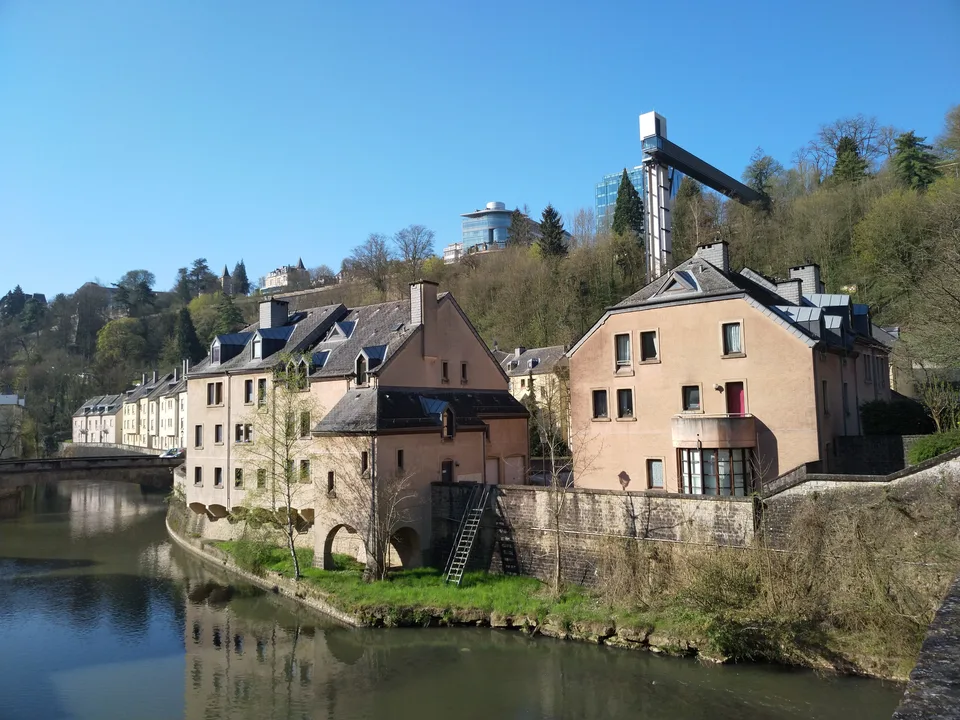
The Grund district gives the old town a different scale. Beside the Alzette, the upper city becomes a backdrop rather than the ground beneath your feet. Make room for a slow riverside walk and look back towards the fortifications to connect the scene with the morning’s viewpoints.
Neumünster is a useful landmark when exploring the area. Check its current cultural programme if you want an indoor visit or event, and distinguish the public surroundings from a ticketed performance. A walk through the district can be worthwhile without adding another admission.
Choose your return route while you still have energy. The public lift to the upper town can be particularly useful, but knowing where it emerges matters when planning the final approach to accommodation. Staying in a valley district gives attractive surroundings while making the vertical journey part of everyday outings.
Use the Pfaffenthal lift as transport and a viewpoint
The Pfaffenthal panoramic lift links Pescatore park in the upper town with Pfaffenthal beside the Alzette. It is free to use, and the glass cabin makes the change of level an experience in itself. The published normal hours are 05:45–01:00.
Regular maintenance is scheduled for the first Monday of the month, with additional interruptions possible. Consult the municipal lift-status page before relying on it, particularly for a step-free return. The Grund lift and the Pfaffenthal panoramic lift should not be confused simply because both connect upper and lower districts.
Combine the ride with time in Pfaffenthal rather than going straight back up.
Change perspective on Kirchberg
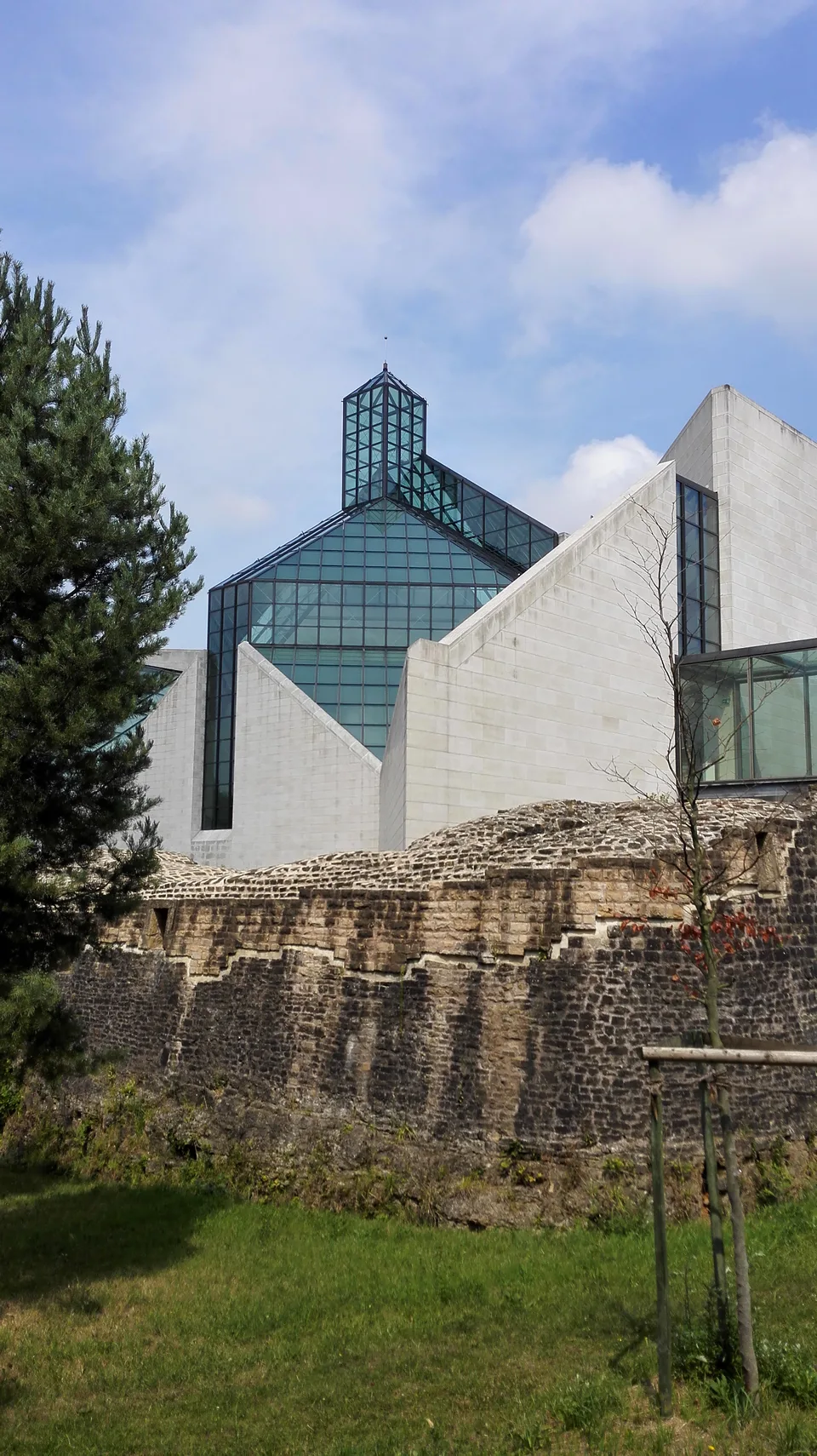
Kirchberg brings together contemporary architecture, cultural buildings and European institutions. It gives a useful counterweight to the fortress city and can occupy a substantial part of your second day. Plan around a museum or performance rather than travelling over solely to collect a photograph of office buildings.
The area includes the Court of Justice of the European Union, European Investment Bank and European Court of Auditors. These are working institutions. Visitor access, where offered, requires checking the relevant organisation’s arrangements rather than treating the district as an open-access exhibition.
Around the Philharmonie and Mudam, leave time for the outdoor setting as well as the buildings. Consider a concert when the programme suits your interests, checking the venue’s booking details and your return connection.
Make Mudam the focus of an art visit
Mudam’s practical information lists standard adult admission at €10. Visitors under 21 and students with a valid student card receive free admission; ages 21–25 and seniors aged 65 or over have a €7 rate. Wednesday evenings from 18:00 to 21:00 are free, subject to any separately booked event conditions.
Normal opening is Tuesday–Sunday, 10:00–18:00, extending to 21:00 on Wednesday. It closes on Mondays, with holiday exceptions to check. This matters when using older itineraries that describe a different closing day.
Its contemporary art programme and architecture merit a visit on their own terms. The museum’s access guidance describes routes from the tram and interchange, lifts between floors and a small basement-room exception. Review it for your requirements rather than assuming every historic and modern museum in the city offers identical access.
Add the city museum when history is your priority
The Lëtzebuerg City Museum at 14 rue du Saint-Esprit offers another way to investigate the capital before or after walking its streets. Standard adult admission is €5, and entry is free for visitors under 21. Thursday evening admission from 18:00 to 20:00 is also free.
Consult its current opening information when choosing the day, especially around holidays. A museum stop is a useful response to poor weather, but it deserves enough time to provide context rather than becoming a hurried shelter between outdoor photographs.
For a two-day trip, choose the city museum if understanding Luxembourg’s development interests you most; choose Mudam for contemporary art and a Kirchberg outing. You can visit both on a longer stay without forcing the historic centre, two casemates and every valley walk into the same afternoon.
Choose accommodation by district and level
Use the official accommodation directory to compare locations, including hotels, guest rooms and the youth hostel near the Bock. Search the exact address and the approach from public transport. Two rooms advertised as central can involve very different final walks.
Ville Haute suits a first sightseeing stay focused on the old town. The Gare district makes sense when railway access matters and offers its own shops and restaurants. Kirchberg can suit a visit centred on its institutions or cultural venues. Grund and nearby lower districts appeal for their setting, with the vertical connections becoming part of the choice.
Check the complete room price, breakfast, cancellation conditions, parking and lift access. For families, confirm room occupancy and sleeping arrangements. For longer stays, establish what kitchen and laundry facilities are included. Temporary accommodation should be assessed separately from a home suitable for residential registration.
Arrive through the airport or railway station
Luxembourg Airport now has a tram connection. Use the airport’s bus and tram information for current stops and onward journeys, then plan the final approach to your accommodation. Advice describing the airport tram as a future project is out of date.
The central railway station serves a different part of the city from Ville Haute. For international journeys, CFL’s international travel tools allow you to investigate routes and tickets to neighbouring countries and beyond. Compare the actual departure, changes and reservation conditions for your date rather than assuming every route has the same fare structure.
At either arrival point, the useful comparison is the complete door-to-door journey. Include walking with luggage, a possible change of level and the service available at your arrival hour. An early departure may make proximity to the relevant connection more valuable than a picturesque view.
Understand what free public transport covers
According to the Public Transport Administration’s fare information, domestic buses, trams and second-class trains are free for residents and visitors. You do not need to buy a city transport pass simply to make those journeys. First-class train travel is chargeable.
International travel needs more care. Free domestic transport does not generally extend across the border, although specified railway exceptions exist. Check the ticket for your actual international itinerary. Private sightseeing services and other commercial activities should not be assumed free because ordinary public transport is.
For daily plans, group nearby activities and use the journey planner for the connections between them. If you are considering a move, try the route at commuting time, including the first and last walking sections. A zero fare is helpful, but frequency, changes, accessibility and journey duration still determine whether a routine works.
Eat with curiosity and a practical budget
Look for Luxembourgish food alongside the city’s international restaurant choices. Gromperekichelcher are fried potato patties associated with markets, fairs and festivals, often served with apple sauce. Availability depends on the venue and occasion; their familiar name does not establish the ingredients used in every version.
Other traditional names in the official food glossary include Judd mat Gaardebounen, pork with broad beans, and Kniddelen, dumplings. Check menus directly for portion size, ingredients and dietary needs. A dish that sounds vegetable-based may still include meat or an animal-based preparation.
For everyday spending, compare a restaurant meal with a bakery lunch or food you can prepare in your accommodation. Ask what a set menu includes and check drinks separately. Travellers staying for several weeks should investigate grocery access near the actual address, including opening hours that fit their routine.
Use markets and museum choices to control spending
The Stater Maart normally takes place on Place Guillaume II on Wednesday and Saturday, with the current calendar listing 07:30–14:00. Special events can move it to Place de la Constitution. Check the date before planning breakfast shopping around it.
Separate a travel budget into rooms, food, attractions and intercity journeys. At the standard adult rates checked for this guide, Bock admission, Mudam and the city museum total €26. Accommodation and meals remain additional; age-based concessions and free museum sessions can change the calculation.
For housing, compare properties with similar sizes and inclusions. Keep the initial deposit, moving costs and household purchases separate from ordinary monthly expenditure.
Choose the season, then check the forecast
The tourism office’s seasonal overview describes an unpredictable spring, warmer summer outdoor activity, autumn foliage and cold winter conditions. Treat those as broad planning cues. Rain and wind can change the appeal of a long valley walk even during a short break.
Spring and early autumn suit a trip that mixes museums with time outside. Summer offers longer outdoor evenings and the possibility of seasonal palace tours when available. Winter can work well for a compact cultural visit, provided you plan for shorter daylight and check holiday closures.
Wear footwear suitable for uneven surfaces and changes of level, and carry a waterproof layer. Before travelling, review dated attraction calendars as well as weather: the casemates’ seasonal admission times and a museum’s weekly closing day can have a more immediate effect than the average conditions for a month.
A balanced first day in the old city
Begin in Ville Haute with its squares, palace exterior and cathedral, adjusting around any services. Continue towards the Corniche and your booked underground visit. Choose either Bock or Pétrusse and follow its own entrance instructions; the day does not require both.
After lunch, spend time at river level in Grund. Keep space for a café stop and the return to the upper town, using a functioning public lift where appropriate. If rain persists, the city museum can replace the longer walk when open.
Finish with dinner near your accommodation. Adjust the order to your admission slot, the weather and how much climbing you want.
A second day for Pfaffenthal and Kirchberg
Use the Pfaffenthal lift when operating and explore the lower district, then plan the onward connection towards Kirchberg. The funicular and panoramic lift serve different journeys, so follow the route to your intended destination rather than boarding whichever facility appears first.
Make Mudam the main indoor appointment, with time around the cultural buildings afterwards. If you have booked a concert, leave room for a meal before it. On Monday, revise the museum plan instead of assuming that the normal itinerary still works.
With only one day, retain the upper town and one principal attraction. With three days, add a regional excursion or another museum. For a relocation visit, inspect a home and rehearse a weekday routine.
Investigate a home before signing
Evaluate housing together with the workplace or study address. A quieter street can be attractive, but measure the commute with its transfers, gradients and evening services. Ask about basic rent, service charges, utilities, heating, furniture, bicycle storage and the right to register at the address.
The Housing Ministry’s residential tenancy FAQ explains the rules introduced for new contracts from 1 August 2024. These include a written lease, a deposit capped at two months’ rent excluding charges and equal sharing of estate-agent fees between landlord and tenant. Check the rules applicable to the particular contract rather than relying on older advice describing a three-month deposit.
Keep a condition inventory and photographs at handover. Establish who arranges energy and internet, how meter readings are recorded and which charges will later be reconciled. A furnished room, holiday apartment and ordinary residential tenancy can involve different practical arrangements.
Register and arrange essential services
The city’s residence-declaration procedure requires people establishing their usual residence from abroad to register within eight days; it specifies three working days for third-country nationals. Prepare identification, proof of address and the immigration documents applicable to your status. Contact the Bierger-Center for the appropriate municipal procedure.
Address registration and permission to reside are separate. Follow the additional immigration steps for your nationality and purpose, especially during a change in application procedures.
For healthcare, CNS affiliation guidance explains that an employer handles a salaried worker’s registration with the social-security centre, while self-employed people arrange their own. Confirm your coverage and any family arrangements. Use the municipal waste service for street-specific collection and sorting information. Families should also investigate school and childcare arrangements before choosing a long-term address; availability and daily travel belong in the housing decision.
Keep tourism, employment and study separate
Start a tourist visit with the Foreign Ministry’s visa information, including nationality-specific eligibility and the general Schengen maximum of 90 days in any 180. A short visit does not itself establish employment or permanent residence rights.
For third-country nationals establishing residence, an official October 2026 reform notice (source unavailable) explains that a long-stay Visa D application replaces the earlier separate temporary-authorisation procedure. Consult the current salaried-worker route and competent consular post before travelling; older application instructions remain visible online.
EU, EEA and Swiss citizens follow different longer-stay conditions. The student route is also distinct. Check your actual teaching location: the university’s main Belval campus is in Esch-sur-Alzette, not Luxembourg City. Admission, housing and immigration each require their own arrangements. VisaWand’s Luxembourg consultant listings can help you locate advice, while the authorities determine applications.
Add one regional outing
The Moselle region offers a change of scenery, while Mullerthal is worth investigating for an outdoor day suited to your ability and conditions. Pick one outing and verify transport, opening arrangements and the return journey before leaving the city.
Cross-border alternatives include Trier’s city page and Metz’s city page. Price those journeys separately from free domestic transport and check any conditions relevant to crossing borders.
For a possible move, consider alternatives through the same questions as the capital: a suitable home, the full commute, services and a lawful basis for residence. VisaWand’s Luxembourg country page and consultant directory provide further starting points. A weekend reveals the setting; a weekday reveals more about the life you could build there.
Official planning resources
Reviewed 17 October 2026. Use the official resources linked throughout this guide for admission, transport, housing and immigration decisions. Prices, services and rules can change; confirm the details relevant to your dates. Photography illustrates the locations and is not a live view.
View all official resources
- Luxembourg City topography
- Tourism history of Luxembourg City
- UNESCO old quarters and fortifications
- Notre-Dame Cathedral visitor information
- Grand Ducal Palace seasonal tours
- Bock Casemates official 2026 admission
- Pétrusse Casemates official visitor page
- Grund official district information
- Pfaffenthal panoramic lift information
- Municipal lift operating status
- Kirchberg official district information
- Mudam official practical information
- Mudam accessibility routes
- Lëtzebuerg City Museum visitor information
- Official city accommodation directory
- Gare official district information
- Luxembourg Airport bus and tram connections
- CFL international travel planning
- Public Transport Administration fares
- Official Luxembourg potato-fritter information
- Official Luxembourg handbook food glossary
- Stater Maart current dates and location
- Official city seasons and climate
- Housing ministry residential tenancy FAQ
- City residence declaration procedure
- Bierger-Center resident services
- CNS health insurance affiliation
- Municipal waste collection and sorting
- Luxembourg Foreign Ministry visa applications
- Official October 2026 immigration reform notice (source unavailable)
- Current salaried-worker residence route
- EU citizen residence beyond 90 days
- Current student residence route
- University Belval campus
- Moselle day trips
- Mullerthal regional outings
Plan the next part of your journey
Explore the Luxembourg guide, browse other cities or compare consultants for your travel and relocation questions.