Visa
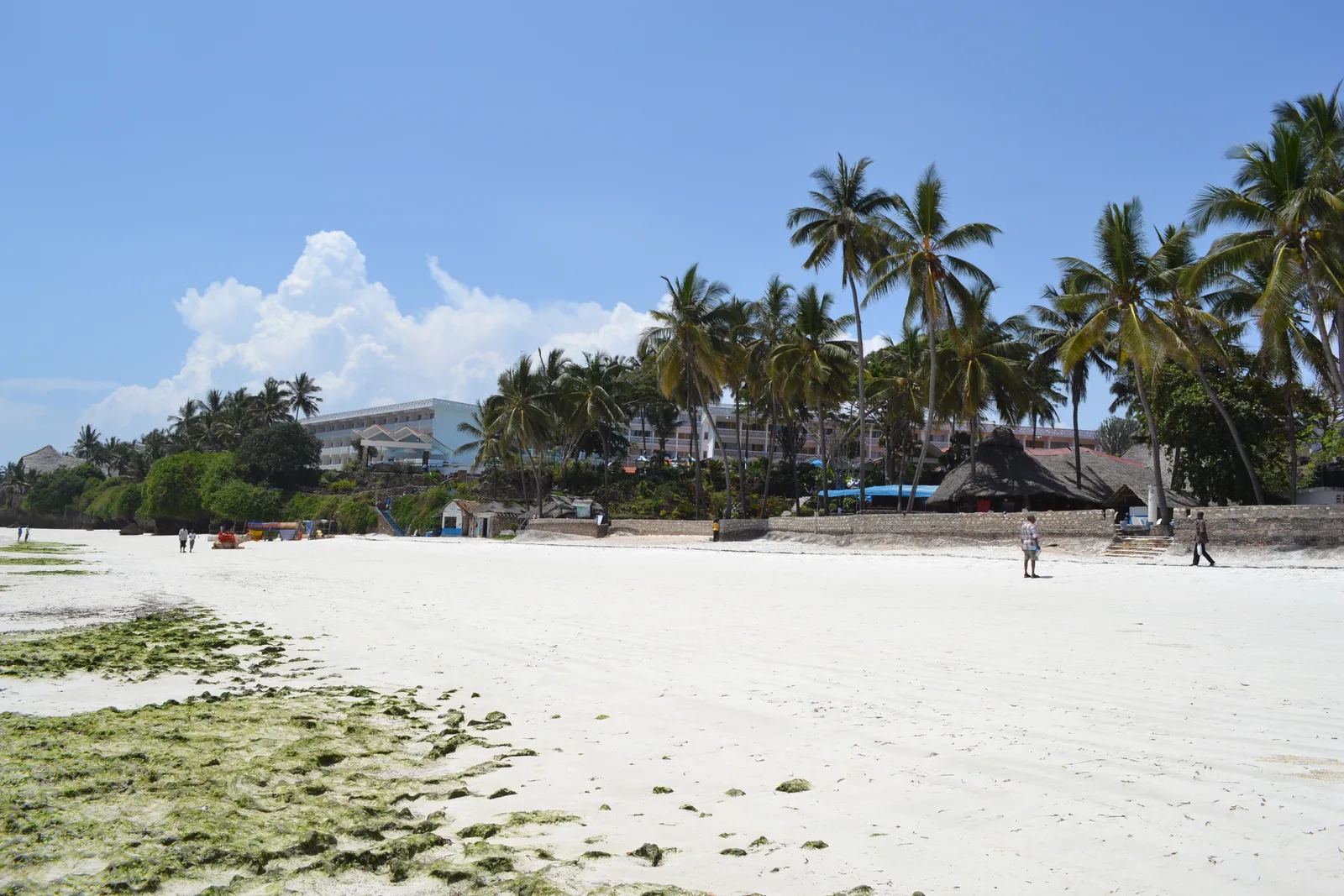
Choose between a coastal city break and a beach holiday
Mombasa rewards travellers who make room for both its streets and its shoreline. A morning inside a coral-stone fortress and an afternoon beside the Indian Ocean belong to the same visit, but they require different plans. Decide whether you want to explore the city every day or spend most of your time at a beach hotel before choosing an address.
The historical centre occupies Mombasa Island, separated from mainland districts by creeks and the harbour. Modern Mombasa extends beyond that island. The county's geographical account helps explain why a short-looking journey can involve a bridge, a busy approach road or a ferry crossing. For a first visit, allow four nights if you want history, food and unhurried beach time. Two nights suit a selective stop between other destinations.
Use VisaWand's Kenya country guide for the national context and its Kenya destination information and consultants when comparing travel requirements. Mombasa offers an urban coastal experience; choosing it solely for a secluded beach can mean spending your holiday arranging transfers away from the city you booked.
Read the city through Fort Jesus
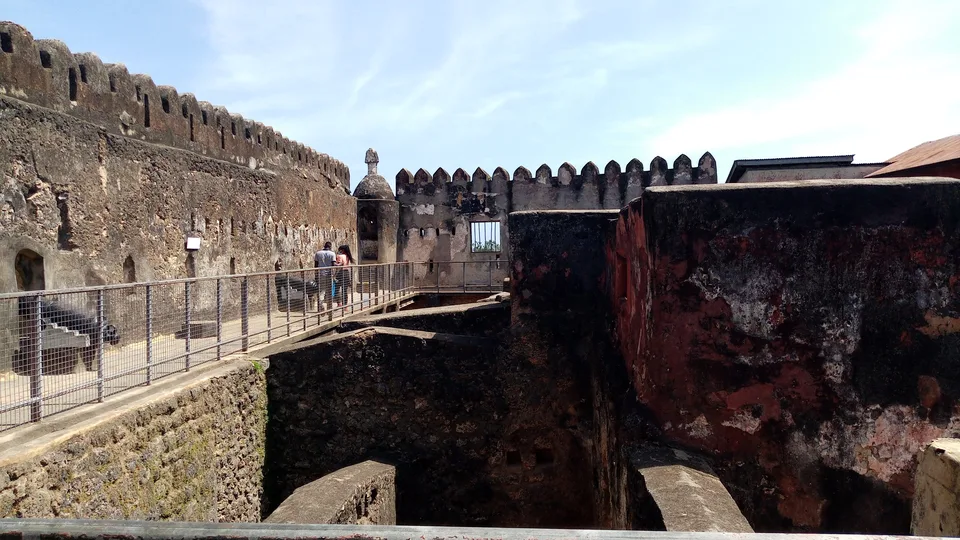
UNESCO's Fort Jesus account dates the Portuguese fort to 1593–1596 and identifies Giovanni Battista Cairati as its designer. Its purpose was control of the port. Successive occupations make the building a useful introduction to the competing powers that shaped this stretch of the Indian Ocean, rather than simply a photogenic monument.
Fort Jesus became a World Heritage property in 2011. The inscribed property covers 2.36 hectares, with a surrounding buffer zone that includes Old Town. That designation should not be mistaken for an inscription of all modern Mombasa. Look closely at the coral masonry and defensive geometry, then relate what you see to the waterfront outside.
National Museums of Kenya lists Fort Jesus as open daily from 08:00 to 18:00, with cashless payment through eCitizen. The museum includes coastal archaeology and maritime material alongside its military history. Check the current admission category before paying; this guide does not substitute an unverified ticket price. Uneven surfaces make supportive footwear sensible, and visitors with mobility needs should ask about the route before arrival.
Plan roughly half a day for the fort, an accompanying walk and lunch. That is an itinerary allowance, not the museum's prescribed visit length. If a sound-and-light event interests you, obtain a dated booking confirmation rather than assuming the advertised experience runs every evening.
Walk Old Town with time for its everyday life
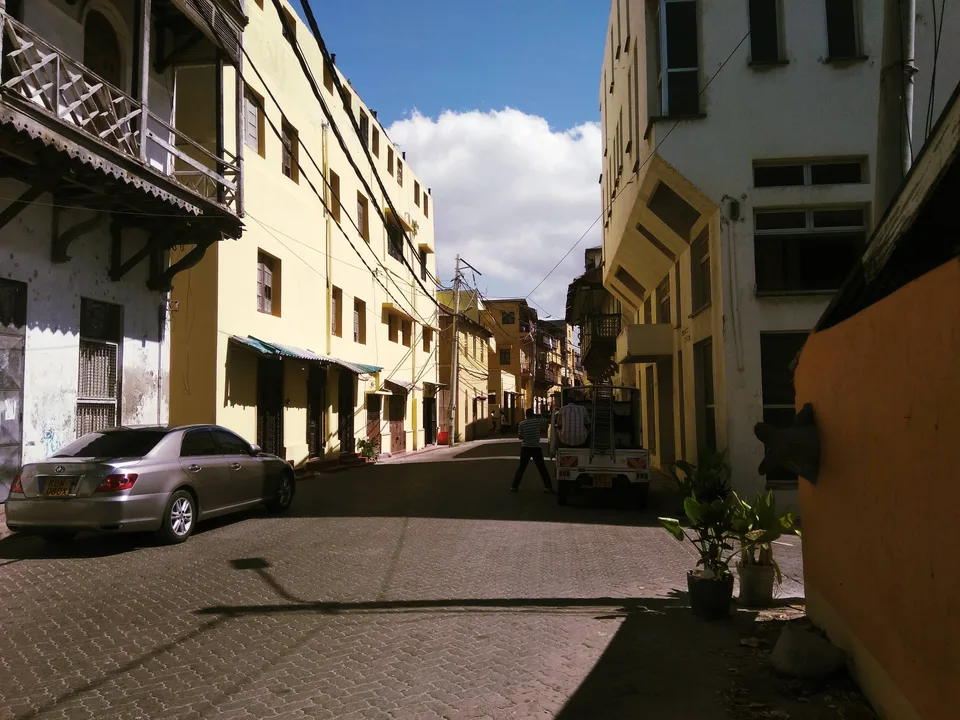
Old Town deserves attention beyond the approach to the fort. Kenya Tourism Board's coastal visitor brochure highlights its carved doors, balconies, spice shops and fragrance oils. Use those details as things to notice, not as a checklist that requires entering private homes or treating residents as exhibits. Ask before photographing people, workshops or interiors.
Arrange a daytime walk with a guide whose name, meeting point, price and route are agreed beforehand. Request explanations of the buildings and waterfront rather than a sequence of souvenir stops. A guided introduction can also help you judge where you would like to return independently. Keep any shopping budget separate from the guiding fee.
Check current Kenya safety advice before setting out: it specifically identifies Old Town and the Likoni area among places requiring care over crime. Carry only what you need, keep your phone discreet and arrange your return journey before evening. Dress respectfully away from beach settings, particularly around places of worship. Ask locally about access and visiting etiquette rather than assuming every religious building welcomes sightseeing.
Understand the north coast before booking
The island is the natural starting point for a history-focused visit. Nyali and Bamburi are the more useful names to investigate when the beach is central to your plans. Compare an exact hotel pin with your intended activities; a listing labelled Mombasa can conceal a considerable daily transfer commitment.
Mkomani offers a creek-side dining reference through Tamarind Dhow, which the operator locates at its Tudor Creek jetty. Farther along the north coast, Sarova Whitesands illustrates the full resort model, with several pools, restaurants and a spa. These are examples of different settings, not recommendations based on personal stays. Check your dates and priorities against the current offer.
Avoid changing hotels simply to collect neighbourhood names. For a short holiday, one well-chosen base is usually easier than repeated packing. For a longer stay, splitting a city-focused opening with a beach-focused finish can work if each move replaces several return journeys. Map that trade-off before paying deposits.
Make the marine park a properly planned excursion
Mombasa Marine National Park and Reserve protects coral environments and offers snorkelling and diving opportunities. Kenya Wildlife Service currently lists non-resident admission at US$25 for adults and US$15 for children. Separate categories apply to African citizens, Kenya residents and East African citizens; verify your eligibility rather than treating every foreign visitor as the same category.
A park ticket is only one part of an outing. Ask an operator to itemise the boat, guide, equipment, admission, pickup point and cancellation terms. Establish whether the trip is private or shared and what happens if conditions prevent the planned activity. A cheap headline boat price is difficult to compare with a package until those inclusions are clear.
Tell the operator honestly about swimming confidence and any assistance needed. Ask about flotation equipment, shade, boarding arrangements and the suitability of the day's conditions. Choose an experience that matches your ability rather than attempting to keep up with a more experienced group. Keep a land-based alternative available so rough conditions do not turn a cancelled excursion into a rushed substitute booking.
Visit Haller Park for a different coastal landscape
Bamburi Haller Park presents a landscape restored from a former limestone quarry, with rehabilitation beginning in 1971. Its mix of planted habitats and managed animal areas makes a useful change from beach and historic streets. Approach it as a specific restoration and visitor attraction, with its own admission and rules.
The operator's Haller Park table lists Kenyan adult entry at KSh900 and non-East-African-resident adult entry at KSh2,400, including VAT. Its separate Bamburi Forest Trails table has different prices: do not buy or budget for one while expecting the other. Bring the identification required for your category and confirm general visiting hours directly; venue-hire hours are not necessarily park opening hours.
Ask which activities are available on your date, especially if travelling with children who expect a particular animal encounter. Follow staff instructions around wildlife. Leave enough room in the afternoon for a relaxed return, rather than attaching several distant stops to an attraction whose pace will depend on your group.
Pick accommodation by the full daily cost
A beachfront resort can make sense when you will use its pools, meals and organised facilities. A smaller hotel or apartment may suit independent exploration or a longer stay. Compare the total payable amount for the same occupancy and dates, including taxes, meal plans, cancellation deadlines and transport. There is no reliable single room rate that represents the city.
For apartments, request a written inventory and recent photographs of the actual unit. Establish whether electricity, water, cleaning, linen and internet are included. Ask who responds if the air-conditioning fails overnight and whether reception or security is staffed. A kitchen is useful only if its equipment and food-storage arrangements meet your needs.
Travellers with access requirements should ask for measurements and photographs of entrances, bathrooms and routes to dining areas. Families should confirm bed configurations and any pool-supervision arrangements. Light sleepers should ask where their room sits relative to entertainment spaces and roads. A specific question produces a more useful answer than a general request for a quiet, accessible or family-friendly hotel.
Compare meal plans against your intended days out. Paying for lunch at the resort can be poor value if three excursions take you elsewhere, while an inclusive arrangement may simplify a holiday spent mostly on the property. Ask which restaurants and drinks are covered, whether reservations are required and how early departures affect breakfast. Keep the written confirmation with your booking.
Arrive by air or rail with the final transfer arranged
Moi International Airport serves Mombasa. Kenya Airways' Mombasa booking page lists the Nairobi route; check the actual itinerary, baggage allowance and connection conditions for your dates. Do not assume an international flight and a separately purchased domestic connection come with protection if the first service is delayed.
Kenya Railways' official booking service sells Madaraka Express journeys between Nairobi and Mombasa termini. Its linked fare and timetable PDF lists adult Nairobi–Mombasa fares of KSh1,500 in economy and KSh4,500 in first class. Treat these as published reference prices and confirm the fare displayed for your booking. The timetable distinguishes express, inter-county and night services, so compare arrival time as carefully as departure time.
Book the transfer from the airport or railway terminus to your exact accommodation separately unless it is explicitly included. Send the driver your booking details and a recognisable meeting point, and retain a contact number accessible on arrival. An overnight arrival is worth planning around: confirm reception access and whether the room is available immediately, rather than discovering that check-in begins later that afternoon.
Treat crossings and traffic as itinerary decisions
The south coast requires a route decision. A Kenya News Agency report on Dongo Kundu describes the road connection between the western mainland and the south coast, providing an alternative to Likoni. Ask your driver which route suits your actual origin and destination; the bypass does not make every south-coast journey identical.
Kenya Ports Authority's Likoni terminal update describes construction expected to finish in early 2028. Proposed waiting areas and other improvements should not be treated as facilities already available. Allow a contingency around a crossing, particularly when catching a flight or train, and obtain current local advice about operations.
For daily trips, compare an agreed car transfer with the practicalities of local public transport. Before boarding a shared vehicle, establish its destination, fare and where you will get off. With luggage, young children or a tight connection, the simplest door-to-door option may be worth more than a small fare saving. Avoid building a day around a precise cross-city driving time supplied by a hotel advertisement.
Eat along the Swahili coast and budget in shillings
Kenya Tourism Board's Swahili food introduction points to biryani, pilau, grilled fish, coconut-based curries, mahamri and viazi karai. Try different dishes over several meals rather than ordering a broad tasting spread you cannot finish. Ask how a dish is prepared, especially when avoiding shellfish, dairy or particular spices; a familiar name does not establish its ingredients.
Tamarind Dhow offers a more formal seafood setting. Its published business hours do not establish a cruise departure, so confirm whether your reservation is for a moored meal or another specific experience. For an everyday lunch, compare a current menu near where you already are instead of paying for a long transfer solely to reproduce somebody else's restaurant list.
Keep a budget in Kenyan shillings with accommodation, transfers, food and activities on separate lines. Add drinks, tips where you choose to give them, laundry and any payment fees. Do not convert a single resort meal into a citywide average. Before shopping, agree a final price and check export or baggage restrictions for anything made from animal or plant material.
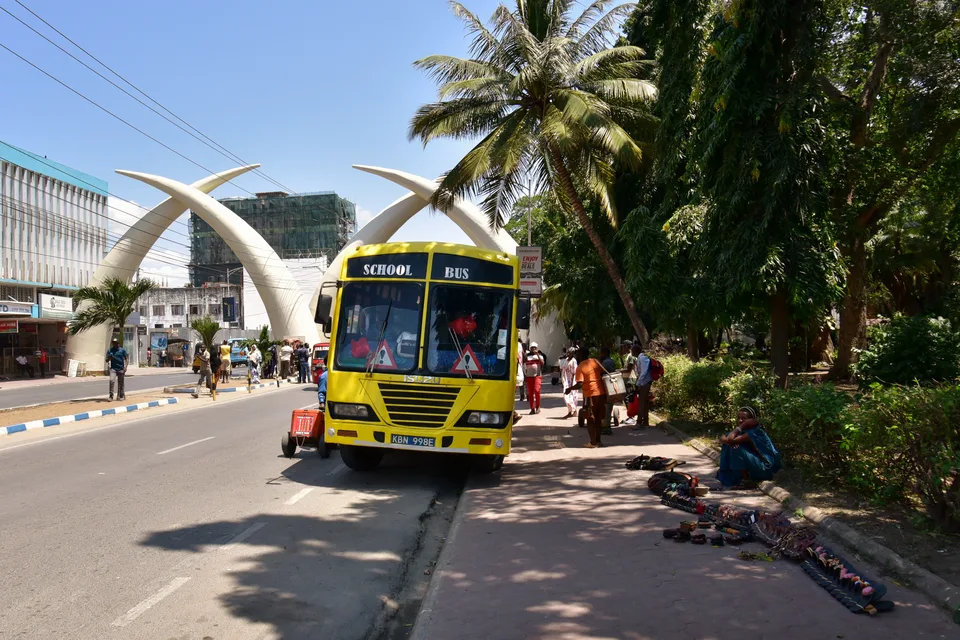
The artificial tusks on Moi Avenue offer a recognisable city-centre landmark. Combine a brief look with an existing island outing rather than making a dedicated journey solely for a photograph. Stay aware of traffic when framing the scene. For souvenirs, favour an item whose material, maker and price you understand over a claim of antiquity that cannot be substantiated.
Plan for coastal heat and rain
Mombasa's older county planning document describes a tropical monsoon climate, with long rains broadly from April to June and shorter rains toward the end of the year. These seasonal patterns are background, not a forecast for your travel dates. Consult Kenya Meteorological Department information and the operator's current assessment before a marine outing.
Put exposed walking earlier in the day and leave a shaded or indoor pause around lunch. Carry drinking water and sun protection, and judge your own tolerance for humidity before planning an ambitious walking route. A hotel pool or an afternoon at leisure can be a practical part of a city holiday rather than wasted sightseeing time.
If your dates are fixed, choose flexible activities instead of trying to identify a guaranteed dry week. Ask accommodation providers how heavy rain affects access to the property. For a beach-led trip, examine cancellation terms on boat excursions and consider whether the hotel offers enough to enjoy a day when swimming or sailing is unsuitable.
Pack for the activities you have actually booked. A small day bag, suitable walking shoes and protection for documents can be more useful than carrying every beach accessory into town. Ask boat operators what they supply before bringing duplicate equipment. If you need to leave luggage after checkout, agree the storage arrangement with your accommodation and retain essential documents and medication yourself.
Follow a realistic four-day outline
Day one: settle into your accommodation and make a modest local outing. Check the next day's pickup and ticket arrangements, find an uncomplicated dinner and avoid turning an arrival delay into a late cross-city dash. If you arrive early, use the spare time to understand your immediate surroundings.
Day two: devote the morning to Fort Jesus and a planned Old Town walk. Stop for lunch and decide how much energy remains before adding the Moi Avenue tusks. Return to your base with time to rest. This is the day to concentrate island sightseeing, not to combine history with a distant marine excursion.
Day three: reserve the marine excursion for conditions your operator considers suitable. Keep the remainder of the day light. If it cannot run, move an indoor museum visit or a relaxed meal into that space and retain the option of trying again. Avoid sacrificing departure-day reliability to recover a cancelled boat trip.
Day four: choose Haller Park or an unhurried beach day, depending on your interests. Travellers assessing a future move can use part of the day for a prearranged housing visit and a test commute. Leave the final evening for packing and reconfirming your departure transfer rather than adding another distant destination.
Assess a longer stay through housing and household needs
For relocation, start with the journeys you must repeat: work, school, healthcare and routine shopping. Test a proposed commute at the relevant time before signing a lease. A holiday address can be attractive while proving inconvenient for daily responsibilities. Rent temporary accommodation first if you cannot assess neighbourhoods and buildings in person before committing.
At a viewing, run taps, examine ventilation and ask about water storage, drainage and maintenance responsibilities. Check the lease's deposit, notice period and repair process in writing. Ask how service charges are calculated and whether any arrears remain on utility accounts. Inspect mobile reception and test the actual internet connection rather than accepting an advertised speed as evidence.
MOWASSCO's customer information distinguishes consumption and service charges; establish how the property's account is managed. Kenya Power customer support provides electricity-service channels. Record meter details and opening readings when taking possession. Keep an inventory signed by both parties and retain payment receipts. No representative current citywide rent has been verified for this guide, so compare dated, like-for-like quotations.
Identify an appropriate clinic, pharmacy and emergency contact before you need them. Discuss travel health and any ongoing treatment with a qualified clinician, including whether medication can be obtained locally. Current Kenya health advice should be checked again close to departure because screening and outbreak measures can change. Household planning should include healthcare access and insurance, alongside the more obvious rent and transport costs.
Parents assessing schools should arrange appointments and request the complete fee schedule, including transport and extras. Check the journey from the proposed home on a normal school morning. For anyone working from home, ask about backup power and try a video call on the property's connection. These checks reveal more about daily suitability than a furnished apartment's promotional photographs.
Separate entry permission from work, study and residence
Use the official Kenya eTA information to determine whether your nationality and circumstances require authorisation; exemptions exist. Apply with time to resolve queries and check passport, onward-travel and health-document requirements for your itinerary. An approved travel authorisation does not guarantee admission or establish permission to take employment.
Current entry advice for Kenya describes compulsory visitor insurance introduced on 5 October 2026, with exemptions and conditions. Check your eligibility and obtain the required policy through the official eCitizen insurance service where applicable. An existing overseas travel policy should not be assumed to replace the Kenyan requirement. Budget for the confirmed premium rather than an unofficial quoted total.
Employment, study and permanent relocation require their own assessment through Kenya's immigration permits and passes. For example, Class D employment permission concerns a specific employment arrangement. Do not start working simply because a tourist stay is possible. VisaWand's consultant directory can help locate professional assistance; verify the adviser's credentials and the authority's requirements before paying.
Keep relocation decisions separate from an enjoyable reconnaissance holiday. A short stay can establish whether you like the setting; it cannot establish that a particular job, school place or immigration route will be available. Make those commitments conditional on the relevant written approvals and on a household budget that includes the costs you have actually been quoted.
Choose an onward destination that changes the experience
For more coastal history, Jumba la Mtwana near Mtwapa preserves remains of a fourteenth-century Swahili settlement. National Museums of Kenya lists daily opening from 08:00 to 18:00 and cashless payment. Plan transport and the return arrangement before leaving Mombasa, and treat the site as a separate outing rather than another city-centre stop.
Diani is a south-coast alternative when a beach-focused stay matters more than repeated island sightseeing. Watamu and Malindi offer other coastal bases; compare transfer requirements and what you actually want to do before combining them. The tourism brochure covers the wider coast, so its attractions should not all be mistaken for locations inside Mombasa.
For a substantial change of setting, continue with VisaWand's Nairobi city guide rather than expecting another coastal experience. Use the Kenya cities and settlements directory to identify other places, remembering that a directory entry does not necessarily contain a completed guide. A good itinerary gives each stop a purpose and allows enough time to enjoy it.
Official planning resources
Reviewed 16 October 2026. Use the official resources linked throughout this guide for admission, transport, housing and immigration decisions. Prices, services and rules can change; confirm the details relevant to your dates. Photography illustrates the locations and is not a live view.
View all official resources
- Mombasa County: 2015–16 development plan
- UNESCO: Fort Jesus, Mombasa
- National Museums of Kenya: Fort Jesus
- Kenya Tourism Board: coastal visitor brochure
- UK FCDO: Kenya safety and security
- Tamarind Group: Tamarind Dhow
- Sarova Whitesands: resort facilities and reservations
- Kenya Wildlife Service: Mombasa Marine National Park and Reserve
- Bamburi Group: Haller Park
- Kenya Airways: Mombasa flights
- Kenya Railways: official Madaraka Express booking
- Kenya Railways: Madaraka Express fares and schedule
- Kenya News Agency: Dongo Kundu bypass
- Kenya Ports Authority: Likoni passenger terminal construction
- Kenya Tourism Board: Swahili dishes
- Kenya Meteorological Department: forecasts and alerts
- MOWASSCO: customer FAQs
- Kenya Power: customer support
- UK FCDO: Kenya health
- Kenya Immigration: eTA general information
- UK FCDO: Kenya entry requirements
- Kenya eCitizen: inbound travel health insurance
- Kenya Immigration: permits and passes
- Kenya Immigration: Class D employment
- National Museums of Kenya: Jumba la Mtwana
Plan the next part of your journey
Explore the Kenya guide, browse other cities or compare consultants for your travel and relocation questions.