Visa
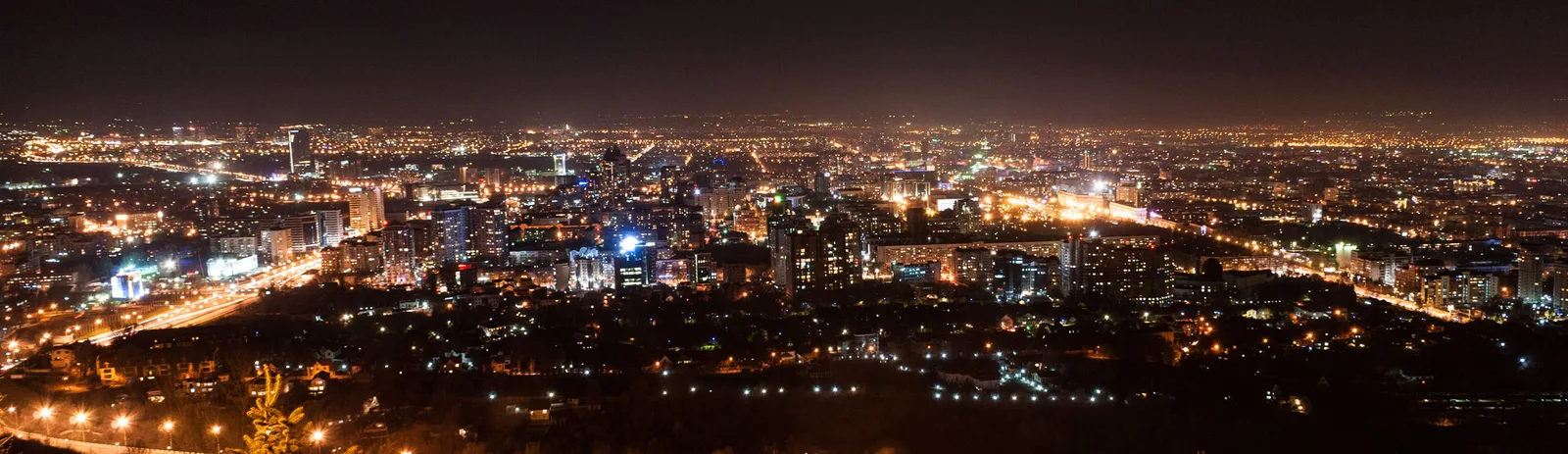
A mountain city that deserves time on the ground
Almaty rewards visitors who leave room between excursions. The mountains draw the eye, but the city itself supplies the other half of the trip: a wooden cathedral, food markets, national art collections and neighbourhood streets where a coffee stop can become an afternoon. Kazakhstan’s former capital remains a major commercial and cultural centre. It makes a practical introduction to the country, especially if you want museums and restaurants alongside mountain scenery rather than a holiday spent entirely in a resort.
Plan three full days for a first visit, then add separate time for the wider region. A cable-car outing and a distant lake expedition are different undertakings. For a possible move, spend some of your stay following an ordinary weekday: travel to a prospective workplace, shop for groceries and inspect accommodation. VisaWand’s Kazakhstan country guide provides the national context; this guide concentrates on decisions within Almaty.
Read the city through its changing roles
The modern city’s history includes the establishment of the Verny fortress in 1854, followed by its development into an administrative centre. Almaty became Kazakhstan’s capital in 1929 and retained that role until the transfer in 1997. These dates help explain its concentration of institutions and cultural venues without reducing the place to a former capital waiting for a new purpose. The city administration’s historical overview offers a starting point for that story.
Today, banking and business sit alongside universities, museums and leisure districts. The official investment profile describes this continuing economic role and records the metro’s opening in 2011. For a visitor, the useful consequence is variety: a trip can include art and everyday urban life as well as landscapes. For a newcomer, it means choosing a neighbourhood around actual work and household needs instead of assuming every interesting destination lies in the historic centre.
Choose a base around the streets you will use
For a short stay, start your search around the central streets serving Panfilov Park, Zhibek Zholy and the Abay corridor. Compare the exact address with your intended walks and a metro station. A hotel described simply as “central” can still leave you dependent on road transport. Save the entrance location, rather than just the building’s map label, particularly for an apartment reached through a courtyard or separate stairwell.
The Dostyk side of the centre suits a trip including Kok Tobe, while a mountain property offers a different experience from a city hotel. Neither automatically makes the other inconvenient: the decision depends on how often you intend to travel between them. The tourism bureau’s accommodation directory distinguishes city and mountain options. Use it to identify possibilities, then check current room conditions, cancellation terms and the route from the property to your chosen activities.
Give Panfilov Park and the cathedral an unhurried morning
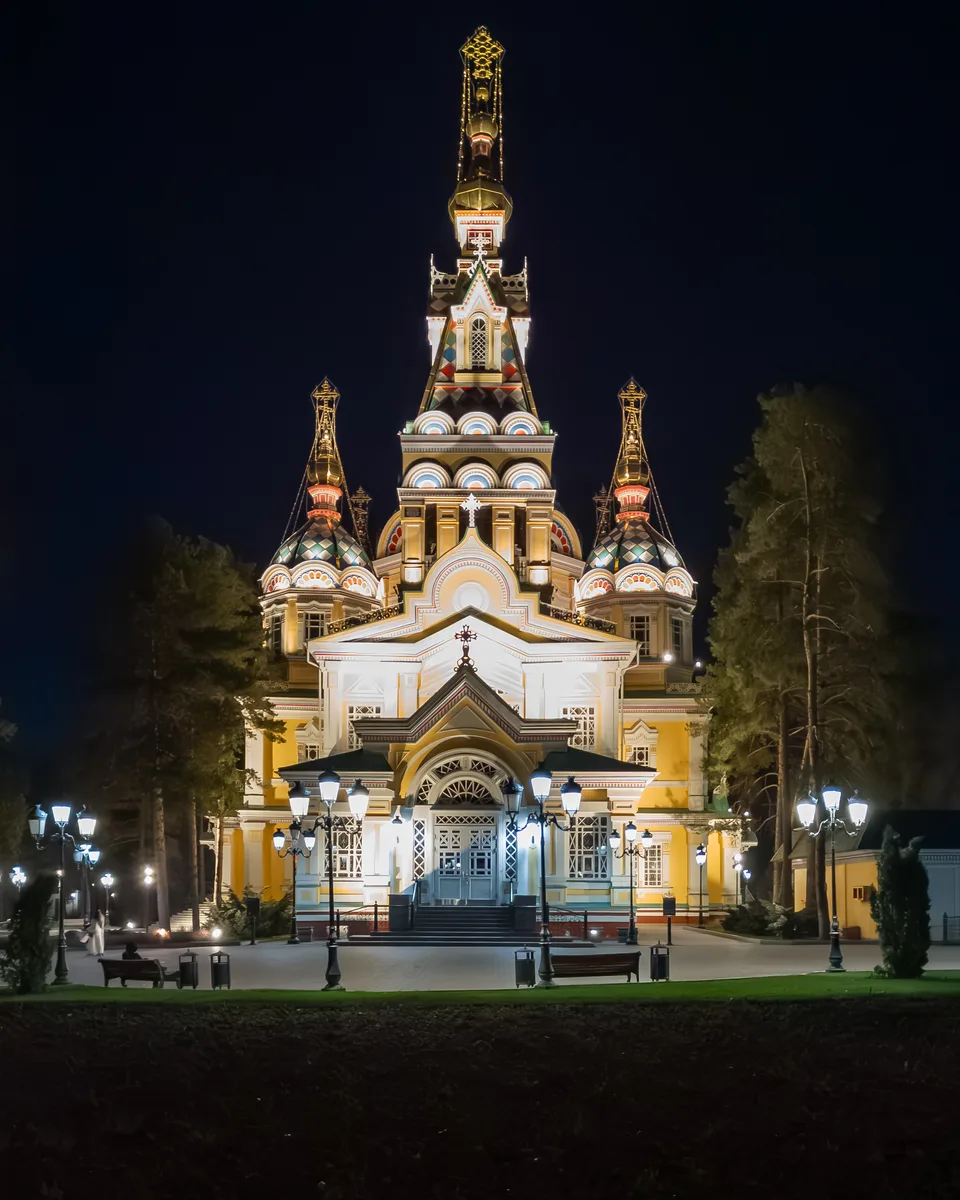
The Ascension Cathedral, also called Zenkov Cathedral, stands in the Park of the 28 Panfilov Guardsmen. Its colourful exterior makes an immediate impression, but its construction history is more interesting than the familiar postcard. Completed in 1907, the wooden building survived the destructive 1911 earthquake with damage. The cathedral’s own historical account describes extensive metal reinforcement and explicitly challenges the popular claim that it was built without a single nail.
Approach it as an active place of worship. Keep conversations quiet, respect services and ask before photographing interiors or worshippers. A park visit and a respectful look at the cathedral can share one morning without requiring an elaborate excursion. Allow space to sit, look at the building from several angles and continue into the surrounding streets. If a service limits sightseeing access, the exterior and park still provide a worthwhile introduction to this part of Almaty.
Make room for music, art and national history
Choose museums according to the questions that interest you. The Ykhlas Museum of Folk Musical Instruments introduces instruments including the dombra and kobyz and the musical traditions associated with them. It is a useful counterpart to a cathedral visit: the focus shifts from a single building to another part of Kazakhstan’s cultural inheritance. Ask whether any demonstration or guided interpretation is available that day rather than assuming a performance comes with admission.
The Kasteyev art museum is the stronger choice for painting, sculpture and decorative arts, including Kazakh works. The National Central Museum offers a broader historical perspective. Pick one substantial museum visit instead of treating all three as quick photo stops. Current admission categories, special exhibitions and opening arrangements should be checked directly before setting the day’s route; no single museum price is assumed here for every visitor or exhibition.
See Kok Tobe without turning it into a rushed transfer
Kok Tobe offers a view over the city and a straightforward contrast with street-level sightseeing. The operator’s cable-car page places the lower station on Dostyk Avenue and describes a line of 1,620 metres, with a journey of about six minutes. As checked on 15 October 2026, the published adult fare is 6,000 tenge one way or 10,000 tenge return. Confirm the applicable child category and current operating arrangements before buying.
Choose your ticket around a complete return plan. A one-way fare is only useful if you know how you will leave the hill, and an evening visit needs attention to the final descent. Visibility matters more than an ambitious list of summit activities. Keep this as a flexible outing, moving it to a clearer part of your stay where possible. Budget separately for food and optional attractions rather than treating the cable-car fare as an all-inclusive pass.
Plan Shymbulak around the actual operating calendar
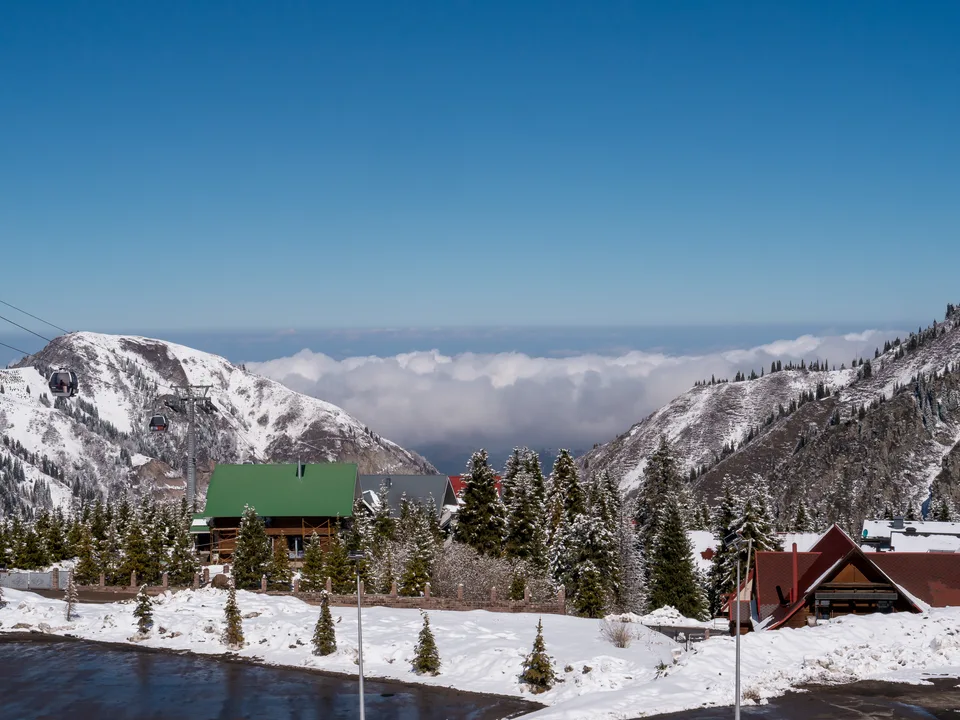
Shymbulak is a mountain outing, with cable-car access and a different environment from central Almaty. The official pedestrian tariff lists the standard adult Shymbulak return ticket at 12,000 tenge and the child ticket, ages six to fourteen, at 4,000 tenge when checked on 15 October 2026. Other products cover different routes or conditions. A sightseeing ticket should not be confused with a ski pass, equipment hire or lessons.
There is an immediate seasonal restriction. The resort’s autumn maintenance announcement schedules the Medeu–Shymbulak, Combi-1 and Combi-2 cable cars to close from 19 October to 1 November 2026. KKD-4 is scheduled closed from 12 October to 9 November. The same notice reports the gorge road closed for infrastructure work until 30 November. Recheck updates before travelling; an operating hotel does not establish normal public access to every part of the resort.
Treat mountain weather as a separate forecast
A warm afternoon in the city does not settle what you need higher up. Carry layers, suitable footwear, water and sun protection, and distinguish a cable-car sightseeing day from a hike beyond the resort. Decide your return route before setting out. If cloud, wind or maintenance removes the main purpose of the outing, switching to a museum is a sensible use of the day.
For longer walks, use a reputable guide or trekking operator, tell someone your route and expected return, and check insurance for the activity and altitude involved. Current official travel advice warns of rapidly changing weather, avalanches, landslides and rockfalls in mountain areas. Mobile coverage and rescue access can be limited away from developed routes. Photographs of an accessible summer trail do not establish that the same route is appropriate during an autumn or winter visit.
Arrive with a day or night transfer plan
Almaty International Airport’s official bus information currently lists daytime route 92 from terminals T1 and T2 towards Mamyr-2, operating from 06:00 to 23:00. Night route 3 runs towards Orbita-2 from 23:00 to 06:00. Both are listed at 120 tenge. The airport says ONAY transport cards are accepted and can be purchased in the international terminal’s first-floor arrivals area.
Check the stop and direction for your accommodation; the final destination on a bus is not necessarily your best place to alight. With heavy bags, children or an unfamiliar late-night arrival, compare that journey with a prearranged licensed taxi or hotel transfer. Agree the pickup point and total charge, including any waiting arrangements. Keep the address available offline. Allow generous time for the return to the airport rather than basing a flight connection on an optimistic road journey estimate.
Use the metro for the journeys it actually serves
The metro operator’s payment page lists a single journey at 120 tenge. It also lists a reusable metro smart card at 180 tenge before travel credit and accepts ONAY cards and bank-card payment through POS terminals. The published operating window is 06:20 to midnight. Check the current network and your last-train needs rather than assuming every district or attraction has a nearby station.
For a few central journeys, a simple payment option may be more useful than spending time optimizing a small fare difference. Keep transport credit available and understand the purchase process before joining a busy entrance queue. On a longer stay, test both your outward and return commute. The distance between a flat and station matters, but so do crossings, luggage, winter conditions and the final walk. Combine walking, metro and planned road trips according to the day’s actual geography.
Eat with curiosity and ask specific questions
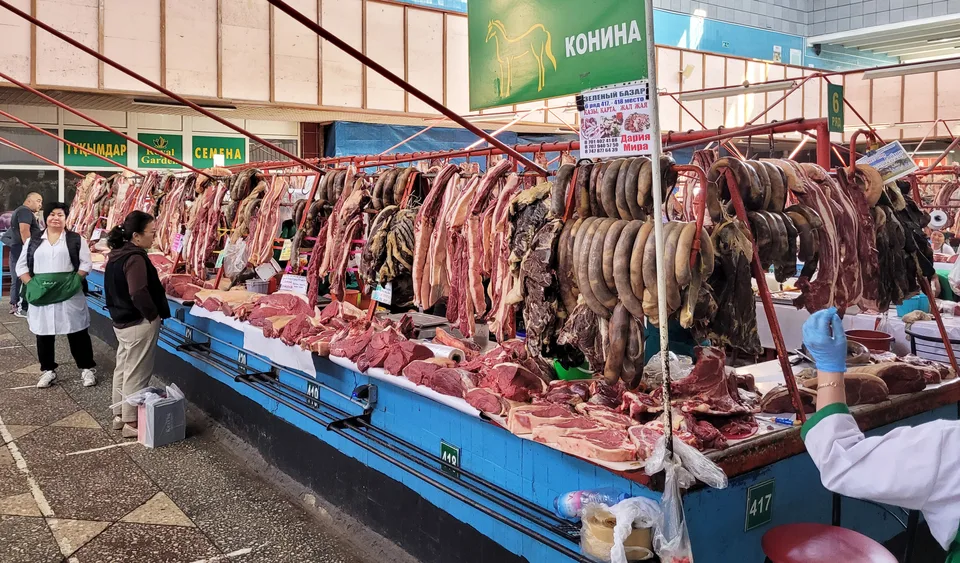
Start with the official Almaty food map, which identifies food markets and dining locations, including Green Bazaar on Zhibek Zholy. A market visit can introduce ingredients and everyday shopping as well as provide lunch. Look at portion sizes and posted prices, ask what a dish contains and confirm whether a quoted amount is per portion, piece or weight before ordering.
Dietary requirements deserve precise questions. Ask about meat stock, dairy, cooking fat and shared preparation where relevant; an unfamiliar dish name or a vegetable garnish does not establish suitability. Keep a translated version of any serious allergy available. Choose well-maintained places where food handling is visible, and use your own judgement about uncooked products. A clear menu, suitable ingredients and a convenient location are useful selection criteria, especially when travelling with children or arriving too late for an elaborate meal.
Budget for the expensive decisions first
The contrast between a 120-tenge metro ride and a 10,000-tenge Kok Tobe return ticket shows why a single daily spending average can mislead. Separate accommodation, ordinary meals and transport from cable cars, guided outings and any ski equipment. Add airport transfers, insurance and the cost of changing plans. Recheck prices at purchase, especially where a ticket has several route or age categories.
For accommodation, compare the final payable amount rather than the headline nightly rate. Breakfast, cancellation flexibility, a kitchen and a workable location can change the value substantially. For shopping, check weights, receipts and your home country’s import rules before buying food or animal products. Use authorized currency exchange services, protect your PIN and check bank fees for foreign transactions. Keep a modest cash reserve without carrying the entire trip budget through a crowded market.
Pick a season around your main reason for coming
Choose dates for the activity you care about most. A city-and-museum visit has different requirements from skiing, high-country walking or clear mountain views. Spring and autumn can suit an itinerary built around urban walks, provided you allow for changeable conditions and resort maintenance. Summer needs attention to heat and sun exposure, while winter introduces ice, cold and more demanding road and mountain decisions.
Use Kazhydromet’s Almaty climate information for historical context and a current forecast for the actual travel dates. Its station data should not be treated as a forecast for every elevation around the city. Check official air-quality and weather monitoring when planning outdoor exercise, especially if a household member has respiratory needs. Leave one movable activity in a short itinerary; that flexibility is more useful than promising the mountains will be visible on a particular morning.
A realistic three-day first visit
On day one, explore Panfilov Park and the cathedral, then choose the musical-instrument museum or a market visit according to opening arrangements and your energy. Keep the evening close to your accommodation. This is also the day to understand local payments and check the next day’s forecast, rather than filling every hour after a flight.
Use day two for Shymbulak only when the relevant cable cars and access are operating. Give it most of the day, with a relaxed evening afterwards. During maintenance or unsuitable weather, replace it with the Kasteyev museum and an unhurried meal. On day three, take a central walk, visit the National Central Museum if it matches your interests, and consider Kok Tobe when visibility is worthwhile. This is an editorial itinerary, not a guarantee that every venue operates daily or that all three days require paid excursions.
Give the wider region its own travel time
The national tourism page for Charyn National Park places its canyon landscape roughly 200 kilometres from Almaty. Treat it as a substantial road outing with a clear transport and return plan. Ask a tour operator how much time you will actually spend walking, what the price includes, and how weather or road disruption changes the day. A low price with minimal time outside the vehicle may not meet your expectations.
Kolsai and Kaindy lakes belong in a wider regional plan. The official Almaty Province overview identifies Saty as a guesthouse base for exploring that area. Consider an overnight stay rather than stacking several distant sites into one compressed day. Check current access, vehicle arrangements and seasonal conditions. Regional attractions are not neighbourhoods of Almaty, and a scenic photograph does not tell you how long the transfer, final approach or return will take.
Check accessibility at the level of the actual journey
If stairs, slopes or long walks affect your travel, ask accommodation providers for specific measurements and photographs. Confirm the route from the street to reception and from the lift to your room, including any steps between them. An advertised lift does not answer whether a wheelchair can enter the building or bathroom. Request the same detail from a tour operator about vehicle access and the distance from a drop-off point to the attraction.
For a family outing, identify toilets, meal options and somewhere to wait indoors before booking. Avoid pairing a demanding mountain morning with a tight evening reservation. Anyone accompanying a traveller who may need assistance should understand the return arrangements if that person decides to leave early. This preparation is particularly useful when a group’s interests differ: a flexible city afternoon can be easier to divide than a distant excursion with a fixed vehicle departure.
Test everyday life before choosing a lease
For a possible move, begin with temporary accommodation and a practical inspection list. Travel to work at the hours you will actually commute. Walk to groceries and a pharmacy, check the building entrance after dark, and test mobile reception and internet inside the flat. Ask about heating, hot water, ventilation, lift reliability, maintenance contacts and any planned construction nearby.
Inspect the particular unit rather than relying on photographs of a similar apartment. Record existing damage and inventory, clarify utilities and service charges, and obtain written terms covering the deposit, notice period and repairs. Verify the owner or authorized agent before transferring money. Because Almaty lies in an active seismic zone, ask about the building’s documentation and emergency arrangements; appearance alone cannot establish structural safety. A panoramic view is a bonus after the household’s daily requirements have been met.
Organize services around your household
Ask an employer, university or qualified adviser which documents your circumstances require before arranging banking or longer-term services. Kazakhstan’s eGov guidance for foreign nationals explains the role of the individual identification number, or IIN, in banking, salary payments and public services. An IIN is an administrative identifier; obtaining one does not independently authorize employment or permanent residence.
For families, confirm school admission, language of instruction, transport and fees directly with the institution. Check healthcare coverage, the clinic’s services and how prescriptions will be managed before an urgent need arises. Save 103 for an ambulance and 112 for emergency assistance, as listed by the tourism bureau. Keep copies of essential documents accessible, and retain the original identification required for your situation. These arrangements deserve their own preparation time rather than being left until after a long lease is signed.
Compare Almaty with the rest of your route
Almaty works especially well when the journey combines city culture with the surrounding mountains. If your priority is a particular museum, university, employer or family connection elsewhere, compare that location directly instead of selecting Almaty simply because it is the main arrival point. A domestic flight or long-distance train is another travel day to plan, with its own baggage rules, departure station or terminal and accommodation implications.
VisaWand’s Astana location page and Shymkent location page provide other places to investigate; these are location directories rather than completed travel guides. Compare the exact reason for visiting each place before adding stops. On a short trip, one well-chosen regional overnight stay may be more rewarding than repeatedly packing, transferring and checking in. For relocation, the relevant comparison is the household’s employment, education and services, alongside personal preferences about the urban environment.
Match entry permission to your passport and purpose
Consult the Foreign Ministry’s visa-regime table using your nationality and ordinary passport category. Diplomatic and service-passport entries can differ. Visa-free access and permitted stays vary; another traveller’s entitlement does not establish yours. Verify your passport validity, entry conditions and the terms of any onward route before paying for non-refundable travel. VisaWand’s Kazakhstan destination page can help organize the broader trip, alongside the official rules.
Where an e-visa is appropriate, the government’s current application instructions require an approved invitation and eligibility for the traveller’s citizenship and purpose. Details must match the passport, and the issued visa determines the permitted stay. Current guidance restricts e-visa entry and exit to international airport checkpoints. Check your precise itinerary and save the issued document; an approved online application should not be treated as permission to use any land border.
Keep tourism, work and residence separate
The receiving party must notify Kazakhstan’s migration authorities within three working days of a foreign national’s arrival and after a change of address. This obligation also matters for visa-free visitors. Ask your hotel or private host to confirm completion and retain the relevant evidence. Host notification is separate from the permission needed to remain for work, study or another longer-term purpose.
Before accepting employment or beginning a course, establish the applicable visa, residence and employment requirements with the employer, institution and authorities. Nationality and individual circumstances affect the route. Do not assume a tourist stay, apartment lease or remote income creates unrestricted work rights or a path to permanent residence. The Kazakhstan location directory is useful for comparing places, while VisaWand’s consultant listings can help identify advisers to question about qualifications, relevant experience and the scope of their service.
Official planning resources
Reviewed 15 October 2026. Use the official resources linked throughout this guide for admission, transport, housing and immigration decisions. Prices, services and rules can change; confirm the details relevant to your dates. Photography illustrates the locations and is not a live view.
View all official resources
- Kazakh Invest: Almaty city profile
- Almaty city administration: city history
- Almaty Tourism Bureau: accommodation directory
- Kok Tobe: cable car and fares
- Shymbulak: pedestrian cable-car tariffs
- Shymbulak: autumn 2026 cable-car maintenance
- Almaty Metro: official fares and payment
- Almaty Tourism Bureau: food map
- Kazhydromet: Almaty climate
- Kazhydromet: official environmental monitoring maps
- Kazakhstan Foreign Ministry: visa regime by nationality
- Kazakhstan government: current e-visa instructions
- Kazakhstan eGov: entry, notification and residence
- FCDO: Kazakhstan safety and local restrictions
- Almaty Airport: official city bus connections
- Ascension Cathedral: architectural history
- Almaty Tourism Bureau: Kasteyev art museum
- Almaty Tourism Bureau: Ykhlas instrument museum
- Almaty Tourism Bureau: National Central Museum
- Kazakhstan Tourism: Charyn National Park
- Kazakhstan Tourism: Almaty Province
Plan the next part of your journey
Explore the Kazakhstan guide, browse other cities or compare consultants for your travel and relocation questions.