Visa
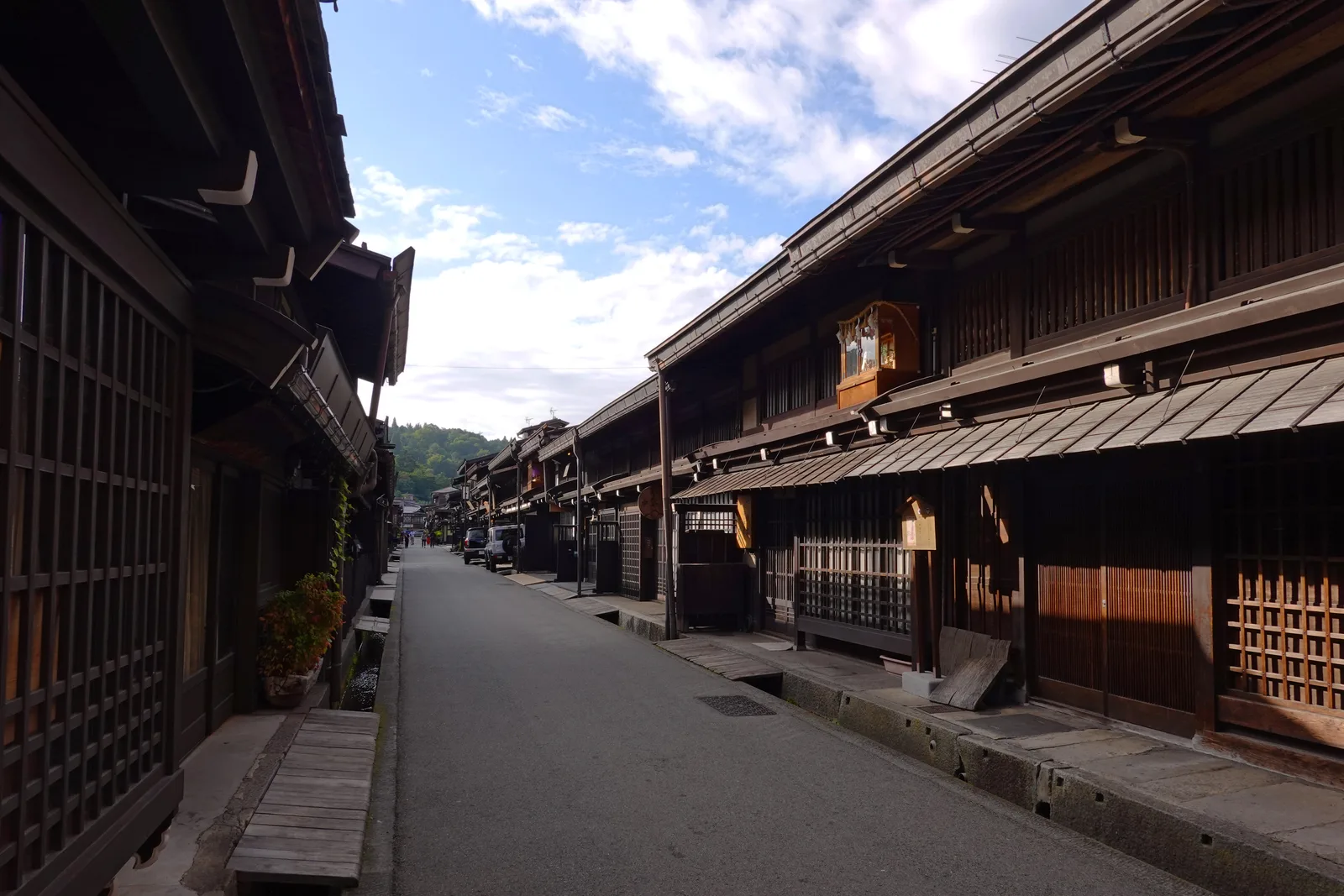
Takayama rewards a stay beyond the day trip
Takayama's appeal is close to street level: wooden shopfronts, a riverbank morning market, bowls of curly noodles and the quiet space inside an old government office. In northern Gifu Prefecture, this is a useful stop for travellers who want historic streets and regional food alongside access to the Japanese Alps. It deserves time for those ordinary pleasures, rather than a hurried photograph between long bus journeys.
Allow two nights for a first visit if your wider itinerary permits. That gives you a market morning and time for the centre and Hida Folk Village without making every connection decisive. The Japan National Tourism Organization's Takayama introduction provides the broad orientation. Visitors considering a move should also spend time beyond the sightseeing circuit: a beautiful walking holiday reveals little about winter heating bills or the journey to a particular workplace.
Understand the town and the much larger municipality
The compact historic centre and the administrative city are different scales of place. Takayama expanded through a 2005 merger with nine surrounding towns and villages. An accommodation address containing “Takayama” can therefore mean somewhere well beyond an evening walk from the railway station. Check the actual map position before booking.
The city's historical account connects the town's development to Kanamori rule, a castle on the site of today's Shiroyama Park and roads converging from surrounding regions. Woodworking remains an important part of Hida's identity. That background makes the timber buildings more interesting: their materials belong to a regional economy and skilled craft tradition, rather than simply providing an attractive setting for shops. Avoid treating the present streets as an untouched snapshot of one historical year.
Choose your base by the journeys you will make
For a short stay using public transport, compare accommodation around the station with properties closer to Sanmachi and the Miyagawa. Station proximity simplifies luggage and early departures; the historic side puts evening walks nearer your door. Use the official walking maps to judge the particular address and river crossings, rather than relying on a hotel's description of its neighbourhood.
Higashiyama, east of the centre, suits a temple walk. Hida Folk Village is a separate excursion on the southwestern side. Further afield, Okuhida's five hot spring areas include Hirayu and Shinhotaka in the mountain country. Choose an Okuhida inn for baths and mountain access, and allow for its transport timetable. Staying there changes the practical shape of a Takayama visit; it should be a deliberate choice when comparing apparently similar search results.
Read Sanmachi through its buildings
Walk Sanmachi slowly enough to notice the continuous wooden latticework, narrow water channels and cedar balls outside sake breweries. The municipal description of the preservation area identifies a commercial district of historic townhouses, now mixed with food shops and souvenir businesses. The relationship between street, shop and working interior is the main attraction.
An early walk can help you appreciate the buildings before concentrating on purchases later. Keep entrances clear, ask before photographing people or interiors, and distinguish a shop open to customers from a private doorway. Buying something does not confer permission to photograph everything around it. Give yourself an unhurried loop rather than trying to turn every short street into another scheduled attraction. Return at a different hour if the first visit feels crowded.
Visit Takayama Jinya for the history behind the streets
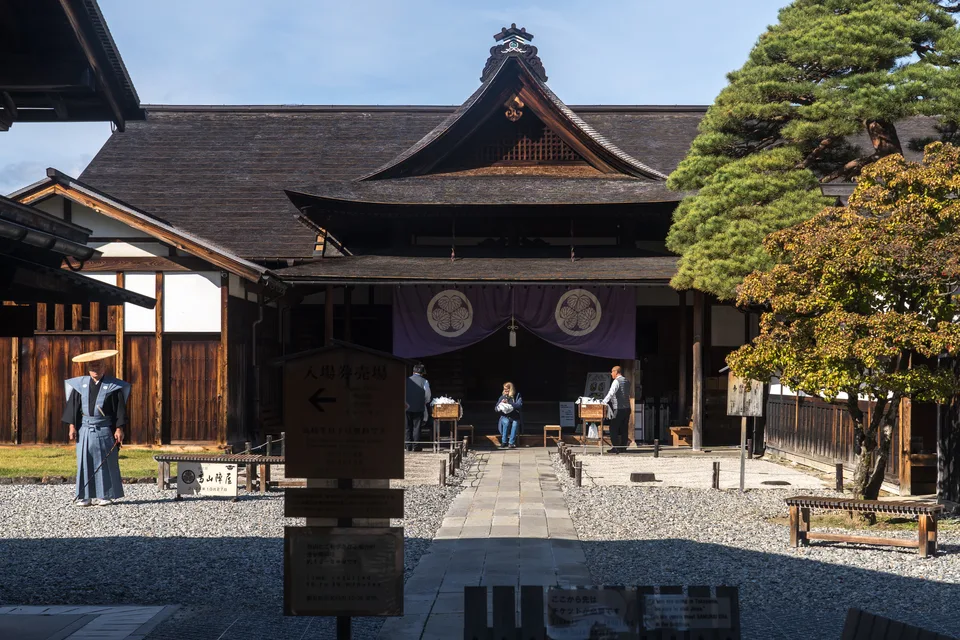
Takayama Jinya was an administrative headquarters associated with the shogunate's direct control of Hida from 1692. It adds a different perspective from merchant streets: government, taxation and the organisation of a region. Approach it as an office complex with a long institutional history, rather than expecting a castle or a religious monument.
The current visitor information lists adult admission at ¥500, with visitors aged 18 and under admitted free subject to identification when requested. Opening is normally 08:45–17:00 from April through October and 08:45–16:30 from November through March; the ticket office closes 30 minutes earlier. The regular New Year closure runs from 29 December to 3 January. Shoes come off inside. Rooms are unheated, making thick socks or suitable indoor footwear particularly useful in winter. Ask about the dedicated wheelchair arrangements before visiting if assistance is needed.
Make room for Hida Folk Village
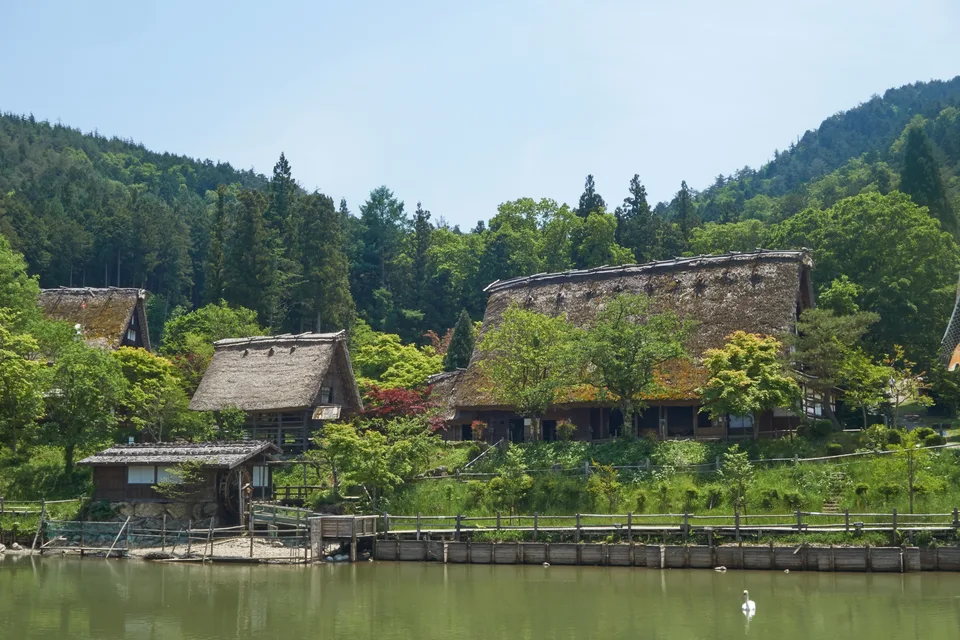
Hida Folk Village brings together more than 30 traditional rural buildings. It is valuable for understanding life outside the merchant centre: compare roof shapes, domestic spaces and the relationship of houses to the landscape. This is a reason to reserve a substantial part of a morning or afternoon, rather than treating it as a quick photograph beside the pond.
The current operator website lists normal opening at 08:30–17:00 and admission of ¥700 for adults and ¥200 for primary and junior high school children. Check its dated notices for special access arrangements. Evening illuminations are separate events on selected dates, with their own tickets; ordinary daytime opening does not imply nightly access. Choose shoes for an outdoor museum and inspect access information closely if steps, uneven surfaces or winter conditions could limit your visit.
Give the morning markets a proper morning
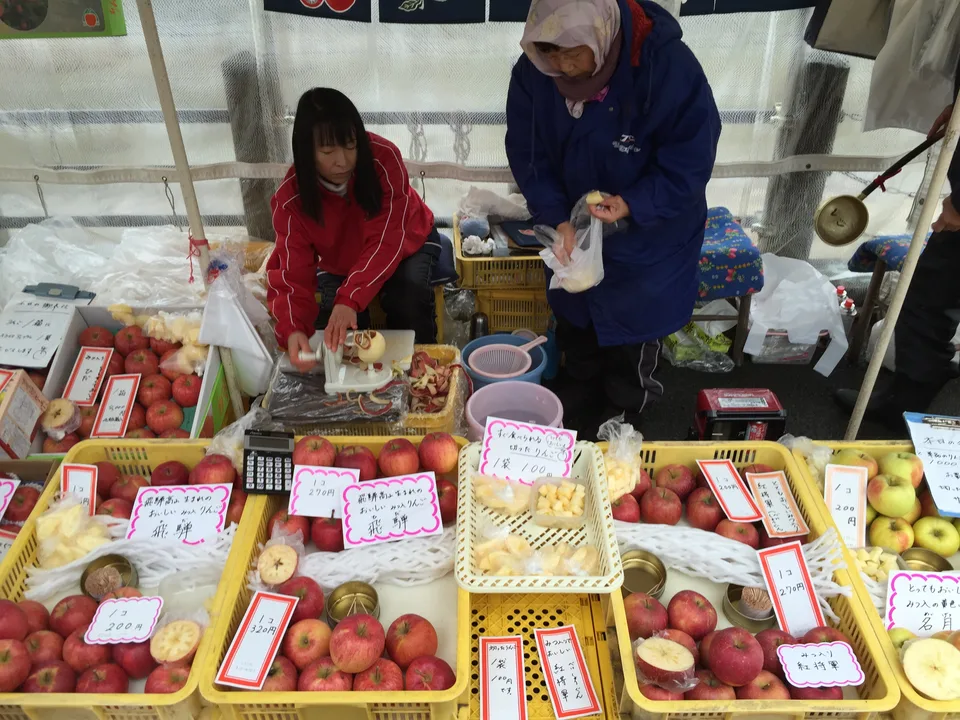
The Miyagawa morning market runs beside the river between Kajibashi and Yayoibashi. Produce, pickles and craft shopping make it a useful starting point for the day. The published business hours are 07:00–noon from April to November and 08:00–noon from December to March, with free admission. Rain and winter can reduce the number of stalls substantially; photographs of a busy summer morning are no promise of the same scene in February.
The Jinya-mae market occupies the forecourt of the government complex and has a farming connection, with vegetables, dried foods and homemade pickles among its offerings. Its listed seasonal hours follow the same pattern. Visit before a late breakfast or museum appointment, and bring small change. Ask about ingredients and storage before purchasing unfamiliar preserved foods, particularly if they must survive a long onward journey.
Walk Higashiyama and understand the festival calendar
The Higashiyama walking course links a temple district on the eastern hillside with Shiroyama Park. The complete route is about four kilometres from Ryuunji. Take it as a change of pace after the shopping streets, with time to shorten the walk if conditions or energy dictate. “Walking course” should not be read as a guarantee of level, step-free access throughout.
The spring and autumn Takayama festivals take place on 14–15 April and 9–10 October respectively. If the festival is your reason for travelling, secure accommodation and transport around the actual dates. The autumn programme explicitly allows weather cancellations, including processions and evening events, without postponement. Outside festival dates, the Festival Floats Exhibition Hall offers a rotating selection of floats. It provides context for their craftsmanship without implying that a full street procession happens year-round.
Compare accommodation by what the rate includes
A conventional hotel can simplify a late arrival, while a ryokan stay may make meals and bathing part of the experience. Compare the actual room and package: private or shared bathroom, bed or futon, lift access, dinner inclusion and the latest acceptable arrival time. Ask directly about dietary needs before paying for a meal plan.
For a family, check whether a child's quoted price includes bedding and food. For a longer stay, laundry, cooking facilities and a workable desk can matter more than a decorative room photograph. Confirm luggage storage around check-in and checkout when planning a final sightseeing day. In mountain accommodation, ask how to reach the property from the named bus stop and what happens if the last connection is missed. A cheaper nightly rate can be poor value if it creates repeated taxi journeys.
If bathing is central to your stay, establish whether the advertised bath is private, reservable or communal, and ask about any rules that affect your party. A photograph of an outdoor bath does not establish access from your booked room category. Travellers with limited mobility should request the entrance route, bathroom arrangement and number of internal steps in writing. Traditional surroundings and modern accessibility need to be assessed property by property.
Arrive by rail, with an airport connection you can follow
Takayama is served by conventional railway, including the Hida limited express; it is not a Shinkansen station. JR's official reservation search identifies Hida services between Osaka or Nagoya and Takayama or Toyama. Check your chosen date, departure station and connection together. The shortest headline journey on a tourism page may not match the train that fits your flight.
From Chubu Centrair Airport, Meitetsu trains connect with Nagoya. The airport lists 28 minutes for the fastest μ-SKY service, whose reserved first-class ticket is additional to the regular fare. That is only the airport leg. Use the Nagoya station transfer map for the change to JR, and add time for immigration, baggage collection, walking between operators and finding the correct platform. After a late international arrival, compare an overnight near the arrival point with a rushed final mountain connection.
Use buses according to the route and ticket
Nohi's intercity bus information covers connections including Nagoya, Tokyo and Matsumoto. Reservation requirements and travel times depend on the route. Compare a dated bus option with rail on total journey time and available seats, rather than assuming that a service appearing on a route map has space when you need it.
Within town, the operator's city route guide lists ¥100 fares on the Takumi and Machinami services, while Sarubobo fares range from ¥100 to ¥210 for adults. Check the service name and destination before boarding. The city two-day pass costs ¥1,000 and covers specified local routes. It is not an unlimited pass for every mountain destination within the broad municipality. Keep the current Nohi service notices available during travel, especially when snow or autumn traffic could alter an otherwise straightforward plan.
Eat locally without making every meal expensive
Takayama's regional food guide describes thin, curly ramen noodles in soy-based broth, savoury soy-glazed mitarashi dango and hōba miso cooked on a dried magnolia leaf. Pickled red turnips provide another regional flavour. A noodle lunch and a more leisurely evening meal offer variety without making every stop a premium dining occasion.
Hida beef is a defined regional product associated with cattle raised in Gifu, not a synonym for every beef dish sold locally. Compare cut, quantity and cooking style when judging a menu. A skewer, a set lunch and a steak dinner are different purchases. Tell staff about allergies explicitly; a dish that appears vegetable-based may contain meat or another ingredient you avoid. Reserve a meal you particularly want, and check opening days rather than relying on an old restaurant roundup.
Shop for craftsmanship and keep a usable budget
The official craft introduction explains Hida Shunkei lacquerware, which reveals the underlying grain, and Ichii Ittōbori yew carving, known for visible chisel work. These give shopping a connection to the area's woodworking history. Ask where a piece was made, how to care for it and whether it needs special packing. A small, well-chosen object can be more useful than an additional bag of fragile souvenirs.
For a concrete activity subtotal, combine ¥500 Jinya admission with Nohi's ¥1,000 Folk Village package, which includes museum admission and return bus travel. That totals ¥1,500 for those two visits and the included bus journey only. Meals, accommodation, other transport and purchases are extra. The similarly priced city two-day pass is a different product. Build your full budget from dated room quotes, chosen menus and actual journeys; there is no single reliable daily figure for every traveller.
Separate money already committed from spending you can adjust. A prepaid inn dinner belongs in the accommodation total rather than being counted again as a restaurant allowance. Likewise, subtract journeys included in a package before adding a transport pass. Keep a reserve for changing a regional outing when a road closure or missed connection makes the original plan impractical.
Pick the season for the trip you want
Takayama's climate needs more thought than a generic “Japan in spring” packing list. Japan Meteorological Agency station normals show a January mean temperature of −1.2°C and an August mean of 24.4°C. These are monthly averages, not daily highs, and they describe the town's station rather than every higher mountain area. July's normal precipitation is about 261 millimetres, so summer also calls for a rain plan.
Spring and autumn suit visitors interested in combining town walks with their respective festivals, but those dates require more careful reservations. Winter can be rewarding for buildings and food, provided footwear, warm layers and transport flexibility are part of the plan. For any mountain outing, check conditions at the destination itself. Comfortable weather beside the Miyagawa does not establish safe conditions on a high trail, or prove that a seasonal bus is operating.
A realistic two-night itinerary
On arrival day, leave your luggage at the agreed time, orient yourself between the station and river, then walk Sanmachi. Keep the evening meal convenient to your accommodation. This gives the first afternoon a clear purpose while allowing for a delayed train or a slower check-in.
On the full day, start at one morning market, visit Jinya after it opens and have lunch in town. Spend the afternoon at Hida Folk Village, checking the return bus before entering. If you prefer temples to rural architecture, substitute the Higashiyama walk instead of squeezing both into fading daylight.
On departure morning, revisit a favourite street, buy something you have already compared and collect your bags before the onward connection. Add a third night for a separate regional excursion. This keeps a village or mountain trip from consuming the only full day available for Takayama itself, particularly when weather requires a change.
For a wet day, favour the indoor history visit and a booked meal, then reassess the outdoor portion. Families can split the group if one person prefers a longer temple walk. Keep the day's fixed points limited to actual reservations and closing times; the short distances in the centre are an opportunity to slow down, not a reason to fill every gap.
Plan Shirakawa-go and mountain outings separately
Nohi's Shirakawa-go route currently lists ¥2,800 adult one-way travel from Takayama. Some departures require reservations and others do not; a mobile ticket for a non-reserved departure does not reserve a seat. The operator warns that congestion can cause delays of two hours or more. Avoid attaching this outing to a tightly timed flight or final intercity departure.
Kamikochi is another regional excursion, across in Nagano Prefecture. Its normal visitor season runs from mid-April through 15 November, with facilities and bus services closed from 16 November and some closing earlier. It is not a casual winter substitute for a town walk. Private cars and motorcycles cannot enter; drivers transfer at designated parking areas such as Hirayu or Sawando. Confirm the operating timetable and return journey before choosing a walking route.
Moving here starts with housing and the daily commute
Before committing to a move, identify the exact workplace or school and test the journey from a prospective home. A central sightseeing address, an outer residential neighbourhood and an Okuhida property imply very different routines. Compare groceries, medical appointments and evening returns as well as the morning commute. Ask an employer which travel costs or transport arrangements are actually provided.
Use the government's rental housing guidance for foreign residents to prepare questions about the contract. Request a written breakdown of rent, management charges, deposits, agency charges, guarantee arrangements and move-out obligations. Check whether furnishings, appliances and internet are included. For winter, inspect heating equipment, window insulation and responsibility for clearing snow around the property. Ask for recent utility bills where available; a low rent is difficult to evaluate without knowing how the dwelling performs in cold weather.
If you expect to work from home, test mobile reception inside the room and obtain the installation date for a fixed connection. If a car is necessary, confirm a legal parking space and its separate cost before signing. A viewing should also establish where wet coats and boots can dry, where household rubbish is stored and who handles urgent maintenance. These details influence everyday comfort more than the distance to a souvenir street.
Set up resident services and household essentials
Takayama's foreign resident service information identifies the municipal counters for address records, health insurance, pension and other household matters. English and Mandarin consultation support exists, but an interpreter is not necessarily present whenever you arrive. Arrange help in advance if a contract, tax issue or school matter needs detailed discussion.
Confirm whether your employment provides health coverage or whether National Health Insurance eligibility must be addressed with the city. Visitors should arrange travel medical insurance separately. The local medical guidance notes that foreign prescriptions cannot simply be used in Japan, making medication planning important before departure. For daily life, use the city's multilingual waste guide and district collection calendar rather than rules remembered from another Japanese city. Check water, electricity, heating fuel, internet installation and laundry arrangements before the handover date.
Match immigration permission to the purpose of your stay
Start with Japan's official visa information and check the nationality and passport conditions for visa exemption. Permitted short-stay periods vary; tourism admission should not be treated as permission to take paid employment. A planned job, course of study or long residence needs its own assessment through the work and long-term stay categories.
Remote workers should examine the separate digital nomad route, including nationality, income and insurance requirements. Its six-month stay cannot be extended under that category. A wish to settle permanently is a separate matter from either a holiday or temporary remote work. For qualifying new mid- to long-term residents, Immigration Services Agency guidance requires address notification within 14 days of establishing residence. Check your permitted activities and documentation with the authorities, and use the Japan consultant directory if individual advice is needed.
Before paying tuition, signing a lease or accepting a start date, establish which permission your plan requires and who will supply the supporting documents. Keep that timetable separate from booking a holiday.
Compare the next stop before extending the booking
A longer regional stay can include Gero's destination page when comparing a hot spring stop, or Kanazawa's destination page when considering an onward city. These links help identify locations; check the content available on each page and the real transport connection before deciding how many nights to allocate.
Use the Japan country guide for broader planning and the Japan destination directory to compare other places. Choose Takayama for the combination of historic streets, regional food and access to surrounding country. Give each part enough time, and judge any longer move by the practical household routine you can establish there.
Official planning resources
Reviewed 21 October 2026. Use the official resources linked throughout this guide for admission, transport, housing and immigration decisions. Prices, services and rules can change; confirm the details relevant to your dates. Photography illustrates the locations and is not a live view.
View all official resources
- Japan National Tourism Organization: Hida Takayama
- Takayama City: history and municipal geography
- Takayama City: visitor walking maps
- Takayama City: Okuhida hot spring area
- Takayama City: Sanmachi preservation area
- Gifu Prefecture: official Takayama Jinya
- Takayama Jinya: admission and opening hours
- Takayama City: Hida Folk Village
- Hida Folk Village: current official operator
- Takayama City: Miyagawa morning market
- Takayama City: Jinya-mae morning market
- Takayama City: Higashiyama walking course
- Takayama City: spring and autumn festivals
- Takayama City: autumn festival programme and weather rules
- Takayama City: Festival Floats Exhibition Hall
- JR West: Hida train reservations and route search
- Chubu Centrair Airport: rail connections
- Chubu Centrair Airport: Nagoya station transfer map
- Nohi Bus: intercity bus routes and reservations
- Nohi Bus: Takayama city routes and fares
- Nohi Bus: current service notices
- Takayama City: local food
- Takayama City: Hida beef
- Takayama City: traditional crafts
- Nohi Bus: local and excursion ticket products
- Japan Meteorological Agency: Takayama station normals
- Nohi Bus: Takayama–Shirakawa-go regional bus route
- Kamikochi official visitor information
- Kamikochi: private vehicle restrictions
- Ministry of Land: rental housing guidance for foreign residents
- Takayama City: consultation and services for foreign residents
- Takayama City: National Health Insurance eligibility
- Takayama City: illness or injury during a visit
- Takayama City: multilingual waste guides and calendars
- Ministry of Foreign Affairs: visas for Japan
- Ministry of Foreign Affairs: visa exemption conditions
- Ministry of Foreign Affairs: work and long-term stay categories
- Ministry of Foreign Affairs: digital nomad visa
- Immigration Services Agency: guidance for new residents
Plan the next part of your journey
Explore the Japan guide, browse other cities or compare consultants for your travel and relocation questions.