Visa
A harbour city that deserves more than a day trip
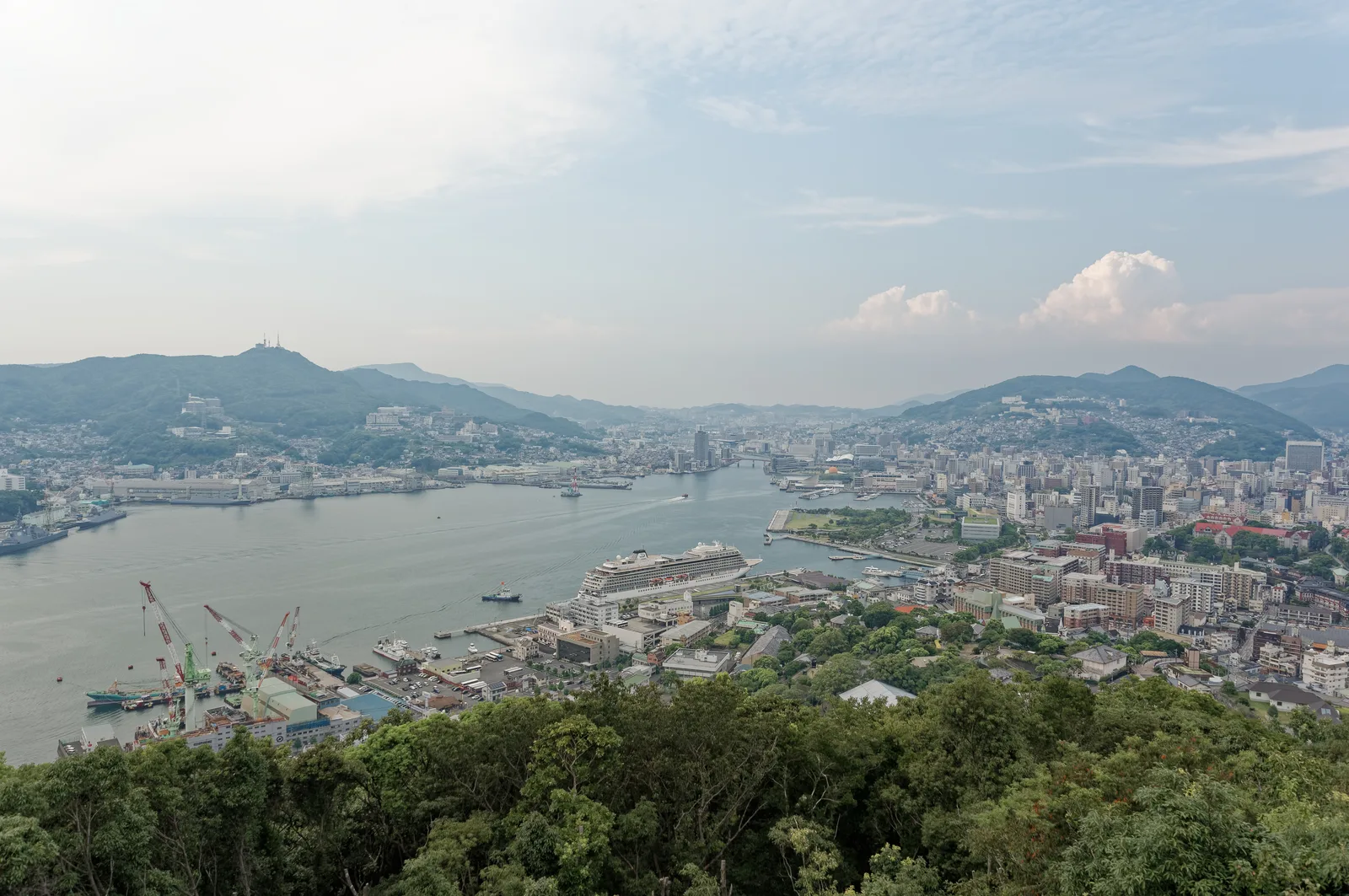
Nagasaki is a city of short distances and surprisingly demanding contours. Its harbour, tram corridors and trading districts are straightforward to connect, but residential streets climb into the surrounding hills. That geography creates memorable views and practical consequences: the room with the panorama may involve stairs, while a modest hotel beside a tram stop can make a short visit much easier.
Come for the combination of maritime history, Chinese and European influences, regional food and serious engagement with the atomic bombing. Two full days give the major sites some breathing space; three allow a slower neighbourhood walk or an excursion. The official introduction to Nagasaki City is a useful starting point. Keep the city distinct from the prefecture: island communities, Unzen’s mountain hot springs and Sasebo are wider journeys, rather than extra stops on one central walking route.
Read the trading history with some care
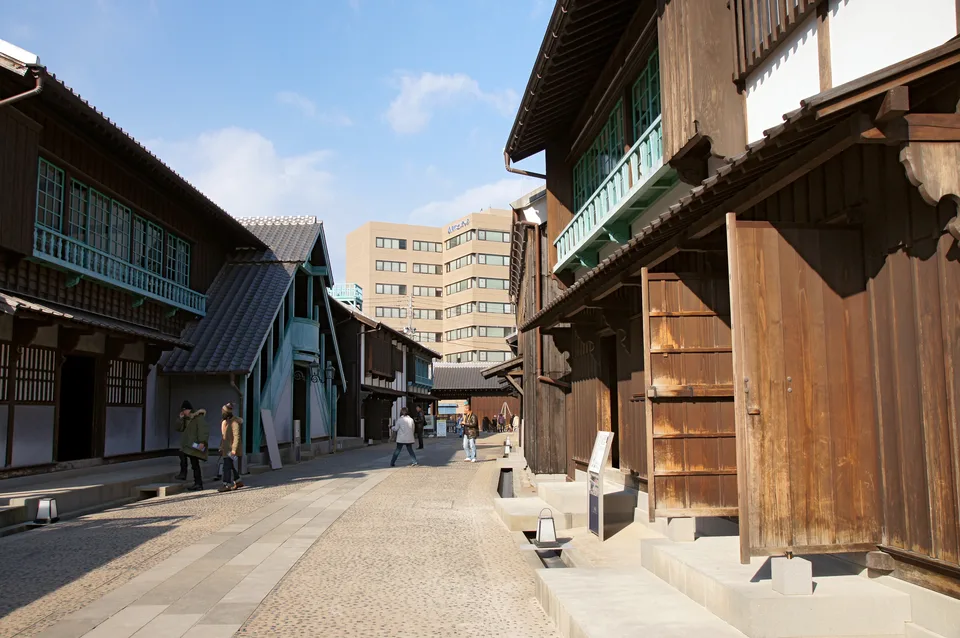
Dejima supplies a tangible introduction to Nagasaki’s international relationships. Completed in 1636 for Portuguese residents, the artificial island became the Dutch trading post in 1641. Its importance should not be simplified into a claim that every foreign connection with Japan passed through one small island. The site’s particular story concerns tightly controlled European trade, alongside a broader history of exchange.
Later harbour reclamation changed the setting, so Dejima is no longer an isolated island surrounded by open water. The operator explains its restoration programme, focused on the trading post around 1820, as well as surviving features from other periods. Knowing which buildings are reconstructions makes the visit more interesting, not less authentic as an educational experience. Look for the relationship between the former trading compound and the modern city around it, rather than expecting an untouched seventeenth-century streetscape.
Choose a base along the journeys you will make
Around Nagasaki Station, accommodation suits rail arrivals, onward travel and people who prefer to keep luggage handling simple. Before booking, distinguish the railway station entrance from the Nagasaki-ekimae tram stop and the particular airport bus stop you need. A property advertised as near the station can still leave a meaningful walk between those different points.
Shinchi Chinatown and the central shopping streets suit visitors who want food and evening browsing nearby. Dejima and the waterfront are useful reference points for a history-focused stay. Around Ōura and Minamiyamate, the appeal is the former foreign settlement and hillside scenery, with gradients to consider. Urakami places the peace sites farther north along the tram corridor. Choose according to the trips you will repeat, rather than assuming the most picturesque hill is the most convenient address for every household.
Visit the Atomic Bomb Museum deliberately
The Nagasaki Atomic Bomb Museum addresses the bombing of 9 August 1945, its effects on the city and the wider questions of nuclear weapons and peace. It deserves attention as a museum of human lives and historical evidence, rather than a rapid stop between photographs. Allow time afterwards to reflect, particularly when visiting with children or anyone who may find the material difficult.
The museum’s current admission information lists ordinary adult admission at ¥200. From April 2026, high-school pupils and younger children are admitted free; older descriptions of paid schoolchild tickets are superseded. Check the current hours and holiday closures for your date, and avoid booking an onward connection that forces you through the exhibitions at speed. Combine the museum with the nearby memorial landscape, but recognise that each institution has its own purpose and visitor arrangements.
Normal museum hours begin at 8.30am, with the main exhibition closing at 5.30pm outside the May–August extension to 6.30pm. Last admission is half an hour before closing, and 29–31 December are closure dates. The museum’s own visitor information also identifies anniversary-period extensions. Check the date-specific arrangements if your visit depends on the final opening hour, rather than assuming that an extended memorial-hall schedule automatically applies to the museum too.
Make space for the National Peace Memorial Hall
The National Peace Memorial Hall for the Atomic Bomb Victims is separate from the museum. Its emphasis is commemoration, testimony and remembrance. Admission is free. The memorial hall’s visitor guide lists normal opening to 5.30pm outside the May–August extended season, with closure on 29–31 December. Check the calendar if travelling around the anniversary or year end.
The hall provides elevators and accessible facilities, but that does not establish that every surrounding pavement or hillside route is equally manageable. Ask about the complete approach if assistance is needed. In the Peace Park and around the hypocentre, keep photography considerate of people paying respects. An itinerary can allow both historical learning and quiet time without treating the memorials as a sequence of interchangeable sightseeing backgrounds. Keep the remainder of this part of the day relatively unstructured.
Explore Dejima without rushing back through the gate
Dejima is substantial enough to reward a considered visit through its reconstructed buildings and historical displays. The ordinary adult ticket is now ¥1,100, with school pupils paying ¥550. The operator specifies that re-entry is not permitted, so have a meal or other outside errand before entering if you do not want to pay again.
The exhibition area normally opens from 8am to 9pm, with last admission at 8.40pm. Those hours do not mean the museum shop and restaurant remain open throughout the evening. Plan your visit around the rooms and services you want, rather than using the final entrance time as a recommended arrival. As the restoration remains an ongoing project, some facilities may occasionally be unavailable. The historic scene in a photograph also records one stage of that work, rather than guaranteeing the exact arrangement on your visit.
Put Glover Garden and Ōura into context
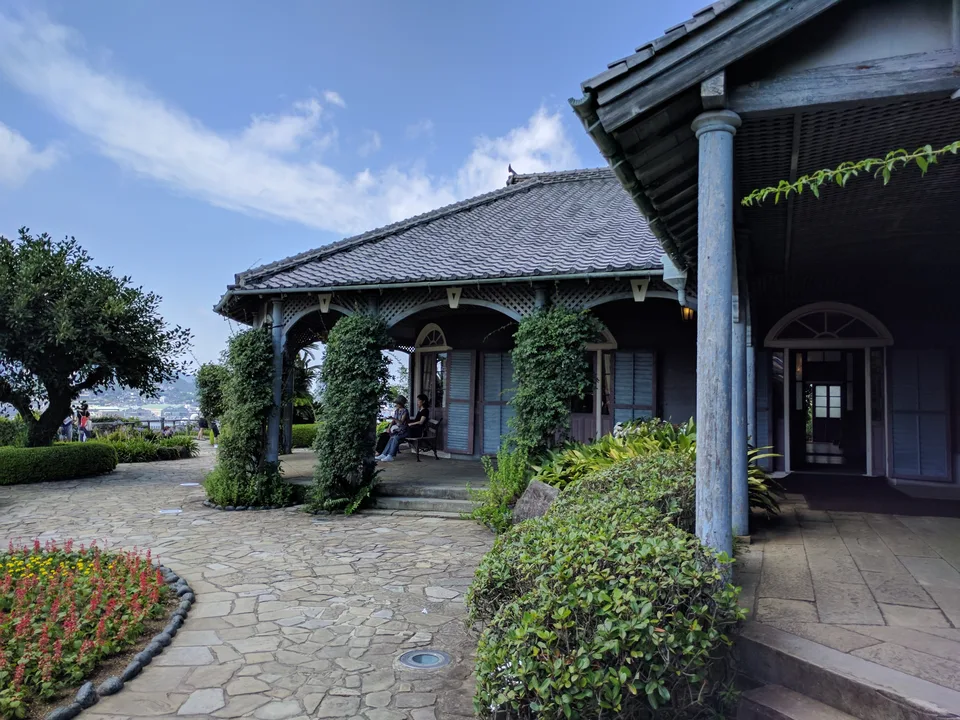
Glover Garden combines historic Western-style houses with a hillside setting overlooking the harbour. It is a good place to examine the architecture and commercial world of the foreign settlement, while allowing time for the views. The garden’s current visitor guide lists adult admission at ¥1,300 following the April 2026 revision. Older ¥620 prices are no longer a sound basis for a budget.
Nearby Ōura Cathedral has its own ¥1,000 ordinary adult admission, including its Christian Museum. It forms one component of the Hidden Christian Sites in the Nagasaki Region, inscribed in 2018. That serial World Heritage property extends beyond the city; visiting this cathedral does not mean you have seen all twelve components. Glover Garden also has ramps and moving walkways, but its operator warns that gradients and stone paving can still require assistance for wheelchair users.
Garden opening extends into the evening on selected dates and seasons, with the last entry twenty minutes before closing. A night visit can therefore be an alternative to the ropeway, but check the published calendar and any private-event exceptions first. The second entrance does not accept card payments. Decide which entrance and approach you will use before arrival, especially if you want to avoid unnecessary climbing between the tram stop, ticket gate and first building.
Pause beside the Nakashima River
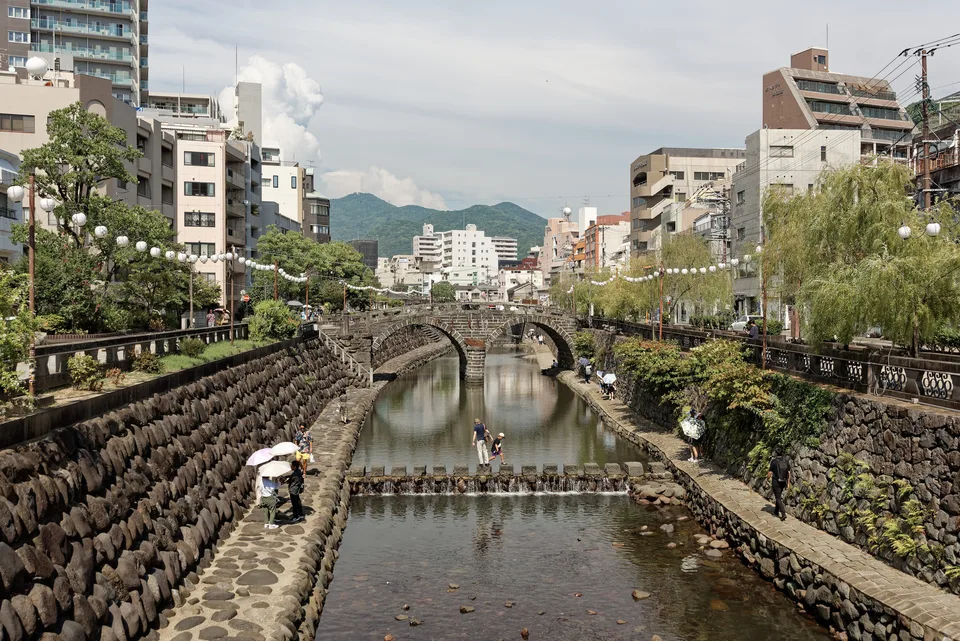
Meganebashi, the Spectacles Bridge, changes the scale after large museum visits. Its twin arches and reflections explain the familiar name. The city’s cultural-property account records the traditional association with construction in 1634 while acknowledging uncertainty in the surviving historical evidence. There is little need to turn that nuanced history into an absolute claim about the country’s first or oldest bridge.
Allow time to browse the surrounding streets and stop for a drink rather than simply collecting the bridge photograph. Riverside levels and steps need more care than the street-level view, especially in wet weather or with mobility needs. Water conditions also change the appearance of the reflections. A photograph of people close to the river is not an instruction to follow them when the level is higher; enjoy the bridge from a suitable public position for the conditions you encounter.
Save Mount Inasa for a clear evening
The harbour’s shape becomes easier to understand from a higher viewpoint, and Mount Inasa is a popular choice for seeing the city lights. Keep the evening flexible: mist or low cloud can remove much of the reason for paying to ascend. Check the operator’s service information before leaving the centre, including the final descent and the transport back from the lower station.
The Nagasaki Ropeway operator lists an ordinary return fare of ¥1,900, revised in April 2026. The ropeway and the separate Inasa Slope Car are different facilities, so confirm which route and ticket your plan involves. Do not assume a city tram pass includes either. A viewpoint visit also needs a weather-appropriate layer after dark, even when the daytime streets felt warm. If visibility is poor, an unhurried dinner is a better use of that evening than pursuing a guaranteed panoramic experience.
Arrive by airport bus or connecting trains
Nagasaki Airport’s official bus information distinguishes services via Shinchi and Nagasaki Station from those serving the Urakami corridor via Shōwamachi. The listed adult one-way fare to Shinchi or Nagasaki Station is ¥1,400. Choose the route for your accommodation and check the day’s departure information. Traffic can affect the arrival time, so avoid treating the bus timetable as a guaranteed airport-to-hotel appointment.
From Hakata, the rail journey requires a change at Takeo-onsen between a limited express and the Nishi Kyushu Shinkansen Kamome. JR Kyushu explains the same-platform connection, but this is not a through shinkansen ride from Fukuoka. Buy the appropriate tickets for the complete journey and check reservations and pass conditions separately. For a late arrival, compare the actual final connections before choosing the flight or train, including how you will reach the accommodation after leaving the station.
Use the tram system’s current rules
The tram is practical for many central visits. The operator’s current route map and riding instructions show routes 1, 3 and 5; route 4 is suspended. Ordinary fares are ¥150 for adults and ¥80 for children. A one-day pass costs ¥600 for an adult, while the mobile 24-hour product is ¥700. One covers the chosen calendar day; the other continues across midnight within its validity. Neither includes buses.
With cash, prepare the correct fare and pay when leaving. Cash payments do not qualify for transfer discounts. With supported IC or contactless payment, tap both when boarding and when alighting. Discounted transfers apply only to specified routes and interchange stops, normally within 30 minutes; they are not permission to stop anywhere and continue free. Use an individual card for each traveller when relying on transfer eligibility, and consult the operator’s diagram for the exact journey.
Eat the city’s trading connections
Champon and sara udon are practical introductions to Nagasaki’s food culture. The official cuisine guide describes champon as noodles cooked with a rich soup and mixed ingredients, commonly including vegetables, seafood and meat. Sara udon generally puts a thickened topping over noodles, with thin and thick variations. Neither name establishes that a dish is vegetarian, shellfish-free or suitable for a particular allergy.
Shinchi Chinatown offers a natural starting point, but compare menus and opening hours before choosing where to eat. A bowl piled with vegetables may still use meat stock. For something to take home, castella cake is associated with Nagasaki’s Portuguese-influenced food history. Check the ingredients, storage conditions and expiry date, especially if it will spend several days in luggage. These associations give useful direction without requiring an invented claim that one restaurant or shop is every resident’s favourite.
Book accommodation against the actual dates
Choose the room and cancellation terms together. A business hotel may suit a short visit near a transport corridor, while an apartment with laundry and cooking facilities can serve a longer stay. Check whether the advertised size includes enough usable space for luggage, and confirm the bed arrangement rather than assuming occupancy means separate beds.
For a hillside property, ask about steps from the street, vehicle access and the final route from the tram or bus. For a waterfront or station hotel, check the precise entrance and walking distance. Families and travellers requiring step-free access should obtain specific answers about lifts and bathrooms. Compare the full cost for your dates, including breakfast and any disclosed taxes or additional charges. Event periods and weekends can produce different availability from an ordinary weekday, so a citywide “typical room price” can obscure the decision you actually need to make.
Budget for selected experiences
Current tickets make a useful starting calculation. One ordinary adult admission each to Dejima, Glover Garden and Ōura Cathedral, plus the Atomic Bomb Museum, totals ¥3,600. A Mount Inasa ropeway return adds ¥1,900. These are separate purchases, not a city pass or an implied recommendation to fit everything into one day. The free National Peace Memorial Hall offers a different experience rather than a cheaper equivalent of the museum.
Add accommodation, meals and arrival transport for your own itinerary. An adult airport bus ride each way at the listed central fare totals ¥2,800, before local journeys. For only two or three tram rides, compare singles with a pass rather than buying one automatically. Keep some cash available for smaller purchases and places whose payment arrangements differ from major hotels. A workable budget acknowledges those differences instead of assuming every expense can be paid through one travel card.
Choose walking weather and keep a rain plan
Spring and autumn are sensible periods to consider for a visit dominated by hills and outdoor walks. The Japan Meteorological Agency’s Nagasaki normals for 1991–2020 show an average April temperature of 15.6°C and October average of 20°C. These monthly means describe a climate record, not the temperatures guaranteed during your trip.
June is markedly wetter in that record, with about 336mm of average monthly precipitation. August’s average daily maximum is 31.9°C, making long exposed walks less appealing than an early start and indoor breaks. Winter is relatively mild by Japanese standards, but January’s average daily minimum is around 4°C; pack for a cool evening viewpoint. Check current forecasts and official visitor alerts before excursions. Heavy weather can affect boats, trains and hillside facilities, so retain an indoor option rather than scheduling every day around a weather-dependent booking.
Spend three days in coherent areas
On day one, concentrate on the central harbour side: visit Dejima, have lunch around the central streets or Chinatown, and allow a short waterfront walk. Reserve the evening for Mount Inasa only if visibility and operating conditions justify it. On day two, go north for the Atomic Bomb Museum, National Peace Memorial Hall and the surrounding peace sites. Leave enough time for reflection and a quiet meal afterwards.
Use day three for Glover Garden and Ōura Cathedral, then choose a shorter neighbourhood walk or return toward Meganebashi if energy permits. Swap the outdoor-heavy day with the museum day when the forecast changes. With two days, choose between the fuller southern heritage visit and extra time elsewhere; combining every paid attraction into two crowded days diminishes the experience. Keep the last activity compatible with collecting luggage and reaching the onward bus or railway platform without rushing.
Treat a rental search as a separate project
For a move, the attractive view from a holiday room is only one part of choosing an address. Test the journey to the actual workplace or campus, including the uphill return with shopping. Ask whether the home has vehicle access, where rubbish is collected and how deliveries reach the entrance. These everyday questions matter more than a sweeping description of a desirable neighbourhood.
Use the national housing ministry’s resources for foreign tenants to understand the application and contract process. Request a written breakdown of initial rent, deposit, any non-refundable key money, agency charges, guarantee arrangements and insurance. Terms vary; a single advertised rent does not show the amount needed to move in. Inspect ventilation, heating and cooling, laundry arrangements and the property’s condition. Photograph the handover and clarify restoration and cleaning obligations, as well as the difference between a regular lease and a fixed-term agreement.
Arrange the household beyond the lease
The city’s guide for foreign residents and resident-service resources point toward registration, utilities, education, insurance and everyday administrative support. Confirm current documents with the relevant counter: an English guide may retain references to older procedures even when its general explanation remains helpful. The city’s moving digest also distinguishes starting and stopping water and sewerage service, rather than assuming a signed lease activates every utility.
Ask your employer or institution which health insurance arrangement applies. People outside workplace coverage may need National Health Insurance, subject to their circumstances; tourists should not assume they can use resident arrangements instead of travel cover. Families should investigate school placement and language support before finalising the housing search. For rubbish, obtain the schedule and sorting instructions for the actual address. Check mobile service, internet installation and banking requirements early enough that work or study does not begin before essential household access is arranged.
Separate a visit from work, study and residence
Check Japan’s official visa guidance against your nationality, place of residence and purpose. Visa exemption does not mean every visitor receives the same permitted stay. The Japan eVisa FAQ describes a tourism product, not permission to take employment or a substitute for a student route. A lease, property purchase or return ticket does not itself establish the status required for long-term residence.
Employment and longer study require the appropriate work or long-stay arrangements, often involving a Certificate of Eligibility before the visa application. Remote workers should examine the distinct Digital Nomad designated-activities route, with eligibility, income and insurance conditions. It permits a six-month stay without extension under that route; it should not be presented as permanent relocation. Confirm the permitted activities before making commitments, and treat tax, healthcare and eventual permanent residence as separate questions requiring their own assessment.
Consider a longer regional journey
If you want an additional excursion, the tour operator’s 2026 Gunkanjima leaflet explains tours to Hashima, the former mining island. Book with an operator, confirm the meeting point and read the landing conditions. Weather and safety standards can prevent landing even when the sea appears calm. There is no toilet on the island, footwear restrictions apply, and tours are not permission to explore abandoned buildings independently.
For a different pace, consider the Shimabara Peninsula and Unzen as a further base rather than another hurried central attraction. VisaWand’s Fukuoka and Kumamoto pages offer other locations to compare. Use the Japan country guide, Japan location directory and Japan destination page for their different planning purposes. The directory identifies places rather than guaranteeing a completed guide for each. For individual support, review consultant listings and confirm the service and fees directly before booking.
Official planning resources
Reviewed 28 October 2026. Use the official resources linked throughout this guide for admission, transport, housing and immigration decisions. Prices, services and rules can change; confirm the details relevant to your dates. Photography illustrates the locations and is not a live view.
View all official resources
- JNTO Nagasaki city overview
- Dejima operator visitor information and history
- Nagasaki Atomic Bomb Museum visitor admission
- National Peace Memorial Hall visitor information
- Glover Garden visitor guide
- Oura Cathedral visiting rules
- UNESCO Hidden Christian Sites
- City Meganebashi cultural property account
- Mount Inasa ropeway operator fares
- Nagasaki Airport bus information
- JR Kyushu Nishi Kyushu Shinkansen
- Tram operator March2026 map and instructions
- JNTO Nagasaki local food
- JMA Nagasaki1991–2020 normals
- JNTO Safety Tips alerts
- MLIT foreign resident rental housing support
- City foreign residents guide
- Nagasaki resident service resources
- City moving procedures digest
- MOFA Japan visa guidance
- MOFA Japan eVisa FAQ
- MOFA work and long stay categories
- MOFA Digital Nomad designated activities
- Gunkanjima Concierge2026 English tour leaflet
- JNTO Unzen and Shimabara
Plan the next part of your journey
Explore the Japan guide, browse other cities or compare consultants for your travel and relocation questions.