Visa
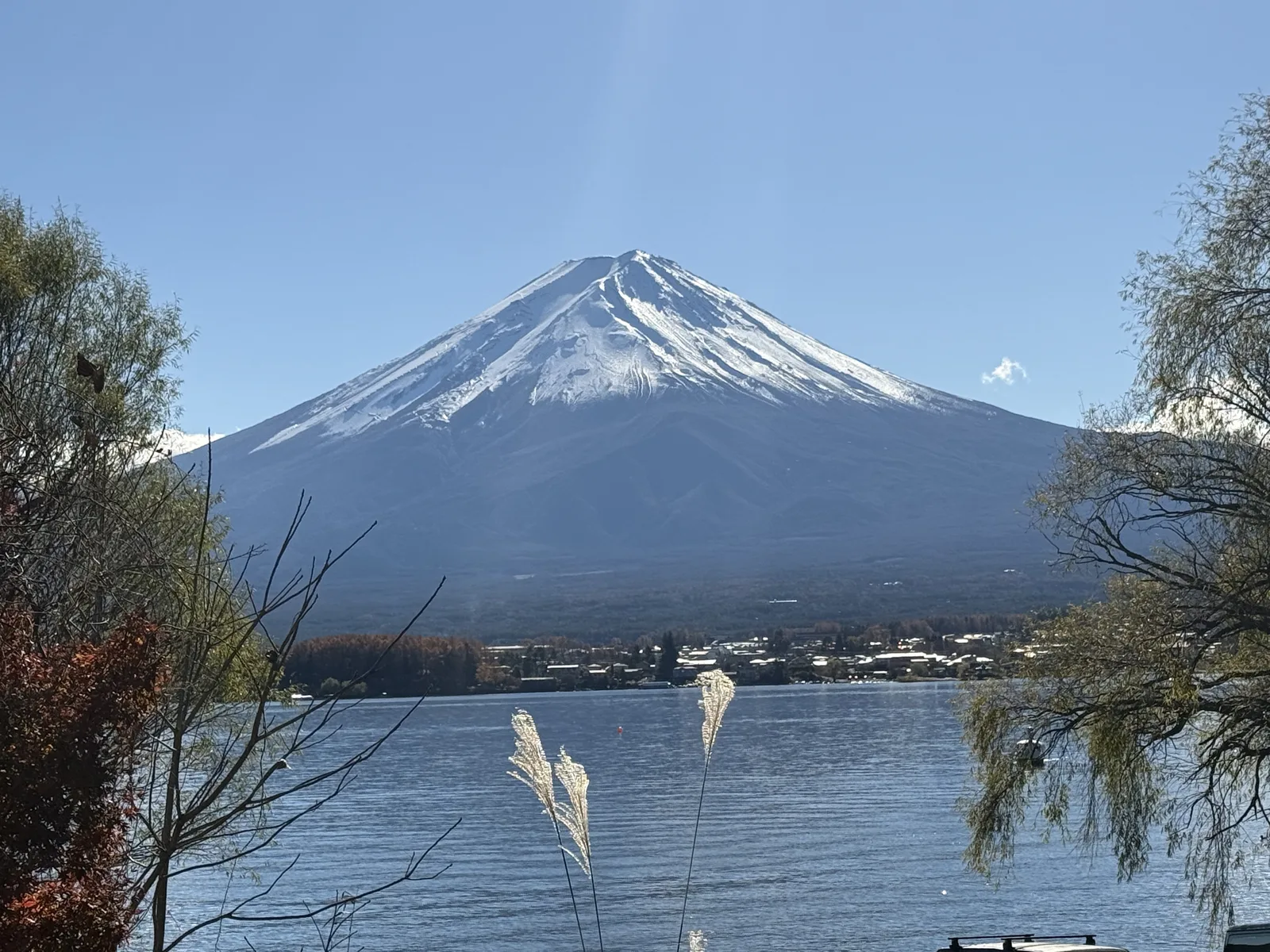
Come for Mount Fuji, stay for the lakes
Fujikawaguchiko rewards a little patience. Mount Fuji may dominate the horizon one moment and disappear behind clouds the next; the lake, museums and wooded surroundings still give you a day worth having. The strongest visit leaves room for both possibilities, rather than treating a single photograph as the entire purpose of the journey.
This is a lakeside town with several distinct areas, not a compact city where everything sits beside the railway station. A day trip can cover a small selection around Lake Kawaguchi. Staying overnight creates more opportunities to enjoy the shore and fit in an attraction without watching the return departure throughout lunch. Anyone considering a move should add a separate assessment of transport, winter conditions and everyday services.
Understand what the name covers
Fujikawaguchiko is in Yamanashi Prefecture on the northern side of Mount Fuji. The town includes Lake Kawaguchi, Lake Saiko, Lake Shoji and Lake Motosu. These four belong to the wider Fuji Five Lakes area; choosing accommodation at one does not place you within walking distance of every other lake.
The municipality’s geographical data lists Lake Kawaguchi’s shoreline at about 21 kilometres. That is useful perspective when a map makes the water look deceptively small. Select a manageable stretch rather than casually committing to a complete circuit. Use the VisaWand Japan location directory to orient yourself among destinations, and the Japan country guide for the wider trip. Check the full property address when comparing similarly named accommodation.
Choose your base by shore and station
Around Kawaguchiko Station, prioritise the convenience of arriving, leaving and catching onward transport. Funatsu and the southern shore suit plans that connect the lakefront with the station area. The eastern shore around Asagawa provides another practical focus for visitors interested in the ropeway and lakeside accommodation.
The northern shore combines lake views with access to museums and the Oishi area. It deserves its own allocation of time, rather than being treated as the continuation of a short station walk. Saiko, Shoji and Motosu call for a more deliberate transport plan. Before booking, draw your arrival route and evening return on the same map. A scenic address is only convenient if you can reach it with luggage and return after your chosen dinner or activity.
Look beyond the postcard mountain
Mount Fuji’s cultural importance helps explain why the landscape contains places of worship as well as viewpoints. The Fujisan World Heritage Center’s account explains its inscription as a cultural World Heritage site in 2013, reflecting religious traditions and artistic inspiration. The mountain’s influence on ukiyo-e and other art is part of the story, alongside its physical presence.
Give that context a place in your trip. Seeing an exhibition before returning to the shore can change what you notice in a familiar silhouette. The modern town itself emerged through a 2003 merger, as the municipality’s introduction records. Its visitor districts and quieter settlements therefore belong to a larger administrative community, rather than forming one purpose-built resort. Residents’ ordinary streets and services continue between the photographed places.
Make Oishi Park a landscape stop
Oishi Park is a useful reason to explore Lake Kawaguchi’s northern side. The tourism federation’s early-summer introduction describes lakeside lavender around late June to mid-July, with conditions determining the actual display. Treat flowering periods as seasonal guidance, not an appointment that the plants must keep.
Leave time to enjoy the water even when the summit is hidden. A reflection requires suitable conditions; a bright day alone does not guarantee still water. The federation’s 13 October 2026 traffic notice reports substantial congestion around the park’s roads and parking. It asks visitors to allow extra time and prohibits roadside or unauthorised parking at neighbouring businesses. Keep your onward reservation sufficiently flexible to accommodate the journey back, especially when another activity is the day’s priority.
Check the ropeway’s changing fares and closures
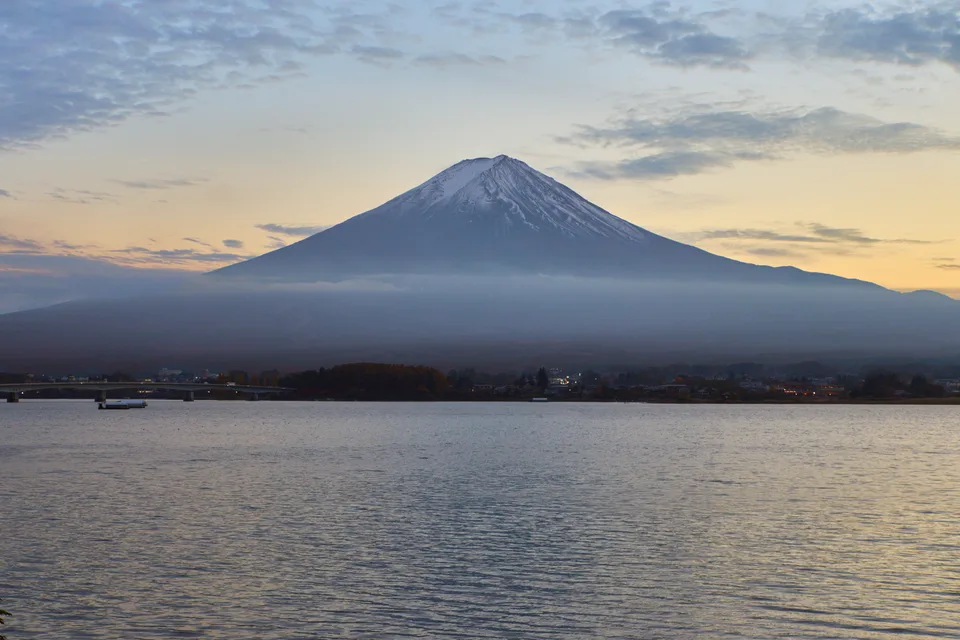
The Mount Fuji Panorama Ropeway takes visitors to a viewpoint at approximately 1,075 metres. Its published individual return fare is ¥1,000 for adults and ¥500 for children through October 2026. The operator’s current notice announces return fares of ¥1,200 and ¥600 from 1 November 2026.
Maintenance also affects planning. Shortened operation is announced for 21–22 October and 25–26 November, with the final ascent at 15:00 and descent at 15:20. A longer suspension is planned for 7–18 December 2026. Strong winds or other adverse conditions can interrupt operation. Check the day’s status before committing to the approach, and look at visibility before buying a ticket. Paying to gain height cannot guarantee a view through cloud.
Consider access before choosing a viewpoint
The ropeway’s visitor information lists stairs at both stations and says wheelchair movement is difficult. Anyone who needs step-free access should discuss their requirements directly with the operator before making it the centre of the day. A short gondola journey does not mean an entirely stair-free visit.
For a mixed-ability group, choose shared experiences that everyone can enjoy, then decide whether some people want an additional excursion. A lakeside stop may suit the party better than a rushed climb or a difficult station approach. Carrying a pushchair, managing small children and handling luggage also change what feels achievable. Leave bulky bags at an appropriate storage point or accommodation where arrangements have been confirmed, rather than planning every attraction around carrying them.
Give Itchiku Kubota’s work your attention
The Itchiku Kubota Art Museum’s exhibition hall presents the artist’s work within a distinctive timber building. Its displays include the Koukyou series and works taking Fuji as their subject, with the selection changing during the year. This is a reason to look closely at textiles and artistic technique, rather than simply another place to photograph the mountain.
The museum’s visitor information lists adult admission at ¥1,500, university and high-school students at ¥900, and elementary and junior-high pupils at ¥400. April–November hours are 10:00–17:00, last admission 16:30; December–March closes half an hour earlier. Consult the opening calendar for your date. Individual visitors do not normally need reservations, while parties arriving by bus or minibus must arrange their visit in advance.
Use the heritage centre for context
The Yamanashi Prefectural Fujisan World Heritage Center in Funatsu provides free admission and an opportunity to understand the mountain before deciding how to explore its surroundings. It is a particularly useful alternative when cloud makes a distant viewpoint less rewarding. Check current opening arrangements, including the South Hall’s maintenance closures, before travelling specifically to visit.
Do not confuse this centre with the similarly named institution in Shizuoka Prefecture. Save the address together with the name when mapping your route. If different members of your group have different interests, choose a question to investigate: why the mountain became sacred, how its image travelled through art, or how communities have lived around it. That makes an indoor visit part of the journey rather than merely a place to wait out rain.
Understand what was rebuilt at Nenba
Saiko Iyashi-no-Sato Nenba’s history records the destruction of the earlier settlement by a debris flow in September 1966. The present heritage attraction opened in 2006, centred on reconstructed thatched houses. It offers an interpretation of local buildings and traditions; describing it as an untouched ancient village would miss the event that shaped the place.
The published admission charge is ¥500 for high-school-age visitors and older, and ¥250 for elementary and junior-high children. March–November hours are 09:00–17:00; December–February operates 09:30–16:30, with final entry half an hour before closing. Temporary closures remain possible. Allow time to look at the buildings and any craft activity you choose, checking its separate conditions instead of assuming every experience is included in admission.
Leave room for the western lakes
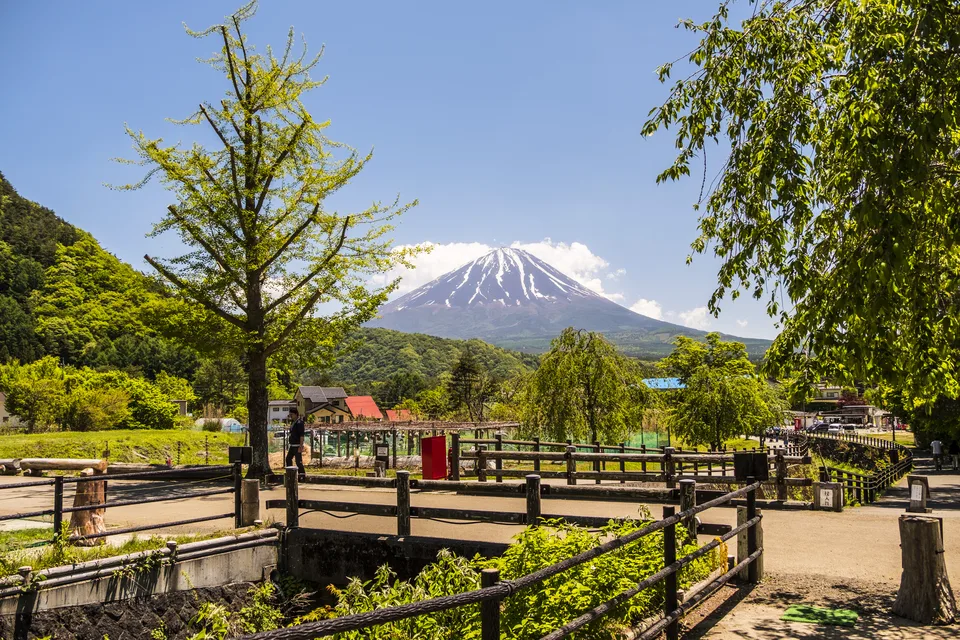
Saiko, Shoji and Motosu give you reasons to extend the visit beyond Lake Kawaguchi. Choose one according to what you want to do and how you will return. A shore walk, an organised activity and a photographic stop demand different amounts of time; attempting all three at several lakes can turn the outing into a sequence of departures.
The tourism federation’s four-lake introduction provides a starting point for comparing their settings. Confirm the exact meeting place for any activity with its operator. Being at the right lake is insufficient if the launch point is on another shore. For a quiet visit, carry what you need for the planned interval and establish where you can obtain food, use facilities and reconnect with transport before leaving the bus.
Decide what accommodation must do for you
Compare a station-oriented hotel, a lakeside property and a more secluded stay against the same practical questions. What is the final arrival connection? Is dinner available when you expect to reach the property? Can you leave before breakfast for a planned departure, and what happens if your bus arrives late?
A room advertised with a Fuji view should be assessed by its actual category and description; a photograph on the hotel homepage may represent a particular room or public area. Visibility remains weather-dependent. Check bed arrangements, bathrooms, stairs or lifts, occupancy limits and cancellation terms. For a self-catering stay, confirm cooking equipment and food-shopping access. A lower room price may offer limited savings if it creates transfers or meals that were not in your original budget.
Read the details of a ryokan stay
A ryokan can make the overnight stay part of the experience, particularly when you want an evening meal and time at the property. Compare meal-inclusive and room-only offers carefully. Confirm dinner times and dietary requirements before booking; arriving after the agreed meal window is a different problem from checking into a hotel that only provides a room.
Bathing arrangements also vary by property. Ask whether the bath is shared, private, reservable or attached to the room, and establish any relevant admission rules directly. Neither the word “onsen” nor a photograph establishes that every guest can use every facility. Travelling companions should agree on these details before paying. Consider whether you will actually have time to enjoy the facilities between arrival and the following morning’s departure.
Compare the Shinjuku bus with the train
The official Shinjuku–Kawaguchiko highway-bus page lists a standard adult fare of ¥2,200, with ¥2,000 available through its stated online-payment discount. Seats are reserved. Secure both directions when your dates are fixed, rather than assuming an outward ticket also solves the journey home.
Road traffic can affect timing, so leave a margin before an onward train, appointment or flight. Identify the boarding terminal and collection requirements associated with the ticket you buy. A fare comparison should include reaching the departure point in Tokyo and continuing from Kawaguchiko Station to your accommodation. The cheapest headline ticket may be less useful if it leaves you with a difficult final transfer, especially after a long international journey or with several children and bags.
Book the railway product you actually need
The Fujikyu Railway’s limited-express information explains the direct Fuji Excursion connection with Shinjuku and links to Ekinet reservations. Reserving a seat gives you a clearer journey plan than relying on space on a popular departure. Make sure your purchase covers the required basic fare and limited-express elements for the complete journey.
An alternative is to travel through Otsuki and change between JR and Fujikyu services. Check the dated timetable and transfer rather than inferring a regular connection from a general map. Rail passes have individual conditions: verify the exact product’s coverage before assuming the Fujikyu section is included. Keep the confirmation accessible offline, and ensure everyone understands which departure and carriage belong to the booking before arriving at a busy platform.
Allow enough time from the airport
The Haneda Airport–Kawaguchiko bus operator lists an adult airport fare of ¥3,300. Its lower ¥2,300 headline starting fare applies to Shinagawa, not Haneda. The service uses specified-departure reservations; travellers without a reservation can board only if space remains. The published airport journey is approximately two hours 50 minutes, subject to road conditions.
Leave a realistic interval for immigration, baggage collection and reaching the correct terminal stop. For Narita, compare a dated itinerary into Tokyo with the onward train or bus instead of assuming a frequent direct airport connection. If a late arrival makes the final stage uncertain, consider spending the first night near your arrival route. A separate hotel night can be easier to manage than risking a missed rural connection.
Use the local bus map before buying a pass
The Fujikyu sightseeing-bus information (source unavailable) distinguishes the Red Line around Kawaguchiko, Green Line towards Saiko, and Blue Line serving the Narusawa, Shoji and Motosu direction. Its published Kawaguchiko–Saiko–Motosuko coupon costs ¥1,500 for an adult one-day ticket or ¥2,000 for two days; child prices are ¥750 and ¥1,000.
Compare the covered network with the journeys you actually intend to make. These products should not be treated as unlimited access to every railway, highway coach or mountain service. Read the stop name, direction and last useful return together. On a day involving the western lakes, establish the return first and build your visits around it. Leave room for delays rather than selecting the last possible connection at each stage.
Eat locally without relying on a “best” list
The federation’s local-food introduction highlights hoto: flat wheat noodles cooked with vegetables in a miso-based broth. It is a useful dish to look for when you want a substantial meal associated with Yamanashi. Ingredients and preparation differ, so confirm stocks and sauces if you have dietary restrictions; vegetables in the bowl do not establish that the entire dish is vegetarian.
The same source identifies produce-shopping stops such as Michi-no-Eki Katsuyama and Kawaguchiko Base. Choose purchases around your luggage and onward journey, particularly for food needing refrigeration. For restaurant decisions, compare the current menu, opening hours and the time you have available. A leisurely sit-down meal fits differently from lunch between two bus departures, and an accommodation dinner may already cover the evening.
Build a budget around your dates
Start with the actual room quote and return transport, then add only the activities you want. At current published prices, the museum, reconstructed village and ropeway each contribute a different amount; buying all three makes sense only if you have time and interest. Leave an allowance for meals, local travel and any separately charged workshop.
For stays extending into 2027, read the town’s accommodation-tax announcement. It records national approval and a planned collection start of 1 April 2027. Ask the property how applicable taxes and other charges appear in your dated quotation. Comparing the final payable amount is more useful than comparing an attractive nightly headline. Keep a small contingency for changed transport or weather-dependent plans rather than spending the whole budget on advance tickets.
Choose a season and keep a weather alternative
The town’s environment information emphasises the contrast between relatively cool summer conditions and harsh winter weather. Pack for the lakeside stay rather than assuming Tokyo clothing will suit every hour outside. Winter plans need particular attention to cold, snow conditions and transport; a clear mountain photograph does not show how the roads felt that morning.
Flowering, autumn colour and snow cover vary from year to year. Choose a season for the experiences you want, then confirm current conditions closer to departure. Keep one indoor option and let visibility decide when to prioritise the shore. For driving, ask the rental operator about suitable equipment and requirements for the dated route. A previous visitor’s clear-road experience cannot establish conditions for your own journey.
Keep summit climbing separate from sightseeing
The official Mount Fuji climbing website states that the 2026 climbing season has ended and identifies the closed summit trails. An autumn stay beside the lake is therefore not an opportunity to add an ordinary summit hike. A sightseeing journey towards the mountain and permission to continue on a climbing trail are separate matters.
For a future climbing trip, use the next season’s published rules, reservations, fees and facility dates when available. Do not carry forward an older year’s arrangements as a promise. Check mountain access and road operation separately from your accommodation booking. If your interest is the view rather than an ascent, keep the itinerary focused on lakeside places and open attractions that match the conditions and your party’s abilities.
A realistic two-day introduction
On day one, arrive at Kawaguchiko Station, leave luggage under confirmed arrangements and choose a northern-shore visit. Combine Oishi Park with the Itchiku Kubota Art Museum if its opening calendar suits. Return with time for check-in and dinner. Add the ropeway only when its operation, visibility and the remaining time justify it.
On day two, choose either Saiko Iyashi-no-Sato Nenba and a modest Saiko outing, or a slower Lake Kawaguchi day including the heritage centre. Shoji or Motosu can replace that excursion when you have a suitable transport plan. Avoid squeezing all four lakes into the interval before a reserved Tokyo departure. With one day, select one shore area and one substantial attraction, retaining a meal break and a comfortable return margin.
Test everyday life before committing to a move
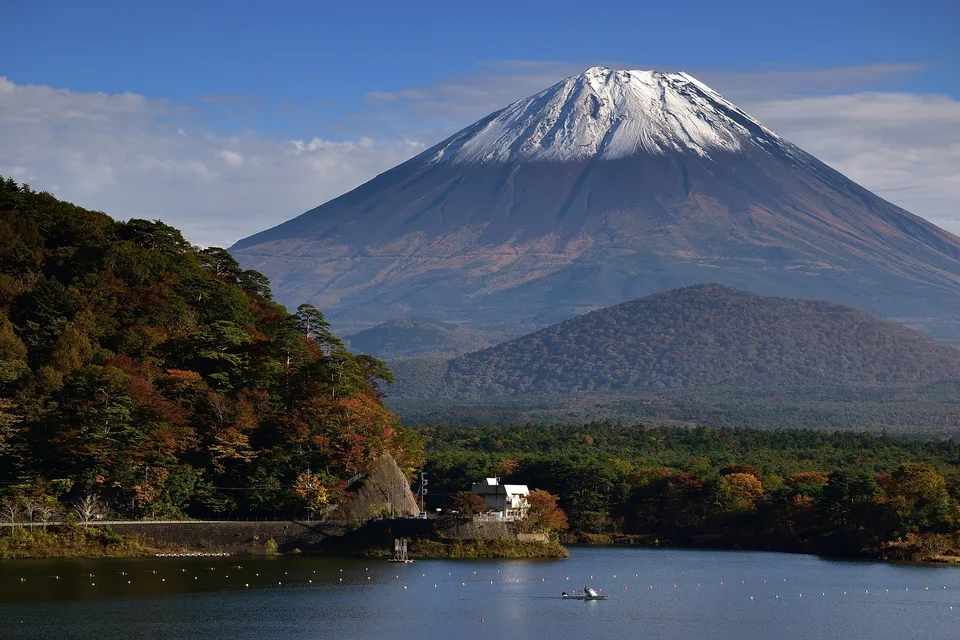
For a potential home, start with work or study and test the actual journey at the required time. A successful holiday bus connection does not demonstrate a workable daily commute. Include groceries, healthcare access and winter travel in the same assessment, along with the cost of any vehicle you would need.
The town’s relocation portal offers practical starting points, including a weekday daytime introduction to local facilities. Use it to identify questions about specific addresses. The municipal vacant-house bank requires registration and is aimed at people moving into the town; the town provides information but does not broker the rental contract. Availability varies. Inspect heating, insulation, internet service, equipment and initial costs before treating a rural property as an affordable solution.
Set up services and establish your lawful status
The town’s household-services directory links schools, childcare and a district-based waste calendar. Confirm water arrangements and the correct municipal procedures for your circumstances. The Yamanashi foreign-resident consultation service offers free help with everyday-life questions, including work and family matters; check language availability before travelling to its Kofu office.
For a visit, consult Japan’s official visa-exemption conditions. Employment and enrolment require their own assessment through the working-visa and student-visa resources. The long-stay overview helps identify categories; permanent residence is a separate matter. Neither a rental agreement nor local relocation support grants immigration permission. Use VisaWand’s Japan destination page and consultant listings for professional assistance. If considering a city base instead, compare the Tokyo guide before deciding how this lakeside stay fits your wider plans.
Official planning resources
Reviewed 16 October 2026. Use the official resources linked throughout this guide for admission, transport, housing and immigration decisions. Prices, services and rules can change; confirm the details relevant to your dates. Photography illustrates the locations and is not a live view.
View all official resources
- Town: geographical data
- Fujisan World Heritage Center: cultural significance
- Town: relocation information
- Tourism federation: Oishi Park in early summer
- Tourism federation: Oishi Park traffic notice
- Mt Fuji Panorama Ropeway: tickets and access
- Ropeway: current operating notices
- Itchiku Kubota Art Museum: exhibition hall
- Itchiku Kubota Art Museum: admission and hours
- Yamanashi Prefectural Fujisan World Heritage Center
- Saiko Iyashi-no-Sato Nenba: history
- Saiko Iyashi-no-Sato Nenba: admission
- Tourism federation: four lakes
- Fujikyu Bus: Shinjuku–Kawaguchiko
- Fujikyu Railway: limited express
- Fujikyu Bus: Haneda Airport connection
- Fujikyu Bus: sightseeing routes and tickets (source unavailable)
- Tourism federation: local food
- Town: accommodation tax approval
- Town: climate and environment
- Official Mount Fuji climbing information
- Town: vacant-house rental bank
- Town: services and household information
- Yamanashi Prefecture: foreign resident consultation support
- Japan foreign ministry: short-stay visa exemptions
- Japan foreign ministry: working visas and Certificates of Eligibility
- Japan foreign ministry: student visa
- Japan foreign ministry: work and long-term visas
Plan the next part of your journey
Explore the Japan guide, browse other cities or compare consultants for your travel and relocation questions.