Visa
Stay long enough to see Verona beyond its famous balcony
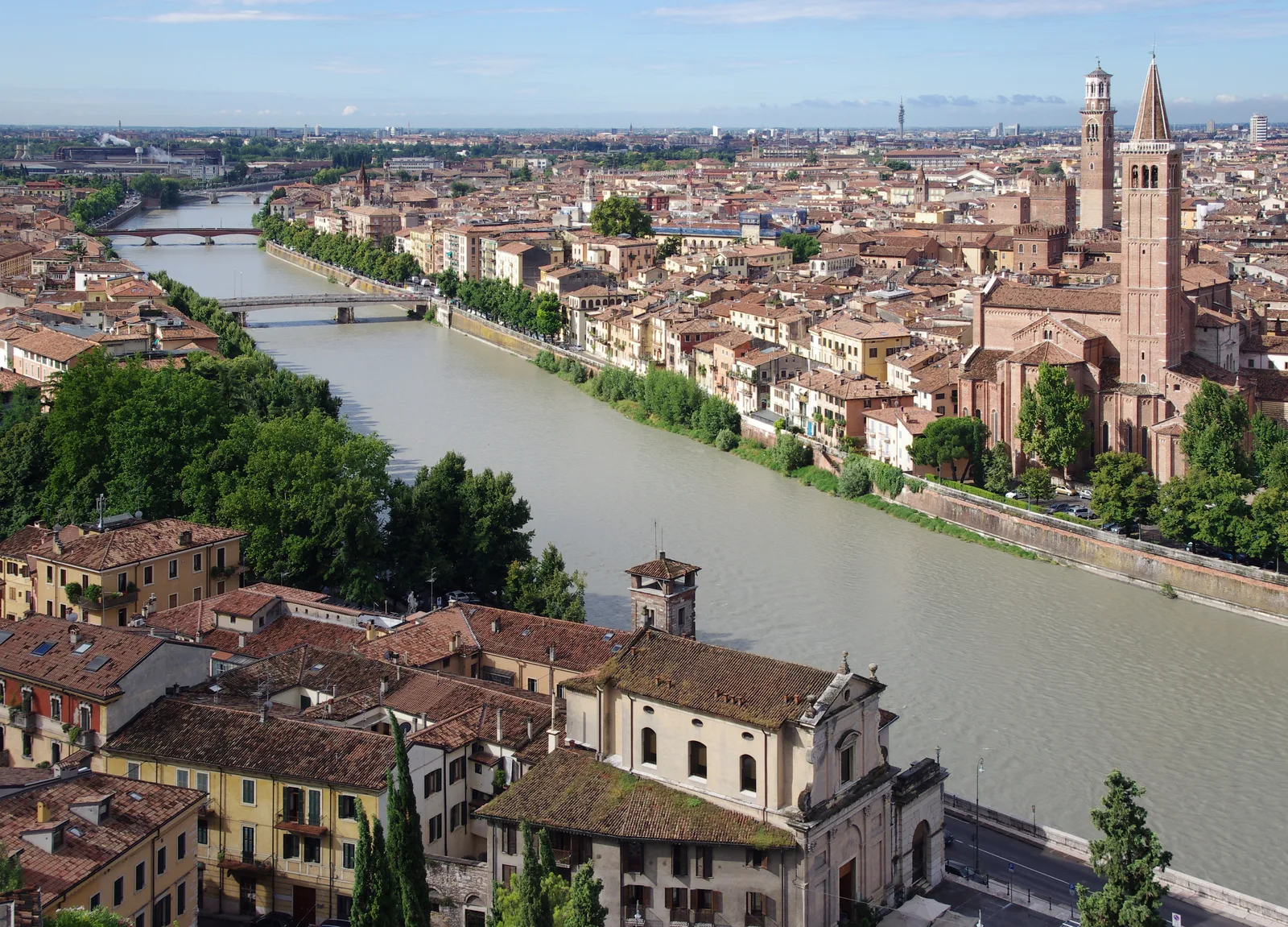
Verona rewards a visit built around the river as much as its celebrated monuments. Within the Adige's curve, Roman masonry, medieval towers and busy shopping streets fit into a centre that is manageable on foot. Across the water, the ground rises towards viewpoints and quieter paths. A day trip can introduce the city, but two or three nights allow a museum, a hill walk and dinner without fitting everything between trains.
The official VisitVerona portal is the place to check events and visitor updates. Use VisaWand's Italy country guide for the wider journey. Verona suits travellers interested in architecture, art and performance, while prospective residents should also investigate their particular workplace, campus and housing options. A convenient sightseeing base and a practical home may occupy different parts of the city.
Read the history in the shape of the city
The UNESCO-listed City of Verona, inscribed in 2000, preserves successive periods of development rather than one uniform historic style. Roman remains include the Arena, gates and theatre; the Scaliger rulers left a strong medieval presence, followed by centuries under Venice. The Adige and defensive structures help explain why routes, crossings and viewpoints matter as much as individual façades. Follow the transitions on foot instead of treating each monument as an isolated stop.
The city's literary fame needs a different reading. Visiting the house associated with Juliet can be enjoyable without treating the setting as proof that Shakespeare's fictional characters lived there. Churches, civic collections and river walks offer plenty for visitors with little interest in the balcony.
Match the neighbourhood to your stay
Around Piazza Bra and the Arena, accommodation works well for central sightseeing and an evening performance. Near Piazza delle Erbe and Piazza dei Signori, the older core puts many walks on your doorstep, but ask about the room's exposure to street activity. A courtyard-facing bedroom and one above a busy restaurant can produce different stays at the same address. Check the final pedestrian route if you are arriving with luggage.
Veronetta, across the Adige, combines historic streets, university activity and access towards the hills. Choose it for the places you intend to use rather than an assumption that crossing the river guarantees cheaper or quieter rooms. San Zeno offers another base for visitors interested in its basilica and neighbourhood walks. The Porta Nuova station area can simplify early departures and excursions, but compare the walk or bus connection into the centre before deciding that station proximity outweighs everything else.
Choose a room that works at night and on arrival
Hotels, guesthouses, hostels and apartments suit different needs. For a short stay with a late arrival, dependable reception or clear self-check-in instructions may matter more than a kitchen. For a longer visit, laundry, cooking equipment and a comfortable place to work deserve attention. In older properties, establish the floor, lift dimensions and any remaining steps. Ask for the complete entrance route if accessibility is essential.
Compare the final charge after accommodation tax, cleaning fees, breakfast and cancellation terms. Confirm cooling for hot weather and heating for winter. If attending a performance, check the return route and late access to the property.
Arrive through the airport or the correct railway station
Verona Porta Nuova is the principal rail arrival point for many visitors. Search Trenitalia's current departures for the station and service you need, allowing time to find the onward bus or walk to your accommodation. A booking displaying Verona is not enough detail for a tightly timed connection.
The airport's transport information identifies the Airlink connection with Porta Nuova. On ATV's current airport-bus page, the single fare is €7, valid for seventy-five minutes from validation and usable on Verona's urban buses within that period. That can cover a useful onward connection from the station. The operator describes an approximately fifteen-minute airport–station journey, but waiting and traffic sit outside that estimate. Online single tickets are tied to the requested day; verify their conditions before buying. Check the current timetable for an early flight rather than assuming round-the-clock service.
Buy urban transport for the trips you will actually make
For many visitors, walking does most of the work once they reach the centre. Buses help with station transfers, outer accommodation and tired legs. ATV's urban fare page lists a €1.50 ordinary ticket valid for ninety minutes, with the journey completed within that time. Buying from the driver costs €2. Validate every time you board, including when changing buses; keep the ticket available for inspection.
The urban day ticket costs €5 and runs for twenty-four hours from validation. It differs from the €11 entire-network day product, which includes the airport service and provincial routes. Read the coverage before choosing: a cheap urban ticket does not automatically include Lake Garda or the airport. Use ATV's route and timetable information to distinguish weekday, Sunday and evening journeys. With app tickets, follow the product's activation instructions before relying on the purchase screen as evidence of a valid journey.
Understand the traffic restrictions before driving in
The municipality's ZTL information sets out the limited traffic zone, maps and permission arrangements. Consult it before following navigation towards a central hotel. A reservation or parking space is not, by itself, proof that your vehicle may pass a restricted entrance. Ask the property precisely how authorised access is arranged and which route to use, then follow current signs.
Compare leaving the car at an appropriate car park with bringing it to every stop, checking tariffs and opening times. Prospective residents need a separate assessment of parking rights, commuting and vehicle formalities.
Separate the Arena visit from the evening performance
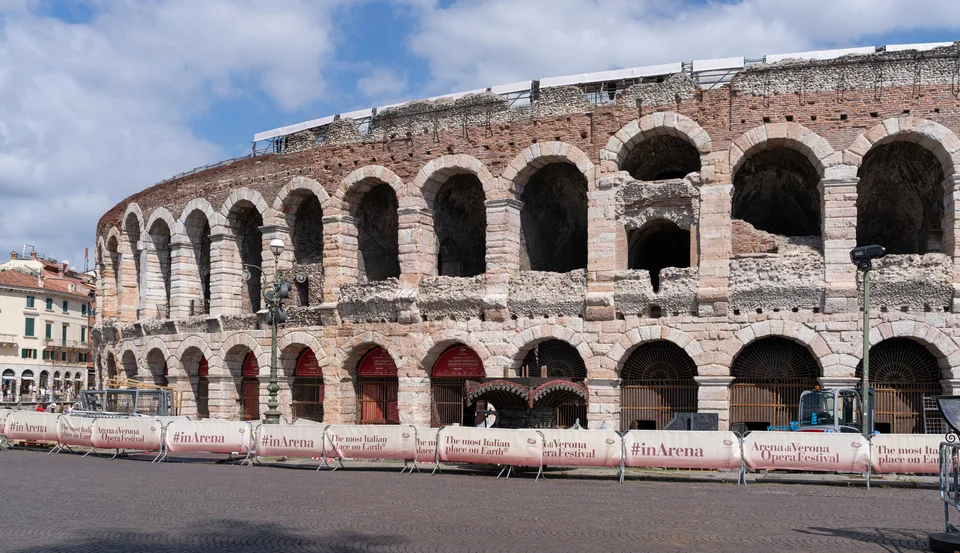
The Arena's exterior gives Piazza Bra its scale, but a daytime visit and an opera night are different experiences. The municipal sightseeing page lists standard admission at €12, normally Tuesday–Sunday from 9 a.m. to 7 p.m., with Monday closure and calendar exceptions. Shows and preparations can shorten visitor access. Check the actual day before arranging other bookings around an assumed late-afternoon entry.
For online civic-museum tickets, follow the official October 2026 ticketing notice to the current seller. For a performance, use Fondazione Arena's programme and conditions, choosing seats, access and the event itself deliberately. A monument ticket does not buy an opera seat, and a city pass should not be treated as a performance ticket. Outdoor events also require attention to weather and cancellation rules. Travellers needing assistance should arrange it through the appropriate booking channel before choosing seats.
Walk the squares before climbing Torre dei Lamberti
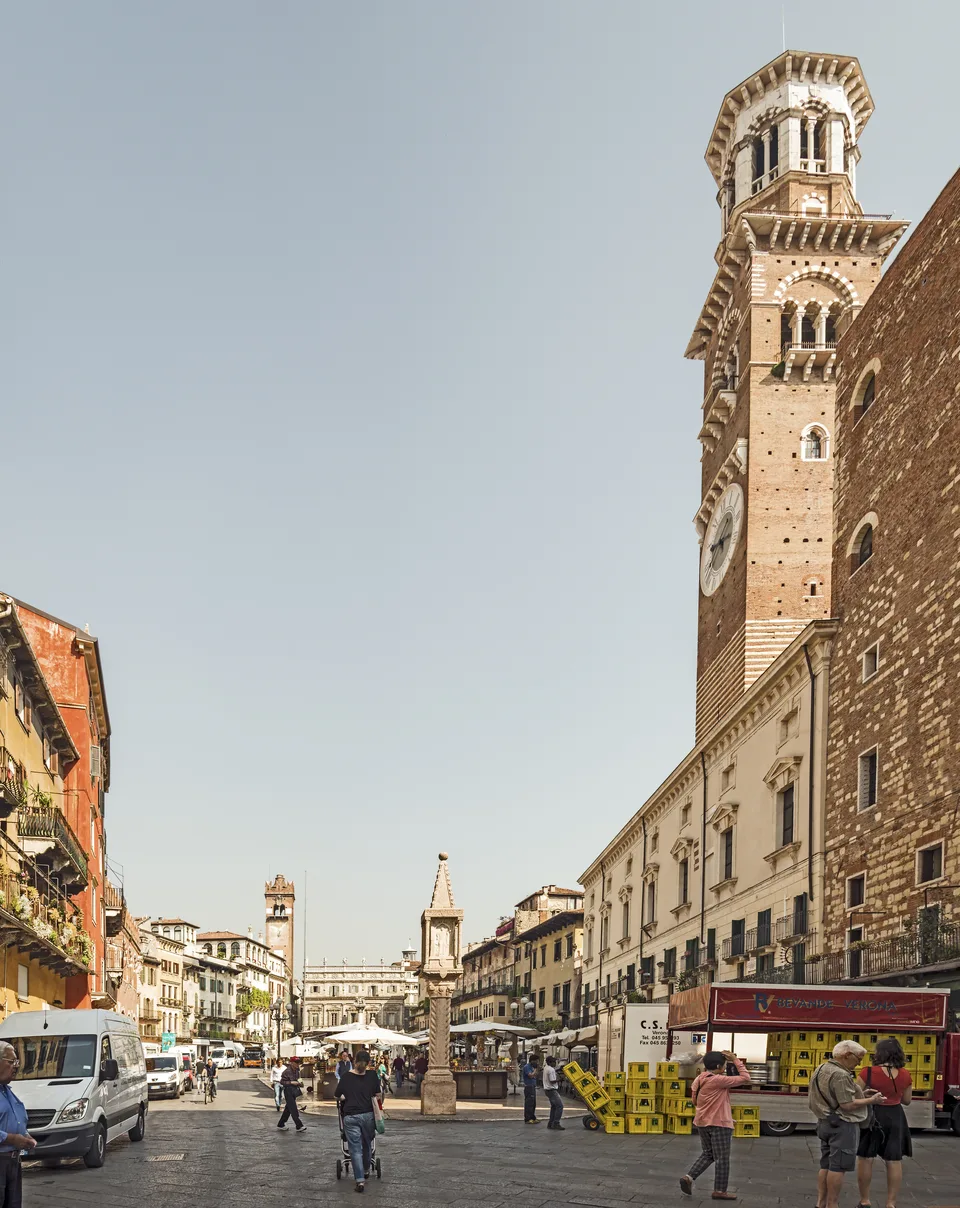
From Piazza Bra, make your way towards Piazza delle Erbe, where market activity and civic buildings sit within the area of the Roman forum. Continue to Piazza dei Signori and the surrounding lanes rather than stopping only for a photograph of the market stalls. Look upwards as well as at the shopfronts: façades, towers and changing rooflines explain much of Verona's character. Leave time for a coffee or a shorter return route along the river.
The Torre dei Lamberti ticket page lists standard entry at €6 and recommends booking. It offers another perspective on the compact centre, but check the physical route before assuming that a lift removes every access barrier. VeronaCard holders pay an additional €1 to use the lift. If climbing does not suit your group, the squares remain worthwhile at ground level; there is no need to make a tower visit the condition for enjoying this part of town.
Reserve Juliet's courtyard through the new entrance
Under the current Juliet's House visitor rules, entry is through Teatro Nuovo in Piazzetta Navona, with a one-way route leaving through Via Cappello 23. The theatre-and-courtyard option costs €5; the full route including the house costs €12. Both require an online reservation, including for VeronaCard holders and other visitors entitled to free admission. There is no on-site ticket sale, so arriving at the old entrance expecting a free courtyard visit will not work.
The usual timetable is Monday afternoon and Tuesday–Sunday daytime, with holiday and theatre-event exceptions. Consult the available slots rather than an old street guide. The courtyard has strongly uneven stone paving, and access inside the house is limited for visitors with reduced mobility. Check the precise arrangements before committing. Treat the visit as an interpretation of Verona's literary association, then leave time to see the city beyond its most crowded romantic landmark.
Give Castelvecchio time as an art museum
Castelvecchio's collections span medieval and Renaissance art and later works, while the museum's restoration and display design connect Carlo Scarpa with director Licisco Magagnato. The setting is part of the experience, not simply a fortified shell around paintings. Allow a substantial session to look at the relationship between works, supports, windows and the building, then take a break outside rather than scheduling another long interior immediately afterwards.
The museum's current visitor page lists standard admission at €9, normally Tuesday–Sunday, 10 a.m.–6 p.m., with last entry at 5.15 p.m. and Monday closure except specified dates. Check temporary notices and accessibility separately. The civic museums changed their online ticketing operator on 1 October 2026; follow the current museum link rather than an older saved reseller address. A walk towards the adjoining fortified bridge can complement the collection without turning the whole afternoon into a sequence of admissions.
Choose churches for their art, not just their number
At San Zeno, Romanesque architecture, the bronze door panels and Mantegna's altarpiece provide a focused reason to go beyond the busiest central streets. Examine a few details slowly rather than trying to see every church before lunch. The basilica is an active religious building, and visitor access changes around services. Sunday sightseeing hours differ from ordinary weekdays, so check the current calendar if you are organising a short stay.
Chiese Vive's admission options cover San Zeno, the cathedral complex, Sant'Anastasia and San Fermo. A single-church ticket costs €4; the four-church route costs €8 and can be completed within ninety days. Audio guides carry additional charges. This is a useful comparison if you want several of those particular churches, rather than a reason to add unwanted stops. VeronaCard also includes their admission, subject to the relevant access arrangements.
Cross Ponte Pietra and decide how to reach the viewpoint
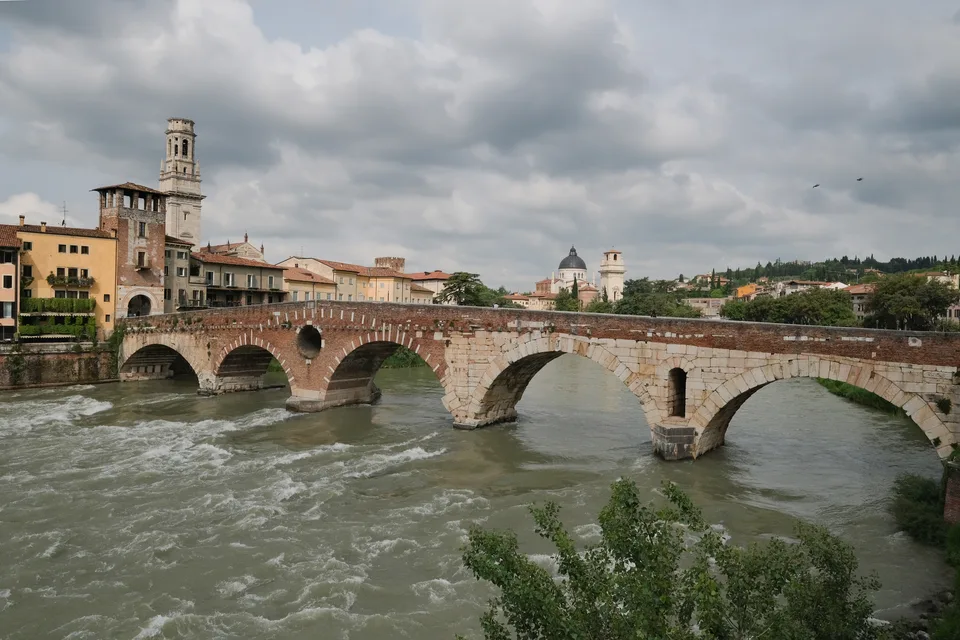
Ponte Pietra connects the river walk with the rising ground near Castel San Pietro. The crossing helps make sense of Verona's setting: the bend in the Adige, dense roofs on one bank and the hillside on the other. Pause without blocking people using the bridge, then decide whether you want the ascent or a shorter walk through the streets below. Uneven surfaces, steps and weather deserve attention when choosing the route.
The Castel San Pietro funicular costs €3 return or €2 one way at the standard rate. Published hours are 10 a.m.–9 p.m. from April to October and 10 a.m.–5 p.m. from November to March, with Christmas Day and New Year's Day closures. It is outside VeronaCard. Check the final route to your intended viewing point if mobility is limited, and plan the descent before staying for evening light. A viewpoint outing can be worthwhile without expecting access inside the castle building.
Consider a garden as an alternative afternoon
Giardino Giusti's own visitor page offers another option on the opposite bank, useful when you want to balance civic interiors with an outdoor visit. Standard admission is €14; VeronaCard holders pay €10, rather than receiving free entry. Consult the garden's latest calendar and notices before going, particularly if this is your main plan for a limited afternoon. Special closures and seasonal hours matter more than a general statement that a garden opens all year.
Compare VeronaCard with separate tickets
The municipality's September 2026 changes introduced digital VeronaCard options and revised prices. With urban ATV transport, the card costs €33 for twenty-four hours or €38 for forty-eight. The version without transport costs €29 or €32 respectively. Compare the admissions you intend to use, their opening days and the available reservations before choosing a duration.
The current card conditions distinguish activation: physical cards begin at first use, while digital cards need manual activation in the wallet at actual first use. Admission is normally once per participating site. Airport and extraurban buses, the funicular and the Lamberti lift supplement are excluded. Reservations still matter at Juliet's House. Calculate savings against your own choices; fitting several visits into the validity window should not require rushing through places you came to appreciate.
Eat through rice dishes and regional produce
Verona's official food overview highlights Vialone Nano rice from the surrounding plains, prepared in risotto with different seasonal ingredients. That gives a meal a more specific connection to the region than choosing only familiar dishes. Gnocchi, local cheeses and traditional sauces broaden the options. Ask how a dish is made: broth, meat, cheese and wine can affect whether an apparently simple preparation meets dietary requirements.
Compare menus and any cover charge before sitting down, and check whether a risotto has a minimum order or preparation time. A bakery breakfast or grocery lunch can leave room for a longer dinner. For wine, choose a glass or tasting that fits your interest rather than assuming every regional label comes from the immediate city. If driving, arrange a suitable alternative before a tasting. Food shopping also needs a storage and onward-travel plan, especially for chilled purchases.
Budget around bookings and your actual travel dates
Separate tickets make useful comparisons possible: Arena admission at €12, Castelvecchio at €9 and an urban day ticket at €5 total €26 before food and accommodation. That example excludes Juliet's House, churches and other paid visits, and does not claim to be an average daily budget. Compare it with the appropriate card only after deciding what you want to see.
Choose a season with room for the weather
For long city walks, spring and autumn are useful starting points, with an indoor alternative for rain. Summer visitors should pace exposed walks, carry water and confirm bedroom cooling. Anyone travelling principally for opera should choose the performance first, then plan sightseeing around its date. Winter can suit churches and museums, but requires attention to heating, daylight and reduced outdoor opening hours.
Use ARPAV's official forecasts near your arrival rather than treating seasonal expectations as a promise. Heat, rain and visibility can change whether a tower or hill outing is enjoyable. Keep waterproof footwear and a flexible half-day in mind. A cold or wet afternoon is a good reason to spend longer with a collection, while a clear spell may suit the river and viewpoint. Check each attraction's calendar alongside the weather, particularly on Mondays.
A realistic three-day plan
Day one: begin around Piazza Bra, visit the Arena if the day's access permits, then walk towards Piazza delle Erbe and Piazza dei Signori. Arrange Juliet's House around the slot you actually booked, or omit it if the literary association is not a priority. Finish with a river walk and dinner near your accommodation rather than another cross-city appointment.
Day two: give Castelvecchio a substantial morning or afternoon, then continue towards San Zeno and its basilica if the visiting hours align. Leave a break between interiors. If a performance is planned for the evening, keep time to eat, return to your room and reach the correct entrance. A daytime admission is not a substitute for preparing for the evening event.
Day three: cross Ponte Pietra and visit the Castel San Pietro viewpoint, choosing the ascent and descent deliberately. Add Veronetta or Giardino Giusti if it fits your interests and conditions. With only two days, select the church, garden or viewpoint you most want rather than retaining all three. Add a Lake Garda excursion as extra time when possible, preserving enough of Verona to make the stay worthwhile.
Test a home against your work or study routine
For a move, the first decision is the commute. Confirm your workplace or teaching building, then test journeys at the time you will use them, including the final walk and evening return. An attractive historic-centre flat may bring noise or access constraints; an outer address may offer different space but a transport commitment. Compare groceries, laundry, pharmacies, childcare and the services your household actually needs.
Inspect heating, cooling, ventilation, appliances and internet arrangements. Establish the rent, deposit, condominium costs, utility responsibilities, agent's fee and notice terms in writing. Verify who is authorised to let the property and the appropriate contract registration before paying. Separate initial costs from the monthly total. In a shared flat, distinguish a private bedroom from a bed in a shared room and ask how bills and common areas are managed.
Arrange housing support and essential paperwork separately
The university's Welcome Office describes accommodation support for international students and visitors, including ESU residences and private flats. ESU's current accommodation applications have their own eligibility requirements and deadlines; admission to a course does not guarantee a bed. Begin before arrival and use temporary accommodation if needed while checking a longer-term offer. Do not build a household budget around an old student rent estimate.
Follow the municipal residence-declaration service for your circumstances, and arrange the codice fiscale through official guidance. These are separate from a residence permit. For healthcare, use ULSS 9 Scaligera's local services information to establish registration, doctor selection and coverage appropriate to your status. Visitor insurance, a student arrangement and a working resident's entitlement should not be treated as interchangeable. Families should also investigate school or childcare procedures before choosing a lease around an assumed place.
Keep tourism distinct from permission to relocate
Use the Foreign Ministry's Visa for Italy checker for nationality, residence and travel-purpose requirements. The visa-duration guidance explains the relevant short-stay limit of ninety days in any 180-day period across Schengen. A tourism visit does not establish a right to take local employment or settle permanently. Confirm the correct work or study route before signing commitments dependent on those permissions.
For arrivals on an Italian national visa, the official arrival guidance requires the relevant residence-permit application within eight working days. EU citizens follow different residence arrangements. Permanent settlement also has separate eligibility conditions, including a qualifying residence history and other requirements. Use VisaWand's Italy destination page and consultant listings to compare support, written scope and fees; the authorities decide applications. Academic acceptance, a rental contract and a paid consultation do not themselves grant immigration status.
Pick one nearby place that adds something different
The official Verona Garda destination portal helps compare Lake Garda, Valpolicella, Lessinia and Soave. Decide whether you want a lakeside town, wine country or a smaller historic settlement before choosing transport. A train to a lake station does not place you at every lakeside village; check the final bus, walk or sailing and the return, especially outside the main season.
Use VisaWand's Peschiera del Garda location page and Soave location page for geographic orientation, alongside the Italy location directory. Match an excursion to the actual connections rather than trying to combine several areas in one day. Verona can support a broader regional journey, but an evening back in the city is often worth protecting too.
Official planning resources
Reviewed 15 October 2026. Use the official resources linked throughout this guide for admission, transport, housing and immigration decisions. Prices, services and rules can change; confirm the details relevant to your dates. Photography illustrates the locations and is not a live view.
View all official resources
- VisitVerona: official destination information
- UNESCO: City of Verona
- VisitVerona: Veronetta district
- VisitVerona: Piazza delle Erbe
- Verona Airport: transport connections
- ATV: Verona Airlink airport bus
- Trenitalia: rail times and tickets
- ATV: Verona urban fares and rules
- ATV: urban bus routes and timetables
- Verona municipality: limited traffic zone
- Verona municipality: Arena sightseeing admission
- Civic Museums: ticketing change from 1 October 2026
- Fondazione Arena: opera and performance information
- Juliets House: current visits and reservations
- Torre dei Lamberti: tickets and hours
- Castelvecchio Museum: collections and design
- Castelvecchio Museum: visitor information
- VisitVerona: Basilica of San Zeno
- Chiese Vive: historic churches admission
- Castel San Pietro funicular: fares and seasons
- Giardino Giusti: visitor information
- VisitVerona: current VeronaCard conditions
- Verona municipality: digital VeronaCard and new prices
- VisitVerona: local food and produce
- ARPAV: Veneto forecasts
- University of Verona: Welcome Office
- ESU Verona: accommodation applications
- Verona municipality: residence and address declarations
- ULSS 9 Scaligera: local health and administrative services
- Italian government: tax-code guidance
- Foreign Ministry: Visa for Italy checker
- Foreign Ministry: visa types and duration
- Foreign Ministry: arrival formalities
- Italian government: EU long-term residence
- Destination Verona Garda: surrounding areas
Plan the next part of your journey
Explore the Italy guide, browse other cities or compare consultants for your travel and relocation questions.