Visa
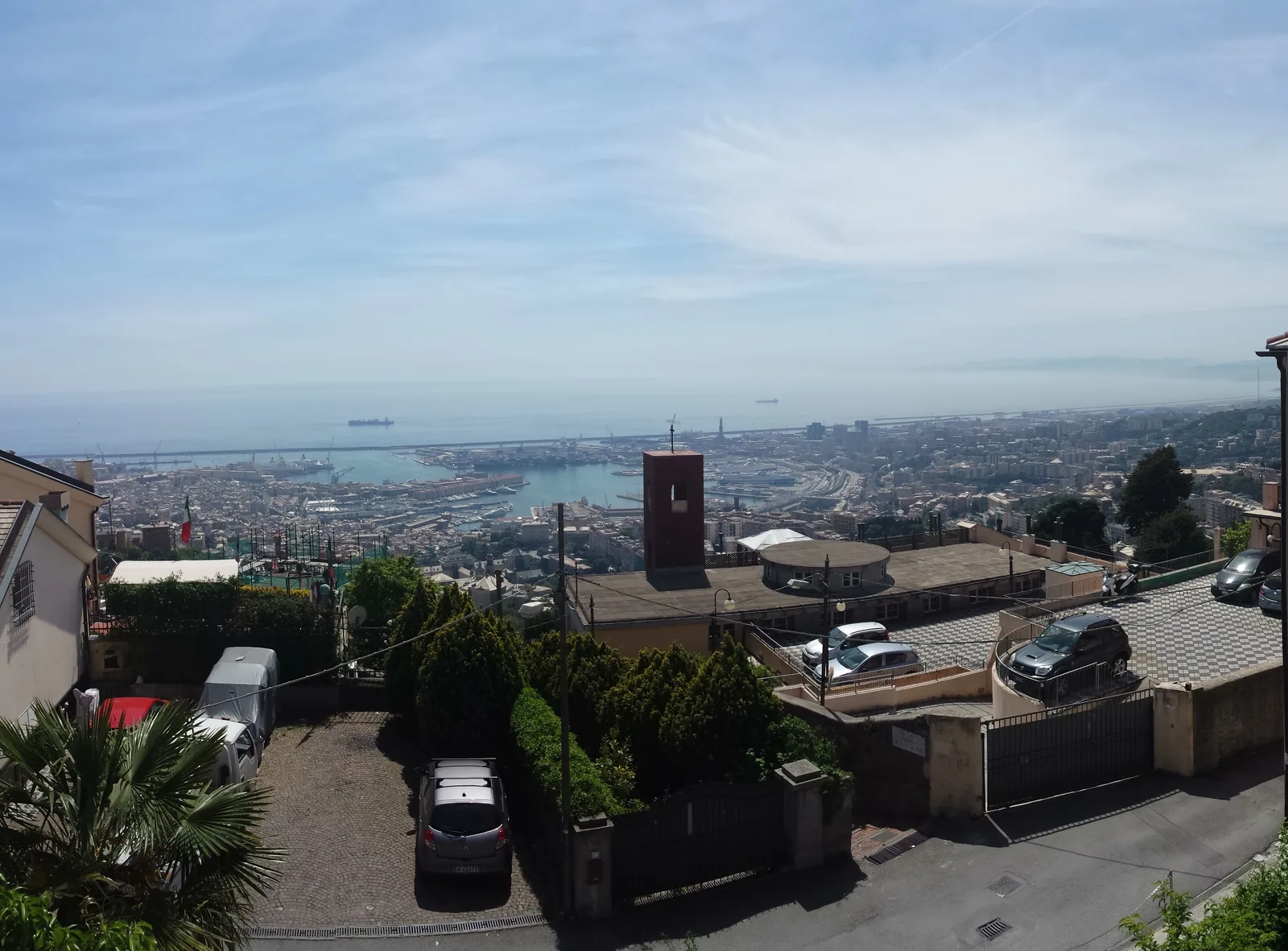
Plan for a city that climbs as well as stretches
Genoa rewards a little geographical preparation. The old town's narrow lanes lead towards the waterfront, residential streets climb the hills behind them, and the city continues along the coast into neighbourhoods with their own seaside character. A short distance on a map can involve steps, a lift or a winding road. An attractive sea view does not necessarily come with an easy walk home. These details matter whether you are choosing a hotel for three nights or a flat for a year.
Come for the combination: palace interiors and port history, focaccia between museum visits, and a coastal outing that does not require leaving the city. Genoa is a useful choice when you want urban substance alongside the Ligurian waterfront. Give it its own days rather than treating it only as a station on the way elsewhere. The Italian name, Genova, appears on local transport, institutional websites and railway bookings; check the full station name when planning arrival.
Read maritime wealth in the streets and palaces
The UNESCO account of the Strade Nuove and Rolli palaces places their development in the late sixteenth and early seventeenth centuries, when the Genoese republic had exceptional financial and maritime influence. Private aristocratic homes formed part of a public system for hosting state visitors. That relationship makes the façades more interesting than a succession of expensive buildings: domestic space also served the republic's public life.
The newer streets contrast with the tighter medieval fabric nearby. Walk between those environments and notice how street width, entrances, courtyards and changes of level shape the experience. A list of Rolli palaces is not a promise that every door is open or that one ticket covers all of them. Select a museum route or a separately advertised opening, and use its actual admission arrangements. You will learn more from one considered interior visit than from racing between closed entrances.
Give the Strada Nuova museums a proper session
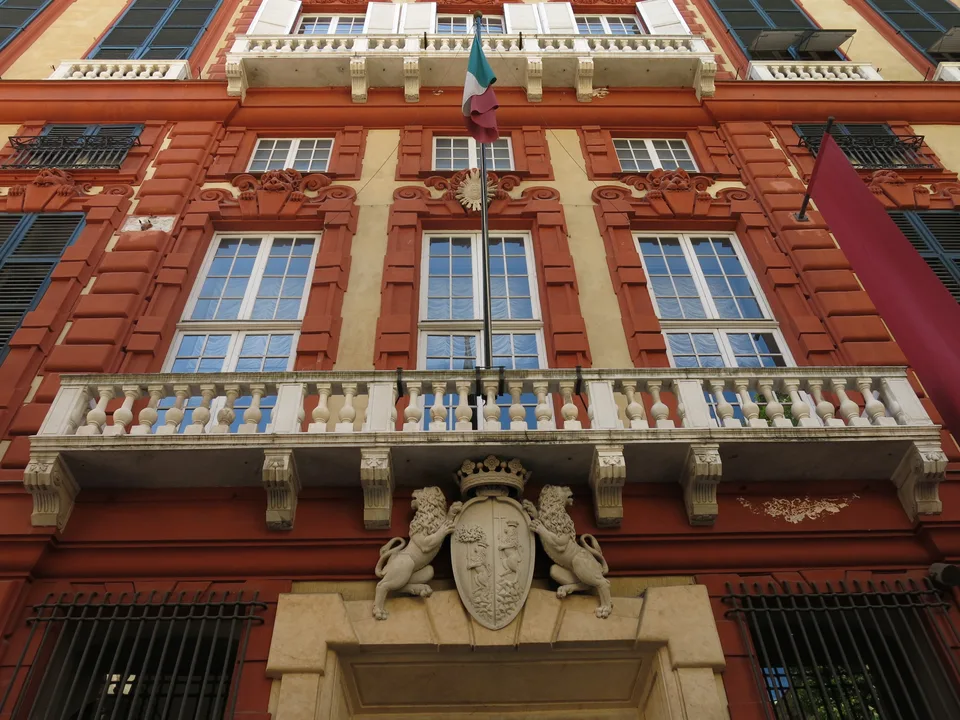
The municipal Strada Nuova museum booking page describes a connected itinerary through Palazzo Rosso, Palazzo Bianco and Palazzo Doria-Tursi on Via Garibaldi. Its appeal includes furnished and decorated rooms, paintings and applied arts. Tursi also holds historic instruments associated with Paganini. Choose the elements that interest you most rather than assuming you must give every gallery equal time.
At the October 2026 check, the published winter timetable ran from 28 September 2026 to 18 April 2027, with daily opening from 10:00 to 18:30 and last admission an hour before closing. Check the calendar and ticket price for your date before travelling. The route crosses different levels and buildings, so ask about the particular accessible itinerary if steps or long periods standing would be difficult. Keep a break afterwards; another major museum need not follow immediately simply because both appear close together on a map.
Decide what you want from Porto Antico
The Porto Antico visitor directory brings together waterfront attractions, places to eat and activities such as the aquarium, Biosfera and Bigo panoramic lift. These are different products. Visiting the public waterfront does not mean that every attraction there is included, and a combined ticket is worthwhile only if its components fit your interests and available time. Check each venue's conditions rather than buying the longest list of inclusions.
For families, the aquarium may be the main reason to devote a day to this area. Other visitors may prefer a maritime museum and time outside. Leave room to sit, eat and orientate yourself. The visitor waterfront is also distinct from operational port areas: use signed public routes and the entrance instructions for the place you are visiting. If arriving for a cruise or ferry, confirm the terminal separately; “the port” is too imprecise an address for a tight connection.
Book the aquarium with its ticket conditions in mind
Use Genoa Aquarium's own ticket selection to price the date, time and combination you actually want. The operator's conditions of sale explain that fixed-date aquarium admissions use dynamic pricing and half-hour entry slots. An old price list, a promotional headline or a small add-on price cannot establish the total for your visit. Compare like-for-like options, including children's categories and any additional attractions.
The published terms describe fixed-date tickets as non-refundable and say the date and time cannot be changed. Open-ticket conditions differ. Read the terms attached to the product before paying, particularly when coordinating a flight, train or cruise arrival. Book a slot that leaves enough margin for delays rather than assuming a late arrival will be accommodated. A flexible first afternoon can be more useful than a discounted ticket whose restrictions do not suit your journey.
Choose maritime history at the Galata
The Galata Maritime Museum's official overview follows seafaring through vessels, trade and human movement, including contemporary migration. It occupies a building associated with the former arsenal and spreads its displays over several floors. This is a substantial alternative to another palace visit and a way to connect the waterfront you see today with the people and systems that made it important.
Consider the museum on its own terms rather than treating it as a quick extra after the aquarium. Check the day's opening and current ticket options before setting out. If a submarine visit is part of your interest, establish whether it is included in the chosen product and whether the access requirements suit everyone in your party. The existence of an attraction beside a museum does not guarantee unrestricted entry for every ticket-holder, age or mobility level.
Choose a base by its actual approach
The municipal tourism site's neighbourhood overview is useful for understanding Genoa's variety. The historic centre and Porto Antico suit a programme concentrated on central museums and waterfront sights. The Brignole and Foce side deserves comparison when your plans involve that station and the eastern city. A hillside address around Castelletto can offer another perspective, but the route from a bus stop or lift matters as much as the view.
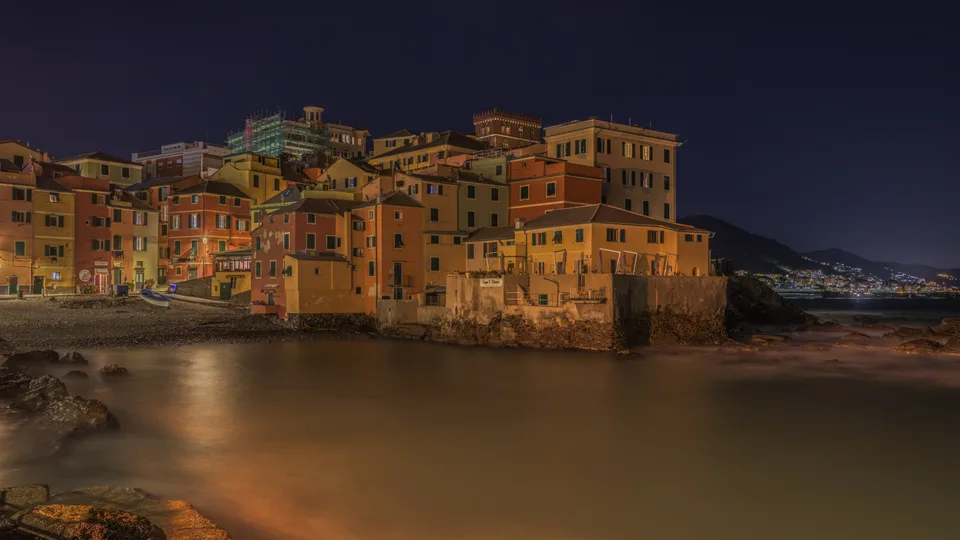
Boccadasse and Nervi provide different coastal settings farther east. They are parts of Genoa, but a stay there creates a different routine from sleeping beside a central museum. Put your accommodation entrance, preferred station and evening destinations on the same map. Ask the host to describe the approach with luggage and the return when lifts or other services have finished. A short straight-line distance is a poor substitute for those instructions.
Use the hills and public lifts intelligently
Genoa's AMT public-lift information belongs in the practical planning, not merely a list of curiosities. A lift can turn an awkward climb into a straightforward journey, but its entrance, operating hours and any interruption determine whether it helps you. Check the named installation rather than assuming every uphill address has a convenient connection. Have a realistic alternative if the service is unavailable.
For a viewpoint outing, allow time at the top and decide how you will return before you go. For a prospective home, test the same route carrying something comparable to ordinary shopping. Ask whether the building itself has a lift, which floors it serves and whether steps remain between the street, lift and front door. Public vertical transport and a building's internal accessibility solve different problems. This distinction is especially important when travelling with a pushchair, heavy luggage or limited mobility.
Compare Volabus with the airport rail connection
The operator's Volabus page describes a direct airport bus serving central Genoa and its principal railway stations, Genova Piazza Principe and Genova Brignole. It uses a MetDaily ticket rather than the ordinary short-duration city ticket. The AMT MetDaily page listed a one-person twenty-four-hour product at €10 in October 2026, with different offers for groups and longer periods. Check the start time and current timetable when buying.
Genova Airlink is a different service: a shuttle between the airport and the Sestri Ponente railway connection, using the Via Cibrario stop by the pedestrian footbridge. From there, the train is a separate part of the journey into the city. Compare waiting, luggage and the final walk with the direct bus option. The closest railway station's airport name does not mean a train platform is inside the terminal. For late flights, check the last usable connection before committing to an accommodation location.
Match the city ticket to the journey
AMT's ordinary ticket was €2 for 110 minutes from first validation at the October 2026 review. It excludes Volabus, the Genoa–Casella railway and the Portofino line, apart from specific local exceptions. The €2.20 integrated AMT–Trenitalia ticket adds one second-class urban train journey within its stated boundaries. That is different from unlimited regional rail travel or a ticket onward along the entire Ligurian coast.
Check validation instructions for the medium you buy, particularly when combining bus and train. Keep the ticket available through the journey and station exit. MetDaily and other passes have their own coverage; do not infer rail inclusion from the word “integrated” appearing on a different product. The operator's fare FAQ also distinguishes resident concessions from unrestricted purchases. Advice that Genoa's transport is simply free can be misleading for a visitor who does not hold the required resident pass.
Read the station name before booking the room
Principe and Brignole are separate stations, so make the one on your ticket part of the accommodation decision. For an arrival followed by an early onward departure, reducing transfers with luggage can matter more than a marginally lower room rate. Check both legs of the booking: an incoming service and your next train may use different stations. Build in time to reach the correct platform rather than treating “Genova” as a single interchangeable stop.
Consult Trenitalia's engineering-work notices alongside the journey planner. Notices current at the October 2026 review described changes affecting some services between Principe and Brignole, including trains ending earlier than their usual destination. These are date-specific arrangements, not a permanent rule for every train. Recheck the actual service shortly before travel and allow for the different final approach if its arrival station changes.
Make a coastal day deliberate
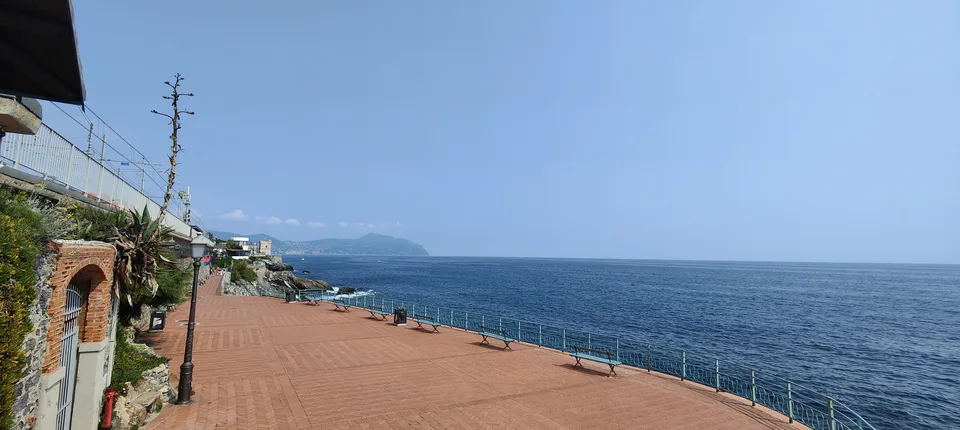
The official tourism waterfront overview identifies Boccadasse's cove and colourful buildings, Corso Italia's promenade and Nervi's cliffside setting as different coastal experiences. Choose the one that fits your day rather than assuming they form a short extension to the old-town walk. Boccadasse can be a focused outing with time by the water; Nervi deserves a separate look at how the promenade and park landscape fit together.
Check local notices and conditions before setting off, especially after bad weather. A promenade is not proof that every section is open, and a seaside setting is not a guarantee of suitable bathing conditions. For a relaxed day, choose an arrival point and a manageable walking distance, then leave room for a meal and the return connection. Families and anyone with mobility needs should check surfaces and access rather than relying on a photograph of a level-looking path.
Eat beyond the waterfront postcard
Visit Genoa's local-food guide highlights pesto, focaccia and chickpea farinata alongside dishes based on vegetables, herbs and olive oil. A useful food itinerary can therefore include a bakery purchase, a simple lunch and one longer meal without turning every stop into a restaurant expedition. Read the menu for the specific dish and ask about ingredients where allergies matter. Familiar names do not guarantee identical recipes or preparation.
The MOG food hall provides an operator-run directory within the Mercato Orientale setting. Distinguish its dining businesses and events from the opening arrangements of individual fresh-market traders. Check current menus and prices before choosing where to eat, and compare portion sizes or unit prices when buying takeaway food. For self-catering, establish whether the accommodation has the fridge, utensils and cooking facilities you expect. A kitchenette shown in a photograph may not support the meals you intend to prepare.
Budget for a programme you can actually use
Start with accommodation for your dates, then add airport transfers, ordinary local journeys and the attractions you have chosen. The dated transport examples above give useful comparisons, but an aquarium booking or museum ticket needs a current quote for your party. A day pass can make sense on an airport-transfer day without being the cheapest answer for a quiet day on foot. Work out each day's journeys before choosing a product.
Request a complete accommodation total, including any visitor tax, cleaning, breakfast and parking charges. Compare cancellation terms as well as the headline nightly amount. Keep an allowance for changes caused by weather or transport disruption. Longer stays need a different calculation: deposits and initial household purchases are one-off costs, while rent, building charges, utilities, internet and commuting recur. Separating those categories makes a possible move easier to assess than combining everything into an unsupported average monthly figure.
Use three days without crossing the city repeatedly
On day one, settle in and explore the historic centre, with a Strada Nuova museum visit if arrival time permits. Keep the first evening near your base. On day two, make the aquarium or Galata the principal booking, then spend the remaining time around the visitor waterfront. Choosing one major attraction leaves more room to understand it, eat properly and avoid rushing through the other simply because it is nearby.
Use day three for Nervi or Boccadasse, shaped around weather and the route you prefer. A viewpoint outing can replace part of this programme when conditions and lift service suit. If arriving late on the first day, move the palace visit to another session rather than cutting it down to the final admission hour. Anyone considering relocation should replace one leisure session with a weekday commute and a practical neighbourhood visit; those observations answer questions that a holiday itinerary cannot.
Make weather part of the daily plan
Genoa's municipal climate overview describes a Mediterranean setting and identifies October and November as wetter months. For a trip built around walking, spring or early autumn can be sensible starting points to compare, with forecasts still determining the day. Summer suits a coastal emphasis if you are comfortable with warmer sightseeing; winter can support a museum-focused visit without relying on outdoor conditions. Choose dates around your priorities rather than expecting one season to guarantee an uninterrupted waterfront itinerary.
Consult AllertaLiguria's official warnings and municipal access notices before committing to an exposed coastal walk or hill outing. The regional warning system follows defined alert zones, so use the information relevant to your actual location. A forecast for a broad region and a closure notice for a particular path answer different questions. Keep an indoor alternative available when the weather changes.
For warm-weather visits, allow shade, drinking water and breaks between outdoor sections. For cooler stays, ask about heating and bring layers suitable for waiting outside and walking above the waterfront. Rain changes the appeal of steep routes and outdoor viewpoints, even when a museum remains open. Avoid a programme that depends on every connection and every outdoor attraction working perfectly. Choosing fewer geographical areas each day gives you more flexibility than spending much of the visit moving back and forth.
Test the neighbourhood before committing to housing
A holiday address near the old town may not be the right home for work elsewhere in the city. Identify the workplace entrance or university department, then test the journey at the times you would normally travel. Include the uphill final stretch, the return after evening commitments and the shopping you would carry. For study, confirm the actual campus rather than assuming every University of Genoa course takes place within central Genoa.
The university's accommodation resources can help its eligible community search for rooms or flats, while the international welcome office provides information on practical matters such as tax codes, healthcare and transport. These services do not establish that accommodation is guaranteed. For any tenancy, view the property, verify the letting party's authority and obtain clear written terms. Distinguish a short furnished stay from a contract intended to support an ordinary household routine.
Check the household and the paperwork together
Ask how rent, building charges and utility consumption are separated, and record the condition of the property and meter readings at handover. Clarify heating, hot water, internet installation, laundry and waste arrangements. Check stairs and lifts in person. A home that works well for a short visit may be less practical when you are carrying groceries, receiving deliveries or travelling every day.
The tax authority's rental-registration information explains the registration process for contracts within its scope; ask for the applicable registration evidence rather than accepting an informal promise. Municipal civil-registration information concerns another administrative step and does not itself grant immigration permission. For healthcare, ASL3's foreign-national registration guidance distinguishes eligibility according to status and requires supporting documents. Arrange appropriate cover until your position is confirmed, and do not assume that renting a home automatically registers you with the health service.
Keep visiting, employment and study permissions separate
Use the foreign ministry's Visa for Italy portal for your passport, residence and intended activity. For many non-European short-stay visitors, the Schengen allowance is at most ninety days in any rolling 180-day period across the area, with the conditions of their own visa or exemption still applying. Previous visits matter. An unused portion of a hotel booking does not extend permission to remain, and a new Italian city does not restart the clock.
Employment, degree study and a longer private stay require their own assessment. The university's residence-permit guidance explains the post-arrival process for relevant non-EU students; admission and immigration clearance are separate matters. Italy also has specific provisions for qualified digital-nomad applicants, with consular requirements rather than a general permission attached to tourist entry. EU citizens follow a different framework. Confirm the correct route before making a long housing commitment, and use the European Commission's border-system information for EES and ETIAS updates.
Consider the coast beyond Genoa separately
Recco and Camogli are options for extending a Ligurian trip, not neighbourhoods of central Genoa. Italy's national tourism description of Recco places it on the Golfo Paradiso between Sori and Camogli. Treat a visit as a separate excursion with its own railway or road journey and return plan. The urban ticket boundaries described earlier do not establish coverage for every coastal destination.
Use Recco's destination page and Camogli's destination page as location references when dividing your stay. A base farther along the coast may suit a different itinerary from one concentrated on Genoa's museums and university appointments. For wider planning, consult VisaWand's Italy destination directory and Italy country guide. If relocation requires individual advice, review the relevant consultant listings and professional qualifications, explaining your nationality and intended activity rather than asking for a generic promise of approval.
Official planning resources
Reviewed 21 October 2026. Use the official resources linked throughout this guide for admission, transport, housing and immigration decisions. Prices, services and rules can change; confirm the details relevant to your dates. Photography illustrates the locations and is not a live view.
View all official resources
- UNESCO: Genoa Strade Nuove and Rolli palaces
- Genoa Museums: Strada Nuova admission
- Porto Antico: visitor attractions
- Genoa Aquarium: tickets
- Genoa Aquarium: conditions of sale
- Galata Maritime Museum: official museum information
- Visit Genoa: neighbourhoods
- AMT: public lifts
- AMT: Volabus airport service
- AMT: MetDaily day ticket
- AMT: Genova Airlink
- AMT: ordinary ticket
- AMT: integrated AMT–Trenitalia ticket
- AMT: revised fare FAQs
- Trenitalia: works affecting Genoa train services
- Visit Genoa: waterfront areas
- Visit Genoa: local foods and recipes
- MOG Genova: food hall visitor information
- Visit Genoa: climate and seasonal conditions
- Regione Liguria and ARPAL: official weather alerts
- University of Genoa: accommodation resources
- University of Genoa: international student welcome office
- Agenzia delle Entrate: rental contract registration
- Comune di Genova: civil registration from outside the municipality
- ASL3 Genoa: foreign nationals and health-service registration
- Italian Ministry of Foreign Affairs: Visa for Italy
- University of Genoa: residence permit procedures
- Italian Consulate in London: self-employed digital nomad visa
- European Commission: EES and ETIAS border systems
- Italia.it: Recco on the Golfo Paradiso
Plan the next part of your journey
Explore the Italy guide, browse other cities or compare consultants for your travel and relocation questions.