Visa
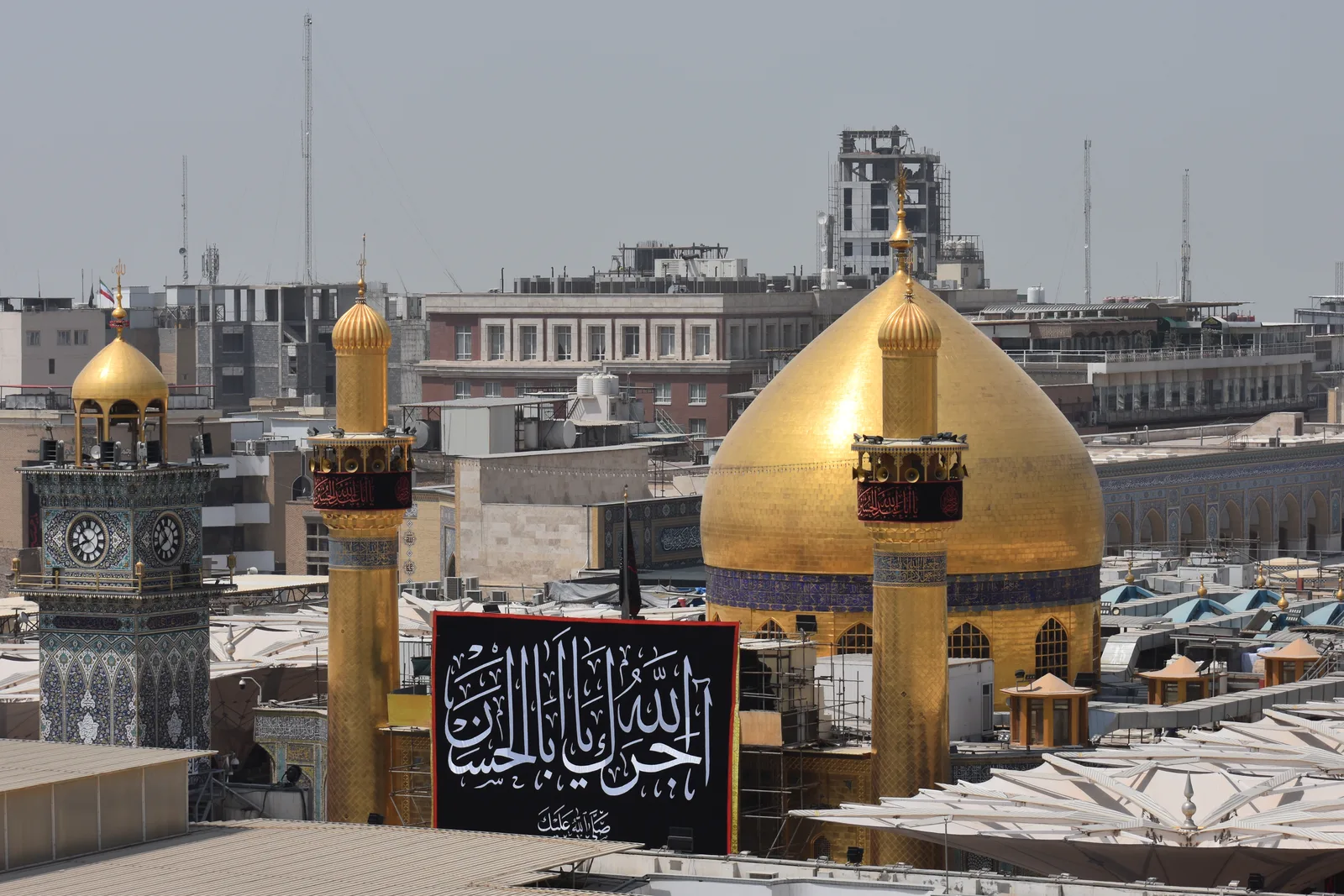
A pilgrimage city with practical choices to make
Najaf is organised around religious life in a way that changes the visitor’s priorities. The Imam Ali shrine is its principal focus, but the city also contains seminaries, markets, residential districts and the extensive Wadi al-Salam cemetery. A useful visit needs an understanding of worship and mourning as well as a workable plan for accommodation, transport and personal needs.
The first decision is whether to travel. At review, the UK government’s Iraq advice advised against all but essential travel to Najaf province. The US State Department’s advisory issued on 23 October 2026 maintained Level 4, Do Not Travel, for Iraq. Read advice for your own nationality, establish insurance conditions and assess your circumstances before committing to a journey.
This guide helps explain the destination for people with a necessary connection, those assessing a future pilgrimage and anyone considering a longer stay. It does not establish that a leisure trip is currently advisable. Use VisaWand’s Iraq country guide for the national context, then investigate the exact route and services you would depend on in Najaf.
Separate Najaf, Kufa and Karbala on your map
Najaf and nearby Kufa have closely connected religious and urban lives, but they are distinct places. Karbala is another city requiring a separate journey. An itinerary advertised as covering the shrine cities can conceal substantial transfers, checkpoints and changes of vehicle; read the daily arrangements rather than relying on a short list of destinations.
Within Najaf, the old city around the shrine serves different needs from newer commercial and residential areas. A room that suits repeated visits on foot may be less convenient for a university appointment or a business meeting elsewhere. Compare the location against your own purpose instead of assuming that “central” describes one universally suitable base.
Save the exact name, address and contact details of every property and meeting point. Arabic spellings can help when translated names vary between maps and booking documents.
Understand the shrine’s place in the city
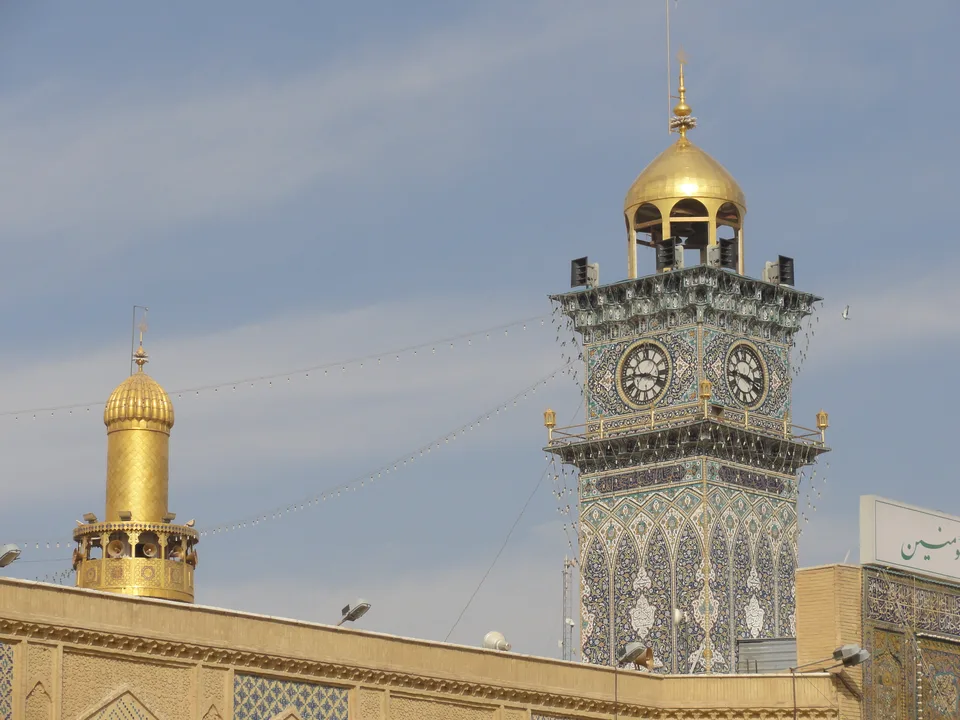
For Shia Muslims, Najaf’s religious importance is centred on the shrine associated with Imam Ali ibn Abi Talib. Approach it as a place of devotion, not simply an architectural attraction. The golden dome and minarets are visible landmarks, but what happens around them includes prayer, family visits, learning and deeply personal acts of remembrance.
The Imam Ali Holy Shrine’s own information service provides a direct source for its activities and announcements. Its religious accounts should be read as the custodianship’s presentation of tradition and belief. Visitors interested in history can benefit from a guide who distinguishes that perspective from the dates and evidence for particular building phases.
Give yourself time to observe the setting without interrupting it. Do not make a complicated first visit immediately after a tiring arrival. Settle into your accommodation, understand the local arrangements and choose a manageable period when you can pay attention rather than worry about luggage or an uncertain pickup.
Confirm access instead of assuming it
Ask the shrine’s visitor services or a competent local organiser about the arrangements for your intended visit. Establish clothing requirements, permitted belongings, any separation of entry routes and where members of your party should meet afterwards. These questions matter even when other visitors report a straightforward experience.
No clear, current universal policy on non-Muslim admission was established from the custodianship’s published information during this review. If that is relevant to you, seek confirmation before building the trip around access to a particular interior. A traveller’s photograph is evidence of that traveller’s visit, not an assurance that your circumstances will be treated identically.
Follow staff instructions and avoid blocking entrances or photographing worshippers without permission. Ask before taking out a camera. Arrange a meeting point that everyone can identify without a live phone connection, and agree what to do if you become separated.
Notice how the complex has changed
The shrine’s surroundings are not a frozen historical scene. The custodianship’s account of the Lady Fatimah al-Zahra courtyard describes a major expansion bringing together devotional space, a museum, a central library and visitor services. This helps explain why older descriptions and photographs may not match the route encountered today.
If collections, architecture or manuscripts are your main interest, ask specifically what is open to a general visitor and whether an appointment is needed. The existence of a museum or library within a complex does not establish unrestricted entry to every part of it, nor a fixed public timetable.
Look for a visit that matches your interests without turning worship into an obstacle to sightseeing. A short, well-explained architectural walk can be more rewarding than trying to enter every room. Keep a separate block of time for a scholarly appointment so a delayed meeting does not disrupt transport or another person’s religious observance.
Visit Wadi al-Salam as a working cemetery
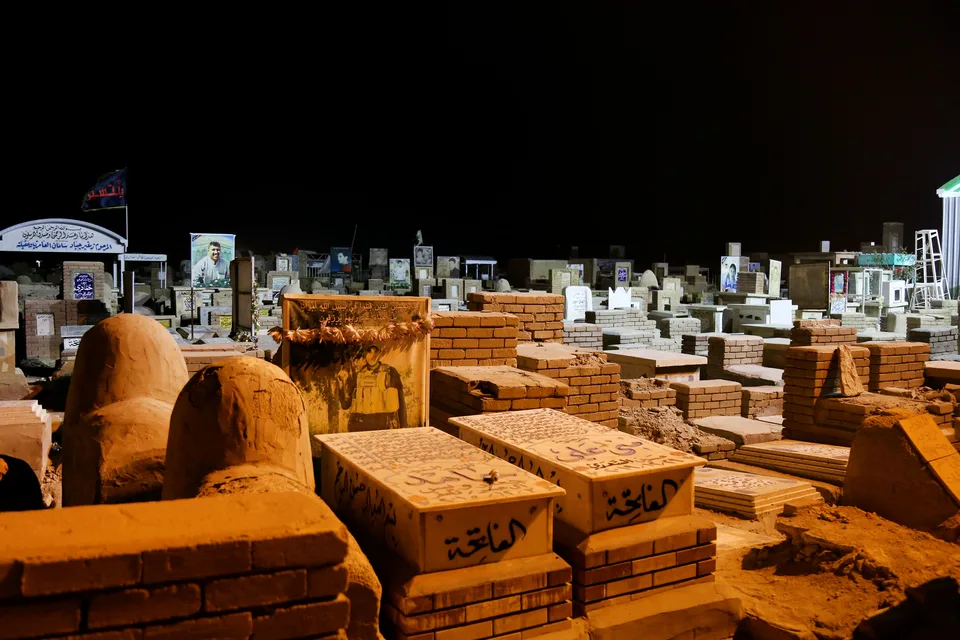
Wadi al-Salam is part of Najaf’s religious and emotional landscape. Its scale can be striking, but its significance is not measured only in hectares or the number of graves. Families continue to have personal connections to the place, and a visitor should leave space for funerals, mourning and the ordinary work associated with burial.
The UNESCO page for Wadi al-Salam is a Tentative List submission made by Iraq in 2011. It is not confirmation of inscription on the World Heritage List. Its old measurements and superlative claims should not be presented as a current survey or an independently verified global ranking.
Arrange a respectful, manageable route with someone who understands the site and current conditions. Do not step across graves for a better picture or wander into private burial spaces. The historical night photograph in this guide illustrates the cemetery; it does not recommend visiting after dark. End the visit when your group needs rest rather than treating the site’s extent as something to complete.
Give Kufa its own visit
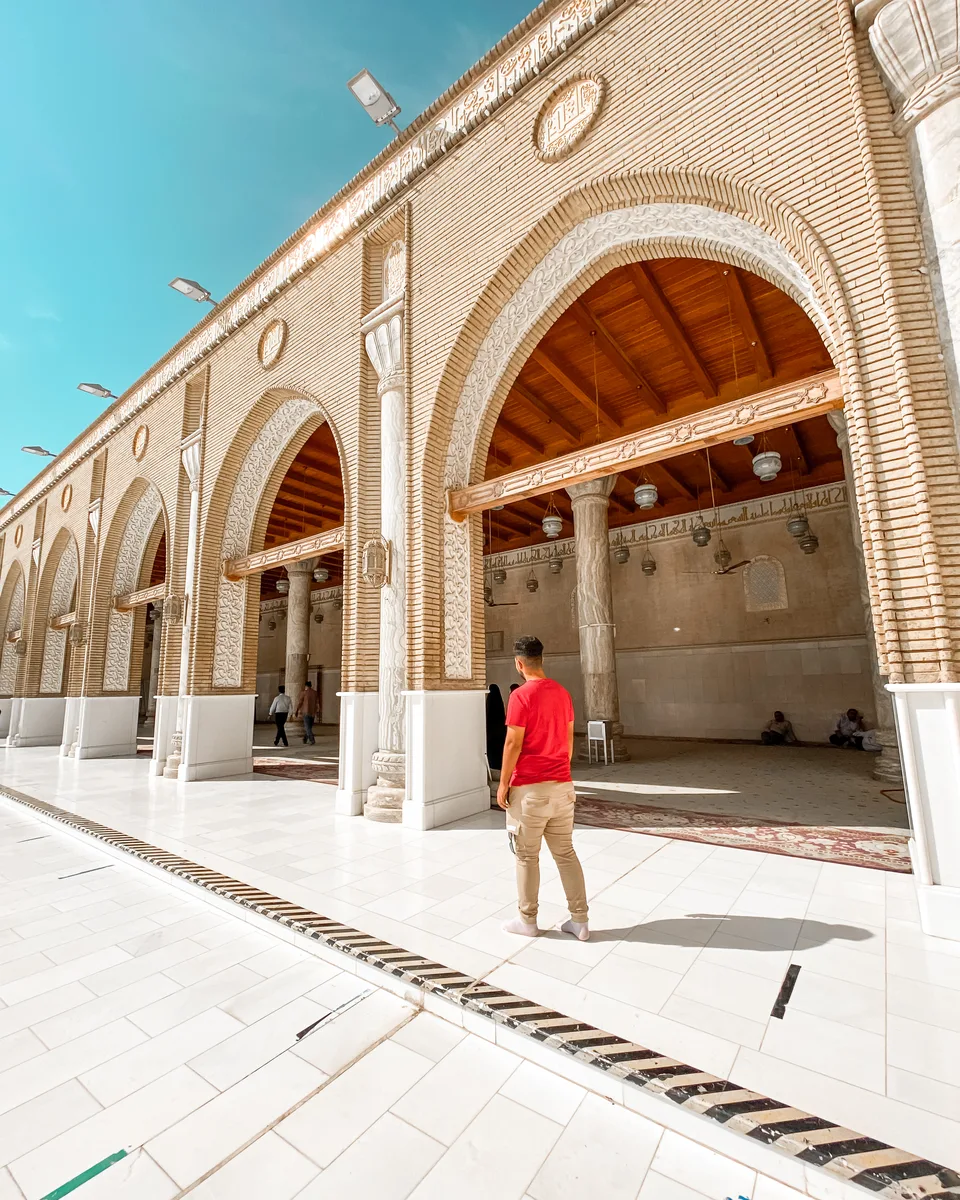
Kufa deserves a separate plan rather than being treated as a minor stop between meals. Contact the Great Mosque of Kufa’s custodianship for information about the mosque and associated shrines. Check the current arrangements for the precise places you intend to enter, including worship schedules and any visitor restrictions.
Allow time for an explanation of the site’s religious significance and for moving through the permitted spaces at a respectful pace. Distinguish the mosque, associated shrines and other nearby locations when agreeing a tour.
Confirm both outward and return transport in advance, with a clear meeting point. Keep the day’s plan proportionate to heat, mobility and the needs of older relatives or children. If the purpose is pilgrimage, the time required for prayer should lead the schedule; if the purpose is historical understanding, arrange suitable interpretation rather than improvising at the entrance.
Look beyond the shrine without inventing a nightlife scene
The old city’s commercial life and newer streets show different aspects of Najaf. The Najaf International Exhibition’s local visitor information identifies the covered Great Souk around the shrine and commercial areas along Al-Rawan and Al-Jawahiri streets. It also points to the Great Mall area and services around Al-Salam Street.
Use these as areas to investigate according to your needs. A market visit may be useful for buying a modest gift or an everyday item; a newer shopping area may better suit a household errand. Neither requires an exaggerated promise of hidden gems or entertainment that has not been verified.
Keep purchases practical on a day spent walking. Compare quality and prices, ask permission before photographing people at work and avoid obstructing a shop while a group stops to talk. For books or religious objects, seek help understanding the language and subject so that the item you buy is the one you intended.
Choose accommodation by the final approach
For a pilgrimage-centred stay, proximity to a usable shrine approach may be more valuable than a large room farther away. For work, study or a family visit, a quieter district close to the real daily destination may make better sense. The relevant distance is the route you can use under current access arrangements.
Ask whether a car can reach the entrance, where luggage is unloaded and how far you must carry it. Confirm lift availability, stairs, bathroom arrangements, cooling, backup power and reception hours. A photograph of the dome from an upper floor does not establish that the final approach is easy for someone with limited mobility.
Compare offers for identical occupancy and dates, including meals and transport. Get the cancellation conditions in writing. If your plan depends on a particular religious occasion, ask how road restrictions or crowds alter access to the building. Do not pay for a location claim that the property cannot translate into a clear arrival plan.
Check direct hotel claims carefully
Qasr Al-Dur Hotel’s own website describes its position close to the Imam Ali shrine and advertises facilities including central air-conditioning, laundry, a safe and an airport shuttle. It is a directly sourced option to investigate, not a personal endorsement or an assurance that every service is included in every rate.
Request a dated written quotation identifying the room category, number of guests, meal plan and any shuttle conditions. Confirm the current pickup procedure, especially for late arrivals or a flight delay. Ask whether advertised facilities are operating for the dates you need instead of assuming a website feature list is a contractual promise.
Smaller accommodation may suit some visitors, but compare essentials just as carefully. Establish who receives your payment and issues the confirmation, and keep copies available offline. A package organiser should name the actual property rather than promising an unspecified hotel of a particular standard that could change shortly before departure.
Make the budget transparent before paying
Reliable current public tariffs for a complete Najaf stay could not be established during this review. Room prices, transfers and services can depend on dates, occupancy and the type of arrangement. A precise-looking daily budget assembled from old quotations would therefore be less useful than a clear list of confirmed costs.
Ask for separate totals for accommodation, meals, airport transfers, local journeys, guide services and any other charge. Record the currency and whether a figure applies per person, room, vehicle or group. Confirm the exchange rate used for any conversion at the time of payment.
The Iraqi dinar is the local currency. Card acceptance and access to functioning cash machines should not be assumed everywhere; arrange a lawful payment plan and an accessible reserve. Keep enough flexibility for a changed transfer or extra accommodation night. A prepaid package can simplify logistics, but only if the exclusions and responsibilities are explicit.
Eat according to ingredients and the day’s demands
The exhibition’s visitor information lists Iraqi dishes including kebab, masgouf, quzi, dolma, tashreeb and kubba among options to investigate. Those names do not identify a verified restaurant or a uniform recipe. Ask what is being served that day and how large the portion is before ordering for a group.
Plan simple meals around the demands of pilgrimage or walking. Confirm opening and serving times rather than assuming a restaurant will fit a late return. For dietary needs, ask specifically about meat, stocks, dairy, nuts and shared preparation; translated names alone cannot establish whether a dish is suitable.
If food or water is offered through a pilgrimage service, follow the organiser’s current instructions and use your own health judgement. Carry a practical drinking-water plan. Avoid buying more food than you can safely store in the conditions available at your accommodation, especially when the day’s schedule may change.
Build the airport transfer into the booking
Najaf has an international airport identified by code NJF; the flynas airport-information page is one primary airline reference for that identity. It does not by itself establish that a particular airline route operates on your chosen date. Confirm the actual flight, baggage terms and arrival arrangements directly with the operating carrier.
Arrange your transfer through a trusted provider before travelling. Obtain the driver’s name or identification procedure, exact meeting point, contact method, vehicle capacity and total price. Establish what happens if your flight is delayed or your group arrives on different services. A vague promise that someone will be waiting is not enough.
For departure, allow for the journey to the airport, any checks and the airline’s required reporting time. Keep essential documents accessible. Do not accept an unverified approach from a stranger as a substitute for your booked transfer; if a meeting fails, contact the provider through the details you already verified.
Organise local journeys around current conditions
A short map distance can involve a restricted vehicle approach, a walk with luggage or a different pickup point from the one used earlier in the day. Ask your accommodation or organiser to explain the complete route and agree how changes will be communicated. Plan rest stops around your party’s needs.
Current, dependable local bus timetables and public fares were not established for this review. Do not assume a suggested service or an app-based booking will be available without checking it locally. For an arranged vehicle, establish whether the price includes waiting, additional stops and the return journey.
The UK government’s Iraq safety guidance warns about road risks, fake checkpoints and the possibility of short-notice curfews or vehicle bans. It recommends pre-arranged airport transport through a trusted sponsor. Keep your arrangements under review and follow legitimate local instructions; adding a sightseeing stop is not worth undermining the security plan for the journey.
Choose the season with heat and dust in mind
Najaf’s setting calls for serious attention to hot-weather conditions. UNICEF’s Iraq climate analysis describes the country’s hot, dry summers and cooler winters, with rainfall concentrated in the cooler part of the year. That national overview is context, not a Najaf-specific monthly forecast or a guarantee of conditions on a particular day.
If future circumstances allow a discretionary visit, cooler months can make prolonged standing and walking more manageable. Check current forecasts and air-quality or dust warnings before setting out. Keep outdoor blocks shorter in heat, arrange shade and avoid treating an early start as permission to continue beyond your physical limits.
For an essential summer journey, cooling at the property and in the transfer vehicle becomes a central booking question. WHO’s account of Arbaeen surveillance describes heat as a real challenge during the 2024 gathering and emphasises hydration and shade. Plan with a qualified clinician if heat, dust or exertion could affect an existing medical condition.
Religious dates change the whole visit
Arbaeen and other major observances can transform movement, accommodation needs and the number of people using services. Their dates follow the religious calendar, so do not assume they fall in the same Gregorian month every year. Confirm the exact dates and local arrangements relevant to your stay.
The shrine’s July 2026 Arbaeen service announcement describes religious guidance and publications for pilgrims. A separate Ramadan service plan describes seasonal accommodation and service preparations. These announcements show how provision responds to particular occasions; they do not establish a year-round, individually bookable free hotel entitlement.
A WHO review of Arbaeen preparedness explains why health, transport, water and crowd-management planning must work together. For a group journey, establish the leader’s responsibilities and emergency contact process before departure. Choose accommodation and transport around the actual occasion rather than trying to apply an ordinary sightseeing timetable to a major pilgrimage.
A measured two-day outline, if travel is appropriate
This outline is conditional on current advice, permissions and local arrangements allowing your journey. It is not a recommendation to ignore travel warnings. Add a separate arrival period so an unpredictable transfer does not consume the only time allocated to an important visit.
Day one can focus on the Imam Ali shrine and a short old-city walk, with substantial time for prayer or interpretation according to your purpose. Include a proper rest and meal break. A respectful cemetery visit should only be added if arrangements, conditions and your group’s energy make it sensible.
Give day two to a separately arranged Kufa visit, then return without a crowded list of extra stops. Travellers with more time can deepen a religious or historical interest rather than immediately adding another city. Avoid attaching a demanding excursion to an airport departure. Keep a spare period for a changed meeting, transport delay or a family member needing rest.
Test housing against the daily routine
A move for employment, study or family reasons requires a different assessment from a pilgrimage stay. Establish your legal status, institutional support and household payment arrangements before considering a long lease. A room near a sacred site is not automatically a suitable base for every member of a household.
Inspect the actual property where possible. Ask about rent, deposit, utilities, repairs, furnishings, cooling, hot water, power backup and internet installation. Confirm who holds the deposit and how it is returned. Seek independent help understanding the written agreement, especially if you cannot read the contract language confidently.
Test the commute at the times you would use it and identify shops, pharmacies and appropriate medical services. UNICEF’s earlier Al Najaf water-services project underlines the importance of water infrastructure, but does not establish today’s supply in an individual building. Ask about the property’s current arrangements rather than assuming conditions are uniform throughout the city or governorate.
Keep study, work and residence separate
The University of Kufa’s Study in Iraq programme information is a useful institutional starting point for international applicants. It describes different funding routes, housing subject to programme rules and procedures for entry and study residence. Confirm your actual offer, faculty location, teaching language and any housing allocation directly with the university.
Do not infer employment rights from enrolment. The programme’s published conditions restrict work by participating students, with a specific diplomatic exception. Employment requires its own verified permissions, and a visitor’s entry document should not be treated as a work permit. A longer-term move needs a clear legal basis beyond a short visit.
For British citizens, UK entry guidance describes advance federal eVisa requirements and distinguishes them from Kurdistan-region permissions, which do not cover Najaf. Use the Iraqi Ministry of Interior’s nationality and passport search to investigate your own case. Verify fees, validity, permitted stay and conditions before paying; older visa-on-arrival descriptions should not determine your travel plan.
Prepare essential services and compare onward options
Before a necessary stay, use official health guidance to check treatment access, insurance and medication arrangements with qualified providers. Schools, childcare and any specialist support also need individual investigation before a family commits to housing. Save official emergency contacts offline: ambulance 122, fire 115 and police 911.
For a broader itinerary, investigate VisaWand’s Kufa, Karbala and Baghdad destination pages. They are directory resources, not assurances that a transfer or additional visit is currently advisable. Each journey needs its own route assessment and confirmed arrangements.
Use the Iraq destination directory for wider comparisons and the Iraq consultant listings to investigate relevant professional help. Verify qualifications and responsibilities. The best plan for Najaf respects its religious purpose while remaining clear about documents, services and the practical limits of the journey.
Official planning resources
Reviewed 26 October 2026. Use the official resources linked throughout this guide for admission, transport, housing and immigration decisions. Prices, services and rules can change; confirm the details relevant to your dates. Photography illustrates the locations and is not a live view.
View all official resources
- UK government: Iraq travel advice
- US State Department: Iraq advisory
- Imam Ali Holy Shrine: official information
- Imam Ali Holy Shrine: Lady Fatimah courtyard
- UNESCO: Wadi al-Salam Tentative List submission
- Najaf International Exhibition: local visitor information
- Qasr Al-Dur Hotel: direct information
- flynas: Najaf airport information
- UK government: Iraq safety, laws and transport
- UNICEF: Iraq climate landscape analysis
- WHO: Arbaeen surveillance and heat precautions
- Imam Ali Holy Shrine: Arbaeen services
- Imam Ali Holy Shrine: Ramadan service arrangements
- WHO: Arbaeen public-health planning review
- UNICEF: Al Najaf water services project
- University of Kufa: Study in Iraq programme
- UK government: Iraq entry requirements
- Iraq Ministry of Interior: visa requirements search
- UK government: health in Iraq
- UK government: emergency help
Plan the next part of your journey
Explore the Iraq guide, browse other cities or compare consultants for your travel and relocation questions.