Visa
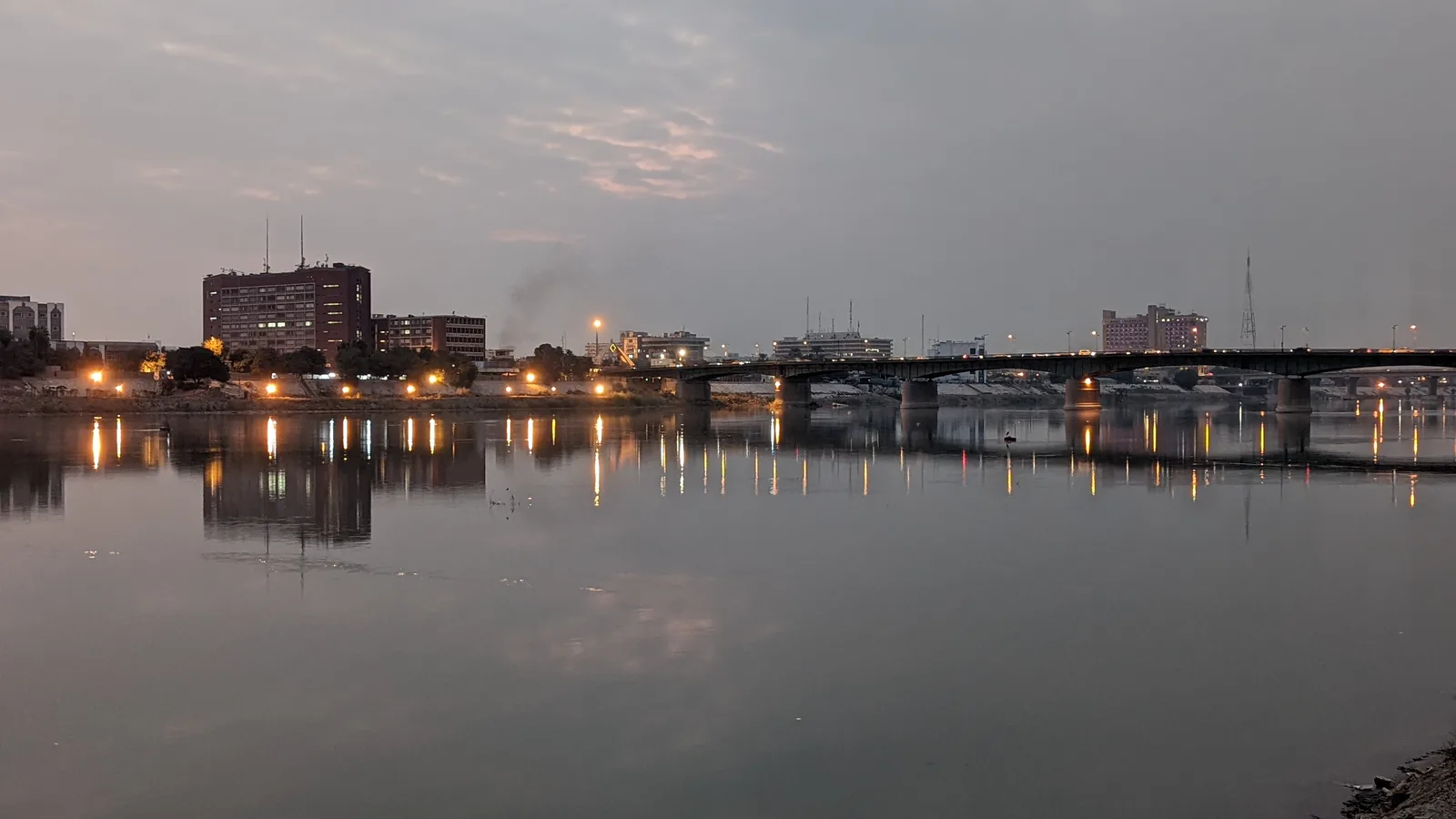
Baghdad begins with the river and the decision to travel
Baghdad’s appeal comes from the relationship between a working capital and an unusually influential cultural past. Bookselling streets, decorated brick buildings and the Tigris give a visit its shape. For someone considering a move, the same map raises different questions: which riverbank contains the workplace, how dependable is the journey, and what support accompanies the proposed job or course?
Those decisions currently sit within serious travel restrictions. Researched on 17 October 2026, this guide describes Baghdad without presenting ordinary tourism as assured. The itinerary is conditional on current advice and lawful access. Start with VisaWand’s Iraq location directory and Iraq destination page for geographical context, then use the official resources here to check circumstances before paying for travel.
Read the current warnings before booking
The UK government’s Iraq advice distinguishes between Sadr City, where it advises against all travel, and the rest of Baghdad province, where it advises against all but essential travel. Read the full geographical wording rather than treating a countrywide headline as a neighbourhood assessment. Advice can change, and an earlier visit does not establish present conditions.
The Australian government advises against all travel to Iraq, including the Kurdistan Region, and describes volatile security conditions and limited commercial flights. Its guidance also says Baghdad’s International Zone remains closed with limited exceptions. A hotel advertisement inside that zone therefore cannot establish that you can enter. Check your own government’s advice, the airline’s actual operation and your insurer’s exclusions. These are separate questions; a valid visa answers none of them.
Understand Baghdad’s geography and cultural weight
The Tigris divides Baghdad into the broad Karkh and Rusafa sides, connected by bridges. The Iraqi Embassy’s geographical introduction provides a useful starting point for that arrangement. Keep the river in mind when reading accommodation addresses: two places that appear close on a map can require a bridge crossing rather than a short direct journey.
Baghdad’s historical importance is visible in its buildings, but also in the continuing life of books, poetry and publishing. UNESCO’s City of Literature profile places the capital at the meeting of historic trade routes and records its literary identity. Baghdad joined the Creative Cities Network in 2015. That designation concerns cultural activity; it is different from inscription of a monument on the World Heritage List.
The city, its governorate and a wider urban population are different statistical subjects. A location database’s population estimate should not become a current census claim. For practical planning, your precise destination matters more than a metropolitan ranking: identify the street, riverbank and entrance you need before comparing accommodation or deciding how much can fit into a day.
Organise the map around particular districts
Begin a cultural plan with the older Rusafa riverfront around Mutanabbi Street and Mustansiriya. Abu Nuwas provides another river-oriented reference, extending towards Jadriya. These are useful geographical anchors, not a suggestion that every stretch is suitable for independent walking or that access remains unchanged throughout the day.
For a prospective resident, names such as Karrada, Jadriya and Mansour are starting points for a housing search rather than automatic recommendations. Ask the employer or institution to mark the actual workplace and suggested properties on the same map. Compare the route at the hours you would use it, including any bridge crossing and controlled entrance. A description such as “central Baghdad” is too broad to settle a household decision.
Do not choose a district on the assumption that a familiar international brand guarantees easy access. Establish the building’s visitor arrangements, permitted approach and return transport. Families should make the school journey part of the same comparison, rather than selecting a house first and trying to solve every daily journey afterwards.
Look closely at Mustansiriya and the historic riverfront
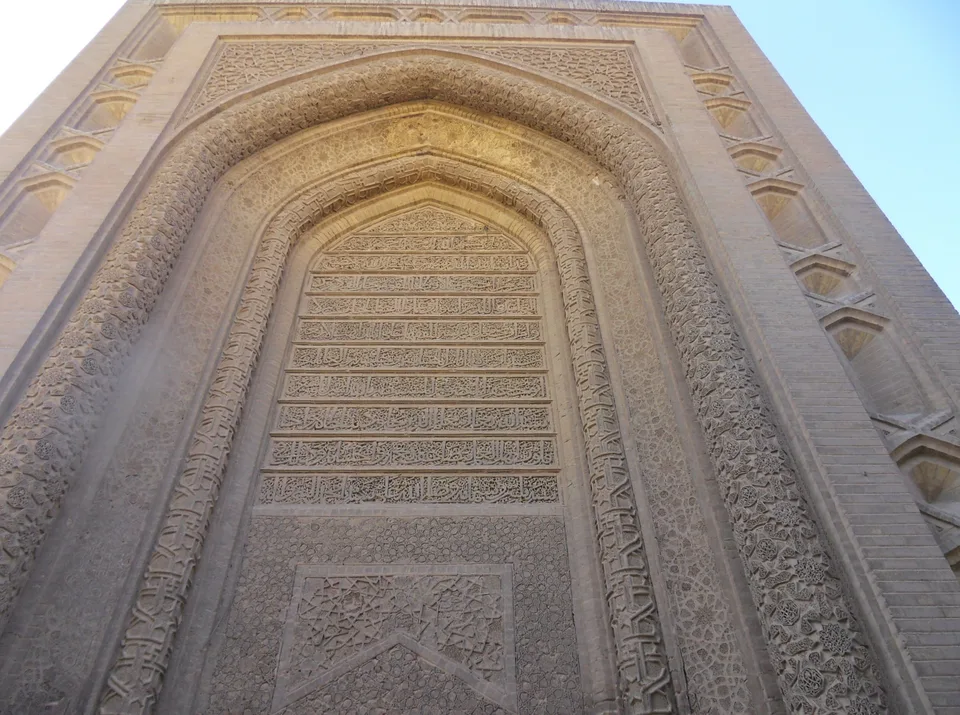
Mustansiriya’s surviving architecture rewards a slower look: patterned brick, substantial arches and a sense of enclosed scholarly space. The historic madrasah belongs to Baghdad’s medieval educational heritage. It should not be confused with the modern university bearing a related name. When arranging a visit, specify the historical building so that a driver or guide understands the intended destination.
The UNESCO Tentative List description of the Rusafa riverfront connects Mustansiriya with the Abbasid Palace and later buildings including the Qishlah and Saray complex. This is a proposal submitted by Iraq, not an inscribed World Heritage property. Its value for visitors is the way it identifies several architectural periods within one historical area.
Ask which buildings can actually be entered and which can only be understood from outside. A route assembled from photographs can otherwise become a sequence of closed gates. Agree the intended stops with a knowledgeable licensed operator and leave time to understand the architecture instead of collecting exterior photographs without context.
Discover the city’s literary character on Mutanabbi Street
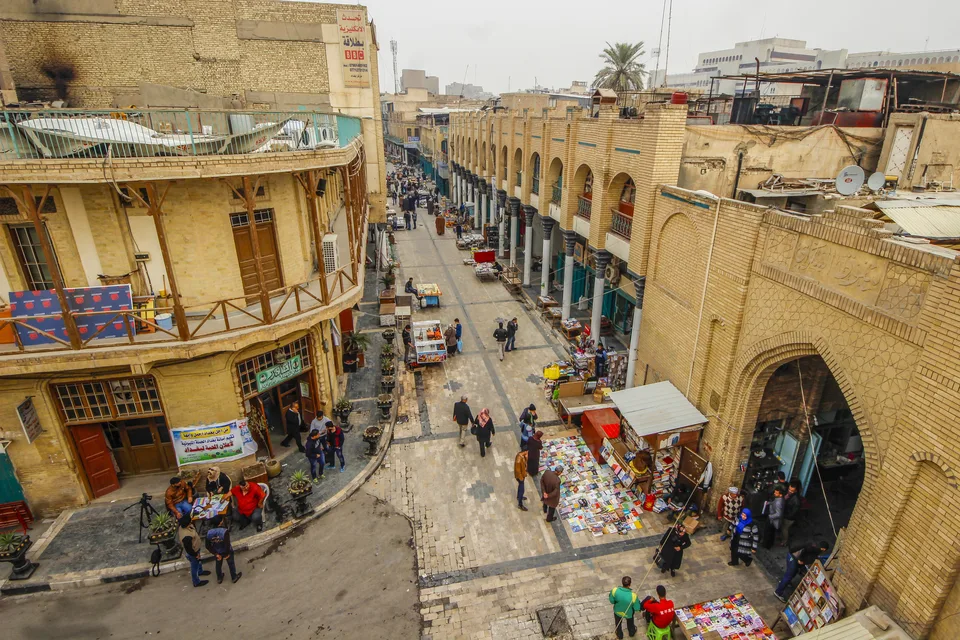
The Iraqi Tourism Authority’s Mutanabbi Street profile describes a cultural meeting place associated with booksellers and publishing, named for the poet Abu Tayyib al-Mutanabbi. It offers a particularly tangible connection between Baghdad’s literary reputation and a functioning commercial street. Look at what is being sold, the different kinds of books and the relationship between shops and public space.
A worthwhile visit does not require buying a collectible. If you do purchase something, ask about the edition, language, condition and price before agreeing. For an illustrated book or modern print, check its weight and how you will carry it home. Do not assume that an old-looking object is an unrestricted souvenir; antiquities and cultural goods require separate attention to export rules.
Published photographs capture a particular day, not a timetable. Confirm current opening patterns rather than building the whole stay around an assumed Friday market. If access is unsuitable, reading about the street’s writers and history is more useful than forcing a stop into an otherwise sensible route.
Respect access rules and the people using each place
Historic and religious places can be working institutions rather than visitor attractions. Ask about dress, entrances, permitted photography and any restrictions before arriving. A religious visit may require arrangements different from a general heritage tour. Request permission before photographing people, particularly where the photograph could identify someone who has not agreed to appear.
UK guidance says photographic identification is legally required and that checks can take place within cities. It also describes severe restrictions affecting LGBT+ people, including criminal penalties for same-sex relationships. Read that section carefully where relevant to your circumstances. During Ramadan, follow the local rules on public daytime eating, drinking and smoking. Understanding these requirements belongs in the decision to travel, not in an improvised conversation after arrival.
Treat the Iraq Museum as a conditional visit
The Iraq Museum is central to understanding the country’s archaeological heritage. UNESCO’s museum overview explains its collections and the work of recovery after the looting of 2003. That history is important, but an account of a past reopening does not establish today’s public opening hours.
A NINA report dated 23 September 2026 described continuing refurbishment of galleries and facilities ahead of reopening. This research did not establish a subsequent confirmed reopening date. Contact the responsible institution or ask your operator to obtain current confirmation before allocating a day, buying transport or expecting access to a particular gallery.
If a visit is possible, choose a few historical themes rather than attempting to absorb every period at once. If it is unavailable, retain the time for another confirmed activity or for rest. A good itinerary accommodates uncertainty openly; it does not turn an unverified museum listing into a promise.
Choose accommodation for access and dependable arrangements
Baghdad accommodation should be judged through its address, access and services as well as the room itself. The Tourism Authority’s Baghdad Hotel profile illustrates the city’s established riverfront hotel tradition. The operator page for Mövenpick Hotel Al Zaytoon Baghdad identifies a property in the Green Zone. These are examples for enquiries, not endorsements or confirmation of present availability.
Request a written quotation for your exact dates and party. Ask whether breakfast, taxes, airport collection and any required transport are included. Confirm which entrance the vehicle uses, how the driver and guest identify each other, and who answers if the flight changes. Obtain cancellation terms before sending a deposit, especially where an advertised rate depends on a non-refundable booking.
For a longer stay, compare a hotel, serviced accommodation and a properly inspected rental. Kitchens and washing facilities can matter more than a lobby photograph. Establish whether there is reliable cooling, backup electricity, drinking water provision, internet and a reachable maintenance contact. Request specific answers rather than accepting “all facilities available” as a description.
Before selecting an operator, use the Iraqi Tourism Authority’s licensed facilities directory to investigate the business identity. Ask who will deliver the service, which languages they work in and how cancellations are handled. Clarify whether an archaeological explanation, a driver and a security arrangement are separate services. A licence or directory entry should not be presented as a guarantee of safety or of every service advertised.
Arrive with a confirmed transfer rather than an assumed connection
Baghdad International Airport uses the code BGW, identified on Turkish Airlines’ Baghdad information page. Check that code on each booking; an itinerary to another Iraqi city is not an arrival in Baghdad. A destination page describes a route market, while the airline’s current booking and operational information must establish your actual flight.
Arrange airport collection through a trusted host or provider before departure. Get the meeting point, permitted vehicle access, passenger contact method and full price in writing. Establish whether waiting time and an arrival delay change the charge. Airport access arrangements can change, so a historic account of a shuttle, taxi rank or terminal road should not settle the plan.
Within Baghdad, build a day around a small geographical cluster and prearranged return transport. Ask whether your driver remains available or whether a separate collection must be booked. Do not budget using an unverified taxi fare or treat a proposed transport project as an operating service. The useful measure is a confirmed journey for your actual destination, date and circumstances.
Eat well while understanding the bill
Masgouf, the fish dish strongly associated with Iraqi cooking, is one useful starting point. The Baghdad restaurant operator’s Masgouf London page confirms a menu centred on this tradition and regional favourites. Its hotel setting is one particular dining option; it does not establish what a neighbourhood restaurant charges or whether a visitor can enter without prior arrangements.
Before ordering a whole fish, ask whether the price is by weight or portion and what accompanies it. Clarify service charges, drinks and the expected total for the table. People with allergies should establish ingredients directly rather than relying on an English dish name. For a group with mixed appetites, an agreed selection can be easier to price than several loosely described shared dishes.
For shopping, favour purchases whose origin and permitted export you understand. Books, contemporary crafts and ordinary household items raise different questions from archaeological material. Keep receipts and avoid any purchase presented as an antiquity without authoritative documentation. A seller’s assurance is not a substitute for the applicable rules.
Budget in dinars and separate essential costs
The US government’s Iraq guidance identifies the Iraqi dinar, IQD, as the official currency and warns that card acceptance and ATM reliability are limited. Confirm your own bank’s position and each major supplier’s payment methods. Do not assume either that all foreign cards work or that Iraq follows another country’s banking restrictions.
Build the trip budget from accommodation, confirmed transport, meals, any guide and the entry charges actually quoted for available sites. Keep a separate allowance for a changed flight or an extra night. Write down the currency and whether a quotation is per person, per vehicle or per room; these differences matter more than an unsupported daily average.
No representative current citywide price range was verified for this guide. Comparing written quotations is more useful than converting an old restaurant bill or taxi anecdote into a current promise. For relocation, add deposits, furnishings, utilities, school costs and the financial effect of maintaining a home elsewhere.
Match the season to the purpose of the stay
Baghdad’s summer heat makes outdoor time a central planning constraint. Official Australian advice highlights the possibility of extreme summer temperatures in Iraq. Consider cooler parts of the year for a future cultural visit, while checking the actual forecast rather than relying on a seasonal label. A comfortable room and dependable cooling are practical requirements for a summer assignment.
Dust can also affect the experience. The UK safety guidance notes spring and summer sand and dust storms, with consequences for visibility and transport. Keep flexibility around outdoor activities and onward travel. Winter plans still need clothing suitable for cool conditions; the city should not be packed for as though every month were midsummer.
Religious observances change the daily rhythm. Check the dates relevant to your stay and ask about dining arrangements and opening hours during Ramadan. A pilgrimage or public holiday can also affect a journey beyond the capital. Choose the season alongside the purpose of the visit, rather than assuming that pleasant weather guarantees easy movement.
A realistic three-day framework, when conditions allow
Day one should establish orientation with a confirmed local operator. If access and advice permit, concentrate on the older Rusafa cluster, giving Mutanabbi Street and a confirmed heritage stop enough time. Keep the afternoon modest. This is a framework for a future feasible visit, not a recommendation to disregard the current warnings.
Day two can focus on Mustansiriya and another verified riverfront building if these were not covered together. Ask for an explanation of the different historical layers rather than adding a distant landmark purely to lengthen the list. A prearranged meal and return journey complete a workable day without requiring a late search for transport.
Day three is deliberately flexible. Use it for the Iraq Museum only after confirmed public access, or for another activity agreed with the operator. Do not fill an uncertain museum day with a speculative excursion outside Baghdad. People assessing a move should instead reserve this time for property inspections, a workplace journey and meetings about essential services.
Assess a home through the daily routine
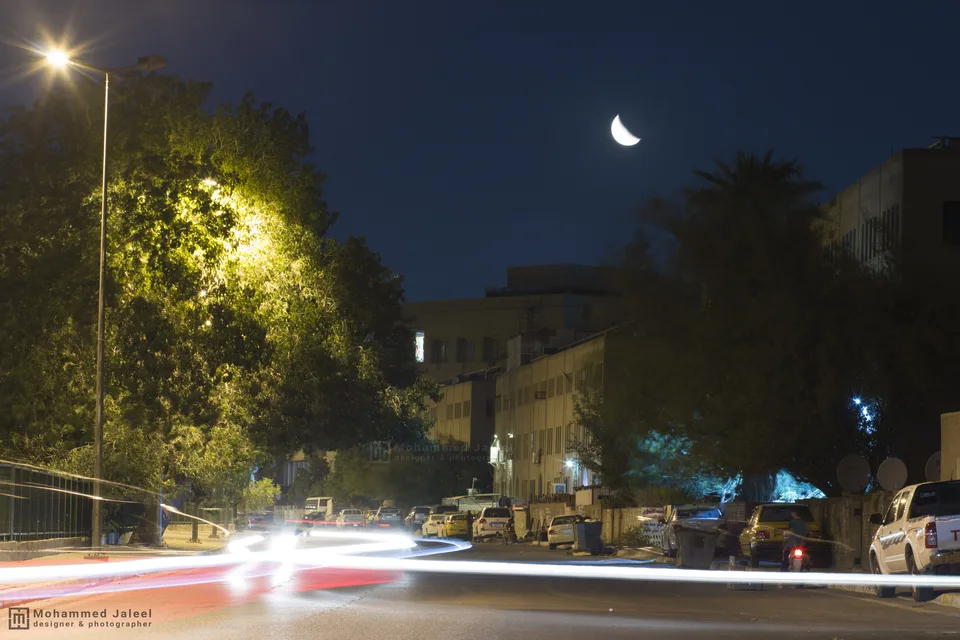
A move requires an address that works repeatedly, not just a convenient base for several nights. Ask who may lawfully sign the tenancy, what documents are required, how the deposit is protected or returned, and which language governs the agreement. Get independent local advice before committing money, particularly where the proposed arrangement depends on employment or sponsorship.
Inspect water pressure, bathrooms, cooling and electrical provision in person. Establish how backup power is supplied, what capacity is available and how it is charged. Ask separately about internet installation, building access, waste collection and repairs. Photograph the inventory and record meter readings where relevant. A furnished property still needs a clear agreement about replacement and maintenance responsibilities.
Test the ordinary journey to work or campus with the host’s advice. Add school, groceries and healthcare to that map. For a family, ask how a sick child would reach suitable care and who can help with language or transport. A slightly cheaper rental can become the more expensive choice if it creates several difficult daily journeys.
Agree the household payment schedule before moving in. Separate rent from electricity, generator charges, water, internet and any building fee, and ask for a sample bill where possible. Establish who can approve repairs and whether you must pay first and seek reimbursement. If accommodation is tied to a job, ask how long you can remain after the employment ends and who pays for an early move.
Arrange health needs and household support before arrival
The UK health guidance for Iraq describes medical limitations and the importance of appropriate insurance, including evacuation arrangements where necessary. Review existing conditions and prescriptions with a qualified clinician before travel. Confirm the legality and availability of medication rather than assuming a familiar brand will be obtainable after arrival.
The ambulance number is 122, also listed in US government guidance. Save your insurer’s assistance number and your host’s local contact alongside it. Identify an appropriate facility through those arrangements, including how payment works and how you would reach it. An emergency number alone does not establish response time or the treatment available.
For an assignment, put practical support in the contract or accompanying written arrangements: accommodation responsibility, transport, medical cover and what happens if the work ends early. For an independent household, establish those services before signing a long lease. The objective is a workable routine whose costs and responsibilities are understood.
For study, compare the complete year rather than tuition alone. Ask about examination dates, accommodation during holidays and whether dependants receive any practical support. Obtain the institution’s answers in writing and distinguish an admission offer from any immigration approval. A realistic decision includes the cost of returning home and the consequences if the course or your circumstances change.
Keep tourism, work and study permissions separate
Baghdad is in federal Iraq. Start with the Ministry of Interior’s official electronic visa portal and its nationality and passport-specific instructions. Check the category, required documents, permitted entries and fee for the actual applicant. Do not rely on a single advertised duration: the permission issued and the responsible authorities determine the authorised stay.
The UK entry requirements page says British visitors need a visa in advance and explains passport requirements. Those nationality-specific rules should not be copied automatically to every traveller. A Kurdistan Region visa alone does not authorise a visit to Baghdad. Check the whole route, especially when an itinerary crosses between immigration jurisdictions.
A sightseeing permission should not be treated as approval for employment, a degree course or permanent relocation. Ask the proposed employer or institution and the relevant Iraqi authorities to confirm the necessary permissions before committing. The Ministry of Higher Education’s Study in Iraq portal is a starting point for academic enquiries. Confirm campus, teaching language, fees, housing and immigration support directly. VisaWand’s consultant listings can help locate professional assistance, but official decisions remain with the authorities.
Consider other Iraqi places as separate plans
Babylon’s UNESCO World Heritage listing describes an archaeological property south of Baghdad, inscribed in 2019. Its walls, gates, palaces and temples concern a different historical world from the capital’s medieval riverfront. Check present access and the entire journey before considering it; proximity on a national map does not establish a straightforward excursion.
VisaWand’s Karbala city page and Najaf city page provide other geographical starting points, especially for people considering religious travel. Treat each as a separate destination with its own arrangements and current advice. Compare them according to the purpose of your journey rather than adding them automatically to a Baghdad stay.
Official planning resources
Reviewed 17 October 2026. Use the official resources linked throughout this guide for admission, transport, housing and immigration decisions. Prices, services and rules can change; confirm the details relevant to your dates. Photography illustrates the locations and is not a live view.
View all official resources
- FCDO: Iraq travel warnings
- Australian Government: Iraq travel advice
- Iraqi Embassy: tourist guide
- UNESCO: Baghdad City of Literature
- UNESCO: historical riverfront in Rusafa, Tentative List
- Iraqi Tourism Authority: Mutanabbi Street
- UNESCO: Iraq Museum and cultural heritage
- NINA: Iraq Museum refurbishment report, 23 September 2026
- Iraqi Tourism Authority: Baghdad Hotel profile
- Accor: Mövenpick Hotel Al Zaytoon Baghdad
- Iraqi Tourism Authority: licensed tourism facilities
- Turkish Airlines: Baghdad destination and airport
- Mövenpick: Masgouf London restaurant in Baghdad
- US Department of State: Iraq country guidance
- FCDO: Iraqi laws, security and transport
- FCDO: medical care and health in Iraq
- Iraqi Ministry of Interior: electronic visa portal
- Iraqi e-visa instructions
- FCDO: entry rules for British passport holders
- Iraqi Ministry of Higher Education: Study in Iraq
- UNESCO: Babylon World Heritage property
Plan the next part of your journey
Explore the Iraq guide, browse other cities or compare consultants for your travel and relocation questions.