Visa
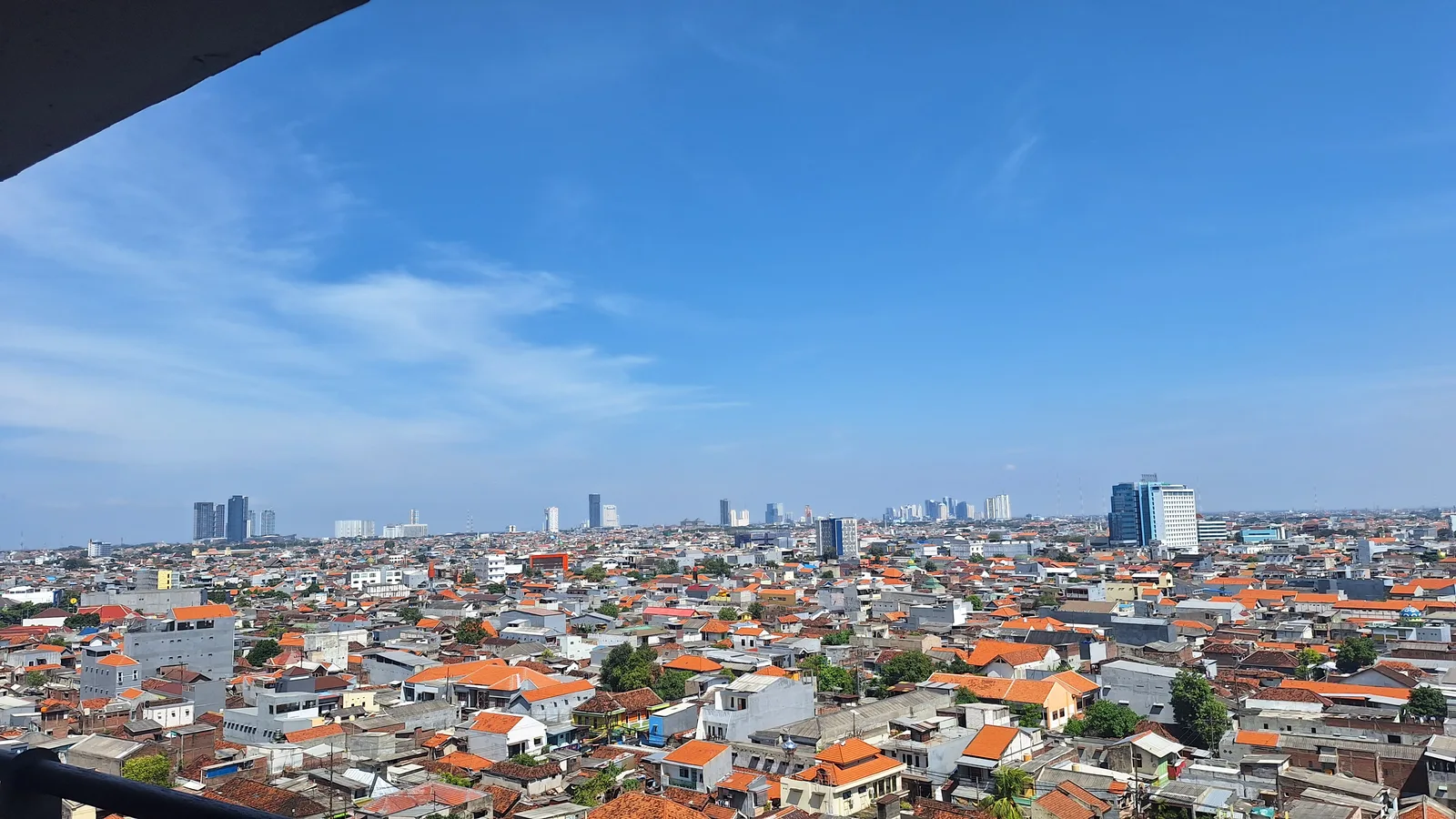
Give East Java’s capital time beyond the airport
Surabaya makes a rewarding stop when you want to understand an Indonesian city through its streets, food and recent history. East Java’s capital is a substantial urban destination: expect commercial districts, traffic, shopping centres and neighbourhood life alongside its monuments. Two full days offer a useful introduction. An arrival evening and a rushed morning leave little room to connect the places you see.
The national tourism overview of East Java puts the city in its wider setting. Mountains and other regional destinations require separate journeys; they are not attractions just beyond a city-centre hotel. For a move, judge Surabaya through your workplace, school and daily services. A good weekend sightseeing base may be poorly placed for an ordinary working week.
Understand why it is called the City of Heroes
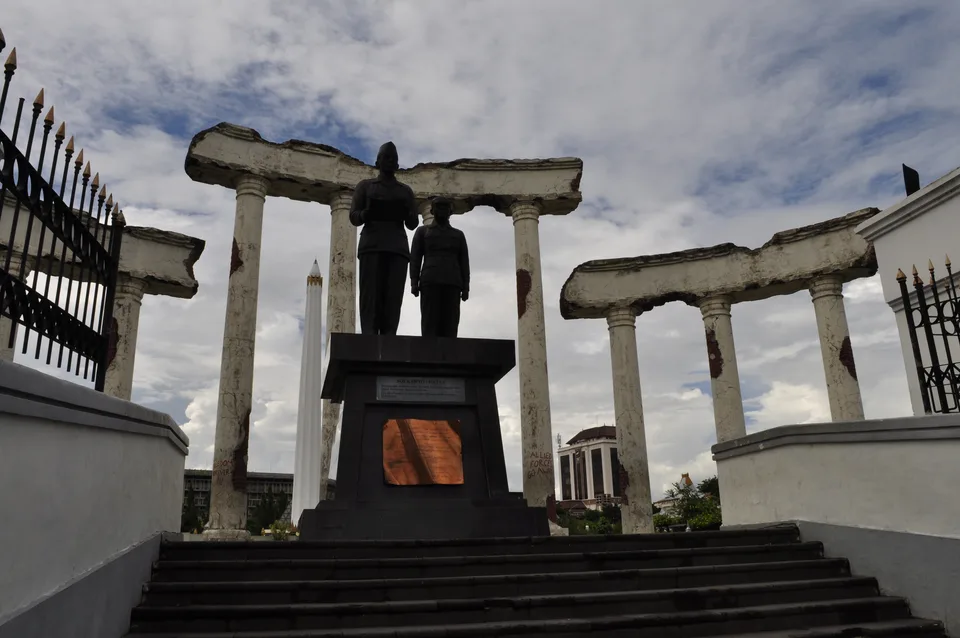
The struggle surrounding the Battle of Surabaya on 10 November 1945 is central to the city’s public identity. Tugu Pahlawan, the Heroes Monument, and the underground Museum Sepuluh Nopember provide a focused introduction. The municipal museum network describes collections including photographs, weapons and recordings associated with the independence struggle.
Read that history alongside the built environment. Surabaya’s historic commercial areas contain buildings and streets shaped by different communities, while Tunjungan offers another perspective on colonial architecture and the independence period. This gives a visit a coherent thread: the city’s history appears in public memorials, former trading districts and buildings that still have everyday uses. Allow time to read interpretation rather than treating every stop solely as a photograph.
Use three geographical anchors to plan your stay
For a first visit, organise your map around central Tunjungan and Siola, the northern Kota Lama heritage areas, and the eastern or southeastern coastal outings. These are different clusters, best combined selectively rather than strung together as an uninterrupted walk. The city’s official tourism portal is useful for discovering destinations and checking their locations.
For a longer stay, add the actual office or campus before looking at housing. Surabaya Intercultural School’s published address, for example, is in Sambikerep in the west; proximity to a central monument says little about that school run. Ask for a precise building pin and test the relevant journey. Keep neighbouring administrative areas distinct, and do not interpret every business using “Surabaya” in its address as being equally convenient for the centre.
Start with Tugu Pahlawan and its museum
The monument grounds and the underground museum are related experiences, but their access and tickets should be checked separately. The official Museum Sepuluh Nopember booking page currently lists admission at Rp8,000 and hours of 08:00–15:00. Its booking calendar should decide your visit day; the observed schedule offered Tuesday through Sunday rather than Monday.
Inside, concentrate on the material that explains the battle and the people involved, then allow time outside to understand the memorial setting. The displayed price is a better planning reference than an older blog or a short-lived holiday offer. Check any concession requirements before relying on them. A status label for the monument grounds should not automatically be read as a closure of the museum, or vice versa.
Walk a manageable part of Kota Lama
Kota Lama is a collection of heritage districts, not a single enclosed attraction. The city government’s account of its revitalisation describes European, Chinese, Arab and Malay areas, with historic commercial streets around Rajawali and Kembang Jepun forming part of the story. Select a compact route and give it a clear beginning and end.
Start with the area around Jalan Rajawali and Jembatan Merah, then decide whether the group wants to continue towards Kembang Jepun. Look at building fronts, street patterns and surviving commercial uses. Do not assume that an attractive historic facade is a public interior, or that every connecting street is pedestrian-only. A short guided walk can be useful if you want interpretation, but establish its language, route and inclusions before booking.
Approach Ampel with respect for its religious life
The Ampel area belongs to the wider northern heritage landscape, with a religious character that differs from a conventional museum outing. Go with time to observe the neighbourhood and follow local directions around worship spaces. Dress appropriately, seek permission where access is uncertain and keep photography considerate.
Arrange a clear meeting point outside the busiest lanes if travelling as a group. Combine Ampel with another northern stop where timing permits, and leave space for worship and ordinary business.
Use Siola for a different view of the city
Museum Surabaya occupies the former Siola building at Jalan Tunjungan 1–3. Its collections concern the city’s development and social and cultural life, making it a useful complement to the battle-focused museum. The official Siola museum visit page lists admission as free and gives 08:00–15:00 as its published opening window; check the selected date and current notices.
This is a practical stop when you want some time indoors without constructing the day around a large paid attraction. Read the labels that interest you and avoid trying to absorb every display. Continue along Tunjungan afterwards if conditions are comfortable. The museum visit and an evening street outing need not be consecutive: a midday break can make both more enjoyable.
Decide whether the submarine interior suits your group
Monumen Kapal Selam, commonly shortened to Monkasel, preserves the former naval submarine KRI Pasopati 410. The national tourism description of the monument explains that visitors can explore interior spaces associated with the crew, controls and machinery. It is a distinctive encounter with maritime history rather than a conventional gallery.
Consider the confined setting before buying tickets. Ask about the current entry route if steps, narrow passages or enclosed spaces could be difficult for anyone travelling with you. Do not assume that wheelchair access elsewhere on the grounds establishes access through the submarine. Check admission and opening arrangements directly; this guide does not reproduce an unverified ticket price. Keep an alternative nearby if only part of the group wants to enter.
Book a Kalimas boat trip as an optional outing
The official Taman Prestasi–Monkasel boat page lists Rp10,000 for that particular route. The ticket portal explains that Kalimas outings return to their original pier; they should not be treated as a substitute for point-to-point city transport. A route name mentioning Monkasel also does not establish that admission to the submarine is included.
Read the city ticket portal’s current conditions before paying. It says Kalimas tickets are not sold on site, warns that late check-in can invalidate tickets, and notes that water conditions can affect bookings or departures. Arrange transport to the correct pier and keep this activity flexible. A river outing is enjoyable only when its timing fits; it should not jeopardise a train connection or become the sole plan for an evening.
Choose a coastal nature outing with the right entrance
The mangrove gardens offer a contrast to central buildings and museums. Municipal information identifies Gunung Anyar and Wonorejo among the city’s mangrove visitor areas, where conservation and education form part of the appeal. Use the city’s mangrove garden information to establish which site you mean before arranging a car.
Check the exact entrance, available walking route and return pickup. Similar descriptions can conceal different access points, and a photograph of one boardwalk is not evidence that every walkway is open. Carry what you need for an exposed outdoor visit and move the outing if the weather is unsuitable. This is a separate half-day choice, particularly for a short stay, rather than a quick addition between two appointments in the centre.
Stay near the part of Surabaya you will use
Central Tunjungan is a logical starting point for visitors combining Siola, historic architecture and shopping. A hotel elsewhere may suit a business appointment or family visit better. Compare the walking route to your main destination, the pickup arrangements and the journey at the time you expect to travel, not simply the distance shown beside a listing.
Accommodation ranges from straightforward hotels to serviced apartments and heritage properties. Hotel Majapahit’s official booking page provides one concrete central option to compare, without implying that every room or rate suits every traveller. Obtain the total for your dates, including taxes, breakfast and additional occupants. For an apartment, establish whether housekeeping, reception and late arrival assistance are included, and ask about nearby construction before paying.
See Hotel Majapahit as a working heritage property
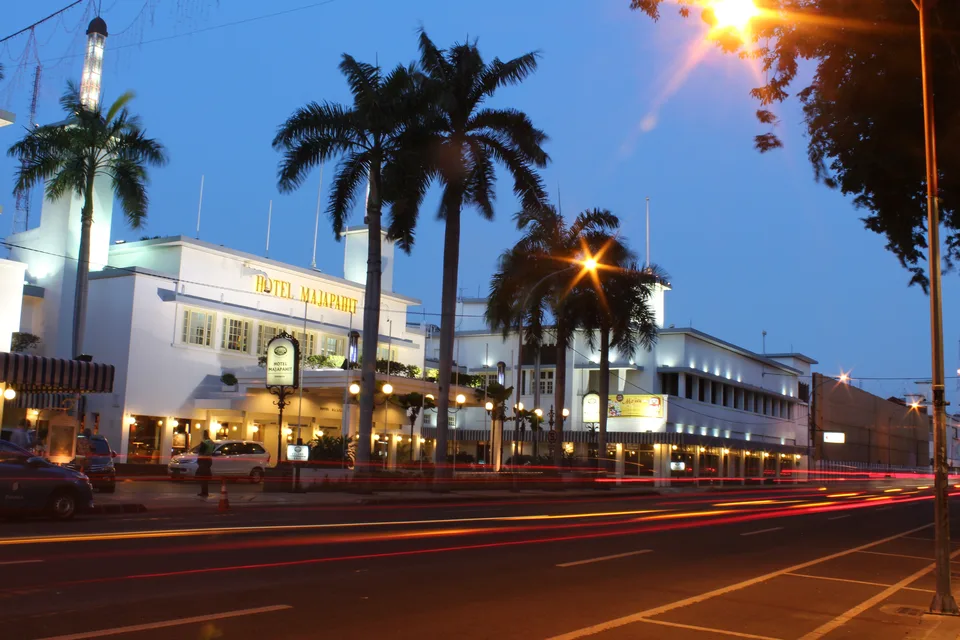
Hotel Majapahit connects Tunjungan’s architecture with national history. The operator’s historical account distinguishes construction beginning in 1910 from opening on 1 July 1911, and recalls the flag incident of 19 September 1945 when the property was known as the Yamato Hotel. That distinction is useful when comparing summaries that give different dates.
It remains a functioning hotel. If you want a heritage tour, afternoon tea or another visitor experience, confirm availability, price and booking requirements with the property. Do not assume a public right to wander through guest areas. Viewing the frontage from the street is a separate activity, and enough for visitors who simply want to understand the building’s place along Tunjungan without adding a paid experience.
Arrive through Juanda with a complete transfer plan
Juanda International Airport serves the city, but reaching your accommodation is a separate part of the arrival. The airport operator’s ground transport page lists buses, shuttles and taxis. Confirm the terminal on your ticket and use the designated service information on arrival; this guide does not assign an unverified bus fare or promise a fixed transfer time.
For a booked car, provide the flight number and agree on the meeting point, luggage capacity, tolls and delay policy. If changing flights, check whether terminals differ and how much time the airline requires. For an early departure, organise the return transfer before the final evening. A central hotel’s airport offer may be optional, so include it explicitly in the comparison of room packages.
Read the station name before buying a train ticket
Surabaya Gubeng and Surabaya Pasar Turi are distinct stations. KAI’s current station information confirms both within its network; the station printed on your own itinerary is the one that matters. Do not instruct a driver simply to go to “Surabaya station”.
Use KAI’s official passenger and booking service to compare trains for your date, destination and preferred class. Check passenger identification requirements, the boarding procedure and luggage rules before leaving for the station. Allow time for the city journey as well as station formalities. Regional services and long-distance trains can have different booking arrangements, so a timetable screenshot or a familiar train name should not substitute for a confirmed ticket. Keep the departure details accessible when mobile reception is inconvenient.
Use buses where the route supports the day
The Surabaya transport department’s service information lists a general fare of Rp5,000 and a student fare of Rp2,500 across the services it describes. Suroboyo Bus and WiraWiri are listed at 05:30–21:00, with other services having different hours. Verify your particular route, payment method and last usable departure rather than treating the network as one uniform timetable.
Ask about transfers and any concession evidence before travelling. The ordinary bus system and the SSCT sightseeing service are different products: the tourism portal’s current maintenance notice concerns the regular SSCT bus on 16–18 October 2026. For gaps in the network, compare a taxi or booked car. A useful low-cost journey still needs a safe, practical route between the stop and your destination.
Eat rawon and understand what is in the sauce
Rawon is a good introduction to East Javanese cooking: beef soup with a dark broth coloured and flavoured by kluwek. Rice and accompaniments such as sprouts, sambal or salted egg vary with the serving. The national tourism explanation of rawon helps decode the dish without claiming that one restaurant represents the only authentic version.
Another regional dish, rujak cingur, combines fruit and vegetables with cow snout and a petis-based sauce. Ask about ingredients if dietary restrictions matter; a vegetable-heavy appearance does not establish a vegetarian meal, and sauces can contain seafood. Order portions to suit your appetite and establish the total before adding side dishes. Avoid building a meal plan around an unverified “best local” recommendation or a price copied from an old menu.
Budget with a few verified anchors
Two general-fare local bus journeys, the November Museum ticket and the listed Kalimas boat route add up to Rp28,000 per adult at the published rates used here. This is an illustration of those four items, not a complete day’s budget. It excludes meals, accommodation, transfers, other admissions and any change in ticket conditions.
Choose shopping locations according to what you need, and check receipts and warranties on higher-value purchases. Confirm payment methods: a QRIS sign does not establish that every foreign banking application will work. Arrange a usable alternative.
Plan around heat and the actual forecast
Surabaya’s lowland city days need a different plan from a mountain excursion. Place longer walks early, leave space for an indoor stop and avoid using every afternoon for exposed sightseeing. Check BMKG’s national weather information shortly before outdoor activities and again when conditions change.
Seasonal descriptions are useful only at a broad level. In September 2026, the city’s dry-weather preparedness notice discussed unusually dry conditions and the need to adjust activity during strong heat. That is a reminder that a familiar rainy-season label does not predict your travel week. For a first visit, choose dates that fit your commitments and build a flexible itinerary; do not pay extra for a promise of dry weather that no hotel or guide can guarantee.
Spend one day connecting the centre’s history
Begin with the November Museum, subject to its booking calendar, and give the memorial surroundings time rather than rushing straight to the next stop. Move to a meal and a break before exploring Siola and a manageable stretch of Tunjungan. This creates a day with a historical thread and avoids placing all the outdoor walking in the hottest hours.
See the Hotel Majapahit frontage while exploring the street, or book an organised heritage experience if that particularly interests you. Keep the evening near your accommodation unless a confirmed Kalimas departure fits comfortably. If arrival delays reduce the available time, preserve one museum and the street outing rather than attempting every stop. The purpose is to connect the city’s stories, not to maximise the number of entrances scanned.
Give the northern districts their own second day
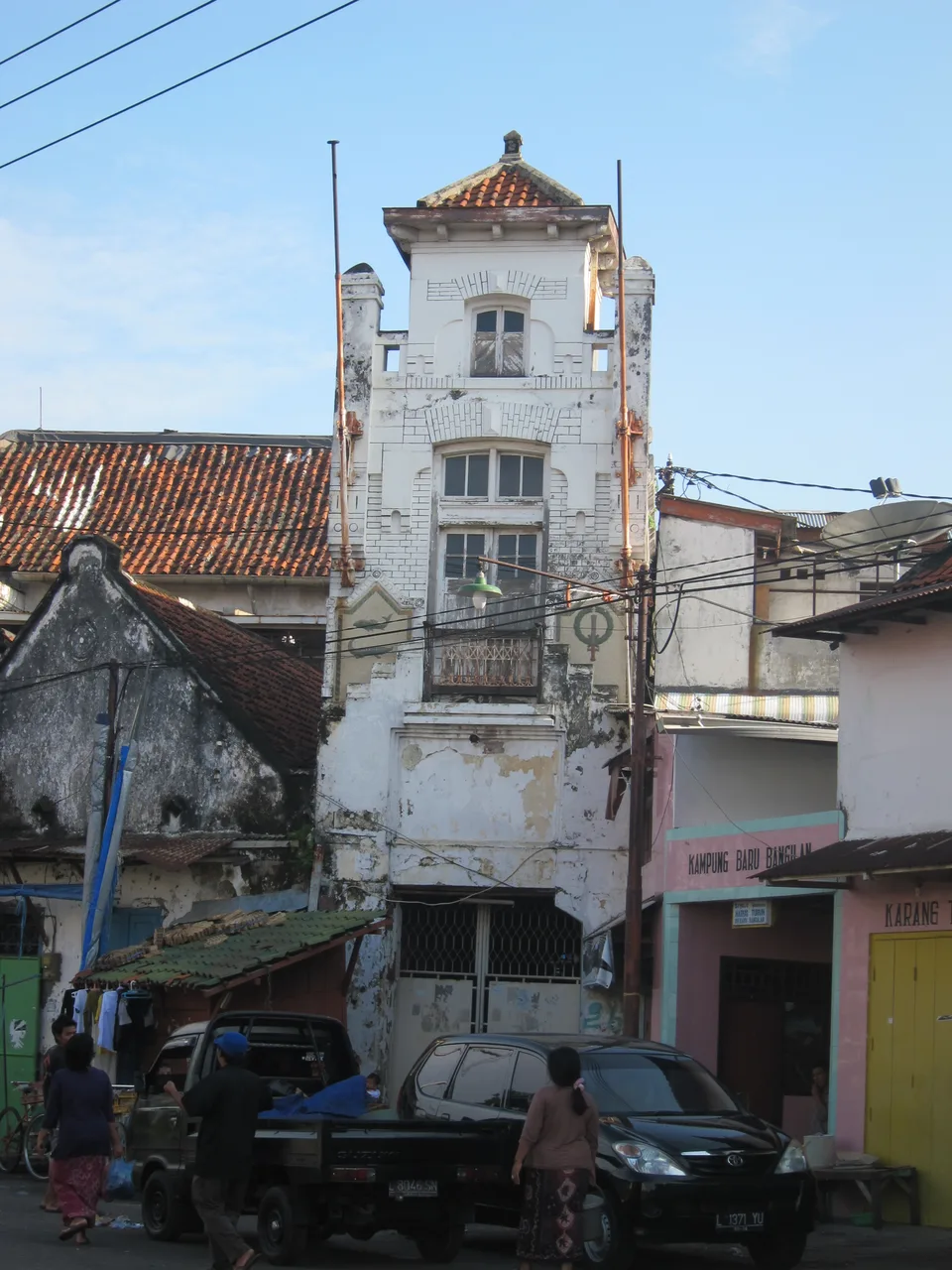
Choose a compact Kota Lama route for the morning, then decide whether to continue towards Ampel. Build in a meal and a return plan, and avoid assuming that the entire heritage area can be covered on foot without breaks. The old harbourmaster tower photograph illustrates the area’s older built fabric; it is not confirmation of public access inside that building.
For a third day, choose the mangrove gardens or Monkasel. Avoid adding a distant excursion on departure morning. With only one full day, select the central or northern programme rather than compressing both.
Test a home against the household’s working week
Start with temporary accommodation and inspect housing before signing a long lease. Compare an apartment, a house and any employer-arranged option on the same basis: total cost, maintenance, security, furnishings and location. Visit a promising property at different times and test the bedroom, air-conditioning, water pressure and internet connection.
Put the deposit, payment schedule, inventory, repairs, service charges and termination terms in a contract you understand. Confirm who has authority to let the property. Ask about water storage, drainage and access during heavy rain, without assuming that every street has the same exposure. Take photographs of the agreed condition at handover. A smaller home closer to work or school may support the household better than more space across a difficult daily journey.
Set up utilities and schools before settling in
Ask whether electricity is prepaid or billed and how the landlord calculates any recharge. PLN’s explanation of service types is useful for understanding the account arrangement. For water, Surya Sembada’s customer services provide billing and usage information. Confirm meter readings, account responsibility and complaint procedures at handover; also price internet, parking, laundry and waste arrangements.
Families should settle school suitability before choosing a permanent address. Surabaya Intercultural School’s admissions page describes assessments, records and several fee categories, with its campus in Sambikerep. Request the current academic-year total, available places and transport route. Its requirements are school-specific, so compare alternatives rather than treating one admissions process as a rule for every school in the city.
Make healthcare and emergency access practical
Check whether the care you need is available, how appointments work and what payment is expected. Keep insurance assistance details accessible and ask about specialist referral or evacuation cover where relevant. The FCDO’s Indonesia health guidance discusses medical planning, medicine rules and drinking-water precautions; do not assume that a foreign prescription authorises every medicine for import.
For an emergency within the city, Surabaya’s BPBD Command Center 112 coordinates integrated assistance around the clock. Give a clear address and nearby landmark, and ask your accommodation to help communicate if necessary. Confirm where you would seek routine care before an urgent need arises. For a long stay, continuity of treatment deserves the same attention as housing and commuting, especially where a household member depends on regular specialist appointments.
Separate a visitor visa from a relocation route
Eligibility depends on nationality, passport and purpose. The Immigration office’s B1 guidance describes a single-entry visitor option for eligible passport holders, initially allowing up to 30 days for Rp500,000, with one extension to a maximum total of 60 days. Check the current conditions, passport validity and onward-travel requirements. The period in which a visa can be used differs from the authorised stay after arrival.
Apply through the official Indonesian e-visa service where appropriate. For employment, the Manpower Ministry’s foreign-worker framework and immigration permissions must both be addressed by the relevant employer and applicant. Study requires the institution’s correct route; permanent residence has separate conditions. A visitor visa, rented apartment or repeated border crossing should not be represented as automatic permission to live and work indefinitely.
Complete arrival formalities and check relevant local rules
International arrivals must complete the integrated All Indonesia declaration. Use the official All Indonesia service within the permitted three-day period before arrival. This covers arrival information across several agencies; it is separate from establishing that you hold the correct visa or entry entitlement.
Read current government travel advice on Indonesian rules and safety, including the new criminal code’s complaint-based provisions concerning cohabitation and sex outside marriage. Do not confuse those provisions with a blanket claim that all unmarried visitors are refused hotels. If driving, check the licence and insurance requirements for your own circumstances. For a complicated move, compare the Indonesia consultant listings or VisaWand consultant directory, with a written scope and fees.
Compare a regional stop with another urban base
Malang offers a different East Java city to consider when extending the journey; use its VisaWand city page to locate the destination and related information. Mountain trips, including a Bromo excursion, need their own transport, rest and current access checks. Confirm official restrictions and the return plan before paying a tour provider, particularly if connecting with a flight.
For a move, compare the actual employment opportunities and test daily life in the shortlisted neighbourhood. The Jakarta city page and Indonesia country page can support a broader comparison.
Official planning resources
Reviewed 17 October 2026. Use the official resources linked throughout this guide for admission, transport, housing and immigration decisions. Prices, services and rules can change; confirm the details relevant to your dates. Photography illustrates the locations and is not a live view.
View all official resources
- Indonesia Tourism East Java overview
- Musea Surabaya city museum network
- Surabaya municipal tourism information
- Museum Sepuluh Nopember official booking and admission
- City government on Kota Lama heritage districts
- Museum Surabaya at Siola official visit page
- Indonesia Tourism submarine monument information
- Kalimas boat Taman Prestasi–Monkasel route
- Official Surabaya tourism ticket portal and service notices
- City government mangrove garden visitor information
- Hotel Majapahit official rooms and booking information
- MGallery account of Hotel Majapahit history
- Juanda International Airport ground transport
- KAI confirms Surabaya Gubeng and Pasar Turi stations
- KAI official booking and passenger information
- Surabaya transport department service fares and hours
- Indonesia Tourism rawon ingredients and variations
- BMKG national forecasts and weather warnings
- City government September 2026 dry-weather preparedness
- PLN prepaid and billed electricity service types
- Surya Sembada municipal water customer services
- Surabaya Intercultural School admissions requirements
- FCDO Indonesia healthcare and medicines guidance
- Surabaya BPBD integrated Command Center 112
- Immigration office B1 visitor visa conditions
- Official Indonesian e-visa application service
- Manpower Ministry foreign-worker implementing regulation
- Official All Indonesia arrival declaration
- FCDO Indonesia safety transport and legal conditions
Plan the next part of your journey
Explore the Indonesia guide, browse other cities or compare consultants for your travel and relocation questions.