Visa
Kolkata rewards time on the street
Kolkata is a city of bookstalls, workshop doors, museum galleries and conversations that continue over tea. Its most memorable days move between those settings rather than racing between monuments. Come for Bengali culture, the Hooghly waterfront and the contrast between Victoria Memorial’s formal gardens and the everyday commerce around the river crossings. Give it three full days for a first encounter, with more time if literature, photography or the festival calendar shapes your trip.
This is West Bengal’s capital, on the eastern bank of the Hooghly. Howrah, across the water, is a separate city within the wider metropolitan area. That distinction matters when booking trains and accommodation: a property advertised for “Kolkata” may put a river crossing between you and your daily destination. Start with VisaWand’s India country guide, then use this guide to choose a manageable base and an itinerary suited to the season.
Read the city beyond its colonial buildings
Kolkata’s former role as the capital of British India explains much of its monumental architecture, but it does not explain the whole city. Bengali literature, religious festivals, commercial neighbourhoods and artistic production deserve equal space in a visit. The useful question is less how many colonial facades you can photograph than how those buildings sit beside the institutions and working communities that continue to shape Kolkata.
Tagore’s family home provides a particularly strong introduction. Rabindra Bharati University’s museum at Jorasanko interprets a household associated with Rabindranath Tagore and with artists Gaganendranath and Abanindranath Tagore. It connects literature and the Bengal School of painting to a particular domestic setting. Check current visitor arrangements before travelling there, and be prepared to remove your shoes where requested. Pair the visit with a northern neighbourhood walk rather than treating it as an isolated stop across town.
Choose your base by the journeys you will repeat
For a first sightseeing stay, the Park Street, Chowringhee and central museum area is a practical starting point. It puts food, the Indian Museum and the Maidan side of the city within the same broad district, although individual journeys still need planning. Esplanade is useful for connections and central errands; a room facing busy traffic may be a poor trade for a small saving.
Northern Kolkata makes more sense for travellers concentrating on Jorasanko, College Street and Kumartuli. Accommodation should be judged by its actual entrance, street access and facilities rather than a romantic description of an old neighbourhood. For business or a longer stay, compare addresses around your workplace before assuming a central tourist hotel is convenient. The eastern metropolitan districts and the river’s western bank create very different daily travel patterns. Test the route at the time you would actually use it.
Victoria Memorial needs two different visiting decisions
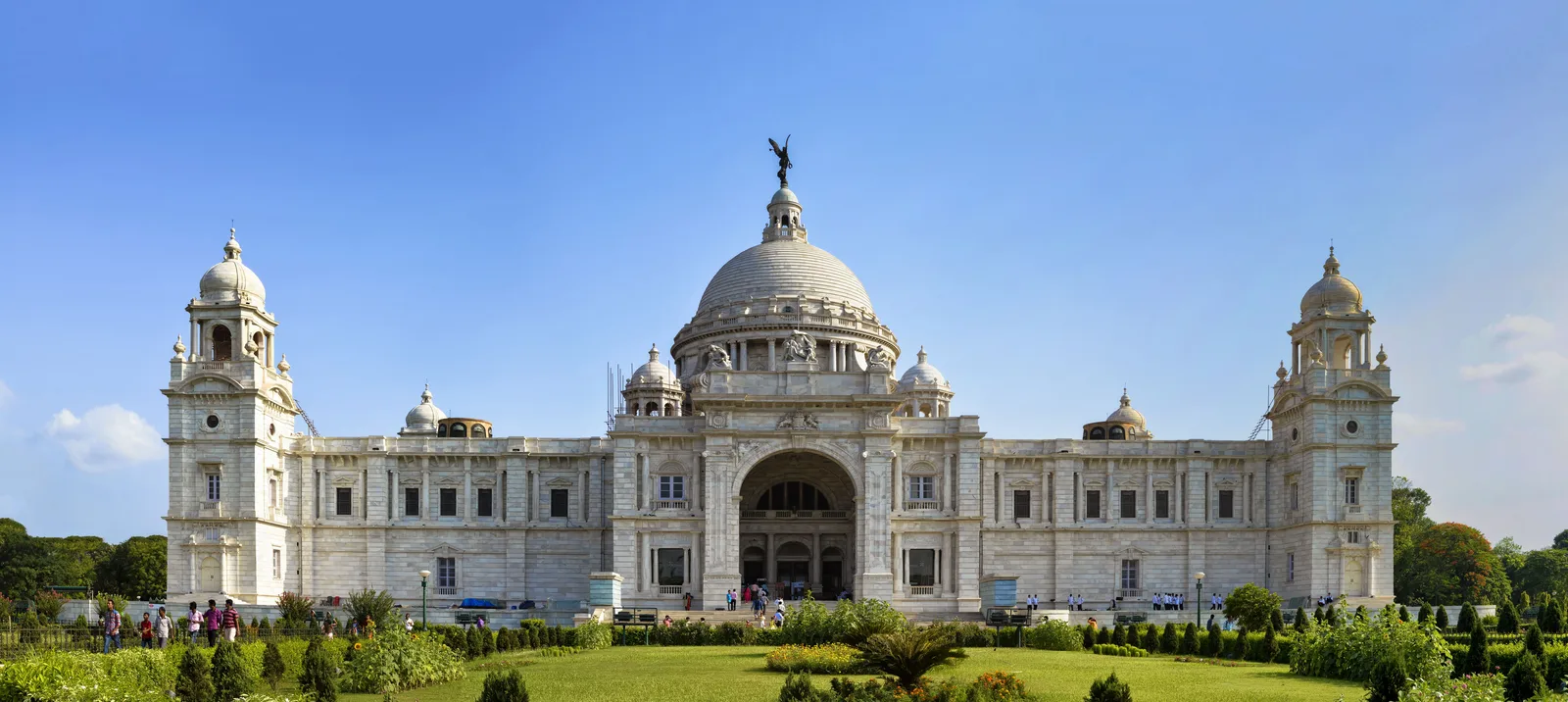
Victoria Memorial’s white marble silhouette and grounds make an accessible introduction to the city’s monumental landscape. Decide whether you want the museum galleries, the gardens, or both. Under the Memorial’s published visitor arrangements, galleries open Tuesday to Sunday, 10am–6pm, subject to designated holiday closures. Gallery admission is ₹50 for Indian visitors, ₹100 for visitors from the listed SAARC countries with a passport, and ₹500 for other foreign visitors.
The gardens open daily, 6am–6pm, with a separate ₹30 entry ticket; garden admission does not admit you to the museum. Travel light because the published rules restrict bags, food and liquids, and prohibit flash photography. Check the Memorial’s latest announcements before choosing a visit around a particular exhibition: its notice lists the first-floor Biplobi Bharat Gallery as closed from 27 January 2026 until further notice. Do not build an evening around an assumed sound-and-light performance without confirming its operation.
Make the Indian Museum a selective visit
The Indian Museum is easier to appreciate with a shortlist than with an attempt to exhaust every room. Ask at the entrance which galleries are accessible that day, then choose subjects that interest you. Its visitor information lists Tuesday–Sunday opening, 10am–6pm, with Monday and designated holiday closures. Published adult admission is ₹75 for Indian visitors and ₹500 for foreign visitors; check applicable concessions rather than assuming an overseas child or senior receives a domestic discount.
Photography can affect the budget: the listed smartphone charge is ₹50 and the DSLR charge ₹100, plus 18% GST. Commercial photography has separate conditions. The museum’s dated notices also list the Long Archaeology Gallery as closed for renovation from July 2026 until the work finishes. Wheelchairs, lifts and ramps are available in specified areas, but visitors needing a continuous step-free route should confirm the exact galleries and entrance arrangements with the museum.
College Street is worth browsing without a shopping target
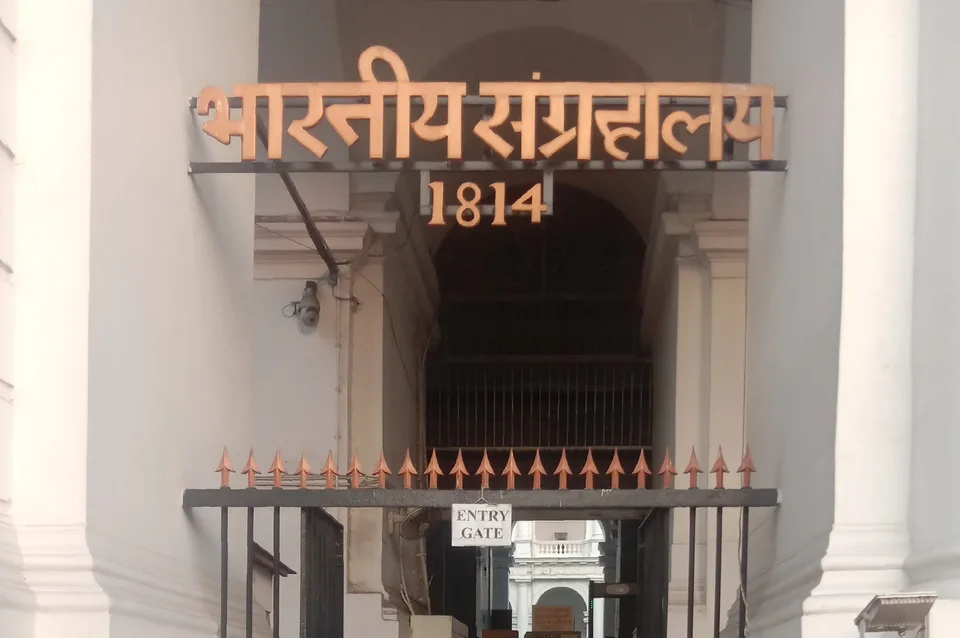
College Street, or Boi Para, brings Kolkata’s literary reputation into a commercial setting: stalls and shops sell new and second-hand books around major educational institutions. Allow time to browse rather than searching only for a famous photograph. If buying an older edition, inspect its binding, missing pages and condition before agreeing a price. Academic titles and Bengali-language stock are part of the place’s character, even if they are not what you intend to take home.
The Indian Coffee House belongs naturally in this outing, but treat it as a place to pause and observe rather than expecting a polished specialty-coffee experience. Keep the northern part of your day flexible: shop hours differ, pavements can be busy, and a meaningful browse takes longer than a map suggests. Combining College Street with Jorasanko is more coherent than repeatedly returning south between individual stops.
Kumartuli is a workplace before it is an attraction
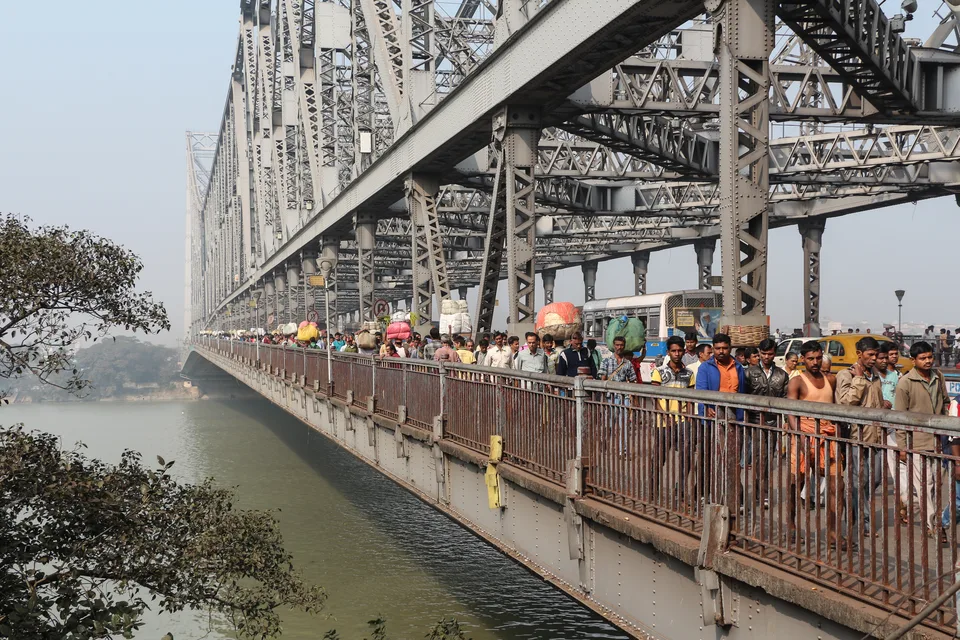
Incredible India’s Kumartuli introduction describes the potters’ quarter where artisans make clay idols for festivals. Its interest lies in seeing a process, not simply a finished object. The amount and stage of work depend on the calendar, so photographs from a previous festival season are no promise of what will be on display during your visit.
Stay clear of materials and doorways, ask before entering a workshop, and request permission before photographing someone working. An artisan’s consent to a quick photograph does not mean permission to touch a sculpture or interrupt a delivery. A local guide can help explain the sequence and religious context, but agree the scope and fee beforehand. Leave time to walk the surrounding streets and absorb the change in scale from the central monumental district. Avoid turning a busy production area into a rushed checklist stop.
See the Hooghly as a working river
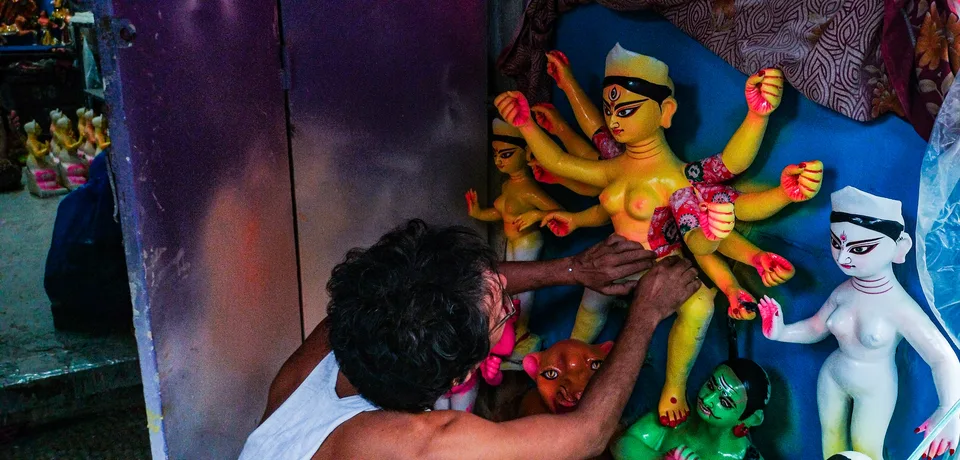
Howrah Bridge is both a landmark and a heavily used connection across the Hooghly. Its steel structure becomes more interesting when seen alongside pedestrians, deliveries and the movements around the riverbank. Choose a safe viewpoint and keep footways clear; the working crossing is not a dedicated viewing platform. A quieter waterfront pause can be more rewarding than trying to make every photograph from the bridge itself.
Across the river, Howrah’s visitor information helps orient the western bank and its major railway station. If considering a ferry, confirm the operating ghat, destination and return service locally on the day, and follow weather and boarding instructions. Do not assume a sightseeing boat and a public ferry are interchangeable. Likewise, a ticket to Howrah station does not mean arrival in the Park Street hotel district. Keep the river crossing visible in both your sightseeing and departure plans.
Durga Puja changes the trip rather than decorating it
UNESCO inscribed Durga Puja in Kolkata on its Representative List of the Intangible Cultural Heritage of Humanity in 2021. The recognition concerns a living festival tradition, not a designation of the entire city as a World Heritage Site. The annual September–October celebration involves temporary pandals, idol-making, performance and immersion, with preparations extending well beyond the main days.
Visit then if the festival is your purpose. Reserve accommodation early, expect crowds and altered road access, and ask your host which walking routes and return arrangements are realistic. A standard museum-and-taxi itinerary will need adjustment. Travellers seeking calmer streets, predictable transfers or an introductory visit with small children may prefer another period. Check the current year’s programme and local instructions instead of carrying forward dates or access arrangements from an earlier Puja. The festival deserves a deliberate plan and enough time to experience it respectfully.
Book the room as carefully as the neighbourhood
Compare small hotels, larger full-service properties and apartments against the needs of your trip. A short museum break benefits from a central address and luggage storage; a longer assignment may need laundry, workspace and reliable internet more than a landmark view. Ask whether the quoted price includes taxes, breakfast and any extra-person charge. Check cancellation terms carefully around festivals and other busy dates.
Before reserving, confirm a working lift if stairs are difficult, the room’s window and noise situation, air-conditioning arrangements and the exact check-in time. For an apartment, ask who handles access if the arrival flight is delayed. Foreign visitors should establish that the property accepts their documents and handles the required accommodation reporting. Avoid paying a long non-refundable stay solely on attractive photographs. A few initial nights provide time to inspect the room, neighbourhood and commute before extending.
Save the address, entrance photograph and reception number offline before landing. Ask the host for any locally used building or street name that helps a driver identify the entrance. If arriving before check-in, confirm whether luggage storage is available and whether an early room requires payment for the preceding night.
Airport arrivals now have a metro option
Netaji Subhas Chandra Bose International Airport uses the code CCU. The important change is that airport metro access is operating: the Railway Ministry documented passenger travel between Jai Hind Bimanbandar and Noapara in June 2026. Older airport pages describing a future metro connection are therefore an unreliable basis for a current arrival plan. Noapara provides access to the wider network, but reaching a central hotel still involves planning the appropriate connection and final walk or vehicle ride.
Consult the current official metro network overview and check the airport line’s actual operating hours for your arrival day. Do not infer its last train from another line’s schedule or assume the Orange Line is complete to the airport. For luggage-heavy, late or family arrivals, compare an arranged transfer with the airport’s published taxi options. Confirm the current pickup point and fare arrangement with airport staff, allowing for traffic rather than relying on a fixed transfer time.
Use rail for the long journey and check the last mile
The metro makes several important cross-city movements more practical, including the Green Line between Howrah Maidan and Salt Lake Sector V through central Kolkata and Sealdah. Its river crossing is useful transport, not just an engineering attraction. For ordinary sightseeing, start with the station closest to your destination and work backwards, including the walk from the exit. A “near metro” hotel can still involve a difficult pavement or road crossing with a suitcase.
Service patterns vary by line and day. Metro Railway’s July 2026 service notice introduced experimental changes to Blue and Green line operations; it should not be read as a timetable for the airport line. Check current station information before an early departure or late return. For mainline rail, read the exact station name and code on your booking. Howrah and Sealdah are distinct terminals, and a wrong-terminal journey can consume the buffer intended for boarding.
Eat across the day rather than ordering everything at once
Kolkata gives food a central role in a visit. Incredible India’s food guide highlights rolls and sweets, while the national tourism overview points to Park Street’s restaurants and the city’s biryani and tea culture. A useful approach is to spread the experience: a roll or small snack between visits, a Bengali meal when you have time to understand the menu, and a separate stop for sweets.
Ask what contains fish, shellfish, egg, dairy or nuts; a familiar dish name does not settle an allergy question. Vegetarians should describe their requirements explicitly rather than assuming a shared preparation area meets them. Choose food served freshly and hot, and check drinking-water arrangements. Markets are good for observing everyday shopping as well as buying souvenirs, but compare quality and prices before committing. For textiles, ask about fibre, care instructions and whether the price is for a complete garment or unstitched fabric.
Build a budget from the costs you can actually check
Accommodation and private transport will often determine the difference between a modest visit and an expensive one, so price those for your actual dates before choosing a daily allowance. Add museum admission according to nationality, camera charges where applicable, meals, drinking water and a reserve for a taxi when weather or fatigue makes another journey impractical. Do not copy a domestic sightseeing budget into a foreign visitor’s plan.
For a concrete comparison, an Indian adult paying the listed gallery admission at Victoria Memorial and adult entry at the Indian Museum spends ₹125 before transport, food or photography; an adult in the other-foreign-visitor category spends ₹1,000. The Memorial’s garden ticket is a separate decision. These are admission examples, not complete daily budgets. Carry more than one usable payment method, keep small cash for minor purchases, and confirm card acceptance before ordering or beginning a service.
Winter is easier for walking; rain needs spare time
For a first trip built around walking, the cooler winter period is generally the more comfortable choice. The IMD regional climate brochure lists Alipore January normal maximum/minimum temperatures of 25.8°C and 14.1°C, compared with 35.3°C and 25.3°C in April. Its table gives July rainfall as 396mm against January’s 10.4mm. The brochure does not state the averaging period beside that table, so treat these as broad seasonal context rather than a current forecast.
Heat calls for shorter outdoor sessions and an indoor midday break. Rain calls for waterproof protection for documents, flexible transfers and extra time before flights or trains. October can still be warm and wet; festival season does not automatically mean dry sightseeing weather. Use the IMD Kolkata forecasts and warnings shortly before travel and during your stay. If warnings affect river travel or outdoor activities, reorganise the day around conditions rather than a prepaid checklist.
A three-day itinerary with room to stop
Day one: start around the Maidan and Victoria Memorial, choosing garden or gallery admission according to your interests. Keep the afternoon for the Indian Museum if it is open, then finish around Park Street. If two substantial museums feel excessive, move the Indian Museum to another day and preserve time for a meal and a walk.
Day two: concentrate on northern Kolkata. Visit Jorasanko under its current arrangements, browse College Street, and allow time for a coffee or tea stop. Add Kumartuli only if you can reach it without turning every stop into a hurried transfer; otherwise make it the following morning’s focus.
Day three: spend time around the Hooghly and Howrah Bridge, with an optional western-bank outing chosen around confirmed transport. Leave the final afternoon for whatever interested you most: books, an unfinished museum visit or a neighbourhood meal. Swap museum days around Monday and holiday closures, and simplify the route during heat or Puja crowds.
Moving starts with a trial commute and a written lease
For a move, arrange temporary accommodation before selecting a long-term home. Take the proposed commute in both directions at working hours, including any station interchange and last-mile journey. A larger apartment can become a poor bargain if every weekday depends on an uncomfortable or unreliable connection. Compare the whole monthly household cost, not just an advertised rent.
Ask for a written agreement stating the deposit, notice period, maintenance charges, inventory, repair responsibilities and any restrictions on guests or pets. Check the landlord’s authority to let the property before transferring a substantial payment. Inspect damp, ventilation, drainage, water pressure, electrical capacity, lift operation and mobile reception. Visit the street after dark as well as during the day. For families, confirm school availability and the actual school-run route before choosing housing; proximity on a map is not an admission offer or a workable daily journey.
Check household services at the property
For premises supplied by CESC, its customer services portal provides electricity bill, name-change, connection and outage services. Establish who holds the account, how the meter is read and which charges the lease passes to you. Do not assume every address in the wider metropolitan area has the same supplier. Test internet provision for the building and room rather than accepting a neighbourhood-wide coverage claim.
Within the municipal area, the Kolkata Municipal Corporation water guidance explains connections and complaint channels. Ask how the particular building stores and supplies water and what arrangements are needed for drinking. Identify a nearby pharmacy and suitable medical facility before an urgent need arises. The UK government’s India health advice highlights insurance, mosquito-borne illness and air-quality considerations, and lists 112 for emergencies. Discuss personal medical needs with a qualified clinician; a central address alone does not establish access to the treatment you require.
Match immigration permission to the purpose of the stay
Use the Government of India visa portal to check nationality-specific eligibility and the appropriate application route. Tourism, employment, business activity and study are different purposes; a visitor permission should not be treated as authority to take a local job or begin a degree. Longer residence and permanent relocation require their own lawful basis. Renting a home or finding a consultant does not create immigration status.
Foreign nationals and OCI cardholders must check the official e-Arrival Card requirement. The portal states that it is submitted within 72 hours before arrival and is arrival information, not a visa. Review current health declarations and airline instructions as well. Registration and reporting obligations depend on your visa and circumstances; the UK government entry guidance is a useful supplementary explanation for British travellers, not a universal nationality checklist. For complex work, family or residence plans, compare appropriately experienced VisaWand consultant listings and confirm requirements with the competent Indian authority.
Extend the journey without calling everything a day trip
Santiniketan near Bolpur is a strong continuation for travellers interested in Tagore and the university setting. Consider an overnight stay rather than forcing a hurried return around transport connections. The Incredible India’s West Bengal directory also introduces Bishnupur and the Sundarbans, which call for different planning: one is a cultural extension, while the other involves riverine and wildlife arrangements. Check operating conditions and permissions with the relevant provider and authority; wildlife sightings cannot be promised.
For an urban comparison, VisaWand’s Chennai city guide and Bengaluru city guide help assess a different Indian itinerary or working base. Browse the India location directory for other cities and settlements, and the India consultant destination page for matching services. Choose the next stop because it adds something you want to understand, leaving enough time for Kolkata’s books, river and neighbourhoods to become more than photographs.
Official planning resources
Reviewed 15 October 2026. Use the official resources linked throughout this guide for admission, transport, housing and immigration decisions. Prices, services and rules can change; confirm the details relevant to your dates. Photography illustrates the locations and is not a live view.
View all official resources
- Victoria Memorial: admission, gardens and visiting rules
- Victoria Memorial: current closure notices
- Indian Museum: visitor information and admission
- Indian Museum: gallery closures and notices
- Incredible India: Kolkata visitor overview
- Incredible India: Kolkata food guide
- Rabindra Bharati University: Jorasanko museum
- UNESCO: Durga Puja in Kolkata
- Incredible India: College Street
- Incredible India: Howrah Bridge
- Incredible India: Howrah
- PIB: Kolkata Metro network, September 2026
- Railway Ministry: operating airport metro, June 2026
- Airports Authority of India: Kolkata airport taxis
- Metro Railway: revised Blue and Green line services
- IMD Regional Meteorological Centre: forecasts and warnings
- IMD: regional climate brochure
- Government of India: official visa and arrival-card portal
- UK government: India entry requirements
- UK government: health and medical care in India
- CESC: electricity accounts and customer services
- Kolkata Municipal Corporation: household water services
- UNESCO: Santiniketan
- Incredible India: West Bengal destinations
Plan the next part of your journey
Explore the India guide, browse other cities or compare consultants for your travel and relocation questions.