Visa
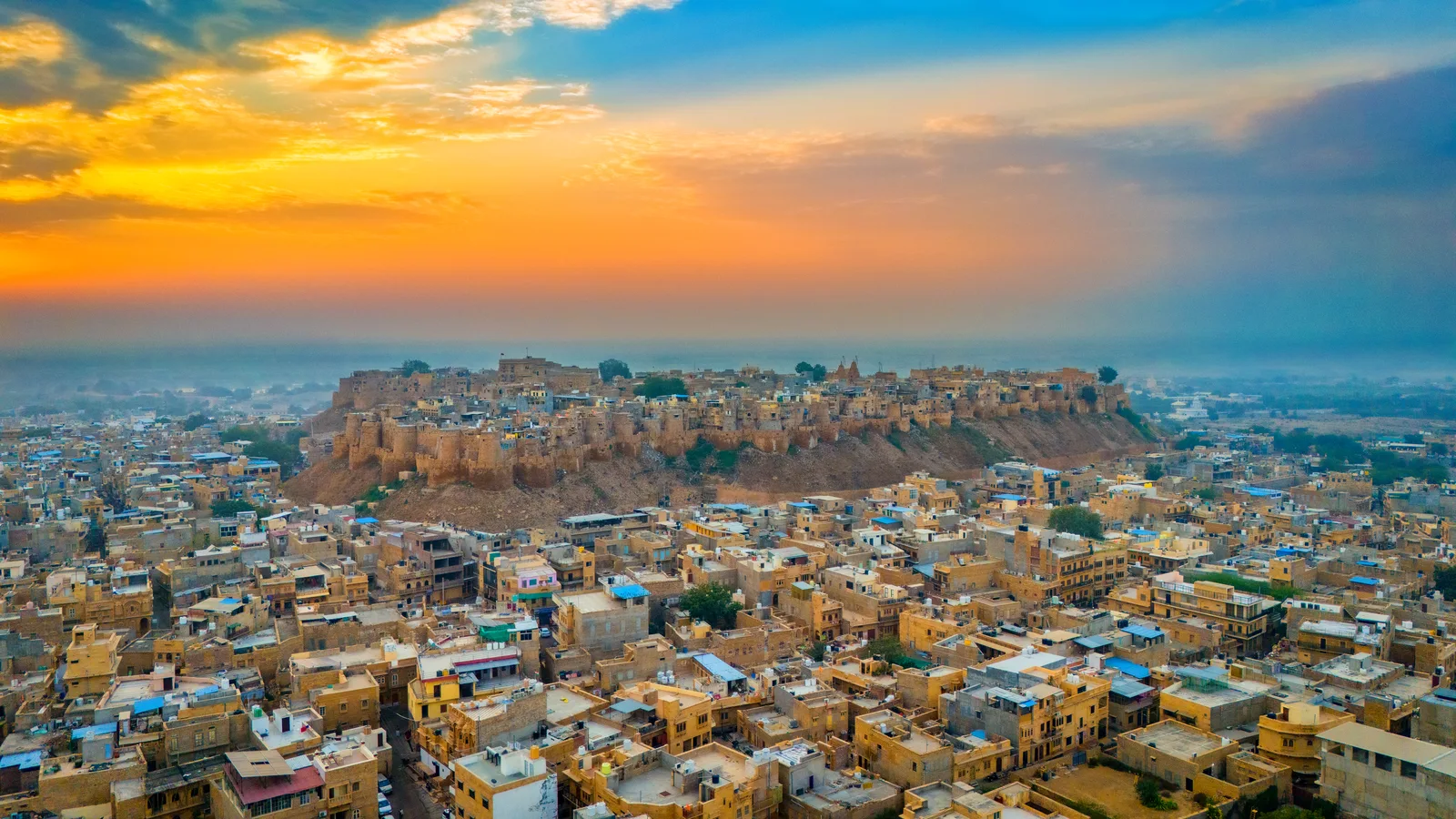
Give the Golden City time beyond sunset
Jaisalmer rewards a slower visit than its famous silhouette suggests. The sandstone fort rises above a city of carved houses, trading streets and rooftop terraces; outside town, the landscape opens into the Thar Desert. Architecture, food and an evening among the dunes can fit together beautifully, provided you allow for heat, road transfers and the difference between a town hotel and a remote camp.
Three nights make a sensible first visit: time for the fort, merchant houses, Gadisar Lake and one carefully chosen excursion. With two nights, reduce the list instead of spending every daylight hour in transit. A longer exploratory stay needs different questions about cooling, household water, healthcare and transport. Jaisalmer can be compelling as a destination without automatically meeting every requirement for living there.
Use VisaWand’s India country guide for the wider trip, then plan this western Rajasthan stop around your dates and actual arrival connections.
Read the fort as part of a living city
Rajasthan Tourism dates Jaisalmer’s foundation under Rawal Jaisal to 1156. Its city overview describes an inhabited fort containing homes, shops and visitor accommodation. That distinction matters on the ground: residential doorways and working businesses sit alongside monuments. Streets are shared spaces, and a camera does not turn someone’s home into an exhibit.
The fort is one component of UNESCO’s Hill Forts of Rajasthan World Heritage property, a serial designation covering six forts. Its importance extends beyond defensive walls to palaces, commerce, temples and the relationship between settlement and landscape. The designation does not cover every building in modern Jaisalmer.
Look at carved openings, shade and the transitions between streets and courtyards as well as the skyline. Ask before photographing people, religious activity or private interiors; a quiet residential lane deserves the same consideration as a crowded shrine.
Choose a base around access and daily needs
For a short stay, start by comparing three settings: within the fort, in the surrounding town, and outside the built-up centre. A fort address offers immediate access to historic lanes, but confirm the final approach, stairs and luggage arrangements.
Around the old-town markets, prioritise the room’s actual access and noise level over a broad neighbourhood label. On Sam Road, RTDC’s Moomal provides a verified example of accommodation with parking near the Collector office. A room outside the tightest lanes may suit travellers who depend on vehicle pickup.
Treat a desert camp as a separate base with its own transfer needs. Before splitting nights, decide where bags will stay, when check-in starts and how you will return to town. Families and travellers with reduced mobility should obtain photographs of bathrooms and entrances rather than relying on a property’s general description.
Explore the fort without confusing access and tickets
Give the fort an unhurried morning. Choose the palace museum, time in the lanes and a temple visit according to your interests and the access available that day. The museum is a specific interior attraction within a functioning settlement; a guided walk, religious-site admission and museum entry may involve different arrangements.
Reliable current primary-source tariffs for those individual interiors were not established for this guide. Ask at the relevant entrance for the applicable visitor category, camera charges, opening hours and what a ticket includes. Avoid buying a vaguely described “fort ticket” without understanding the actual service or building covered.
For the Jain temples, check visitor access around worship, dress requirements and rules for belongings and photography. Leave additional time if you need to store items or remove footwear. Steep approaches and historic interiors can make a compact route more demanding than its distance suggests; arranging a shorter guided visit can be more useful than attempting every building.
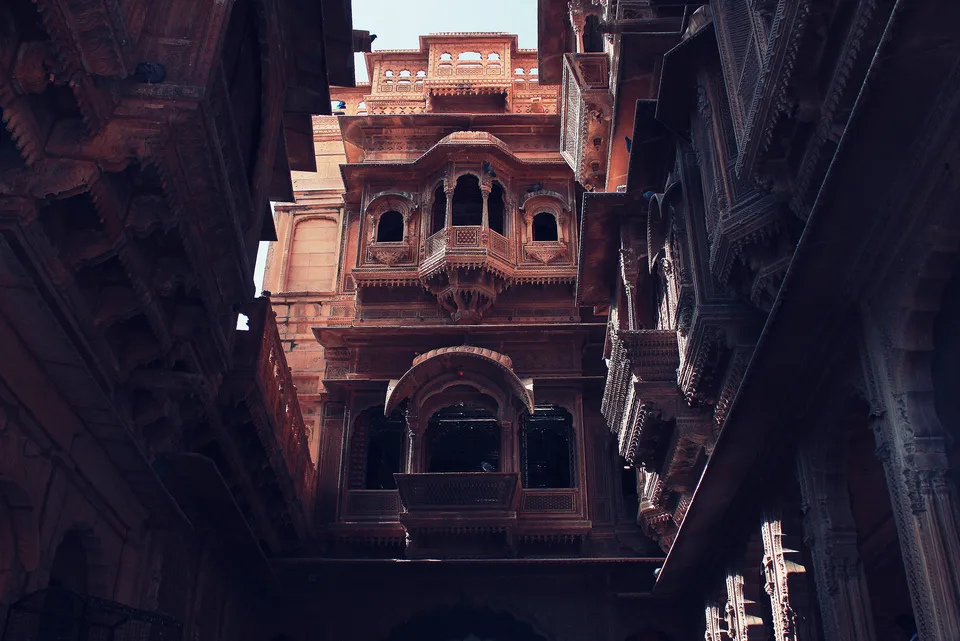
Give Patwon ki Haveli a separate visit
Patwon ki Haveli offers a different perspective on Jaisalmer: the wealth and architectural ambition of merchants. Incredible India describes five interconnected mansions, with the first commissioned by Guman Chand Patwa in 1805. Carved sandstone, projecting balconies and decorated interiors provide enough detail to justify a visit of their own.
The national tourism page publishes daily hours of 9am to 5pm. Confirm those hours locally before making a tight plan, and ask which section your admission covers. Do not assume that a price displayed for one museum or house opens the entire complex. Current entrance charges remain a separate check.
A useful way to visit is to look first at the facade, then choose an interior rather than rushing through several similar stops. Notice how openings bring light and ventilation into the building. If stairs or confined spaces are difficult, establish the accessible route before paying. Pair the visit with nearby market browsing, leaving another afternoon free for the desert.
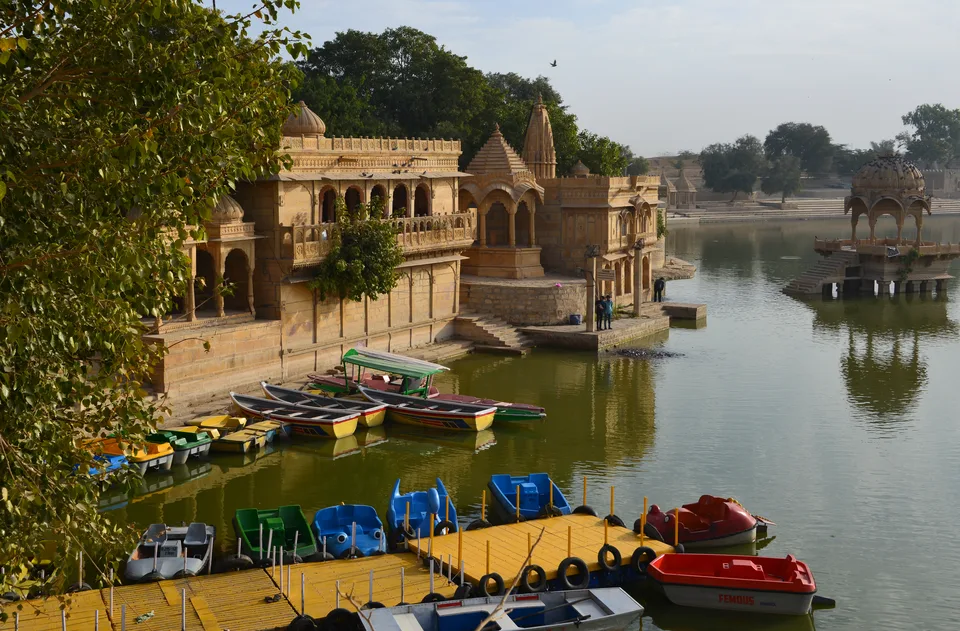
Use Gadisar Lake as a quieter counterpoint
Gadisar, also written Gadsisar, changes the pace after enclosed lanes and carved interiors. The Rajasthan government’s lake description explains its role as a historic rainwater reservoir and former source of city water. That history makes the setting more interesting than a convenient backdrop for photographs.
Allow time to sit, look at the waterside architecture and walk only as far as conditions and access permit. Boating can be an optional addition, but check availability, safety equipment, the price for your party and the duration before boarding. The official festival website carries an approximate boating figure without a clear current tariff date; it should not be treated as a confirmed fare.
Water levels, weather and activity around the lake can change the experience. Choose a cooler part of the day and leave enough daylight for your return.
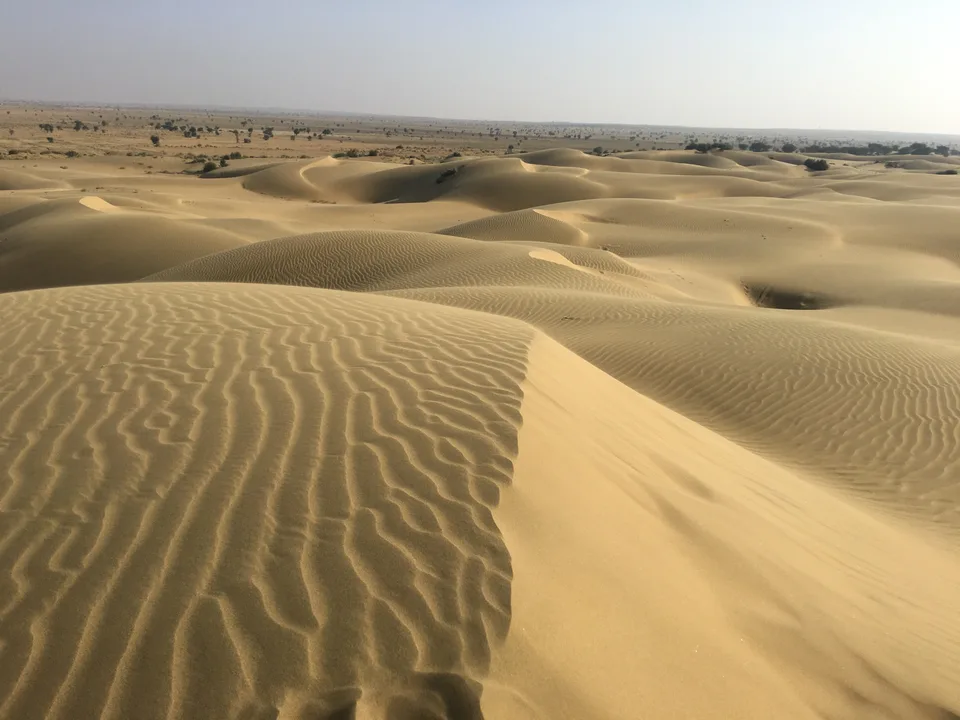
Decide what you want from the desert
Sam’s dunes are outside Jaisalmer, roughly 40–45 kilometres by road depending on the destination. The national tourism board’s Sam Sand Dunes page describes camel rides and jeep excursions. Neither activity is compulsory: you can choose a landscape-focused outing, a camp meal or a cultural programme according to your interests.
Ask a provider to name the camp and pickup point, specify shared or private transport, and itemise meals, rides and return arrangements. “Desert safari” alone does not explain whether the offer includes a short ride, an overnight stay or several hours away from town. Check bathroom facilities and sleeping arrangements before booking a night.
For camel activities, inspect the animals and handling, and decline if their condition or treatment concerns you. For vehicles, ask about seat belts and the planned route. Travellers who dislike loud entertainment should ask about amplified music and neighbouring camps. A quieter experience requires a specific agreement, not just a photograph of empty sand.
Separate wildlife, memorials and frontier excursions
Desert National Park is a wildlife landscape rather than another name for a camp evening. Its habitats include scrub, rocky ground and dunes, and it supports the Great Indian Bustard. The Rajasthan Forest Department’s park information is the starting point for checking permitted areas. Arrange any specialist outing around current access rules, your nationality and the exact route; no bird sighting is guaranteed.
For a shorter architectural excursion, Bada Bagh offers royal commemorative cenotaphs outside town. Incredible India lists visiting hours of 8am to 6pm. Check the closing time and admission locally, particularly if sunset photography is your aim.
Do not casually add a frontier drive to either trip. The UK government currently advises against travel within 10 kilometres of the India–Pakistan border and notes unmarked sections in Rajasthan. That is travel advice, distinct from Indian permit rules. Check both your government’s advice and local restrictions before considering a border-area itinerary.
Compare flights with the complete overland journey
Jaisalmer Airport uses the code JSA. IndiGo describes it as approximately 17 kilometres from the city centre on its Jaisalmer flight information page. Flight routes and operating days should be checked for your actual dates; a general destination page is not proof that a particular service is running.
The Airports Authority of India schedule page also warns that published schedules are tentative and should be verified with airlines. Compare the whole journey, including any connection, baggage allowance and onward pickup. A cheaper arrival elsewhere in Rajasthan can involve a substantial additional road or rail leg.
For the airport transfer, obtain a written quote from your accommodation or transport provider. Confirm the terminal meeting point, vehicle size, waiting charges and the last place a vehicle can reach near your lodging. No dependable current official shuttle timetable or fixed taxi tariff was established here. Arrange assistance in advance if you need a step-free transfer or help with luggage.
Book rail and bus journeys by date
Use Indian Railways passenger enquiry to establish station names and journey options, then complete reservations through an official booking channel. Confirm the boarding station, date, class and reservation status. An overnight journey may arrive on a different calendar day from departure, which affects the room you need to reserve.
For running information, CRIS explains the National Train Enquiry System, including its public enquiry service. A published train list or an old travel blog cannot confirm today’s departure or disruption status. Recheck before leaving your accommodation.
The RSRTC booking portal searches state bus services by origin, destination and date. Its booking help explains how to inspect stops, fares and seat availability. Compare the service type and exact arrival point as well as price. Arrange the final transfer separately, particularly for an early arrival. Ask a hotel whether luggage storage is available if your bus or train reaches Jaisalmer before check-in.
Plan local movement around heat and luggage
Historic sightseeing is easiest to organise in compact clusters, with vehicle journeys reserved for the airport and outlying places. Start with the fort and town sights, then give a desert excursion its own departure window. Repeatedly crossing between a camp and town can consume the time you hoped to spend exploring.
Ask your accommodation where an auto-rickshaw or taxi can collect you and agree the fare and destination before setting off. For a return trip, establish whether waiting time is included. Save the property’s name, telephone number and meeting point offline; a photograph of the entrance can help when street names or spellings vary.
Allow breaks between climbs and exposed walks. A route that looks short on a screen may include slopes, steps or little shade. If mobility is limited, ask a guide to describe the terrain and identify places to rest. Avoid making a paid onward connection depend on finishing a sightseeing circuit at an exact minute.
Compare accommodation using dated examples
Jaisalmer has heritage stays, town hotels and desert camps, but the useful comparison is what your rate buys. Check cooling, hot water, bathroom privacy, breakfast, cancellation terms and access after dark. Rooftop dining or a fort view does not establish the quality of the room itself.
As a concrete example, RTDC’s Moomal tariff lists an air-conditioned double at ₹2,450 and a non-air-conditioned double at ₹1,450 for 1 October–1 November 2026, including breakfast with applicable GST extra. For 2–10 November, the air-conditioned double rises to ₹3,950 with breakfast and either lunch or dinner, again before applicable GST.
These are one property’s dated published rates, not citywide averages or a promise of availability. They show why dates and meal plans matter. Obtain a complete quote for your stay before comparing alternatives. For a camp package, separate transport and activities from the accommodation cost so that a low headline price does not conceal essential extras.
Eat Rajasthan through its ingredients
Jaisalmer’s food makes sense in its arid setting. Try dal baati churma for lentils, baked wheat balls and a sweet accompaniment; ker sangri for desert berries and beans; or gatte ki sabzi for gram-flour dumplings in a yoghurt-based gravy. These dishes appear in Incredible India’s Jaisalmer food guide, alongside bajra flatbread and the meat curry laal maas.
Choose meals around appetite and activity. A substantial lunch is easier to enjoy when you have time to rest afterwards, while a lighter meal may suit a long road transfer. Read the menu before ordering and establish portion sizes, taxes and whether accompaniments cost extra. This guide does not assign a single “local price” to dishes served in very different settings.
Vegetarian food can contain dairy, wheat or nuts. Explain allergies directly and ask about ingredients and shared preparation. Choose freshly cooked food and safe drinking water. Ask what is included before accepting an elaborate tasting or special meal arranged through an intermediary.
Browse bazaars with a clear buying decision
The national tourism board identifies Sadar Bazaar, Bhatia Bazaar and Manak Chowk among Jaisalmer’s shopping areas. Textiles, embroidery, jewellery and decorative objects offer plenty to browse.
For a textile, inspect stitching, backing, fabric and size; for jewellery, ask what the metal and stones actually are. Request a receipt describing an expensive purchase and agree any delivery terms in writing. A seller’s claim of age, origin or therapeutic value is not independent verification. Be especially cautious about objects described as antiquities or made from wildlife materials, where ownership and export rules may matter.
Set a shopping allowance separately from transport and meals. If a driver or guide brings you to a particular shop, you can still compare elsewhere. Buy something because its workmanship and price suit you, rather than because you feel a short visit requires a major souvenir.
Choose the season for the trip you want
Cooler months make long walks and desert outings easier to arrange. India Meteorological Department’s Jaisalmer climate table for 1981–2010 gives January mean daily minimum and maximum temperatures of 9.1°C and 23.8°C, compared with 26.4°C and 41.9°C in May. These are historical averages, not a forecast or limits on possible weather.
That contrast has practical consequences. Winter visitors need layers for early starts and evenings; hotter-season visitors should check effective cooling and reduce exposed activity during the middle of the day. Lower room prices do not make a hot afternoon suitable for a strenuous walk.
Rain is possible in this desert environment, with the table showing higher average rainfall in July and August than in winter. Recheck current forecasts and road conditions before an outlying trip. If a festival is central to your visit, verify the particular year’s programme before paying for transport; annual publicity does not establish next year’s dates.
A realistic three-night itinerary
On arrival day, check in or leave your bags, eat and recover from the journey. If energy and weather allow, spend the later afternoon at Gadisar Lake, followed by dinner. Keep a delayed train or flight from derailing the rest of the visit by leaving this first outing flexible.
Use the first full day for the fort, with a palace museum or temple visit according to confirmed access. Take a proper midday break, then browse the town markets. On the second full day, visit Patwon ki Haveli in the morning and leave the afternoon for a prearranged Sam excursion. An overnight camp works only if its next-day return fits your departure.
With another day, choose Bada Bagh, a properly arranged wildlife outing or more time in town. Do not stack all three onto a desert evening. This is a suggested sequence rather than a guaranteed schedule: move outdoor activity to suit temperatures, access and your own pace.
Test a longer stay before signing a lease
A holiday room tests Jaisalmer’s appeal; it does not fully test a household routine. For relocation, arrange temporary accommodation near the place you will actually work or study, then try the commute at the relevant hours. Check the route with groceries or luggage, not only during a sightseeing walk.
Inspect prospective housing for cooling, ventilation, water supply and storage, drainage, secure access and bathroom condition. Ask who pays electricity and water charges, how meters are read, what backup is available and who arranges repairs. Obtain the deposit, notice period, furnishing inventory and responsibility for maintenance in writing. Reliable current comparable long-term rents were not established for this guide.
The fort’s setting adds a conservation consideration. The National Culture Fund’s project record includes management of water intake, sewage and solid waste. Ask practical questions about those systems rather than assuming a picturesque address guarantees suitable services. For a purchase, use independent legal advice before committing money.
Check household services, healthcare and school needs
Before a long stay, test mobile reception and internet inside the actual room, including a video call if work depends on it. Ask about installation permission, billing and backup arrangements. Locate everyday groceries, drinking-water supplies, laundry and a pharmacy, then calculate the recurring journeys these require.
Families should approach schools directly about admissions, teaching language, fees, transport and the support a child needs. Do not assume that tourist-facing English services translate into a suitable school or specialist medical service. For healthcare, establish where you would seek routine treatment and what a referral would involve.
The UK government’s India health advice recommends cover for treatment and unexpected evacuation and gives 112 as the emergency number for an ambulance. Check your own insurer’s process and exclusions. For legal and administrative preparation, its living-in-India guidance provides useful starting points, while Indian authorities determine the rules that apply to your nationality and status.
Match immigration permission to your purpose
Start with the Government of India’s e-visa instructions and your Indian diplomatic mission. Eligibility depends on nationality, passport and purpose; some applicants, including those of Pakistani origin, must follow a regular-visa route. Check permitted entry points as well as the visa category before buying a complicated itinerary.
A multi-year tourist visa does not grant unlimited residence or permission to take employment. The official portal directs employment applicants to a regular visa and lists separate study categories. Arrange work or formal study through the relevant employer or institution before travel. Longer residence and registration requirements need an individual check rather than repeated assumptions based on tourist stays.
The government also provides a separate e-arrival card, submitted within 72 hours before arrival; it is arrival information, not a visa. The UK entry guidance explains this distinction for its readers. VisaWand’s India consultant listings can help you find assistance, but applications and final eligibility should be checked against official requirements.
Consider Jodhpur and Bikaner as separate stops
Jaisalmer sits within a wider Rajasthan journey, but nearby on a regional map does not mean a quick urban transfer. Jodhpur and Bikaner are both sensible alternatives to investigate when choosing the route, subject to actual road, rail and flight connections. Give each its own accommodation and travel day rather than treating it as an extra neighbourhood.
Compare the Jodhpur destination page and Bikaner destination page for location details, and use the India destination directory to explore other places. These pages are destination listings; the transport operators remain the authority for a bookable journey.
For Jaisalmer itself, the strongest plan leaves room to notice the sandstone, understand the inhabited fort and enjoy the desert without chasing every advertised excursion. Build the visit around a comfortable base, verified connections and a few worthwhile experiences, then use a separate exploratory stay if you are considering making the city home.
Official planning resources
Reviewed 24 October 2026. Use the official resources linked throughout this guide for admission, transport, housing and immigration decisions. Prices, services and rules can change; confirm the details relevant to your dates. Photography illustrates the locations and is not a live view.
View all official resources
- Rajasthan Tourism: Jaisalmer
- UNESCO: Hill Forts of Rajasthan
- Incredible India: Patwon ki Haveli
- Rajasthan government: Gadisar Lake
- Incredible India: Sam Sand Dunes
- Rajasthan Forest Department: Desert National Park
- Incredible India: Bada Bagh memorials
- UK government: India–Pakistan border travel advice
- IndiGo: Jaisalmer airport and flight planning
- Airports Authority of India: Jaisalmer flight schedule
- Indian Railways: passenger reservation enquiry
- CRIS: National Train Enquiry System
- RSRTC: state bus booking
- RSRTC: fares, stops and seat availability help
- RTDC: Moomal hotel dated tariffs
- Incredible India: Jaisalmer food
- Incredible India: Jaisalmer bazaars
- India Meteorological Department: Jaisalmer climate table
- National Culture Fund: fort conservation project
- UK government: India healthcare planning
- UK government: living, working and studying in India
- Government of India: e-visa eligibility and instructions
- Government of India: e-arrival card
- UK government: India entry requirements
Plan the next part of your journey
Explore the India guide, browse other cities or compare consultants for your travel and relocation questions.