Visa
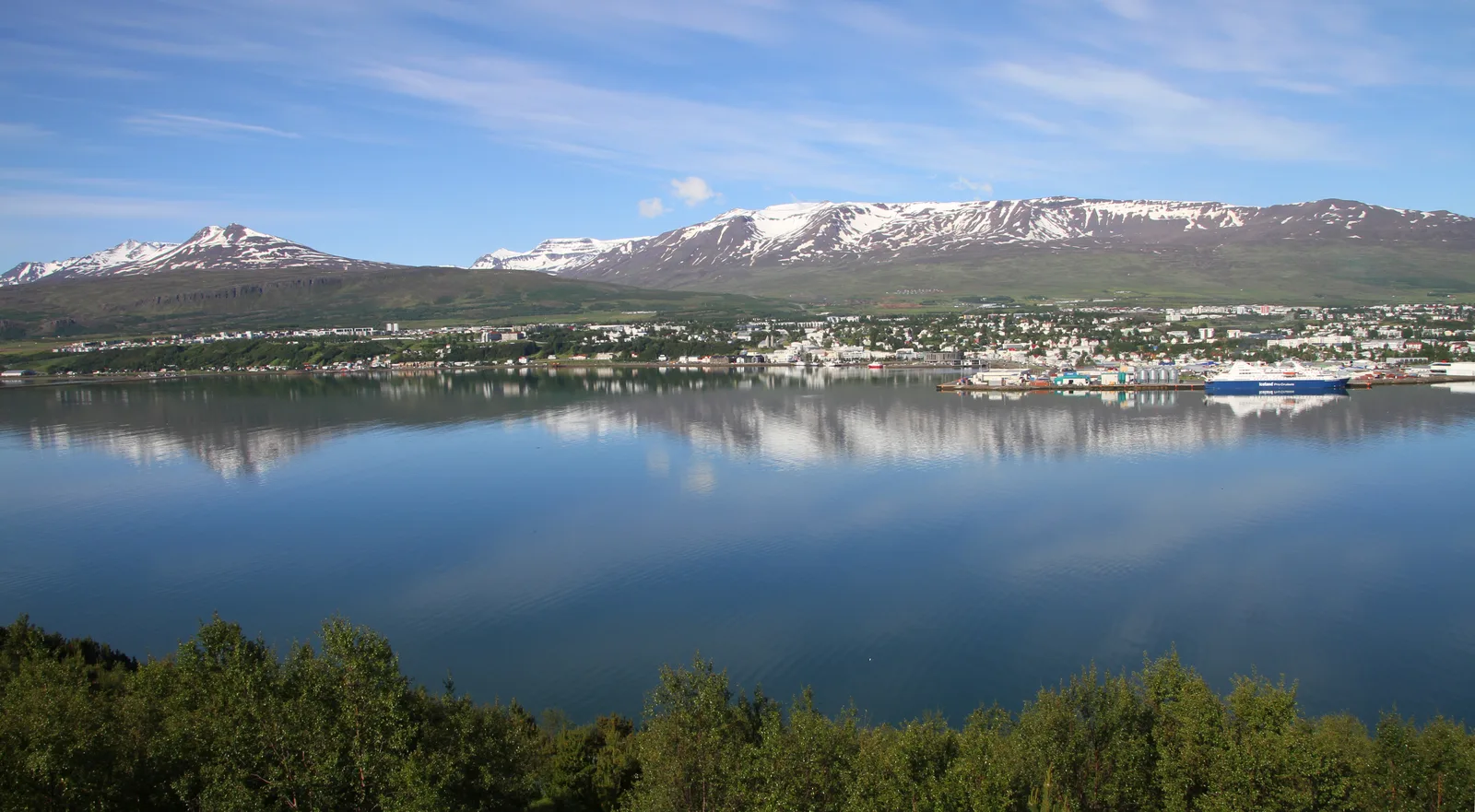
Give Akureyri a few days of its own
Akureyri works well for travellers who want northern Iceland’s landscapes without changing accommodation every night. The waterfront, shopping streets, museums and swimming pool give a stay its daily rhythm; the fjord and surrounding mountains provide the setting. It is a compact town with regional responsibilities, rather than a miniature Reykjavík with an equivalent range of late-night services.
Allow three nights for a first visit combining town time with one substantial excursion. Two nights can work if you keep plans local. For a possible move, add ordinary weekdays to test shopping, commuting and household arrangements. A comfortable holiday apartment and a successful whale-watching trip reveal relatively little about finding a long-term home or managing a winter work schedule.
Read the trading town beneath the scenery
Akureyri’s development owes much to trade, agriculture and the sea. The municipal visitor service’s history of the town explains the influence of Danish merchants, the restoration of trading status in 1862, and the subsequent importance of cooperative enterprise and fishing. Gardens and sheltered residential streets belong to that history as much as harbour buildings do.
This background rewards a slower walk. Look at how houses occupy the slope behind the waterfront and how the commercial centre relates to the older settlement farther south. Avoid treating every building as an attraction requiring entry. Some of the most useful historical interpretation is outdoors, on information boards that let you connect architecture, trade and changes in the shoreline without booking a tour.
Choose a neighbourhood by its daily route
The centre around Ráðhústorg and Hafnarstræti is the straightforward base for restaurants, shops and access to the waterfront. Hof provides another useful landmark near the water. A central address suits visitors who want to walk out for dinner and return without arranging transport.
The older streets to the south favour history walks, while addresses uphill require attention to gradients rather than map distance alone. For longer stays, compare the actual route to your workplace or university building with access to groceries and a bus stop. An attractive fjord view from outside town may involve a drive for every errand. Ask accommodation owners for the precise entrance and parking arrangements before deciding that two listings are equally convenient.
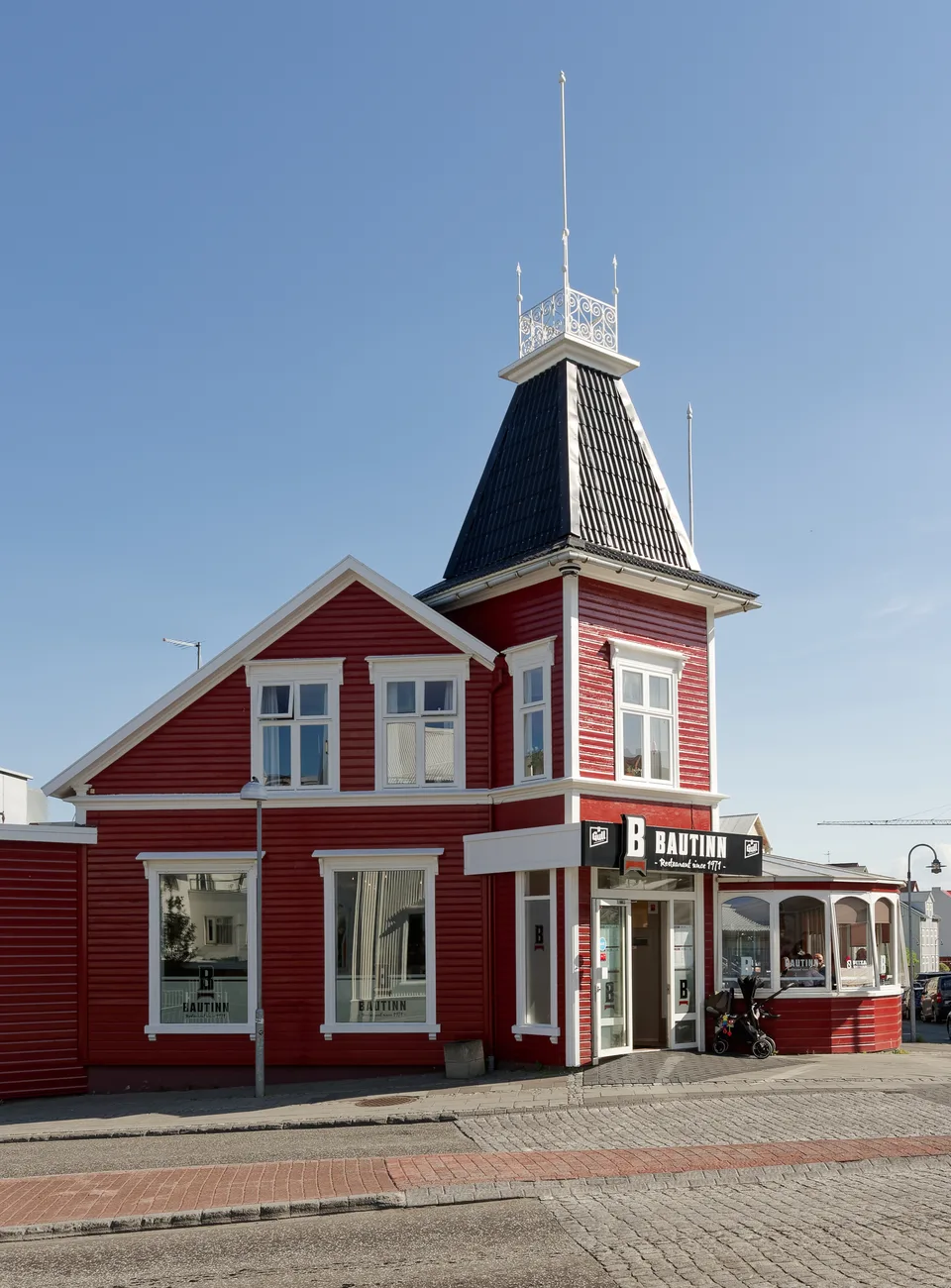
Walk south into the Old Town
The Old Town visitor page describes the preserved streets and houses of the early settlement, including Laxdalshús, dating from 1795. Notice the corrugated metal and decorative pressed metal used to protect buildings: the town’s character is partly a practical response to weather, expressed through colour and construction.
Follow the historical boards rather than rushing between photograph stops. This walk is particularly useful early in a stay because it establishes the relationship between the present centre and older waterfront development. Allow time to turn back uphill or stop indoors if conditions change. Private houses remain homes, so keep to public routes, avoid looking through windows and distinguish a building’s historical importance from permission to enter it.
Visit the church with services in mind
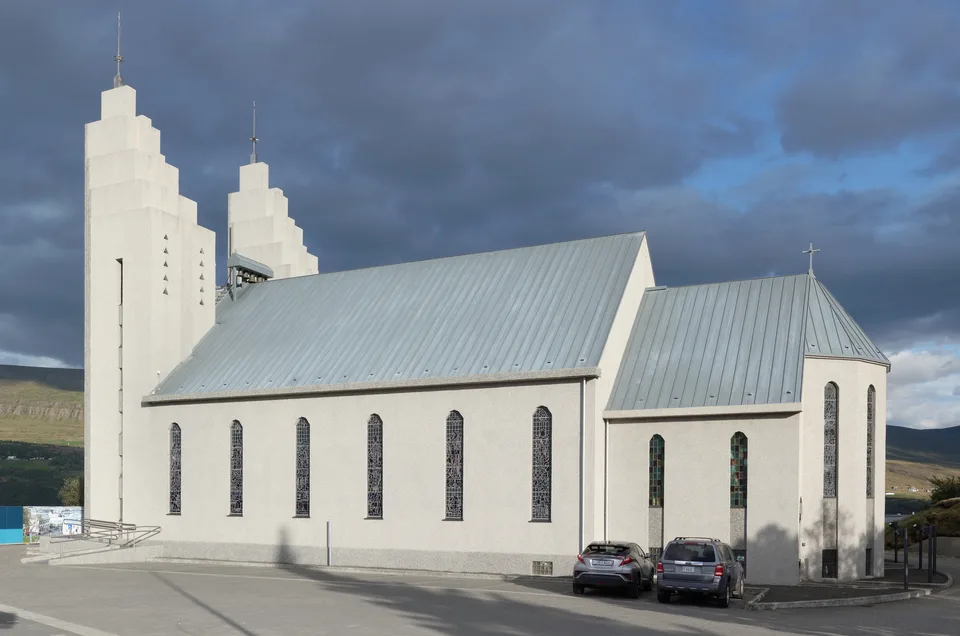
Akureyri Church stands above the centre, with twin towers that make it an easy landmark. Designed by Guðjón Samúelsson and consecrated in 1940, it is a Lutheran place of worship as well as a familiar image of the town. Its exterior can be appreciated as part of a walk through the hillside streets.
Interior access needs more planning. Published summer visitor hours do not establish year-round opening, and funerals or other services take precedence. Check the church’s own notices before climbing up specifically to visit. Anyone avoiding steps should confirm a suitable approach instead of assuming that the most photographed staircase is the only route worth investigating. Leave enough flexibility to enjoy the area even if the doors are closed.
Let the Botanical Garden explain the seasons
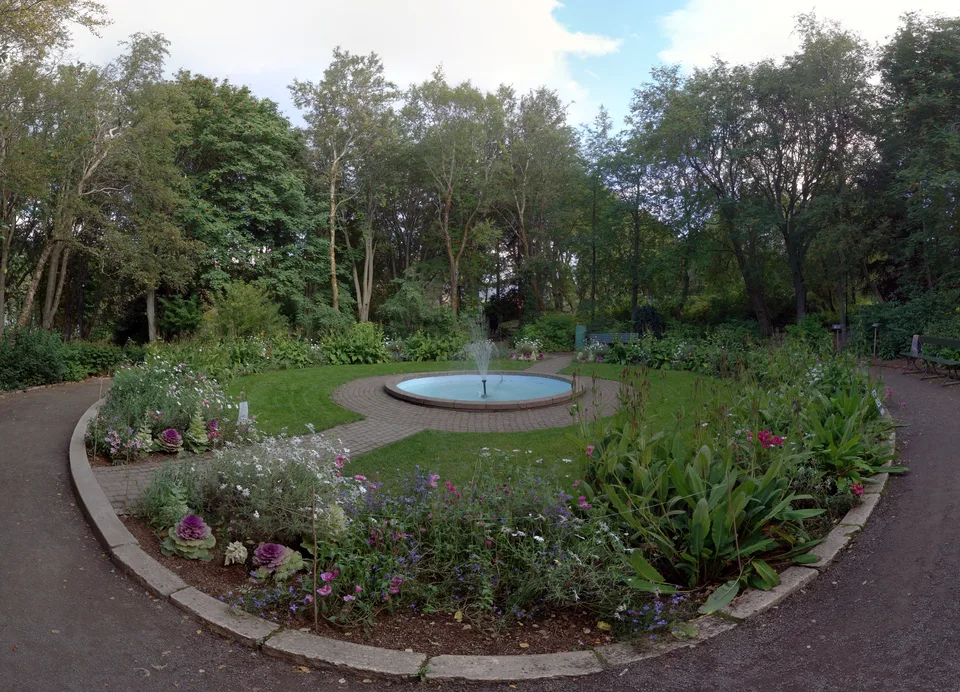
The Public Park and Botanical Garden offers a different way to understand this northern setting. The park opened in 1912, with the botanical section added in 1957. Sheltered planting demonstrates what can grow here, and the garden is a worthwhile destination even for visitors without specialist botanical interests.
Plan around the season. The visitor service publishes longer gate hours from June through September; during the colder months the gates remain open for walks while garden facilities close. The restaurant has its own operating arrangements. Summer flowers, autumn planting and a winter stroll are different experiences, so photographs taken in one season should not determine expectations for another. Pair the visit with nearby town sights rather than treating it as an all-day excursion.
Make room for contemporary art
Akureyri Art Museum on Kaupvangsstræti gives the town an indoor cultural stop that can anchor a wet or windy afternoon. Consult the current exhibition programme before choosing a day: changing displays are part of its appeal, and a familiar artist’s presence in a collection does not guarantee a particular work will be on show.
At the October 2026 check, general admission was ISK 2,400, with daily opening from noon to 17:00 during September–May and 10:00–17:00 during June–August. Listed closures include 24, 25 and 31 December and 1 January. Recheck before travelling on a holiday. Allow roughly an hour initially, then extend the visit if the exhibitions interest you rather than fitting it into an inflexible checklist.
Separate the museum sites and their calendars
The Akureyri Museum network includes several distinct places, so decide which subject matters to you instead of assuming that one door provides access to everything. The main museum and Nonnahús offer different encounters with local history and literature; the industrial collection introduces another side of the region’s working life.
Use the operator’s 2026 opening-hours page when planning. It lists the main museum, Nonnahús and museum church daily from 13:00–16:00 in October–May, with longer summer hours. The Industrial Museum has a different winter pattern, Thursday–Sunday. Laufás has a seasonal public opening period, with group arrangements separately available. The short winter visiting window makes a late-afternoon arrival a poor substitute for checking the timetable beforehand.
Consider aviation as a separate outing
The Icelandic Aviation Museum occupies a hangar at the airport, making it a particularly relevant visit in a region where air links connect communities across considerable distances. Historic aircraft, photographs and other material trace Icelandic aviation; this is an exhibition visit, not a promise of a flight or access to operational airport areas.
Published visitor information distinguishes daily summer opening from a much narrower winter schedule, ordinarily Saturday afternoons outside the mid-May to mid-September season, with appointments also possible. Confirm directly for your date. Do not rely on older descriptions of numbered town-bus routes to reach it: transport networks change, and the museum entrance needs to be checked separately from the passenger terminal. Arrange the return before setting out.
Choose a whale-watching departure carefully
Whale watching is possible from Akureyri itself, but regional advertising also includes departures from other towns. Check the meeting point before paying. One operator’s departure instructions place its office and floating pier behind Hof at Oddeyrarbót 2; its classic excursion is described as approximately two and a half to three and a half hours.
Compare boat type, accessibility, clothing, age rules and cancellation terms rather than the headline wildlife photograph. Ask what happens if the weather prevents sailing or no whales appear. Wildlife sightings cannot be scheduled, and a replacement trip is useful only if your remaining stay allows it. Keep a town activity available as an alternative, and avoid pairing a boat return with a tightly timed flight departure.
Match outdoor plans to conditions
Kjarnaskógur woodland, south of town, offers walking routes, picnic facilities and playgrounds, with seasonal winter recreation as well. It can be a more adaptable choice than a mountain outing when travelling with children or keeping the day short. Check the approach: the visitor service describes a walk of roughly 1.5 kilometres from the suggested bus stop, rather than a bus dropping passengers at every trail entrance.
For skiing, consult Hlíðarfjall’s operating information before committing to a mountain day. Lift operation, equipment hire, lessons and weather are separate considerations. A ski-area address does not ensure lifts are running, and summer use has different arrangements. Choose a route or activity that suits your ability and available daylight, allowing time to return comfortably.
Swim where the town swims
The main municipal swimming pool at Skólastígur 4 combines outdoor swimming with hot tubs and other facilities, offering an accessible way to include geothermal water in a town day. It is a different purchase from a commercial lagoon experience, with its own changing arrangements and rules.
The municipality’s current tariff, updated in September 2026, lists adult admission at ISK 1,400 and ISK 310 for children aged 6–17. Towel and swimsuit hire cost extra, so bringing your own can make a meaningful difference. Follow the posted washing and supervision instructions, and confirm the facilities you need before paying. For a longer stay, compare passes against realistic use rather than assuming that the largest package offers savings for every household.
Choose accommodation beyond the photograph
The official accommodation directory covers hotels, guesthouses, apartments, hostels and campsites. It also includes places outside the town and on islands within the wider municipality. Read the location carefully: municipal inclusion does not mean a property is a short walk from the central restaurants.
A central hotel suits a short stay with few logistical decisions. A kitchen can help families or longer visitors manage meals, while a hostel may suit those comfortable with shared facilities. Compare the complete booking price, bathroom arrangements, linen, cleaning charges, breakfast, check-in procedure and cancellation deadline. For winter arrivals, ask how access is maintained and what happens if transport disruption delays you. Accessible rooms should be checked against specific requirements, including the route from the street.
Keep Reykjavík’s two airports distinct
Akureyri has an airport close to town, with domestic services and international connections whose schedules need checking for the season. Direct arrival in the north can simplify a short visit. When comparing fares, examine the full journey rather than assuming every itinerary labelled Reykjavík uses the same airport.
Icelandair’s airport-transfer guidance distinguishes Reykjavík Airport, RKV, from Keflavík International Airport, KEF. Travellers connecting between them need a ground transfer and must account for their baggage. The airline describes approximately 50 kilometres between the airports; transfer time is additional to check-in, immigration and baggage collection. Check the booking’s protection and allow a sensible margin, especially on separate tickets. A cheap connection can become expensive if it requires an unexpected overnight stay.
Plan the last few kilometres from the airport
The municipal airport information page places Akureyri Airport approximately three kilometres from the centre. A taxi or booked transfer may be worthwhile with luggage, children or poor weather. A short distance on a map should not be treated as evidence of a comfortable walk after an evening arrival.
The visitor service distinguishes a pre-booked airport shuttle associated with international flights from countryside bus services. Check the exact service for your flight, stop and date; airport transport is not automatically included in the town’s free bus offer. If collecting a rental vehicle, confirm the desk’s arrangements for your arrival time and any delayed-flight procedure. Keep the accommodation’s check-in instructions available offline so the final stage does not depend on mobile reception or a staffed reception.
Use the free town buses without overplanning
Akureyri’s town buses are free within the town. Their routes operate as loops, so the direction and stop can matter more than the straight-line distance. Weekend service starts later than weekday service, and holiday arrangements require a separate check. Consult the journey planner for the actual day instead of assuming a continuous shuttle between attractions.
For travel farther afield, use Strætó’s countryside timetables. Route 57 connects Akureyri and Reykjavík, while other routes serve destinations including Húsavík and Siglufjörður. These are separate services with their own fares and timetables. A regional bus that passes somewhere interesting may not provide a useful same-day return, so confirm both legs before using it as the basis for an excursion.
Budget for transport as well as meals
Build a trip budget from accommodation, food, transfers, excursions and a contingency for disrupted travel. Free local buses help, but a rental car, boat trip or additional night can change the total substantially. Price those decisions before choosing accommodation outside the centre.
Drivers should read the parking-zone information and the signs at the actual space. Central paid zones and marked time limits make older advice about universally free parking unreliable. Listed historical tariffs should not be mistaken for a current quote. Check rental-company rules for tolls, fuel and administrative charges as well. For an ordinary town day, walking and public transport may be simpler than repeatedly moving a car between nearby stops; retain it for the journeys where it provides useful flexibility.
Eat and shop with a practical plan
The municipal food directory shows a broader choice than a diet of expensive restaurant dinners: bakeries, cafés, takeaway options, international cuisines and the Iðunn food hall at Glerártorg. Use it to find an appropriate location and then consult the venue’s current menu, hours and dietary information. Directory inclusion is not a personal recommendation.
For a self-catering stay, check that the advertised kitchen supports the meals you intend to cook, including refrigeration and basic equipment. Buy food before an early departure rather than assuming a café will be open. When shopping for clothing, gifts or design, compare provenance and materials instead of judging by an Icelandic motif alone. Leave room in the luggage and budget for what you actually want to take home.
Choose daylight and flexibility over a perfect forecast
Summer offers long light evenings and the most straightforward combination of garden visits, walking and regional sightseeing. Winter brings a different proposition: shorter daylight, snow or ice, and activities whose operation depends on conditions. Shoulder-season dates can suit a quieter town stay, provided you check seasonal openings.
Use the Icelandic Meteorological Office for forecasts and warnings, and official road information before driving. The ICE-SAR winter-driving guidance is useful preparation, including clearing snow and ice from the vehicle and using appropriate lights. A larger vehicle does not remove the need to respect closures. Northern lights require suitable darkness, cloud conditions and activity; book a trip you would still value if the sky provides no display.
A realistic three-day first visit
Day one: settle into the centre, walk the waterfront and explore the shopping streets. Add the church exterior and an unhurried meal. If arrival is late or the weather poor, keep the walk short and save the hillside for another day.
Day two: combine an Old Town walk with one museum, planning around the relevant visiting window. Add the garden if conditions suit, then leave the evening free for swimming or dinner. Choose one substantial cultural visit rather than rushing through several.
Day three: reserve the main excursion you most want, whether a boat trip or a regional sightseeing day. Keep an indoor alternative available. With only two full days, choose between the town’s museums and a major outing instead of compressing both into a timetable with no allowance for delays.
Arrange housing before judging the move
A relocation budget needs current rental offers, not short-stay prices converted into a monthly estimate. Compare furnished and unfurnished homes, deposits, contract length, heating, electricity, internet and the practical cost of getting to work. Inspect the property or arrange a reliable viewing, and confirm the landlord’s authority before transferring money.
The official residential-lease registration guidance states that, from January 2026, landlords must register residential leases in the HMS Rent Register. Electronic agreements register after all parties sign, with a separate route for paper agreements. Registration is part of the process, not a guarantee that every term suits your household or that you qualify for financial support. Keep a signed copy and a record of the property’s condition at handover.
Test commuting and essential services
Spend a trial weekday travelling at your expected working hours, including the return after evening commitments. A free bus is valuable only when the relevant route and timetable fit. Include walking gradients, winter footwear and grocery carrying in the test rather than measuring the journey solely by driving time.
The municipal household-services directory identifies Norðurorka for water, heating and electricity distribution, alongside local health and education services. Confirm which bills the tenancy includes and arrange account transfers with the relevant providers. Families should ask the municipality about school or preschool applications and support needs before assuming a place is available. Students can use the university’s housing information, with accommodation arrangements treated separately from academic admission. Internet installation, laundry, storage and waste sorting also deserve attention before signing.
Keep tourism, employment and residence separate
Use Iceland’s official visa eligibility checker for your nationality and documents. Short visits generally fall within Schengen arrangements; where the 90-days-in-180 rule applies, time elsewhere in Schengen counts too. Permission to visit does not establish permission to take employment or settle permanently.
The Directorate of Immigration’s work-related residence routes distinguish applications and eligibility categories. Study and family circumstances also require their own checks. EEA/EFTA citizens have different rules: Registers Iceland’s registration guidance says those staying longer than three months must register, although the page’s form label refers to six months. Ask Registers Iceland which procedure fits your circumstances rather than resolving that discrepancy by assumption. Nordic nationals have a separate route. An Icelandic identification number alone is not proof of every immigration entitlement.
Check healthcare before arrival
Arrange travel insurance for a visit and establish the correct coverage route before a move. The 2026 Iceland Health announcement shortened the waiting period for people moving from outside the EEA to three months after transferring legal residence, replacing the previous six-month period. Ask Iceland Health about your individual eligibility, any transfer of existing rights and insurance needed during a gap.
Akureyri has primary-care services and a hospital, but local facilities do not mean every treatment is free or available immediately. Bring information about prescriptions and ongoing care, and ask how to register with an appropriate provider. Make healthcare arrangements early enough to resolve paperwork before your existing cover ends.
Decide how much farther north to go
Akureyri is a useful base, but northern Iceland deserves realistic distances and time. The regional tourism board’s Diamond Circle information brings together Goðafoss, Mývatn, Dettifoss, Ásbyrgi and Húsavík on a substantial circuit. Add the approach and return to your accommodation; it is not a compact town sightseeing loop.
Choose one direction or focus rather than collecting every landmark in poor weather. An overnight elsewhere may serve a longer itinerary better than repeated drives. Compare the VisaWand Iceland country page and Reykjavík city page when considering your wider trip. For individual immigration help, the Iceland consultant listings and consultant directory let you compare providers and consultation terms while official authorities remain the source for eligibility decisions.
Official planning resources
Reviewed 17 October 2026. Use the official resources linked throughout this guide for admission, transport, housing and immigration decisions. Prices, services and rules can change; confirm the details relevant to your dates. Photography illustrates the locations and is not a live view.
View all official resources
- Visit Akureyri: town history
- Visit Akureyri: Old Town
- Akureyri Church visitor information
- Akureyri Botanical Garden
- Akureyri Art Museum
- Akureyri Museum current programme
- Akureyri Museum: 2026 opening hours
- Icelandic Aviation Museum
- Whale Watching Akureyri departure point
- Classic whale-watching tour details
- Kjarnaskógur woodland routes
- Hlíðarfjall ski area operating information
- Akureyri geothermal swimming pools
- Municipal swimming-pool admission tariff
- Visit Akureyri accommodation directory
- Icelandair domestic flights and airport transfers
- Akureyri Airport connections
- Free Akureyri town buses
- Strætó regional timetables
- Akureyri parking zones and payment
- Visit Akureyri food directory
- Icelandic Meteorological Office forecasts
- Icelandic road conditions
- ICE-SAR winter driving advice
- Create and register residential leases
- Municipal household services directory
- University of Akureyri student housing
- Official Iceland visa eligibility checker
- Directorate of Immigration work routes
- Registers Iceland EEA/EFTA registration
- Iceland Health: 2026 coverage changes
- Visit North Iceland: Diamond Circle
Plan the next part of your journey
Explore the Iceland guide, browse other cities or compare consultants for your travel and relocation questions.