Visa
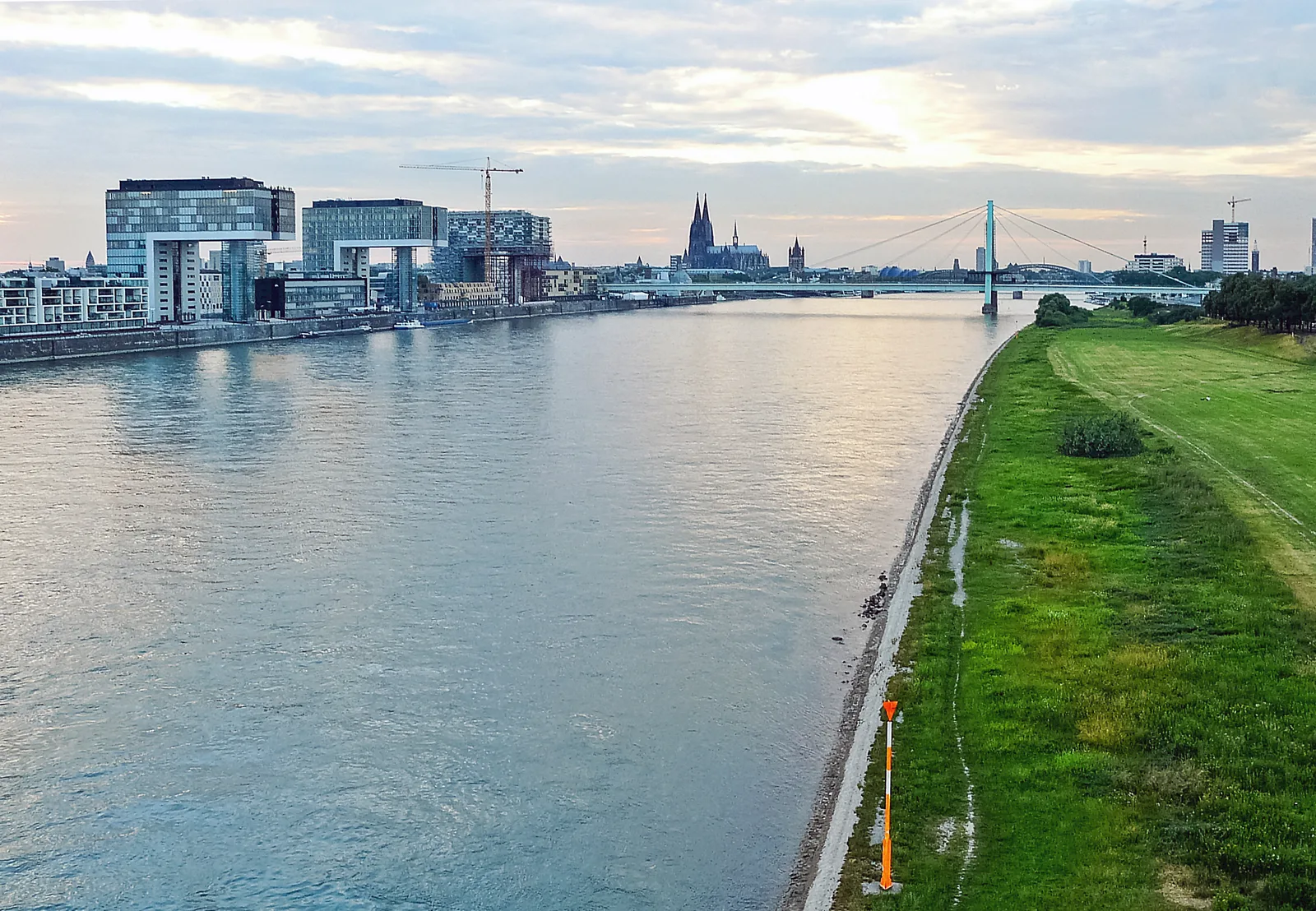
Cologne: start beside the Rhine, then explore the neighbourhoods
Cologne makes a strong short break when you give its different pleasures enough room: the cathedral, a museum afternoon, an evening in a brewery restaurant and a walk across the Rhine. The river helps you understand the geography. The cathedral and main station anchor the western side of the central sightseeing area; Deutz, across the water, offers the view back towards them. Beyond this familiar panorama, districts such as Ehrenfeld introduce another rhythm of shops, cafés and everyday journeys.
Allow three days for a first visit if you want more than the cathedral and a hurried riverside circuit. A prospective move needs additional time for viewings, practical appointments and ordinary weekday journeys. Use the visit to establish what interests you, then test whether a particular address works for your household. Cologne’s English name and the German Köln refer to the same city; booking systems and railway signs commonly use Köln.
Roman foundations and a cathedral completed centuries later
The city’s Roman history predates its status as a colony. The municipal museums’ historical account explains that the existing settlement, the oppidum Ubiorum, became Colonia Claudia Ara Agrippinensium in AD 50, under Emperor Claudius. That distinction matters: the date marks a change of status, rather than the first human presence at the location. Roman collections and surviving traces help connect the contemporary city with this earlier settlement beside the Rhine.
The cathedral’s own history records the foundation of the present Gothic building in 1248 and its formal completion in 1880. This was a long, interrupted undertaking, not six centuries of continuous construction. The arrival of relics associated with the Three Kings in 1164 had already strengthened Cologne’s importance as a pilgrimage destination. Approach the cathedral as a working religious building as well as a major architectural attraction, with worship taking priority over sightseeing.
Where to stay: centre, Deutz or Ehrenfeld?
For a first visit, compare rooms around the main station and cathedral with accommodation farther into the centre. Proximity to the station can simplify arrival; a room near the river can make evening walks convenient. Neither address guarantees quiet. Read the room description, ask about street-facing windows and check the route with luggage. Hotels, hostels and furnished apartments serve different needs: compare cancellation terms, reception hours, lift access and cooking facilities alongside the nightly price.
Deutz is particularly worth comparing if your plans involve the exhibition grounds, LANXESSarena or arrivals at Köln Messe/Deutz station. Ehrenfeld suits an itinerary with more neighbourhood exploration, although you should price the additional journeys to central attractions. For a longer stay, choose by the actual commute and household requirements. A district’s reputation is a useful introduction, but the individual building, nearest stop and evening surroundings deserve separate inspection.
Cathedral admission changed in July 2026
Older advice about free tourist entry is now misleading. The cathedral’s visitor information says that tourist visits to the interior have required paid admission since 1 July 2026. The official interior ticket costs €12 for an adult. Prayer access through the northern entrance facing the station remains free outside services, but that arrangement should not be treated as permission for a free sightseeing circuit of the whole interior.
Tourist hours are narrower than the building’s general opening hours: normally Monday–Saturday, 10am–5.45pm, and Sundays and church holidays, 1.30pm–4.30pm, with earlier last admission. Check the dated arrangements around worship and special events. The official ticket conditions also distinguish a guided tour from admission: a tour booking requires the separate interior ticket. Keep large luggage elsewhere; bags exceeding the published 40 × 35 × 15 centimetre limit are not admitted, and the cathedral does not provide storage.
The tower is a separate physical undertaking
The tower ticket costs €8 for an adult and is separate from interior admission. There are 533 steps and no lift, so decide whether the climb suits everyone in your party before buying. The viewing level is about 100 metres above ground; this is different from the cathedral’s overall height. Keep your plans flexible if visibility is poor or a lengthy climb would leave little energy for the rest of the day.
Published tower hours change seasonally, with earlier closing from November through February. There are also specific closures around Carnival, Christmas, New Year and 11 November. Consult the operator’s current calendar rather than assuming the tower opens whenever the cathedral does. The KölnCard does not discount the tower or ordinary interior admission. Its cathedral benefit concerns the Treasury, so check the product name carefully when calculating a visitor-card saving.
Cross to Deutz for the river view
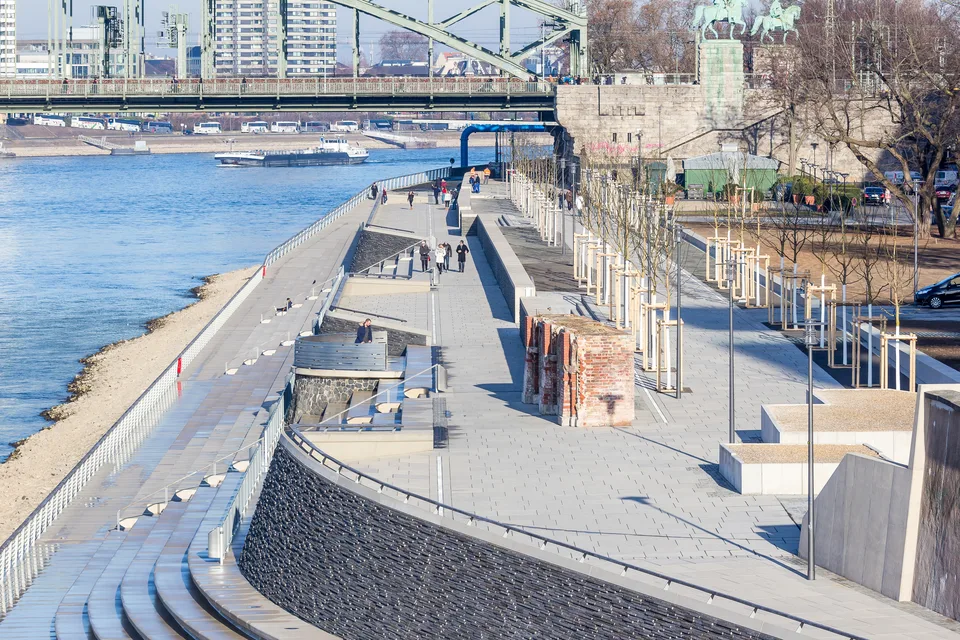
The tourism board’s account of Deutz provides a useful geographical counterpoint to a cathedral-focused visit. Walk across the Hohenzollern Bridge and spend time on the Rheinboulevard steps looking back towards the western bank. The riverfront is an experience in its own right, rather than simply a place to take a photograph before returning.
Deutz also contains the Rheinpark and the Deutzer Freiheit shopping street. Combine a riverside walk with a meal or a look around the neighbourhood rather than treating the eastern bank as one isolated viewpoint. Köln Messe/Deutz and Köln Hauptbahnhof are different stations: check which one appears on your ticket and which best serves your accommodation. If your visit involves an arena event or exhibition, compare the journey to that venue with your sightseeing plans before choosing a hotel.
Museum Ludwig: plan around its own calendar
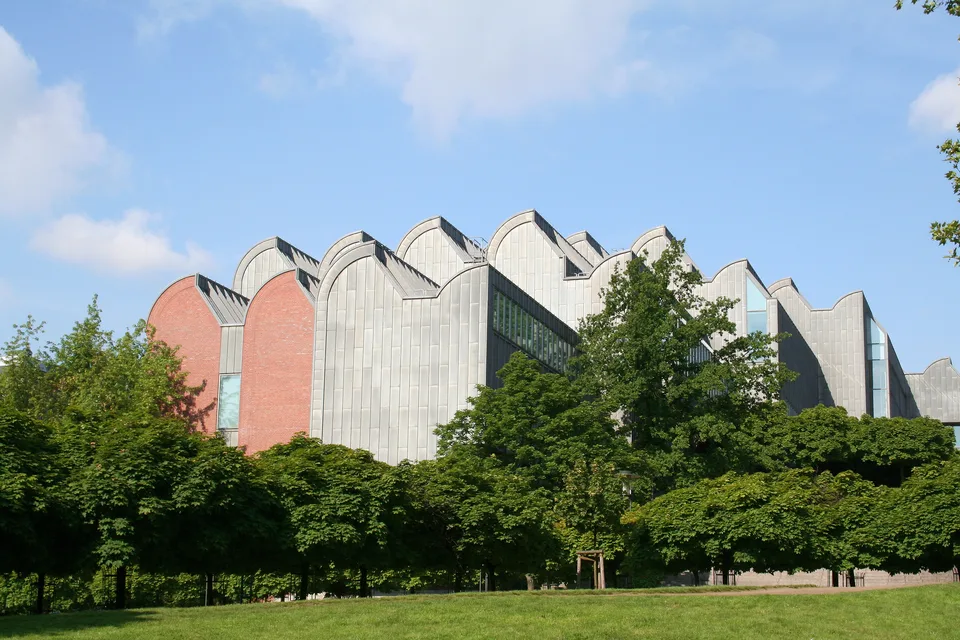
The Museum Ludwig’s visitor page lists regular adult admission at €15.40 and normal opening Tuesday–Sunday, 10am–6pm. Monday opening is generally limited to public-holiday exceptions; the first Thursday of the month has extended hours. Use the dated programme to decide whether a particular exhibition warrants reserving a substantial part of your day.
The municipal MuseumCard is a separate option from the KölnCard. Listed at €18 for an individual, it covers participating municipal museums over two consecutive opening days. It does not include every privately operated attraction. Compare your intended museums and their closed days before choosing it. Museum Ludwig lists a KölnCard discount too, so work out which arrangement fits the visits you will actually make rather than combining headline savings that cannot necessarily be used together.
Roman collections: go to Belgian House
The Roman-Germanic Museum’s current visitor information directs visitors to Belgian House at Cäcilienstraße 46, near Neumarkt. Do not follow an older itinerary straight to the original museum building beside the cathedral expecting the normal collection visit there. The Dionysus mosaic and Poblicius tomb at Roncalliplatz are currently closed to visitors. This is exactly the kind of operational detail that can turn an otherwise sensible sightseeing day into a wasted journey.
The Belgian House exhibition normally opens Wednesday–Monday, 10am–6pm, and closes on Tuesdays. Adult admission is €6. Its closure pattern differs from Museum Ludwig’s, making these two museums useful alternatives on different days. If archaeology is a principal interest, give the exhibition room in the itinerary instead of assuming a quick glance will substitute for time with the collection.
Chocolate Museum: distinguish admission from extra activities
The Chocolate Museum’s planning page lists adult admission at €17.50 on weekdays and €19 on weekends and public holidays. Standard opening is 10am–6pm, with last entry at 5pm; production finishes at 5.30pm. Arriving shortly before closing therefore limits more than the time available to look around. The operator has also published Monday closures on 2, 9 and 16 November 2026, so the usual daily pattern has exceptions.
Workshops and tastings are separate activities that need their own booking checks. Choose between a standard museum visit and an activity around your interests, budget and the ages of any children travelling with you. An online ticket can avoid the ticket-office queue, but it does not guarantee an empty museum. Leave a realistic interval for meals and the onward journey rather than stacking the visit tightly against another timed booking.
Ehrenfeld: explore beyond the postcard centre
The official Ehrenfeld guide describes a district shaped by nineteenth-century industry, with former factory spaces finding new uses as studios, clubs and event venues. Venloer Straße is a useful starting point for an exploratory walk, bringing together everyday shops, cafés and Turkish restaurants. Look along side streets too, while remembering that street art changes and a photograph is not a promise that a particular mural will still be present.
For accommodation or a possible move, assess the immediate surroundings carefully. An area known for nightlife can be appealing for evenings out, while an individual room may require closer questions about noise and windows. Neuehrenfeld, beyond Subbelrather Straße around Lenauplatz, has a distinct setting and should not be treated as interchangeable with every part of Ehrenfeld. Visit the address and test the transport connection rather than deciding from a broad neighbourhood label.
Arriving by air or rail
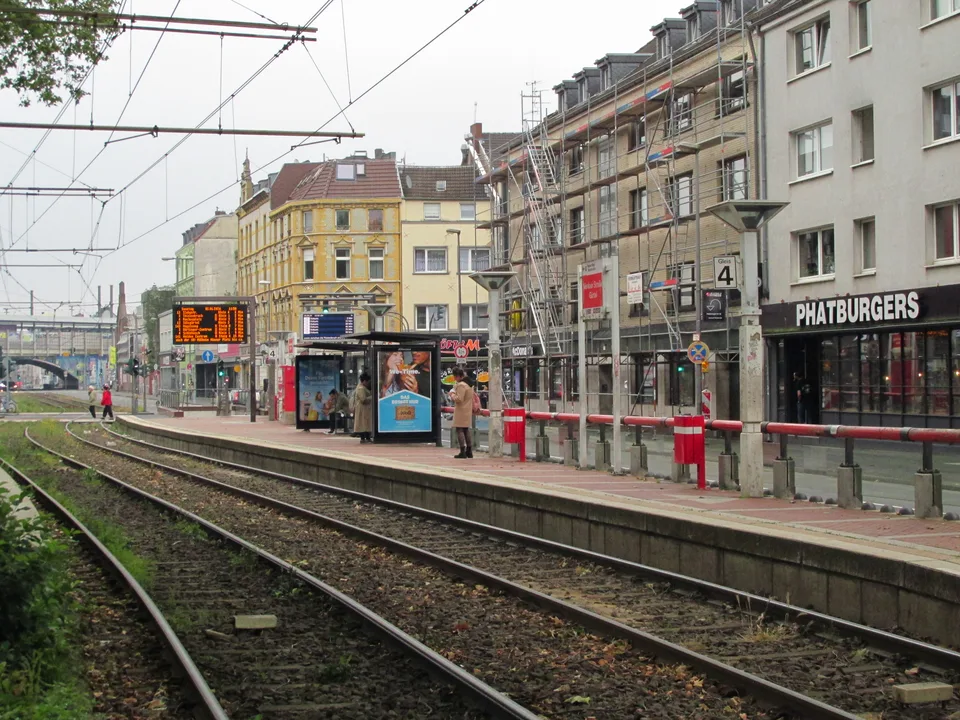
Cologne Bonn Airport’s transport information identifies its own railway station close to both terminals, serving local, regional and long-distance trains. This makes rail worth checking before arranging a road transfer. Search for your actual arrival date and final destination, allowing for baggage collection and the walk to the platform. A station described as serving ICE trains does not mean that an ordinary city transport ticket covers those trains.
The airport also distinguishes the express bus connection to Bonn Hauptbahnhof from Cologne’s rail connections. Choose the correct city and station in the planner. For an early departure or late arrival, verify the individual service rather than interpreting the airport’s round-the-clock transport description as a promise that every route runs continuously. When arriving from elsewhere by rail, compare Köln Hauptbahnhof and Köln Messe/Deutz against your hotel address and the train’s actual stopping pattern.
Local fares: the city boundary matters
KVB’s current fare table follows the Rheinlandtarif introduced in June 2026. A Cologne price-level 1b adult single costs €4 and is valid for ninety minutes within the applicable conditions. A twenty-four-hour city ticket costs €9.60 for one person or €19.20 for up to five. The validity period runs from validation rather than ending at midnight. Check the instructions attached to the product you buy before boarding.
The short-trip fare has separate limits and cannot simply replace a city ticket for an arbitrary journey. Trips beyond Cologne may require a wider fare area, so price excursions separately. KVB also warns that some ticket machines currently offer only Cologne city tickets while software changes are pending; use the approved app or a suitable sales outlet for wider products.
When the KölnCard makes sense
The official KölnCard offer costs €9 for one person for twenty-four hours, or €18 for forty-eight hours. Group versions for up to five cost €19 and €38 respectively. It includes specified local public transport within Cologne’s city limits, including second-class regional services, plus participating discounts. Compare this visitor product with the ordinary city fare rather than assuming the more familiar day ticket is automatically the better purchase.
Read the activation instructions: a card purchased in the KVB app is for immediate use, while paper cards require the prescribed details and validation. The card is personal and requires official identification. Present it before receiving a benefit, including before ordering at a participating restaurant. Its discounts do not make all attractions free, and it is not a national rail pass. Calculate savings using your chosen activities and each operator’s current exclusions.
Food, brewery customs and everyday shopping
The tourism board’s brewery guide explains a useful menu surprise: Halver Hahn is a rye roll with aged Gouda and mustard, despite a name suggesting chicken. Other traditional choices include Rhineland-style Sauerbraten and black pudding. Ask about ingredients and preparation when dietary requirements matter; a familiar dish name does not establish that every version is suitable. Ehrenfeld offers another useful starting point for exploring food beyond a traditional brewery menu.
Kölsch is traditionally served in a small cylindrical glass holding 0.2 litres. In brewery service, placing a coaster over the glass signals that you have finished. Check the menu and keep track of what you order rather than treating small glasses as inconsequential to the bill. For an apartment stay, compare nearby food shops and cooking facilities before deciding that self-catering will save money.
Budget from real bookings, not a citywide average
Start with accommodation for your dates, then add arrival travel, local transport, meals and your selected admissions. For illustration, standard adult cathedral interior admission, Museum Ludwig and the Chocolate Museum total €44.90 on a weekday before transport or applicable discounts. This is an example using published fees, not a complete daily budget. A predominantly outdoor day beside the Rhine has a different cost structure from a day built around paid interiors.
Compare passes only after deciding which visits interest you. Leave room for a meal, poor-weather alternative and any luggage arrangements. For a prospective move, build a separate first-month calculation including deposit, temporary accommodation, furnishing and service connections.
Seasons: plan around conditions and opening dates
Choose dates by the experiences you value and check the event calendar before committing to accommodation. A visit centred on river walks needs more weather flexibility than a museum break. Keep a rain layer and comfortable shoes available, and reserve your clearest suitable period for a view or longer outdoor circuit. In colder or wetter conditions, shorten the walks and give indoor visits more room rather than trying to reproduce a summer itinerary unchanged.
Heat also deserves practical planning. The city’s heat portal links to cool places, drinking-water information and warnings that can help shape a walking day. For a longer stay, inspect shading and ventilation at the actual apartment instead of judging comfort from a neighbourhood photograph. Seasonal closures matter too: Brühl’s palace interiors close in winter, while the cathedral tower has shorter winter hours. Check each attraction’s calendar rather than assuming a single citywide sightseeing season.
A realistic three-day visit
Begin day one around the cathedral and the western riverfront. Book interior admission if you want a sightseeing visit, and add the tower only if the climb and conditions suit you. Cross to Deutz for the Rheinboulevard view, leaving time for a meal and the return journey. An arrival delay can be absorbed by shortening the outdoor circuit rather than sacrificing every planned stop.
On day two, choose Museum Ludwig or the Roman-Germanic exhibition according to your interests and their different closed days. Add Ehrenfeld for a neighbourhood walk and dinner. Give day three to the Chocolate Museum, with time for any separately booked activity, or choose Brühl as a distinct excursion. These are editorial suggestions rather than a guaranteed timetable. Rearrange the order around dated closures, worship, bookings and your own pace; trying to fit every option into each day would undo the value of allowing three days.
Moving: compare the complete housing offer
The federal housing guide distinguishes Kaltmiete, the basic rent, from Warmmiete, which includes agreed service charges. Read what the particular contract covers: electricity, internet and sometimes gas need separate arrangements. A deposit can be up to three months’ basic rent. Keep that initial cash requirement separate from recurring bills, and inspect any graduated or index-linked rent terms before signing.
Long-term flats are often unfurnished and do not necessarily include a kitchen. Check equipment, condition and energy information at the viewing, then record existing damage and meter readings at handover. Flatshares and student residences offer other arrangements, with eligibility and availability to investigate early. Ask which application documents are required, and verify the provider before sharing sensitive paperwork. Test the actual journey to work or university, including the evening return, before treating lower rent farther away as a saving.
Registration, energy and household arrangements
Cologne’s address-registration service normally requires registration within fourteen days after moving into a home. The landlord’s Wohnungsgeberbescheinigung is essential; a lease or informal confirmation is insufficient. People moving from abroad must attend personally rather than use a representative. Follow the city’s document requirements for your circumstances, including original family records and appropriate translations where needed. Address registration is separate from permission to live or work in Germany.
Arrange energy before the move. RheinEnergie’s moving guidance asks for dates, the new address and meter numbers, and says the change must be arranged in advance. Record readings at handover and confirm which utilities are handled by the landlord. Check internet availability and installation timing at the address too. Decide who holds each household contract and keep the handover information together, so the first weeks are not spent reconstructing which meter or service belongs to the flat.
Schools and healthcare need their own preparation
For newly arrived children who lack sufficient German for ordinary lessons, the city’s school-placement guidance explains the role of preparation classes. The municipal integration centre provides advice, while the school authority assigns a suitable place. Investigate this process early and bring the requested identity, address and previous school documents where available. A convenient apartment does not guarantee a place at a preferred school or English-language teaching.
The federal health-insurance overview explains Germany’s statutory and private systems, whose eligibility rules differ. Arrange continuous cover between arrival and the start of your regular insurance, checking the requirements for your residence purpose. Visitor insurance and longer-term cover need separate assessment. Ask the insurer about dependants, ongoing treatment and suitable local practices before moving. Use a quote for your circumstances in the household budget rather than an unsupported average premium.
Tourism, work, study and permanent residence
Check nationality, purpose and duration before committing to a long stay. The Foreign Office’s short-stay guidance explains the general ninety-days-in-180 calculation across Schengen, including entry and exit days. It is not a fresh allowance in each country, and nationality-specific provisions require checking. A visa’s overall validity does not necessarily equal the number of days you may remain.
The federal work and residence guidance makes clear that ordinary tourist or Schengen visitor permission generally does not authorise employment. EU, EEA and Swiss nationals have different access rights from other nationalities. Workers and students from elsewhere need the appropriate route; some nationalities can enter without a visa but must secure the relevant permission before working. Check the responsible German mission and authority for your circumstances. A job offer, university admission or tenancy does not itself create permanent residence, which has separate requirements.
Nearby: Brühl or another Rhine city
Brühl’s palaces provide a distinct excursion. The operator’s ticket page lists Augustusburg standard admission at €15, including its guided palace tour; the €9.50 special product has narrower coverage. Falkenlust costs €8, while the combined Plus ticket is €21. Check what you are buying rather than choosing solely by the lowest displayed price.
The seasonal opening page is especially important: palace interiors close December–February and normally on Mondays. Gardens have separate hours and can have weather-related restrictions. Plan the journey and visit as a substantial outing. Alternatively, compare Düsseldorf’s completed city guide for an art-focused extension. VisaWand’s Germany country guide provides broader context, while its Germany location directory helps you explore other places; directory entries do not all contain completed travel guides.
Official planning resources
Reviewed 16 October 2026. Use the official resources linked throughout this guide for admission, transport, housing and immigration decisions. Prices, services and rules can change; confirm the details relevant to your dates. Photography illustrates the locations and is not a live view.
View all official resources
- Cologne Cathedral: current visitor rules
- KVB: Rheinlandtarif fares and validity
- Cologne Bonn Airport: public transport
- Cologne Cathedral: official ticket conditions
- Cologne Cathedral: interior ticket prices
- Cologne Cathedral: tower ticket prices
- Museum Ludwig: tickets and opening hours
- Roman-Germanic Museum: Belgian House visitor information
- Cologne Chocolate Museum: visiting and admission
- Cologne Tourist Board: KölnCard transport and discounts
- Cologne Tourist Board: Ehrenfeld and Neuehrenfeld
- Cologne Tourist Board magazine: Deutz
- City of Cologne: registering a home
- Cologne municipal museums: Roman history
- Cologne Cathedral: history
- RheinEnergie: energy arrangements when moving
- City of Cologne: heat planning and cool places
- Brühl Palaces: tickets and prices
- Brühl Palaces: seasonal opening hours
- Federal government: resident health insurance
- Federal government: work, study and residence permissions
- Federal government: housing and tenancy
- German Foreign Office: Schengen short-stay counting
- Cologne Tourist Board: brewery culture and food
- City of Cologne: school advice for newly arrived children
Plan the next part of your journey
Explore the Germany guide, browse other cities or compare consultants for your travel and relocation questions.