Visa
Düsseldorf: art, architecture and everyday choices on the Rhine
Düsseldorf rewards a visit built around a few strong interests: art collections, modern architecture, Japanese food or time beside the Rhine. Its appeal comes from the proximity of different experiences. You can spend a morning in a museum, walk through the Old Town and choose dinner around Immermannstraße without turning the day into an expedition. A longer visit gives the outlying districts and Benrath Palace room in the itinerary.
For a first stay, allow two or three days rather than trying to combine every museum and neighbourhood in a single circuit. If you are considering moving, reserve additional time for apartment viewings and journeys to the places you will actually use. The city’s visitor attractions help establish whether you like its character; housing terms, commuting and household arrangements determine whether everyday life will work.
How a settlement on the Düssel became a state capital
The city’s historical account traces Düsseldorf to a settlement at the Düssel estuary, granted its town charter in 1288. The Rhine shaped its trade and expansion, while its role as a ducal residence brought political influence and patronage. Johann Wilhelm, remembered as Jan Wellem, supported the arts and assembled a significant collection of paintings. That history provides context for a city whose museums deserve substantial time rather than a quick stop between shopping streets.
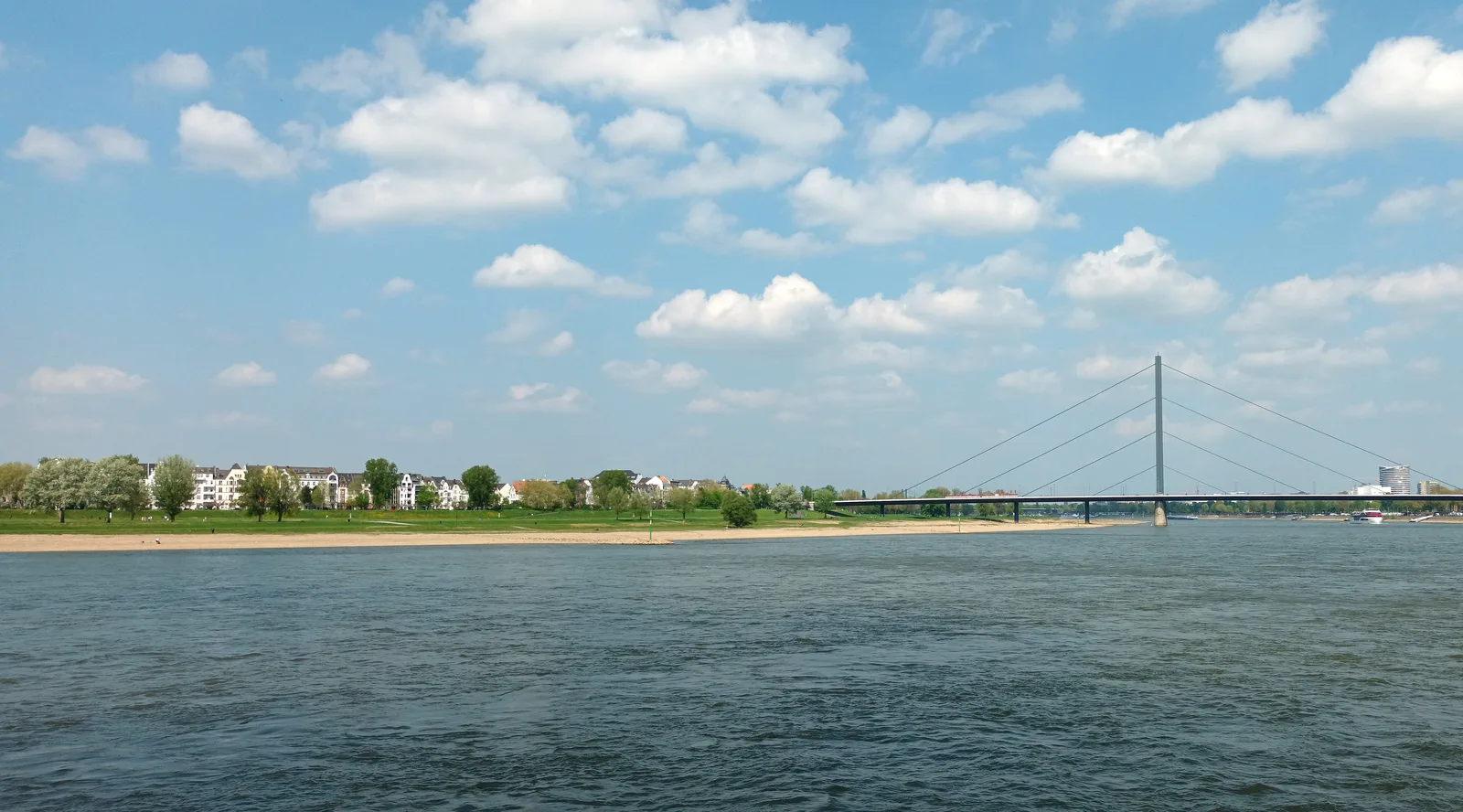
Düsseldorf became North Rhine-Westphalia’s capital in 1946. Its more recent development is visible in the relationship between roads, public spaces and architecture: the Rhine promenade occupies the roof of a road tunnel, while the MedienHafen combines harbour remnants with striking newer buildings. These are useful places to begin understanding the city’s changing shape. The Old Town is one chapter of that story, rather than a complete picture of Düsseldorf.
Choose a base by the journeys you need
For a short visit, compare accommodation near the main station and Little Tokyo with options closer to the Old Town, Königsallee or the river. A station-side base can simplify arrival with luggage; a central sightseeing base may make evening walks easier. Check the actual route and room details before treating either as the obvious choice. Ask about street noise, lift access, cancellation terms and late check-in, especially when arriving after a flight.
The official neighbourhood overview also points visitors towards Flingern, Pempelfort and Kaiserswerth. Use these as starting points for exploration rather than shortcuts to conclusions about rents or quiet streets. For a longer stay, test individual addresses against work, university, food shopping and evening connections. If attending a trade fair is the purpose of your trip, compare the journey to the correct exhibition entrance with the advantages of sleeping in the centre.
Walk the Old Town and the Rhine first
Begin with an unhurried circuit through the Old Town and towards the river. It gives you a geographical framework before you start allocating time to paid attractions. The promenade is also a useful connective route: combine part of it with a museum visit or a walk towards the Rheinturm, rather than feeling obliged to complete every riverside landmark at once. Leave time to sit down and watch the working river as well as photograph it.
Königsallee introduces another part of Düsseldorf’s identity, with its established fashion and shopping character. You can include a walk here without making shopping a requirement of the trip. When selecting accommodation nearby, assess the particular building and transport connection rather than paying for an address alone. For anyone thinking of moving, return to the area at a normal weekday hour to distinguish a sightseeing route from a practical daily routine.
For an accessible visit, make the route as specific as the attraction list. Ask about step-free entrances, the distance from the stop and the facilities you need, particularly at historic buildings. A centrally located room or a nearby station does not establish that the entire journey is step-free. The palace’s published restrictions make this especially important for Benrath. Build in rest stops and choose fewer destinations if that makes the day comfortable. When travelling with children, compare a museum’s current programme with their interests and leave room for meals and breaks. A combined ticket is an option to compare, rather than a reason to keep going after everyone has had enough.
MedienHafen: read the old harbour beneath the architecture
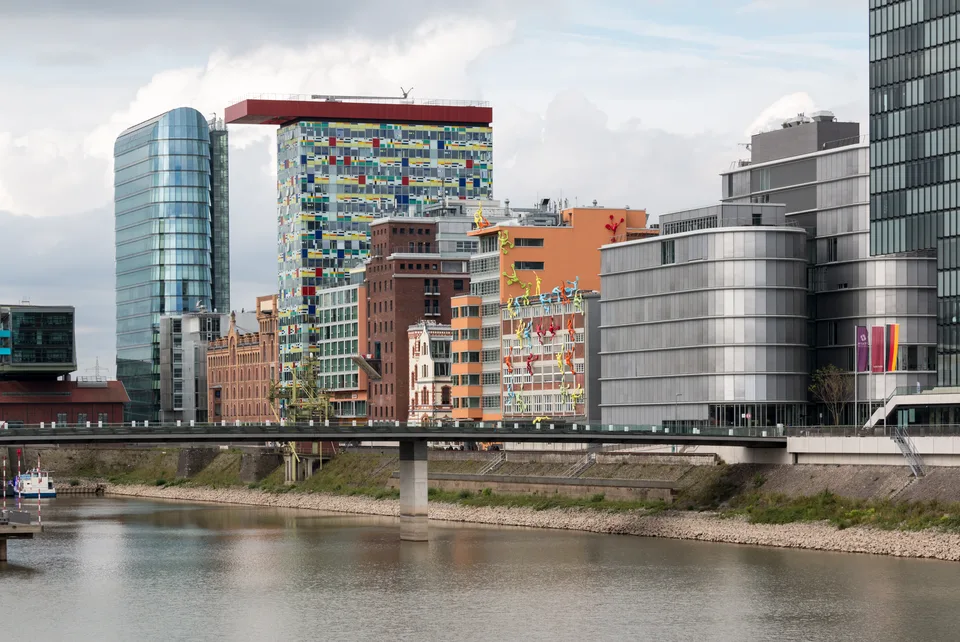
The city’s Media Harbour guide explains how former harbour infrastructure became part of a new business and cultural landscape. Look for retained quay walls, steps and loading tracks alongside the modern buildings. The Gehry ensemble, an established landmark since 1999, is the most recognisable architectural stop, but the setting is more interesting when you notice the relationship between those buildings and the industrial features around them.
Treat a harbour walk as an outdoor activity with a flexible end point. Allow time for photographs and a meal if that suits your plans, and keep a museum alternative for poor weather. The area’s office and hospitality uses also mean it is worth checking the surroundings of a hotel or apartment carefully. An impressive waterfront photograph does not tell you whether the nearest shop, evening transport or room arrangement meets your needs.
Rheinturm: buy a view that suits the conditions
The Rheinturm ticket page lists adult observation admission at €12.50, with €8 early-bird entry until noon and late-night entry from 8pm. Check the applicable booking conditions and opening arrangements before choosing a discounted slot. Visibility should influence your decision: a tower visit is a different proposition when low cloud obscures the city. The viewing experience is advertised at 168 metres; that is the observation level, not a statement of the tower’s overall height.
Tickets are paid by card online or at the venue; the operator no longer accepts cash. DüsseldorfCard discounts are available at the tower’s ticket desk, so do not buy a full-price online ticket expecting the discount to appear afterwards. Observation tickets cover the deck and M168 rather than a meal in QOMO. Choose the product you need, and compare a daytime view with the evening atmosphere instead of assuming the latest slot is always best.
K20 and K21: allow time for two separate museums
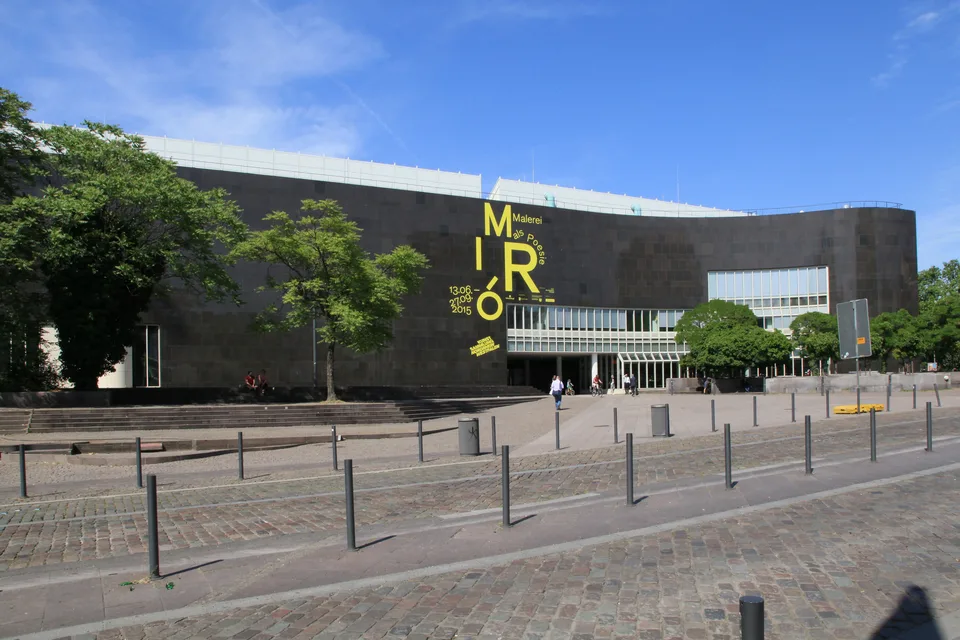
Kunstsammlung Nordrhein-Westfalen’s visitor information distinguishes K20 at Grabbeplatz from K21 in the Ständehaus. They are separate buildings, so a combined ticket should not be mistaken for a single museum visit. The adult combination costs €21 and permits one admission at each within a year, including on different days. Compare collection-only and exhibition-inclusive tickets if you intend to visit just one building; the prices differ according to the chosen offer.
Normal opening is Tuesday to Sunday, 11am–6pm, with specified holiday exceptions. On the first Wednesday of the month, opening extends to 10pm and entry is free from 6pm. Check the dated calendar: K21 has published closures on 11 and 17 November 2026 and opens only from 6pm to 10pm on 4 November. Timed tickets are required for Franz Marc and Playground despite the general rule that most visits do not need a time slot.
Benrath Palace deserves a separate outing
Benrath Palace’s visitor information describes the main building, Garden Art Museum and Natural History Museum as distinct parts of the visit. Its published opening pattern is Friday afternoon, weekends and Monday–Tuesday, so do not assume a Wednesday or Thursday museum visit is available. Check the ticket shop for the particular date and experience you want. A walk around the setting and admission to interiors should be planned as separate decisions.
The U72 serves Schloss Benrath, while the railway station at Benrath involves a walk of about ten minutes according to the foundation. Visitors with mobility needs should read the detailed access information and contact the venue: steps, narrow doors and stairs restrict parts of the historic buildings. Leave enough time for the journey and visit rather than adding Benrath as a hurried final stop after a full day in the centre.
Airport connections: choose the right station
Düsseldorf Airport’s transport guide distinguishes Düsseldorf Flughafen, used by regional and long-distance trains, from Düsseldorf Flughafen Terminal beneath the terminal. From the former, passengers transfer by SkyTrain; the S11 serves the terminal station directly via Düsseldorf Hauptbahnhof. Check the station name in your journey plan rather than assuming every train labelled “airport” delivers you beneath the terminal. Allow time for the transfer when booking a rail connection after a flight.
There is also a newer direct option: Rheinbahn’s U80 links the main station with Flughafen Terminal. Its published service is generally every twenty minutes during weekday daytime and every thirty minutes at quieter times and on Sundays. The U81 connects the airport with Messe Nord on trade-fair days; it is not the regular main-station route. Check the dated journey planner for your departure, particularly early or late, rather than treating a headline frequency as a guaranteed connection.
SkyTrain and local tickets
The SkyTrain connects the airport railway station, parking facilities and terminals. Its published operating hours run from 3.45am to 12.45am, with a gap overnight. The airport lists several accepted tickets, including valid VRR tickets and the DüsseldorfCard; check what you already hold before buying another fare. For a late arrival, inspect the current overnight arrangements rather than assuming the SkyTrain runs continuously.
For city travel, Rheinbahn’s 24-hour ticket costs €7.60 for one person at price level A, with €5.10 for each additional person, up to five travellers. Wider fare areas cost more. The ticket lasts twenty-four hours from validation, rather than ending at midnight, and allows repeated journeys within its chosen area. Buy through an approved app, stationary machine or sales outlet, and follow the validation instructions for your product. Confirm the fare area before adding a regional excursion.
Is the DüsseldorfCard worth buying?
The official DüsseldorfCard offer lists a €13.90 price for one person for twenty-four hours. Compare that with the transport and attractions you actually plan to use. The card combines specified public transport with discounts, some reaching free admission; it does not make every activity free. The sightseeing bus, for example, receives a discount rather than being included. Avoid deciding solely from a promotional savings example containing activities you would otherwise skip.
Read the card conditions before selecting the start time. Online validity begins at the date and time you choose, and the card is personal and non-transferable. A group card requires its named holder to accompany the group; it is not a set of separate passes for people following different itineraries. Bike hire is a separate product. Check the exact transport coverage and the method of redeeming each attraction’s discount, including whether it must be obtained at the ticket desk.
Little Tokyo and food shopping
Little Tokyo runs along Immermannstraße and nearby streets between the main station and the centre. It is a useful area for exploring Japanese restaurants, cafés, supermarkets and bookshops, rather than a single attraction with an entrance gate. Choose a meal around the menu and your dietary requirements. A busy restaurant or a popular dish does not establish that a particular broth, sauce or preparation is suitable for you, so ask when ingredients matter.
Carlsplatz’s market website lists opening hours of 8am–6pm Monday to Friday and 8am–4pm Saturday. Check individual traders before planning a specific purchase. A market stop can fit a central sightseeing day or supply an apartment meal, but compare prices rather than assuming a market automatically means a low-cost lunch. The Japanese gardens in Nordpark and the EKŌ-Haus in Niederkassel are elsewhere in the city; do not confuse them with Little Tokyo’s streets around Immermannstraße.

Set a budget around your own itinerary
Price accommodation for your actual dates first, then add arrival transport, local journeys, meals and the paid sights you have chosen. Keep museum combinations, visitor cards and individual tickets alongside one another in your comparison. A predominantly outdoor day around the Old Town and harbour has a different cost structure from a day of exhibitions and tower admission. Paying for a pass is useful only when its usable benefits justify the cost for your itinerary.
For a possible move, separate the initial cash requirement from recurring household spending. A deposit and furnishing costs can make the first month different from later months. Compare the full accommodation terms, including utilities, contract duration and any agreed rent increases, rather than extrapolating from hotel prices. Keep a margin for transport changes and an indoor alternative when weather alters your plans. Use current offers and published fees instead of relying on an unsupported citywide daily or monthly average.
Seasons and weather: keep outdoor plans movable
Choose your dates around the experiences you want, then check the relevant operating and exhibition calendars. A visit centred on riverside walks and architecture needs more weather flexibility than one built around galleries. Carry a rain layer and comfortable shoes, and use the forecast to decide when to attempt the tower view. There is little benefit in committing your only clear afternoon to an indoor stop that could readily move to another day.
For hot weather, the city’s climate-adaptation information links to its map of cool places, drinking fountains and refill locations. Use it to plan breaks during a walking day. Summer cooling installations have their own seasonal dates and should not be assumed to operate year-round. Winter or wet-weather itineraries can place greater emphasis on museums, cafés and shorter outdoor circuits, with opening exceptions checked before you travel.
A realistic three-day itinerary
On day one, establish your bearings with the Old Town, Königsallee and part of the Rhine promenade. Add Carlsplatz during its opening hours and choose dinner in Little Tokyo if Japanese food interests you. This leaves room for an arrival delay without sacrificing a prepaid museum slot. If you arrive late, shorten the route rather than trying to complete it after dark simply to tick off the stops.
Give day two to K20 or K21, or both if you want a substantial art day. Put the harbour walk and Rheinturm on the clearest suitable part of your schedule. On day three, choose Benrath Palace when its museums are open, or make the Neanderthal Museum a separate excursion. These are editorial suggestions, not a timetable: Monday closures, timed exhibitions and your own walking pace should determine the final order.
Renting: compare the full household cost
The federal government’s housing guidance explains the distinction between Kaltmiete, the basic rent, and Warmmiete, which includes agreed service charges. Check precisely what is covered. Electricity, internet and sometimes gas need separate arrangements, so a headline inclusive rent should not be treated as the final household bill. A deposit may be up to three months’ basic rent, which is different from three months of every monthly expense combined.
Long-term accommodation is often unfurnished, and a kitchen is not guaranteed. Inspect the condition, equipment and energy information before signing, and record existing damage and meter readings at handover. Ask which application documents the landlord needs rather than sending sensitive documents indiscriminately. Test the route from the actual address to work or university, including a realistic evening return. Compare any saving in rent with travel costs and the time you would spend commuting.
Registering your address and arranging services
Düsseldorf’s address-registration service normally requires registration within two weeks of moving into a home. You need the accommodation provider’s Wohnungsgeberbestätigung; the rental contract alone is insufficient. The city lists specific exceptions for people whose usual residence is abroad and for initial commercial accommodation, so follow the instructions for your circumstances. Registration is free and is a separate matter from immigration permission.
Stadtwerke Düsseldorf’s moving service is a useful starting point for energy arrangements. Confirm who handles each service, record the handover readings and check availability and contract terms at your address. Families arriving with children who do not yet have sufficient German should contact the municipal integration centre’s school-placement service. That central process differs from the ordinary school enquiry route. Investigate placement and childcare early; do not assume that a preferred school or English-language teaching follows automatically from a housing choice.
Tourism, work, study and settlement need different permissions
Check your nationality and purpose before booking a long stay. The Foreign Office’s short-stay guidance explains the general ninety-days-in-180 calculation across the Schengen area, including arrival and departure days. It is not a fresh allowance in each country. Nationality-specific provisions can affect the position, and a visa’s validity period does not by itself establish how many days you may remain.
The federal work and residence guidance makes clear that a tourist or ordinary Schengen visitor visa generally does not authorise employment. EU and EEA citizens and Swiss nationals have different access rights from other nationalities. Third-country workers and students need the appropriate route, with nationality-specific entry exceptions checked before assuming a visa must always be obtained abroad. University admission, a job offer or an apartment lease should be followed by the relevant permission checks. Permanent settlement has separate conditions and is not created by spending a holiday in Düsseldorf.
Health cover belongs in the moving plan
Use the federal government’s health-insurance overview to understand the statutory and private systems and how your employment or study circumstances affect eligibility. Arrange continuous cover between arrival and the start of regular insurance. Visitor travel insurance and the insurance needed for residence can serve different purposes, so confirm the requirements with the responsible authority and insurer rather than assuming a policy is suitable because it is labelled international.
For household budgeting, request a quote appropriate to your circumstances instead of using a single supposedly typical premium. Ask how dependants are covered, which services are included and how to find an appropriate medical practice. Check the arrangements for ongoing treatment and medicines before moving. These decisions are easier to make before arrival than during the first week of work, study or school.
Nearby: a separate day in the Neandertal
The Neanderthal Museum is in Mettmann, outside Düsseldorf, and offers a different focus from another central-city sightseeing circuit. Its standard adult museum-and-Höhlenblick-tower ticket is €14. Normal opening is Tuesday to Sunday, 10am–6pm, with Monday opening during NRW school holidays and on public holidays. Check the calendar rather than assuming either that every Monday is closed or that every holiday follows normal hours.
The museum lists an approximately 800-metre walk from the S28 Neanderthal stop; the S8 stop at Hochdahl involves a longer walk. Its directions warn pedestrians to use Thekhaus rather than Feldhof. Check the dated rail connection and the fare area before departure. Keep this outing spacious enough to enjoy the museum, rather than squeezing it between several Düsseldorf attractions and treating the journey as incidental.
Official planning resources
Reviewed 15 October 2026. Use the official resources linked throughout this guide for admission, transport, housing and immigration decisions. Prices, services and rules can change; confirm the details relevant to your dates. Photography illustrates the locations and is not a live view.
View all official resources
- Dusseldorf Airport: rail stations and terminal connections
- Rheinbahn: 24-hour ticket
- Visit Dusseldorf: visitor card conditions
- Rheinbahn: direct U80 airport service
- Rheinbahn: U81 airport to trade fair
- Rheinturm: observation deck tickets
- Benrath Palace: visiting and accessibility
- Kunstsammlung NRW: K20 and K21 tickets and opening
- Visit Dusseldorf: Little Tokyo
- City of Dusseldorf: address registration
- City of Dusseldorf: historical development
- City of Dusseldorf: Media Harbour
- Federal government: housing, rental costs and moving in
- Federal government: work, study and visa FAQ
- Visit Dusseldorf: official visitor card offer
- Stadtwerke Dusseldorf: moving and energy service
- City of Dusseldorf: school admissions for new arrivals
- Carlsplatz market: official opening hours
- Visit Dusseldorf: neighbourhood overview
- German Foreign Office: short-stay day counting
- Federal government: health insurance for residents
- Neanderthal Museum: admission, opening and directions
- City of Dusseldorf: heat adaptation and cool places
Plan the next part of your journey
Explore the Germany guide, browse other cities or compare consultants for your travel and relocation questions.