Visa
A city for walking, eating and looking up
Toulouse offers two very different ways to spend a day. In the centre, you can move between brick churches, shaded squares, a covered food market and the Garonne riverfront largely on foot. Beyond that historic core, aviation and space attractions explain why this is also a city associated with engineering and scientific ambition. The best first visit gives both sides room.
Its familiar nickname, the Ville Rose, makes sense when the light catches the brickwork. Yet the pleasure is in the details: a decorated doorway, a café terrace, the great branching vault at the Jacobins. Come for two or three full days if you want the principal monuments and one substantial excursion beyond the centre. Add time for a regional day trip rather than squeezing it between airport transfers.
VisaWand’s France country guide gives the national context. Here, the emphasis is on choosing a useful base, understanding current access and making practical decisions about visiting or testing the city as a possible home.
Start at the Capitole, with a flexible plan
Place du Capitole is the natural orientation point. The building combines civic and cultural functions; the historic reception rooms offer a closer view of the city’s public identity. The official Capitole visitor page describes the Salle des Illustres, with paintings and sculpture evoking Toulouse’s history, and lists free admission to the historic rooms.
Access requires more care than the headline opening hours suggest. These remain working civic spaces. Weddings, council meetings, receptions and exceptional closures interrupt visits, and the city publishes a separate monthly schedule. Check that notice shortly before going, particularly for a Saturday. A view of the square is easy to plan; entry to the rooms should remain conditional.
If the rooms are closed, keep the walk moving towards Saint-Sernin or the river rather than waiting around for an uncertain reopening. Travellers who need step-free access can consult the same page for lift arrangements and contact the building before arrival.
Give Saint-Sernin time beyond the photograph
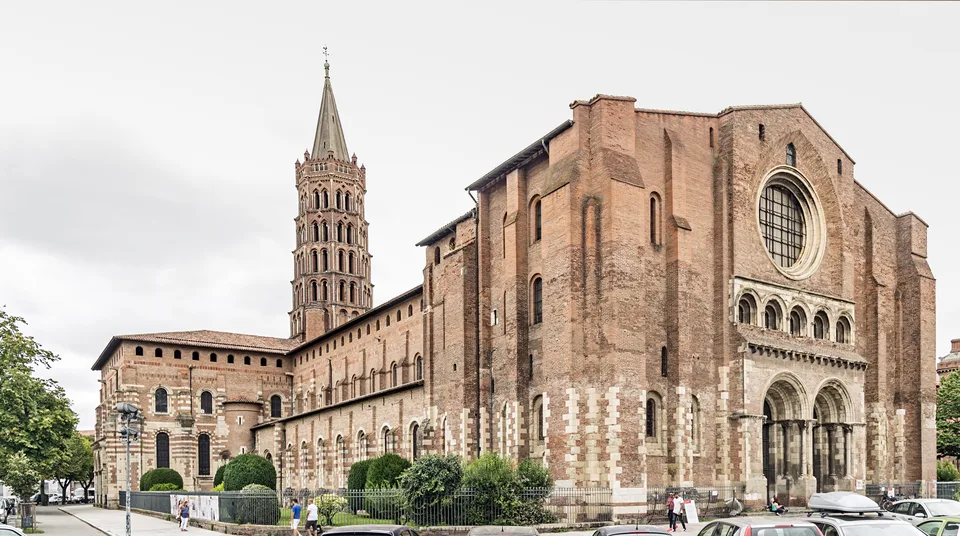
The basilica rewards a visit that looks at the building as a pilgrimage church rather than simply an attractive tower. The official Saint-Sernin information dates the beginning of the present construction to around 1080 and its consecration to 1096. Its place in the Routes of Santiago de Compostela in France is the basis of its UNESCO inscription; that designation does not cover the whole city centre.
Inside, notice how the nave, side aisles and ambulatory organise movement around the church. Outside, step back far enough to understand the scale of the brick structure and its octagonal tower. Combine the visit with nearby streets rather than arriving only for a quick photograph at the entrance.
The city lists opening from 8:30am to 7pm from June to September, and to 6pm from October to May. Sightseeing is not permitted during services. Check worship times and any current restrictions before planning a detailed interior visit.
Look closely at the Jacobins
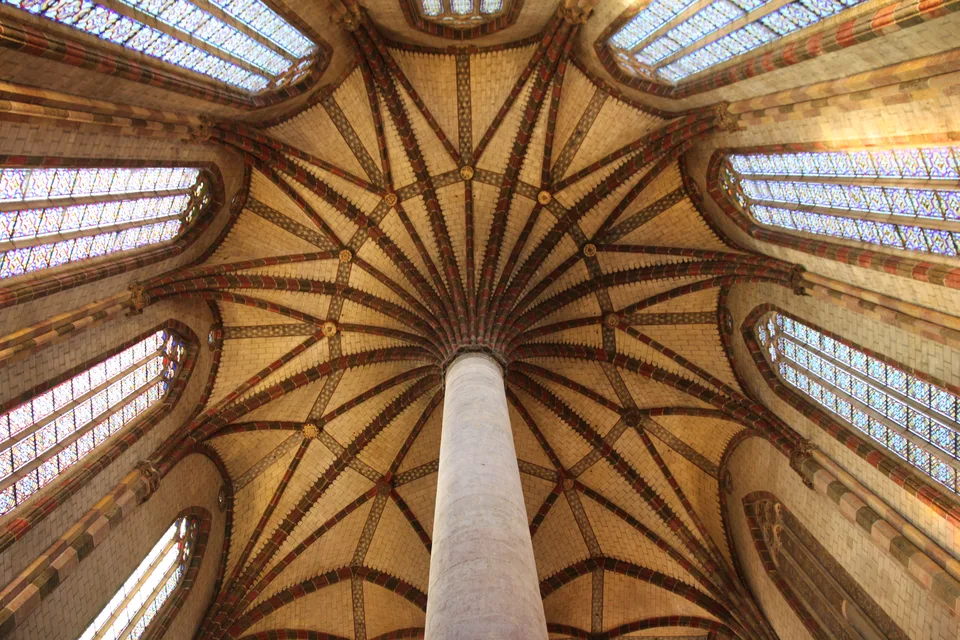
The Couvent des Jacobins brings another architectural language into the same walk. Built by the Dominican order in the thirteenth century, it is a major example of southern Gothic architecture. Its church, cloister and surrounding spaces make a worthwhile pause between the Capitole area and the Garonne.
The most memorable feature is the branching vault, often called the palm tree. The monument’s guide to its highlights explains the column’s 22 ribs and points visitors towards the cloister, chapter house and painted Saint-Antonin chapel. Look up, then slow down: the changing light and the relationship between the spaces matter as much as the famous photograph.
Check the programme for guided visits, exhibitions and family activities. The current cultural calendar identifies languages and age guidance for individual sessions, so do not assume every tour runs in English. The bell tower is not open to visitors. Avoid planning a climb, and confirm the current admission arrangements for the parts of the complex you want to see.
Follow the river, then recognise the canal
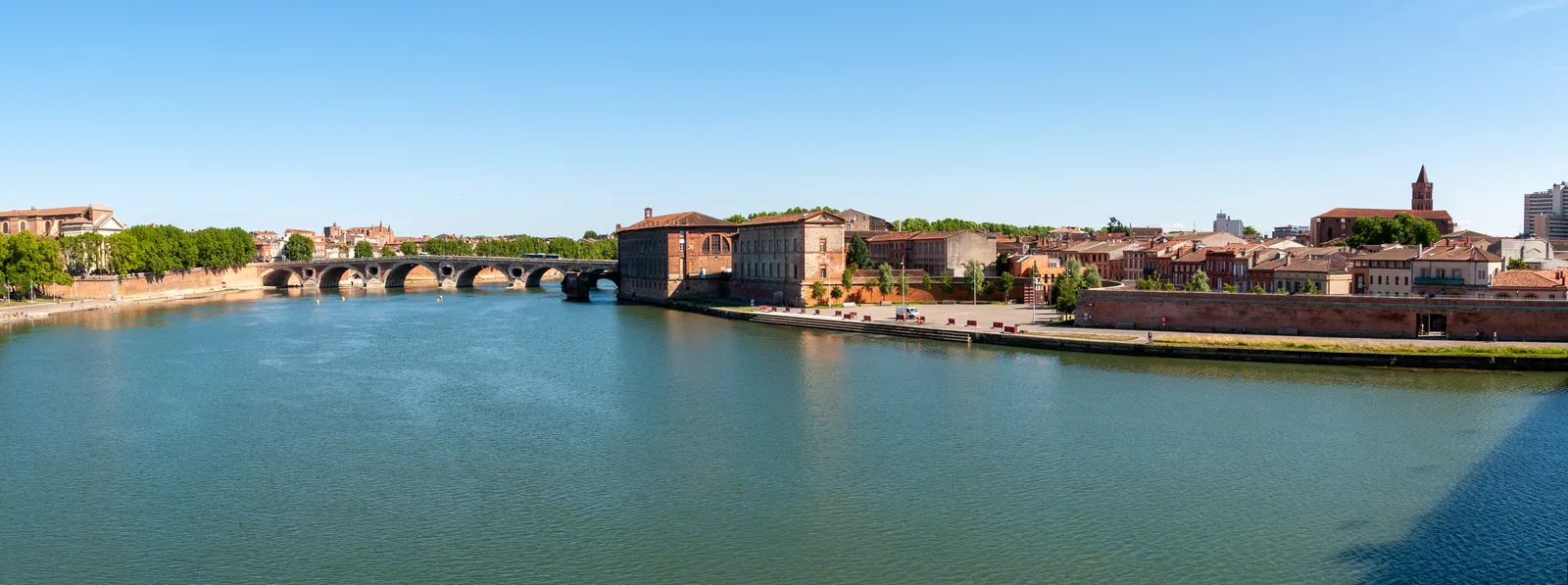
The Garonne gives the central visit breathing space. Walk towards the Daurade waterfront, look across to the opposite bank and use the river as an orientation line between outings. This is a sensible place to pause rather than another attraction that needs a tightly scheduled slot. Keep riverside plans flexible when conditions or access notices change.
The Canal du Midi is a separate waterway with its own history. The Toulouse Municipal Archives’ account of its inauguration describes Pierre-Paul Riquet’s project linking the Garonne to the Mediterranean, inaugurated in May 1681. Understanding that distinction makes a canal walk more interesting than treating every waterside path as part of the same riverfront.
Choose a manageable stretch for your available time and decide where you will turn back or join public transport. If you want a boat excursion, check its actual departure point and waterway before paying. A cruise on the Garonne and a trip on the canal are different experiences, and neither should be assumed to operate simply because it appeared in a previous season’s itinerary.
Choose a district that matches your evenings
For a first visit, a central address reduces the number of journeys needed between monuments and meals. The tourist office’s neighbourhood guide helps distinguish the main settings. Carmes combines a covered market, small streets and evening dining. Saint-Étienne adds the cathedral and historic mansions. Daurade suits time near the river and shopping streets.
Across the Garonne, Saint-Cyprien gives the visit a different viewpoint, with places to eat and cultural destinations on the left bank. Les Chalets is worth considering when residential streets appeal more than being directly beside a busy square. Judge the exact property, though: a district name is too broad to establish how quiet a bedroom will be.
The official guide to Toulouse’s evening districts identifies cafés and restaurants around Wilson, Victor Hugo, Trinité, Carmes and Saint-Georges, as well as student-oriented areas near Saint-Sernin and Arnaud-Bernard. Use those concentrations to choose where to spend an evening. When booking accommodation, ask about street-facing rooms, sound insulation and late arrivals rather than assuming that every central address offers the same experience.
Fit the Augustins around its actual opening days
The Musée des Augustins is a valuable addition for art and architecture, but older advice describing a fully closed museum is no longer useful. Its current reopening programme includes the Gothic rooms, reopened in October 2026. Equally, reopening does not mean the entire historic complex is available.
Read the museum’s practical information before choosing the day. Individual visiting is listed on Monday, Thursday and Friday from noon to 6pm, and on weekends from 10am to 6pm. Tuesday is reserved for groups accompanied by the museum, and Wednesday is closed. Full admission is €9; eligible reductions and free-entry rules require their own checks.
The museum still describes partial access, restricted colonnades and a later reopening for the church. Do not plan around older restoration targets. Large bags and suitcases are prohibited, and pushchairs cannot enter the galleries. Leave belongings at your accommodation or confirm suitable luggage storage before visiting.
Make aviation a separate outing
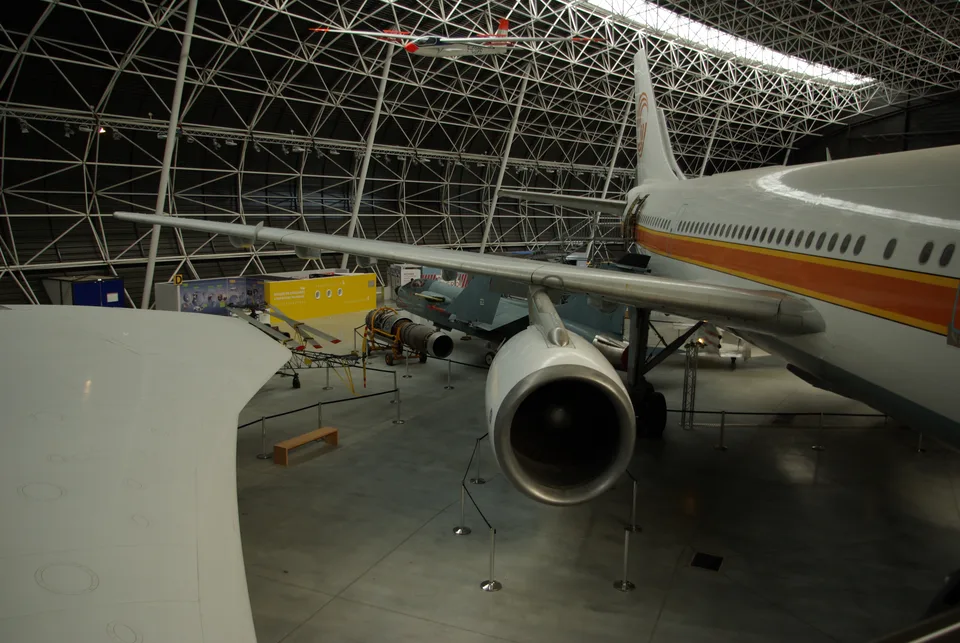
Aeroscopia is in Blagnac, beyond the central walking circuit. Its official practical page lists adult museum admission at €16, with standard opening from 9:30am to 6pm. Check its calendar for school-holiday hours and exceptions.
The exhibition hall has neither heating nor air conditioning, which matters when choosing clothing and the season of a family visit. T1 tram access is via Beauzelle–aeroscopia, followed by a signed walk of about ten minutes. Allow for that final stretch rather than treating the tram stop as the museum entrance.
An Airbus tour is a separate booking, even when combined with the museum. The operator requires advance reservation and original identification; non-EU visitors need a passport, and driving licences are not accepted. Photography and video are prohibited on the Airbus site. Check the full conditions and allow the required two complete working days before the tour. A spontaneous museum visit does not establish eligibility or availability for a factory visit.
Choose space exploration for a full family day
The tourist office’s Cité de l’espace listing describes an experience built around astronomy, spacecraft and the practical challenges of exploration. Full-size exhibits, including Ariane 5 and Mir, sit alongside indoor experiences, a planetarium and large-screen film presentations. It offers a very different day from the historic centre.
Give it a substantial block of time. Moving between outdoor exhibits and scheduled presentations is more satisfying when you are not watching the clock for a second major attraction. Check the day’s programme, language provision and any experience-specific restrictions before deciding which activities matter most to your group.
The listing gives adult prices ranging from €29 to €32, depending on the applicable date or tariff. Its children’s area is aimed at ages four to eight with adult accompaniment. Check the calendar and your precise ticket before travelling; opening hours vary. Bring weather protection for the outdoor portions and decide whether you will use the catering or picnic facilities. Avoid combining this with Aeroscopia simply because both concern aerospace: they are separate outings in different locations.
Arrive with the current airport route in mind
Toulouse–Blagnac is the city’s airport. The airport’s public transport page identifies the shuttle connection with Compans-Caffarelli, Jeanne-d’Arc and the Matabiau interchange, with the airport stop at arrivals near door C2. Match the stop to your accommodation rather than automatically travelling to the final terminus.
Be careful with older tram instructions. The airport page still warns that T2 is interrupted for metro construction. Use the Tisséo journey planner for the actual travel date, including any bus-and-tram alternative. Do not assume that a planned future airport link is already operating.
For the shuttle fare, the current Tisséo shop lists the airport journey at €9.50, superseding the €9 still displayed on the airport information page. The airport ticket conditions allow up to four different lines within 90 minutes, with validation required at each boarding and transfer. Return travel is excluded from that single journey. For a taxi, the airport taxi page identifies the arrivals rank between doors B3 and C1; confirm the fare for your address and any applicable supplements.
Use trains and city transport deliberately
Arriving by rail brings you to Toulouse Matabiau. Compare the actual SNCF Connect timetable rather than assuming every Paris service has the same duration or terminal. TGV and OUIGO journeys use Paris Montparnasse, while Intercités options can use Austerlitz. Compare departure time, total duration and ticket conditions.
Within Toulouse, central sightseeing often needs fewer paid journeys than a map of the whole metropolis suggests. The standard single-ticket conditions permit four different lines within one hour, excluding a return journey. Validate on boarding and at transfers; keeping an unused ticket in your pocket is not the same as having a valid journey.
If you expect repeated travel, compare individual tickets with the three-day product. It runs through the final departures of the third consecutive day, not for 72 hours after activation, and excludes the airport shuttle. This distinction matters if you arrive late in the evening. Plan tickets around the days you will actually travel, not simply the number of nights booked.
Choose accommodation and calculate the total
For a short break, proximity to the centre and a useful transport stop may matter more than a long facilities list. For an early train, compare the route to Matabiau with the appeal of sleeping beside your preferred restaurants. For an aviation-focused visit, check the journeys to Blagnac separately from the route into the historic centre.
Inspect the room details before booking: cooling, lift access, bed arrangement, breakfast, luggage storage and check-in hours. Request clarification where accessibility or a late arrival is important. An apartment can make household routines easier, but confirm cleaning charges, keys and the cancellation conditions attached to that particular reservation.
Use known activity prices to assemble a realistic budget. Standard tickets currently include €9 for the Augustins and €16 for Aeroscopia; a three-day Tisséo ticket is €14.30, with airport travel separate. These costs are only part of the holiday. Add accommodation, meals and the outings you actually choose, and compare any Tourism Pass offer with your eligible admissions. Its optional transport bundle does not include the airport shuttle, regional trains or bike rental. A pass is useful only if its included benefits match your programme.
Plan for heat as well as rain
Choose dates by the activities you value, then check the Météo-France Toulouse forecast as departure approaches. A walking-focused break needs different preparation from several indoor visits. Put longer outdoor walks at the more comfortable part of the day, keep water available and retain an indoor alternative when conditions make the original plan unattractive.
Summer comfort deserves attention in both hotels and rental homes. Météo-France’s Toulouse heat-island study explains how urban nights can remain warmer than the nearby countryside after a strongly sunny summer day. That is a modelled local effect, not a forecast that every night will have the same temperature difference. It does explain why cooling, shutters and ventilation deserve specific questions.
Spring or autumn can be sensible choices when you prefer to prioritise walking over long summer days, but neither guarantees dry weather. In winter, check reduced attraction schedules and dress for the combination of outdoor streets and indoor spaces. At Aeroscopia, remember that the main hall is unheated. Build the plan around the current forecast and published opening calendar, rather than a single description of the city’s climate.
Spend three days with room to enjoy them
Use day one for the central monuments: start at the Capitole, enter the rooms if the closure calendar permits, then continue towards Saint-Sernin. Choose the Jacobins later in the day or keep it for the following morning. Finish by the Garonne, leaving time for a meal instead of trying to complete every church interior in one sweep.
On day two, visit Victor Hugo while the market is trading, then choose the Augustins if its individual opening schedule fits. A walk through Carmes or across to Saint-Cyprien can follow. Reorder this day when it falls on a Monday, Tuesday or Wednesday; the market and museum have different closure patterns.
Give day three to one major excursion: Aeroscopia with a properly booked Airbus tour, or the Cité de l’espace. Keep the other for a longer stay. Families may prefer fewer central interiors and more time at the attraction they choose. This itinerary is a practical outline, not a promise that every stop is open on every date; reserve timed experiences first, then fit the flexible walks around them.
Test a move through ordinary weekday tasks
A longer stay should include the journeys you would make when the holiday is over. Travel from a prospective home to the actual workplace or campus, including the final walk and the return journey after dark. Do not judge a commute only by the distance to the centre: Blagnac, an individual campus and a central office create different transport needs.
Before signing a lease, consult ADIL Haute-Garonne’s free housing advice if the contract or charges are unclear. Its role is independent advice, not finding an apartment. ANIL’s renting guidance covers the written lease, condition inventory, diagnostics and responsibilities. Check furnished versus unfurnished terms, the energy information, deposits, insurance and which services the charges include.
For water, Eau de Toulouse Métropole’s moving-in instructions request a meter reading and bank details for an individual subscription. Establish whether your building includes water in communal charges before applying. Arrange electricity and internet for the exact address, and identify healthcare, school and grocery needs before committing. A reconnaissance visit is most valuable when it tests those ordinary routines alongside the neighbourhood’s appeal.
Match immigration permission to the purpose
Use France-Visas’ tourist-entry guidance to check whether your nationality and circumstances require a visa and which supporting documents apply. Toulouse follows French immigration rules. A holiday admission should never be treated as permission to start work simply because an employer, client or accommodation is already arranged.
The official routes distinguish professional activity from study and training. Employment, self-employment and an academic placement can involve different procedures. Obtain the permission appropriate to the activity before committing to a start date. An offer or university acceptance is part of the preparation, not the whole immigration decision.
For longer residence, read the long-stay visa and arrival-formality guidance, including nationality exemptions. A VLS-TS generally requires validation within three months of arrival; other visa wording can require a residence-card application within two months. Follow the instructions attached to the document actually issued. Neither process amounts automatically to permanent residence. VisaWand’s France destination and consultant listings and consultant directory can help you compare advice and the written scope of professional support.
Add one regional trip when you have time
If you have another full day, Albi’s tourist office presents an appealing change of scale: Sainte-Cécile cathedral, red-brick architecture, gardens and the Tarn riverfront. Check the train and your route from the station, then allow enough time for the centre. A focused day is more useful than attempting several regional destinations with little time in each.
VisaWand’s Albi location directory and Carcassonne location directory offer destination links for comparison; a location listing should not be mistaken for a completed travel guide. Use the France location directory for a wider search.
Keep Toulouse itself in proportion. Its central walks, food and monuments already fill a rewarding short break. The aerospace attractions and regional excursions are reasons to extend the stay, not obligations to compress into a weekend.
Official planning resources
Reviewed 16 October 2026. Use the official resources linked throughout this guide for admission, transport, housing and immigration decisions. Prices, services and rules can change; confirm the details relevant to your dates. Photography illustrates the locations and is not a live view.
View all official resources
- Toulouse Tourist Office: Capitole visitor information
- Toulouse Tourist Office: Saint-Sernin visitor information
- Couvent des Jacobins: history and visiting
- Couvent des Jacobins: architectural highlights
- Couvent des Jacobins: current activities
- Toulouse Municipal Archives: Canal du Midi inauguration
- Toulouse Tourist Office: neighbourhood guide
- Toulouse Tourist Office: evening districts
- Musée des Augustins: current reopening programme
- Musée des Augustins: current visitor information
- Aeroscopia: admission, hours, transport and Airbus tours
- Toulouse Tourist Office: Cité de l’espace
- Toulouse Tourist Office: Victor Hugo covered market
- Atout France: Toulouse food and heritage
- Toulouse–Blagnac: airport shuttle and public transport access
- Tisséo: official journey planner and network notices
- Tisséo shop: current occasional fares
- Tisséo: airport ticket validity
- Toulouse–Blagnac Airport: taxi ranks and fare zones
- SNCF Connect: Toulouse–Paris rail planning
- Tisséo: single journey ticket
- Tisséo: three-day ticket
- Toulouse Tourist Office: tourism pass FAQ
- Météo-France: Toulouse forecasts
- Météo-France: urban heat maps including Toulouse
- ADIL Haute-Garonne: independent housing advice
- ANIL: renting, leases and tenant obligations
- Eau de Toulouse Métropole: moving in and out
- France-Visas: short tourist stays
- France-Visas: professional activity
- France-Visas: study and training routes
- France-Visas: long stays and residence formalities
- Albi Tourist Office: visiting from Toulouse
Plan the next part of your journey
Explore the France guide, browse other cities or compare consultants for your travel and relocation questions.