Visa
A capital best explored beyond its old streets
Santo Domingo rewards a visit with enough time to change pace. Spend a morning examining stone façades in the Colonial City, an afternoon in a museum and another day among gardens or underground lagoons. Then leave space for dinner in a contemporary neighbourhood. The capital’s appeal lies in the relationship between those experiences, rather than in a single monument or a stretch of beach.
This guide covers the Dominican Republic’s capital on the Caribbean coast of Hispaniola. The historic centre is a manageable introduction, but the wider city requires transport planning. A hotel described as being in Santo Domingo may be convenient for business meetings while remaining a separate journey from the streets you came to explore.
Allow three full days for a first visit, adding time if you want a beach excursion or are investigating a move. VisaWand’s Dominican Republic country guide provides the national context. Here, the emphasis is on choosing a base, understanding current access and arranging days that leave room to enjoy the city.
Read the colonial grid with its history in mind
The UNESCO account of the Colonial City places the historic core at the Ozama River’s mouth. It describes the early settlement on the east bank, its foundation in 1498 and the transfer of institutions to the west bank under Nicolás de Ovando in 1502. The resulting grid and central square influenced later colonial town planning elsewhere in the Americas.
That is an architectural story, but also a history of conquest, institutions and encounters between Indigenous, European and African cultures. Looking closely at the street plan helps connect a fortress, a religious building and a palace with the systems of power they served. Avoid reducing the past to an unqualified celebration of European “firsts”.
Use the heritage district as a starting point for questions. What was a building originally for, how has it changed and what happens there now? A guided walk can be useful if its interpretation interests you. Ask about language, duration, included admissions and the actual route before booking, especially if steps or prolonged standing would be difficult.
Make the Colonial City a walk rather than a race
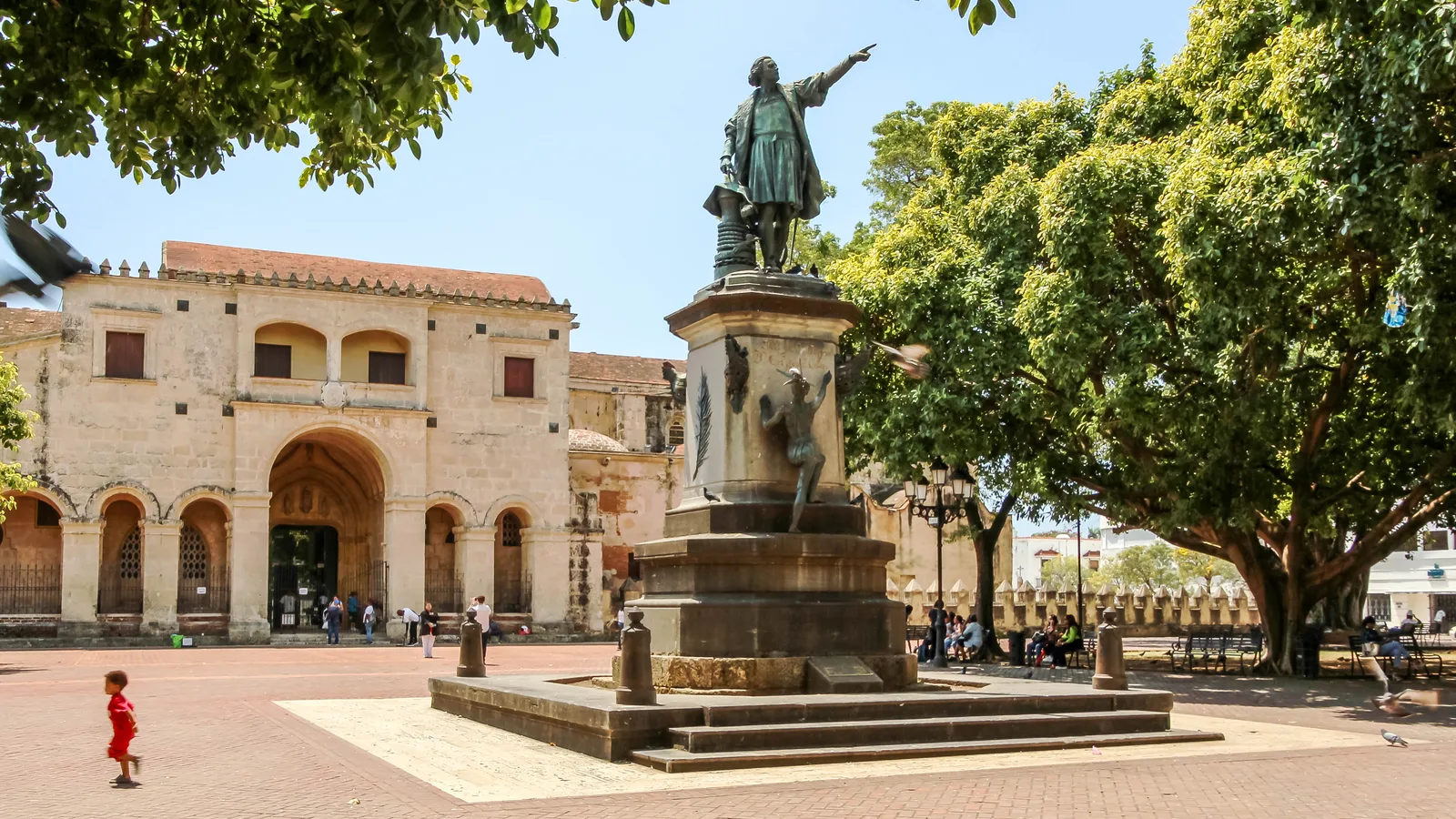
Begin around Parque Colón, with the cathedral surroundings and a pause to orient yourself. The tourism ministry’s Santo Domingo destination overview identifies Calle El Conde, the cathedral, the San Francisco ruins and Independence Park among the historic centre’s principal places. Choose a few connected stops instead of trying to see every listed attraction in one uninterrupted circuit.
Continue towards Calle Las Damas, where the official visitor description links sixteenth-century architecture with buildings now used as museums, embassies and hotels. Fortaleza Ozama and the National Pantheon are important points along this historic corridor. Their proximity makes a walk coherent; it does not establish that each interior has identical opening hours or a shared admission ticket.
Allow time for changes in surface and level, a seated break and whichever building you want to examine properly. Confirm church access around services and ask about any dress requirements. For a paid walking tour, establish where it ends as well as where it starts. A clearly agreed meeting point makes the return journey easier if the group splits for lunch or a museum visit.
Visit the Alcázar with the newest information
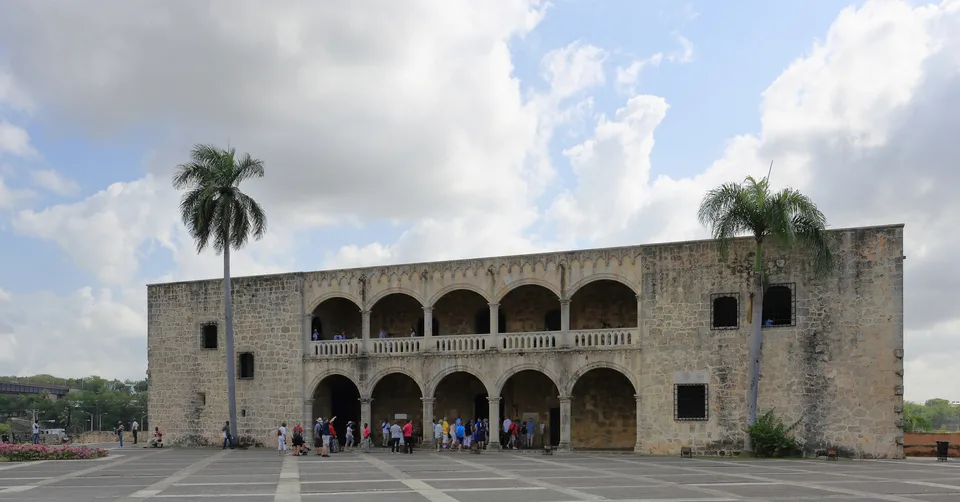
Facing Plaza de España, the Alcázar de Colón was built as the residence of Diego Colón and is now a historical museum. Its arcaded façade offers a clear contrast with the smaller street frontages elsewhere in the district. The tourism ministry dates the original palace to 1511–1514 and locates it on Calle La Atarazana.
Current information matters here. A government announcement published in September 2026 reports the inauguration of its reconstructed museum and new museography. Older listings that show prolonged closure should therefore not be treated as the final word. Equally, a reopening announcement does not confirm every subsequent day’s access or the ticket category for your visit.
Check the museum’s current arrangements before committing to a timed tour. Ask whether the booking includes the exhibitions, any guided interpretation and the facilities your group needs. The photograph in this guide predates the recent work and is identified accordingly. Spend some time with the square and exterior even when your main interest is indoors; the palace’s position helps explain its relationship with the colonial city.
Give Dominican history an afternoon of its own
The National Museum of History and Geography offers a different perspective from the colonial monuments. The Ministry of Culture reports that it reopened on 28 April 2026 following restoration and an overhaul of its exhibitions. It stands in Plaza de la Cultura Juan Pablo Duarte and bears the name of historian Emilio Cordero Michel.
The renewed interpretation includes the Trujillo period, the April war and the Caamaño guerrilla movement, alongside restored historical objects. Those subjects make this a valuable choice for visitors who want to understand the country beyond its earliest colonial architecture. Follow a theme through the displays rather than expecting every period to receive equal attention in a short visit.
The ministry lists Tuesday–Sunday opening from 10:00 to 18:00 and says guided visits are available. Confirm admission and interpretation options directly, including the language offered. Temporary exhibitions announced at reopening may have changed by your dates. Keep this outing distinct from a rushed old-town circuit: it deserves both the travel time and the attention needed to engage with the material.
Compare the natural museum’s ticket options
Also in Plaza de la Cultura, the National Museum of Natural History Prof. Eugenio de Jesús Marcano provides an indoor alternative for a family or anyone interested in the island’s natural world. Its visitor site distinguishes the museum from a combined museum-and-planetarium experience. Decide which you want before comparing prices or planning the rest of the afternoon.
The dedicated admission and payment page lists museum entry at RD$200 for the adult category and RD$100 for identified students and children aged three to twelve. Combined tickets are RD$400 and RD$300 respectively. Ask about the applicable category for your party; reduced admission is conditional, and a planetarium ticket involves more than simply entering the galleries. The page accepts cash and cards.
The museum’s published opening hours are Tuesday–Sunday, 09:00–17:00, with ticket sales ending at 16:00. Holiday hours end earlier. Check session availability before planning around the planetarium. Follow the visitor rules on quiet voices and leaving exhibits untouched, and discuss activity bookings separately from an ordinary visit.
Slow down in the National Botanical Garden
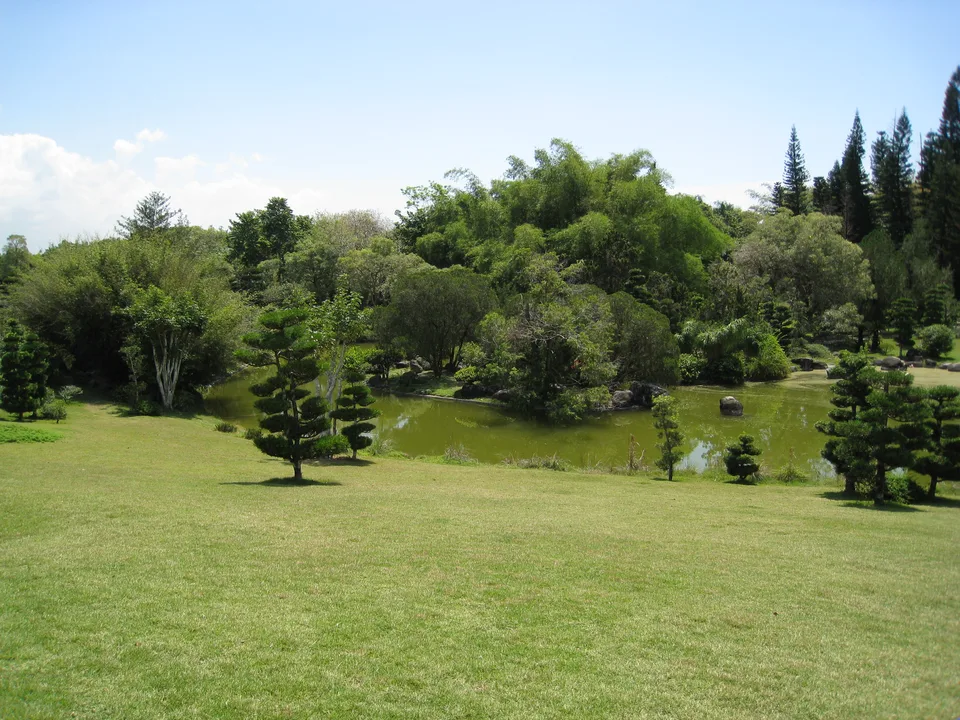
The National Botanical Garden provides a landscape change from masonry, traffic and museum rooms. The official tourism description highlights native trees, palms, orchids and birds, with a Japanese garden among its distinct areas. Treat it as a place to observe plants and landscape design, rather than an attraction to cross off between two distant appointments.
Choose a manageable walk and ask which sections are accessible that day. A garden visit can suit different interests: a short family outing, photography, quiet time outdoors or a closer look at particular plant collections. The tourism board describes a tram tour, but confirm current departures, availability and whether it is included in the ticket you buy.
Bring water, sun protection and footwear suitable for the paths. Establish where your return transport will collect you before heading further into the grounds. If an organised visit is important, ask about its language and scope in advance. The garden image here is a dated historical photograph, so it illustrates the landscape without claiming to show every present-day facility or planting arrangement.
Enjoy the Malecón as a seafront city space
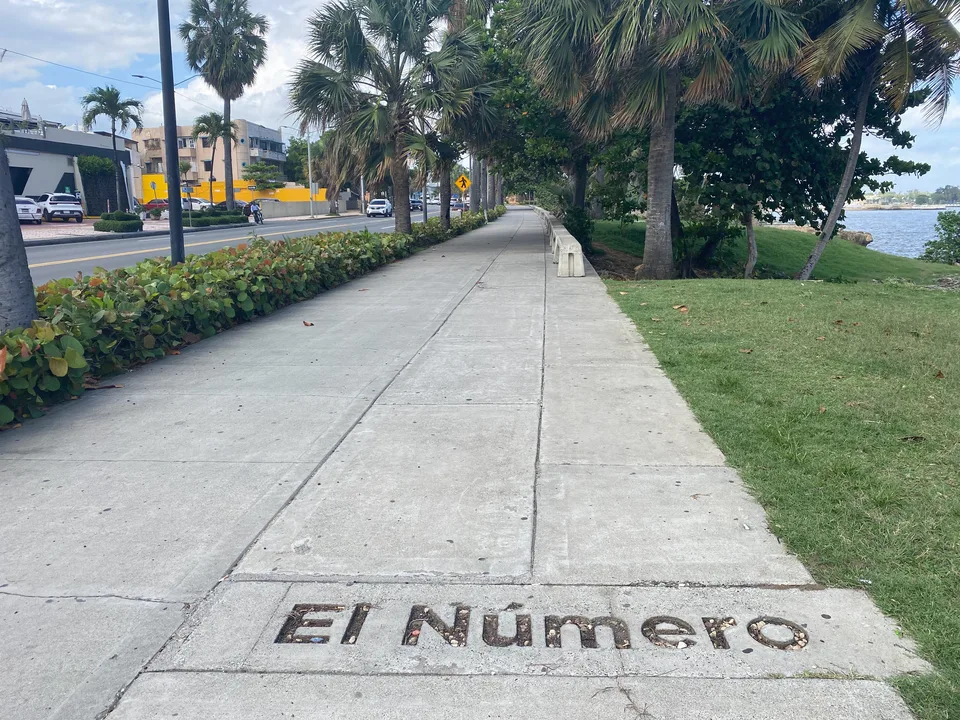
The Malecón along George Washington Avenue is a useful counterpoint to the enclosed streets of the historic district. The tourism ministry describes a waterfront of hotels, restaurants, recreational areas and space for strolling or cycling, including Plaza Juan Barón and Güibia. It is a place to spend time beside the Caribbean, not a reason to assume your city hotel offers a sandy beach outside its door.
Select a section that works with your accommodation and the rest of the day. A short walk followed by a drink may be more enjoyable than attempting a long stretch in uncomfortable heat. Check crossings and the return route, particularly if travelling with children or anyone who needs regular rests.
For dinner nearby, compare the menu and final charges before choosing a table. A sea view is one consideration; noise, shade, accessibility and the journey back also matter. If hiring a bicycle or joining an activity, clarify the equipment, route and return arrangements rather than assuming that every part of the waterfront serves the same purpose.
Choose a base around your main journeys
For a first cultural visit, accommodation in the Colonial City can keep historic walks close at hand. A Malecón address suits visitors who value the seafront setting. If appointments and dining in the contemporary city dominate the trip, compare Piantini and Naco instead. The tourism ministry’s dining-area overview identifies these districts and their principal avenues among the capital’s restaurant hubs.
Compare exact addresses, not neighbourhood labels alone. Check the entrance, likely pickup point and journey to your most frequent destination. A central-looking map pin may still leave an awkward final walk. For a family, proximity to a usable grocery shop or laundry can matter more than the number of attractions listed in a property description.
Shortlist accommodation by purpose before comparing room photographs. A restored historic building, a modern hotel and a self-catering apartment can solve different needs. Ask about street noise, stairs, lift access, working space and the particular room category. For a prospective move, test the commute at the time you would actually make it, including the journey home.
Check the hotel rate beyond the headline
The Santo Domingo Marriott Hotel Piantini is one example of a contemporary city property, on Avenida Abraham Lincoln at Andrés Julio Aybar. Its operator lists restaurants, fitness facilities, a rooftop pool and laundry services. It also explicitly says that the hotel does not provide an airport shuttle. That distinction can materially change the arrival plan and the total cost of a stay.
Request a dated quote for the room and occupancy you need. Establish whether breakfast, taxes, parking and any other required charges are included. Confirm the availability of facilities central to your decision, as maintenance notices and operating arrangements can change. A general list of accessibility features should lead to a conversation about the specific room and route you require.
For an apartment, ask about electricity allowances, cleaning, kitchen equipment and internet performance. Clarify cancellation and deposit terms in writing. A lower nightly figure can become less attractive after separate charges or a costly daily journey are included. Keep those comparisons on the same basis before committing to a long booking.
Arrange the airport transfer as a complete journey
Las Américas International Airport, SDQ, serves the capital from its eastern side. Check the airport code on the ticket before arranging transport; the name of the destination city alone is not enough to identify the terminal where a driver should meet you. Include your accommodation’s full address and a contact method that will work after landing.
The airport’s authorised taxi information identifies SICHALA and locates its stand at the main entrance on the first level. Obtain the complete price and destination agreement before departure, including any relevant luggage or other charges. For a prebooked transfer, establish the meeting point, waiting allowance and procedure for a delayed flight.
The airport’s current construction notice warns that expansion works affect services and long-term parking. Its free shuttle relates to remote parking, not a verified free transfer to downtown. If leaving a car there, review the current instructions and allow additional time. On departure, plan for traffic and airline check-in requirements rather than treating a favourable driving estimate as a guarantee.
Use public transport where it fits the route
The Sistema Integrado de Transporte planning portal is a useful starting point for the capital’s rail and bus connections. Match your origin and destination with the relevant service and check current payment arrangements. Network information can include projects or changes at different stages, so a system-wide description should not be read as proof that every proposed line is operating.
For a short visit, combine transport with walks that make geographical sense. A station near a broad district may still leave a substantial final approach to the particular museum or hotel. Ask about that last stage, especially with luggage or access requirements, and keep a straightforward alternative for the return.
A new electric route in and around the Colonial City was announced in September 2026. Its launch is useful context, but confirm the current route, stops and fare with OMSA before relying on it: street works can affect a young service. Do not build a tight museum reservation around an unverified frequency. For any taxi journey, agree the pickup location clearly and retain the destination address.
Make meals and shopping part of the route
Look for meals that help you encounter Dominican cooking without turning every stop into a formal restaurant booking. The tourism ministry’s practical travel questions describes mangú as boiled, mashed green plantain, commonly accompanied at breakfast by eggs, fried cheese and salami. Its description of la bandera centres on rice, beans and a meat stew. Ask what a particular kitchen is serving that day.
Discuss allergies and dietary requirements directly, and check whether side dishes and drinks are included in the displayed price. For a special dinner, use the restaurant’s current menu and booking terms. The capital’s international dining scene offers variety, but an award or an older recommendation does not establish what a kitchen serves now.
For purchases, the official shopping overview points to Colonial City galleries and crafts, including textiles, amber and larimar jewellery, alongside contemporary malls such as BlueMall and Ágora. Compare materials, provenance and receipts before an expensive purchase. Browsing a gallery can be worthwhile without buying, while practical shopping for groceries or household goods may call for a different stop altogether.
Budget for your choices and the weather
Build the budget from dated accommodation and transport quotes, then add the museum tickets and meals you actually plan to buy. Keep a contingency for changed plans. The admission examples above are operator-specific; they do not establish a reliable universal daily cost for every traveller. Check eligibility before assuming a student, child or other reduced ticket applies.
Santo Domingo is a warm tropical destination. The official visitor information identifies the Atlantic hurricane season as June–November. That is a planning consideration, not a prediction for an individual trip. Review cancellation terms and current forecasts, particularly before an outdoor excursion or an onward journey whose timing leaves little flexibility.
Arrange exposed walks for a comfortable part of the day and keep an indoor alternative available. Carry water and sun protection rather than saving all refreshments for a distant lunch reservation. A quieter morning in a garden and an afternoon museum can provide a better balance than packing every outdoor activity together. Leave spare time when conditions make a planned route less appealing.
Spend three days without crossing the city repeatedly
On day one, concentrate on the Colonial City. Begin with the cathedral surroundings, choose a walk through selected streets and give one museum proper attention. Keep lunch nearby. Confirm the Alcázar’s arrangements before making it the fixed point of the day, and allow the square and streets themselves to remain part of the experience.
On day two, make Plaza de la Cultura the main outing. Choose the historical interpretation, the natural museum or a combination that suits your interests. A planetarium session needs its own availability check. Leave time for a meal afterwards rather than treating a second museum as compulsory. Later, consider a modest Malecón walk if conditions and energy allow.
On day three, choose between a garden visit and a more substantial excursion. This is also useful space for revisiting somewhere that interested you. If scouting a move, replace sightseeing with a property inspection and ordinary commute. The outline deliberately leaves choices: a meaningful visit depends on the time spent looking and understanding, not the length of the checklist.
Add caves or a beach day for contrast
Los Tres Ojos offers a different landscape east of the city: caves and freshwater lagoons reached by descending a staircase and following waterside paths. The tourism ministry describes a small barge connection to a fourth lagoon. Ask about current access, admission and any separate boat arrangements before travelling. The stairs make it particularly important to discuss mobility needs rather than assuming an easy, level park walk.
For beach time, compare Boca Chica’s official visitor information with your preferred style of day. The tourism board describes shallow coastal water, beachfront seafood and a lively local atmosphere, especially around busy holiday periods. Check conditions and the return journey instead of assuming a fixed transfer time or that a sheltered setting guarantees safe swimming.
VisaWand’s Boca Chica location directory identifies the nearby coastal settlement; it is not presented here as a completed travel guide. Choose an excursion or an overnight beach stay according to your priorities. Neither option needs to be squeezed between a museum visit and an inflexible flight.
Test everyday life before making a longer commitment
For relocation, inspect the household routine as carefully as the apartment. Test the commute, locate grocery and pharmacy options, and investigate healthcare and school services relevant to your family. Ask the landlord about water storage, electricity backup, internet installation and responsibility for repairs. Confirm building fees, utility billing and deposit conditions before signing. Examine a recent utility bill with the account holder and clarify which accounts will remain in the landlord’s name. For an unfurnished home, list the appliances and essential furniture you must obtain before comparing it with an equipped apartment.
Keep immigration decisions separate from property decisions. Tourist entry and the free official E-Ticket do not supply permission for employment or permanent residence. The migration authority publishes distinct procedures for employment residence, study permission and permanent-residence applications. Review the relevant route before accepting work or making commitments dependent on a particular status.
For a holiday, use the current official entry requirements for your nationality, passport and travel dates; passport-validity exceptions can be time-limited. For a move, obtain advice on the procedure that fits your circumstances. VisaWand’s Dominican Republic destination and consultant listings and consultant directory can help you compare professional support, fees and the written scope of the service.
Official planning resources
Reviewed 16 October 2026. Use the official resources linked throughout this guide for admission, transport, housing and immigration decisions. Prices, services and rules can change; confirm the details relevant to your dates. Photography illustrates the locations and is not a live view.
View all official resources
- UNESCO: Colonial City of Santo Domingo
- Dominican Republic Tourism: Santo Domingo
- Official tourism: Calle Las Damas
- Official tourism: Alcázar de Colón location and history
- Presidential press: Alcázar reopening and Colonial City electric route
- Ministry of Culture: reopened National History and Geography Museum
- Natural History Museum: current admission and payment
- Natural History Museum: opening and last admission
- Natural History Museum: visitor rules
- Official tourism: National Botanical Garden
- Official tourism: Santo Domingo Malecón
- Official tourism: dining districts and Dominican flavours
- Marriott Piantini: facilities, location and airport arrangements
- Aerodom: Las Américas airport SDQ
- Las Américas airport: authorised taxi service
- Las Américas airport: current terminal and parking works
- SIT: network journey planning
- Official tourism: weather and practical travel questions
- Official tourism: city shopping areas
- Official tourism: Los Tres Ojos caves and lagoons
- Official tourism: Boca Chica beach destination
- DGM: free entry and exit E-Ticket
- DGM: employment temporary residence RT-3
- DGM: student permit E-1
- DGM: permanent residence application RP-1
- Official tourism: entry requirements and passport exceptions
Plan the next part of your journey
Explore the Dominican Republic guide, browse other cities or compare consultants for your travel and relocation questions.