Visa
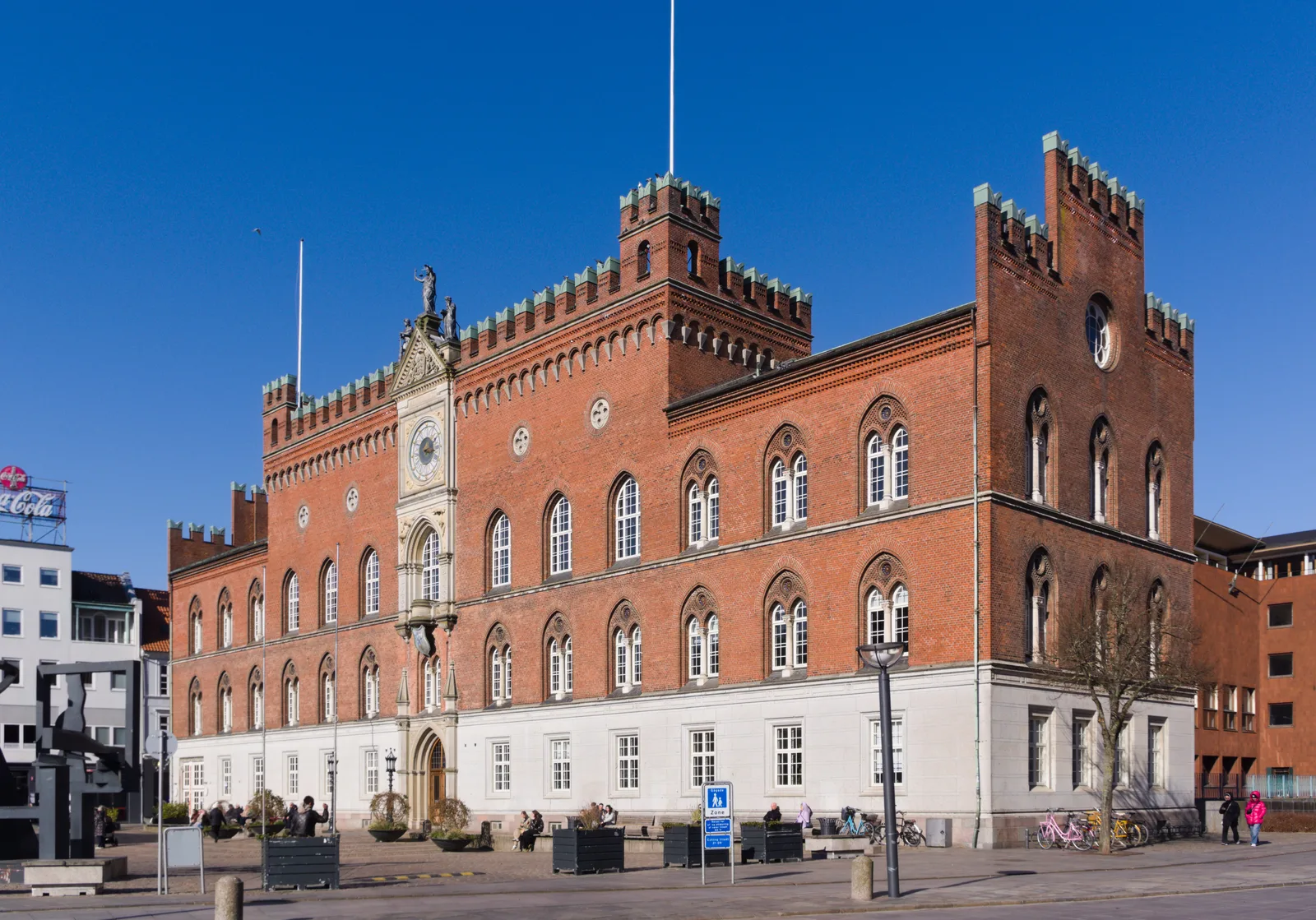
A city break with more than one story
Odense invites you to follow Hans Christian Andersen into a world of stories, but it also rewards looking beyond its most famous name. A cathedral, former industrial spaces, railway collections and green routes give a short stay several different rhythms. You can spend the morning in an immersive museum and the afternoon noticing how an ordinary working city fits around it.
The official VisitOdense overview describes a centre reshaped by new public spaces, the light railway and harbour redevelopment. That combination is useful to visitors: historic streets and contemporary transport belong to the same trip. Give the city two nights if you want time for more than the Andersen museum and a quick walk. That is a suggested pace, rather than a minimum stay.
For a possible move, use the visit to examine daily journeys and housing as well as attractions. VisaWand’s Denmark country guide provides the national context; this guide concentrates on the decisions that become clearer once you look closely at Odense itself.
Start with the quarters, not a long checklist
The city’s district guide distinguishes the historic centre, the Carl Nielsen Quarter and the harbour among its different settings. Overgade and Nedergade provide an introduction to the older streetscape. Rather than treating the centre as one uniform museum district, leave time to notice where small historic buildings give way to newer squares and developments.
For a first orientation, choose a walk between your arrival point, the Andersen area and Flakhaven, where the town hall faces the civic centre. Keep a map available but resist programming every turn. A short detour for a facade or courtyard can be part of the visit without becoming another scheduled attraction.
The harbour is a separate direction to explore, not a seaside resort attached to the old town. Someone choosing a room there should check the precise approach from the station and evening destinations. Likewise, a property advertised as “Odense” may require a regular bus, tram or bicycle journey into the centre.
Andersen’s quarter and the museum visit
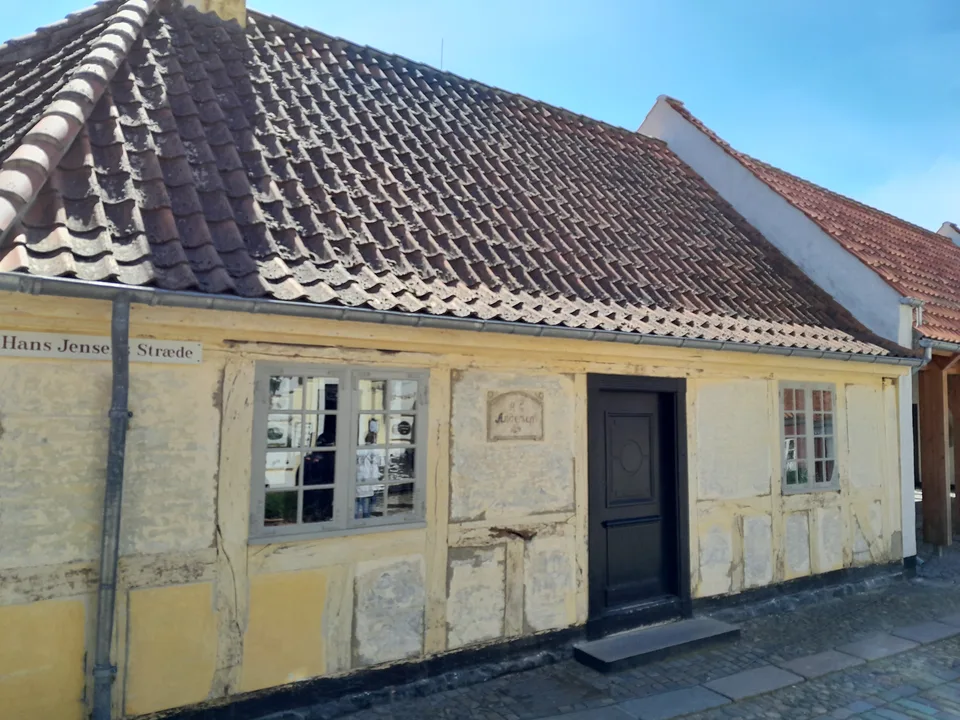
The Hans Christian Andersen Quarter includes Bangs Boder, Rosengade, Ramsherred and Overstræde. Its small streets and historic buildings give the museum a setting worth exploring before or after your booked entry. The public garden also helps connect the attraction with the surrounding city, rather than confining the whole experience indoors.
For admission, use the museum’s official ticket information. Entry is allocated by time slot, and the ticket includes Andersen’s Childhood Home within thirty days of your visit. The childhood home is a separate stop with its own arrangements; buying another ticket automatically may duplicate something you already have.
Families should also consider Ville Vau, designed for children aged two to twelve, and check its separate opening hours. The museum recommends its audio guide for children aged eight and above. Choose the experience around the people travelling with you: a literary visit for adults and imaginative play for younger children need different amounts of time.
Allow time for the museum’s practical details
The museum’s planning page recommends approximately one and a half to two hours for the main visit. Keep additional time for children’s activities or a return to the quarter afterwards. A reservation matters even with certain free tickets or annual passes, so establish the booking process before arriving at the entrance.
Accessibility also requires a distinction between buildings. The museum describes wheelchair access across the main attraction, with an exception for the historic birthplace, whose narrow doors and high thresholds present obstacles. Ask about the parts you want to see rather than assuming that one access description covers every historic room.
Large bags and backpacks cannot accompany you into the exhibitions; lockers are available. Arrange your arrival-day luggage around your actual needs, particularly if you have a suitcase or specialist equipment. A station arrival followed immediately by a timed museum visit is less relaxed than leaving a sensible margin for finding your way and storing your belongings.
The cathedral brings medieval Odense into view
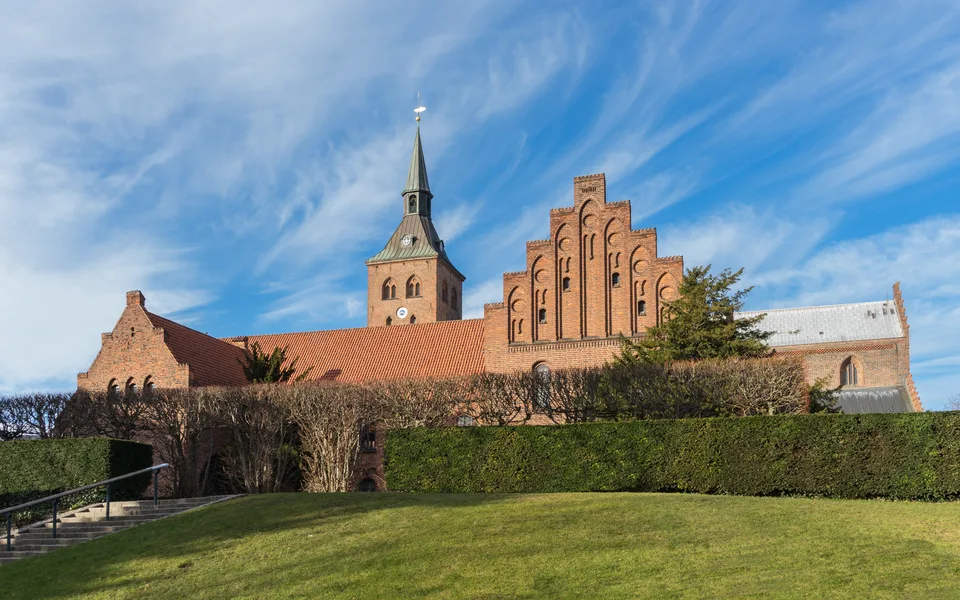
Saint Cnut’s Church, Odense Cathedral, offers a different historical perspective. The Gothic building was completed in the late fifteenth century, while its crypt connects visitors with an earlier church and the remains of Cnut the Holy. He was killed at Saint Alban’s Church in Odense in 1086; the present cathedral should not be confused with that original setting.
The cathedral also contains royal tombs, including those of King Hans, Queen Christine and Christian II. These connections make it worthwhile even if ecclesiastical architecture is not your principal interest. Look at the building as part of the city’s changing political and religious history, alongside the intimate domestic scale of the Andersen streets.
The visitor listing identifies free entry. Check access around services and special events, dress appropriately for a working church and keep photography considerate. If the crypt is important to your visit, confirm its particular approach and availability. A free attraction still deserves enough time and an appropriate place in the day.
Brandts: make room for art and changing exhibitions
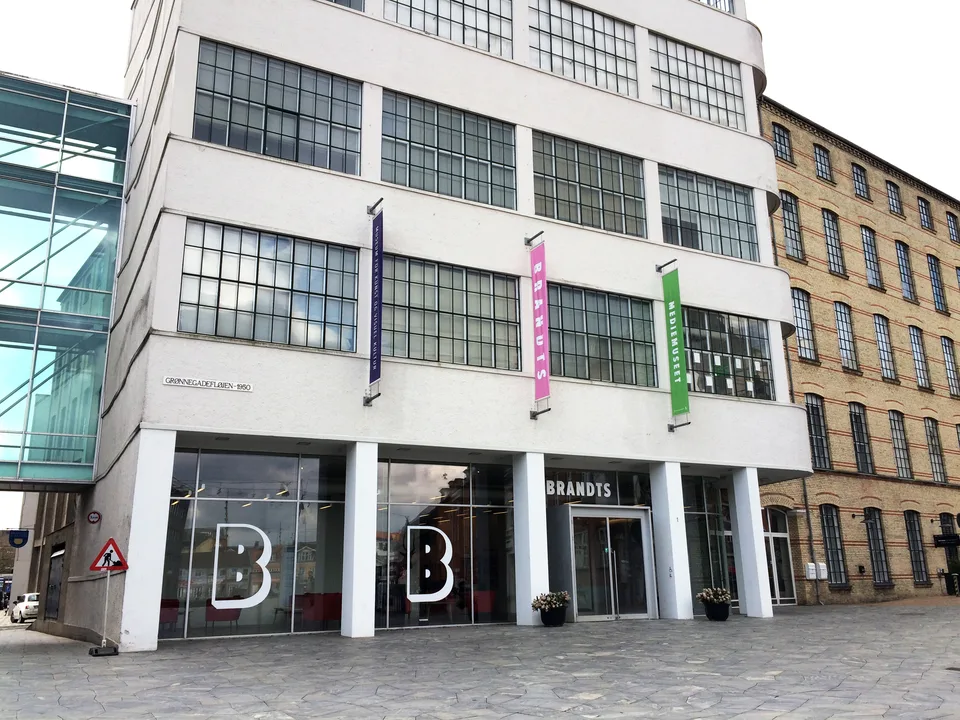
Kunstmuseum Brandts provides a useful counterpoint to the literary and medieval sights. Its practical information lists standard adult admission at DKK 140 and student admission at DKK 75. General admission is free for ages zero to seventeen, but the children’s sensory exhibition has a separate DKK 40 charge for that age group.
This distinction matters when comparing a family outing: “children free” does not mean that every activity is included. Sensory-exhibition capacity is limited, and the museum recommends booking during busy periods. Check the current exhibitions and the session arrangements before deciding how much of the afternoon to reserve.
Only small bags may enter the exhibitions; larger ones belong in the cloakroom lockers. Lifts serve the museum’s floors, and a wheelchair can be borrowed by arrangement. Confirm your date’s opening hours directly, particularly on Mondays and holidays. Published weekly headings and exception lists are not always sufficient to settle a specific visit, so avoid building an inflexible itinerary around an unconfirmed closing time.
The railway museum suits a substantial visit
The Danish Railway Museum’s visitor page lists adult entry at DKK 140, with free admission for children aged zero to seventeen. Children under fifteen must be accompanied by an adult. The operator says most visitors spend at least two hours, a useful indication that this is more than a quick stop to fill time before a train.
Its location north of Odense Banegård Center makes it convenient to consider on an arrival or departure day, provided your luggage and onward booking allow a comfortable visit. You may bring your own food, which can help a family manage both budget and meal timing. Check current facilities rather than assuming that café service runs throughout every museum opening hour.
The main indoor spaces have substantial accessibility provision, including lifts, but wheelchairs cannot be taken aboard the museum’s vintage train. Choose the activities that fit your group and verify which are running on your date. Access to a collection and access to a particular historical vehicle are different questions.
A different pace at the Funen Village
The Funen Village’s ticket page currently lists adult entry at DKK 145 and free admission for ages zero to seventeen. It also describes a fifty-percent admission discount within thirty days for a qualifying, previously purchased Andersen’s House ticket. Check the conditions before paying: the discount cannot simply be combined with every other offer.
Consider this outing when you want more time outdoors and an alternative to consecutive central museums. Plan the journey and operating calendar first, then leave space for the visit itself. It is a separate destination, rather than an extra room you can add to the Andersen museum at the last minute.
For families, an outdoor visit can change the pace after a morning spent listening and looking indoors. Bring clothing suitable for the forecast, and decide whether everyone wants another substantial attraction that day. Buying several tickets is easy; enjoying them with enough time and energy takes a little more selection.
The river and the harbour are different outings
Odense Aafart’s route map describes a river journey between Munke Mose and Fruens Bøge, with a zoo stop on the outward trip. A valid zoo ticket is required to board or disembark there, and the boat does not make that stop on its return. Check those details before treating the service as a general sightseeing shuttle.
The river outing gives you a different view of Odense’s green surroundings. The harbour offers another urban setting, but it is not the same destination as the riverboat route. Choose which experience interests you rather than assuming a boat trip automatically covers both.
Read the operator’s current practical guidance and sailing calendar before making a return journey depend on a boat. Seasonal services and available seats need checking. If you plan to get off and walk, identify a realistic alternative route back. For a quieter afternoon, a short walk and a long break can be enough without adding another paid activity.
Where to stay for the journey you will make
The tourism board’s central-hotel directory gives useful starting points. Hotel Odeon and Comwell H.C. Andersen are options near the Andersen Quarter; First Hotel Grand and Milling Hotel Plaza represent classic city-hotel choices. CABINN and the Milling Mini hotels are listed among simpler central possibilities. These are comparisons of location and format, not personal endorsements or a promise about the lowest rate.
A station-oriented stay suits a brief visit with onward rail travel. Near the historic quarter, you may prefer returning easily after a museum visit or dinner. Outside the centre, compare the full transport cost and the last useful connection, particularly if an attractive room price depends on repeated taxi journeys.
Ask about breakfast, luggage storage, lift access and cancellation terms. Apartment guests should check kitchen equipment, laundry and the exact check-in process. Compare the final price for your dates and party; broad claims about a universally cheap or expensive neighbourhood are less useful than an actual quote with its conditions attached.
Arriving by rail or from an airport
The official arrival guide directs travellers to Rejseplanen for current connections. Use the exact address as your destination when possible, then examine the final walk or local service. A central railway arrival and a coach stop elsewhere in Odense can lead to different plans for reaching the same hotel.
For Copenhagen, DSB’s Odense route information includes travel from Copenhagen Airport. Check the departure you intend to use and whether a change is required. When comparing tickets, distinguish a flexible fare from a departure-specific offer, especially after a flight that might be delayed. A promotional “from” fare does not establish the cost of your actual journey.
From Billund Airport, the airport’s official bus information lists route 43 to Vejle. Check the onward train connection towards Odense in the journey planner. Include transfer margins and the final service of the evening. Nearby airport names alone do not establish that a suitable scheduled flight or direct transfer exists for your dates.
Using the light railway without ticket surprises
Odense Letbane’s QR-ticket information lists DKK 15 for passengers aged twenty-six or older and DKK 10 for those under twenty-six. The ticket starts immediately on purchase and lasts seventy-five minutes. It is displayed on the phone used to buy it; it is not a ticket you can freely transfer between devices.
Its scope is also specific: the offer covers the tram and FynBus services within Odense Municipality, not DSB or GoCollective trains. Keep that boundary in mind when planning a regional excursion. A local fare is not an all-Denmark travel pass.
The operator’s current ticket rules require purchase before boarding. There are no ticket machines at tram stops and you cannot buy from the driver; alternative ticket methods and physical-ticket outlets are listed online. DSB Orange is excluded from tram validity. If you arrive with a rail ticket, check its particular conditions instead of assuming every DSB purchase includes the local connection.
Walking, cycling and bringing a car
The city’s getting-around guidance identifies walking, cycling, buses and light rail as practical options. Route 10 is a free city-centre bus, useful to investigate for a shorter journey. Check its stops and timetable rather than expecting it to replace the paid network across the municipality.
For a bicycle, consider your confidence as well as the map. A familiar cycle route can be convenient for a longer stay; an unfamiliar junction with luggage is a different proposition. Ask a rental provider about equipment, locks and return arrangements, and leave time to understand the route before setting off.
Driving visitors should check parking terms and Denmark’s official low-emission rules. Odense has a zone affecting relevant diesel vehicles; passenger cars and minibuses require a particulate filter or Euro 5 compliance. Check any foreign-registration requirement for your vehicle. Park-and-ride may simplify a visit, but parking and the tram journey have separate conditions: free parking does not automatically provide a free tram ticket.
Food, shopping and a useful budget
Storms Pakhus brings food stalls, bars and creative workshops into a warehouse setting. It can be a useful option when a group wants different dishes while eating in the same place. Check the current stall selection and hours; a photograph or older recommendation does not guarantee that a particular trader is operating.
In the centre, combine a meal with the area you are already exploring rather than crossing town simply to follow a list. Read menus before sitting down, clarify allergens directly with the kitchen and compare what is included. For shopping, a book or a small museum-related object can carry a stronger connection to the visit than an impulse purchase with no room in your bag.
Budget in Danish kroner and build from actual bookings. Add your chosen admissions, local journeys and meals to accommodation and intercity transport. Keep some flexibility for weather changes. A museum-heavy weekend and a stay built around walking will have different totals; neither is well described by an unsupported universal daily average.
Two adults buying standard admission to Brandts and the railway museum would spend DKK 560 on those two attractions alone. That arithmetic is a planning example, before discounts, transport or food. Compare it with the activities you actually want, rather than buying an extra admission simply because another visitor enjoyed it.
Choosing a season and a two-day route
The official seasonal guide presents different reasons to visit throughout the year. Spring and summer suit investigating outdoor routes; autumn and winter can centre more heavily on museums, meals and cultural events. Check event dates and forecasts rather than treating Christmas imagery as a promise of snow or summer photographs as a guarantee of dry weather.
For a first day, start with the Andersen Quarter and a booked museum visit. Leave time for lunch, then choose the cathedral and a walk through the centre. Keep the evening unstructured enough for a meal and a return to a street you enjoyed. This is an editorial suggestion, not an operator’s tour schedule.
On day two, choose Brandts or the railway museum as your main indoor visit. In suitable conditions and operating season, add the river or Funen Village instead of trying to fit every attraction into the remaining hours. With one day only, keep Andersen and the central walk, then choose one additional interest. Bring a waterproof layer and shoes suitable for sustained walking, and keep an indoor alternative available if the forecast changes.
Finding a home and understanding the listing
International House Odense’s rental-search resources distinguish private portals, rental companies and housing associations. Association membership normally leads to a waiting list, not an immediate offer. Look at several routes while keeping a temporary arrival arrangement realistic. A holiday apartment is not automatically suitable for the registration and duration of a move.
The local housing-search guide explains an easy mistake: advertised rooms are not the same as bedrooms. Check the floor plan, furnishings and storage before comparing two listings. Heating and water may involve advance payments and later settlement; electricity and internet can require separate arrangements. Ask for the full monthly picture and the amount needed before moving in.
Use the government’s rental-contract guidance before signing. Inspect the property, obtain a lease before paying a deposit and record defects promptly; the guidance specifies reporting them within fourteen days after handover. Deposit and prepaid rent serve different purposes, so have both explained in the written offer. Seek qualified help with unfamiliar terms.
For an exploratory stay, carry groceries along the likely route home and try the commute at the time you would normally travel. Check bicycle storage and where a delivery can stop. Those small tests reveal more about a workable address than a quick viewing between sightseeing appointments.
Study, registration and ordinary household needs
Prospective students should start with SDU’s Odense housing information. Its housing guarantee depends on applying within the stated deadlines and meeting the relevant conditions. Shared kitchens, bathrooms, location and furnishings vary. Confirm your course’s actual teaching location and test the journey from the accommodation offered before judging it solely by distance from the historic centre.
For a move, the CPR authority explains that resident registration follows actual arrival and the applicable residence requirements. A number issued for tax purposes does not by itself mean you have completed resident registration. Coordinate the paperwork with the municipality and institution or employer, rather than expecting a tourist visit to complete everything in advance.
The local healthcare guidance explains choosing a doctor during registration and receiving the yellow health card by post. Put your name on the mailbox and check your own coverage. Adult dental treatment and prescriptions should not be assumed wholly free. Also establish internet, utilities, waste arrangements and the everyday shopping route before considering the household settled.
Immigration and places to compare
Start with New to Denmark’s official application categories for visiting, working, studying or joining family. Special arrangements apply to EU, EEA, Swiss and Nordic citizens. The relevant Schengen short-stay framework generally limits qualifying visits to ninety days in any 180-day period; it does not create permission to take employment or settle permanently.
Use VisaWand’s Denmark consultant listings if you want to compare professional assistance, while relying on the authorities for eligibility and decisions. Check the specific route before committing to a lease or assuming that admission to a course settles every immigration requirement.
For a wider trip, compare Svendborg, Nyborg and Copenhagen against the journeys you actually want to make. Egeskov’s visitor information is useful for a separate excursion, with its own opening and transport planning. The Denmark location directory offers further places to investigate; individual entries vary in depth and should be assessed accordingly.
Official planning resources
Reviewed 21 October 2026. Use the official resources linked throughout this guide for admission, transport, housing and immigration decisions. Prices, services and rules can change; confirm the details relevant to your dates. Photography illustrates the locations and is not a live view.
View all official resources
- VisitOdense: city overview
- City districts — VisitOdense
- Hans Christian Andersen Quarter
- Andersen museum tickets
- Plan an Andersen museum visit
- Odense Cathedral — visitor information
- Brandts: practical information
- Danish Railway Museum: visiting
- Funen Village ticket prices
- Odense Aafart route map
- Odense Aafart frequently asked questions
- VisitOdense central hotel directory
- Getting to Odense
- Rejseplanen journey planner
- DSB: Copenhagen to Odense
- Billund Airport buses
- Odense Letbane tickets and prices
- Odense Letbane ticket rules
- Getting around Odense
- Official Danish low emission zone rules
- Storms Pakhus official website
- VisitOdense seasonal planning
- International House Odense rental search
- Odense housing search guide
- Government rental guidance
- SDU student housing in Odense
- CPR registration when moving to Denmark
- International House Odense healthcare
- New to Denmark: official applications
- Official Schengen visa code
- Egeskov practical visitor information
Plan the next part of your journey
Explore the Denmark guide, browse other cities or compare consultants for your travel and relocation questions.