Visa
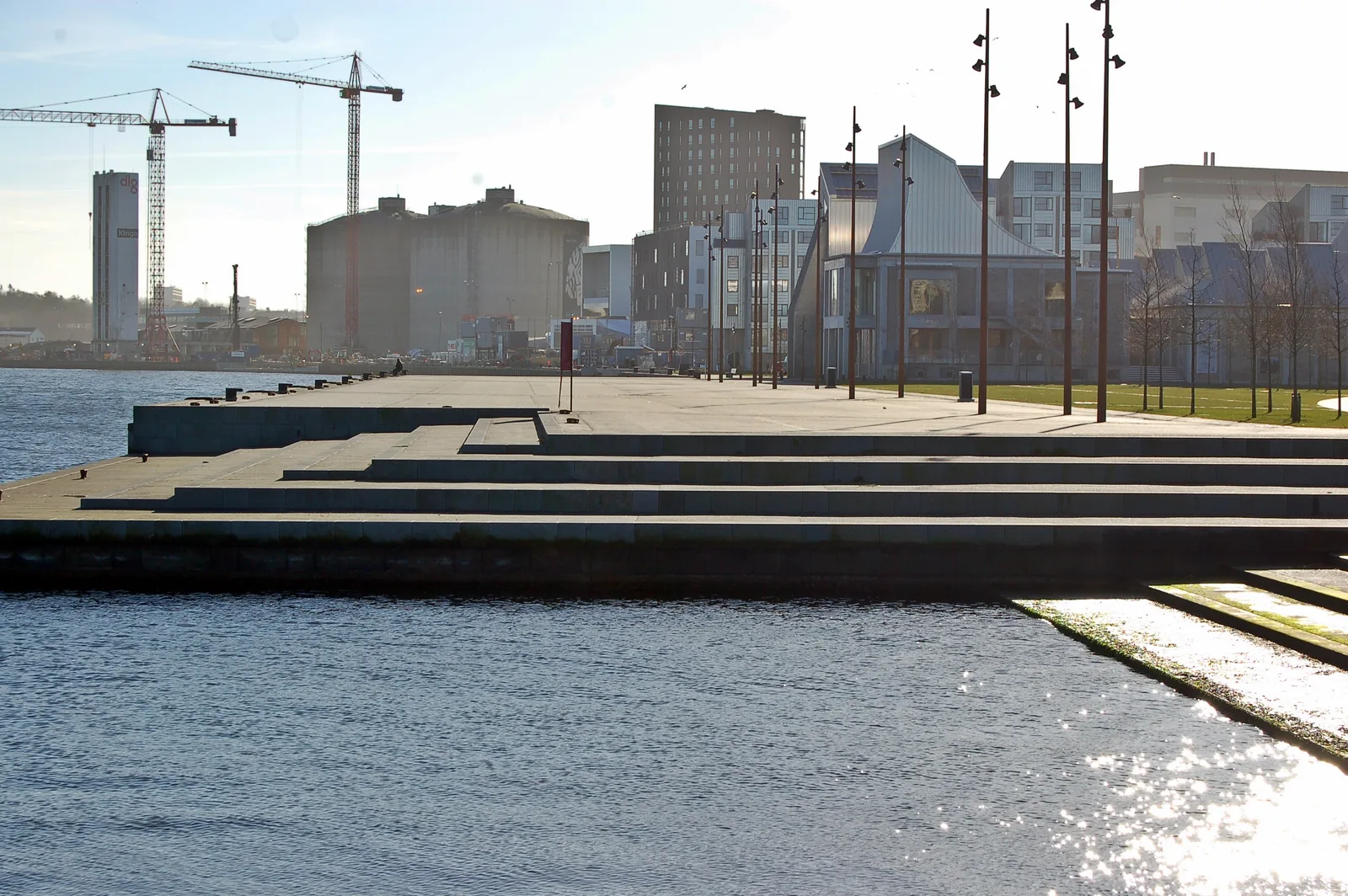
Start with the fjord, then look beyond the waterfront
Aalborg makes an appealing short break when you want architecture, art and urban history without planning around the scale of Copenhagen. The Limfjord provides a clear geographical reference: the centre and its waterfront lie on the southern side, while Nørresundby and Lindholm Høje are across the water. That distinction matters when choosing accommodation or judging how much sightseeing fits into a day.
The city suits a two-day introduction, with an extra day for a slower excursion or a more serious look at everyday life. Its attractions are varied enough to reward choices: an architecture exhibition, an art museum and a Viking burial landscape offer quite different experiences. You do not need to collect every admission ticket to understand the place.
Use VisaWand’s Denmark guide for the national context, and the Denmark destination directory to investigate other locations. This guide focuses on decisions within Aalborg and its immediate surroundings, including the practical difference between visiting for a weekend and establishing a home.
Understand the industrial city behind the cultural buildings
Aalborg’s present cultural identity makes more sense when viewed alongside its industrial past. The waterfront introduces striking contemporary buildings, but the story also includes factories, trade, workers and changes in the use of urban space. The old city streets provide another layer rather than a complete account of how Aalborg developed.
The Aalborg Historical Museum is a useful first stop for that context. Its collections include a Renaissance panelled room, material relating to the German occupation during the Second World War and accounts of everyday life at local factories. It also addresses violence in the city’s past, including an excavated mass grave associated with 1534.
At Algade 48, the museum lists free admission. Its September–November 2026 schedule is Tuesday to Saturday, 10am to 5pm, with Sunday and Monday closure. Check the venue’s current notice before relying on a particular day, especially when planning a short winter visit.
Choose between the centre, Vestbyen and the northern bank
For a first visit, the centre is the simplest base for combining shopping streets, historic lanes and the eastern waterfront. Compare the actual street and room position, not just a booking platform’s description of a central location. Ask about noise if your room faces evening activity, and check the walking route from the station with luggage.
Vestbyen deserves consideration for a longer stay or a visit with more emphasis on the western fjord areas. The municipality’s Vestbyen development information explains its connection with Mølholm and the recreational waterfront. It also identifies the Plusbus corridor along Kastetvej and Skydebanevej; assess the stop nearest your address rather than assuming the whole district has an identical commute.
Across the fjord, Nørresundby’s destination page helps locate a distinct part of the urban area. An address there can work well, but include the crossing and onward journey when comparing it with a southern-bank hotel, campus or workplace.
Walk the historic streets at a residential pace
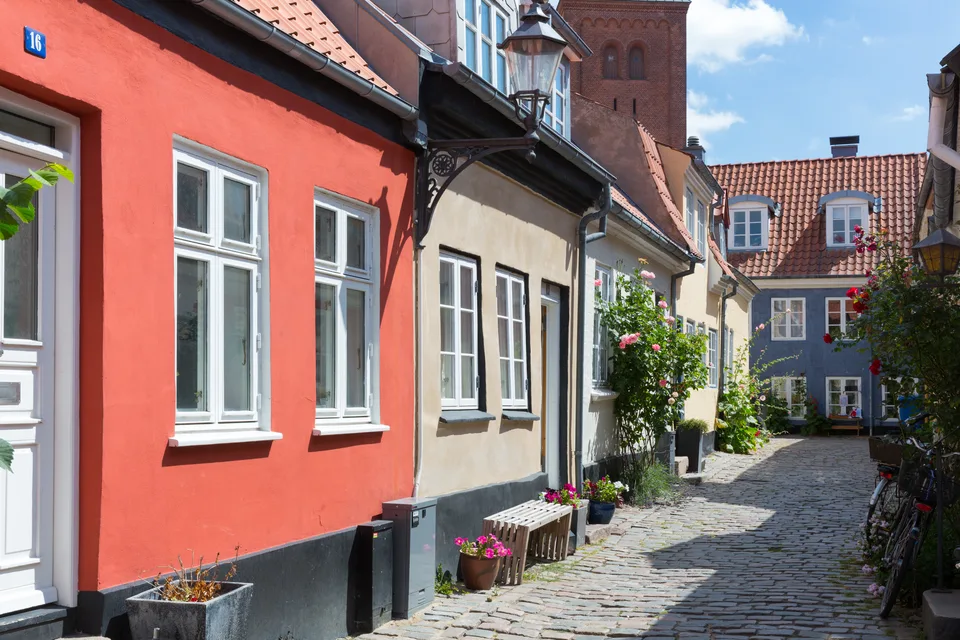
Give the centre some time between its bigger attractions. A walk around the historic streets and Hjelmerstald offers a different scale from the broad waterfront: smaller houses, tighter spaces and details best noticed slowly. Keep entrances clear and avoid treating private windows and doorsteps as public viewing platforms.
The national tourism introduction to Aalborg provides a starting point for selecting sights, including its architecture and the relationship between the city and the fjord. Use it to choose an area rather than follow a rigid sequence of every photographed landmark.
Follow the waterfront to the Utzon Center
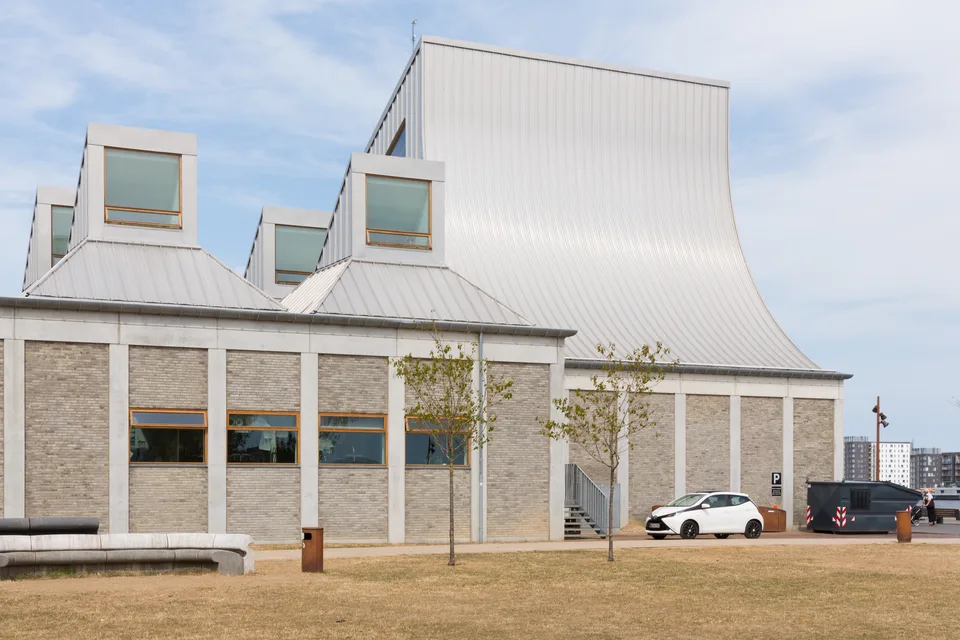
The waterfront is a useful route through contemporary Aalborg, with opportunities to pause and look back at the city rather than remain inside exhibitions. Bring a layer against the wind even when a sheltered street feels comfortable. Leave room for an indoor stop if conditions change.
The Utzon Center’s visitor page sets out the architecture and design venue’s practical arrangements. Standard adult admission is DKK 110; students with valid identification and visitors aged 4–17 pay DKK 70, while children under four enter free. Check the exhibitions before deciding how much time to spend inside.
Regular opening is later on weekdays than at some museums: Tuesday, Wednesday and Friday start at 11am, with Thursday evening opening until 9pm. Weekends start at 10am, and Monday is normally closed. Holiday exceptions apply. Its restaurant has separate kitchen arrangements, so an open building does not guarantee that lunch is still being served.
Visit Kunsten for the building as well as the art
Kunsten deserves attention from anyone interested in the experience of a museum building. Its architectural history credits Alvar Aalto, Elissa Aalto and Jean-Jacques Baruël, and records its opening in 1972. Daylight, materials and the relationship with the surrounding park are integral to the design, giving the visit another focus alongside individual artworks.
The museum’s current visitor information lists adult admission at DKK 150 and student admission at DKK 110 with valid identification. Normal Monday closure has holiday exceptions; Wednesday and Thursday evening opening can help distribute a short itinerary more comfortably.
Plan any meal there as part of the museum visit. Access to the brasserie and shop requires a valid admission ticket or annual pass, and the brasserie closes before the museum. Ask about accessibility for your particular needs: the museum describes improvements and free admission for disability attendants, but that is not a substitute for confirming the route or facilities you require.
Reserve a performance or building tour at Musikkens Hus
Musikkens Hus gives the eastern waterfront another reason to visit. Choose a concert because the programme interests you, then allow time to experience the building before taking your seat. Concert admission and access to other parts of the venue should not be assumed to be the same product.
Its practical visitor information describes level entrances, lifts and arrangements for guests with accessibility needs. For adapted seating or a companion ticket, contact the box office before purchasing rather than trying to resolve the arrangement on arrival.
If the architecture is your main interest, investigate the official guided building tours. The listed tour lasts 75 minutes and costs DKK 125 for adults, with selected scheduled dates. Confirm language, availability and any conditions for children. These are organised visits, not a promise that backstage areas are freely accessible whenever the doors are open.
Cross to Lindholm Høje with time for the landscape
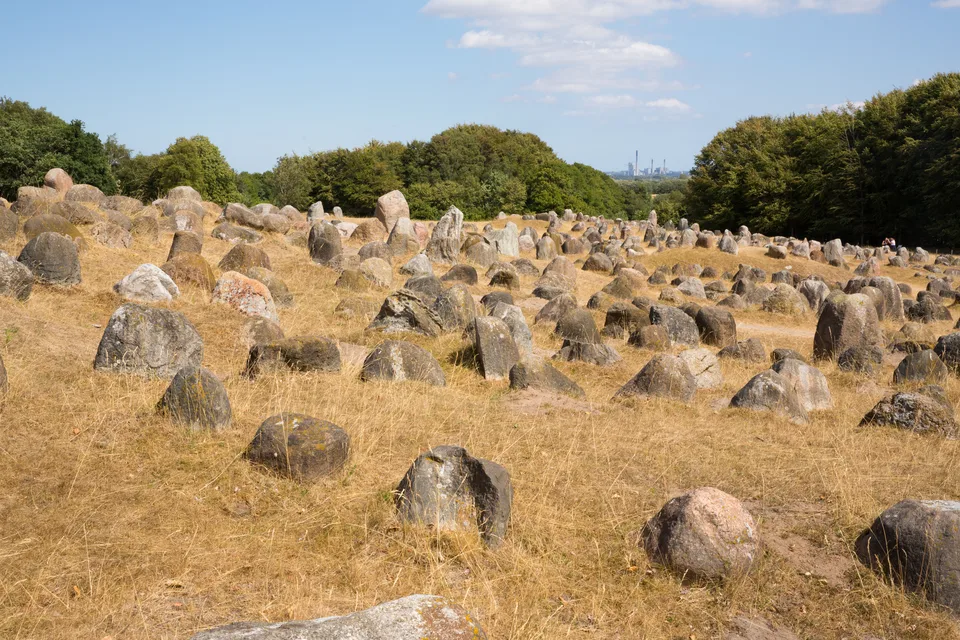
Lindholm Høje is a substantial historical experience beyond the southern-bank centre. The stone-marked burial landscape and the museum complement one another: leave time outside rather than treating the site as a quick addition before a flight.
The museum’s official information describes nearly 700 cremation graves from the Iron and Viking Ages, with use extending approximately from the fourth century to around AD 1000. Avoid imagining that every visible arrangement represents the same kind of burial or the same moment in history.
Museum admission is DKK 110 for adults, DKK 95 for students and free for visitors aged 17 and under. Its published 2026 schedule changes from 5pm closing in September–October to 4pm from November until 13 December. The museum lists closure from 14 December 2026 to 2 January 2027. Indoor opening and access to the outdoor landscape are separate questions; check both if visiting during the closure period.
Take a short ferry trip to Egholm
Egholm offers a quieter alternative when another museum is not what you need. The attraction is the change of pace: plan a walk suited to the weather and your available daylight, then return without making the excursion depend on an unverified restaurant opening.
The municipality’s Egholm ferry page lists a five-minute crossing and regular half-hourly departures, with operating times varying by day. The 2026 return passenger fare is DKK 39 from age 16, including a bicycle. Children aged 4–15 and pensioners have a separate reduced fare.
Buy at the landing with a payment card; the service does not accept cash. Check the return timetable and disruption information before leaving. Vehicle charges are separate from passenger charges, so a quoted car fare should not be treated as the complete cost for everyone travelling in it. There is little reason to take a car simply to make a short walking excursion.
Pick accommodation by room layout and total price
A central hotel makes a short stay easier when you want to move between the centre and waterfront without repeated transfers. An apartment may suit cooking and a longer visit, but confirm arrival arrangements, laundry, the deposit and the practical distance to groceries.
CABINN Aalborg’s own hotel page provides a useful example of why details matter. It advertises compact rooms from DKK 575, with breakfast priced separately at DKK 125 per person per day. The starting room price is an advertised minimum, not a guaranteed quote for your date or room type.
The hotel lists lift access, yet its FAQ states that it has no adapted rooms. Travellers requiring an accessible bathroom or other specific facilities should therefore compare alternatives directly. More generally, check bed configuration, space around the beds, cancellation terms and parking conditions before choosing a room solely because its headline price looks attractive.
Arrive through the airport or railway station
Aalborg Airport’s official transport page confirms both bus and train connections. The airport railway station is a short walk from the terminal. Use the linked journey planner for your actual arrival date and destination; a connection to the main station and a door-to-door journey to a hotel are different calculations.
Buy the appropriate rail ticket or check in with the applicable product before boarding. The airport gives DKK 24 for two zones as a fare reference, but the precise charge depends on the journey and ticket. Do not assume that every address is covered by the minimum fare.
For an early departure, check the first usable service before booking accommodation. A frequent daytime connection does not establish that public transport will meet every flight. If a taxi is necessary, obtain a quote and confirm where it will collect you rather than relying on an invented citywide fixed fare.
Use the correct ticket on buses and Plusbus
NT’s official fare tables list a standard adult single ticket at DKK 24 for two zones and DKK 34 for three. The number of zones matters, so search the full route, including transfers, before buying. Different products and concessions have their own conditions.
The current single-ticket rules allow transfers within the purchased zones and time validity. A one- or two-zone ticket has a 60-minute validity period; the operator says you must board before it expires. Read the rules for your selected product instead of importing another city’s ticketing conventions.
Plusbus line 2 is particularly important for visitors: you cannot buy a ticket from the driver using cash or a bank card. Arrange payment through an accepted app or product before boarding. For a longer stay, compare a commuter pass for the zones you need with occasional travel, and check the requirements of the available digital or physical options.
Eat where the opening hours fit your day
Meals can help structure a visit, especially when the weather encourages a longer indoor pause. Compare a restaurant’s current menu, kitchen hours and location rather than assuming that every waterfront venue serves food throughout its opening period. Ask directly about allergies and dietary requirements.
Aalborg Streetfood’s own seasonal calendar is useful for groups wanting different food choices. For 19 October–13 December 2026 it lists Friday-to-Sunday opening, with Monday to Thursday closure. Food stalls close earlier than the hall, so arriving before the building closes does not necessarily mean dinner is still available.
That seasonal pattern makes it a poor default recommendation for every weekday itinerary. Check the period containing your visit before travelling to Skudehavnsvej. In the centre, keep an alternative near your evening destination. No reliable single restaurant price describes the whole city, and individual stall prices should not be presented as a general daily food budget.
Budget in Danish kroner and choose paid experiences deliberately
A clear sightseeing example is DKK 198: DKK 150 for Kunsten plus two separate DKK 24 two-zone journeys, assuming those zones fit your chosen route. Utzon Center and Lindholm Høje each add DKK 110 at the standard adult rate. These are selected components, not an estimate covering an entire holiday day.
Free time also has value. Combine the historical museum, an outdoor waterfront walk and the older streets when you want a lighter admissions budget. For shopping, compare practical centre-based errands with a dedicated trip to a larger retail destination. Check individual store hours and Sunday arrangements; a street being accessible does not mean its shops are open.
Choose the season around daylight and outdoor time
Summer gives more scope for a longer waterfront evening, while autumn and winter call for shorter outdoor sections and a useful indoor alternative. Bring rain protection and a wind-resistant layer rather than packing entirely for the temperature shown in a forecast.
Consult DMI’s Aalborg weather information shortly before travel. The meteorological service’s storm-season explanation identifies October through February as the principal period for Danish storms. That is seasonal context, not a claim that a storm is forecast for your booking.
For a winter visit, place Lindholm Høje or Egholm during daylight and check their operating arrangements separately. Museum Mondays, shorter seasonal hours and food-market closures can matter more than the month’s average temperature. If your preferred dates leave several priorities closed, moving the trip by a day may be more useful than searching for another attraction to fill the gap.
A two-day introduction with an optional third day
On day one, begin with the older centre and the historical museum when open. Continue to the waterfront and choose an Utzon Center visit, then reserve a concert or a meal for the evening. This leaves time to walk without turning every stop into a deadline.
On day two, travel to Lindholm Høje and give the outdoor site and museum their own part of the day. Return for Kunsten, using an evening opening if that suits your dates. Keep the order flexible around weather and closing times.
For a third day, choose Egholm, more time in Vestbyen or a pre-booked regional excursion. Avoid scheduling all of them. Anyone assessing a move should reserve part of an ordinary weekday for a trial commute, housing viewing and food shopping. That provides information a weekend of exhibitions cannot supply.
Moving here means choosing an address and a workable routine
Start a housing search with the exact university building or employer address. Aalborg University has facilities beyond the historic centre, so do not assume that a central apartment is automatically the most convenient option. Test the route at the time you would normally travel, including the return journey.
Establish which utilities are estimated advances and how they are reconciled. Check the landlord’s authority to let the property, inspect its condition and retain a written inventory and meter readings.
Ask whether the accommodation documents will support the registration process you need. A listing’s informal description of being suitable for newcomers does not answer that question. Before paying substantial sums, understand the contract, cancellation position and who is responsible for repairs. The first month’s housing cost may include more than a single month’s rent.
Arrange student housing through the right channel
Aalborg University’s accommodation office describes private rooms with shared facilities, studios and a limited number of apartments for couples. Choose according to the facilities and household arrangements you can live with, rather than comparing rent figures without knowing what they include.
The university’s published price examples remain explicitly labelled March 2024. They are therefore unsuitable as verified 2026 rental quotes. Ask for the current price, availability and payment terms for the offer you actually receive. The page also notes payment in three-month periods, which can affect the cash needed at arrival.
Confirm eligibility and allocation arrangements directly. University accommodation is not a promise that every student, visiting researcher or accompanying partner will receive the same offer. If using a private rental instead, check its location against the campus you will attend and the duration of the contract against your programme.
Register your arrival and organise household services
The Danish civil registration authority explains that resident CPR registration requires an actual move to Denmark and satisfaction of the relevant conditions. It is not something that can simply be completed before arrival to make every later task easier.
International Citizen Service North provides local registration guidance by nationality and requires an appointment. Its office is at Badehusvej 7; International House North Denmark’s general advice service is at a different address. Check the appropriate process and required documents before travelling to either.
Once housed, put the correct name on your mailbox, establish how official correspondence will reach you and confirm the steps for healthcare registration. Ask the building manager about waste sorting, container locations and collection arrangements. Arrange utility accounts and internet early enough that you can use the home as intended, particularly if you need a reliable connection for study or work.
Know where to seek medical help
The North Denmark Region’s medical-help guidance distinguishes life-threatening emergencies from problems that should first be assessed by a doctor. Call 112 for severe illness, serious accidents or immediate danger.
For less urgent illness or injury, contact a general practitioner during normal weekday hours and call first. Outside those hours, including weekends and holidays, the region gives +45 70 150 300 for the out-of-hours doctor. Follow that advice before attending an emergency department unless the situation requires emergency assistance.
Visitors should arrange the healthcare cover appropriate to their circumstances and carry the relevant documents. Relocation requires checking entitlement and registration rather than assuming a visitor arrangement covers an indefinite stay.
Separate a holiday from work, study and permanent residence
Use the official Danish short-stay visa routes to check whether your nationality and travel document require a visa. A short visit is generally governed by Schengen’s 90-days-in-180 framework across the area; it is not a new allowance for every country entered. Longer residence requires a suitable legal basis.
For employment, follow SIRI’s work-permit guidance and the scheme relevant to your circumstances. Nordic and EU/EEA/Swiss citizens have different routes from most other nationals. A tourist visit, a job offer and authorisation to perform work are distinct; do not assume that remote or unpaid activity automatically removes the need to check the rules.
Students should use the higher-education residence guidance with their institution. Admission, financial evidence, programme status and work rights have specific conditions. Permanent residence is another process, rather than an automatic consequence of completing a visit or course. Compare VisaWand’s Denmark consultant listings if you need help assessing an individual case.
Extend the trip only where the experience justifies it
North Jutland offers alternatives to another city day. The regional museum organisation lists REGAN Vest, a preserved Cold War government bunker visited on guided tours that require advance online tickets. Check access, language and transport before building a day around it; it is not a casual walk-in substitute for a closed museum.
For a different destination, investigate Skagen or Hjørring through VisaWand’s destination pages, then consult the relevant visitor and transport operators for the places you want to see. These links identify locations rather than promising a particular completed guide.
Official planning resources
Reviewed 28 October 2026. Use the official resources linked throughout this guide for admission, transport, housing and immigration decisions. Prices, services and rules can change; confirm the details relevant to your dates. Photography illustrates the locations and is not a live view.
View all official resources
- Aalborg Historical Museum official visitor information
- Aalborg Municipality Vestbyen development plan
- VisitDenmark: Aalborg introduction
- Utzon Center official visitor information
- Kunsten official museum architecture history
- Kunsten official visitor information
- Musikkens Hus official practical visit information
- Musikkens Hus guided building tours
- Nordjyske Museer: Lindholm Hoje
- Aalborg Municipality Egholm ferry 2026 timetable and prices
- CABINN Aalborg official accommodation details
- Aalborg Airport official bus and train connections
- NT official fares and travel rules
- NT current single-ticket rules
- Aalborg Streetfood official seasonal hours
- DMI Aalborg forecast and warnings
- DMI October2026 storm-season guidance
- Aalborg University accommodation office
- Danish CPR authority: moving to Denmark
- Official International Citizen Service North
- North Denmark Region immediate medical help
- Danish Immigration Service short-stay visa routes
- SIRI official residence and work application routes
- SIRI higher education residence rules
- North Jutland Museums official places to visit
Plan the next part of your journey
Explore the Denmark guide, browse other cities or compare consultants for your travel and relocation questions.