Visa
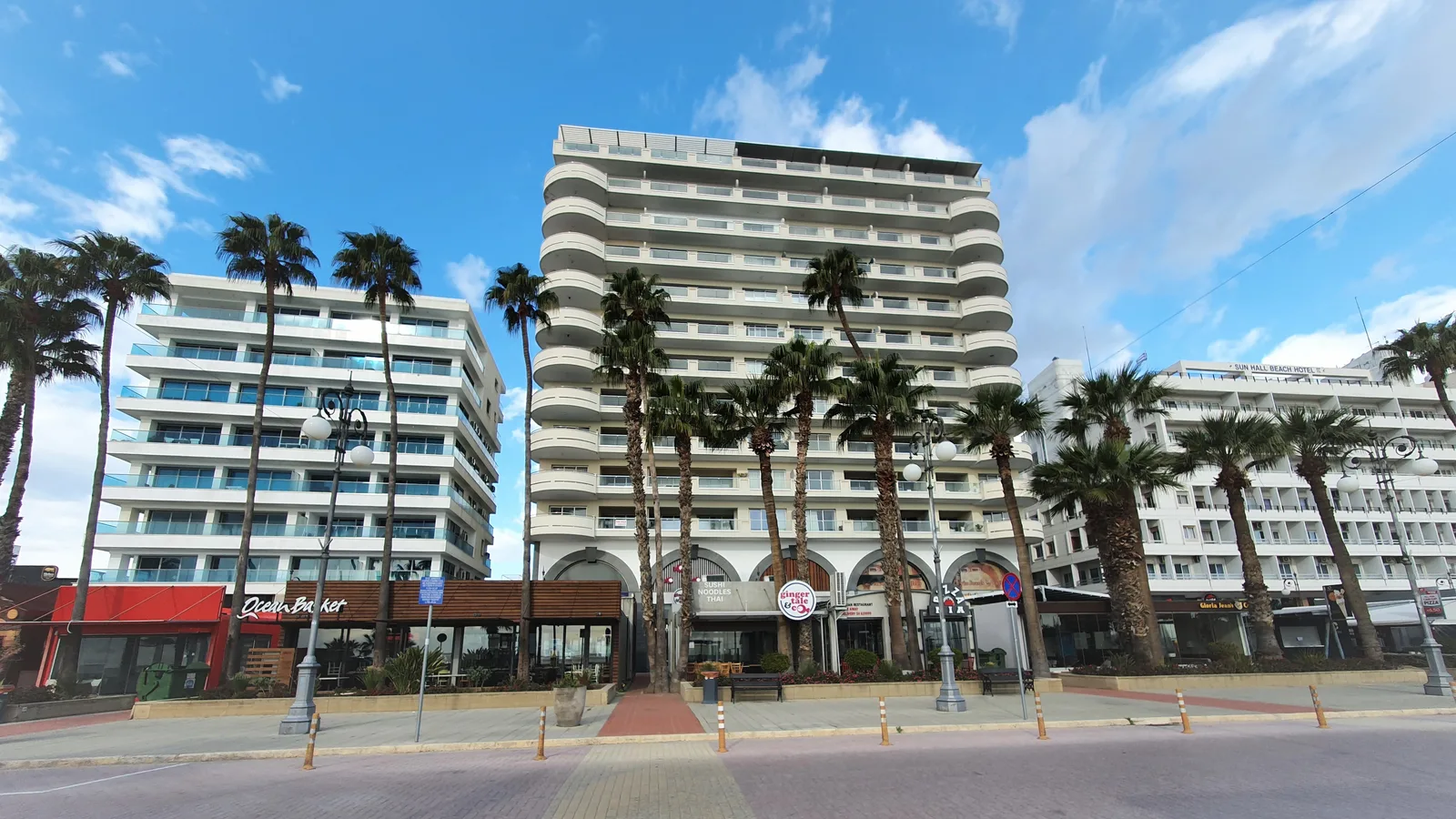
A seaside base with a working life behind it
Larnaca offers a useful combination for a first visit to Cyprus: a central seafront, historic streets within walking distance and an international airport close enough to make a short break practical. Often written Larnaka on official signs and websites, the city rewards travellers who look beyond a beach photograph. A Byzantine church, a fort with a prison history and a seasonal wetland tell different stories about the same coastal setting.
The main decision is what you want your base to do. Staying near Finikoudes makes meals and central sightseeing straightforward; a more distant address may suit a particular beach or workplace but require more transport. Three days can introduce the city without filling every hour. For a longer stay or relocation, investigate an ordinary working week as carefully as the waterfront: housing terms, summer electricity use and the route home after an evening shift matter.
Read the city through Kition and the waterfront
The official Larnaca regional overview connects the city with religious landmarks, its palm-lined promenade and the surrounding district's villages and archaeological sites. Use that range to avoid treating Larnaca as interchangeable with every other coastal resort. Its appeal includes the relationship between the old centre, the sea and places whose significance reaches far beyond a holiday itinerary.
Ancient Kition adds another layer. Its surviving remains help explain a harbour city shaped by connections across the eastern Mediterranean, while the castle's later uses reveal a less picturesque side of power and administration. At Saint Lazarus and Hala Sultan Tekke, distinguish documented architectural history from religious tradition. Both can be meaningful to a visitor without presenting a faith narrative as independently verified historical evidence. Leave time to look and understand rather than moving between landmarks only for photographs.
Choose an area by the journeys you will make
Finikoudes, also written Foinikoudes or Phinikoudes, is a sensible starting point for a first stay. Compare the hotel entrance with the actual bus stop and beach access, especially if you have luggage or mobility needs. A seafront room may offer a view while also placing you near traffic, restaurants and evening activity. Ask about the specific room rather than assuming that a coastal address guarantees quiet.
The streets around Saint Lazarus suit visitors who want to spend time in the historic centre. Farther south, the Mackenzie area is another accommodation option to investigate if beach time is your priority. Establish the walk or bus journey back to the centre and ask about aircraft or nightlife noise. For residents, extend the search according to work, school and shopping needs. A listing described broadly as Larnaca may be some distance from the central promenade.
Use Finikoudes to find your bearings
Begin with a walk along the central waterfront, noting where the castle, inland streets and useful transport stops connect. It is an easy way to understand the scale of the centre before adding an excursion. Pause for a meal or coffee if it suits your arrival time, but read the menu and prices instead of assuming that every seafront establishment serves the same market.
For beach time, look at the conditions on the day, marked swimming areas and any instructions from lifeguards. Seasonal facilities should not be assumed to operate throughout winter or at every hour. Sun protection, water and a shaded break can make a longer outdoor day more comfortable. If travelling with children, decide where you will stop and return before the heat or tiredness makes the walk less enjoyable. Keep valuables and essential documents out of unattended beach bags.
Visit Saint Lazarus around worship
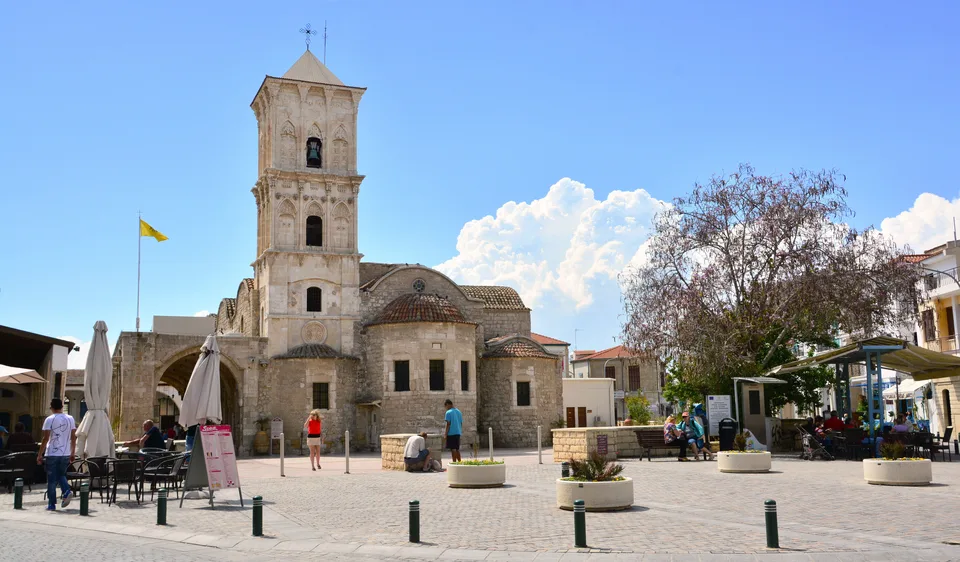
Larnaca Tourism Board's Saint Lazarus information describes the church's ninth-century origins, later restoration and elaborate iconostasis. Christian tradition associates the site with Lazarus and his tomb. The square and surrounding streets make it a rewarding stop even if a service or other religious activity changes your interior plans. Enter respectfully and follow local instructions on dress and photography.
The regional board lists church admission as free, with different summer and winter visiting hours and a split schedule on Sundays. Winter weekdays also have a midday break. Check the current opening before making a special journey, and do not assume that free church entry includes every adjacent museum. Anyone needing step-free access should ask about the precise areas they want to see. Entrance ramps and other facilities do not establish that every historic interior or below-ground space is equally accessible.
Give the castle time for its difficult history
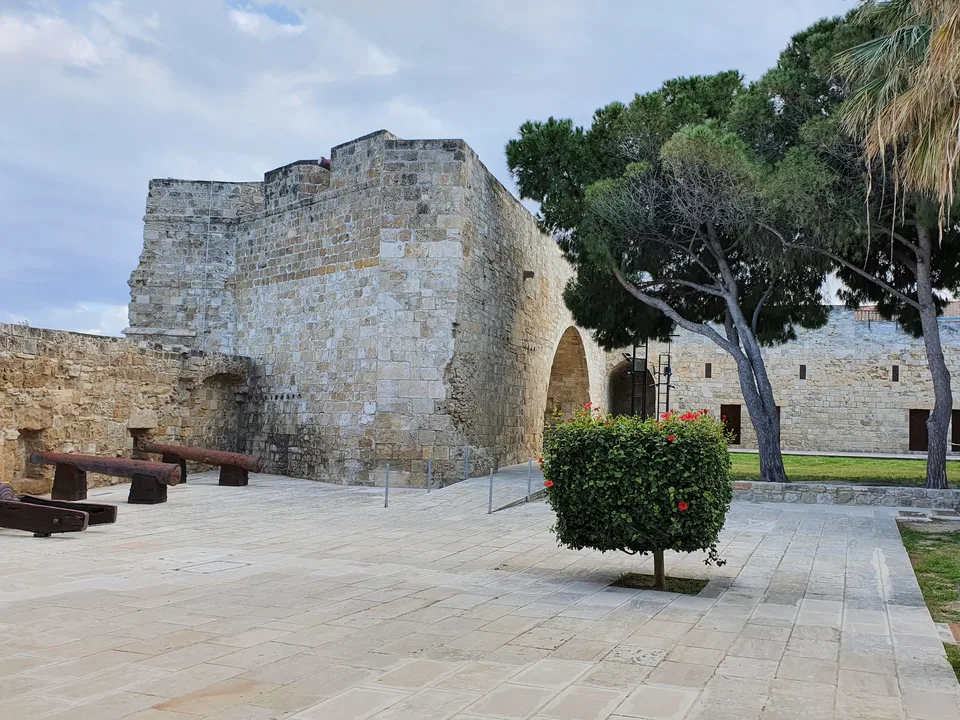
At the southern end of the promenade, Larnaca Medieval Castle's official visitor page describes a structure with disputed origins and an appearance shaped during Ottoman rule. Later, under British administration, it served as a prison. Its history includes an execution chamber, so the visit offers more than attractive stonework beside the beach. The small medieval museum spans several periods rather than presenting one single moment in the city's past.
Listed admission is €2.50. From 16 September to 15 April, ordinary hours are 08:00–17:00 on weekdays and 09:30–17:00 at weekends; the official page lists longer summer hours and closure on public holidays. Check exceptions before travelling. Ask directly about stairs and access if those affect your visit. Combine it with the waterfront and central streets, leaving time to read the displays instead of treating the interior as a brief detour for a view.
Add Kition on a weekday
Kition's official archaeological-site information outlines evidence of late Bronze Age settlement and later Phoenician occupation, including fortifications and religious remains. For travellers interested in antiquity, it gives the city a depth that can be missed on a seafront-only visit. Bring the explanation of the site into the walk: low remains can be harder to interpret than a standing castle, but they reveal a much older urban story.
The listed entry price is €2.50. The site operates Monday to Friday, with seasonal hours, and closes at weekends and on public holidays. That makes the day of the week a real itinerary constraint. Plan an earlier visit when heat matters, carry water and check the entrance location. If you need accessible facilities, confirm both circulation around the remains and toilet provision; an accessible entrance does not guarantee every supporting facility is available.
See the Salt Lake as a changing wetland
The regional tourism board's Salt Lake guidance explains that this is a complex of lakes, with Aliki the main lake beside a nature path. Flamingos usually arrive with the rains, often from November, and may remain until around March. Their presence and numbers depend on conditions. A summer visit should not be booked on the assumption that the lake will be full of pink birds.
Watch from a respectful distance and bring binoculars or a longer lens if birdwatching is important to you. Wading out to approach the flamingos is prohibited. The published four-kilometre nature trail should not be mistaken for a complete circuit of every lake. Choose a section suited to your time, weather and transport arrangements. Avoid turning a wildlife outing into a rushed stop between flights: leave enough margin to return, collect luggage and complete airport formalities comfortably.
Visit Hala Sultan Tekke as a place of worship
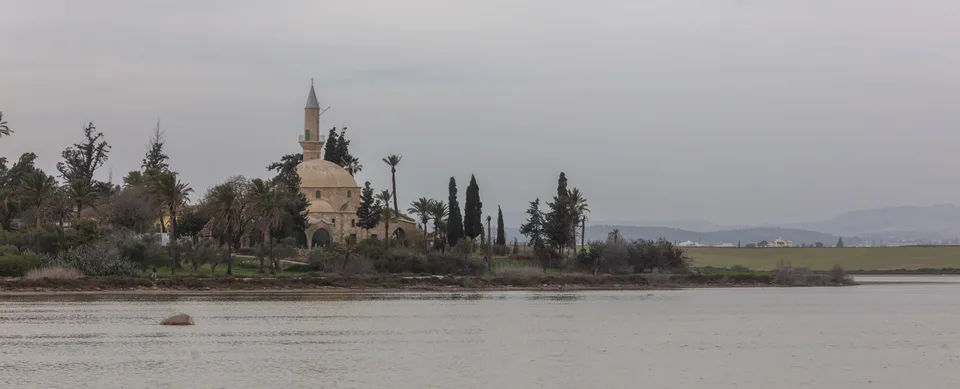
Hala Sultan Tekke's regional visitor information describes a mosque, tomb, cemetery and archaeological remains overlooking the Salt Lake. The complex is traditionally associated with Umm Haram; much of its present architectural ensemble developed during the Ottoman period. Its religious role continues today, which should shape how you visit as much as the setting does.
Admission is listed as free, with donations welcome. The published schedule gives winter closing at 17:00 and longer summer opening, but visitors must avoid prayer times; Friday prayers are specifically excluded from sightseeing access. Cover shoulders and knees, keep noise down and follow instructions at the entrance. Ask the guard about wheelchair access where needed. Pairing the mosque with the lake can work well, provided you have checked the route and return transport rather than assuming that every nearby point is conveniently connected on foot.
Pick accommodation by the complete offer
Compare hotels, smaller properties and apartments against the trip you intend to take. A short city break may benefit more from location than a kitchen; a longer stay may make laundry and cooking facilities valuable. Check breakfast, cleaning fees, cancellation terms and the cost of parking where relevant. Ask whether air conditioning is included in the quoted price and what arrangements apply outside normal reception hours.
For a concrete central example, Sun Hall Hotel's own website places it on the Phinikoudes promenade, with guestrooms and suites. That identifies its setting and accommodation type, not a personal endorsement or a verified nightly rate for your dates. Check the specific room category, view and accessibility before booking. For an apartment, establish who provides assistance if something fails. A holiday listing with attractive photographs is not automatically suitable for a semester, a family move or a year-round tenancy.
Leave the airport with the right service
Hermes Airports' transport page distinguishes Cyprus Public Transport's Larnaca services from separate airport-coach operators. The bus operator's map page identifies airport route 425 and its hotel-service map. Use the current journey planner to select the stop nearest your accommodation and confirm the direction, departure and last connection for your travel date. Older airport timetables can remain searchable after schedules change.
Do not assume that an airport coach to another city is the same product as a local Larnaca bus. Compare luggage arrangements and the complete journey before paying. Hermes lists a designated taxi waiting area to the right after leaving the arrivals hall at Level 0, with taxis available around the clock. Confirm the fare basis and destination with the operator. There is no reason to turn an uncertain arrival into a long roadside walk simply because the hotel looks close on a map.
Calculate local bus costs using the current tariff
Cyprus Public Transport's tariff effective from August 2026 lists an adult urban cash single at €2.70, compared with €2 using a plastic Motion card. The card itself costs €5 to issue. Night singles, between 21:00 and 04:00, cost more. Work out how many journeys you expect before buying a card solely for a cheaper single fare.
The operator also lists a four-trip paper product at €8.70; if all four trips are used in one service day, later trips that day are free under its stated conditions. That is different from assuming an old €5 daily ticket remains available. Drivers sell a limited range of tickets, so check sales-office options for other products. Choose the ticket for your route and eligibility, and distinguish local services from intercity buses and separate airport coaches. Keep the current planner available for the return journey too.
Build a practical day budget
Two adult urban cash bus singles and castle admission total €7.90 at the published prices: €5.40 for travel and €2.50 entry. This excludes meals, accommodation, extra journeys and any different transport product. Adding Kition costs another €2.50 when it is open. The church and Hala Sultan Tekke are listed as free, so a worthwhile visit need not consist entirely of paid attractions.
Make a separate allowance for a beach day, a cultural day and a regional excursion. Restaurant choices, room category and seasonal demand can move the total much more than a small admission fee. Check whether a quoted excursion includes entry, food and the final transfer. Keep some money available for a changed return plan. This guide does not turn an unsupported hotel, restaurant or rent estimate into a supposed citywide average; use live offers for your dates and retain the conditions attached to them.
Match the season to your reason for coming
Cyprus's official climate guidance describes long, dry summers and generally mild winters with rain. For a walking and heritage break, spring or autumn can be more comfortable than designing every outing around peak summer heat. Summer suits travellers prioritising beach time, provided the daily plan allows shade, water and less strenuous periods. Winter can work for culture and birdwatching, with more attention to rain and opening hours.
Read the Department of Meteorology's forecasts and warnings close to departure and before an exposed outing. A broad description of Mediterranean sunshine does not override a thunderstorm, wind or heat warning. Do not apply inland or mountain temperature figures to a coastal Larnaca address without checking the relevant forecast. Pack for the season and the activity: a warm evening layer or rain protection may be useful even on a trip promoted mainly through beach images.
A three-day introduction with room to adapt
Day one: arrive, settle in and use Finikoudes to orient yourself. Visit the castle if opening hours permit, then explore the streets around Saint Lazarus. Keep worship arrangements in mind and avoid making an uncertain arrival compete with a prepaid activity. Finish with a meal chosen from the current menu rather than a timetable packed with stops.
Day two: visit Kition on a weekday, or move this part of the plan to the next suitable day. Leave the afternoon for the beach, a slower central walk or an indoor break according to conditions. Someone with a strong interest in archaeology may want more time reading about the site; another visitor may prefer to keep the afternoon unstructured.
Day three: combine the Salt Lake and Hala Sultan Tekke if access, weather and transport fit. In an unsuitable season for flamingos, go for the landscape and religious heritage without expecting a particular wildlife sighting. Alternatively, choose one regional outing and protect enough time for the return.
Moving here starts with the actual address
Before signing a lease, test journeys to your workplace, school or campus at the hours you will travel. A convenient holiday location may not suit a daily commute, and an affordable-looking outer address can create additional transport costs. Ask about the last bus and the final walk, not just the distance to the centre. Consider temporary accommodation while inspecting longer-term options in person.
EURES's Cyprus housing guidance stresses that prices vary by location and property, and that electricity, water and air-conditioning costs need separate consideration. Request a written breakdown of what your rent includes. Inspect cooling and heating equipment, windows, ventilation and signs of damp. Record the inventory and meter readings at handover. Agree responsibility for repairs, communal charges, waste arrangements and the deposit in writing. A holiday rental and a residential tenancy should not be treated as identical merely because the photographs show the same type of apartment.
Ask whether the property is available for the full period you need, including the summer months, and how renewal or departure is handled. Run the cooling equipment during an inspection if possible and establish who pays for servicing. A furnished listing also needs an itemised check: a bed and sofa do not establish that cooking utensils, bedding or a working desk are supplied. For remote work, test the connection where you would actually sit rather than relying on the building's general broadband advertisement.
Set up a household and healthcare in sequence
Confirm the tenancy and legal residence route before arranging services that require address or identification evidence. Check broadband availability for the precise property and ask about laundry, furniture and essential kitchen equipment. For families, investigate the school or childcare arrangement before choosing a home purely on rent. Students should check the actual campus location and whether an accommodation offer lasts for the whole intended study period.
For healthcare, consult the Health Insurance Organisation's beneficiary categories rather than assuming that a rental address automatically creates GHS eligibility. Ordinary residence and the relevant qualifying status both matter. Arrange appropriate cover and understand how to obtain routine care and prescriptions while applications are pending. In a medical emergency, the State Health Services Organisation's ambulance guidance gives 112. Keep your address and useful directions available; a description of the building can help when an unfamiliar street is difficult to locate.
Separate a visit from work or longer residence
The European Commission's Schengen information says Cyprus's integration is still underway and internal border controls have not yet been abolished. Check the Cyprus Ministry of Foreign Affairs visa guidance against your nationality and documents. Some holders of qualifying Schengen visas or residence permits can enter under specific exemptions, but that does not make a Cyprus visa a general Schengen travel document. Verify your permitted stay rather than assuming indefinite access.
For relocation, follow the relevant employment route or student route. EU citizens should check the official registration-certificate requirements for their circumstances. The digital nomad scheme is a separate route for qualifying remote work connected with employers or clients abroad, not permission to take any local job. A lease, university offer or online income does not by itself establish residence rights. VisaWand's Cyprus guide and Cyprus consultant listings can support preparation; the authorities determine eligibility.
Compare nearby places before extending your stay
The district offers reasons to leave the beach for part of a day. The regional tourism board highlights Lefkara's lace and silver traditions and the historic church at Kiti. Use VisaWand's Pano Lefkara destination page and Kiti destination page as location references, then check the particular workshop, attraction and transport you intend to use. These listings should not be mistaken for completed travel guides or confirmed availability.
For a different urban base, compare Nicosia's destination page and Limassol's destination page, alongside the Cyprus destination directory. Decide what Larnaca gives you: a practical airport arrival, accessible central sightseeing and coastal time, or a suitable address for a specific longer-term purpose. A regional itinerary works better when each transfer has a reason and a realistic return plan. Leave enough time in one place to make choices for yourself rather than spending the entire visit between accommodation check-ins.
Official planning resources
Reviewed 28 October 2026. Use the official resources linked throughout this guide for admission, transport, housing and immigration decisions. Prices, services and rules can change; confirm the details relevant to your dates. Photography illustrates the locations and is not a live view.
View all official resources
- Cyprus Tourism Larnaca regional overview
- Larnaca Tourism Board Saint Lazarus Church
- Cyprus Tourism Larnaca Castle visitor information
- Cyprus Tourism Kition archaeology and opening hours
- Larnaca Tourism Board Salt Lake ecology and trail
- Larnaca Tourism Board Hala Sultan Tekke
- Sun Hall Hotel official location and rooms
- Hermes Airports public transport
- Cyprus Public Transport maps and airport route
- Cyprus Public Transport fares effective August2026
- Cyprus Tourism food and meze information
- Cyprus Tourism climate and seasonal planning
- Cyprus Department of Meteorology official forecasts and warnings
- EURES Cyprus housing and working conditions
- Health Insurance Organisation GHS eligibility
- State Health Services Organisation ambulance information
- European Commission current Schengen integration status
- Cyprus Ministry of Foreign Affairs entry visa information
- European Commission Cyprus employed-worker route
- European Commission Cyprus student route
- Cyprus Ministry of Interior EU registration information
- Migration Department digital nomad residence scheme
Plan the next part of your journey
Explore the Cyprus guide, browse other cities or compare consultants for your travel and relocation questions.