Visa
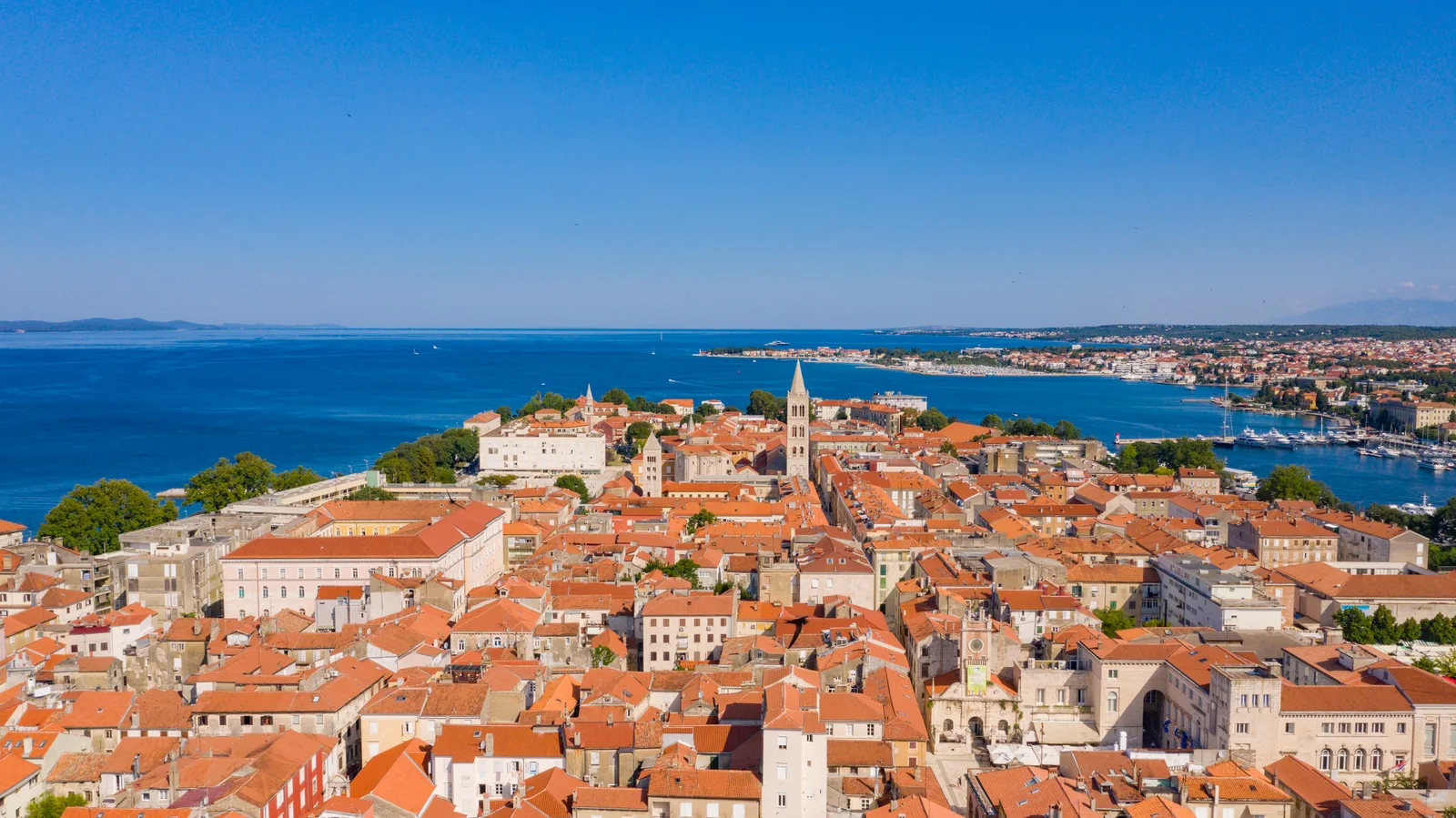
Zadar is more than a sunset stop
Zadar offers an unusually easy introduction to an Adriatic city: a historic peninsula that rewards walking, museums close enough to combine without a complicated transfer, and a waterfront that gives the day a natural ending. Come for Roman remains and medieval churches, then make room for a market visit, swimming or an island crossing. The best short stay leaves time to notice how these parts fit together.
The Old Town is the core of many visits, but it is only part of Zadar. Modern residential areas spread onto the mainland, while beach accommodation, the airport and Gaženica ferry port require separate planning. The islands and national parks promoted alongside the city are destinations in their own right. VisaWand's Croatia city and settlement directory provides a wider starting point for arranging a journey.
Allow two full days for the historic centre and a chosen museum, or three if you want beach time or a straightforward island outing. Someone assessing a move should add working days for housing viewings, public-transport trials and household arrangements. A convenient holiday apartment does not necessarily make a suitable year-round home.
Read the peninsula through its different layers
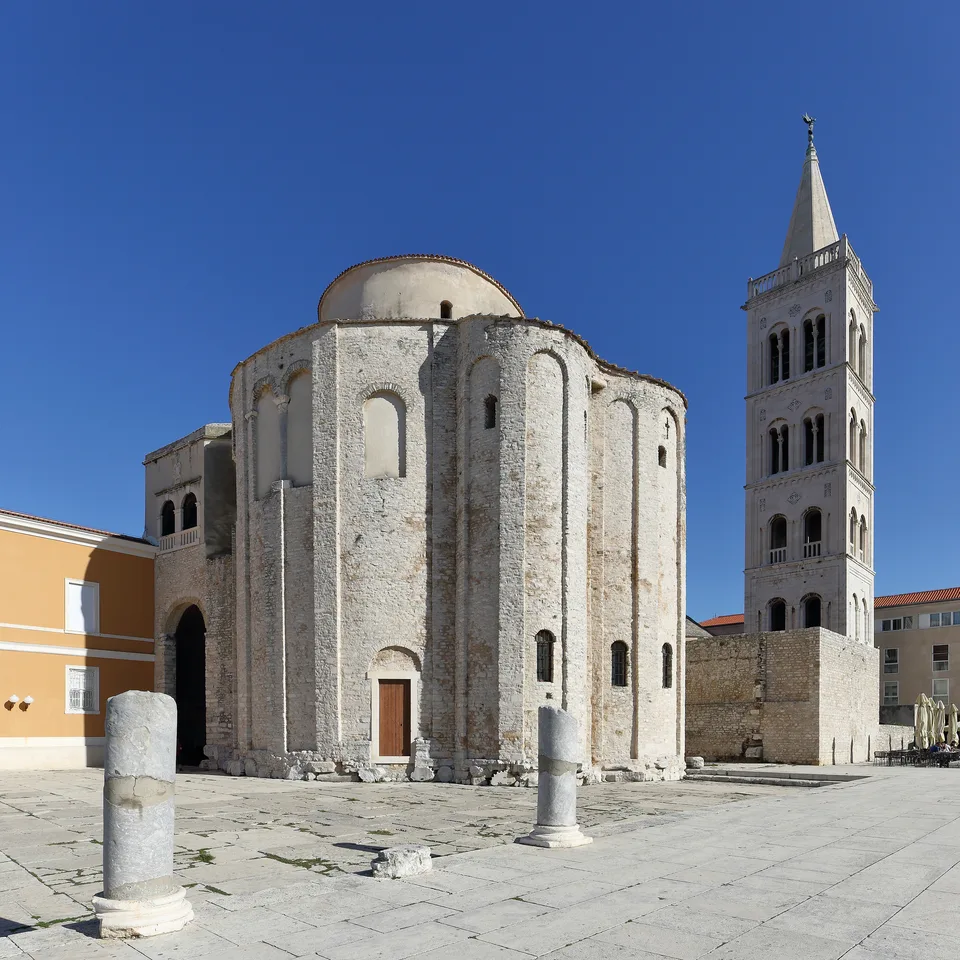
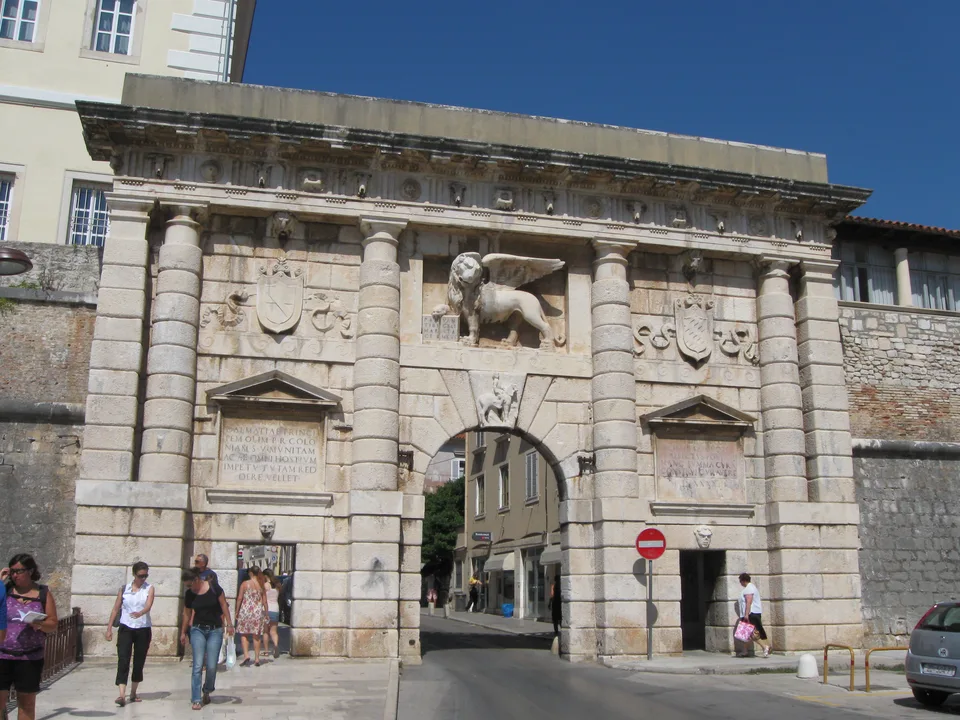
The tourist board's history of Zadar traces the city through Liburnian settlement, Roman urbanisation and later medieval and Venetian chapters. You do not need to memorise the chronology to appreciate it. Look instead at how an ancient public space, a circular church and a defensive gate continue to shape everyday routes across the peninsula.
The Forum is a useful place to begin. Walk around the remains without treating every loose stone as something to climb on, then consider visiting a museum to put the fragments in context. Kalelarga and People's Square offer a different rhythm: streets and gathering places that connect the monuments rather than simply fill the space between them.
Zadar's fortifications form part of the UNESCO-listed Venetian Works of Defence, a serial property shared by sites in Croatia, Italy and Montenegro. That designation concerns a particular defensive heritage. It should not be read as a claim that every building in the Old Town, or the entire cathedral complex, has the same World Heritage status. The distinction matters when choosing a specialist tour or researching the city's history.
Choose your base around the stay you want
For a short cultural visit, staying on the peninsula can simplify mornings and evenings. You can walk out for a museum, return to rest and go out again without arranging a ride. Before booking, ask about stairs, luggage access and the exact entrance. A room in a historic building may involve more carrying than its address suggests, and a central location can bring evening noise.
Kolovare is worth investigating if swimming is part of the holiday and you still want a connection with the historic centre. Borik, Puntamika and Diklo shift the emphasis towards the coast outside the peninsula. Check the actual route from a property to a beach and to town; a description such as “Zadar area” does not establish walking distance to the Forum.
The official accommodation directory distinguishes city properties from those in places such as Petrčane. Use it to locate options, then compare their facilities directly. For a family stay, investigate shade, cooking facilities and the room layout. For an early flight or ferry, price the complete departure journey before deciding that a less expensive nightly rate represents a saving.
Plan St Donatus and the Archaeological Museum together
St Donatus gives the Forum an unmistakable profile, but seeing its exterior and entering the building are separate experiences. The museum operator's St Donatus visitor page lists a €5 individual admission and a €10 combined ticket with the Archaeological Museum. Check that both places will be open during your visit before buying on the assumption that you can use the combination immediately.
Seasonality is substantial. For 16–31 October, the published church schedule is daily, 9am–5pm. From November through March, the normal schedule is closed, with visits possible by prior arrangement. Summer hours are longer. Treat these as published visiting arrangements to recheck, especially if an interior visit is the main reason for travelling. A winter exterior walk can still be worthwhile without promising access inside.
The Archaeological Museum's own information identifies displays covering prehistory, antiquity and the Middle Ages on different floors. Individual admission is €7. Its October hours extend later than those of St Donatus, but winter schedules differ again. Choose the period that interests you and give it time; the museum is a better introduction to the surrounding remains when it is more than a hurried stop between photographs.
Hear the Sea Organ and return after dark
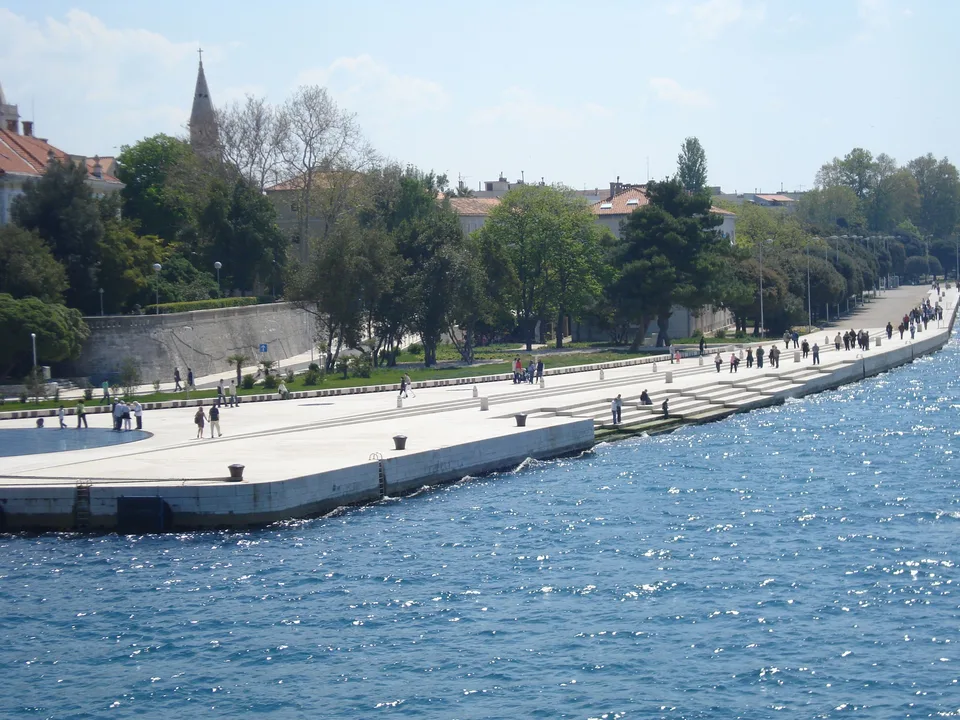
The Sea Organ is an experience of listening as much as looking. The tourist board's explanation describes pipes beneath the waterfront steps that sound through the energy of waves and tides. There is no reason to expect a fixed tune or a performance starting at a particular hour. The changing sea is part of what you hear.
The neighbouring Greeting to the Sun adds a visual attraction to an evening waterfront visit. Keep the two installations distinct: one is associated with sound, the other with light. You can combine them with a walk along the Riva, but leave enough time to enjoy the setting instead of arriving only for a photograph and immediately leaving.
Choose a position that suits the conditions and your mobility. The city's accessibility information distinguishes the accessible upper waterfront from the Sea Organ's lower levels, which involve steps. It also notes limitations around the Forum and some church entrances. Families should keep children close to the water, and anyone needing a step-free route should check the complete approach rather than assuming that a flat promenade makes every part accessible.
Add the Museum of Ancient Glass for a different perspective
The Museum of Ancient Glass overview introduces a specialised collection of glass objects from antiquity. It offers a change of scale after large churches and outdoor stonework: smaller objects can reveal different aspects of past lives. The museum is at Poljana Zemaljskog odbora 1, so it fits naturally into a peninsula day rather than requiring a separate excursion.
Check the museum's current visitor information before planning an evening visit. The October schedule lists daily opening from 9am to 7pm; the winter schedule, beginning 2 November, lists Monday–Saturday, 9am–4pm. The published adult admission is €7. Older indexed pages show different seasonal hours, so use the current operator information and check holiday arrangements separately.
Glassmaking workshops are another reason to investigate the programme, but do not assume a live demonstration happens whenever you enter. Ask what is running on your chosen date and whether it requires a separate arrangement. A visit can still centre on the collection if there is no demonstration. For gifts, the museum describes handmade replicas produced through its glassmaking work; check individual labels and prices.
Choose a beach by access, surface and conditions
Zadar's official beach overview identifies several different coastal options. Kolovare has bays and a seawater pool; Punta Bajlo is rocky; the Borik area includes pebble and sandy sections. These differences affect what to bring and how comfortable the outing will be. A photograph of clear water cannot tell you whether the entry suits a child, a weak swimmer or someone with limited mobility.
Before settling in, look at the actual access, depth, wave conditions and any posted instructions. Bring sun protection, drinking water and footwear appropriate to the surface. Do not transfer a general description of a family beach into a guarantee about every stretch of shore. Ask locally about current bathing conditions, particularly after unsettled weather.
The tourist board describes adapted facilities at some beaches, including seasonal assistance or equipment. Confirm that the facility you need is operating during your dates. An accessible approach, a ramp and assistance into the sea are different things. For a short visit, choosing a beach close to your accommodation can leave more time for swimming and less for moving bags across town.
Make the market part of an ordinary morning
The city market and fish-market guide places the main market on the peninsula, near the St Roch gate and the city harbour. It is a practical place to look beyond restaurant menus: vegetables, fruit, cheese, honey and fish connect the city with its surrounding agricultural and maritime region. What is available changes with the season, so arrive interested in what is there rather than expecting a fixed display.
For an apartment stay, a modest shopping trip can make breakfasts and simple meals easier. Buy quantities you can store and use, and ask about preparation if a product is unfamiliar. Fish is only an economical purchase if you have suitable cooking and refrigeration arrangements. Check prices by weight as well as by item before deciding how much to buy.
For dining out, compare the full menu rather than the price of one headline dish. Establish whether fish is priced per portion or by weight, what sides are included and how drinks change the total. Ask directly about allergies or dietary requirements. A waterfront setting can be part of the pleasure of a meal, but it should be a deliberate purchase rather than a surprise on the bill.
Arrive with the airport connection already checked
The airport's official transport page publishes a €5 one-way bus fare, including luggage. The route links the airport with Gaženica, the main bus station and the peninsula. It also describes a ninety-minute ticket that permits onward city transport within its validity. Check the conditions when buying rather than assuming that every separate airport transfer includes the same benefit.
Timetables are published month by month, with the following month's schedule normally appearing shortly before the current month ends. That makes an old summer departure list a poor basis for an autumn flight. Confirm the service for your exact day and allow for baggage collection, walking to the stop and the final journey to your accommodation.
If arriving late, compare the bus with a taxi quote and check how you will enter the property after reception closes. For an early departure, work backwards from the airline's arrival requirement. Keep boarding and accommodation information available offline.
Use city buses for the journeys outside the peninsula
Walking is straightforward for many Old Town visits, while Liburnija's city transport information helps with trips to other areas. The operator publishes routes for the peninsula, Borik, Diklo, Gaženica and other districts. Use the current route list and dated service information rather than assuming that an older map has the latest route names or stops.
The operator describes cash purchase from the driver and tickets through the Zadar City app. It states that a single trip bought through the app costs less, with a fifty-minute validity for transfers in the same direction. That is not a return journey or an unlimited day pass. Activate and validate the ticket as instructed before relying on a connection.
The old Smartica payment arrangement has ended, and the operator currently says sales of two-direction tickets are suspended despite their appearance in an older fare document. Check the available product rather than planning around an obsolete option. If you will commute repeatedly, compare a personal monthly pass with individual journeys, and confirm whether your destinations fall within city or regional transport.
Match the island boat to the correct port
For an uncomplicated first island outing, investigate Preko on Ugljan. Jadrolinija passenger line 409 leaves from Zadar's central port and has a published crossing time of about twenty-five minutes. Check the dated timetable in both directions, including the separate weekend pattern, before committing to an afternoon activity or an evening meal back in the city.
The 431 ferry service to Preko uses Gaženica instead. These services are not interchangeable departure points simply because both connect Zadar and Ugljan. Confirm the port printed on your booking and allow time to reach it. If you need to take a vehicle, bicycle or mobility equipment, check the rules for that particular service rather than inferring permission from the word “boat”.
Keep the day modest: explore near your arrival point, have lunch and return with a comfortable margin. A crossing does not include onward transport to a distant beach. Establish the return connection and avoid tying an island outing tightly to a flight.
Build a budget around the experiences that matter
Price accommodation, meals, transport and excursions for your dates, including compulsory charges and cancellation terms. Museum admission alone tells you little about the total holiday cost.
Choose one or two interiors that interest you, leaving walking time around them. The Forum, streets and waterfront give structure to a day without admission at every stop. A combined museum ticket is useful when opening arrangements and your interests match.
Check concession requirements at each venue and whether an apartment includes cleaning, parking and utilities. Retain an allowance for a changed connection or an extra meal.
Choose the season before fixing the itinerary
Summer makes sense for a holiday built around swimming and long evenings outdoors, but plan rest and shade into walking days. A room's cooling arrangements can matter as much as a sea view. Check them directly, particularly when booking an apartment where facilities vary from one unit to another.
Spring and autumn suit a mixture of cultural visits and outdoor time, provided you keep the beach or island day flexible. Check the short-range forecast and local marine warnings before a boat trip. A sunny view from the peninsula does not establish conditions for the whole crossing, and a calm morning is not a promise about the return.
Winter calls for a different programme. St Donatus does not keep its normal summer visiting schedule, museum hours shorten and transport needs a dated check. Build the visit around the places confirmed open, with daylight for the waterfront. For someone considering relocation, an off-season visit is useful evidence about daily routines, heating and services rather than merely a less expensive version of a summer holiday.
A three-day introduction with room to change plans
Day one: enter the Old Town, spend time around People's Square and Kalelarga, then make the Forum your main historical stop. Visit St Donatus if its interior is open and you want to see it. Keep the later afternoon flexible before a waterfront visit to the Sea Organ and Greeting to the Sun.
Day two: visit the market in the morning and choose the Archaeological Museum or Museum of Ancient Glass as the day's principal interior. Do not buy both simply because they are nearby. Add a swim at Kolovare if conditions suit, or retain more time for streets and squares if the weather turns.
Day three: take a dated, manageable Preko outing, or choose a beach day around your accommodation. A visitor assessing a move can substitute housing appointments and a trial commute. If your stay is shorter, keep the first day and one museum, then choose between the beach and the island. Trying to fit every option into two days usually removes the unhurried time that makes the city enjoyable.
Test a longer stay beyond the holiday apartment
A long stay begins with a contract that covers the period you actually need. Ask whether a property is available throughout the year, what happens when the agreed term ends and which charges sit outside the rent. Inspect heating, cooling, ventilation and signs of damp, along with furniture, cooking equipment and laundry arrangements.
Start the location search with the workplace, campus or other regular destination. Test the journey at the time you will use it and check the evening return. A coastal apartment can suit a holiday while making an everyday commute awkward. For remote work, verify the connection in the actual unit rather than relying on a general claim that the building has Wi-Fi.
Confirm the landlord or agent's authority, the deposit terms and the documentation needed for your residence arrangements before paying. At handover, record the property's condition and meter readings. Keep the holiday and household budgets separate: furniture, deposits and service setup can make the first month materially more expensive than the later routine.
Establish healthcare and household responsibilities early
Use Croatian Health Insurance Fund guidance to establish which coverage applies to your nationality, employment and residence situation. Visitors insured elsewhere and people moving into the Croatian system can have different arrangements. Do not assume that carrying a foreign insurance card makes every provider or type of treatment free.
Before moving, investigate routine medical care, continuing prescriptions and care needed by other household members. Check whether providers work within your insurance arrangement and keep proof of coverage accessible.
For utilities, agree in writing who holds each account and how bills are divided. The Zadar water utility's information distinguishes fixed and consumption-based charges and explains that customer changes require supporting details. A renter should clarify the arrangement with the owner rather than assume an ownership-transfer form applies. Establish electricity, waste and internet responsibilities too, and ask for recent bills when comparing the running costs of homes.
Keep tourism, employment and study on separate tracks
The Croatian foreign ministry's visa overview provides the nationality check and explains that days in Croatia count with other Schengen stays. Many third-country visitors have a maximum of ninety days in any rolling 180-day period, with the actual visa's conditions also relevant. A visitor admission is not a general permission to take local employment.
EEA and Swiss nationals follow different rules for work and longer residence. Other nationals should check the MUP work-permit guidance against the actual job and employer. University study is a separate purpose within the temporary-stay framework, with supporting documentation and application rules. Ask the institution for its process before treating an acceptance letter as the whole immigration arrangement.
The digital-nomad temporary-stay route concerns eligible remote work for a foreign employer or company, with specific restrictions and conditions. Its published maximum is eighteen months, not an automatic grant of that duration. Applying does not universally extend a visitor's lawful stay. VisaWand's Croatia destination page and consultant directory can help locate individual advice; permanent settlement requires its own eligibility assessment rather than following automatically from a visit or rental contract.
Add another destination for a clear reason
For another small coastal destination, investigate VisaWand's Nin location page. For a broader journey, the Šibenik location page and Split location page offer other places to compare. These links identify destinations; check the available content and actual connections before deciding whether to change accommodation or make a day trip.
Paklenica National Park's visitor information is relevant if you want a hiking day. Treat it as a mountain outing requiring route selection, equipment and a weather decision, rather than an extra stop after a beach morning. Establish how you will reach the trail and return. The ability to get to the park does not establish that every route suits your experience.
For a first visit, one excursion is enough. A slower market morning or another waterfront walk gives Zadar room to become more than a collection of famous sights.
Official planning resources
Reviewed 16 October 2026. Use the official resources linked throughout this guide for admission, transport, housing and immigration decisions. Prices, services and rules can change; confirm the details relevant to your dates. Photography illustrates the locations and is not a live view.
View all official resources
- History of Zadar
- UNESCO Venetian Works of Defence
- Official Zadar accommodation directory
- St Donatus opening hours and admission
- Zadar Archaeological Museum visitor information
- Zadar Sea Organ
- Zadar accessibility information
- Museum of Ancient Glass visitor overview
- Museum of Ancient Glass current official visitor information
- Zadar city beaches and coastal areas
- Zadar green market and fish market
- Official Zadar Airport bus connections
- Liburnija city transport and tickets
- Jadrolinija passenger ship 409 to Preko
- Jadrolinija ferry 431 from Gaženica
- Croatian Health Insurance Fund guidance
- Zadar water utility account information
- Croatian foreign ministry visa overview
- MUP EEA and Swiss stay and work
- MUP work of third-country nationals
- MUP third-country temporary stay
- MUP digital nomad temporary stay
- Paklenica National Park visitor planning
Plan the next part of your journey
Explore the Croatia guide, browse other cities or compare consultants for your travel and relocation questions.