Visa
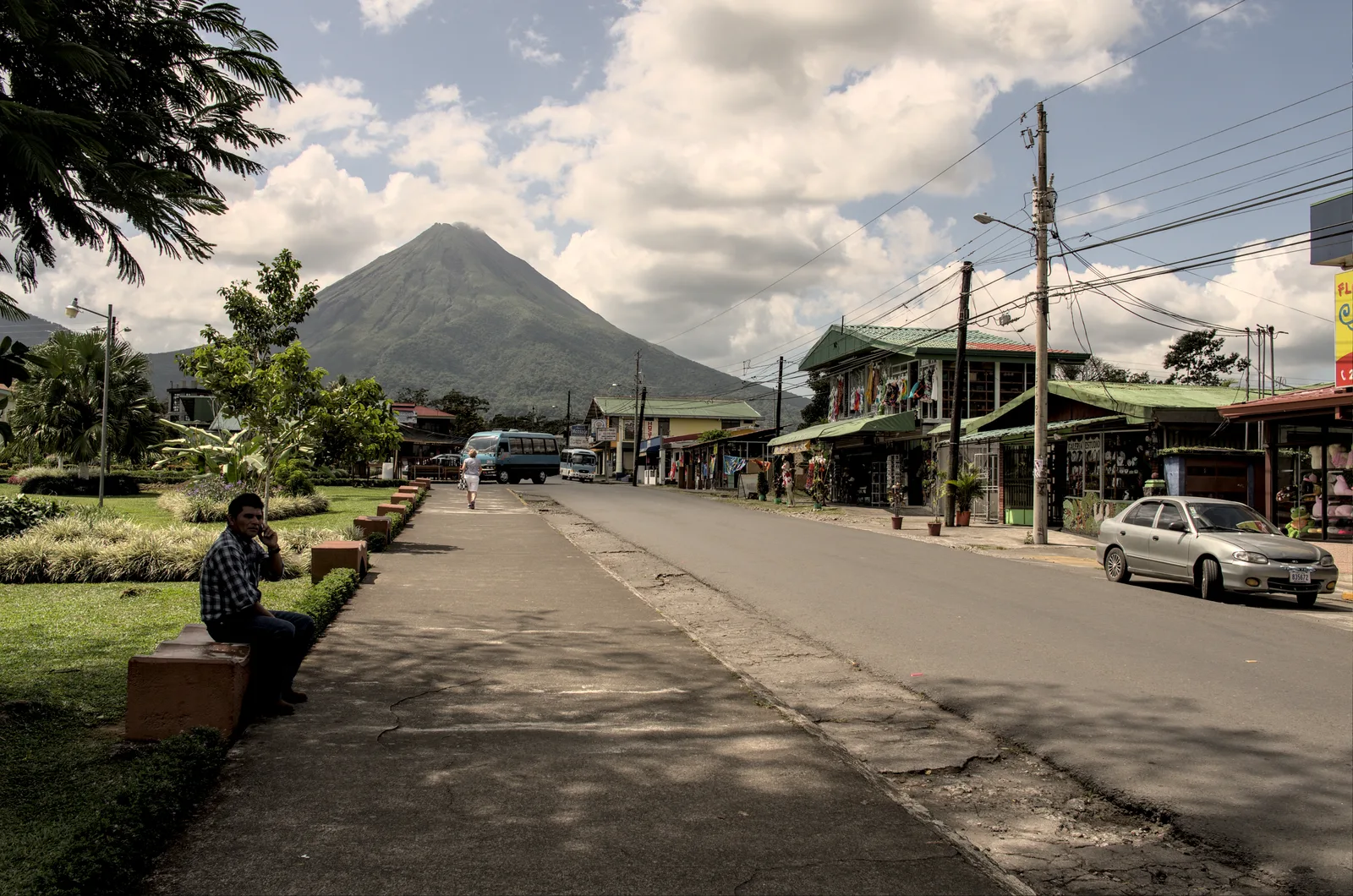
A small town that opens onto a much larger landscape
La Fortuna de San Carlos is a practical base for a landscape of volcanoes, forest, waterfalls and hot springs. The town itself is comparatively modest: you come here less for a succession of urban monuments than for the opportunities beyond the streets. Arenal’s cone gives the region its defining image, but clouds, transport arrangements and the location of your accommodation will influence the experience as much as the photograph that first caught your attention.
This is La Fortuna in Alajuela province, near Arenal, rather than another Costa Rican settlement with the same name. The Costa Rica Tourism Board’s Northern Plains information provides regional context. Allow three or four nights if you want time for several substantial outings without changing hotels every day. VisaWand’s Costa Rica guide covers the national background; the decisions here are about where to stay, what to book and how to make the journeys work.
Look beyond the volcano in the town’s history
La Fortuna’s identity includes agriculture and community organisation as well as tourism. The local development association’s history of La Fortuna traces settlement in the La Palma area and records the earlier name El Burío. It dates the change to La Fortuna to 1948. That account is a useful corrective to the familiar suggestion that the name arose because the town escaped the much later eruption.
The Asociación de Desarrollo Integral de La Fortuna, ADIFORT describes its work across education, roads, conservation and other community projects. It also operates the waterfall attraction. Understanding that local role gives you more context than simply counting the number of adventure activities on sale. When choosing an experience, ask who operates it, what is included and where the money goes. A locally rooted organisation and a reseller may offer access to the same place while providing different services and booking terms.
Choose between the centre and the countryside
A central base makes sense if you want to compare restaurants on foot, buy groceries and meet arranged transport without an additional drive. Check the distance from the actual entrance to the places you expect to use. An address described as “La Fortuna” may cover accommodation well outside the town. A quiet room and a volcano view can be attractive, but they do not remove the cost of every trip into the centre.
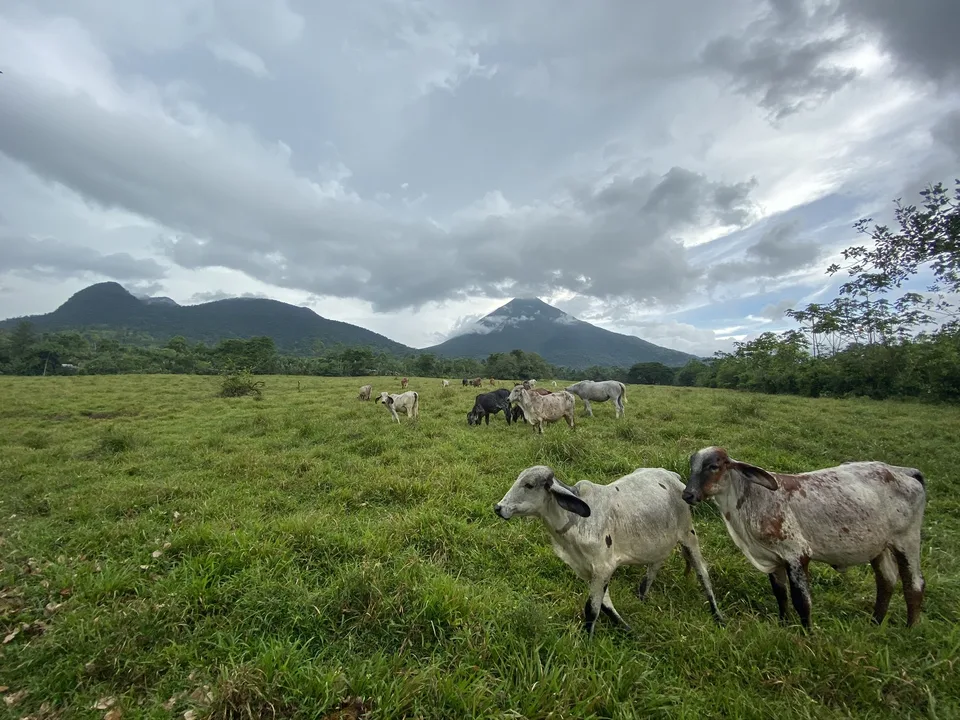
Properties towards Arenal and the lake offer a different setting, often making the surrounding landscape a larger part of the stay. Compare those choices against your planned pickups, evening meals and vehicle arrangements. Ask whether a shuttle will collect you at the property and whether a private access road changes the journey. For a longer stay, test the route to groceries and essential services in ordinary weather as well as on a clear afternoon. Rural tranquillity is easier to enjoy when the practical journeys are settled.
Match the room to your kind of trip
Compare a simple hotel, a self-catering unit and a resort by the facilities you will actually use. A family may value laundry, usable cooking equipment and a convenient breakfast more than a large pool. Travellers spending most days on tours should calculate how much time remains to enjoy a costly resort. If hot-spring access is included, establish which facilities, hours and guest categories the room rate covers.
Before paying, check the total for everyone travelling, taxes, cancellation conditions and any transport charge. Ask about air conditioning or ventilation, drying wet clothes, insect screens and parking. A bungalow photograph does not establish how comfortable it will be during prolonged rain. For step-free access, describe your requirements and confirm the route from parking to the room and dining area; a broadly advertised accessible property may contain individual rooms or paths that do not suit you.
Give Arenal National Park its own outing
The official visitor page for Arenal Volcano National Park lists daily opening from 8am to 4pm and describes trails through vegetation and old lava landscapes. This is a national park outside the town, not a general name for every private trail or resort with Arenal in its title. Verify the entrance and product on a booking confirmation before assuming that a paid tour includes national-park admission.
The official park brochure asks visitors to keep to the trails, avoid feeding wildlife and bring identification. It describes buying entrance tickets with a credit or debit card. Confirm current admission arrangements and the applicable tariff before travelling; a current fee could not be fully verified for this guide. Plan a marked visitor route suited to your ability, with time to stop and look. Do not turn a park walk into an improvised attempt to climb a volcanic cone or follow a route outside the authorised visitor area.
Treat the waterfall as a climb as well as a view
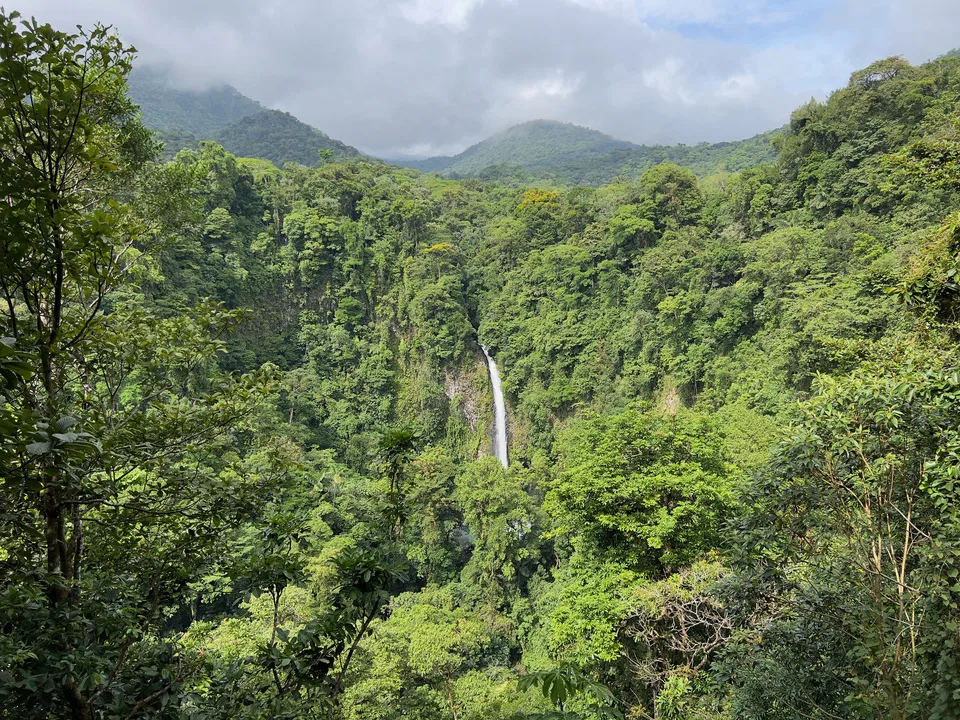
The La Fortuna Waterfall operator’s FAQs list foreign-visitor entry at US$20, national entry at US$10 and free admission for children under eight. More important for many visitors is the physical effort: the operator describes around 500 steps and notes that the climb back depends on your fitness. Do not judge suitability only by the descent or assume that a short distance means an easy outing.
There is a viewpoint accessible to people with disabilities, which is different from access to the waterfall’s base. Decide whether that viewing experience is enough for your group before buying tickets. The waterfall’s walking guidance recommends closed shoes and staying on the trail. Take time on wet surfaces and allow a break before the return climb. If considering entering the water, follow staff directions and conditions on the day; published descriptions of bathing are not a guarantee that swimming will be appropriate during your visit.
Compare guided and independent bridge walks
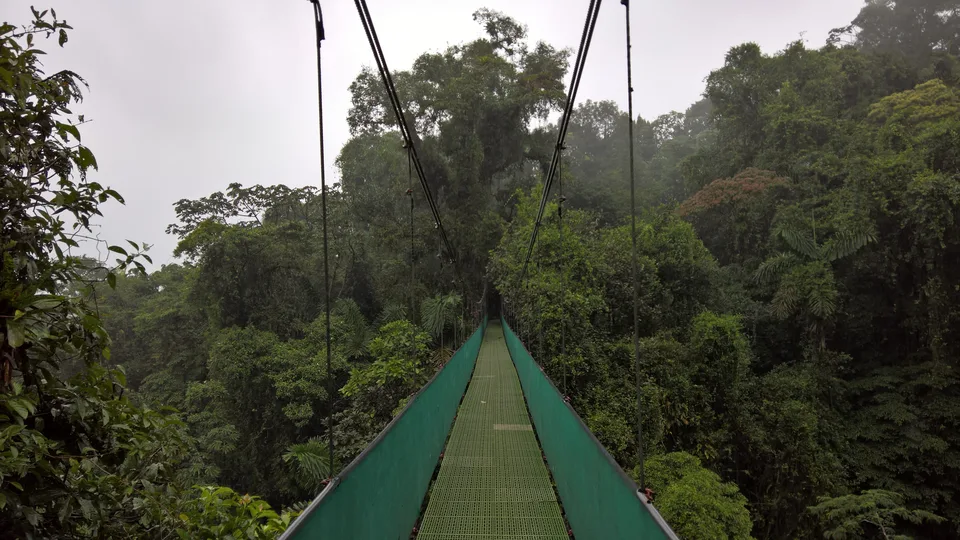
Mistico Park’s self-guided hanging-bridge walk is a distinct paid attraction. Its published route is 3.2 kilometres, with a shorter option, and the suggested visit is about two hours. The page lists starting prices of US$32 for morning entry and US$28 for afternoon entry, plus taxes. Check the final amount for your date and group rather than treating a starting price as the complete cost of every ticket.
The park’s FAQs recommend booking ahead and wearing closed walking shoes. A guide can add interpretation and help with observation, but compare that product’s inclusions rather than assuming the independent ticket provides a guide. Wildlife remains unpredictable. Binoculars and a patient pace are more useful than a promise to see a particular animal. If someone in your group has mobility needs or difficulty with suspended bridges, discuss the actual route and available alternatives with the operator before committing to a timed booking.
Allow time for the wider forest landscape
Forest experiences work best when you choose the kind of outing you want before comparing prices. A slow natural-history walk, a bridge circuit, a zip-line course and a night tour are different activities, even when they use similar photographs. Establish the walking distance, equipment, guiding, transport and return time for each. Do not assume a dramatic image of a suspension bridge identifies the specific park you are booking.
Leave room to stop, watch and listen rather than racing between photo points. For any guided wildlife activity, ask how the group approaches animals and avoid experiences requiring you to handle or disturb them. Keep your own expectations realistic: rain, vegetation and an animal’s behaviour can all affect visibility. A guide’s knowledge may make a quiet walk worthwhile even without a conspicuous sighting. Choose one substantial forest experience first, then decide whether another offers something meaningfully different for the time and money involved.
Choose hot springs by their actual inclusions
Hot springs can be a substantial part of the visit rather than a quick stop after everything else. Compare the setting, changing facilities, age rules, meals and length of access when considering a day pass. Some accommodation includes access to its own facilities, which may change the value of buying a separate ticket elsewhere. Ask about towels, lockers and transport instead of comparing headline prices alone.
Tabacón’s own hot-springs information is one useful example of the detail to check: day-pass capacity is limited, advance reservations are recommended, and children under 16 must remain with an adult. Read payment and cancellation conditions carefully, particularly around holiday periods. A room reservation, day pass, meal and spa treatment are separate products unless explicitly combined. Follow bathing instructions and seek appropriate medical advice if hot-water immersion presents concerns for you. Historic wellness language should not be interpreted as a promise to treat an illness.
Decide how to reach La Fortuna before choosing arrival times
An international arrival is only one stage of reaching the town. Compare the full connection from your arrival airport to your accommodation, including baggage collection, immigration and any change of terminal or vehicle. A late arrival may make an overnight stop more comfortable than immediately continuing along unfamiliar roads. Allow a buffer when separately booking a flight and a transfer.
SANSA’s La Fortuna destination information lists direct flights from San José, with an approximate flight time of 30 minutes and schedules varying by season. Check the actual service, airport, baggage allowance and onward transfer for your date. The short flight does not represent the whole journey from an international aircraft to a hotel room. If carrying bulky equipment, compare the total cost and handling arrangements against travelling by road before assuming the flight is the simplest choice.
Compare a shuttle with independent road travel
Interbus publishes routes involving La Fortuna, including connections with San José and Monteverde. Use its booking information to check availability, pickup points, luggage conditions and whether your chosen property is served. A route listing is not a confirmed seat or a promise of collection at every rural hotel. Ask how flight delays affect an airport-related pickup before paying for an inflexible connection.
For independent driving, compare the rental’s full price, deposit, cover and restrictions. Ask the accommodation about its access road and parking. Plan difficult or unfamiliar stretches for daylight where possible, and avoid loading the first day with a long drive after an overnight flight. If using public buses, verify current departures locally and distinguish a roadside stop from an attraction entrance. A low fare can involve an additional walk or taxi. Build the return journey into the plan before leaving town, especially when the attraction closes well before evening.
Build a budget in colones and clearly labelled dollars
Costa Rica uses the colón, while many tourism businesses quote in US dollars. Keep the currency beside every figure in your budget and check the exchange basis when paying in another currency. Start with accommodation, food, transport and paid attractions, then add a contingency. For a family, multiply per-person tickets before deciding whether to book several large activities on consecutive days.
A practical comparison might put one guided outing beside an independent walk and an afternoon at your accommodation. Check what a combined ticket actually saves after transport, meals and taxes. A discount is less useful if it commits you to activities you would not otherwise choose. Ask whether an advertised total includes all compulsory charges and keep receipts. Avoid converting every quote using a remembered exchange rate; the rate available to you through a card, bank or cash transaction may differ.
Eat well without making every meal a tour booking
The tourism board’s practical travel advice describes sodas as small, locally owned cafés and highlights the availability of both Costa Rican and international food. Compare nearby menus and portions before deciding where to eat. A simple lunch can be a useful break between activities, while an evening close to your accommodation may be more appealing than another drive after a full day outdoors.
Check the bill’s taxes and service charge before deciding on any additional tip. For groceries, buy according to the kitchen equipment and storage available where you stay. Plan what will happen to refrigerated food on a transfer day. Carry water and suitable snacks for outings, but follow each attraction’s rules about food and waste. Shopping for a few everyday items also helps prospective residents understand the difference between holiday spending and the cost of maintaining a household beyond the restaurant circuit.
Expect rain rather than relying on a perfect dry season
The tourism board’s climate guidance explains that Costa Rica has distinct regional rainfall patterns. La Fortuna’s northern setting should not be treated as a copy of a Pacific beach calendar. Forest, cloud and rain are part of the experience; even a trip booked in a broadly promoted dry-season period cannot guarantee an unobstructed volcano view or dry paths throughout the day.
Use the Northern Plains weather information and local updates when arranging outdoor activities. Pack a rain layer, footwear with grip and a way to protect essential documents and electronics. Keep spare clothing available after a wet outing. When possible, place flexible activities around the most important timed reservation rather than booking every hour. Ask operators how they handle unsuitable conditions, including cancellation, rescheduling and transport. An attraction continuing to operate in rain does not mean every route or activity will remain appropriate for your group.
A realistic three-day introduction
Day one: arrive, settle in and explore the centre enough to find meals, groceries and your departure point for the next morning. Keep the first evening flexible. A short local walk can be enough after a transfer, particularly if you need to dry clothing, reorganise luggage or confirm an early pickup.
Day two: make Arenal National Park or a substantial forest experience the main outing, then allow a meal and a rest before any hot-spring booking. Day three: choose the waterfall or a bridge walk according to your interests and physical ability, rather than trying to fit both around a tight departure. Add a fourth day for another experience or time near the lake. Anyone assessing a move should substitute housing inspections and a normal shopping trip for one sightseeing block. Keep an alternative available when heavy rain changes an outdoor plan.
Assess housing through ordinary daily journeys
For a longer stay, begin with a temporary base and compare homes in person. Ask about rent, deposit, lease term, furnishings, utilities, maintenance and the notice required to leave. A monthly holiday quote may cover very different services from a residential arrangement. Put those differences in writing rather than assuming cleaning, electricity or internet remains included indefinitely.
Test the journey to work, classes, groceries and health services from the actual property. Ask about road access in wet weather and consider whether you would depend on a car for most errands. Inspect ventilation, signs of damp, insect screening, water arrangements and secure storage. For a purchase, have a qualified professional examine ownership and title using the National Registry’s certification and information services. A listing, a photograph and a seller’s assurance do not replace that investigation. Keep property decisions separate from assumptions about immigration eligibility or permission to work.
Check household and health arrangements before committing
If you will work online, test the connection at the property at the hours you expect to use it. Ask which service is installed, what happens during an interruption and whether your mobile connection provides a usable backup. Confirm laundry, waste collection and how repairs are requested. Families should discuss enrolment, language and transport directly with the intended school before choosing a home on the assumption that a nearby option will meet their needs.
Arrange insurance and a plan for routine medical care, regular prescriptions and urgent treatment. The UK Government’s living-in-Costa-Rica guidance, written for British nationals, provides an orientation to residence, work and health arrangements, with links to Costa Rican authorities. Use it within that scope and confirm your own circumstances. Do not assume that arriving as a tourist gives you the same health entitlement as an enrolled resident, or that a small-town clinic supplies every specialist service you may require.
Check visitor entry against your passport and journey
The official entry guidance requires a valid travel document, a visa when applicable, evidence of funds and return or onward travel. It lists up to 180 days for the first nationality group, with different limits for other groups. The immigration officer determines the permitted stay. Check your actual admission rather than planning a six-month visit on the assumption that every passport receives the same permission.
Health documentation can also depend on origin, recent travel and transit stops. Verify those requirements for your route before departure, particularly if yellow-fever vaccination rules may apply. Carry the evidence needed for your own circumstances and allow time for any required visa process. Keep a record of the authorised departure date and resolve an extension or other status question before it expires. A holiday booking does not establish permission for local employment, an extended course of study or permanent relocation.
Distinguish remote work, study and residence
Costa Rica has a dedicated remote-worker estancia category for people providing paid services to clients or entities outside the country. Check the full evidence, income and application requirements with immigration before relying on it. Official tourism pages currently give inconsistent family income thresholds, so a figure is not quoted here. This is a reason to obtain confirmation for the application, not to choose the lower number from an older page.
The category’s medical-insurance requirements include at least US$50,000 of relevant cover for the full authorised stay, including each accompanying family member. That is category-specific guidance, not a blanket rule for every tourist. For study or settlement, review the Costa Rican Embassy’s residence-category information and confirm the applicable process with the authorities. Local employment requires permission that allows it. VisaWand’s consultant directory can help identify advisers; check their relevant qualifications, authorisation and written service scope before paying.
Leave room for the next destination
Decide whether your next stop adds a different experience or simply another rushed transfer. Monteverde offers an alternative forest setting, while San José can provide an urban stop within a wider itinerary. Compare VisaWand’s Monteverde location page and San José location page with your actual transport options. They are destination pages, and the information available on each should determine how you use them.
For other places in the surrounding planning region, the Quesada location page, Costa Rica location directory and Costa Rica destination page provide further starting points. Avoid judging a transfer solely by the straight-line distance on a map. Ask about the actual route, pickup time and final arrival before adding another hotel. La Fortuna’s advantage is the range of experiences reachable from one base; giving that base enough time is often more useful than collecting another stop on a crowded itinerary.
Official planning resources
Reviewed 17 October 2026. Use the official resources linked throughout this guide for admission, transport, housing and immigration decisions. Prices, services and rules can change; confirm the details relevant to your dates. Photography illustrates the locations and is not a live view.
View all official resources
- Costa Rica Tourism Board: Northern Plains
- ADIFORT: La Fortuna history and community
- ADIFORT: community development association
- Costa Rica Tourism Board: Arenal Volcano National Park
- Official Arenal National Park visitor brochure (2023)
- ADIFORT: La Fortuna Waterfall visitor FAQs
- La Fortuna Waterfall: hike information
- Mistico Park: self-guided hanging bridges
- Mistico Park: visitor FAQs
- Tabacón: hot springs and day-pass policies
- SANSA: flights to La Fortuna
- Interbus: shuttle routes
- Costa Rica Tourism Board: practical travel and safety advice
- Costa Rica Tourism Board: climate by region
- Costa Rica Tourism Board: Northern Plains weather
- Costa Rica National Registry: certifications and reports
- UK Government: living in Costa Rica
- Costa Rica Tourism Board: current entry requirements
- Costa Rica Tourism Board: remote-worker requirements
- Costa Rica Tourism Board: digital nomad insurance
- Costa Rican Embassy in London: residence categories
Plan the next part of your journey
Explore the Costa Rica guide, browse other cities or compare consultants for your travel and relocation questions.