Visa
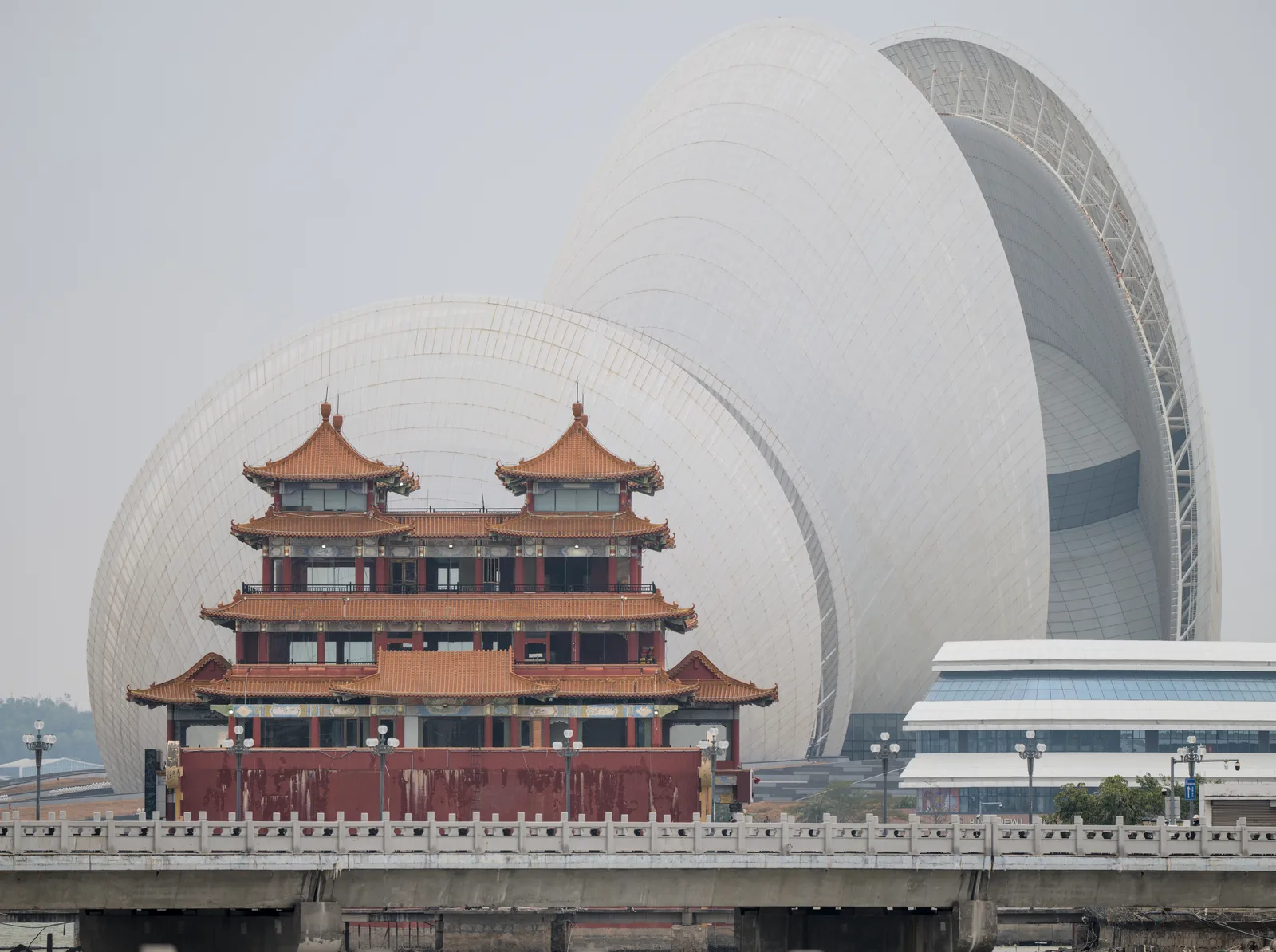
A coastal stay with several possible directions
Zhuhai gives you choices: a waterfront walk, a day in a theme park, time in a historic neighbourhood or a boat journey out to an island. Its position beside Macao and across the Pearl River estuary from Hong Kong makes it an appealing regional stop, but those connections require more planning than a line on a map suggests. Border formalities, ferry departures and the distance between districts shape the experience.
For a first visit, allow two or three nights and choose one main purpose. A city break around the waterfront differs from a family holiday at Chimelong on Hengqin. Someone considering a move should begin with the workplace or campus address, then assess housing and transport around it. This guide concerns Zhuhai in Guangdong. Read VisaWand’s China country guide alongside the local advice, particularly before arranging a journey that also includes Hong Kong or Macao.
Understand the city beyond its modern skyline
The coast is central to Zhuhai’s character. The Ministry of Ecology and Environment’s account of the Lovers’ Road bay area describes the meeting of hills, sea, islands and urban development, together with efforts to restore coastal public spaces. Choose a manageable section of waterfront rather than interpreting the road’s name as a single short promenade.
There is an older story behind the contemporary architecture. The Zhuhai Museum connects maritime history with local arts, customs and shared memories. Tangjia’s historic buildings and Gongle Garden provide another route into that history. Together they make a useful counterweight to a visit centred entirely on shopping and new attractions.
For a prospective resident, these contrasts matter practically. The seafront you enjoy on holiday may be far from the district where you will work. Use sightseeing to explore the city, then test the journeys that would define an ordinary weekday.
Choose between Gongbei, the waterfront and Hengqin
Gongbei is a practical starting point for travellers using Zhuhai Railway Station or crossing to Macao at the nearby land border. Compare the actual hotel entrance and station approach, especially with luggage. Being close to a border crossing is useful only if that crossing matches your documents and onward itinerary.
For a city-focused visit, compare accommodation in Jida and the Xiangzhou waterfront area against the coastal sights you want to see. A sea view can be appealing, but ask about road noise, breakfast arrangements and the walk to transport. A hotel’s district label covers more ground than its photographs reveal.
Hengqin suits a trip built around Chimelong or an appointment on the island. Staying there can reduce repeated transfers, while making a northern sightseeing excursion a separate undertaking. Tangjiawan becomes more relevant for some university and work stays. Choose a base from a daily route map rather than a citywide list of hotel rankings.
Walk the coast in sections
The Fisher Girl statue, Lovers’ Road and the waterfront around Yeli Island are natural first-visit choices. Start with a section you can comfortably walk, including a place to rest, then decide whether to continue. Carry water and plan a return journey before fatigue or a change in weather makes the decision for you.
The Fisher Girl is a distinctive coastal landmark: a figure holding a pearl above her head beside the water. View it from established public areas and keep attention on the path, crossings and sea conditions. A coastal photograph does not establish safe swimming access, and an attractive stretch of shore is not necessarily a supervised bathing beach.
Give this outing some unstructured time. It is a good arrival-day activity because it can be shortened without losing a prepaid attraction reservation. In hotter weather, early or later daylight may make the walk more comfortable; check the forecast rather than relying on a seasonal assumption.
See the theatre, then decide whether to book a performance
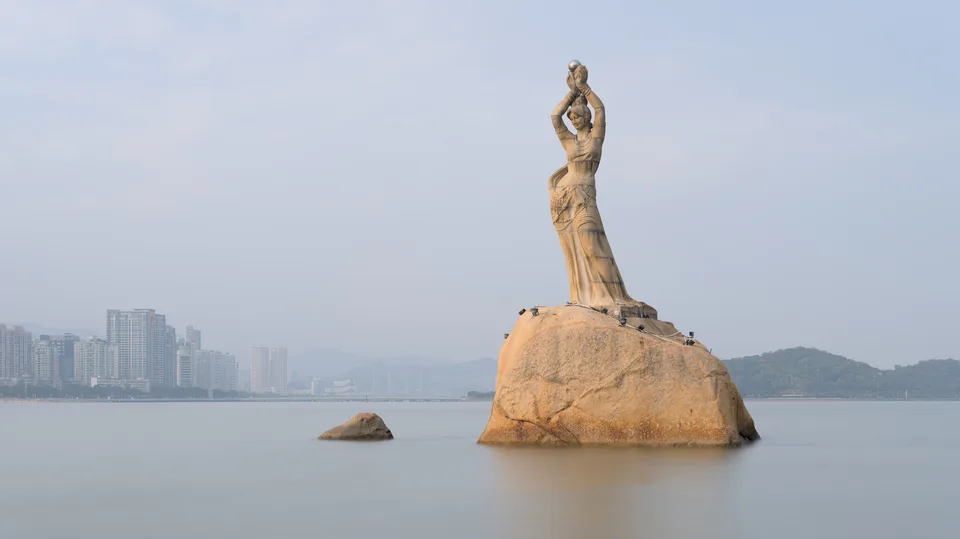
Zhuhai Grand Theatre’s two shell-shaped forms make Yeli Island an architectural destination as well as a performance venue. The official tourism pocketbook describes opera, ballet, drama and music among its programmes. Seeing the exterior and attending an event are different plans: a waterfront visit does not include access to an auditorium.
For a performance, consult the theatre’s official Poly ticketing site for the date, venue, language, seat category and admission conditions. Check age or height restrictions for children and whether everyone in the party needs a ticket. Do not assume an attractive production photograph means the same show is running during your stay.
Allow time to reach the correct entrance and arrange the journey back after the event. If you are combining the theatre with dinner, keep the restaurant booking flexible enough to accommodate travel. An evening here can anchor a city stay without requiring another full day of sightseeing.
Zhuhai Museum has useful passport arrangements
The museum moved to its new address at 88 Haihong Road in 2020. Its collection and exhibition overview introduces maritime and general history, arts, folk traditions and collective memory. Put it early in the trip if you want context for the districts you will subsequently explore.
The official visitor guidance lists free access to exhibitions and public visitor areas. Normal opening is Tuesday–Sunday, 9am–5pm, with last admission at 4.30pm; Mondays close except public holidays. Check special announcements rather than extending holiday hours to ordinary weeks.
The museum uses timed reservations, but explicitly provides for foreign visitors to register in person at the front desk with their passport or another accepted valid document. This is useful when an overseas visitor cannot complete the standard online process. Bring the original document and allow time for registration; the arrangement does not remove capacity limits. Children under twelve must be accompanied by an adult or an organised group.
Give Tangjia a separate outing
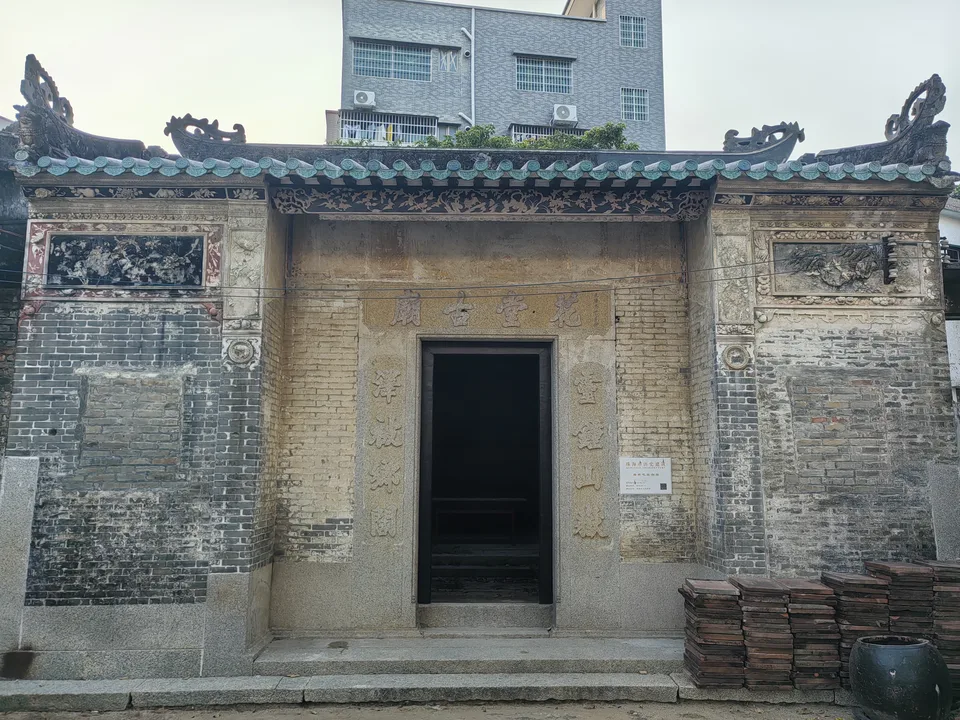
Tangjia’s older streets offer a change from the city’s waterfront landmarks. The High-tech Zone’s heritage-renewal account describes work to protect buildings and improve infrastructure. Expect a neighbourhood shaped by preservation and contemporary use, rather than an untouched historic set.
Gongle Garden adds a more personal strand. A local-government history of the garden links it to Tang Shaoyi and describes a hillside landscape combining Chinese and Western influences. Leave enough time to look at the relationship between buildings, planting and terrain. Verify current access to individual buildings instead of assuming that an open street means every interior is available.
Pair the outing with a modest food stop and return without another fixed attraction immediately afterwards. That leaves room for slower walking or an unexpected closure. If Tangjiawan is a possible future base, continue beyond the heritage area to inspect shops, transport and the specific campus or workplace relevant to you.
Make Chimelong a dedicated day
Chimelong Ocean Kingdom is a major commitment within a short visit. The operator describes eight themed areas combining animal exhibits, rides and performances. Decide whether that mix suits your party before allocating the day and budget. Families with young children may value a slower visit more than an attempt to cover every attraction.
The operator’s published ticket page lists ordinary standard admission at 395 yuan on regular dates and 450 yuan on designated dates. Confirm your calendar selection and ticket conditions before paying. Ocean Kingdom and Chimelong’s Spaceship park are separate products; a ticket for one should not be assumed to include the other.
Use the identity document entered when booking and check the process for your document type. Budget separately for meals and optional extras. For a hotel package, read exactly which park, number of entries and dates are included. Compare that complete package with separate bookings rather than comparing room rates alone.
Island excursions need a return plan
An island trip changes the pace of a Zhuhai stay, but it also adds a fixed transport dependency. Hengqin’s government has documented ferry journeys to islands including Dong’ao, Guishan, Wailingding and Wanshan. That report establishes the destination options, not a guaranteed current daily timetable for all of them.
Before committing, verify the sailing date, departure terminal, island arrival point and return availability with the operator. Zhuhai’s passenger terminals are not interchangeable. A hotel on an island may require a further local transfer after the boat arrives; ask the accommodation provider to explain it before paying.
Keep the final island night away from an inflexible flight where possible. Wind or sea conditions can disrupt sailings, and an onward connection needs a margin beyond the advertised crossing time. If the forecast is uncertain, a mainland day is a reasonable alternative. Choose the island for the experience you want rather than simply the next ticket available.
Fly into Zhuhai with the onward route in mind
Zhuhai Jinwan Airport is a useful gateway when your itinerary begins in the city. Its passenger arrival instructions distinguish coach, taxi and booked-car pickup areas. Follow the signs for your arrival terminal and share the precise pickup zone with a driver rather than merely sending the airport name.
The airport’s city coach route table lists the economy coach between the airport and Gongbei at 30 yuan per adult. It also lists different prices for business vehicles and other routes. Confirm the destination and vehicle category at purchase: one quoted fare does not cover every part of Zhuhai.
The airport transport page directs passengers to current coach information and describes services linked to arriving flights. Check the actual arrangements for a late arrival instead of assuming the printed daytime timetable answers every case. For an early departure, confirm the boarding stop and allow a margin for the road journey, check-in and security.
Railway journeys require the full station name
Use China Railway’s official English service to compare trains, dates and arrival stations. Zhuhai Railway Station, Zhuhai North and the airport station serve different locations. Book according to your final address and the available train, not merely the shortest name in a search result.
Hengqin’s current transport overview confirms its connection to Zhuhai Station and the airport by intercity rail. Check the actual departure and stopping pattern for your day. Promotional journey times describe a rail segment; they do not include the walk from a hotel, waiting, security or the final transfer.
Save your destination’s Chinese address and keep the travel document used for the ticket accessible. On a transfer from another city, allow time to locate the next platform or station entrance. A missed connection can consume more of a short stay than a slightly longer but straightforward journey would have done.
The Hong Kong bridge shuttle is a port-to-port service
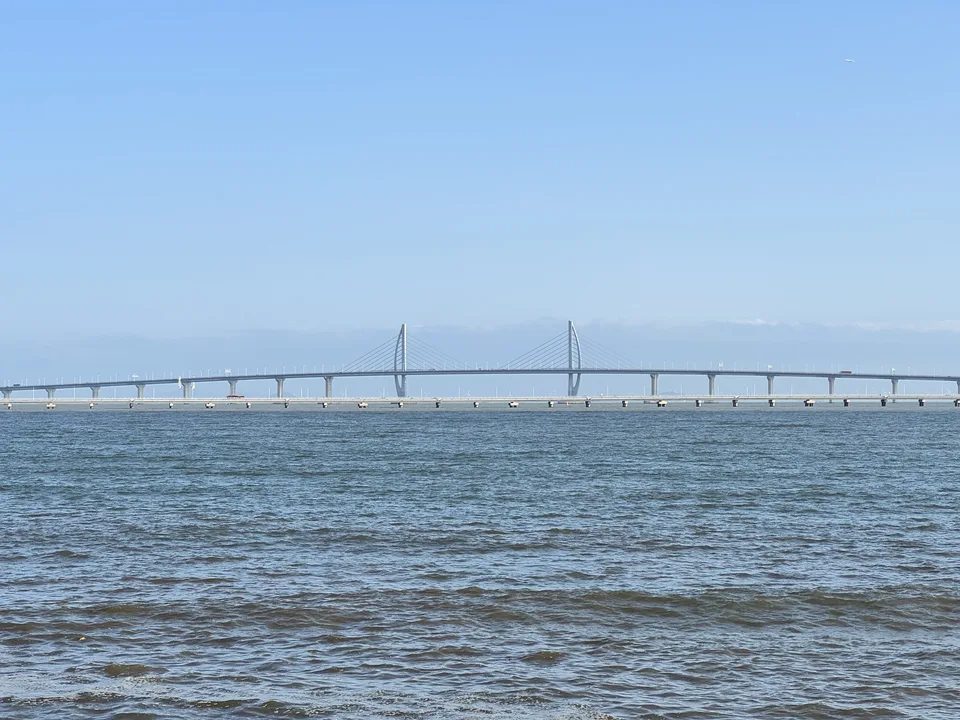
The Hong Kong government’s bridge transport page lists a 24-hour shuttle between the Hong Kong and Zhuhai ports. Published regular fares are HK$65 during the day, from 6am to 11.59pm, and HK$70 overnight. These figures are in Hong Kong dollars, not yuan, and concern the shuttle rather than the complete journey from a city hotel.
Add the journey to the departure port, immigration checks and onward transport from the arrival port. Choose the Zhuhai service carefully: the bridge also has a separate Macao route. A coach sold with urban pickup points is another product with its own schedule and fare.
Before arranging a Hong Kong airport connection, distinguish ordinary public transport from a dedicated airport transfer with specific eligibility conditions. Do not assume you can substitute one for the other while staying airside. Keep passport and entry requirements separate from the transport booking; buying a seat does not authorise admission.
Macao and Hengqin involve different boundaries
A Macao excursion can be a worthwhile addition, provided you check permission to enter Macao and to return to mainland China before leaving. Use the Macao government’s immigration guidance for the relevant nationality and document. For a Hong Kong extension, consult its separate visit and transit requirements.
Hengqin’s official explanation of its boundaries distinguishes the “first line” between Hengqin and Macao from the “second line” between Hengqin and the rest of mainland China. The latter concerns a customs boundary; it should not be interpreted as a general immigration exemption for foreign visitors.
Cross-border commuters need a realistic routine that includes checks, waiting and transport on both sides. Eligibility for a resident scheme or automated clearance cannot be assumed from another traveller’s experience. For a holiday, leave enough flexibility that a slow crossing does not threaten a flight or turn a short excursion into a stressful deadline.
Food: look beyond the waterfront view
Tangjiawan’s cha guo tradition gives a food outing a specific local focus. The museum describes a family of cakes and dumplings made in sweet and savoury forms, with varieties associated with festivals and seasons. Ask what is being made that day rather than expecting every traditional variety at every shop.
Ingredients matter. Some versions described by the museum include pork, dried shrimp, peanuts or sesame, so a cake-like appearance is not a reliable guide to dietary suitability. Explain allergies or restrictions clearly and check preparation as well as the visible filling.
Hengqin’s visitor information also highlights oysters and Cantonese dishes. For seafood, establish the portion, weight-based charge where applicable, cooking fee and total before ordering. A location by the sea does not establish the origin of every item on a menu. Choose according to the food and terms you can assess, with the view as an additional pleasure.
Budget around the expensive day
A coastal outing and a theme-park day create very different budgets. Using the published standard Ocean Kingdom tariffs, two ordinary adult admissions total 790 yuan on regular dates or 900 yuan on designated dates, before meals, travel and extras. That makes the park choice more significant than small savings on individual local journeys.
Add accommodation for your actual dates, intercity transport and any island boats separately. If taking the bridge shuttle, keep Hong Kong dollar costs distinct from mainland yuan costs. Compare the complete door-to-door journey when deciding between a cheaper hotel and one nearer the main purpose of the trip.
Prepare more than one payment method for China. Test your mobile setup, carry an alternative and ask about deposits and refund terms before committing. Current public evidence does not support one reliable citywide hotel rate or household-rent figure; obtain quotes for the property, dates and contract you are considering.
Choose the season with the sea in mind
The China Weather climate overview describes Zhuhai’s maritime subtropical conditions and concentrated rain in the warmer months. Spring can change quickly, while autumn generally provides a more promising starting point for outdoor planning. Winter sea winds can still affect comfort and boats even when the mainland walk looks inviting.
For summer travel, keep a flexible day and schedule exposed walking around the heat. Follow official weather warnings before ferries, coastal activities or long outdoor outings. A forecast for the city centre does not settle the condition of an offshore route.
Chimelong publishes a rain and typhoon operating policy under which outdoor rides and performances may pause while the park remains open; a red typhoon warning closes the park. Check the current announcement and your ticket terms. An open entrance does not mean every planned experience will operate, and weather disruption should not be treated as an automatic refund promise.
A workable three-day visit
Day one: arrive, settle into accommodation and walk a manageable section of the waterfront. Choose the Fisher Girl area or Yeli Island according to your base and daylight. Leave dinner nearby and avoid a fixed cross-city booking immediately after arrival.
Day two: visit Zhuhai Museum after checking opening and registration arrangements, then spend time in Tangjia if that interests you. Keep the afternoon selective; the museum and an unhurried heritage outing are enough. Alternatively, devote the whole day to Ocean Kingdom and leave the museum for another morning.
Day three: choose an island excursion only with confirmed return arrangements and a suitable forecast. Otherwise, explore another coastal section, return to a favourite neighbourhood or use a separately planned Macao excursion. Do not combine a distant island, a theme park and a border crossing in one day. For a two-day stay, retain the waterfront plus one substantial activity rather than compressing this entire itinerary.
Moving: inspect the home and the commute together
Start a relocation search with the precise work or study location. Tangjiawan, Gongbei, Hengqin and the airport side of the city imply different daily routines. Test the journey at commuting time, including the final walk and any border component, before judging a rental by its size or view.
During viewings, inspect air conditioning, ventilation, signs of damp, window seals, hot water and lift access. Ask who pays management charges, how utilities are metered, what internet service is available and who handles repairs. Record the inventory and deposit terms in writing. A temporary stay can give you time to inspect homes without making a long contract your first decision on arrival.
Students should confirm arrangements with their institution. BNBU’s international office FAQ describes on-campus accommodation for admitted international students, but obtain the current terms for your programme and intake. A university housing statement is not a general rental offer or evidence of citywide prices.
Essential services before a longer stay
Map the practical neighbourhood as carefully as the sightseeing one. Find a supermarket, pharmacy, laundry option and the transport stop you would use with groceries or in heavy rain. Ask the landlord what household equipment is supplied and how to arrange maintenance when you are away.
For healthcare, the Fifth Affiliated Hospital of Sun Yat-sen University is a major general hospital in Zhuhai. Confirm the appropriate department, appointment arrangements, language assistance and insurer acceptance directly before a planned visit. A hospital’s international-service programme does not establish coverage or direct billing for every overseas policy.
Families should verify school eligibility, fees and transport before choosing an address. Keep records and prescriptions accessible and arrange continuing care ahead of travel. Where a household expects to spend time in Macao or Hong Kong, check whether its insurance and essential services cover those separate jurisdictions as well as mainland China.
Entry, work, study and residence
Check the National Immigration Administration’s current entry information against your nationality, travel document, route and purpose. Tourism, eligible transit, employment and study have different conditions. A short visit to inspect neighbourhoods does not itself provide permission to start work or a course.
Use the NIA’s residence-permit guidance for the purpose-specific process and any deadline indicated by your visa. Permanent residence requires a separate basis; signing a tenancy does not establish eligibility. Foreigners staying outside hotels must also arrange accommodation registration, with the current official online service available under the September 2026 arrangements. Hotels handle registration for their guests.
If your trip continues across the bay, compare Shenzhen as a separate city stay and check the specific ferry or rail connection.
For broader comparisons, VisaWand’s China location directory identifies other cities, and its China destination page lists consultant options. Use the consultant directory to assess relevant experience and credentials. Settle the permission and daily-life questions first, then choose the part of Zhuhai that fits the visit or move you actually intend.
Official planning resources
Reviewed 16 October 2026. Use the official resources linked throughout this guide for admission, transport, housing and immigration decisions. Prices, services and rules can change; confirm the details relevant to your dates. Photography illustrates the locations and is not a live view.
View all official resources
- Ministry of Ecology and Environment: Lovers’ Road bay area
- Zhuhai Museum: collections and new location
- Association for Tourism Exchange Across the Taiwan Straits: Zhuhai pocketbook
- Zhuhai Grand Theatre: official Poly ticketing site
- Zhuhai Museum: visitor and passport-registration guidance
- Zhuhai High-tech Zone: Tangjia heritage renewal
- Zhuhai High-tech Zone: Gongle Garden
- Chimelong Ocean Kingdom: official park information
- Chimelong: official park ticket prices
- Hengqin government: island ferry services
- Zhuhai Airport: passenger arrival instructions
- Zhuhai Airport: city coach routes and fares
- Zhuhai Airport: ground transport
- China Railway: English booking service
- Hengqin government: transport and everyday life
- Hong Kong government: bridge cross-boundary transport
- Macao government: entry requirements for non-residents
- Hong Kong Immigration Department: visit and transit
- Hengqin government: customs boundaries and student arrival
- Zhuhai Museum: Tangjiawan cha guo tradition
- State Council: payment services for overseas visitors
- China Weather: Zhuhai climate overview
- Chimelong: rain and typhoon operating policy
- BNBU International Development Office: student FAQ
- Fifth Affiliated Hospital of Sun Yat-sen University
- NIA: 240-hour visa-free transit
- NIA: residence permits for foreigners
- NIA: nationwide accommodation registration
Plan the next part of your journey
Explore the China guide, browse other cities or compare consultants for your travel and relocation questions.