Visa
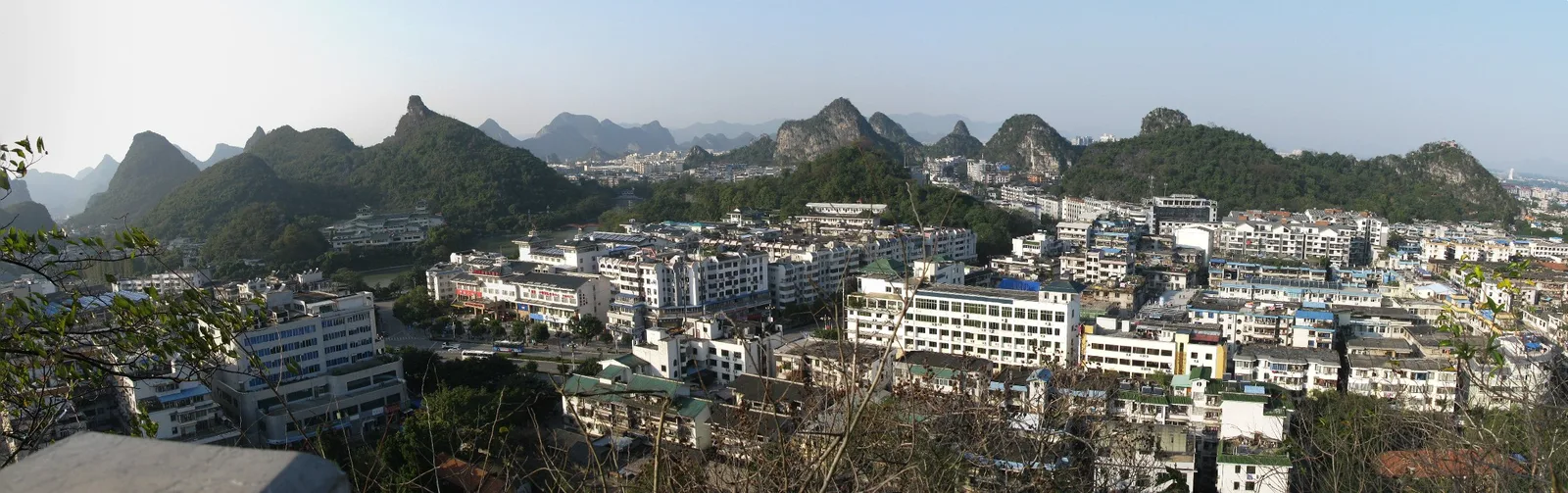
Guilin: a city break with a landscape beyond it
Guilin’s limestone hills are part of the city’s daily scenery, rising behind streets and buildings rather than waiting beyond an urban boundary. A first visit can combine a riverside walk, a historic compound and a bowl of rice noodles without a long excursion. The broader region asks for more planning: a Li River cruise, a Yangshuo stay and the Longji terraces involve different departure points, accommodation choices and travel days.
Allow three full days for an introduction, or more if both Yangshuo and Longji matter to you. Choose the city for convenient urban sightseeing and onward connections; consider a split stay when countryside time is the priority. Guilin lies in northeastern Guangxi, not in a separate province of its own. VisaWand’s China country guide covers the national questions; this guide helps turn a regional wish list into a workable visit or an informed longer stay.
Why the hills look so distinctive
The South China Karst World Heritage site includes the Guilin Karst component, added in the 2014 extension. UNESCO distinguishes tower and cone formations here and identifies separate Putao and Lijiang sections. The designation applies to defined landscapes, rather than every hill, hotel or street carrying the Guilin name. Seeing the city’s skyline and travelling along the river offer complementary perspectives on that geology.
Human history gives the scenery another dimension. The Ministry of Culture and Tourism describes Jingjiang Princes City around Solitary Beauty Peak as a Ming princely compound that later served as an examination institution under the Qing. In the twentieth century, Guilin also became an important wartime cultural centre. These are good reasons to spend time in the city itself before leaving for the river: the place is more than a convenient overnight stop on the way to Yangshuo.
Choose your base by the map
For a first city visit, compare addresses around the central lakes and the Dongxi Lane–Jingjiang area. A base within walking reach of the places you want to see can simplify evenings and reduce repeated vehicle journeys. Check the hotel entrance, room orientation and surrounding roads, rather than interpreting “central” or “river view” as precise descriptions.
Qixing, east of the river, deserves consideration for university-related stays. Guangxi Normal University places its Yucai campus there, while its Wangcheng and Yanshan campuses occupy different settings. Lingui is another practical possibility for a particular workplace or institution, but should not be treated as interchangeable with the central sightseeing area. For one early train, a station hotel may solve a specific problem; it need not become your base for the entire visit. Yangshuo is a separate destination choice, not a neighbourhood you can casually walk back from after dinner.
Accommodation: what to establish before paying
Compare city hotels, smaller guesthouses and serviced accommodation on the total stay cost and the access they provide. Ask whether breakfast, extra beds, laundry and any transfer are included. A cruise package may contain a hotel collection, but an ordinary room reservation does not. Confirm the cancellation terms before linking non-refundable accommodation to an outdoor excursion.
For a family, check bed sizes and whether everyone can use the room as booked. For a longer visit, ask about a desk, reliable hot water, cooking facilities and cleaning. Send your arrival time and ask what identification the property needs. At a rural property, establish where a vehicle can stop and how luggage reaches the room. A beautiful view is easier to enjoy when the final approach, stairs and return transport suit the people actually travelling. Keep the property’s Chinese name and address available offline.
Elephant Trunk Hill without a compulsory package
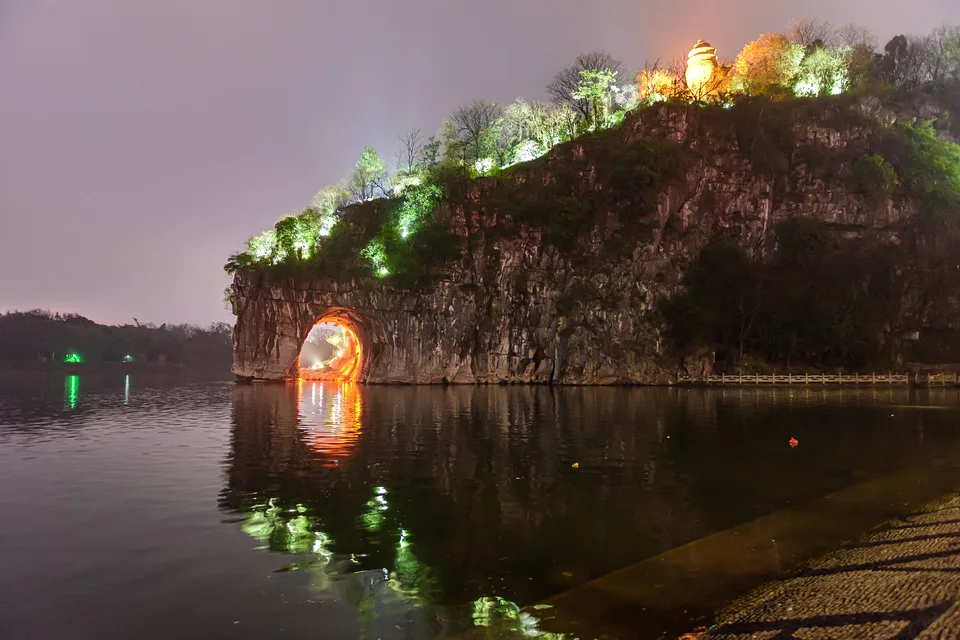
The arch at Elephant Trunk Hill makes a compact introduction to Guilin’s relationship with water and limestone. The scenic operator’s entry information (source unavailable) says admission is free, with real-name registration through the on-site QR system. It directs visitors to entrances 1 or 3 and identifies gate 2 as an exit. Free park admission should not be confused with a paid cruise or a combined attraction product.
Carry your original passport and ask staff for assistance if the registration interface does not accommodate your document smoothly. Choose a shoreline visit if climbing is unsuitable; ask about the route and steps before committing to a higher viewpoint. The operator’s main website currently lists opening from 07:00 to 21:00, but check the day’s access notice before planning a late arrival. Water conditions can affect the experience. Treat an old night photograph as an illustration, not a promise of identical lighting on your date.
The central lakes: walk first, cruise by choice
The Two Rivers and Four Lakes operator identifies Ronghu, Shanhu, Guihu and Mulonghu within the city’s linked waterscape. A walk around a selected lakeside section lets you appreciate reflections and urban scenery without buying a boat trip. Leave time to stop instead of turning every bridge and waterfront path into a route to complete.
If you want a cruise, establish the actual circuit, boarding pier and finishing point. High or low water can change the product: the operator’s booking terms describe substitutions between river-and-lake and lake-only routes. Compare what is running on your day. The Sun and Moon Pagodas can be appreciated as part of the lakeside scene, but confirm interior access separately. A May 2026 renovation notice anticipated reopening in June; that old notice alone establishes neither current closure nor guaranteed admission. Do not make a tower ascent the fixed point of an otherwise flexible evening.
Jingjiang Princes City and an indoor history option
Jingjiang Princes City gives a city morning a historical focus. Decide whether the compound, its interpretation or climbing Solitary Beauty Peak is your priority, and ask which sections your ticket includes. A view from above requires a different level of effort from exploring at ground level. Confirm the current operator price and opening arrangements before purchase; older promotional prices are not a dependable budget.
For another perspective, the Eighth Route Army Guilin Office Memorial examines the city’s wartime role through a historic site and exhibitions. Its visitor rules specify free admission, Tuesday–Sunday opening from 09:00 to 17:00, and last entry at 16:40; Monday closure has public-holiday exceptions. The address is 14 Zhongshan North Road. This is a focused history visit rather than a general art museum. Groups needing a guide should arrange it beforehand, and visitors should follow the institution’s rules on photography and recording.
Li River cruises: book the journey you mean
The Li River scenic authority’s full-route description lists Mopanshan or Zhujiang passenger terminal to Yangshuo. Establish the precise terminal on your confirmation and arrange the approach from your hotel. “Guilin departure” does not mean boarding beside a central lakeside hotel. Make an explicit plan for what happens at the Yangshuo end: staying there, transferring elsewhere or returning to Guilin.
The operator’s published fare board lists RMB 215 per person for the standard three-star cruise and RMB 360 for the four-star cruise on that route, including scenic admission and the vessel fare. Treat these as published reference prices, then check the actual departure and inclusions. Transfers, meals or seat upgrades need their own confirmation. For two adults, those listed tickets total RMB 430 or RMB 720 before additional arrangements. Keep the river day clear of a tightly timed flight or train, and ask about cancellation or route changes when booking.
A shorter raft trip is a different product
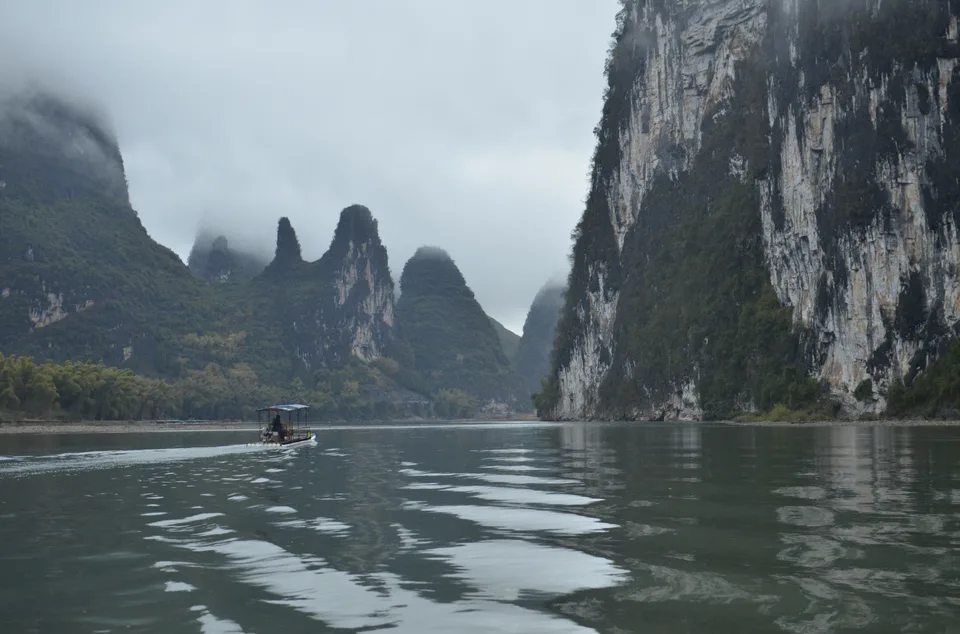
The authority lists several Li River raft routes, including services between Yangdi and Chaobanshan at Xingping and shorter round trips. These are not interchangeable with the full cruise. Decide whether you want a one-way journey, a return outing or simply a shorter time on the water, and confirm the exact embarkation and landing points.
The current operator description of Li River sightseeing rafts explains that newer craft use bamboo-look materials and electric propulsion. Do not assume that every product called a bamboo raft is a small hand-poled craft, or that it follows the Yulong River. Ask the seller about eligibility, age or height restrictions, seating, lifejackets and boarding assistance for your actual party. Regulations can differ by vessel and route. A cheaper headline fare is not useful if it leaves you at an unexpected pier or excludes a traveller in your group.
Cave visits and a sensible wet-weather plan
Reed Flute Cave offers another way to encounter the region’s limestone. CCTV’s background account places it northwest of the city and describes its stalactites, stalagmites and columns. Its older operational details should not be used as a current timetable or ticket quote. Confirm present admission, the guided-visit arrangement and the route from the vehicle stop before travelling.
A cave is not automatically the right replacement for every rainy outing. Ask about stairs, slippery surfaces and any temporary restrictions, particularly for someone who uses a mobility aid. Keep the memorial museum as another possibility on its opening days. In persistent rain, a shorter visit and an unhurried meal may be a better day than a sequence of distant attractions. If a river operator suspends departures or a site closes a path, choose a different activity rather than trying to negotiate access around a barrier.
Getting there: airport bus or railway station
Guilin Liangjiang International Airport’s current city-bus timetable, in Chinese, lists the central Minhang Dasha route at RMB 20 per person. Tickets are sold beside Gate 6 in Terminal 2’s ground-floor arrivals hall; boarding is outside that gate. The airport-to-city route includes central sightseeing-area stops, but confirm the stop closest to your address and the departure available after you clear arrivals.
The northern railway-station bus is different: the operator lists RMB 25 towards the airport and RMB 30 from the airport towards Guilin West or North. Do not apply the central-city fare to every airport route. Published departures remain subject to the day’s ticketing system.
For trains, distinguish Guilin, Guilin North and Guilin West stations before comparing fares. Use China Railway’s 12306 service and carry the valid passport used for booking. Allow time for security and document checks. Price the complete journey to your accommodation, including the station transfer.
Local travel: keep city and countryside separate
Plan central sightseeing as a series of short outings, then arrange separate transport for cruise terminals and the wider region. A hotel pin, attraction name and ticket-office address may refer to different places. Save the exact Chinese destination and confirm it with the driver or booking provider before departure.
For taxis or arranged cars, establish how the fare is calculated and whether waiting, parking and the return leg are included. Ask your accommodation about the current bus option for a specific journey rather than relying on an old numbered route. On a longer stay, test the trip at commuting time and include the walk from the stop. Do not build a household budget around the assumption that every journey can be walked. A driver quotation for an excursion and a daily public-transport routine answer different questions; assess each on its own terms.
Rice noodles, shopping and ordinary spending
Guilin mifen, the city’s rice noodles, belongs near the beginning of a food exploration. A 2026 Guangxi legislature account identifies the craft’s heritage significance and the importance of noodles, seasoned brine and accompanying toppings. Order a portion you can assess before adding extras, and clarify the meat, stock and spice level. Rice noodles alone do not establish that a finished dish meets a vegetarian or allergy requirement.
Around central shopping streets, compare snacks and souvenirs deliberately. Ask the price by portion or weight and inspect packaged-food labels before buying gifts. For textiles, paintings or tea, request the product’s stated materials or origin rather than treating a scenic sales setting as authentication. A longer-stay budget should include ordinary supermarket purchases and routine meals near home. No current representative basket of local food prices was verified for this guide, so meal and grocery spending should be based on your own dated quotes rather than an invented daily allowance.
Build a budget from the bookings
Separate the fixed items—room nights, rail or air tickets and selected excursions—from meals and flexible local travel. Elephant Trunk Hill and the memorial offer free-admission options; paid transport still matters. A two-person outing can involve two individual tickets and one shared car, so calculate quantities before comparing packages. Ask whether a tour includes collection, both transfer directions, meals and every intended admission.
For payment, the Chinese government’s overseas-visitor guidance covers cash, cards and mobile services. Set up a supported method before it becomes essential, check the app’s current terms and your card issuer’s charges, and retain a backup. Ask about payment acceptance before ordering or taking a ride. Keep accommodation deposits separate from spendable money and retain receipts. For a move, add utilities, connectivity, insurance, household equipment and any school or university charges; a holiday budget cannot stand in for a monthly living-cost estimate.
Weather: rain changes the itinerary
China Weather’s Guilin profile describes a humid monsoon climate, with the rainiest period in April–July, the hottest months in July–August and the coldest in January–February. The page contains older climatic figures without a clear averaging period, so its broad seasonal pattern is more useful than treating those numbers as current limits. Heat, rain and river conditions deserve attention even during a traditionally popular travel month.
Choose spring for a green landscape if you accept rain-related changes; consider autumn for walking, while checking the actual forecast rather than expecting guaranteed clear skies. Winter can still suit urban sightseeing, with layers and confirmed room heating. Check warnings before any boat or hillside outing. For a photographic trip, build an extra day into the location you care about most. Booking a single dawn view between late arrival and early departure leaves little room for mist, rain or transport delays.
Three days, with room to change course
Day one: settle into a central base, visit Elephant Trunk Hill and walk a manageable section of the central lakes. Choose dinner nearby. A night cruise is optional; confirm its current circuit if it is important to you.
Day two: devote the day to the Li River. Take the full cruise if the longer journey and Yangshuo arrival fit your plans, or choose a clearly specified shorter outing. Do not add a compulsory return sprint simply to tick another city attraction. An overnight in Yangshuo may be the more comfortable choice.
Day three: use Jingjiang Princes City and the memorial, if open, for a city-focused day, or consider Reed Flute Cave after checking access. Depart from the station actually on your ticket. If Longji is a priority, add a separate day or overnight instead of putting the terraces after a river cruise. This itinerary is a planning suggestion, with weather and confirmed reservations taking precedence.
Longji: another landscape, another travel day
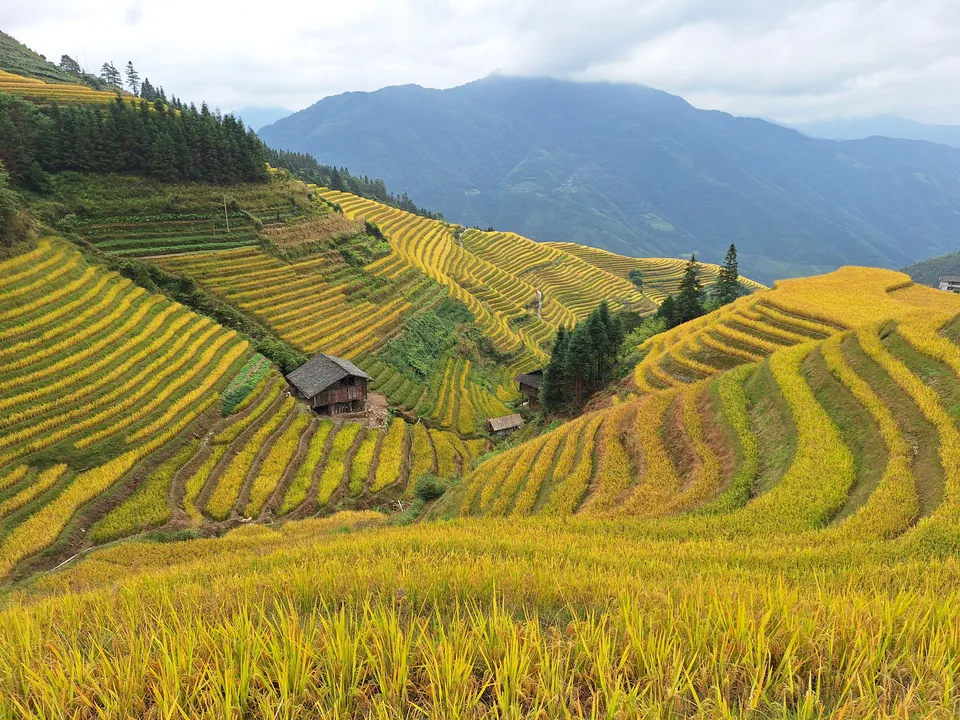
The Longji terraces lie in the Longsheng area and are working agricultural landscapes. FAO’s agricultural-heritage account includes Longsheng Longji within the southern Chinese rice-terrace systems recognised in 2018. Their appearance depends on cultivation and water management, not just the season named on a tour advertisement. They should not be confused with the Hani terraces in Yunnan.
Choose a village base and the walking you want before arranging transport. Ask the property about the final vehicle stop, steps, luggage and the route to viewpoints. For crop colour, ask for current local conditions: an October photograph does not guarantee an identical harvest stage every year. Keep to permitted paths and respect homes and cultivated fields. Establish admission, any local shuttle or cableway charges, and return timing individually. An overnight can give the trip more breathing room, provided the accommodation and access suit your group.
Moving to Guilin: confirm the campus and routine
University geography can determine whether a longer stay works. Guangxi Normal University identifies Wangcheng, Yucai and Yanshan campuses; a placement at one does not imply daily access on foot from another. Obtain your teaching or work address before choosing housing. Test the actual commute, shopping trip and evening return, including how they work in heavy rain.
Students should ask their institution before looking for a private lease. GXNU’s arrival guidance for its March 2026 intake required university accommodation. Separately, Guilin University of Technology’s published off-campus rules require institutional approval. These examples show why a rental listing alone cannot establish that off-campus living is permitted for your programme. Confirm the rules for your intake rather than assuming all universities or students share one policy. Employees should likewise agree the scope and duration of employer-provided housing, insurance and permit support in writing before budgeting around it.
Housing, registration and essential services
Inspect a proposed apartment for damp, ventilation, cooling, heating and reliable hot water. Ask who pays utilities, internet, management charges and repairs. Check inventory, deposit deductions, early termination and the landlord’s authority to rent. Keep enough flexibility for the first weeks to investigate the neighbourhood rather than signing an unsuitable long lease from photographs.
The NIA’s September 2026 accommodation notice distinguishes hotels, which register guests, from other accommodation, where the foreign visitor or host must register within 24 hours. Online registration is now available nationwide through designated NIA channels; the offline public-security route remains. Arrange this with your host before moving in.
For healthcare, Guilin People’s Hospital’s national medical-platform profile is a starting point, not evidence of automatic English service or insurance billing. Confirm appointments, campus, language help and coverage directly. Families also need written school-admission and fee information. Establish phone service, groceries and a usable payment method early; these everyday arrangements determine comfort beyond the sightseeing district.
Entry permission, study and work
Check your passport’s current entry route with the responsible Chinese embassy or consulate. The 240-hour visa-free transit policy requires an eligible passport and route, designated ports, permitted stay areas and confirmed onward travel to a third country or region. It does not make every return holiday visa-free. Tourism permission also does not authorise taking employment.
For study or employment, use the NIA residence-permit service guide with your institution or employer. Supporting documents depend on purpose; where a visa requires a residence permit after entry, the guide specifies applying within 30 days. Student off-campus work or internships need the required approval and endorsement. Permanent residence is a separate question. VisaWand’s China consultant listings can help you compare advice, with scope and fees agreed before commissioning support.
For another Chinese city experience, compare the Hangzhou city guide or the Guangzhou city guide. Use the China location directory to find other destination pages, recognising that editorial coverage varies. Add stops only when you have enough nights to enjoy them.
Official planning resources
Reviewed 16 October 2026. Use the official resources linked throughout this guide for admission, transport, housing and immigration decisions. Prices, services and rules can change; confirm the details relevant to your dates. Photography illustrates the locations and is not a live view.
View all official resources
- UNESCO: South China Karst
- Ministry of Culture and Tourism: Jingjiang Princes City (Chinese)
- Two Rivers and Four Lakes operator: Elephant Hill entry and cruise terms (Chinese) (source unavailable)
- Two Rivers and Four Lakes–Elephant Hill: official website
- Eighth Route Army Guilin Office Memorial: institutional history (Chinese)
- Eighth Route Army Guilin Office Memorial: visitor rules (Chinese)
- Li River: full scenic cruise routes
- Li River Scenic Area: published cruise and raft prices
- Li River: raft routes
- Li River Scenic Area: sightseeing raft vessels
- CCTV: Reed Flute Cave background (Chinese)
- Guangxi Airports: Guilin city bus timetable (Chinese)
- China Railway: passport ticketing and boarding
- Guangxi legislature: Guilin rice-noodle heritage (Chinese)
- State Council: payment services for overseas visitors
- China Weather: Guilin climate profile (Chinese)
- FAO: southern Chinese rice terrace heritage systems
- Guangxi Normal University: campuses
- Guangxi Normal University: 2026 international arrival guidance
- Guilin University of Technology: off-campus accommodation rules
- NIA: nationwide accommodation registration
- National medical science data platform: Guilin People’s Hospital
- NIA: 240-hour visa-free transit
- NIA: residence permits for foreigners
Plan the next part of your journey
Explore the China guide, browse other cities or compare consultants for your travel and relocation questions.