Visa
A city best understood in three dimensions
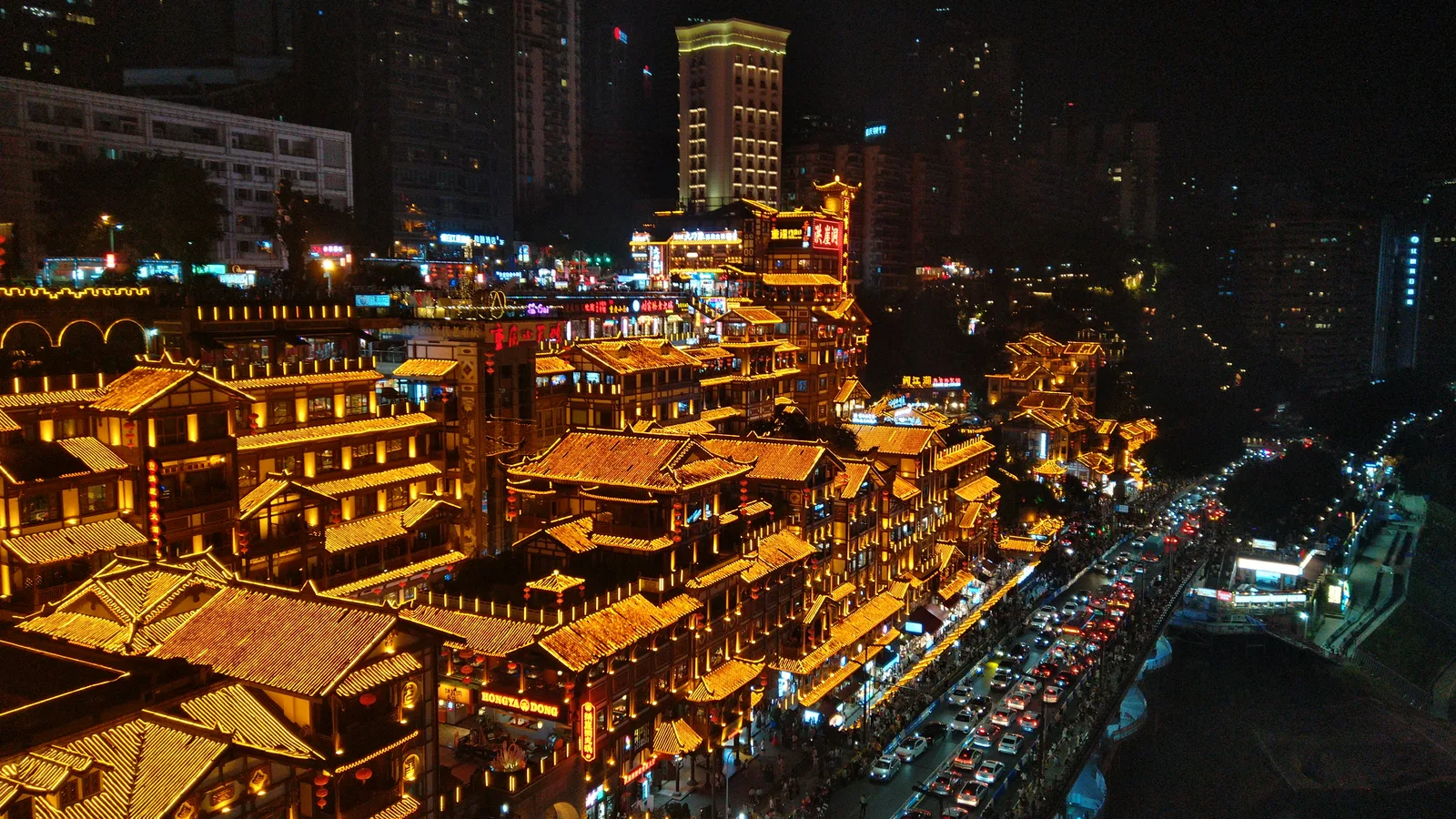
Chongqing’s first surprise is the distance between a place on a map and the entrance you actually need. Roads climb hillsides, railways cross valleys and buildings open onto different street levels. At the meeting of the Yangtze and Jialing rivers, this geography produces an unusually dramatic cityscape: towers behind waterfront steps, bridges above working waterways and illuminated Hongyadong buildings descending towards the river.
Come for the views, but allow time for the city beyond them. Hotpot, museums, old trading streets and neighbourhood rail journeys give a first visit substance. Three full days make a sensible introduction; add another for a regional excursion. For someone considering employment or study, the same terrain makes housing and commuting decisions especially important. This guide focuses on central Chongqing, rather than treating the entire municipality as one compact urban destination. Start with VisaWand’s China country guide for the wider travel and immigration context.
Put the rivers and history together
The waterways explain much of Chongqing’s character. River transport, migration and commerce created a city whose older gathering places face towards docks and crossings. The Huguang Guild Hall’s migration history offers a useful introduction to the merchant associations and communities that established themselves here. Its courtyards and stages make a worthwhile alternative to an itinerary consisting entirely of contemporary viewpoints.
Twentieth-century history is equally important. The official overseas information platform’s historical account describes Chongqing’s role as China’s wartime capital from 1937 and its establishment as a centrally administered municipality in 1997. Museums help connect those events with the buildings and neighbourhoods encountered on foot.
A Chongqing address can require a substantial onward journey. Plot regional sights, campuses and workplaces individually; municipality-wide population figures say little about the neighbourhood where you will spend your days.
Choose a base by district and street level
Jiefangbei is a practical starting point for a short first visit, with access to the eastern Yuzhong peninsula’s commercial streets and riverfront attractions. It suits travellers who want to return to their room between outings. Check the actual walk from the hotel entrance to a useful station; a short horizontal distance can conceal steps and changes in level.
Guanyinqiao offers another commercial base across the Jialing River. The city’s Jiangbei district introduction identifies its shopping and dining cluster around Paradise Walk and the pedestrian area. Compare it with Jiefangbei using your intended journeys, rather than assuming that either district is universally cheaper or quieter.
Consider Nanbin Road for the peninsula’s skyline, including the return journey after dinner in your comparison. Shapingba can make sense for particular institutions and a Ciqikou outing, while accommodation near the airport is principally a transport decision. Ask for the building entrance and taxi drop-off point in Chinese before booking.
Book a room that makes the slopes manageable
A conventional hotel near the right station can save considerable effort, but “near the metro” deserves scrutiny here. Ask which exit serves the property, whether the approach involves stairs, and whether a taxi can stop at reception. Travellers with mobility limitations should request a description of the complete route, including the pavement and entrance, rather than relying on a lift symbol in a listing.
Compare windows, laundry and noise alongside the view. Families should confirm beds and occupancy rules; late arrivals need reliable reception.
For a longer stay, a serviced apartment offers useful space and household facilities, provided the kitchen equipment and cleaning terms are clear. Before paying for a private rental, establish how accommodation registration will be completed. Compare refundable totals for your dates and budget separately for transfers.
See Hongyadong with realistic expectations
Hongyadong is a spectacle of stacked roofs, balconies and light, particularly when viewed from the riverside or surrounding public viewpoints. The official visitor introduction describes an eleven-level complex containing stilt-house forms and imitation antique architecture. Expect a busy commercial attraction with shops and food, rather than an untouched historic settlement.
General access is free, but individual experiences and purchases are separate. Follow current crowd-management directions, and agree a meeting point before separating from companions. Street level matters: the upper approach and lower riverside are different arrival experiences. Save the entrance you intend to use, especially when arranging a taxi or meeting someone.
Avoid organising the entire evening around a precise lighting time copied from an old guide. Check local notices and conditions on the day, then leave enough time to enjoy the waterfront and eat. Public views need no additional package. Keep pavements and crossings clear when taking photographs.
Ride the cableway as a crossing with a view
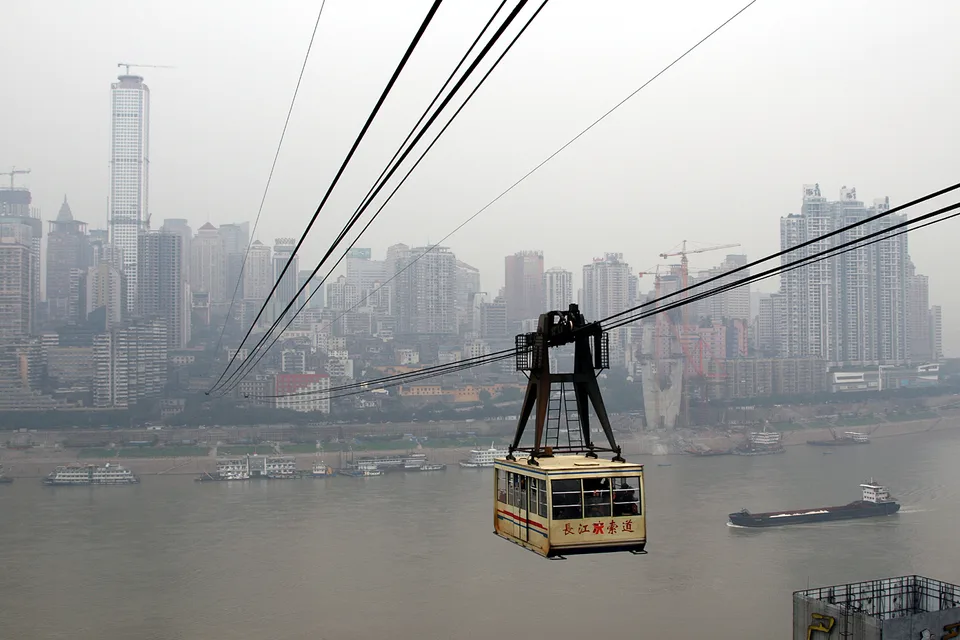
The Yangtze River Cableway operator dates its opening to October 1987 and describes the crossing from Xinhua Road in Yuzhong to the Longmenhao–Shangxinjie area on the south bank. It remains an effective way to understand the relationship between the peninsula, river and opposite hillside. Treat it as a separate experience rather than an automatic shortcut in a tightly timed walking route.
The operator’s booking instructions direct visitors to its official WeChat account for same-day tickets, with the boarding station and time period selected during purchase. Check the current fare and return conditions before paying. A ticket does not guarantee immediate departure or a window position.
Opening information differs between official pages. The operator’s current seasonal page lists 08:00–22:00 for March–November and 08:00–21:00 for December–February, with holiday extensions. Confirm the day’s arrangements and maintenance notices directly; the operator publishes 02368816888 for enquiries. Arrange the rest of a south-bank outing so you can return by another route if needed.
Give Liziba a short, thoughtful stop
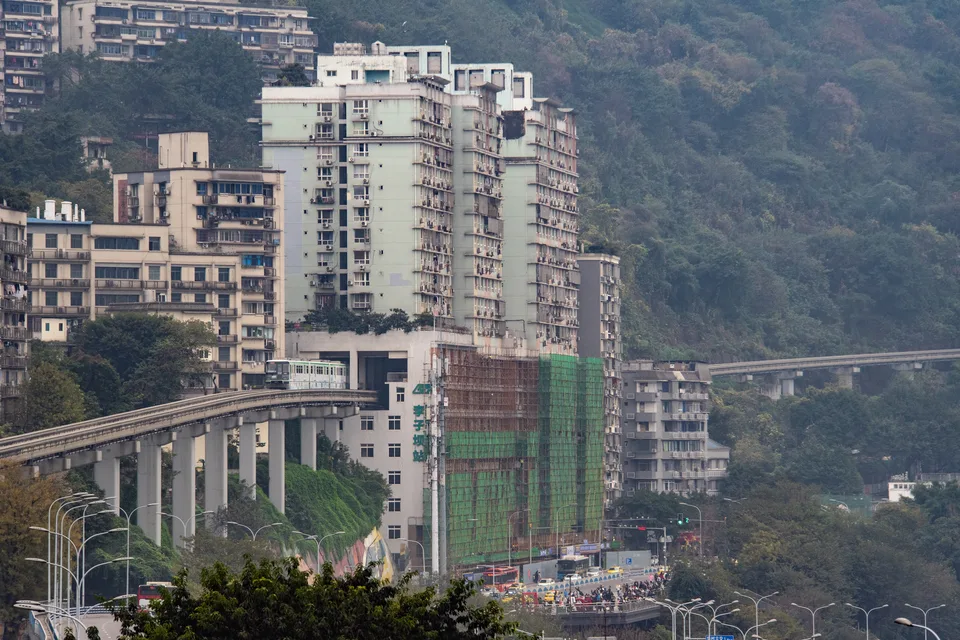
At Liziba station on Line 2, the railway passes through a residential building, creating one of Chongqing’s most recognisable views. Seeing it from the public viewing area and riding the line offer different perspectives. A brief stop can be enough.
The surrounding neighbourhood also places the railway in context. Hillside homes, elevated approaches and ordinary street activity show how transport fits into a difficult landscape. The official introduction points to nearby wartime relics and older residential streets, useful options if you want more than the familiar train image.
Remain in public areas and follow staff directions. A station embedded in a building is still transport infrastructure, and homes nearby are private. Keep luggage out of the passenger flow. Decide on a manageable return route before walking downhill simply because the river appears close.
Use the Three Gorges Museum to understand the region
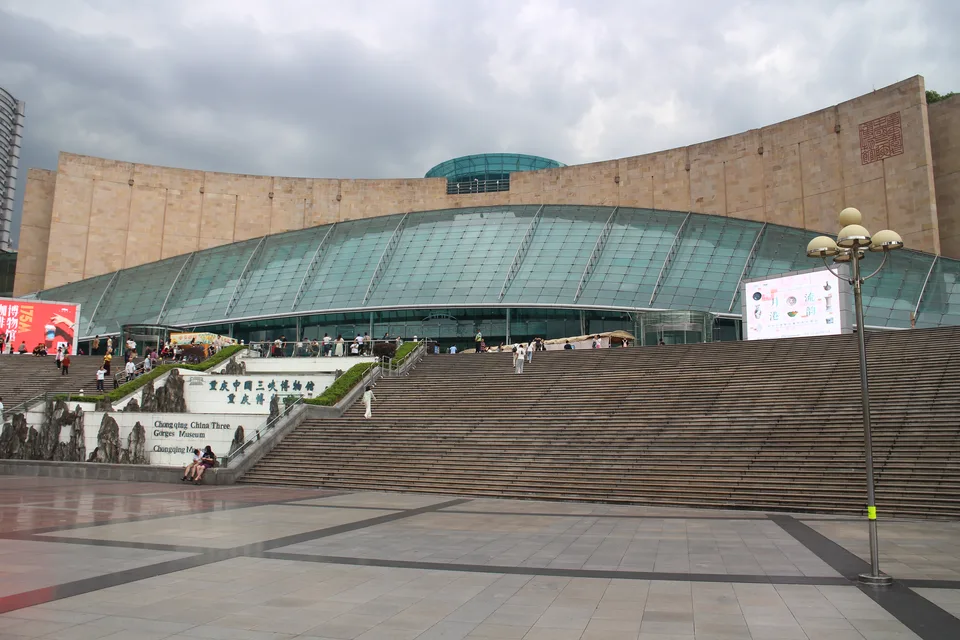
The Three Gorges Museum provides an indoor counterpoint to the riverfront and rail viewpoints. Its main building faces the People’s Square area, making it a useful anchor for a slower cultural outing. Choose a few galleries and leave time to read their explanations.
The museum’s visitor instructions list free admission to its basic displays and ordinary hours of 09:00–17:00, with entry stopping at 16:00. Mondays normally close except national public holidays. Check special arrangements before visiting, particularly around holiday periods.
The Culture and Tourism Commission’s reservation notice states that advance reservations were removed from October 2025 and visitors enter with valid identification, subject to crowd-management arrangements. Bring your original passport and ask staff how to complete entry if necessary. The notice does not make every branch free: the Song Qingling Memorial and Baiheliang Underwater Museum remain ticketed. Do not buy a supposed compulsory reservation for the free main collection from an unsolicited seller.
Allow a separate outing for Ciqikou
Ciqikou’s visitor introduction places the former trading and porcelain centre in Shapingba, beside the Jialing River. Its lanes, tea culture and commercial history provide a different experience from the eastern peninsula’s modern skyline. The principal streets are busy visitor destinations, so expect shops and snacks alongside the older urban fabric.
Give the district a half-day if you enjoy browsing, sitting over tea and exploring beyond the first crowded stretch. General access is free; ask separately about temple admission, performances or any paid interior you choose to enter.
Choose an arrival point and a return route before wandering towards the waterfront. Wet paving and uneven surfaces can make a seemingly easy outing more demanding. Keep it separate from a long-distance excursion. A relaxed meal and one additional attraction make a workable programme.
Spend an evening on the opposite bank
The south bank changes the perspective: the peninsula becomes the view rather than the place you are standing. Longmenhao’s official visitor introduction locates its old-style streets beneath Dongshuimen Bridge, by Nanbin Road. The rebuilt streetscape, shops and places to eat give structure to an outing that might otherwise become an indefinite search for a skyline photograph.
Choose a manageable stretch and allow time to sit down. Check how the upper streets connect to the waterfront, especially if you plan to finish at a different point. Confirm minimum spending before assuming that a café terrace is freely accessible.
Have a clear return plan and a saved pick-up point. The nearest location on a map may be on the wrong road level for a waiting car. If weather obscures the skyline, enjoy the neighbourhood and meal rather than chasing alternative viewpoints.
Arrive with your terminal and railway station confirmed
Chongqing Jiangbei International Airport is the main air gateway. The official visitor transport overview identifies rail, airport buses and taxis as the principal options. Line 10 serves the airport’s Terminal 3 area; check the current terminal-specific signs and onward route rather than assuming every terminal has identical access. Leave time for walking within the airport and any necessary transfers.
The published K01 airport-bus fare to Jiefangbei is RMB 15. Confirm the current boarding point, departure arrangements and return service before relying on it, particularly for a late arrival. Older online pages contain discontinued routes and outdated rail fares. For a taxi, use the designated queue and show the driver your accommodation’s Chinese entrance address.
Chongqing North, Chongqing West, Chongqing East and Shapingba are distinct railway stations. Check your actual booking through China Railway’s official service, then plan the remaining journey. A hotel advertised as convenient for a railway station may be unsuitable for the train you have chosen. Avoid a tight air-to-rail connection without allowing for terminal movement, security and delays.
Make the rail network work for your route
Rail is useful for crossing districts without treating every outing as a road journey. Select stations according to entrances and useful transfers, then check the final walk. Check whether an interchange saves a long climb.
The Development and Reform Commission’s fare mechanism, effective from 30 July 2025, starts at RMB 2 for journeys up to four kilometres. The next bands are RMB 3 up to eight kilometres and RMB 4 up to twelve kilometres. Distance determines the charge; some suburban railways operate outside this particular fare mechanism. Use the current station fare display for the journey you intend to make.
Prepare a payment method before entering a busy station and keep a cash fallback for ticket purchases. Follow the gate instructions for your chosen ticket or payment code. Check the last practical connection through the whole route for a late evening. Taxis can be useful for the final stretch when luggage or steep access makes walking unattractive.
Order hotpot and noodles with the ingredients understood
Hotpot is central to Chongqing’s food identity. The city’s account of traditional preparation describes a beef-tallow-based seasoning and the familiar nine-grid pot. Those grids share broth, so they do not create separate allergen-free cooking spaces. Ask about the base, spice level, dipping sauces and portion sizes before ordering a tableful of ingredients.
For a less elaborate meal, try the city’s wheat noodles. The local noodle-making introduction describes chilli oil, Sichuan pepper and seasonings, with preparations that can include lard and pork or chicken stock. A bowl without a visible meat topping is therefore not automatically vegetarian. Requirements involving wheat, sesame, meat stock or other ingredients need a direct conversation.
Choose somewhere that can explain the preparation if allergies or strict dietary restrictions matter. A divided pot can offer different flavours, but it does not establish safe separation without checking the kitchen’s procedures. Order modestly and add dishes later.
Budget for choices rather than a sightseeing checklist
Several memorable experiences depend more on time than admission spending: Hongyadong’s public views, Ciqikou’s streets and the museum’s basic displays can form an inexpensive programme. Costs rise when you add river cruises, observation decks, performances and multiple transfers. Select the experiences you genuinely want before comparing packages.
Keep three totals: accommodation, ordinary daily spending and optional paid outings. Include a reserve for taxis when stairs, weather or luggage change the plan. Compare restaurant menus by the complete bill, including the hotpot base, individual dishes and any extras, rather than one prominently advertised starting price.
The State Council’s overseas-visitor payment guidance describes mobile payments, bank cards and cash as available methods. Actual acceptance and issuer charges vary. Test your chosen method early and retain a backup. Browse Jiefangbei and Guanyinqiao for shopping, or Ciqikou for small purchases. Check return terms and baggage space before buying bulky items.
Plan around heat, humidity and visibility
Chongqing’s official city profile describes a subtropical monsoon climate, humid conditions and particularly hot summers. Those conditions matter when an itinerary contains stairs and exposed riverside walks. In summer, place demanding outdoor sections earlier, keep a substantial indoor interval and avoid turning the evening into an obligation after an exhausting afternoon.
Spring and autumn are sensible starting points for a walking-focused visit, subject to actual forecasts and holiday crowds. Winter can bring damp, overcast days; compare room heating and drying facilities when selecting accommodation. The centre’s weather should not be treated as a forecast for a mountain excursion elsewhere in the municipality.
Keep skyline outings flexible and a museum as an alternative when rain intervenes. Wear shoes suitable for wet paving. Check notices before entering waterside paths during adverse conditions, and follow closures rather than improvising access.
A realistic three-day first visit
Day one: settle in around your chosen base, establish the route back to the hotel and explore Jiefangbei. Leave the evening for Hongyadong and a meal. This flexible programme accommodates an arrival delay without losing a carefully reserved attraction.
Day two: visit the Three Gorges Museum during an open session, then make a short Liziba outing if energy and weather allow. A ride on Line 2 adds another view of the landscape. Return for a break before dinner rather than extending the afternoon simply to fill a checklist.
Day three: choose Ciqikou for lanes and tea, or a south-bank day built around the cableway and Longmenhao. Trying to fit both into a short final day can leave little time to enjoy either. With a fourth day, separate those choices or organise a regional excursion. Rearrange the sequence around museum closures and your departure station. Adapt these groupings to operating conditions and your walking ability.
Consider regional sights as separate journeys
The UNESCO-listed Dazu Rock Carvings offer a strong reason to extend a cultural visit. The carvings combine Buddhist, Taoist and Confucian subjects, with important work dating from the ninth to thirteenth centuries. They belong to a regional excursion, rather than an extra stop after a central-city museum.
Before booking transport, identify the precise carving sites included, time available on the ground, ticket conditions and the return arrangements. A product labelled simply Dazu may not include every place you expect. The same principle applies to a Three Gorges cruise: check the boarding port, final destination, duration and included shore visits. A short urban river cruise and a multi-day regional sailing serve different purposes.
Compare the published Chengdu city guide. Choose according to the experiences you value and available travel days. Use VisaWand’s China location directory to explore further places, checking whether each page contains a completed guide or location and consultant information.
Test daily life before choosing a home
A move requires a different map from a holiday. Begin with the exact workplace or campus, then test a weekday journey at the hours you will use it. Include the building lift, street approach, station entrance, transfers and final walk. Crossing a river or reaching a hillside campus can affect daily life more than the apartment’s advertised straight-line distance.
Compare areas for household size, groceries, healthcare, school arrangements and evening transport. Visit after dark and test the return route with shopping bags.
Use a temporary stay to assess housing and confirm your employer’s or institution’s support. Choose the individual building for an ordinary week, including evening access and essential shops.
Inspect the property and agree household responsibilities
Before transferring a substantial deposit, verify the landlord’s authority to rent and inspect the property. Test cooling, heating, hot water, drainage, windows, lifts and mobile reception. Look for damp and establish how laundry will dry. Record the condition of appliances and furniture, and obtain receipts for payments.
The housing authority’s published model rental agreement is a useful checklist for rent, deposits, inventories, repairs and responsibility for utilities and management charges. It dates from 2013; use it to identify questions, and obtain current advice on contractual or legal obligations.
At handover, record meter readings, check outstanding balances and learn the billing, access and repair procedures. Budget for internet, insurance, household purchases and transport alongside rent.
Arrange healthcare and register where you stay
Check medical arrangements before you need them. Compare nearby facilities with your insurer’s network, required specialties, language support and payment procedures. Raffles Medical Group’s Chongqing hospital page provides one provider’s official contacts and service information; availability and insurance terms should be confirmed directly. A named international facility is not a substitute for checking the journey from your home or the care you require.
Accommodation registration is a separate task from signing a lease. The NIA’s September 2026 notice states that hotels register guests, while foreigners staying elsewhere, or their hosts, must register within twenty-four hours. A nationwide online route is now available alongside offline registration. Agree responsibility with a private host and retain the confirmation.
For families, establish school eligibility and the actual campus before choosing housing around an assumed placement. Keep the address, building contact and essential documents available offline.
Distinguish a visit from permission to work or settle
Entry conditions depend on nationality, purpose and itinerary. The NIA’s 240-hour visa-free transit guidance requires eligible passports, qualifying entry and exit arrangements and onward travel to a third country or region within the permitted framework. An ordinary return holiday is not automatically transit. Check the current official rules before committing to non-refundable travel.
Work and study require their own permissions. The NIA residence-permit guide explains relevant employment and enrolment documents and the thirty-day application requirement where an entry visa requires a residence permit. Student off-campus work and internships need the appropriate approval and endorsement. A rental agreement does not confer permanent residence, employment permission or an unrestricted right to remain.
Use the China destination page and consultant listings when comparing professional assistance. Ask about the adviser’s credentials, written scope and fees, and take your actual travel purpose and timetable to the consultation. The relevant authority decides an application; professional help should clarify the process and your options without promising an outcome.
Official planning resources
Reviewed 16 October 2026. Use the official resources linked throughout this guide for admission, transport, housing and immigration decisions. Prices, services and rules can change; confirm the details relevant to your dates. Photography illustrates the locations and is not a live view.
View all official resources
- iChongqing: Huguang Guild Hall and migration
- iChongqing: Chongqing history
- iChongqing: Jiangbei commercial districts
- iChongqing: Hongyadong
- Yangtze River Cableway: official operator
- Yangtze River Cableway: official ticket instructions
- Yangtze River Cableway operator: opening arrangements
- iChongqing: Liziba station and surrounding history
- Three Gorges Museum: visitor information
- Chongqing Culture and Tourism Commission: museum reservation notice
- iChongqing: Ciqikou Ancient Town
- iChongqing: Longmenhao Old Street
- iChongqing: airport transport overview
- China Railway: English booking service
- Chongqing Development and Reform Commission: current metro fare mechanism
- iChongqing: Chongqing hotpot traditions
- iChongqing: Chongqing noodle preparation
- State Council: payment services for overseas visitors
- iChongqing: geography and climate
- UNESCO: Dazu Rock Carvings
- Chongqing housing authority: model rental agreement
- Raffles Medical Group: Chongqing hospital
- NIA: nationwide accommodation registration
- NIA: 240-hour visa-free transit
- NIA: residence permits for foreigners
Plan the next part of your journey
Explore the China guide, browse other cities or compare consultants for your travel and relocation questions.