Visa
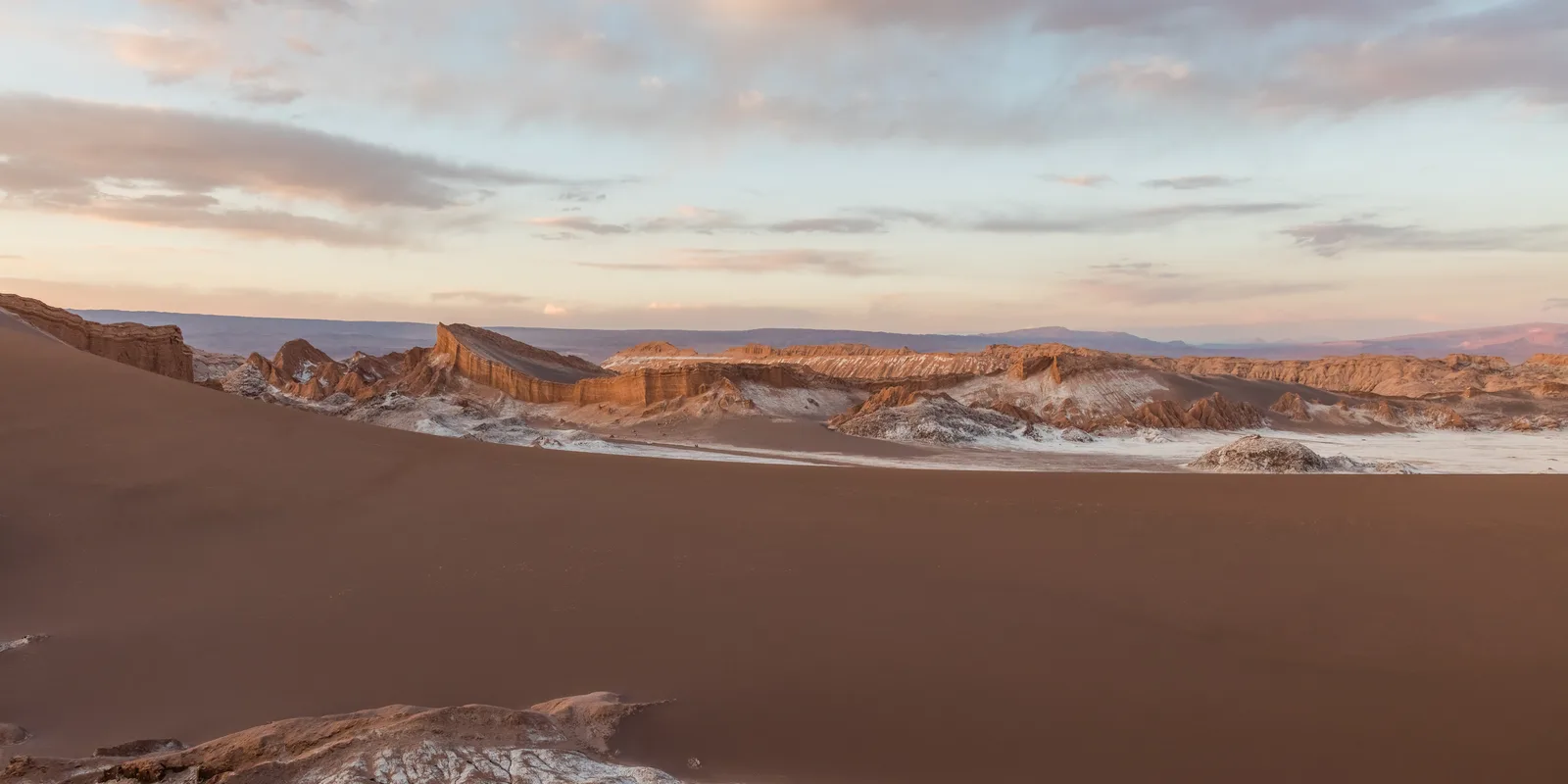
A small oasis with an unusually large horizon
San Pedro de Atacama makes more sense when you picture a small desert town with a vast hinterland. Its centre offers adobe walls, dusty streets, cafés and excursion desks; the landscapes that bring most visitors here lie beyond it. A single holiday can take in salt-encrusted ridges, flamingo habitat, steaming geothermal ground and an evening sky that rewards simply looking up.
The practical question is how much travelling you want each day. San Pedro suits people happy to exchange metropolitan conveniences for extraordinary surroundings, with time to rest between outings. Four or five nights give a more forgiving introduction than a hurried sequence of dawn departures. For someone considering a longer stay, distance from major services, housing quality and the realities of desert living matter as much as the scenery.
Understand the town and its living heritage
This is San Pedro de Atacama in Chile’s Antofagasta Region, an oasis north of the Salar de Atacama. The town, the much larger commune and the wider desert tourism circuit are different geographical areas. An excursion advertised as “San Pedro” may involve hours on the road and a substantial gain in altitude.
The oasis has a long Indigenous history, with Atacameño or Lickanantay communities continuing to shape the surrounding territory. Approach villages and community-managed attractions as inhabited places with their own rules. Ask before photographing people, ceremonies or private agricultural spaces. A local guide can explain relationships between water, settlement and landscape that a photographic stop alone cannot convey. See the broader context in VisaWand’s Chile country guide, and distinguish national information from arrangements specific to this town.
Begin around the plaza and church
The plaza is a useful first point of orientation. Walk the adjoining streets and locate your accommodation, meeting point and evening meal before committing to a remote outing. Central Caracoles and connecting streets are convenient for comparing excursion programmes, but read the actual route rather than choosing from a display photograph.
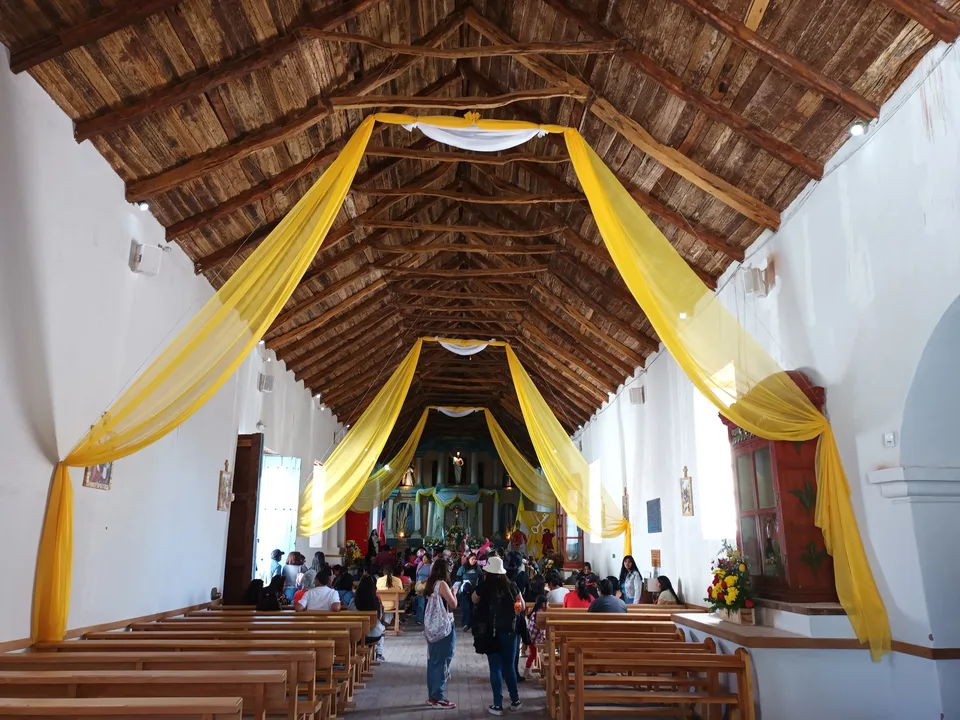
The National Monuments Council’s church record explains why the modest-looking building beside the square deserves attention. The present structure incorporates an eighteenth-century enlargement and subsequent rebuilding; its appearance should not be described as an entirely untouched sixteenth-century church. Adobe walls and regional timbers express the adaptation of religious architecture to local materials. Respect worship, posted photography rules and any temporary access limits. There is no need to turn a quiet visit into an exhaustive historical checklist: the plaza also provides a gentle first afternoon after travelling.
Choose a base by the journey home after dark
Central accommodation makes sense if you want to walk to restaurants and departure points. Confirm whether a room faces a busy street, courtyard or service area: proximity to the centre and quiet sleep are separate questions. Before a dawn excursion, reliable hot water and an agreed breakfast arrangement may be more useful than decorative extras.
Properties in surrounding ayllus offer a different relationship with the oasis. Names such as Solcor, Solor, Larache and Quitor describe locations outside the immediate central grid, with different distances and access roads. Ask for the exact map pin, walking conditions after dark and the cost of returning from dinner. Do not assume every shared transfer serves every property. A remote lodge can work beautifully when transfers and meals are organised; independent travellers should price those arrangements before comparing room rates.
Valle de la Luna requires a planned entrance
The Valle de la Luna Indigenous Association places the valley about 13 kilometres west of town. Its dunes, salt formations and pale ridges reward time on the permitted trails. The important booking detail is access: visitors cannot enter on foot. Under the published September–March schedule, bicycle entry is 09:00–11:00 and motorised entry 09:00–17:00; the April–August schedule differs.
Tickets apply to their specified date and time. More significantly, the operator’s current notice says Ckari viewpoint has been closed since 27 May 2026 following an earthquake safety assessment, until further notice. Do not buy an excursion on the assumption that its familiar sunset photograph guarantees access there. Ask which authorised viewpoint and walking sections are included. Stay on marked routes, leave stones in place and observe the bans on drones and pets. Recheck notices before departure, including closures for community activities.
Separate the salar from the high lagoons
The Los Flamencos National Reserve information is essential because the reserve comprises dispersed sectors rather than one continuously accessible park. Distances, operators and admission arrangements vary. A flamingo observation stop, a valley visit and an excursion to the high lagoons are not interchangeable purchases, even when brochures place them beneath the same desert heading.
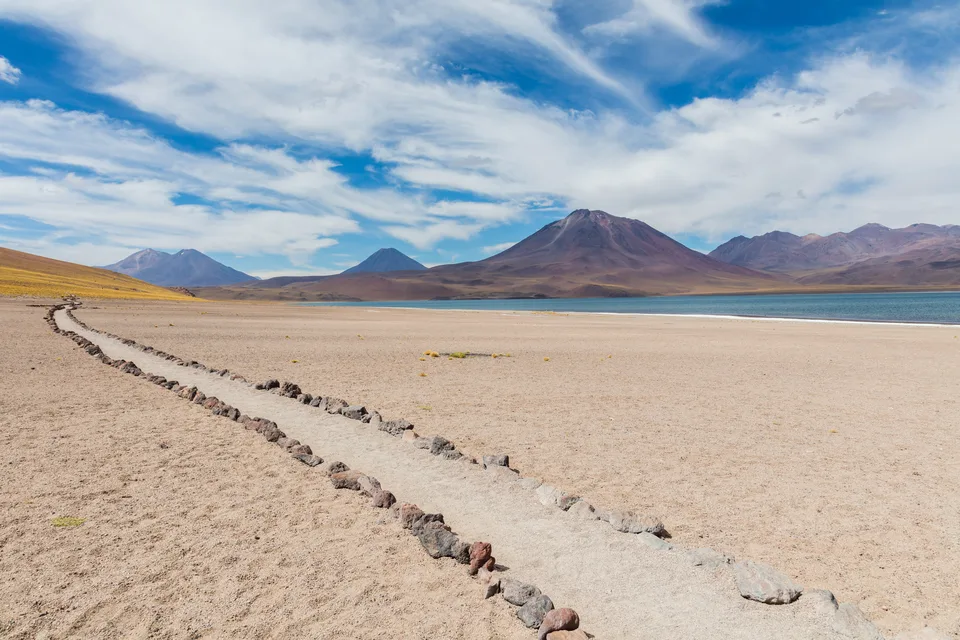
Miscanti and Miñiques require a higher-altitude day, commonly combined with other southern destinations. For the sites it manages, the Socaire community’s official booking information requires online tickets and check-in in Socaire, including the reservation QR code and vehicle registration. Do not drive directly to a lagoon expecting to buy admission at its gate. Weather restrictions can interrupt sales or access, so obtain confirmation for your actual date. Treat wildlife as a possibility, never a guaranteed performance, and allow time to observe without approaching birds.
Decide whether El Tatio fits your trip
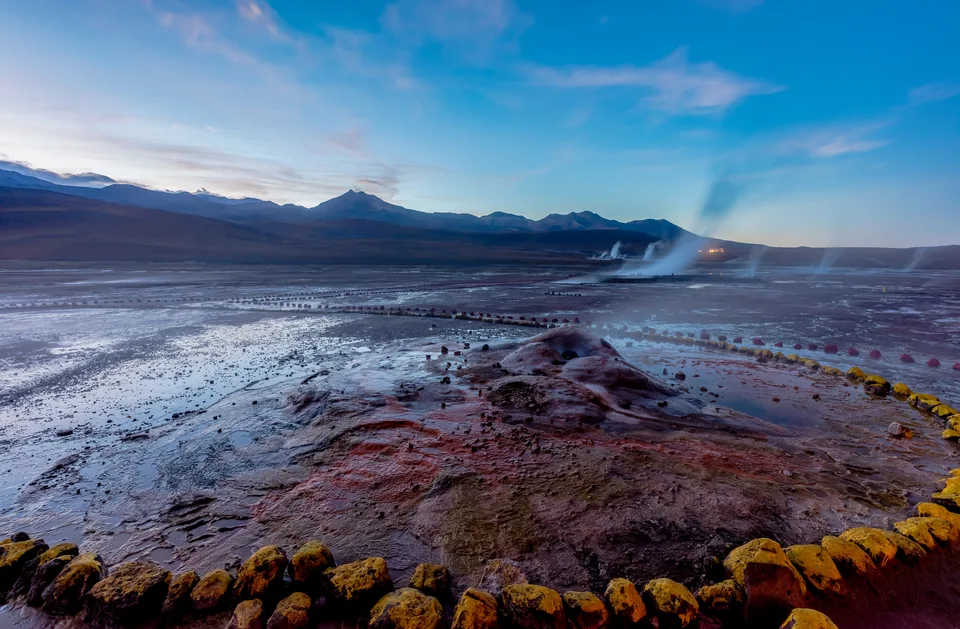
El Tatio’s geothermal field lies roughly 80 kilometres north of San Pedro, above 4,300 metres. Its combination of steam, cold air and mountain scenery explains the early departures, but also makes it a demanding choice immediately after arrival. Confirm the operator’s pickup time, breakfast arrangements, maximum altitude and return time instead of relying on a generic timetable.
Dress for standing outside before sunrise, with insulated layers, gloves and a hat. The warmth of a vehicle at pickup tells you little about conditions at the site. Geothermal ground requires strict attention to marked paths and guide instructions: a thin-looking crust is not an invitation to approach a vent. Travellers who dislike very early starts or have concerns about altitude can choose a lower excursion and still have a worthwhile desert holiday. There is no obligation to complete every headline attraction.
Make room for the sky and a museum
An astronomy outing should be chosen by its content: telescope viewing, explanation, language, group size and cancellation policy. Ask what happens if cloud or wind prevents observation and how moonlight affects the programme you are buying. Darker conditions suit some observations, while other sessions can explain the Moon itself. A promise of a spectacular photograph is not a substitute for a clear description.
ALMA is a research facility with separate access arrangements. Its official visits page currently suspends general public visits; limited institutional and media programmes do not amount to ordinary tourist admission. For an accessible science stop in town, the Meteorite Museum publishes Tuesday–Sunday entry from 16:00 to 19:30, with Mondays closed. Its basic visit takes about 50 minutes. The published adult ticket is CLP7,000 and the child or student ticket CLP5,000; entry is first come, first served.
Puritama is a separate excursion
The official Termas de Puritama information places the springs 28 kilometres north of town along Route B-245. Book a session and arrange the journey separately: the operator does not provide the transfer, and there is no public transport to the springs. Its published sessions run 09:30–13:30 and 14:30–18:00, with visitors asked to leave the water before the site closes.
The car park is about 500 metres from the pools. A limited internal shuttle prioritises visitors who need assistance, but availability should be confirmed rather than assumed. Bring a towel, drinking water and suitable footwear; bathroom water is not potable. Check the current booking price and refund terms directly. For anyone with reduced mobility, describing the springs merely as “accessible” is inadequate: discuss the actual approach, changing facilities and assistance required before paying.
Arrive through Calama with the final transfer booked
El Loa Airport in Calama, code CJC, is the practical air gateway. Chile Travel’s destination information describes the onward journey as around 100 kilometres along Route 23. This is an additional road transfer, not an airport beside your hotel. Allow time for baggage collection and shared-vehicle coordination as well as driving.
The airport’s services directory lists transfer operators, taxis and car-hire counters. Transfer Pampa currently advertises CLP17,900 per passenger one way or CLP34,000 return for its regular San Pedro service. Confirm your accommodation’s inclusion, luggage allowance and arrival time before booking; late-night travel may require a private service. Transvip’s airport help page advises allowing two hours for the journey. For the return, clarify whether a booking field asks for airport presentation time or hotel pickup time: confusing those can undo an otherwise careful connection.
Get around without turning every outing into a drive
Walking works for the compact centre; it does not solve the distances to the salar or high plateau. Shared excursions can make sense when their route matches your priorities. Compare the amount of time at each stop, entrance fees, meal provision and hotel collection, then assess the total price rather than the lowest headline figure.
A hire car offers flexibility but brings responsibility for fuel, permitted roads, vehicle suitability and weather decisions. Confirm the rental contract’s insurance exclusions and whether a proposed unpaved route is allowed. Download maps and tickets before leaving coverage. Cycling is an option for suitable nearby routes, subject to site entrance rules, sun exposure and your experience. Avoid treating a short distance on a map as proof of an easy ride. Arrange a return plan before setting off, especially if your outing ends after dark.
For the southern circuit, Socaire’s visitor questions identify San Pedro as the nearest fuel stop and prohibit swimming and picnicking at the lagoons. Build a proper food and fuel stop into the route. Ask your excursion provider where toilet breaks occur and how long you will spend travelling between stops. These details can determine whether a full-day programme suits young children, older relatives or anyone who needs frequent breaks.
Eat with an interest in the surrounding communities
The centre provides a convenient choice of cafés and restaurants, but the regional food story extends into the villages. The Socaire community’s account of its food heritage describes patascka, a maize-based dish with meat; quinoa preparations; and empanadas with potato and lamb or llama. Availability varies, so ask what is actually being prepared that day rather than expecting every restaurant to reproduce a regional menu.
Vegetarian diners should check ingredients carefully: quinoa can be cooked with animal fat, and a vegetable-looking dish may use meat stock. For an early excursion, organise breakfast or a packed meal the previous evening and establish which stops permit eating. Consider kitchen access when comparing accommodation. Self-catering can help manage dietary requirements, but it is only useful if the property provides the equipment and storage you need. Carry your own rubbish back from remote stops.
Build a budget from the outings you will actually take
Price the visit in separate parts: accommodation, airport transfers, meals, excursions, site admissions and a contingency for altered plans. Ask whether an excursion includes admission or merely transport to a ticketed attraction. A cheap first quote can become less attractive when several compulsory entrance charges are added later.
As a transparent example, one adult’s CLP34,000 return Pampa transfer plus a CLP7,000 museum visit totals CLP41,000 before accommodation, food or landscape excursions. This is an arithmetic example using published prices, not a daily budget. There is no defensible single nightly rate across hostels, private rooms and excursion-inclusive lodges. Compare current, cancellable quotations for the same dates. Keep a modest cash reserve and confirm accepted payment methods; do not depend on obtaining money or an internet connection at an isolated admission checkpoint.
Shop for something with a traceable origin
Look for crafts whose maker, material and place of production the seller can explain. Similar-looking souvenirs can represent very different supply chains. Asking where something was made is more useful than assuming everything sold in a desert town is locally produced. Keep receipts for valuable purchases and check your destination country’s import rules for plant or animal materials.
Leave archaeological fragments, stones and natural specimens where they belong. A photograph preserves the memory without removing part of the landscape. If you are bringing food into Chile from another country, follow SAG’s official declaration instructions: plant and animal products must be declared for assessment. A purchase being packaged, small or intended as a snack does not by itself establish that it may enter. Border formalities deserve time in any overland itinerary, including when returning to Chile after visiting a neighbouring country.
Match the season to the elevation
Expect a pronounced difference between daytime sun and the temperature after dark, and a further difference between the oasis and high-altitude attractions. Pack layers even for a warm-season visit. Winter brings especially cold early starts; accommodation heating should be checked explicitly rather than inferred from photographs of sunny courtyards.
Summer is not a guarantee of uninterrupted dry-weather touring. SENAPRED’s Altiplano rainfall guidance identifies November–March as the main period for these summer storms and warns about watercourses and disrupted access. Keep an adjustable day in the itinerary and check forecasts and operator notices before remote journeys. Do not attempt to cross flowing water because another vehicle went first. Spring or autumn can be a sensible compromise for travellers seeking less severe cold, but weather and access remain date-specific. Astronomy sessions also depend on the conditions on the night.
Take altitude seriously without making it the whole holiday
San Pedro itself is around 2,400 metres above sea level; some excursions climb much higher. Keep the arrival day gentle and avoid stacking an exhausting night journey onto the earliest high-altitude departure. Anyone with relevant medical conditions, pregnancy or concerns about children should obtain individual medical advice before choosing a route.
The CDC’s high-altitude travel advice recommends gradual ascent and recognising symptoms such as headache, nausea and unusual fatigue. Do not continue upwards when unwell. Worsening symptoms at rest require descent; confusion, loss of coordination or breathing difficulty call for urgent assistance. Being fit does not remove the risk, and drinking water is not a substitute for acclimatisation or treatment. Ensure insurance covers your planned activities and elevation, including evacuation where necessary, and tell the operator about relevant needs before departure rather than at the first remote stop.
A flexible four-day introduction
Day one: arrive, settle in and explore the plaza and nearby streets. Visit the Meteorite Museum if its opening day fits, or keep the afternoon free. Have dinner early enough to rest and check tomorrow’s confirmed arrangements.
Day two: choose Valle de la Luna with the correct transport, ticket and authorised route. Leave time in town rather than attaching another long excursion automatically. An astronomy session can fit this evening if conditions and energy allow.
Day three: choose one substantial excursion according to acclimatisation and current access: El Tatio or the southern lagoons circuit. These are alternatives for a comfortable introduction, not a requirement to complete both in one day.
Day four: consider Puritama, a community-focused outing or a deliberately unscheduled morning. If this is your flight day, prioritise the confirmed Calama transfer. Add nights for further excursions instead of assuming every attraction will fit safely between arrival and departure.
Test everyday life before committing to a move
For a prospective resident, an ordinary week is more revealing than a lodge holiday. Shop for groceries, test the commute you would actually make and find out how deliveries, laundry and household maintenance work at the specific address. A job described as being in the commune may be far from the town; establish the workplace location and whether transport is provided.
Inspect a potential rental for heating, ventilation, water arrangements, cooking facilities and the total cost of utilities. Ask about drainage and access during rain as well as dust and temperature. Verify the landlord’s authority, obtain a written contract and record inventory and meter readings. No reliable, comparable current rental median has been established for this guide, so a precise market-wide figure would be misleading. Compare actual long-term listings with a local enquiry rather than extrapolating from holiday-room prices.
Plan services, schooling and a workable connection
The municipality’s development plan describes primary care through the local CESFAM and referrals to Hospital Carlos Cisternas in Calama. That distinction matters for ongoing treatment: confirm the availability of the care, medicines and specialist appointments you need before relocating. Travel insurance and eligibility for resident healthcare are separate questions.
Test mobile reception and internet at the property during working hours, using the applications you depend on. Remote excursions can lose coverage entirely; the Socaire operator specifically warns of no internet at its lagoons. Arrange a backup before relying on online work. Families should contact schools about places, curriculum, transport and enrolment documentation rather than assuming a small-town move offers the same range as a major city. Establish how essential repairs and replacement equipment would be handled, particularly for a home outside the central streets.
Keep tourism, employment and residence separate
Chile’s Permanencia Transitoria rules cover limited visits, generally up to 90 days, with a possible single extension. Prior consular authorisation depends on nationality, and the period actually granted controls your stay. Visitor permission does not generally authorise paid work; specific exceptions require the appropriate authorisation. Do not assume that an overseas employer makes every remote-working arrangement lawful.
For a move, use SERMIG’s temporary residence categories and establish eligibility before making irreversible commitments. Applications are generally made from abroad, with statutory exceptions; renting a home or receiving a job offer does not itself grant residence. Student residence concerns recognised educational establishments and its own evidence requirements. Permanent residence is a separate process, not an automatic consequence of visiting repeatedly. VisaWand’s consultant directory can help identify advisers, but verify their relevant expertise and fees; official authorities decide applications.
Consider other bases and give this one enough time
Calama is the transport and service gateway, while San Pedro is the more convenient base for combining the oasis with desert excursions. They serve different purposes. Toconao and Socaire can add community and agricultural context to a southern route when visits are arranged respectfully, with current access confirmed rather than presumed.
For a more urban Chilean stay, compare Santiago before choosing a permanent base. Use VisaWand’s Chile destination directory to find other locations; individual directory entries should not be mistaken for completed guides. San Pedro rewards a clear choice about what you want: a few carefully selected landscape experiences, time to understand an inhabited oasis, or a realistic trial of everyday desert life. Allowing space between those activities gives the place a chance to become more than the background to your next departure.
Official planning resources
Reviewed 28 October 2026. Use the official resources linked throughout this guide for admission, transport, housing and immigration decisions. Prices, services and rules can change; confirm the details relevant to your dates. Photography illustrates the locations and is not a live view.
View all official resources
- National Monuments Council: San Pedro church
- Valley of the Moon Indigenous Association: official visitor information
- CONAF: Los Flamencos National Reserve
- Socaire community: lagoons and Piedras Rojas visitor information
- Chile Travel: El Tatio geysers
- ALMA Observatory: public visits
- Meteorite Museum: opening times and admission
- Termas de Puritama: official visitor information
- Chile Travel: San Pedro de Atacama
- El Loa Airport: transfers and car hire
- Transfer Pampa: Calama airport transfers
- Transvip: airport transfer help
- Socaire community: visitor questions
- Socaire community: Andean food heritage
- SAG: declaring animal and plant products
- SENAPRED: summer Altiplano rain precautions
- CDC: travel to high altitudes
- Municipality: 2023–2027 development plan
- SERMIG: temporary visitor permission
- SERMIG: temporary residence
- SERMIG: student residence
Plan the next part of your journey
Explore the Chile guide, browse other cities or compare consultants for your travel and relocation questions.