Visa
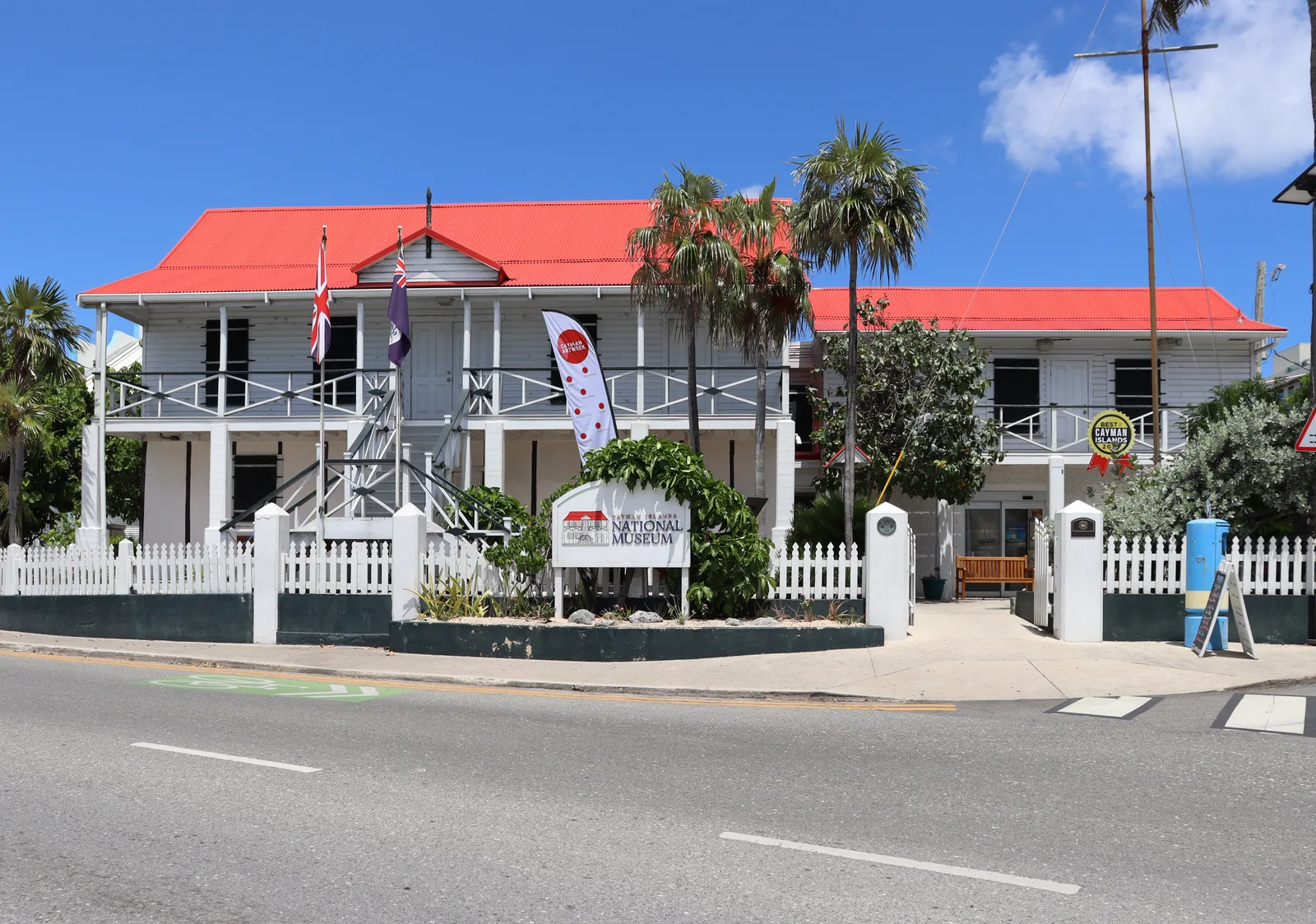
George Town is a working capital beside a holiday coast
George Town rewards visitors who look beyond the cruise shops. The Cayman Islands capital brings a waterfront museum, a small historic fort and everyday island business into a compact centre. Nearby beaches and the newer community of Camana Bay expand the possibilities, but they do not turn every Grand Cayman address into a convenient downtown base.
The Department of Tourism’s George Town overview is a useful introduction to the harbour and cultural attractions. Give the centre a proper half-day or day, then leave room for the coast. For a longer visit, combine city time with a carefully chosen boat trip or an excursion into another district rather than collecting distant stops on one rushed circuit.
VisaWand’s Cayman Islands location directory and destination page help establish the wider geography. This is George Town on Grand Cayman. Cayman Brac and Little Cayman are separate islands with their own transport arrangements. A job, hotel or excursion advertised as being in Cayman needs a more precise address before you can plan the journey.
Begin with the islands’ maritime and civic history
The waterfront is more than a shopping frontage. The museum overlooking Hog Sty Bay and the surviving Fort George site offer ways into a community whose life has long been connected to the sea. Start with those institutions before treating the capital solely as the gateway to a beach holiday.
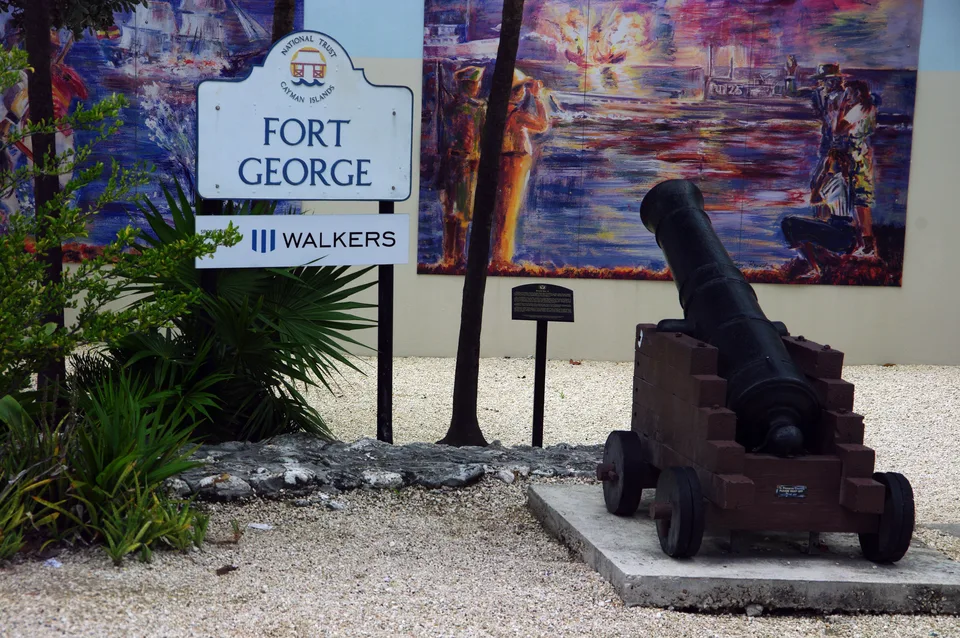
The National Trust’s account of Fort George describes a fortification dating to the 1700s, constructed by Caymanians with local coral rock and limestone. It also served as a coastal lookout during the Second World War. Its modest scale is part of its interest: this is a surviving fragment of the harbour’s history, rather than an extensive fortress complex.
Use the museum’s interpretation to put buildings and objects in context. Look for the connections between seafaring, household life and the natural environment.
Choose your base before choosing your room
Central George Town suits museum visits, harbour walks and appointments. Seven Mile Beach, on Grand Cayman’s western side, offers a different emphasis: beach-oriented accommodation and meals near the coast. Camana Bay provides another setting for dining, shopping and assessing a longer stay. Check the actual property entrance and the route between these places.
South Sound and Smith Barcadere belong to a separate coastal outing south of the centre. West Bay, Bodden Town and East End deserve their own comparison rather than being treated as interchangeable downtown neighbourhoods. The official accommodation directory separates hotels and resorts, villas and guesthouses, apartments and condos, and longer-term options. Compare service, cooking facilities and location within the category you need.
For a short holiday, prioritise your most important experience. For a potential move, plot the workplace, school, grocery shopping and healthcare you will actually use. Visit shortlisted housing at the time you would normally commute. A short map distance says little about the final walking route.
Make the National Museum your first substantial stop
The Cayman Islands National Museum’s visitor information lists natural-history and cultural-history galleries, changing exhibitions, the Old Gaol and an introductory film. The museum stands at 64 Seafarers Way on the historic waterfront. It is a useful first stop because it gives the rest of the visit some historical and environmental context.
Published hours are Monday–Friday, 9am–5pm, and Saturday, 10am–5pm. Visitor admission is US$15 for adults, US$10 for seniors and children aged six to twelve, and free for children five and under. Residents have a separate price schedule and free Saturday admission. Confirm current opening and any gallery closures before travelling; an exhibition with an expired end date should not anchor your itinerary.
Allow time for the film and a selective look at the galleries rather than arriving just before closing. The museum offers an online audio guide accessible through its Wi-Fi. Families can choose a few objects or themes to discuss instead of trying to read every display before lunch.
Give Fort George a place in the harbour walk
Fort George works well as a short heritage stop within a central day. Its surviving fabric and interpretation offer a different scale from the museum’s indoor galleries. Leave time to read the site rather than expecting an extensive ticketed attraction with a long sequence of rooms.
Combine it with the harbour frontage and a pause for food. Watch traffic when crossing between shops and the water, and keep the group together around road edges. Heat and bright reflected light can make a seemingly short waterfront stroll tiring, particularly immediately after a flight or a transfer from a ship.
If your party has limited mobility, check the actual approach and surfaces before setting off. Keep the museum or a seated break available as an alternative, and avoid building the day around a level of walking that only the most energetic person wants.
Visit the National Gallery for a different view of Cayman
The National Gallery of the Cayman Islands offers free admission and publishes opening from 10am–5pm, Monday–Saturday, with closure on Sundays and public holidays. It is on Esterly Tibbetts Highway. Treat it as a planned journey rather than assuming every cultural attraction is on the historic waterfront.
The upper gallery presents the permanent collection on rotation, while the lower exhibition hall accommodates temporary shows. This makes it a worthwhile complement to the museum: art offers another route into the islands’ culture and contemporary conversations. Check the current exhibition programme when deciding how much time to allow.
The sculpture gardens can extend the visit, weather permitting. The visitor page currently marks the Art Café as closed, so arrange your meal separately. For an organised group, contact the gallery about guided visits or educational activities instead of assuming that free general admission includes a private tour. The shop also offers publications and locally made craft and design objects.
Keep Seven Mile Beach separate from the downtown walk
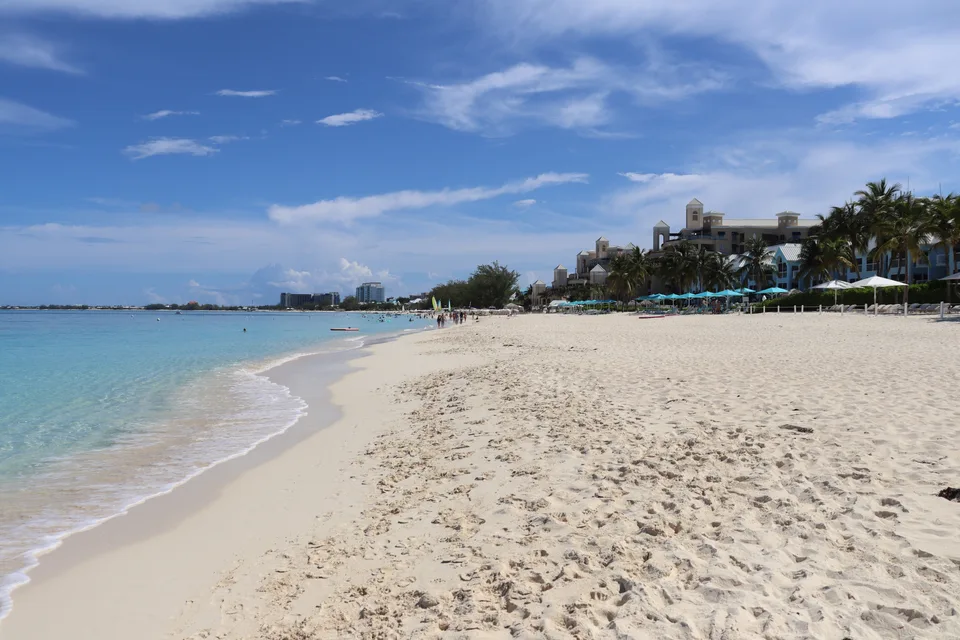
The official Seven Mile Beach page places this celebrated shoreline on the west side of Grand Cayman, with hotels, resorts, restaurants and watersports nearby. It is a strong choice for visitors who want beach time to be the organising principle of their stay. It is not the same setting as the capital’s harbour frontage.
Before booking, establish which stretch of coast the accommodation actually uses and whether your room has direct beach access. Ask what is included: a lounger, shade, equipment rental and a meal are separate services. For an apartment, check the kitchen, laundry and grocery route as carefully as the view.
Assess swimming conditions on arrival and follow local instructions. Promotional descriptions of calm water are not a guarantee for every day or every ability. Keep a beach walk or a dry-land afternoon available when conditions change. For a short cruise visit, choose a defined beach stop with a return arrangement rather than leaving the whole afternoon dependent on finding transport at the last moment.
Smith Barcadere offers a smaller coastal outing
The tourism department describes Smith Barcadere, also called Smith Cove, in South Sound, with picnic benches, public restrooms and outdoor showers. It can suit a shorter beach visit when you want a different setting from the long resort coast. Plan the journey from your actual starting point; it is not a beach directly at the cruise landing.
Bring only what you can manage comfortably and keep valuables secure. If snorkelling is part of the plan, assess the entry, waves and your ability before getting in. Public facilities do not imply that equipment, supervision or a reserved space will be available.
For families, decide who is supervising and who is keeping belongings before entering the water. A picnic and a coastal look can still be worthwhile without swimming. Compare the practicalities with Seven Mile Beach rather than trying to include both simply to increase the number of places visited.
Book marine experiences around the rules and conditions
Stingray City and the Sandbar require a separate excursion plan. Ask the operator about departure location, time on the water, group size, safety equipment and cancellation arrangements. Confirm whether transfers are included. A meeting point elsewhere on Grand Cayman can materially change the cost and timing from a George Town base.
The Department of Environment’s marine-manners guidance recommends observation without touching. At Stingray City and the Sandbar, only guides should feed stingrays during a group visit; touching or feeding rays outside the designated Wildlife Interaction Zones is prohibited. Never lift a ray so its gills leave the water, and never lift a starfish out of the water.
Choose the experience according to the least confident participant’s needs. Explain swimming limitations or mobility requirements before paying. Follow the guide’s instructions, and accept a weather-related alteration when conditions require it. A photograph with wildlife should never become the reason to ignore the operator or the animals’ welfare.
Arrive through the correct airport or cruise connection
The Cayman Islands Airports Authority identifies Owen Roberts International Airport as Grand Cayman’s airport; Charles Kirkconnell International Airport is on Cayman Brac. Check the island as well as the airport name when comparing flights. A connection between islands needs its own booking and sufficient time, rather than being treated as a road transfer.
At Owen Roberts, the airport’s taxi information describes dispatch from the arrivals greeting area on a first-come, first-served basis. Give the dispatcher the exact property, passenger count, luggage and any child-seat or mobility requirement. Establish the full fare and currency before leaving.
For a cruise call, confirm the ship’s landing arrangements and all-aboard deadline, then work backwards from the return journey. Independent activities need enough margin for transfers and changed conditions. A full three-day holiday itinerary is not a sensible template for a few hours ashore; choose the museum and harbour, a beach visit or one organised excursion as the main purpose.
Use buses selectively and price taxis clearly
The tourism department’s getting-around information places the bus terminal on Edward Street beside the Public Library. Published fares start at CI$2.50. Routes 1 and 2 serve the George Town–West Bay/Seven Mile Beach corridor; licensed buses have blue number plates. Confirm the destination and fare before boarding, including how to make the return.
The Public Transport Unit’s taxi page links to the CI:GO fare calculator. Enter the actual pickup, destination, passengers and luggage rather than using a hotel-to-airport example for a different journey. The department publishes example airport fares of US$22 to Locale Hotel and US$34 to Kimpton Seafire for up to four passengers; confirm the applicable quote and extras with dispatch.
Rental cars deserve a separate calculation: insurance, deposit, parking and the journeys you genuinely expect to make. Driving is on the left; ask about licensing requirements and vehicle handover arrangements. Avoid making a car essential to a stay whose main activities can be grouped into a few planned transfers.
Food and shopping can reveal more than the souvenir strip
Leave space for a meal rather than treating food as whatever fits between excursions. The tourism department’s account of Cayman heavy cake identifies cassava cake as a traditional dessert, made with ingredients including coconut milk and brown sugar. Ask what is available that day rather than assuming every restaurant serves the same island dishes.
Around the harbour, compare menus and final prices before sitting down. Confirm the currency, whether service is included and any additional charge. Seafood and mixed dishes require a direct ingredients discussion for anyone with allergies. A waterfront address is a setting, not evidence of a particular cooking standard.
For purchases, ask who made an object and where, especially if you want Caymanian craft rather than a generic souvenir. The gallery shop provides one documented starting point for design and publications. Compare return and shipping terms for costly items. For self-catering, assess groceries, storage and transport together; a kitchen only saves effort if shopping fits the stay.
Build a budget in Cayman dollars and US dollars
The Cayman Islands dollar is commonly written CI$ and has the currency code KYD. The Monetary Authority’s annual report describes currency issuance and repurchase at CI$1 to US$1.20. That official arrangement does not establish the exact cash conversion, card fee or change policy offered by every retailer.
Keep accommodation, transfers, meals and activities as separate budget lines. The museum’s US$15 visitor adult ticket, the free National Gallery and the published starting bus fare provide useful reference points. They do not add up to a universal daily budget: an offshore excursion and a resort meal change the calculation substantially.
Price the room for your actual dates and party, including taxes, cleaning and resort charges where applicable. For a longer stay, request lease terms and recent electricity bills rather than relying on an unsupported average rent. A lower room price further from your daily destinations may be offset by repeated taxi journeys. Compare the total arrangement before committing to the headline rate.
Use climate averages for planning, forecasts for decisions
The National Weather Service’s Grand Cayman climate tables use observations at Owen Roberts Airport for 1991–2020. Mean monthly temperatures range from 26°C in January to 29.8°C in August. These are monthly averages, not afternoon maximums or predictions for the week you intend to travel.
For current conditions, use the national weather service’s forecasts and warnings, particularly before boating or snorkelling. Allow flexibility for an indoor museum or gallery visit when a coastal plan becomes unsuitable. Choose accommodation and excursion terms that you understand before a disruption occurs, including what happens when an operator cancels.
Schedule walking with breaks, water and shade. A light layer can be useful in air-conditioned interiors, while footwear should cope with wet paving as well as the beach approach. The tourism department’s seasonal overview describes January–March as cooler with low rainfall, and July–September as hotter. Compare those conditions with your plans and budget; no season guarantees uninterrupted sunshine.
Add Camana Bay without confusing its harbour with downtown
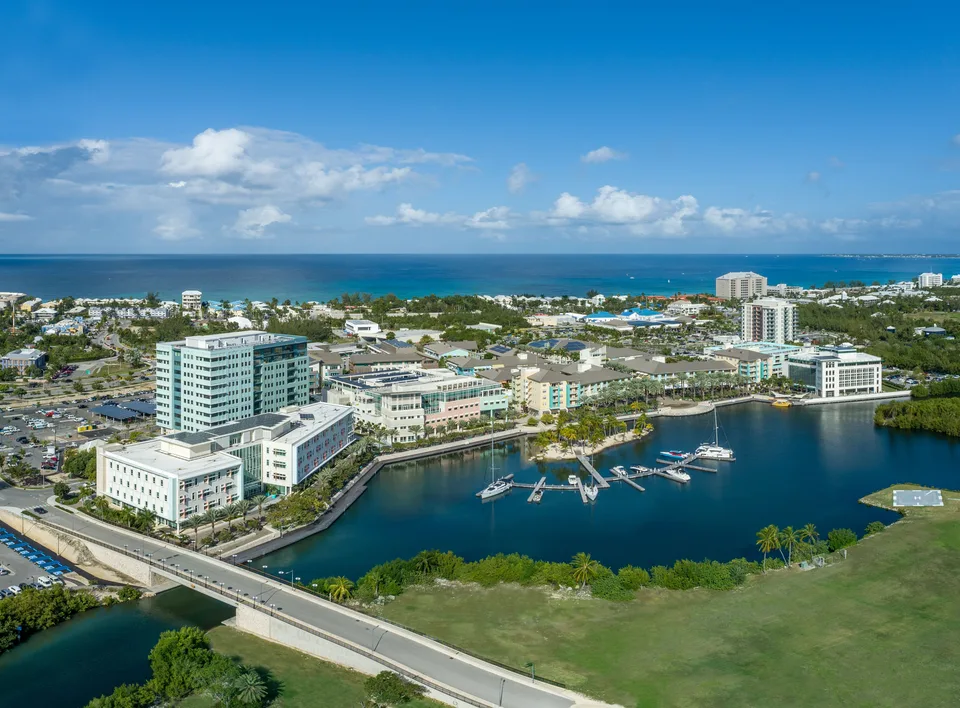
The Camana Bay attractions page describes a 75-foot Observation Tower with an underwater-themed mosaic and views across Grand Cayman, alongside courtyards, fountains and a harbour. This is a newer community with a different character from George Town’s historic waterfront. Give it a separate place in the day rather than searching for its tower among the central cruise shops.
Use the community’s current website to choose restaurants, shops or an event for your dates. Old festival articles and market announcements are not reliable timetables for a future visit. If an activity is the main reason for going, verify its current operating arrangements before organising transport around it.
Camana Bay can also help prospective residents assess a different pattern of everyday life. Look at access to errands and the route to work rather than judging it only during a relaxed evening meal. Compare the complete housing and transport cost with other addresses before assuming a particular community solves every practical need.
A realistic three-day introduction
On day one, concentrate on central George Town: the National Museum, the harbour frontage, Fort George and lunch. Arrange the sequence around confirmed opening. Leave time to read the interpretation and look at ordinary streets behind the shopping frontage. Cruise visitors should shorten this plan to the time their ship actually allows.
Use day two for the National Gallery and Seven Mile Beach, with a meal and transfer arranged to suit the group. Remember the gallery’s Sunday and public-holiday closures. If beach time is the priority, give it most of the day rather than adding several distant attractions and arriving tired.
On day three, choose one substantial marine excursion or an outing farther across Grand Cayman. Camana Bay can fit a separate afternoon or evening when the travel arrangements make sense. Someone considering a move could instead devote this day to housing viewings and a commute test. Leave the departure day free of a tightly timed offshore trip that puts the flight at risk.
Moving requires a housing and utilities plan
Inspect a prospective home for ventilation, cooling, water pressure, internet, appliance condition and signs of damp. Ask which services are included and obtain an inventory. Test the journey to work during normal working hours. School places, fees and the school run need checking before a family signs a lease.
CUC’s existing-location application guidance requires documentation including the lease or land register and photo identification; postpaid service requires a security deposit. Its updated deposit guidance calculates the amount using the property’s consumption history rather than a single universal figure. Allow time for activation and establish whose name will be on each account.
For properties supplied by the Water Authority, its change-in-tenancy guidance says the landlord can add a tenant to the owner’s account, while the owner remains ultimately responsible for charges. Identify the actual supplier for the address before applying. Record meter readings and agree the billing arrangement in writing. Moving into a furnished holiday rental does not settle these longer-term household responsibilities.
Arrange healthcare and immigration before relocating
The Health Services Authority now lists Anthony S. Eden Hospital, formerly George Town Hospital, at 95 Hospital Road, with accident and emergency and other hospital services. Confirm insurance, payment and access to ongoing treatment directly. The presence of a hospital does not establish free care or coverage for a particular policy.
For travel, Customs and Border Control’s entry requirements call for appropriate documents valid beyond the return journey, paid onward or return travel and, when requested, evidence of sufficient funds. Use its visa and extension resources for nationality-specific requirements. Permission to visit does not authorise ordinary employment, and the period granted must be checked individually.
The government’s immigration-reform announcement confirms changes effective from 1 May 2026, including revised work, residence and fee frameworks. Seek current advice on the route relevant to you. A property purchase or employment offer is not itself residence permission. For full-time education, consult CBC’s student-visa guidance and the institution. Its separate Visitor’s Work Visa is a narrow commercial facility, not a general substitute for a work permit.
Consider the rest of Grand Cayman as a deliberate choice
The National Trust’s visitor programmes include the Mission House, Blue Iguana Conservation near the Queen Elizabeth II Botanic Park, and the Mastic Trail. Each offers a different experience from the capital. Check booking, access and transport with the operator rather than assuming an attraction elsewhere on the island fits a spare hour.
VisaWand’s West Bay, Bodden Town and East End location pages offer geographical starting points for comparing other bases. They are location pages, not a promise of completed travel guides. Decide whether you want repeated access to George Town’s services or a stay organised around a different coast.
For immigration questions beyond a short visit, compare the scope and fees shown in VisaWand’s consultant listings and confirm legal requirements with the authorities. Keep travel, employment, study and permanent relocation as separate decisions, each supported by the documents and permissions that actually apply.
Official planning resources
Reviewed 17 October 2026. Use the official resources linked throughout this guide for admission, transport, housing and immigration decisions. Prices, services and rules can change; confirm the details relevant to your dates. Photography illustrates the locations and is not a live view.
View all official resources
- Department of Tourism: George Town
- National Trust: Fort George
- Department of Tourism: accommodation directory
- National Museum: visiting information
- National Gallery: plan your visit
- Department of Tourism: Seven Mile Beach
- Department of Tourism: Smith Barcadere
- Department of Environment: marine manners
- Cayman Islands Airports Authority
- Airports Authority: taxi services
- Department of Tourism: buses and getting around
- Public Transport Unit: taxis and CI:GO
- Department of Tourism: Cayman heavy cake
- CIMA: annual report and currency arrangements
- National Weather Service: Grand Cayman climate
- Cayman Islands National Weather Service
- Department of Tourism: seasons and time
- Camana Bay: top attractions
- Camana Bay: shops, dining and current events
- CUC: service at an existing location
- CUC: security deposits
- Water Authority: change in tenancy
- HSA: Anthony S. Eden Hospital
- Customs and Border Control: entry requirements
- CBC: visas and extensions
- Government: immigration reforms effective 1 May 2026
- CBC: student visas
- CBC: Visitor’s Work Visa
- National Trust: conservation and heritage visits
Plan the next part of your journey
Explore the Cayman Islands guide, browse other cities or compare consultants for your travel and relocation questions.