Visa
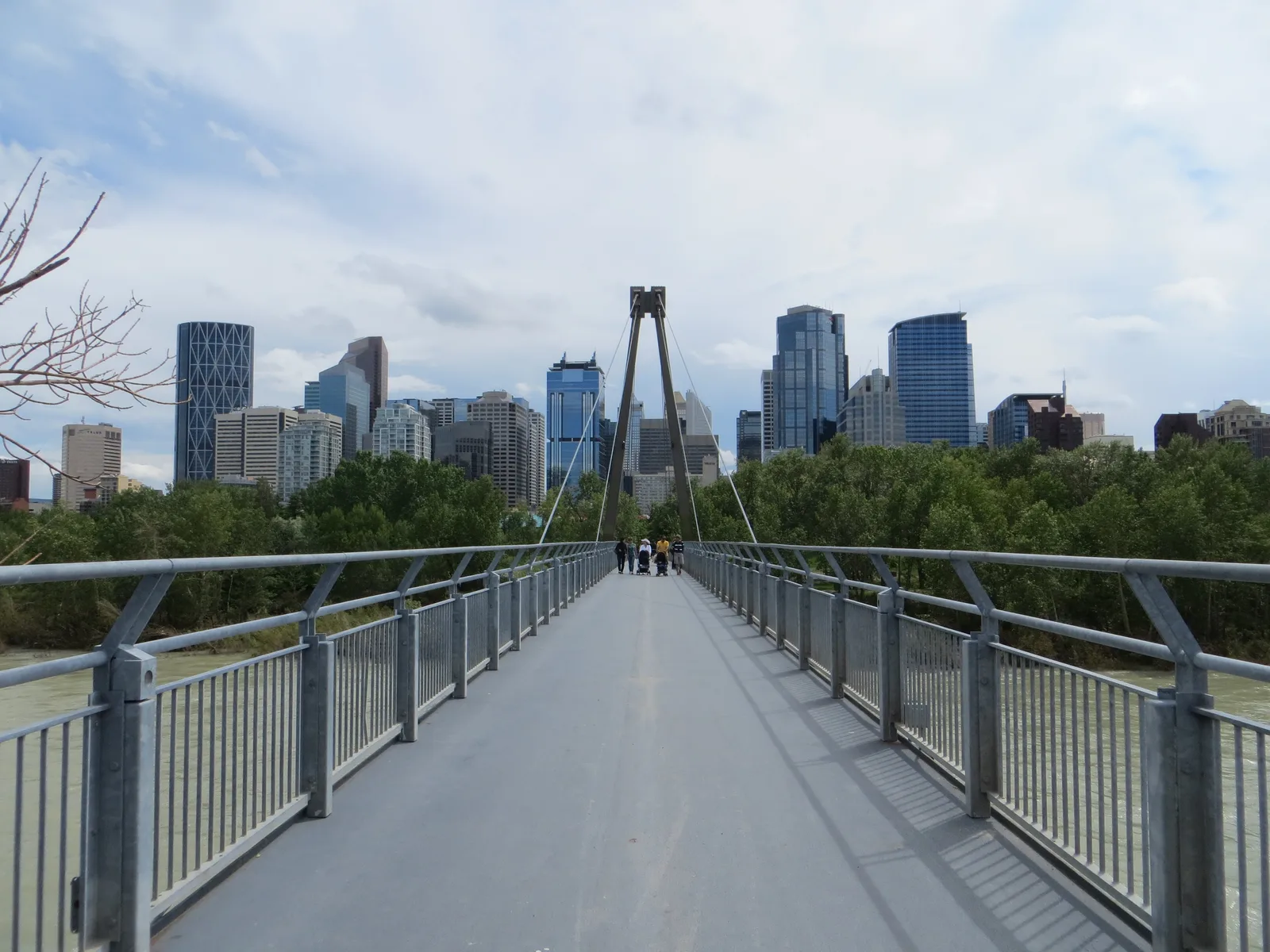
Calgary works best when you give the city its own time
Calgary offers an urban stay built around river paths, neighbourhood main streets, music and western Canadian history. Its skyline and the Rocky Mountains belong to the same travel conversation, but they are different experiences. A few days in the city can be rewarding in their own right, especially if you combine a cultural visit with time in Inglewood, Kensington or beside the Bow River.
For a prospective resident, the useful questions are less photogenic: where is the workplace, how does the winter commute work, and what does the housing quotation include? This guide, researched on 17 October 2026, connects those decisions with a realistic visit. VisaWand’s Canada location directory and Canada destination page provide broader context, while official resources here explain changing transport, attraction and immigration arrangements.
Begin with the meeting of the Bow and Elbow
The rivers help explain the central city’s geography and its history. The Confluence’s account of Treaty 7 makes clear that this meeting place held significance for Indigenous Peoples long before the North-West Mounted Police established Fort Calgary in 1875. Starting the city’s story at the fort would miss that earlier and continuing presence.
The historic site now uses the name The Confluence. When looking up a visit, distinguish its current visitor information from older Fort Calgary listings. Understanding the site means considering Indigenous perspectives and colonial occupation alongside the growth of the later city. It is a useful introduction before encountering more selective versions of western history elsewhere.
Modern Calgary extends far beyond this central area. A city population, a metropolitan figure and an estimate stored in a geographical directory measure different things. For a practical visit or move, concentrate on the actual address and route. A property described as being in Calgary can be a very different daily proposition from one beside your intended destination.
Use the river paths to orient yourself
The Bow provides an accessible geographical thread through a central visit. A walk can connect views, public spaces and a crossing without requiring a paid attraction at every stop. The city’s pathway information includes closures and detours, which are worth checking before choosing a continuous route. Do not assume a line beside the river remains unobstructed in every season.
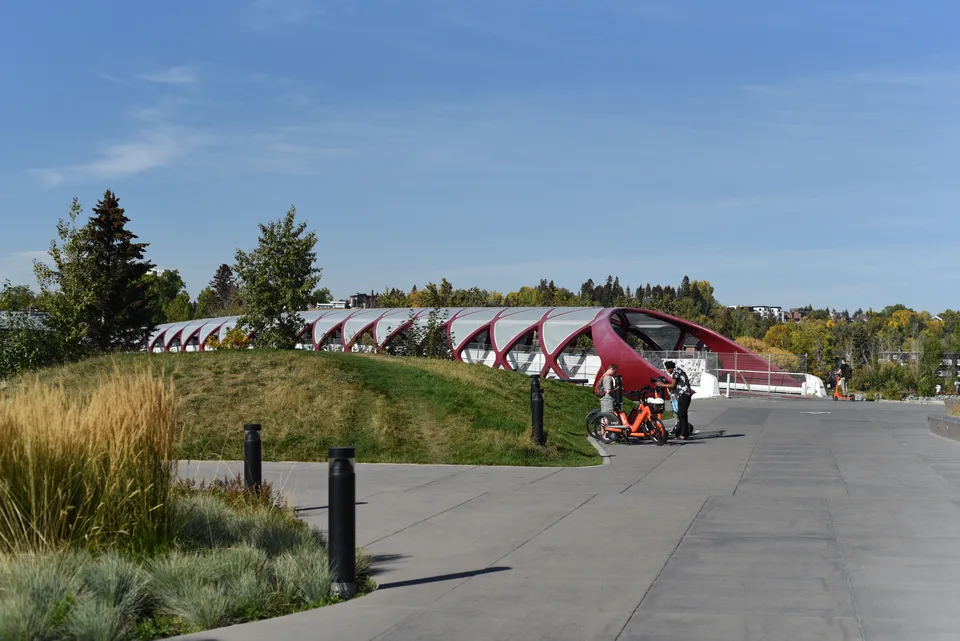
Peace Bridge’s municipal architectural account introduces the distinctive red-and-white walking and cycling crossing. It is a place to experience the connection between the riverbanks as well as photograph it. Share the route with other users, keep clear of moving cycles when stopping, and choose a shorter outing if the weather or footing makes that more comfortable.
For families or visitors with limited mobility, plan a definite start, turning point and nearby break. A riverside walk can be as short as you need; it does not have to become a long circuit. In winter, check the surface and maintenance conditions rather than treating a photograph taken in summer as an accessibility assessment.
Compare the centre with Inglewood and Kensington
Downtown is useful for a compact first stay, especially when your plans involve central institutions or business appointments. The Beltline, south of the commercial core, gives another starting point for accommodation and evening plans. Compare individual blocks and the walk to transport rather than assuming a whole district delivers the same noise level, convenience or atmosphere.
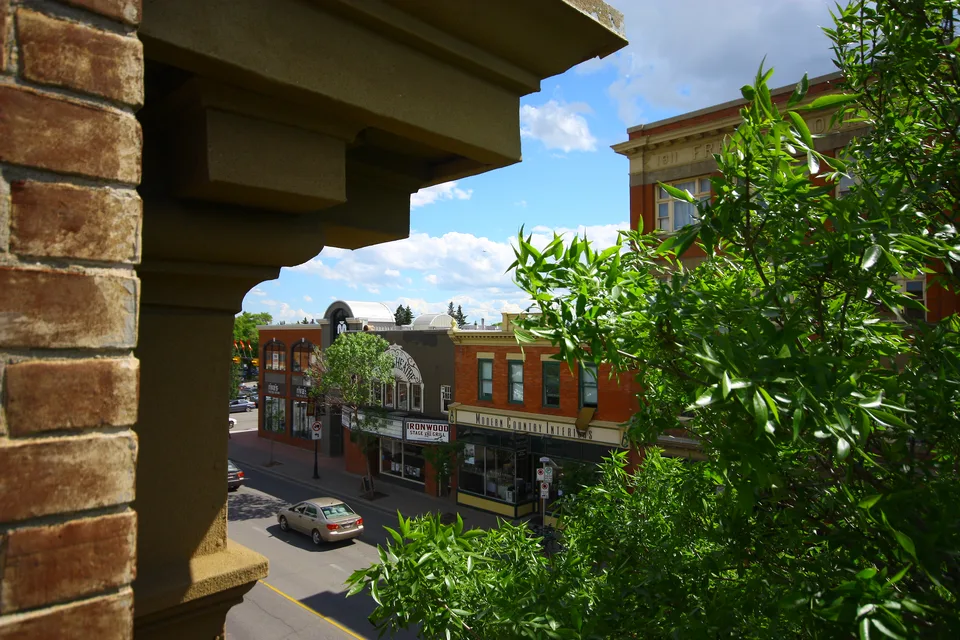
Tourism Calgary’s Inglewood guide highlights its historic character and independent shops along 9th Avenue SE. It suits a visit built around browsing, food and the street itself. Set aside time to look inside businesses that interest you rather than marching through between two distant attractions. A bookshop or specialist store can provide a natural focus for the afternoon, with time for nearby streets.
The official Kensington neighbourhood guide offers a different cluster around Kensington Road and 10th Street NW, north of the Bow. Kensington is a familiar commercial-area name associated with surrounding communities including Hillhurst and Sunnyside. For a housing search, use the actual community and street address. For sightseeing, choose one neighbourhood at a time so lunch and shopping fit naturally into the route.
Choose accommodation around the whole stay
A downtown room may justify its price if it saves repeated transfers, while an airport hotel can be useful for a late arrival or early departure. These are different advantages. Confirm whether an airport shuttle actually serves your flight time and whether reaching your daytime activities requires another paid journey. A convenient airport bed is not automatically a convenient base for a city break.
Compare the complete room quotation: taxes, parking, breakfast, cancellation terms and any extra-person charges. Ask about luggage storage if arrival and check-in times do not match. For an apartment or extended stay, check cooking and laundry facilities and whether the advertised sleeping arrangement works for the actual party, not merely the maximum number of guests.
No representative current hotel-price range was verified for this guide. Use quotations for your own dates, particularly around major events. A rate found for an ordinary week should not become a promise for Stampede. Someone assessing a move may benefit from a short initial booking that leaves time to inspect neighbourhoods before signing a longer agreement.
Match the tower and music museum to your interests
The Calgary Tower’s official admission page describes its panoramic view and glass floor. It also says prices vary by date and that admission purchases are cashless. Check the selected date and final total rather than relying on a fixed price copied from an older guide. A clear view matters more to some visitors than to others, so consider the forecast before making this the day’s central purchase.
Studio Bell, home of the National Music Centre, provides a contrasting indoor experience through instruments, exhibitions and interactive activities. Its operator recommends allowing about two hours for the five floors. Check the programme if a demonstration or tour is particularly important: a general admission ticket should not be assumed to include every special performance or behind-the-scenes visit.
These visits need not compete for the same hurried hour. A music enthusiast may prefer a longer stay at Studio Bell, while a visitor interested in the skyline may give the tower more attention. Choose the combination that leaves time for a meal and the surrounding streets rather than adding both solely because they appear on an attraction list.
Check Glenbow and Heritage Park against current access
Glenbow’s current reopening update targets 2027 at the JR Shaw Centre for Arts & Culture. That is a target, not a confirmed opening date for your visit. Older pages still mentioning 2026 should not settle an itinerary. Check the museum’s latest announcement before booking travel around access to the revitalised building.
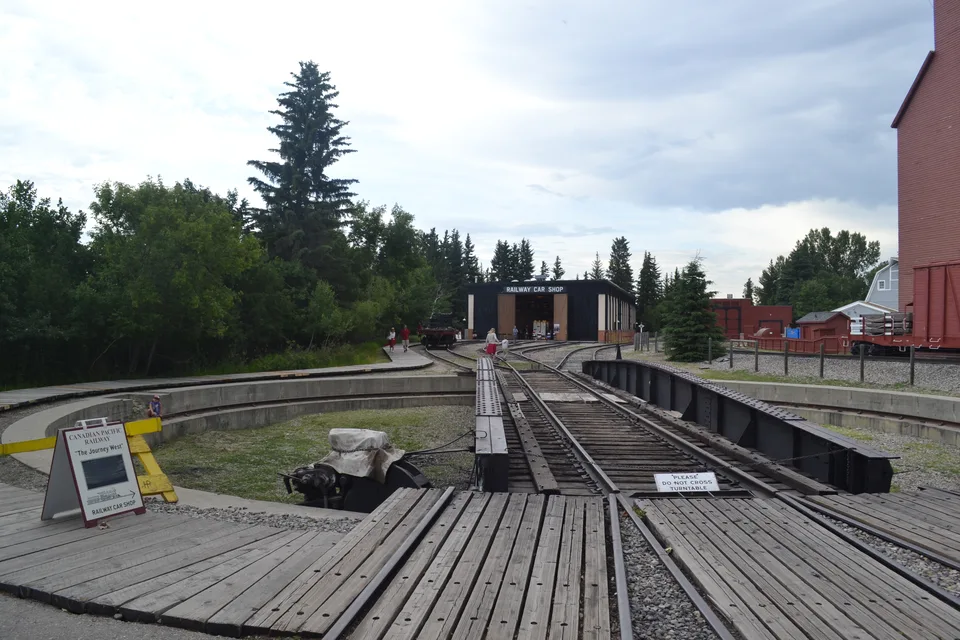
Heritage Park’s admission information also requires careful reading. At this review, its Historical Village is closed for the season and the operator says it will reopen in May 2027. Gasoline Alley Museum and Heritage Plaza provide other reasons to visit during the year, but they do not recreate every element of the summer village experience.
Decide which part interests you before buying a ticket or arranging the journey. A railway photograph does not establish that a train ride operates on your chosen date. Confirm what the ticket covers, current opening arrangements and parking separately. If the attraction you want is unavailable, use the time for a neighbourhood visit or another confirmed cultural activity rather than expecting seasonal operations to continue unchanged.
Treat Stampede as a distinct booking decision
The Calgary Stampede’s official future dates list 9–18 July 2027 for the next edition. If that is the reason for your trip, build accommodation and transport around those dates. If it is not, decide whether an event-period stay suits your budget and preferred pace. The city’s western associations extend beyond this one event, and a normal city visit should not promise a daily rodeo.
Compare the particular admission product, reserved performance and package you intend to buy. Establish what is included, what needs a separate ticket and how you will return afterwards. A family’s plans may depend on meal breaks and the length of an evening as much as on access to the grounds.
For other dates, check the venue or event calendar directly. Do not use a previous year’s programme as a current schedule. The useful approach is to choose a confirmed event that interests you and leave enough room around it to enjoy the rest of Calgary.
Arrive at YYC with the correct bus information
YYC’s official ground-transport page confirms there is currently no direct LRT connection at the airport. It describes buses, licensed taxis, ride-share pickup arrangements, rental cars and hotel shuttles. Compare them against your arrival time, luggage and final address. An airport rail proposal should not become an instruction to catch a train that is not operating there.
There is also a recent route-number change. Calgary Transit’s fall 2026 service notice says Route 300, the former airport/city-centre service, was renamed Route 500 Airport Express from 31 August 2026. Use the current journey planner and dated timetable; old Route 300 advice can otherwise send a visitor searching under the wrong number.
For a taxi or ride-share, follow the airport’s designated pickup guidance. For a hotel shuttle, confirm the operator, meeting point and frequency directly with the hotel. If continuing beyond Calgary, leave room for immigration, baggage and a changed arrival time. A scheduled onward coach is a separate connection, not something an international flight automatically protects.
Understand fares before deciding whether to rent a car
Calgary Transit’s 2026 fare table lists an adult single fare of C$4, valid for 90 minutes, and an adult day pass at C$12.65. The day pass runs until the end of service that day, not for 24 hours from purchase. Children aged 12 and under ride free. Check the appropriate product and activation instructions before travelling.
The operator’s description of the downtown Free Fare Zone identifies the CTrain section along 7th Avenue between Downtown West/Kerby and City Hall/Bow Valley College. Check the current limits and do not extend this arrangement to every bus or the whole rail system. A central free ride does not cover an onward journey outside the zone.
For a short central visit, walking and transit may avoid parking costs. A car can be useful for a more dispersed itinerary, but compare rental, insurance, fuel and parking together. For a move, test the actual commute at the hours you will use it. The station nearest a house is only one part of a journey that may include a bus connection or a substantial final walk.
Eat and shop according to the neighbourhood
Tourism Calgary’s restaurant directory offers a starting point for a dining scene broader than a steakhouse stereotype. Use the neighbourhood you are already visiting to narrow the choice. A meal in Inglewood or Kensington can fit a day’s route more naturally than crossing the city for an unverified recommendation. Check the restaurant’s own menu, hours and booking conditions before making a special journey.
Allergies, dietary requirements and portion sizes deserve direct questions. For a group, clarify whether sharing dishes works with the restaurant’s arrangements. Ask about service charges before treating the displayed menu total as the final bill. Seasonal menus, special offers and opening days can change, so confirm the information relevant to your booking directly.
For shopping, decide whether you want ordinary supplies, independent retail browsing or a specific purchase. Leave space in the budget and luggage for what you actually intend to buy. Longer stays can combine cooking with meals out, but a kitchen only saves money if its equipment, grocery access and your routine make it usable.
Keep taxes and ordinary costs visible
The Canada Revenue Agency’s tax table lists Alberta’s GST at five per cent and provincial sales tax at zero. That does not mean every purchase is taxable in the same way, or that an accommodation quotation includes every applicable charge. Read the final total and currency before paying, especially where a booking platform defaults to another country’s dollars.
Build the visitor budget from accommodation, transfers, local transport, meals and selected admissions. Add parking if using a car and allow for a changed flight or extra night. The verified transit fares provide one useful anchor; they do not establish an entire daily budget. Date-dependent attraction prices should be checked for the visit you are actually buying.
For relocation, separate recurring costs from starting costs. Rent, utilities, transport and groceries belong in the monthly plan; deposits, furnishings and temporary accommodation belong in the initial allowance. Compare the whole household arrangement rather than assuming a cheaper advertised rent produces a cheaper life.
Prepare for winter and leave weather flexibility
Calgary’s winter requires more than a warm-looking photograph. The city notes extreme cold, dry Chinook winds and freezing rain in its winter conditions guidance. Temperature changes do not remove the need for suitable clothing and footwear. For a visitor, choose outdoor blocks short enough to adapt; for a resident, consider the repeated journey between the door, stop and workplace.
The city’s winter activities resources show that the season also has its own programme. Confirm current event dates and operating conditions before making a particular activity the reason for a trip. A weather-dependent outdoor experience and an indoor museum require different backup plans.
Warmer-season visits can devote more time to the river paths, neighbourhood streets and seasonal attractions, while still checking the forecast. For any onward mountain trip, consult the conditions for that destination separately. Weather in central Calgary does not establish the state of a mountain road, trail or lake several hours into another itinerary.
A realistic three-day city itinerary
On day one, orient yourself downtown and along the Bow. Include Peace Bridge if conditions suit, then choose a manageable stretch of path and a meal in a nearby district. Add the tower only if it matches your interests and the day’s conditions. Keep the first evening modest if you have arrived after a long journey.
Day two can focus on Studio Bell and the eastern central area, followed by time in Inglewood. Use The Confluence’s historical context to understand the meeting of the rivers. Confirm any paid access or organised activity separately. A substantial museum visit and an unhurried neighbourhood afternoon are enough without fitting in a mountain excursion.
Day three depends on the season. Choose the available parts of Heritage Park, another confirmed cultural activity, or a longer neighbourhood visit. For a possible move, replace sightseeing with property inspections, the intended commute and appointments about essential services. Keep Banff or Canmore as a separately planned extension rather than treating them as another downtown stop.
Inspect a prospective home before committing
An address near work can be more valuable than a larger property with a difficult daily journey. Compare the route in both directions, public transport at the right times and parking where relevant. For students, verify the actual campus; a university or college name alone does not establish which building you will attend.
Alberta’s starting-a-tenancy guidance explains agreements and deposits. For tenancies covered by the provincial legislation, the security deposit cannot exceed one month’s rent when the tenancy begins. Read the applicable rules and complete the necessary inspection arrangements. Do not substitute rental practices from another Canadian province for Alberta’s requirements.
Ask what rent includes, how heating is supplied and who pays electricity, water, internet and building charges. Inspect ventilation, appliances, laundry and storage, and record the condition. Establish responsibility for repairs and any outdoor maintenance. Clarify parking, pets, guests and the notice or fixed-term conditions before signing. A winter-ready home needs to work as a complete arrangement, not simply look attractive during a summer viewing.
Arrange household services, school and healthcare
The city’s utility-account information explains water billing and account arrangements. Confirm what is your responsibility under the lease before opening or changing services. The residential waste page provides collection information; apartment residents should also ask the building manager how recycling, compost and general waste work on site.
Families can start with the Calgary Board of Education’s New to Canada information. Registration and documentation depend on the child’s circumstances, and the Welcome Centre supports the relevant process. Check the actual school assignment and programme before making a housing decision around a preferred institution. Do not assume the nearest building guarantees the place you want.
For health coverage, Alberta’s guidance for people moving to the province distinguishes different arrival circumstances and eligibility. Apply with the required documents and clarify when coverage begins. Visitors should arrange suitable insurance. Health Link 811 provides health advice and information; it is distinct from emergency response. Establish routine care and prescription arrangements as part of the move, not only after an urgent need arises.
Keep a visit separate from work, study and immigration
Use IRCC’s entry-document guidance to check whether your passport, nationality and mode of travel require a visitor visa, an electronic travel authorisation or other documentation. These are not interchangeable products. Permanent residents and Canadian citizens have different travel-document requirements, so do not choose an application merely because another traveller used it.
A visitor’s permission does not automatically authorise employment. IRCC’s work-permit information explains the relevant pathways and eligibility. A job offer and a valid employment permission are separate questions. For education, check the institution and course as well as the permit process; current provincial attestation requirements include exceptions and should be checked for the actual applicant.
Long-term settlement also needs its own assessment. The Alberta Advantage Immigration Program has defined streams and criteria; moving to Calgary or receiving a provincial nomination should not be described as automatic permanent residence. VisaWand’s consultant listings can help locate professional support, while applications and decisions remain with the responsible authorities.
If your proposed occupation requires professional recognition, ask the relevant regulator which qualifications, examinations or registration steps apply. Discuss this before relying on an employment start date. Immigration permission, an employer’s interest and permission to practise a particular profession are separate matters; obtain written answers from the organisation responsible for each.
Plan the mountains as another destination
VisaWand’s Canmore and Banff city pages provide starting points for a westward extension. Check the complete trip, accommodation and activity access. Parks Canada’s Lake Louise and Moraine Lake guidance explains separate transport and reservation arrangements; arriving in Calgary does not establish a place on a shuttle or parking at a famous viewpoint.
For a different residential comparison, the Airdrie city page covers a separate municipality north of Calgary. Compare the real commute and services rather than treating a nearby location as the same city. The best choice follows the purpose of the stay: Calgary’s neighbourhood and cultural life, a mountain visit and a household move each benefit from their own realistic plan.
Official planning resources
Reviewed 17 October 2026. Use the official resources linked throughout this guide for admission, transport, housing and immigration decisions. Prices, services and rules can change; confirm the details relevant to your dates. Photography illustrates the locations and is not a live view.
View all official resources
- The Confluence: Treaty 7 and the history of the meeting place
- City of Calgary: pathways, closures and detours
- City of Calgary: Peace Bridge architecture
- Tourism Calgary: Inglewood neighbourhood
- Tourism Calgary: Kensington neighbourhood guide
- Calgary Tower: admission and booking
- Studio Bell: National Music Centre visitor information
- Glenbow: reopening update
- Heritage Park: seasonal access and admission
- Calgary Stampede: confirmed future dates
- YYC airport: ground transport
- Calgary Transit: fall 2026 route changes
- Calgary Transit: 2026 fares and passes
- Calgary Transit: downtown Free Fare Zone boundaries
- Tourism Calgary: restaurant and dining directory
- Canada Revenue Agency: GST and provincial tax rates
- City of Calgary: winter conditions and tree protection
- City of Calgary: winter activities and events
- Alberta government: starting a tenancy
- City of Calgary: water utility accounts and billing
- City of Calgary: residential waste services
- Calgary Board of Education: newcomers and registration
- Alberta government: health coverage when moving
- Alberta Health Services: Health Link 811
- IRCC: documents needed to enter Canada
- IRCC: work permits and eligibility
- IRCC: study permit attestation requirements
- Alberta government: Alberta Advantage Immigration Program
- Parks Canada: Lake Louise and Moraine Lake access
Plan the next part of your journey
Explore the Canada guide, browse other cities or compare consultants for your travel and relocation questions.