Visa
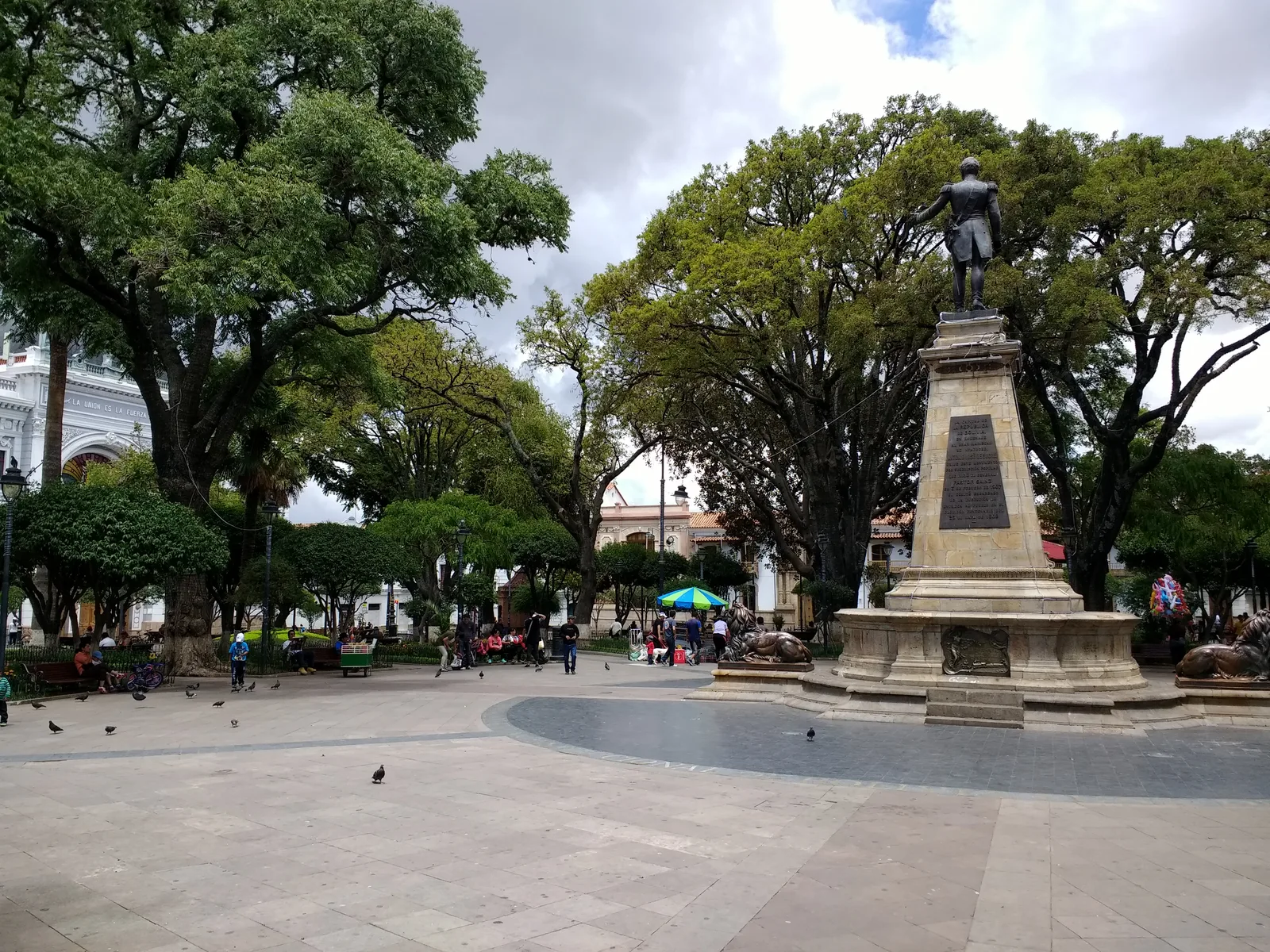
A capital best understood at walking pace
Sucre rewards a stay built around history, buildings and living culture rather than a race between distant attractions. White façades, red-tiled roofs and courtyard architecture give the historic centre a recognisable character. Beyond it lies a working city whose daily routines matter just as much to someone considering a language course or a longer move.
Bolivia’s Foreign Ministry identifies Sucre as the country’s constitutional capital. Its historic centre has UNESCO World Heritage status, but those two distinctions answer different questions: one concerns the state, the other the architectural and cultural significance of a defined heritage area. Neither means every part of the modern city belongs to the same visitor setting.
Allow three or four days if you want museums, the Recoleta area and the dinosaur-footprint excursion without crowding every afternoon. The city can suit travellers interested in a concentrated cultural visit, provided they account for altitude, museum schedules and the onward journey.
Read the architecture through the city’s history
UNESCO traces the Spanish foundation of La Plata to 1538 on lands of the Yampara, within the Characas confederation. The city became a judicial, religious and cultural centre, with the mineral wealth of nearby Potosí influencing its development. It was renamed for Antonio José de Sucre in 1839. Those connections help explain the scale of its institutions and religious buildings.
Look beyond the repeated description of a white city. The World Heritage account explains how local building traditions combined with imported European styles, including Renaissance, Baroque and Neoclassical influences.
The heritage listing dates from 1991. It recognises a historic urban ensemble, not a claim that every building has remained unchanged. Seek a guide who explains Indigenous presence, colonial institutions and the independence period together.
Choose between the centre, Recoleta and an outer address
Begin with the area around Plaza 25 de Mayo when orienting yourself. It provides a practical reference for central museums and other errands. A room described as central still needs a precise address: distance from the square, the approach after dark and traffic outside the window can change the experience of an otherwise convenient stay.
La Recoleta offers another useful reference point, particularly for its square and the nearby Indigenous Art Museum. Account for the uphill approach when comparing accommodation or planning a walk. The view that attracts you to a property may also mean more steps and a less convenient return with shopping or luggage.
An outer address can make sense for a particular workplace, household or appointment, but assess its actual connections before committing. VisaWand’s Bolivia location directory helps distinguish places, while the country guide supplies wider context. A destination listing should not be mistaken for a completed neighbourhood review or a promise about local services.
Start the museum visit at Casa de la Libertad
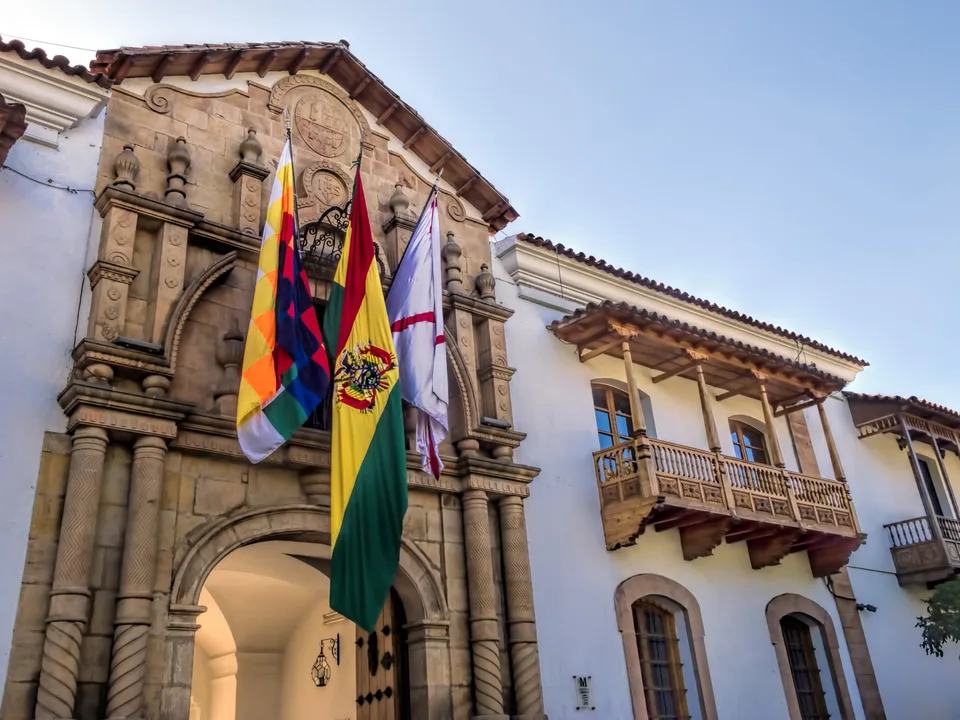
Casa de la Libertad is an obvious place to begin understanding the independence story. Its operator presents collections including the Independence Hall, the Macha flag, the signatories and Marshal Sucre. The building’s earlier connection with a Jesuit convent adds another layer to a visit concerned with how institutions and political life changed.
Do not reduce the museum to a single photograph of the entrance. Ask about the available guided visits, languages and rooms currently accessible.
Current admission and a dependable opening timetable were not established from the operator’s website during this review. Confirm them directly before choosing a slot, especially for a Monday, holiday or late arrival. Ask separately about photography and accessibility. A historic entrance does not reveal the arrangements inside, and a general city-tour advertisement may not include museum admission.
Leave time for Indigenous textile art
The ASUR Indigenous Art Museum offers an essential counterpoint to a visit focused only on colonial architecture. Its own description emphasises contemporary Indigenous art, especially textiles, and explains the role of its exhibition rooms and a gallery where weavers demonstrate techniques. Check whether a demonstration will be taking place during your visit rather than assuming continuous activity.
ASUR’s published visitor information gives the address as Pasaje Iturricha 314 in La Recoleta. Its website lists foreign admission at Bs30 and domestic admission at Bs15, expressly subject to change. Treat those as online planning figures, checked on 26 October 2026, and reconfirm before visiting.
The published weekday schedule has a midday break, with Saturday hours also divided into morning and afternoon sessions. Build the visit around that pause instead of arriving just as the doors close. Give the displays enough attention to understand the work and its makers.
Combine Recoleta with a manageable uphill walk
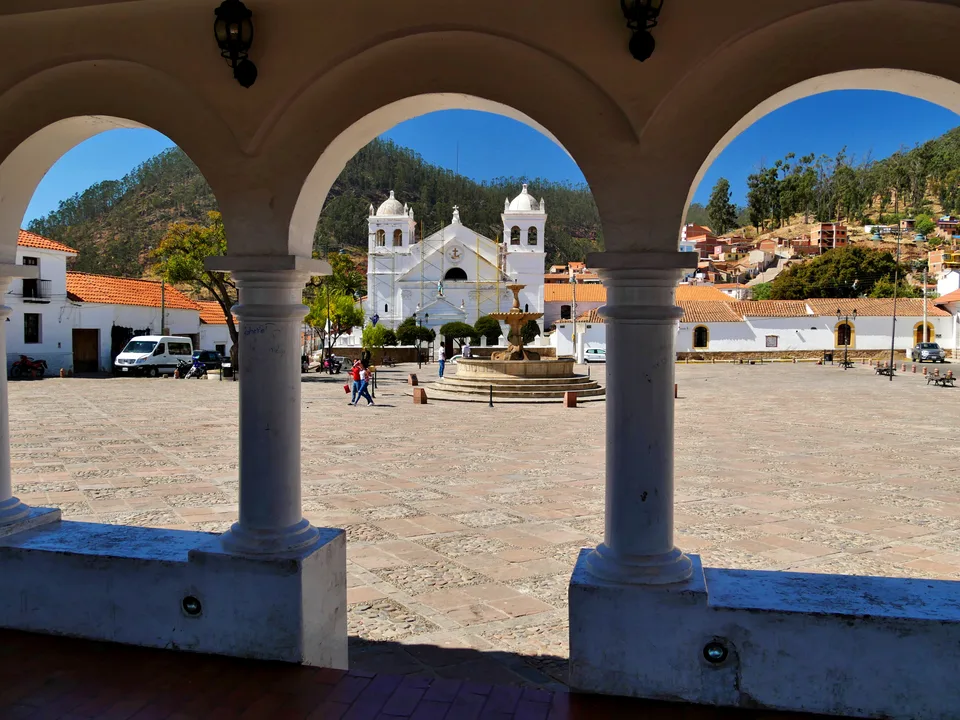
Recoleta works well as a separate part of a day rather than an obligatory addition after several museums. The square and surrounding architecture provide a setting in which to pause and look back over the city. Decide whether to walk uphill, arrange a vehicle or combine one direction on foot with a booked return.
The practical question is how the outing fits your energy and mobility. Sucre is around 2,800 metres above sea level according to the local university’s visitor guide. A route that looks modest on a map may feel different shortly after arrival from lower elevations. Keep the first day flexible and seek appropriate health advice if altitude is a concern.
Combine the area with ASUR when its hours suit, leaving room for a meal or a break. Confirm access to individual religious buildings separately. The square, a museum and a place of worship do not necessarily follow one opening schedule, and an attractive exterior is not evidence that every interior is open to visitors.
Understand the footprint site before booking
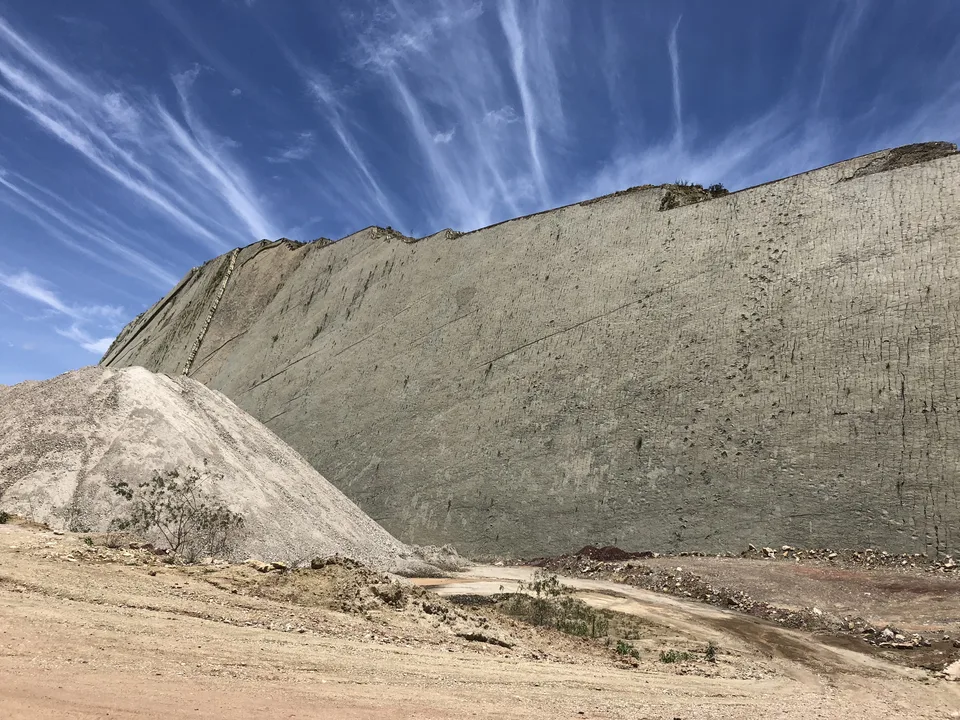
Parque Cretácico is a different kind of excursion from the central museums. Its operator places it five kilometres from the centre, beside the road towards Cochabamba in district 2. The nearby Cal Orck’o rock face preserves dinosaur tracks; the visitor park helps interpret the setting rather than turning a quarry wall into an ordinary city pavement.
Separate general park admission from the opportunity to join the footprint walk. The published schedule lists footprint visits at noon and 1pm, with suitable walking shoes specified. Confirm the arrangements and conditions on the day. Arriving near closing time may give you access to some exhibits while missing the particular experience you wanted.
The operator publishes Tuesday-to-Sunday opening from 9am to 5pm and lists admission at Bs30 for foreigners, Bs20 for nationals and Bs10 for children. Check the applicable child category and any extra services directly. These published figures are useful benchmarks, but transport, a private guide or other inclusions require their own confirmation.
Plan the park transfer around the specific activity
The park’s Dino Bus information places departures at Plaza 25 de Mayo by the cathedral, with several published services between 9:30am and 3pm. Confirm the current departure, return arrangement and fare before setting out. A list of outward departures does not establish that a convenient return leaves immediately after your chosen tour.
For a taxi or private excursion, ask whether the quote includes waiting, a return pickup and admission. Give the driver the actual entrance you need. If the footprint walk is your priority, work backwards from its confirmed time and leave a margin for the journey and arrival procedures rather than booking the tightest possible connection.
Keep the outing separate from a flight departure or an important onward bus. It deserves enough time to make a delayed start inconvenient rather than disastrous. Families should ask about walking requirements, shade and any access restrictions for children.
Choose accommodation by access, not only atmosphere
A central guesthouse or hotel can reduce the number of journeys needed for museums and everyday meals. Courtyard accommodation may be particularly appealing in Sucre, but inspect the room category and the route to it. Steps, internal windows, sound from common areas and late check-in procedures matter more to a comfortable stay than a photograph of an elegant patio.
One documented example is Parador Santa María La Real, which identifies its address as Calle Bolívar 625 and describes a restored eighteenth-century house. Use the property’s own room and booking information to compare categories and facilities. Its architectural appeal is not a substitute for confirming the price, accessibility and inclusions for your dates.
For an apartment or longer stay, check cooking facilities, hot water, heating arrangements, laundry and housekeeping terms. Ask how a delayed arrival is handled and who is available when something fails. A quieter-looking address should be assessed in person where possible, with attention to both daytime routines and the practical return after dinner.
Get the airport name and connection right
The working NAABOL page for Alcantarí Airport identifies it as the airport that opened in 2016 to replace Juana Azurduy de Padilla. Check Alcantarí on your flight and transfer arrangements rather than using an old airport address retained in a map, guidebook or accommodation message. Ask the airline for the current airport and schedule details.
Arrange the onward journey with your accommodation or an established provider. Confirm the exact destination, vehicle capacity, currency, luggage allowance and whether the price is per person or per vehicle. NAABOL’s published vehicle-entry or parking charges are not airport-to-city taxi fares and should not be used to estimate a transfer.
Allow for the complete journey when comparing flights: check-in, baggage, road access and the final approach to your accommodation. Keep a contact method for delays.
Use local transport with a clear return arrangement
Walking can link many central interests, but the whole city should not be treated as a pedestrian circuit. Check gradients, crossing points and the actual address before deciding a journey is easy.
For taxis, ask your accommodation about established services and agree the fare and destination before departure. The official safety guidance for Bolivia recommends booking recognised companies and being alert at transport terminals. Its accounts of incidents in other named cities should not be presented as invented incidents in Sucre, but the booking precautions remain useful.
If using a local minibus, confirm the route, stop, operating period and fare directly. No current flat city fare or universal route list has been verified for this guide. For a prospective move, test the journey at the time you would actually commute, including the walk at either end and an alternative if the usual connection is unavailable.
Treat intercity journeys as part of the plan
Sucre can form part of a wider trip, but a line on a map does not establish a reliable same-day connection. Before buying a bus ticket, check the departure terminal, route, luggage arrangements and realistic arrival time with the operator. Leave a buffer before an international flight or another commitment that cannot easily move.
The current official Bolivia travel advice discusses roadblocks and a state of emergency. It advises against trying to cross roadblocks and explains that a ticket marked condicionado may not guarantee arrival. Check current conditions rather than assuming an advertised journey time will apply during disruption. Reconfirm with the operator close to departure.
The same advice identifies a separate restriction on non-essential travel to the Chapare region of Cochabamba, including specified roads through it. Do not assume that every possible onward route shares the same risk assessment, or that a Sucre stay automatically falls within that regional warning. Review the exact route and be ready to change the wider itinerary.
Make food part of understanding Chuquisaca
A May 2026 Tourism Ministry report on Sucre’s food businesses highlights traditional dishes including mondongo, picante de pollo and chorizo chuquisaqueño. Those names provide a useful starting point for a conversation with a restaurant about what it serves and how it prepares a dish. Ask about ingredients and spice rather than assuming every version is identical.
The report also lists establishments that completed a tourism-quality programme, including cafés and restaurants with different styles. That is a documented source for finding candidates, not a personal taste test or a guarantee about service on a future date. Check the current menu, opening hours, location and dietary suitability before making a special journey.
For a longer stay, pay attention to ordinary grocery shopping and meal preparation as well as restaurant experiences. Compare a realistic basket for your household and establish how you will carry it home.
Shop for work you understand
The ASUR museum shop identifies textiles and ceramics produced by Indigenous artisans. Visiting the collection before buying can help you ask more informed questions about technique, materials and makers. It also makes the shopping experience more specific than choosing a souvenir solely because it resembles something in a display.
Ask which work is handmade, who produced it and whether the seller can explain the design and care requirements. Do not assume every object sold elsewhere has the same origin or process. Photography of a maker or a person wearing traditional dress should be a request, not an entitlement attached to a purchase.
Check the size, weight and protection a fragile or valuable item needs for your onward journey. Keep a receipt and verify customs restrictions for anything that could be regulated.
Budget in bolivianos using dated examples
Use bolivianos, commonly written Bs, when comparing everyday costs. Check what currency an accommodation or excursion quote actually uses, especially if the supplier markets internationally. The Central Bank’s exchange-rate information explains a change in its published dollar series during June 2026, making an older fixed-rate conversion an unsuitable default for a new budget.
Two published foreign-admission figures give a modest example: Parque Cretácico lists Bs30 and ASUR lists Bs30, making Bs60 per person before transport, food or any additional charges. Reconfirm both because the museum explicitly makes its prices subject to change. This example is not an estimate of a complete day in Sucre.
Separate the room, meals, transfers, museum admissions and a contingency allowance. Confirm card acceptance with each supplier and keep appropriate cash without carrying the entire trip budget. Prospective residents need a separate monthly calculation including bills, internet, commuting and household supplies; a visitor’s daily spend says little about the cost of a particular lease.
Choose a season and pack for the nights
The USFX university’s visitor guide describes Sucre as a subtropical mountain setting, with notably cold nights during the austral winter from May to August and frequent summer rainfall from November to March. These are broad seasonal expectations, not a forecast for a particular afternoon or a guarantee that a winter day will stay dry.
For museum visits and outdoor sightseeing, the less rainy part of the year may be attractive, provided you pack warm layers for evenings. During the wetter months, leave flexibility around walks, road journeys and the footprint excursion. Shoes with grip and a way to keep belongings dry are more useful than a plan that depends on uninterrupted sunshine.
Check SENAMHI’s current forecasts and warnings near departure. A historic climate table should not be presented as live weather, and conditions can affect different parts of a route differently. Ask an operator about the actual excursion conditions before committing to a long day outside the city. Keep an indoor alternative available rather than forcing the original schedule.
A four-day itinerary that respects opening hours
Use the first day for a gentle introduction to Plaza 25 de Mayo and the immediate centre, with time to settle in. If you arrive tired or from low altitude, keep it light. Confirm Casa de la Libertad’s current visit arrangements and the park’s footprint schedule before fixing the remaining days.
Give day two to Casa de la Libertad and a limited selection of nearby buildings or collections. On day three, combine Recoleta with ASUR, taking its midday closure into account. Leave room for lunch and a rest instead of treating the uphill walk as a compulsory endurance test after several hours indoors.
Reserve day four for Parque Cretácico, choosing transport around the confirmed footprint walk if you want to join it. Move the sequence to suit the actual weekdays, holidays and weather; it is not a promise that every site opens every day. If you have only two days, choose the themes that interest you most rather than compressing the entire four-day outline.
Test an ordinary week before choosing housing
A longer stay needs different evidence from a pleasant museum weekend. Spend time on shopping, laundry, appointments and the daily route to work or study before signing a long lease. The historic centre and an outer address may solve different household problems. Decide which services need to be nearby and which journeys you can reasonably repeat.
Inspect the actual unit, record its condition and obtain written terms for the deposit, repairs, notice period and included bills. Verify the landlord’s authority to let it. No representative current rental average has been established for this guide; compare live quotes for equivalent properties and terms rather than assuming a holiday listing reflects monthly housing costs.
For a family, confirm school or childcare admission and the practical journey directly. Test mobile reception and internet in the room where you expect to use them. Ask how heating, hot water and cooking equipment work. A restored house can be appealing while still requiring a careful assessment of stairs, insulation and everyday comfort.
Check utility accounts and healthcare arrangements
CESSA’s electricity procedures distinguish several kinds of account and ownership changes, while ELAPAS lists water-connection and name-change requirements. Discuss the applicable arrangement with the landlord and utility. Record meter readings and establish who pays existing balances; do not assume every short-stay tenant must transfer an account into their own name.
Ask about water storage, service interruptions and the maintenance of pumps or building equipment. A tank or backup system is useful only if it works and someone is responsible for it. Check appliance ratings against the supply at the property before plugging in equipment brought from abroad.
Read the current official health guidance before travel. It notes pressure on healthcare and medicine supplies and the possibility of paying upfront for treatment. Arrange suitable insurance, bring prescriptions and plan for regular medical needs. The published ambulance number is 118. For relocation, identify appropriate routine and specialist care before deciding that a convenient address meets your household’s needs.
Keep entry, study and relocation permissions separate
Start with the Foreign Ministry’s consular visa categories and the requirements for your passport and purpose. A December 2025 announcement changed visa policy for eight nationalities, with implementation described as gradual. Older country lists can therefore mislead. Obtain current consular confirmation rather than relying on an old fee or an assumed exemption.
The UK entry guidance describes visa-free visitor arrangements for British citizens, not a universal allowance for all travellers. Work, formal study and other non-tourism purposes require separate attention. Ask how the appropriate entry permission connects with any residence process, and do not treat a course booking, rental agreement or application submission as permission to begin work or remain indefinitely.
For broader choices, compare Potosí, Tarabuco and La Paz destination pages, checking current routes and the purpose of each visit. Use VisaWand’s Bolivia consultant listings to prepare focused immigration questions. A short cultural visit can help you assess Sucre, but deciding to live there requires a workable daily routine and the correct legal status.
Official planning resources
Reviewed 26 October 2026. Use the official resources linked throughout this guide for admission, transport, housing and immigration decisions. Prices, services and rules can change; confirm the details relevant to your dates. Photography illustrates the locations and is not a live view.
View all official resources
- Bolivia Foreign Ministry: Sucre and the bicentenary
- UNESCO: Historic City of Sucre
- Casa de la Libertad: collections and visitor contact
- ASUR: Indigenous Art Museum
- ASUR: museum address, published admission and hours
- USFX university: visitor climate and practical guide
- Parque Cretacico: published admissions
- Parque Cretacico: hours, footprint walks and Dino Bus
- Parador Santa Maria La Real: accommodation and location
- NAABOL: Alcantari Airport
- UK FCDO: Bolivia safety and transport
- UK FCDO: Bolivia travel advice and roadblocks
- Bolivia Tourism Ministry: Sucre food and quality programme, 12 May 2026
- ASUR: museum shop and artisan work
- Central Bank of Bolivia: exchange-rate series and methodology
- SENAMHI: official weather forecasts and warnings
- CESSA: electricity procedures and account changes
- ELAPAS: water connection and account procedures
- UK FCDO: Bolivia health and medical preparations
- Bolivia Foreign Ministry: consular visa categories
- Bolivia Foreign Ministry: visa exemption announcement, 1 December 2025
- UK FCDO: Bolivia entry requirements
Plan the next part of your journey
Explore the Bolivia guide, browse other cities or compare consultants for your travel and relocation questions.