Visa
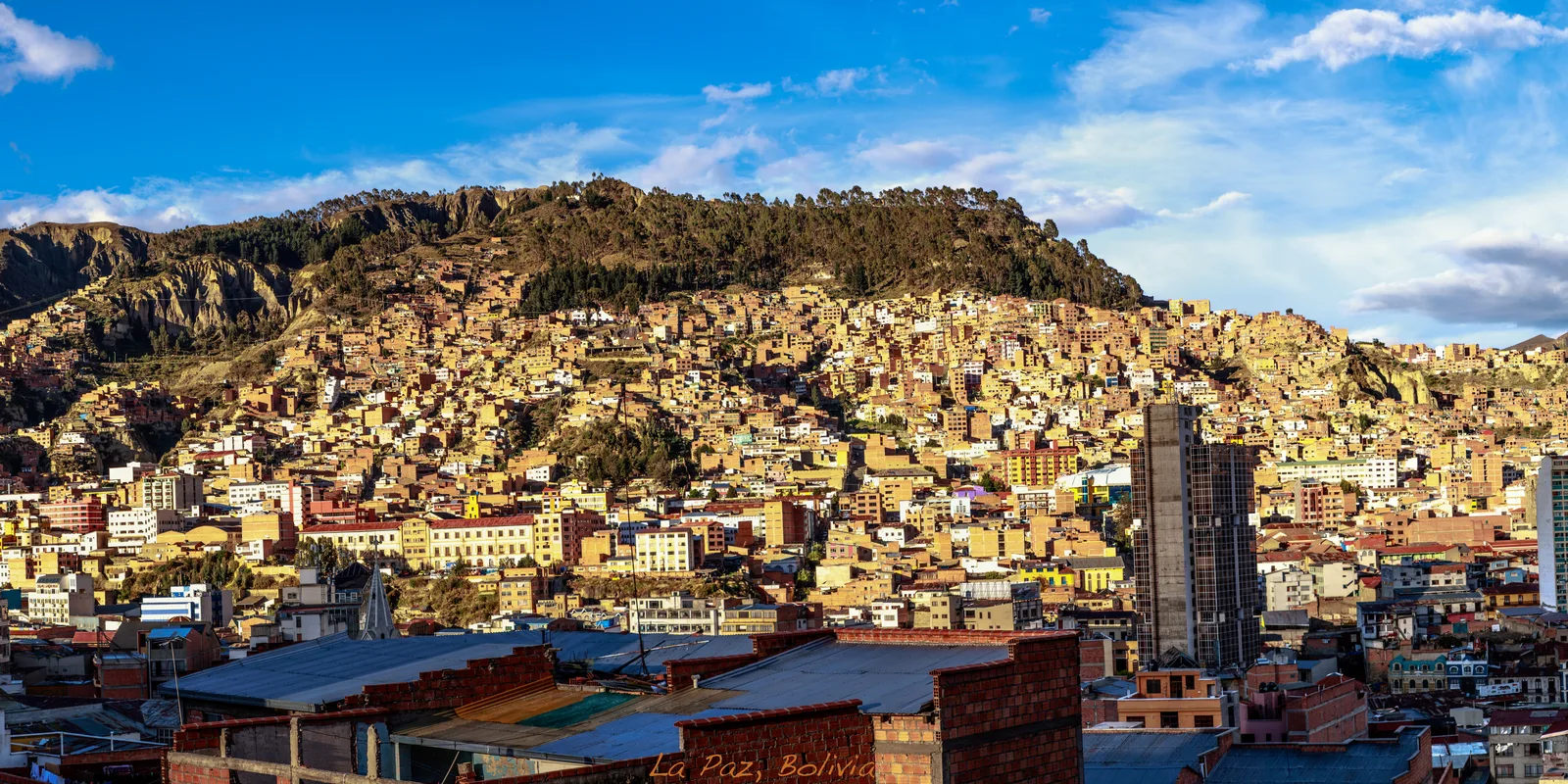
A city whose geography shapes every visit
La Paz fills a steep Andean basin with houses, markets, government buildings and cable cars. Its most memorable experience may be the ordinary journey between neighbourhoods: a walk that suddenly reveals another hillside, or a cabin rising above an intricate landscape of rooftops. Come for living culture, museums, food and the relationship between the city and its mountains.
Plan around the terrain. A short distance on a map can involve a substantial climb, while changing districts may require a combination of walking and transport. Allow three full days for a first introduction, with more time for excursions. Leave the arrival day deliberately light, especially when flying directly from a much lower elevation.
La Paz and neighbouring El Alto are separate municipalities within a connected urban region. Neither should be confused with the entire Department of La Paz. VisaWand’s Bolivia location directory places the city alongside other destinations; a directory entry does not necessarily contain a completed guide. For relocation, add time specifically for housing visits and commute trials.
Understand the city beyond the capital label
La Paz is Bolivia’s seat of government, while Sucre is its constitutional capital. Article 6 of Bolivia’s constitution identifies Sucre as the capital. This distinction matters when reading administrative information: the place where a ministry operates and the country’s constitutional designation are different questions.
The municipal history and planning study traces the Spanish foundation to Laja on 20 October 1548, followed by relocation into the Chuquiago valley. Indigenous settlement and Aymara history predate that foundation. The city’s subsequent growth followed a difficult landscape of slopes and waterways, rather than an endlessly extendable flat grid.
Look for those layers in everyday streets as well as monuments. Religious buildings, trading spaces and contemporary construction sit close together. Ask guides whose histories particular buildings tell, and avoid reducing Indigenous culture to costumes or souvenirs. Learning a little about the city before a walking tour makes its changes and contradictions more interesting than a collection of architectural dates.
Choose a base around the journeys you will make
The historic centre suits a visit concentrated on museums, San Francisco and older commercial streets. Check the actual approach to your accommodation: vehicle access, steps and the final uphill walk can matter more than a hotel’s advertised proximity to a square. Ask about evening meals and a reliable taxi arrangement before booking a late arrival.
Sopocachi offers another base to compare. The municipality identifies the Montículo viewpoint in Sopocachi, useful for orienting yourself within the district. Compare accommodation there against your own appointments rather than assuming a neighbourhood name guarantees a particular atmosphere, noise level or journey time. Inspect the surrounding blocks and access to transport.
The municipal guide to the southern district describes residential areas, shopping and restaurants, alongside geological and outdoor attractions. A southern base can suit plans in that part of La Paz, but adds journeys to the historic centre. Ask prospective hosts for the nearest usable transport stop and the walk from it, including the return climb.
Explore San Francisco and the historic streets slowly
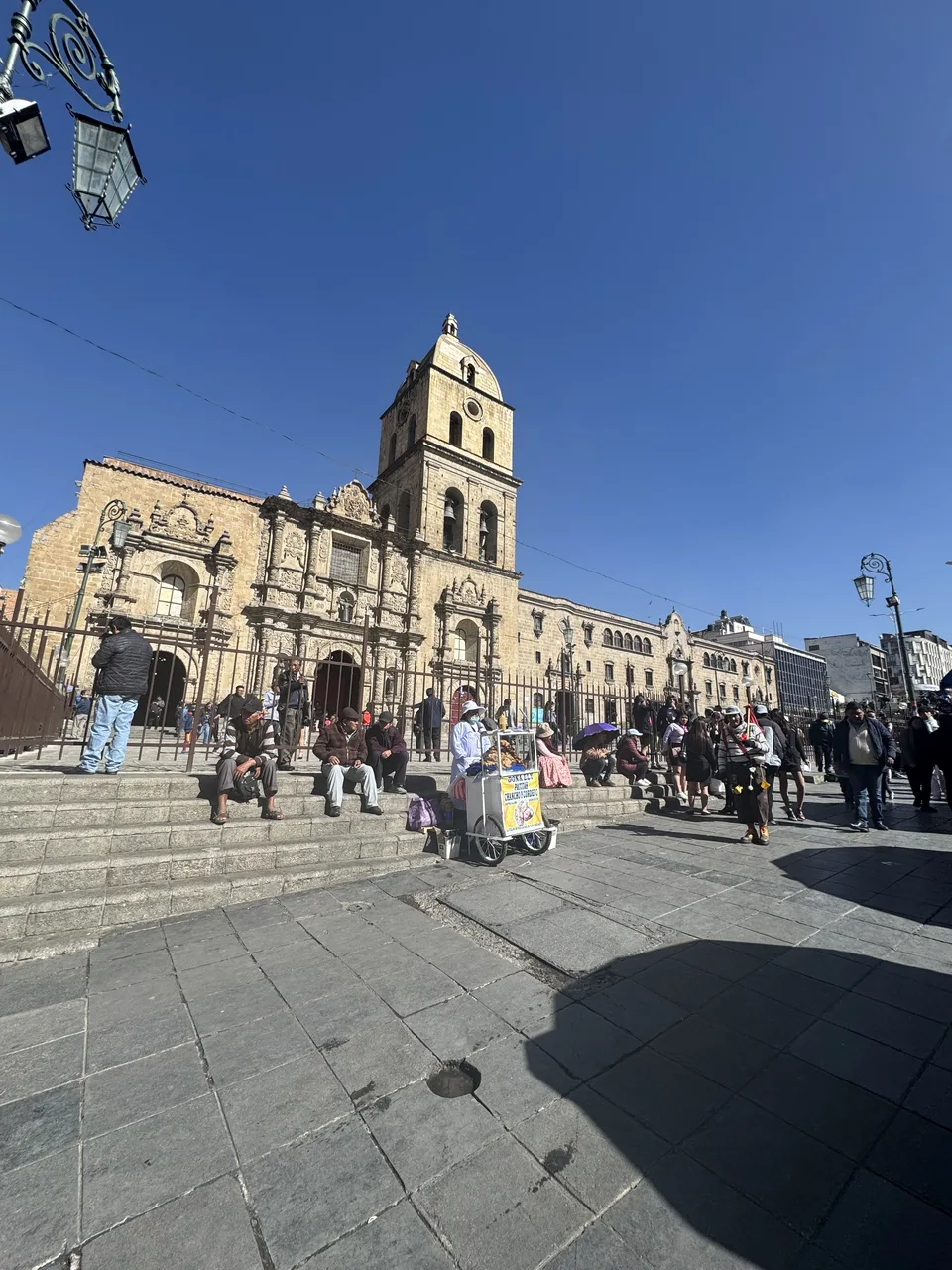
The municipal centre guide brings together San Francisco, Plaza Murillo, Calle Apolinar Jaén and several museums. Treat them as choices within a walk, rather than obligations to complete before lunch. Begin with San Francisco’s square and carved church façade, then decide how much interior visiting you want that day.
Religious access and museum access can involve different arrangements. Confirm which spaces are open, any admission charge, and whether worship changes visiting hours. Keep photography discreet and follow the instructions at the entrance. A published tourism listing does not establish permission to photograph a service or enter every part of a religious complex.
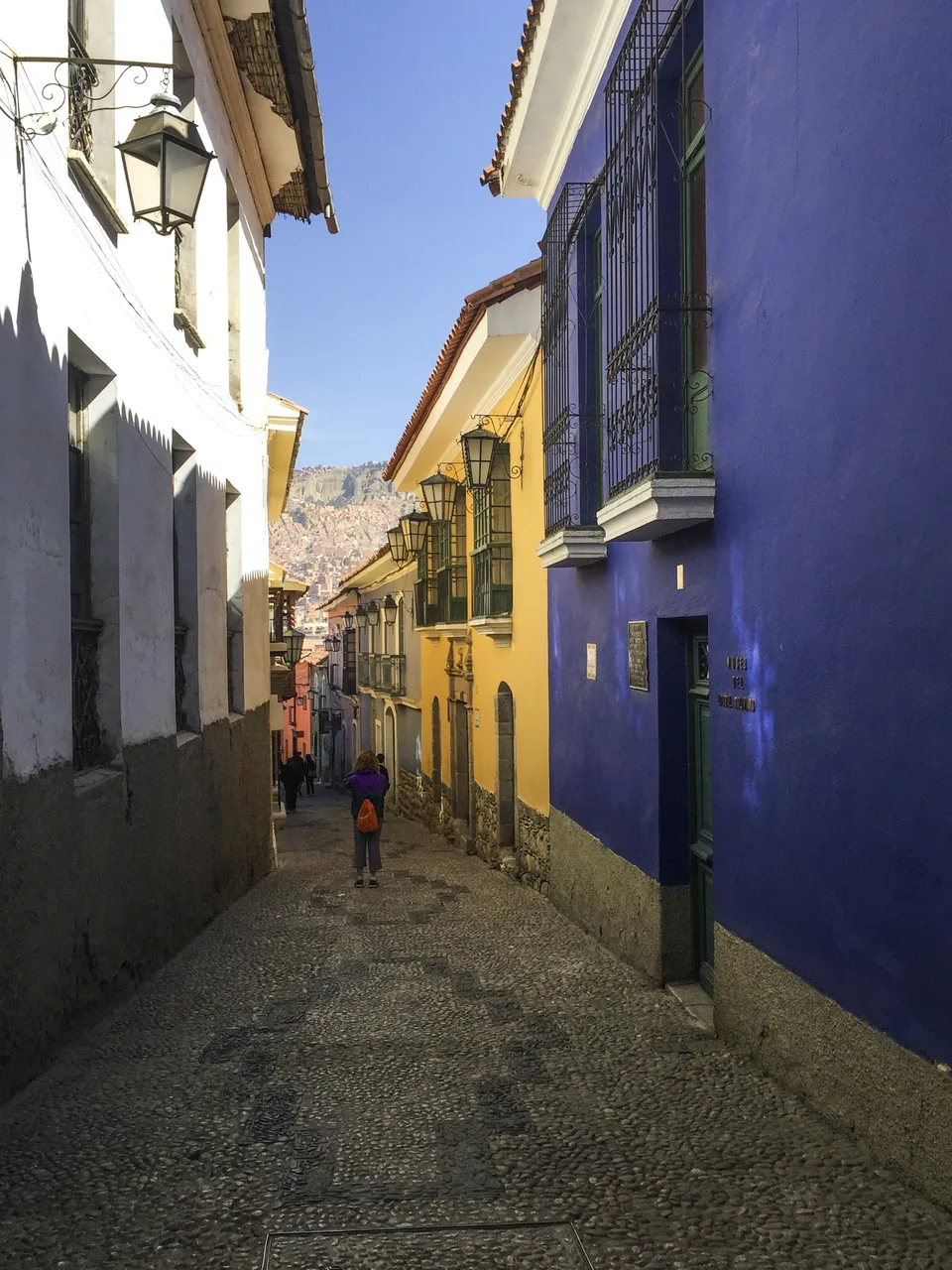
Plaza Murillo provides another perspective on the city’s civic character. Calle Jaén offers a smaller scale of historic streetscape and museum visits. Wear shoes that cope with uneven paving, keep your route flexible and stop before fatigue turns an enjoyable walk into an effort. For someone using a wheelchair or managing limited stamina, request precise entrance and pavement information beforehand.
Give MUSEF time rather than adding another rushed stop
The Museo Nacional de Etnografía y Folklore offers a valuable way to think about Bolivia through objects, clothing and the people who make and use them. Its exhibition information includes clothing and photographic displays alongside changing themes. Check the current programme: the museum explains that even exhibitions described as permanent can be renewed.
The museum’s visitor page lists its La Paz address as Calle Ingavi 916. Published hours are Monday to Friday, 8.30am–4.30pm, and Saturday and Sunday, 9am–1pm. It lists admission at Bs35 for foreigners, Bs5 for nationals and residents, and free for people under 18. Confirm holiday exceptions and which category applies before a dedicated journey.
Allow enough time to read rather than merely photograph displays. Families can choose a few objects to discuss instead of expecting children to absorb every room. Ask about available interpretation and accessibility. This is also a useful counterweight to market browsing: learning how something is made can change the questions you ask before buying it.
Use Mi Teleférico as transport and a view of the region
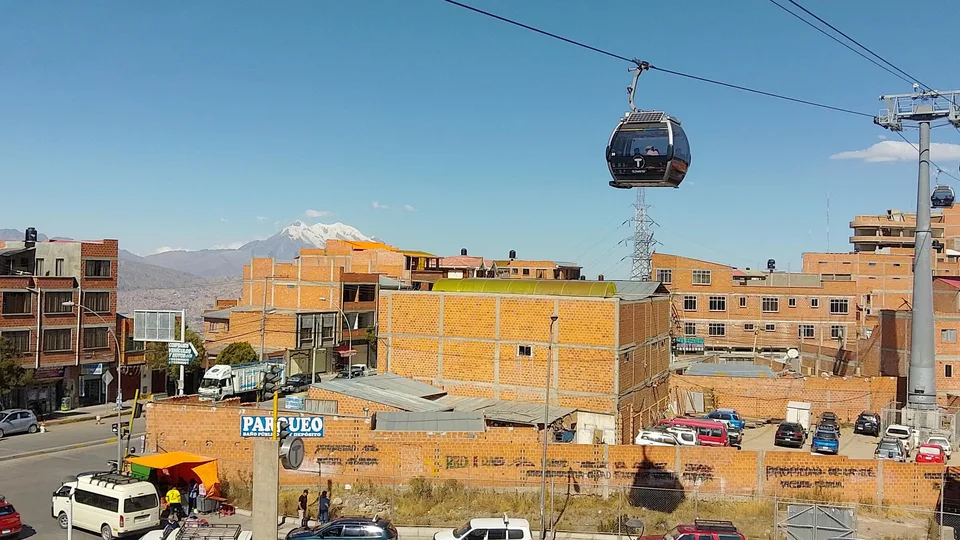
Mi Teleférico connects parts of La Paz and El Alto through a network of cable-car lines. The operator’s line information is the place to choose stations and connections. The view is extraordinary, but these cabins are also part of ordinary daily travel. Keep luggage manageable and avoid obstructing boarding or photographing passengers without permission.
A January 2026 transport ministry notice records ten metropolitan lines and a standard first-line fare of Bs3, with Bs2 for a transfer. It gives usual operating hours of 6.30am–10.30pm Monday to Saturday and 7am–9pm Sunday. Check the operator for maintenance, holiday changes and the payment conditions for a connected journey.
Do not assume the nearest station to your destination leaves an easy walk. Examine the final streets, gradient and return route. Nor should you treat the network as an airport train: establish the road connection required between the airport and your chosen station or accommodation. For sightseeing, select a manageable route with somewhere sensible to pause at the other end.
Leave the centre for Mallasa when you have the energy
Valle de la Luna provides a striking change of texture from the crowded urban basin. The municipal visitor page for Valle de la Luna describes clay formations shaped by erosion, with gullies and narrow pinnacles. It places the attraction in Mallasa and publishes daily hours of 9am–6pm and foreign admission of Bs15. Reconfirm these before travelling.
Visit in suitable footwear and follow the marked route. Narrow paths, exposed ground and changing weather make this a place to walk attentively, rather than a backdrop for stepping beyond barriers. Ask about current path conditions if travelling with small children or anyone who needs level access. Carry water and protection from sun and rain.
Keep the excursion separate from a long museum day if that makes the pace more comfortable. Arrange the outward and return transport together, and leave room for traffic. Promotional journey times are poor foundations for a tight airport connection. The geological landscape is the reason to come; there is no need to repeat an unverified story about how it acquired its name.
Arriving through El Alto and travelling onward
NAABOL’s El Alto airport information confirms the airport’s role in domestic and international services. Establish the operating flight and terminal arrangements with your airline; a historical route map is not a timetable. Keep your first accommodation’s full address available offline, together with a contact who can clarify the entrance for a driver.
For a first arrival, a prearranged transfer or an established taxi company can simplify the descent into La Paz with luggage. Request the full fare, payment method and meeting point in advance. Ask whether waiting, late arrival or a changed destination costs extra. The airport publishes taxi information, but confirm the applicable destination and current charge rather than applying one quote citywide.
For intercity buses, check departure terminal, operator, seat type and actual service on your date. The municipality publishes intercity bus fare information, useful when comparing a ticket quote with its category. Confirm current applicability directly. Build a buffer before international departures, and reconsider a connection if road disruption makes the journey unreliable.
Eat and shop with an interest in how things are made
The municipal traditional-food guide introduces salteñas, chairo and plato paceño. Salteñas are filled pastries with a juicy centre; ingredients vary, so ask rather than assuming a meat-free option. Chairo commonly involves chuño, the preserved potato associated with Andean food traditions. Plato paceño brings together ingredients such as corn, broad beans, potato and cheese.
Use these names as a starting point for asking about preparation, portions and dietary needs. A dish’s traditional description does not guarantee every kitchen follows the same recipe. Choose food prepared and handled carefully, and explain allergies clearly. A busy market can be enjoyable without making every unfamiliar item part of the same meal.
Around craft stalls and the Mercado de las Brujas area, ask before photographing people, displays or ritual objects. Check what a textile is made from and where it was produced before paying for a claimed material or origin. Keep a receipt for substantial purchases. Cultural objects, wildlife products and food can raise export or destination-country import questions; verify restrictions before buying.
Build a budget from confirmed costs
Bolivianos, abbreviated Bs, are the practical unit for comparing local prices. Start with dated accommodation quotes, then add meals, transport, admissions and a contingency. The verified cable-car and museum charges give useful reference points, but they do not establish what your whole day will cost. A private transfer can change the calculation considerably.
Ask hotels whether breakfast, taxes, heating and airport collection are included. For apartments, compare the total payable with cleaning fees and the deposit, not just the nightly headline. A room that saves money but adds repeated taxi journeys may offer less value than one close to the places you actually need.
Confirm card acceptance before a meal or purchase and keep modest cash available for small transactions. Avoid building a budget around an unofficial exchange rate quoted in an old article. Ask your bank about withdrawal and foreign-currency charges. Keep reserve funds accessible separately from the wallet you use in crowded streets, and obtain written prices for longer tours.
Plan for altitude, dry days and seasonal rain
Elevation varies considerably across the urban region, so no single altitude describes every hotel, station and excursion. The CDC’s high-altitude travel guidance supports gradual acclimatisation and light activity during the first 48 hours at altitude. Discuss individual health concerns with a clinician before travel, especially when arriving directly from a much lower place.
Do not schedule a strenuous hike simply because the airport transfer and hotel check-in went smoothly. If symptoms develop, seek appropriate advice and avoid further ascent; severe or worsening symptoms need urgent medical attention. A cable car reduces the walking effort but still takes you to a different elevation. Plan ambitious outdoor trips after assessing how you feel.
The municipality recommends April to October for Valle de la Luna’s generally drier conditions. Dry weather does not remove the need for warm layers, sun protection and an updated forecast. Carry a waterproof layer in wetter periods, and check excursion routes after heavy rain. A clear morning is useful time for an outdoor visit, with museums providing another option when conditions change.
Three days with an arrival buffer
On arrival day, travel to your accommodation, eat something manageable and take only a short orientation walk if comfortable. Use the time to confirm museum hours and the transport route for tomorrow. Keeping this day uncommitted is particularly useful after an overnight journey or a direct flight from sea level.
On the first full day, concentrate on San Francisco, nearby historic streets and a carefully chosen museum. Add Plaza Murillo if energy and conditions allow. On the second, give MUSEF a proper visit, then choose a short cable-car journey to understand the urban landscape. Stop for a meal rather than turning every line into a sightseeing challenge.
Use the third day for Mallasa and Valle de la Luna, or for a neighbourhood you want to know more closely. People interested in relocating can replace an excursion with housing visits and a commute trial. Add a separate day for Tiwanaku rather than compressing it into this programme. Preserve the option to swap days around weather, closures and how you are adjusting.
Make disruption part of practical planning
The UK government’s Bolivia safety advice identifies petty theft in crowded central areas, taxi risks and the possibility of sudden demonstrations and road blockades. Use established transport companies, protect valuables and move away from protests. Do not try to drive through a blockade. Check current conditions before an airport transfer or a long road journey.
The same advice notes rainy-season landslide risks, particularly from November to March, and possible fuel-related transport disruption. Build flexibility into onward bookings and ask an operator how it handles cancellation or an interrupted route. A reassuring sales description is less useful than a clear plan for communication and a refund policy.
Keep important documents and emergency contacts available offline. Agree a meeting arrangement if travelling in a group and someone loses phone access. For activities outside the city, ask about equipment, guide experience, weather decisions and evacuation arrangements. Choose insurance that actually covers your altitude and intended activity rather than assuming ordinary sightseeing cover extends to mountain sports.
Renting a home requires a separate investigation
A pleasant short stay cannot establish whether a home will work through a season of ordinary routines. Compare the historic centre, Sopocachi and southern districts against your workplace, school or other regular destination. Travel the actual route at the time you will use it, including the walk between the building and transport.
At viewings, test water pressure and hot water, ask how rooms are heated, and inspect light, ventilation and signs of damp. Check stairs, lifts, street access and the practicality of carrying groceries. Ask about building charges, rubbish arrangements, internet installation and who handles repairs. A furnished photograph does not tell you whether the apartment is comfortable during a cold evening.
Verify the owner’s authority to rent and obtain a written agreement that explains currency, deposit return, inventory, notice and responsibilities. Compare several current properties rather than relying on a citywide rent average. Have unfamiliar contractual terms explained independently. Temporary accommodation gives you room to make these checks before transferring a substantial deposit or committing to a long lease.
Establish household services and healthcare early
Ask the landlord to show recent utility bills and explain the account arrangements before moving in. DELAPAZ’s account-service requirements include identification and billing documentation for changes of account holder. The provider explicitly distinguishes an account change from property ownership. Establish who pays, how you receive bills and what happens when the tenancy ends.
For internet, ask providers about service at the exact building, installation timing and cancellation terms. Test reception where you will work and consider a backup if your income depends on a connection. Families should contact prospective schools directly about places, language, fees, documents and the daily journey before choosing a home around them.
Identify appropriate healthcare before an urgent need arises. Hospital Arco Iris publishes a 24-hour emergency service and its location in Villa Fátima. Confirm whether a provider can handle your particular needs and what payment or insurance arrangements it accepts. Keep prescriptions and relevant records available, and do not assume a visitor or new resident automatically receives services on the same basis as an established local patient.
Check the current visa group for your passport
Bolivia’s tourist-entry rules changed significantly in December 2025. A foreign ministry announcement moved eight nationalities, including United States citizens, into the visa-exempt Group I, while describing implementation as progressive. Check current consular guidance for your actual passport before relying on an older fee, application form or travel blog. An announcement and an individual admission decision are different things.
Nationality and purpose both matter. For example, current UK guidance for British-citizen passport holders describes up to 90 visa-free tourist days in a one-year period, despite a 30-day entry stamp. It also sets out passport validity and yellow-fever certificate considerations. Those instructions should not be presented as a universal entitlement for every traveller.
Use the official consular service to confirm your category, supporting documents and permitted stay. VisaWand’s Bolivia destination page provides another starting point for planning, with the passport selection checked carefully. Keep proof of accommodation and onward arrangements accessible, and resolve any uncertainty about your admission record with immigration before the end of the authorised period.
Work, study and permanent relocation need their own route
A tourist visit is not a substitute for permission to work, study or establish residence. Consult Bolivia’s official consular services about the appropriate entry process, then confirm residence requirements with the General Directorate of Migration. Ask specifically about paid employment, self-employment or work performed remotely for an overseas organisation; do not assume the visitor category authorises them.
Before departure, establish which records require translation, legalisation or an apostille, and how recent they must be. Families may need different documents for dependants. Permanent residence should be assessed separately from an initial visit or temporary status. Fees, eligibility and processing arrangements need confirmation for your circumstances rather than a generic promise of an easy conversion.
VisaWand’s consultant listings can help you find professional assistance. Check a consultant’s credentials and scope of service, and request written costs. Government authorities decide applications. A guide can help organise the questions, but it cannot guarantee approval, employment or a particular processing date.
Add nearby destinations without turning them into rushed transfers
UNESCO’s Tiwanaku listing describes the monumental centre of a pre-Hispanic civilisation whose greatest influence preceded the Inca Empire. It is a worthwhile separate excursion for archaeology and Andean history. Arrange current access, guiding and return transport, allowing time to understand the site rather than treating it as a brief photo stop.
Copacabana’s location page helps you plan onward travel toward Lake Titicaca. Allow for the road journey and check connections before adding a boat excursion or international crossing. Confirm life jackets and weather decisions with boat operators. Lake travel belongs in its own itinerary, with enough time for delays and the return journey.
For a different Bolivian city experience, consider Sucre’s location page. Compare the additional travel against the days available rather than assuming it is a nearby outing. La Paz rewards staying long enough to develop a sense of its districts and rhythms. A well-chosen extra destination adds variety; too many connections consume the time needed to enjoy either place.
Official planning resources
Reviewed 17 October 2026. Use the official resources linked throughout this guide for admission, transport, housing and immigration decisions. Prices, services and rules can change; confirm the details relevant to your dates. Photography illustrates the locations and is not a live view.
View all official resources
- Bolivia: Constitution, Article 6
- La Paz municipality: history and planning
- La Paz municipality: viewpoints
- La Paz Tourism: southern district
- La Paz Tourism: historic centre
- MUSEF: La Paz exhibitions
- MUSEF: visitor information
- Mi Teleferico: network lines
- Transport Ministry: Mi Teleferico hours and fares, January 2026
- La Paz Tourism: Valle de la Luna
- NAABOL: El Alto International Airport
- La Paz municipality: intercity bus fares
- La Paz Tourism: traditional dishes
- CDC: high-altitude travel and altitude illness
- UK government: Bolivia safety and security
- Hospital Arco Iris: services and contact
- Bolivia Foreign Ministry: tourist visa exemptions, December 2025
- UK government: Bolivia entry requirements
- Bolivia: official consular services
- Bolivia: General Directorate of Migration
- UNESCO: Tiwanaku
Plan the next part of your journey
Explore the Bolivia guide, browse other cities or compare consultants for your travel and relocation questions.